This is a terrific review of POEM; it explains the procedure technique (with pictures), outcomes, indications and adverse events. The paper indicates that more than 300 children (as young as 11 months) have had POEM in published studies with good outcomes.
Interestingly, the authors state that 20-40 procedures “should be performed for competency and that 60 are required to achieve mastery.” Also, long-term data are lacking.
My take: POEM has good data supporting its use, especially in adults. Still, it will be quite difficult for pediatric gastroenterologists to acquire sufficient expertise to do this procedure.
“Exit Glacier” in Kenai Fjords National Park. This picture shows how much the glacier has retreated since 2005 due to global warming (the ice used to extend to this sign).
Design: A prospective observational single-center study in 41 children with EoE treated with the 1-food elimination diet (1FED). Upper endoscopy with biopsies was performed after 8 to 12 weeks of treatment. The primary end point was histologic remission, defined as fewer than 15 eosinophils per high-power field.
Key findings:
Histologic remission occurred in 21 (51%) children, with a decrease in peak eosinophils per high-power field from a median of 50
Endoscopic abnormalities improved in 24 (59%) patients, while symptoms improved in 25 (61%). Improved symptoms included chest pain, dysphagia, and pocketing/spitting out food
Interestingly, in terms of all symptom resolution, this was higher in the group of nonresponders 8 (40%) than in the responders 4 (19%)
Younger patients (mean 7 yrs vs 12 yrs) and patients with IgE-mediated food allergies tended to be more likely to fail dairy elimination in this study
One key caveat is that most patients continued PPI during study; thus it is unknown if stopping a PPI before starting dairy elimination would have changed treatment response. 90% of patients were receiving PPIs at enrollment
My take: This study should prompt more widespread use of dairy elimination as a first line treatment prior to consideration of medications for long-term treatment. This study also reinforces the concept that symptom improvement remains an inadequate indicator of response. Perhaps, Chick-Fil-A marketing needs to be used for our EoE patients to shun cows (cow’s milk in this case).
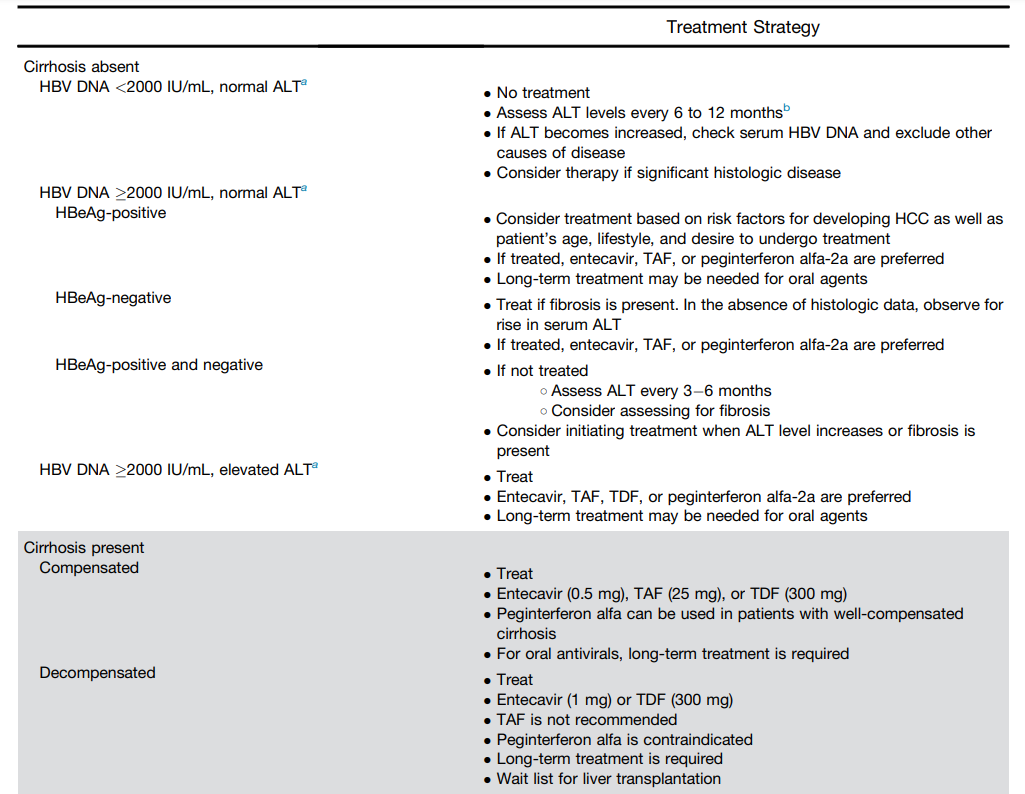
This article provides an updated treatment algorithm with many changes since 2015.
Key points:
New terminology. The authors provide updated terminology. The term ‘immune tolerant’ is losing favor. “There is also evidence that during the immune tolerant phase virologic events occur, such as integration of viral DNA into the host genome, which may help set the stage for the subsequent development of HCC.” As such, the new terminology focuses on “describing the 2 main characteristics of chronicity, infection alone and infection with evidence of ongoing hepatic inflammation (ie, hepatitis).” (See below)
TAF preferred over TDF. “The 4 first-line therapies available for managing CHB infection in the United States are peginterferon alfa-2a, entecavir (ETV), tenofovir disoproxil fumarate (TDF), and tenofovir alafenamide (TAF)….It is the opinion of most—but not all—members of the panel that when antiviral therapy is contemplated, TAF is preferred over TDF because of the lower risks of renal or bone side effects and higher likelihood of ALT normalization through 48 weeks.” For decompensated cirrhosis, TAF and peginterferon are NOT recommended.
Long term treatment is the rule (not the exception). “HBeAg-positive patients with evidence of less extensive fibrosis (<F3) should be treated long-term, even after HBeAg seroconversion and virologic suppression because of the risks of virologic relapse55 and ALT flares, except when treatment is initiated solely for the purpose of prevention of vertical transmission…For HBeAg-negative patients without HBsAg seroconversion, the panel does not recommend stopping treatment.”
Monitoring. “Primary nonresponse to ETV, TDF, or TAF is rare; therefore, any patients who are not responsive to these agents after 12 to 24 weeks should be evaluated for compliance.”
Table 1 (see below) summarizes treatment recommendations. In almost all patients with HBV, if there is elevated ALT, treatment is recommended.
Terminology:
Table for Treatment Recommendations:
In the article, more information is available, including recommendations for treatment in the setting of HIV coinfection
My take: Forget about “immunotolerant” HBV. Until better treatments emerge, patients with HBV and elevated liver enzymes are likely to need long-treatment if using TAF, TDF or entecavir.
“In an effort to reduce the risk of children and teens experiencing serious, even life-threatening injuries from swallowing dangerous, small high-powered magnets, the U.S. Consumer Product Safety Commission (CPSC) voted to approve a new federal safety standard for magnets on September 7, 2022.”
“The new mandatory federal standard requires loose or separable magnets in certain magnet products to be either too large to swallow, or weak enough to reduce the risk of internal injuries when swallowed; specifically, if the magnets fit in a small parts cylinder, then they must have a flux index of less than 50 kG2 mm2.”
“CPSC estimates 26,600 magnet ingestions were treated in hospital ERs from 2010 through 2021, and cases have been rising annually since 2018. CPSC is aware of seven deaths involving the ingestion of hazardous magnets (including two outside of the United States), the majority of these incidents likely involved magnet sets.”
“CPSC urges anyone who may own these magnets and magnet sets to discard them to protect children who may come into contact with them and unintentionally ingest them. “
This study reviewed the topic of milk allergy (both IgE-mediated and non-IgE mediated milk allergy) and provides consensus recommendations from 28 non-conflicted multidisciplinary international experts.
Key points:
“Milk allergy diagnosis can be difficult, making the condition vulnerable to overdiagnosis – and formula milk company sponsorship of milk allergy guidelines, their authors and healthcare professional education is thought to contribute to milk allergy overdiagnosis…Prescriptions for specialized formula used by bottle-fed infants with cow’s milk allergy have increased … expected volumes by up to 10-fold.”
“Consensus was reached that milk allergy does not need to be considered for changes to colour, frequency or consistency of stool, aversive feeding, occasional spots of blood in stool, nasal or respiratory symptoms, in the absence of a temporal relationship with milk protein ingestion. Exceptions to this were biopsy-proven eosinophilic gastrointestinal disorders or protein-losing enteropathy or, in a child ingesting milk protein, faltering growth or daily visible blood in stools”
“Participants noted that visible blood in the stool in an exclusively breastfed infant [has] many possible causes including infection and fissures….and the condition is generally of short duration without serious health consequences”
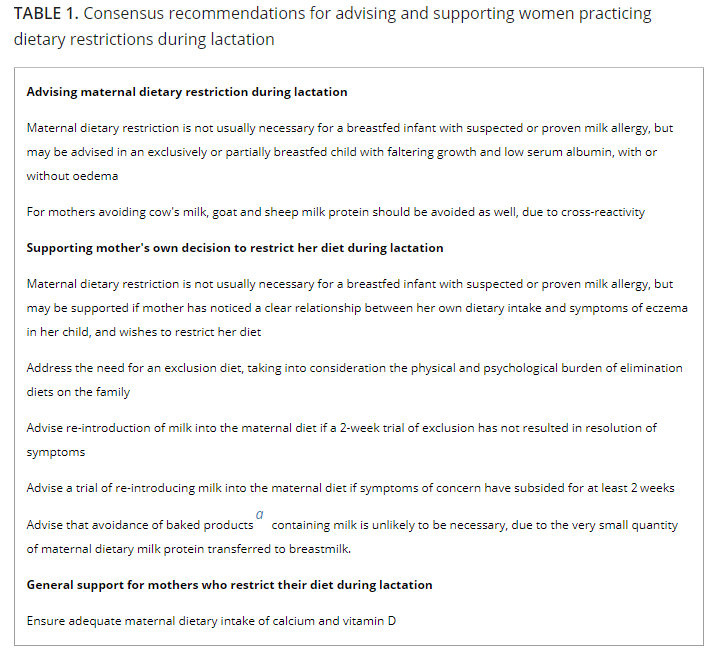
My take: Milk allergy is overdiagnosed in infancy. This guideline supports a more supportive treatment approach. Because breastmilk is hypoallergenic, maternal dietary restriction may be more harmful than helpful in those with mild symptoms (especially if not having trouble with growth or with hypoalbuminemia). Table 1 below lists some of the most important of the 38 consensus recommendations.
Design: “In this study, the investigators analyze long-term follow-up data from the PreventCD trial, a randomized trial of infants [n=944] with a first-degree relative with CD that was designed to test the strategy of low-dose gluten introduction at age 4 months. The trial did not show that this strategy reduced the risk of CD development,7 but the abundant data collected during this trial have allowed these investigators to study risk factors for the development of CD among the trial participants.” The median f/u was 8.3 yrs.
Key points from study and editorial:
135/944 (14%) children developed CD (mean age, 4.3 years)
CD developed significantly more often in girls (P = .005) and in Human Leukocyte Antigen (HLA)-DQ2 homozygous individuals (8-year cumulative incidence rate of 35.4%
Prediction application calculator with screening recommendations https://hputter.shinyapps.io/preventcd/. This screening calculator generally recommends screening every 6 months for those at greastest risk and every 12 months for those at lower risk.
HLA testing in this setting has historically been performed primarily due to its excellent negative predictive value. Because HLA DQ2 and DQ8 are present in nearly 100% of people with CD, the primary value of its use has been in ruling out CD when an individual is found to have neither haplotype. This study shows some usefulness in predicting the likelihood of CD.
My take: This study showed 14% of high-risk children developed celiac disease and the number is likely to escalate with more time. In first-degree relatives, checking HLA-DQ2/8–typing may help determine frequency of screening in asymptomatic individuals –though simply choosing to screen every 1-2 years would be a reasonable alternative.
It should be noted that current expert guidelines provide divergent advice; “NASPGHAN recommends that asymptomatic children in high-risk groups (including first-degree relatives) be screened, 4 but the United States Preventive Services Task Force concluded that the evidence is insufficient to warrant recommending for or against screening asymptomatic individuals.”
Westchester Lagoon, off Tony Knowles Coastal Trail. Anchorage, AK
Disclaimer: This blog, gutsandgrowth, assumes no responsibility for any use or operation of any method, product, instruction, concept or idea contained in the material herein or for any injury or damage to persons or property (whether products liability, negligence or otherwise) resulting from such use or operation. These blog posts are for educational purposes only. Specific dosing of medications (along with potential adverse effects) should be confirmed by prescribing physician. Because of rapid advances in the medical sciences, the gutsandgrowth blog cautions that independent verification should be made of diagnosis and drug dosages. The reader is solely responsible for the conduct of any suggested test or procedure. This content is not a substitute for medical advice, diagnosis or treatment provided by a qualified healthcare provider. Always seek the advice of your physician or other qualified health provider with any questions you may have regarding a condition.
4 patients with Crohn’s disease had loss of response.
9% of patients were switched back to IV vedolizumab due to adverse events or fear of needles.
Median clinical and biochemical disease activity remained stable after the switch. Median vedolizumab serum concentrations increased from 19 μg/ml at the time of the switch to 31 μg/ml 12 weeks after the switch (p < 0.005).
HC Kaplan et al. Am J Gastroenterol 2022 Jun 1;117(6):902-917. Open access: Personalized Research on Diet in Ulcerative Colitis and Crohn’s Disease: A Series of N-of-1 Diet Trials. In this study, 21 patients (completed trial) were randomized to 1 of 2 sequences of 4 alternating 8-week SCD (specific carbohydrate diet) and MSCD (modified specific carbohydrate diet) periods.
Key findings: “SCD and MSCD did not consistently improve symptoms or inflammation.” “Some individuals had improvement in symptoms and fecal calprotectin compared with their UD, whereas others did not.” The authors note that it took 18 months to recruit 54 patients for this study across 19 research sites.
Black adult patients were significantly less likely than White patients to have a diagnosis of CD (odds ratio [OR], 0.53) or UC (OR, 0.41). Pediatric Black patients were also less likely to have a diagnosis of CD (OR, 0.41) or UC (OR, 0.38)
Adult Hispanic patients were less likely to have a diagnosis of CD (OR, 0.33) or UC (OR, 0.45) compared with non-Hispanic patients. Similarly, pediatric Hispanic patients were less likely to have a diagnosis of CD (OR, 0.34) or UC (OR, 0.50).
Thus, these data suggest that CD and UC are modestly less prevalent among patients of non-White races and Hispanic ethnicity
A recent Bowel Sounds had some very useful insight into gastroparesis/dyspepsia. This bowel sounds was particularly interesting with regard to gastric electrical stimulation (very effective in highly selected group) and pyloric botox. It also reviewed many of the difficulties in diagnosis/overlap with dyspepsia.
Lu PL, Di Lorenzo C. Gastroparesis in the Pediatric Patient: Children are Not Little Adults. Gastrointest Disord. 2020, 2(2), 86-95
Lu PL, Moore-Clingenpeel M, et al. The rising cost of hospital care for children with gastroparesis: 2004-2013. Neurogastroenterol Motil. 2016 Nov;28(11):1698-1704.
Lu PL, Teich S, et al. Improvement of quality of life and symptoms after gastric electrical stimulation in children with functional dyspepsia. Neurogastroenterol Motil. 2013 Jul;25(7):567-e456.
Orsagh-Yentis DK, Ryan K, et al. Gastric electrical stimulation improves symptoms and need for supplemental nutrition in children with severe nausea and vomiting: A ten-year experience. Neurogastroenterol Motil. 2021 Sep;33(9):e14199.
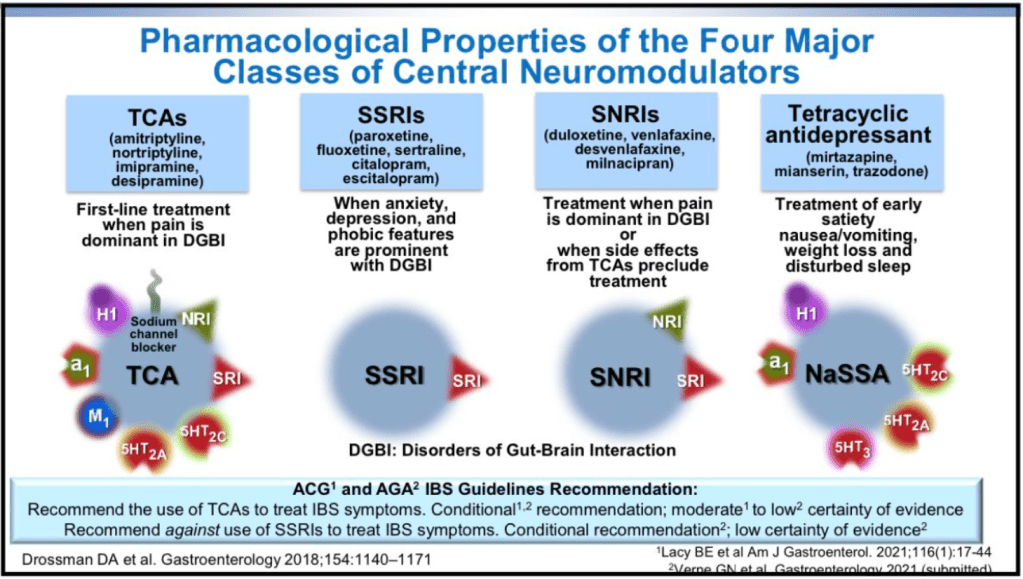
Neuromodulator Algorithm for Adults with Disorders of Gut-Brain Interaction from @Liane428: