ESPGHAN Position Paper: Biosimilars in Pediatric Inflammatory Bowel Disease

A recent position paper from ESPGHAN/Porto Group:

Full text: Use of Biosimilars in Pediatric Inflammatory Bowel Disease: An Updated Position Statement of the Pediatric IBD Porto Group of ESPGHAN. L de Riddler et al. JPGN 2019; 68: 144-53

Key points:

  • There are sufficient data (by extrapolation from different indications, adult data and limited pediatric data) to state that in children with IBD who are indicated for IFX treatment, CT-P13 is a safe and efficacious alternative to the originator IFX for
    induction, and maintenance, of remission. 97% agreement
  • A switch from the originator infliximab to CT-P13 may be considered in children with IBD in clinical remission, following at least 3 induction infusions. 84% agreement
  • Multiple switches (>1 switch) between biosimilars and reference drug or various biosimilars are not recommended in children with IBD, as data on interchangeability is limited and traceability of the drugs in case of loss of efficacy and/or safety signals may be compromised. 97% agreement
  • Physicians/institutions should keep records of brands and batch numbers of all biological medicines (including biosimilars) administered. 89% agreement

Related blog posts:

Disclaimer: These blog posts are for educational purposes only. Specific dosing of medications/diets (along with potential adverse effects) should be confirmed by prescribing physician/nutritionist.  This content is not a substitute for medical advice, diagnosis or treatment provided by a qualified healthcare provider. Always seek the advice of your physician or other qualified health provider with any questions you may have regarding a condition.

IBD Update Feb 2019

Briefly noted:

B Feagan et al. Systematic review: efficacy and safety of switching patients between reference and biosimilar infliximab. Alim Pharm Ther 2019 Jan;49(1):31-40. “While available data have not identified significant risks associated with a single switch between reference and biosimilar infliximab, the studies available currently report on only single switches and were mostly observational studies lacking control arms. Additional data are needed to explore potential switching risks in various populations and scenarios.”

MP Pauly et al. Incidence of Hepatitis B Virus Reactivation and Hepatotoxicity in Patients Receiving Long-term Treatment with Tumor Necrosis Factor Antagonists. Clin Gastroenterol Hepatol 2018; 16: 1964-73. Using data from 8887 adults, this retrospective review found  “HBV reactivation iin 39% of patients who were HBsAg+ before therapy, but not in any patients who were HBsAg-negative and anti-HBc+ before therapy.”

D Lauritzen et al. Pediatric Inflammatory Bowel Diseases: Should We Be Looking for Kidney Abnormalities? Inflamm Bowel Dis 2018; 24: 2599-2605. In a cross-sectional cohort of 56 children with IBD, the authors found 25% “had either previously reported kidney disease or ultrasonographic signs of chronic kidney disease.” The authors note that plasma cystatin C is a useful biomarker for glomerular filtration as it less dependent on nutritional status; it is increased in the setteing of a decline in GFR.

L Pouillon et al. Mucosal Healing and Long-term Outcomes of Patients with Inflammatory Bowel Diseases Receiving Clinic-Based vs Trouhg Concentration-Based Dosing of Infliximab. Clin Gastroenterol Hepatol 2018; 16: 1276-83.  This retrospective study with patients who completed TAXIT maintenance phase found that patients who received trough-based infliximab dosing had a lower discontinuation rate of infliximab compared with clinic-based dosing (2 of 21 [10%]  vs. 10 of 27 [37%]).  However, both groups had >75% of patients able to continue infliximab for more than 3 years after the trial.

N Ouldali et al. Early Arthritis Is Associated With Failure of Immunosuppressive Drugs and Severe Pediatric Crohn’s Disease Evolution. Inflamm Bowel Dis 2018; 24: 2423-30. In this retrospective study with 272 patients with Crohn’s disease, 23.9% (n=65) developed arthritis and this was associated with failure of immunosuppressive drugs with OR of 6.9 after 2 years. In this study, immunosuppressive drugs refers to thiopurines and methotrexate.  By the completion of study, a much greater proportion of those with arthritis required biologic treatment (76% vs 32%, OR 4.3)

Keep the Stool Cool for More Reliable Calprotectin

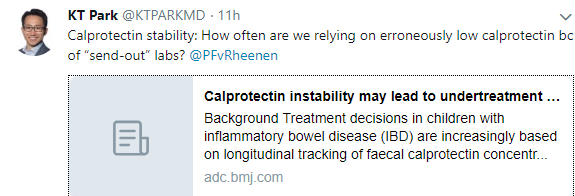
A recent study (S-M Haisma et al. Arch Dis Child http://dx.doi.org/10.1136/archdischild-2018-316584) shows that stool calprotectin levels stored at room temperature dropped nearly 20% after one day and dropped further over several days compared to baseline values, whereas calprotectin values remained reliable over six days for stool specimens stored at 4 degrees Celsius.

The authors conclude: “Calprotectin is not stable at room temperature. Children with IBD and their caretakers may be falsely reassured by low calprotectin values. The best advisable standard for preanalytical calprotectin handling is refrigeration of the stool sample until delivery at the hospital laboratory.”

Full text (link from KT Park’s twitter feed): Calprotectin instability may lead to undertreatment in children with IBD

Related blog posts:


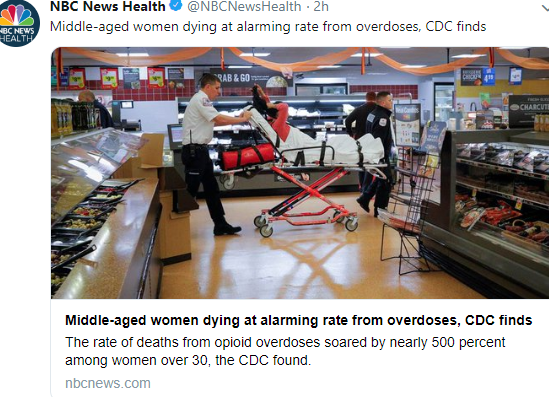
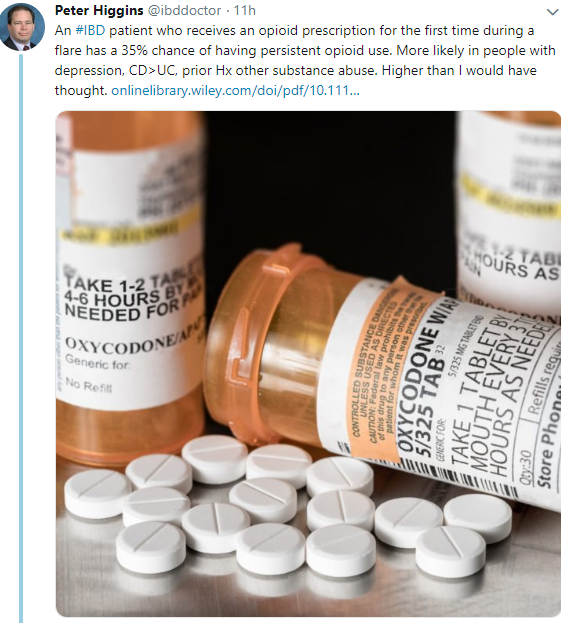
Likelihood of Opioid Dependency If Opioid Given During an IBD Flare

According to a recent study (Full Link: MR Noureldn, PDR Higgins et al. Aliment Pharmacol Ther. 2019;49:74–83. Incidence and predictors of new persistent opioid use following inflammatory bowel disease flares treated with oral corticosteroids), and with the limitation of using an insurance database –Key Findings:

  • 5411 (35.8%) were opioid‐naïve patients (mean age 43.9 yrs) of which 35.0% developed persistent opioid use after the flare
  • Factors associated with new persistent opioid use include a history of depression (hazard ratio [HR] 1.29, 95% confidence interval [CI] 1.13‐1.47), substance abuse (HR 1.36, 95% CI 1.2‐1.54), chronic obstructive pulmonary disease (COPD) (HR 1.17, 95% CI 1.04‐1.3), as well as, Crohn’s disease (HR 1.26, 95% CI 1.14‐1.4) or indeterminate colitis (HR 1.6, 95% CI 1.36‐1.88)

My take: As noted in previous blog (Increased Narcotic Usage in Pediatric Patients with IBD), opioid usage is an issue with pediatric IBD patients as well, particularly in those with associated depression and/or anxiety.

Related blog posts:

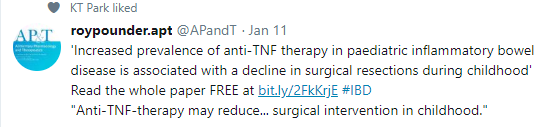
AntiTNF Therapy Associated with Reduced Surgical Resections

Full text: Increased prevalence of anti‐TNF therapy in paediatric inflammatory bowel disease is associated with a decline in surgical resections during childhood JJ Ashton et al. Alim Pham Ther 2019; https://doi.org/10.1111/apt.15094

From absract:

Design: All patients diagnosed with PIBD within Wessex from 1997 to 2017 were assessed. The prevalence of anti‐TNF‐therapy and yearly surgery rates (resection and perianal) during childhood (<18 years) were analysed

Results: Eight‐hundred‐and‐twenty‐five children were included (498 Crohn’s disease, 272 ulcerative colitis, 55 IBD‐unclassified), mean age at diagnosis 13.6 years (1.6‐17.6), 39.6% female. The prevalence of anti‐TNF‐treated patients increased from 5.1% to 27.1% (2007‐2017), P = 0.0001. Surgical resection‐rate fell (7.1%‐1.5%, P = 0.001), driven by a decrease in Crohn’s disease resections (8.9%‐2.3%, P = 0.001)…

Patients started on anti‐TNF‐therapy less than 3 years post‐diagnosis (11.6%) vs later (28.6%) had a reduction in resections, P = 0.047. Anti‐TNF‐therapy prevalence was the only significant predictor of resection‐rate using multivariate regression (P = 0.011).

Conclusion: The prevalence of anti‐TNF‐therapy increased significantly, alongside a decrease in surgical resection‐rate. Patients diagnosed at younger ages still underwent surgery during childhood. Anti‐TNF‐therapy may reduce the need for surgical intervention in childhood, thereby influencing the natural history of PIBD.

Related blog posts:

FDA Approves Adalimumab Biosimilar -But Will Enter U.S. Market in 2023!

October 31, 2018: FDA Approves Sandoz’s Biosimilar Adalimumab, Hyrimoz

An excerpt:

The FDA has approved Sandoz’s biosimilar adalimumab, Hyrimoz (adalimumab-adaz). 

The drug has been approved to treat rheumatoid arthritis, juvenile idiopathic arthritis, psoriatic arthritis, ankylosing spondylitis, adult Crohn disease, ulcerative colitis, and plaque psoriasis…

Despite today’s approval, US patients will have to continue to wait for access to Hyrimoz, as the biosimilar will not enter the US market until 2023. Earlier this month, Sandoz announced a global settlement of patent disputes with AbbVie over the drug. While the settlement allowed Sandoz to launch Hyrimoz in the European Union on October 16, 2018, it forestalled US market entry until September 30, 2023. 

My take: Why will this biosimilar be allowed in Europe but not U.$?

Related blog posts:

Zabriskie Point at Sunrise, Death Valley

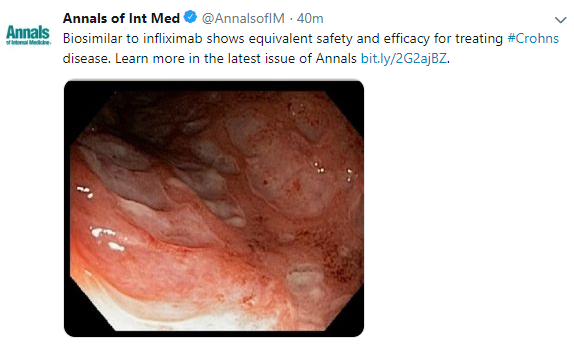
Big Biosimilar Study

Briefly noted: A Meyer et al. Ann Intern Med. 2018. DOI: 10.7326/M18-1512

Abstract link: Effectiveness and Safety of Reference Infliximab and Biosimilar in Crohn Disease: A French Equivalence Study

In this study with 5050 patients, based on review of an administration database, the authors found the following:

  • In multivariable analysis of the primary outcome, CT-P13 (biosimilar) was equivalent to infliximab reference product (RP) (HR, 0.92 [95% CI, 0.85 to 0.99]). 1147 patients in the RP group and 952 patients in the CT-P13 group met the composite end point (including 838 and 719 hospitalizations, respectively).
  • No differences in safety outcomes were observed between the 2 groups: serious infections (HR, 0.82 [CI, 0.61 to 1.11]), tuberculosis (HR, 1.10 [CI, 0.36 to 3.34]), and solid or hematologic cancer (HR, 0.66 [CI, 0.33 to 1.32]).

The authors conclude that “real-world data indicates that the effectiveness of CT-P13 is equivalent to that of RP for infliximab-naive patients with CD.”

Related blog posts:

Another Reason For HPV Vaccine –Prevention of Anal Cancer

Briefly noted: A recent study (L Vuitton et al. Clin Gastroenterol Hepatol 2018; 16: 1768-76) document a high prevalence of anal canal high-risk human papillomavirus (HPV)  infection in all subjects (n=469, median age 54 years) and even higher rates in patients with Crohn’s disease (n=70).  The authors detected HPV DNA in anal tissues from 34% of the subjects and high risk (oncogenic) HPV in 18%.  In patients with Crohn’s disease, high risk HPV was detected in 30%.

My take: HPV infection predisposes to anal cancer which represent 3-4% of lower-digestive tract cancers. The high rate of HPV

Related blog posts:

near Banff

Fish Oil for Ulcerative Colitis?

A small randomized, double-blind, placebo-controlled study (E Scaioli et al. Clin Gastroenterol Hepatol 2018; 16: 1268-75) examined the use of Eicosapentaenoic acid-Free Fatty Acid Form (EPA-FFA) a component of n-3 fish oil for patients with ulcerative colitis UC).

From 2014-2016, the investigators enrolled 60 patients who had partial Mayo score <2 and fecal calprotectin >150 mcg/g who had been receiving stable therapy for at least 3 months.  Then they were randomized 1:1 to receive EPA 1000 mg BID or placebo for 6 months.

Key findings:

  • 19 of 30 (63%) EPA-FFA group compared with 4 of 30 (13.3%) of placebo-treated group had achieved the primary endpoint of a 100-point reduction in fecal calprotectin at 6 months.  OR 12.0, P<.001
  • The secondary endpoint of clinical remission was noted in 23 of 30 (77%) in the EPA-FFA group compared with 15 of 30 (50%), OR 3.29, P=.035)
  • No serious adverse effects were reported.

Limitations:

  • Small number of patients from a single center
  • Short follow-up
  • In those without clinical relapse, a followup colonoscopy was not performed

My take: In this study EPA-FFA was associated with lower calprotectin and higher rates of remaining in remission.  More data are needed.

Related blog posts:

Disclaimer: These blog posts are for educational purposes only. Specific dosing of medications (along with potential adverse effects) should be confirmed by prescribing physician.  This content is not a substitute for medical advice, diagnosis or treatment provided by a qualified healthcare provider. Always seek the advice of your physician or other qualified health provider with any questions you may have regarding a condition.
Near Banff