SAD diet vs Low Fat Diet for Ulcerative Colitis

J Fritsch et al. Clin Gastroenterol Hepatol 2021; 19: 1189-1199. Full text: Low-Fat, High-Fiber Diet Reduces Markers of Inflammation and Dysbiosis and Improves Quality of Life in Patients With Ulcerative Colitis

Background: “A high-fat diet has been associated with an increased risk of ulcerative colitis (UC). We studied the effects of a low-fat, high-fiber diet (LFD) vs an improved standard American diet (iSAD, included higher quantities of fruits, vegetables, and fiber than a typical SAD)”

Key findings:

  • Compared with baseline, the iSAD and LFD each increased quality of life, based on the short IBD questionnaire and Short-Form 36 health survey scores (baseline short IBD questionnaire score, 4.98; iSAD, 5.55; LFD, 5.77; baseline vs iSAD, P = .02; baseline vs LFD, P = .001)
  • Fecal levels of acetate (an anti-inflammatory metabolite) increased from a relative abundance of 40.37 at baseline to 42.52 on the iSAD and 53.98 on the LFD (baseline vs LFD, P = .05; iSAD vs LFD, P = .09)
  • Overall, in this small cross-over study (cross-over study) of 17 patients with UC in remission, a catered LFD or a iSAD were each well tolerated and increased quality of life. However, the LFD decreased markers of inflammation and reduced intestinal dysbiosis in fecal samples

My take: While dietary intervention is recognized as a more effective intervention in Crohn’s disease, this study shows that a low-fat high fiber diet for patients with ulcerative colitis may be beneficial.


How Important is Heparin for Preventing Occlusion of Catheters in Pediatrics?

According to a recent Cochrane review, heparin use is NOT more effective than saline flushes. Thanks to Ben Gold for providing this reference.

Bradford NK, Edwards RM, Chan RJ. Link: Normal saline (0.9% sodium chloride) versus heparin intermittent flushing for the prevention of occlusion in long-term central venous catheters in infants and children. Cochrane Database Syst Rev. 2020;4(4):CD010996. doi: 10.1002/14651858.CD010996.pub3.

Key findings:

  • The four trials (n=255) directly compared the use of normal saline and heparin; the studies all used different protocols for the intervention and control arms, however, and all used different concentrations of heparin.
  • The estimated RR for CVC occlusion per 1000 catheter days between the normal saline and heparin groups was 0.75 (95% CI 0.10 to 5.51; 2 studies, 229 participants; very low certainty evidence).
  • The estimated RR for CVC‐associated blood stream infection was 1.48 (95% CI 0.24 to 9.37; 2 studies, 231 participants; low‐certainty evidence).
  • The duration of catheter placement was reported to be similar for the two study arms in one study (203 participants; moderate‐certainty evidence), and not reported in the remaining studies.
  • This is in agreement with another updated Cochrane review assessing the effectiveness and safety of intermittent locking of CVCs with heparin vs. normal saline to prevent occlusion in adults (11 studies; N=2,392). The pooled analysis did show fewer occlusions with heparin than with normal saline (RR 0.70, 95% CI 0.51 to 0.95; P = 0.02; 1672 participants; 1025 catheters from 10 studies; I² = 14%), but it is based on a very low-quality of evidence given the differences in methodology, unclear allocation concealment, imprecision, and suspicion of publication bias. (López-Briz E, Ruiz Garcia V, Cabello JB, et al. Heparin versus 0.9% sodium chloride locking for prevention of occlusion in central venous catheters in adults. Cochrane Database Syst Rev. 2018;7(7):CD008462. doi: 10.1002/14651858.CD008462.pub3)

My take: This review found there was not enough evidence to determine which solution, saline or heparin, is more effective for reducing complications.

Related blog posts:

Better Levels –>Better Outcomes with Adalimumab

More data is accumulating that show that higher levels of adalimumab are associated with better outcomes: F Rinawi et al. Inflamm Bowel Dis 2021; 27 1079-1087. Association of Early Postinduction Adalimumab Exposure With Subsequent Clinical and Biomarker Remission in Children with Crohn’s Disease. This pediatric study included 65 patients with Crohn’s disease; the author’s note that children weighing less than 40 kg frequently received higher dosing than on-label ADA dosing.

Key findings:

  • Adalimumab trough levels (TLs) at both weeks 4 and 8 were significantly higher in remitters vs nonremitters at week 24 (P < 0.001 and P = 0.002, respectively)
  • The best ADA TL cutoffs at weeks 4 and 8 for predicting clinical/biomarker remission at week 24 were 22.5 µg/mL (80% sensitivity, 90% specificity) and 12.5 µg/mL (94% sensitivity, 60% specificity) respectively

My take (borrowed from authors): Greater early ADA exposure is associated with superior clinical/biomarker outcomes at week 24. ADA pediatric dosing is looking a lot like infliximab dosing in which nearly 75% would be underdosed if using on-label dosing.

Related blog post:

From Illuminarium Show Wild

Hepatic Steatosis as an Incidental Finding

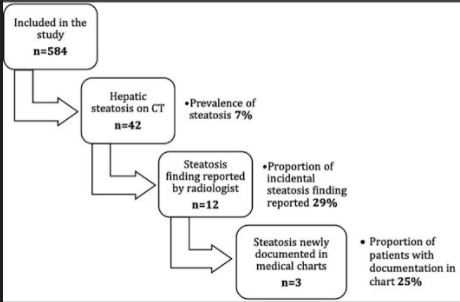
A recent report (H Okura et al. J Pediatr 2021; 234: 92-98. Under-reporting of Hepatic Steatosis in Children: A Missed Opportunity for Early Detection) showed that hepatic steatosis is under-reported as an incidental finding on CT scans which were ordered for nephrolithiasis.

Key findings:

  • Using absolute liver attenuation <48 Hounsfield units (HU), the prevalence was 7% (n = 42/584). Steatosis was reported for only 12 of 42 (28%) of these patients and was documented in clinical notes in only 3 of those cases
  • 232 (40%) had liver enzymes available within 24 hrs of CT scan. 79 had elevated ALT values; steatosis accounted for only 22% of those with elevated ALT values
  • In those with liver attenuation < 48 HU, nearly all had abnormal ALT values and the median was 52 U/L
  • Patients with steatosis had an 8-fold likelihood of overweight/obesity

Discussion:

  • These findings are similar to an adult study of 1290 patients in which 26% had steatosis but only 5% had those findings identified and documented beyond the radiology report. (N Kutaiba et al. J Med Imaging Radiat Oncol 2019; 3: 431-8)
  • CT findings are considered much more accurate than ultrasonography.
  • The authors argue that identification of NAFLD is “crucial” to allow for further specialty evaluation and to exclude secondary causes of steatosis.

My take: This study shows that there is an opportunity to improve identification of incidental steatosis. If identified, this can/should be addressed by their primary care team to emphasize improved diet choices and physical activity.

Related blog posts:

From Journal of Pediatrics Twitter Feed

Impact of NG Feeding Program for NICU Graduates

A recent prospective cohort study (JM Lagatta et al. J Pediatr 2021; 234: 38-45. Full text: Actual and Potential Impact of a Home Nasogastric Tube Feeding Program for Infants Whose Neonatal Intensive Care Unit Discharge Is Affected by Delayed Oral Feedings) shows that an NG home feeding program can get infants home sooner without tube-related readmissions.

The abstract, in my view, makes a mistake by emphasizing that NG fed infants (n=35) had less hospital readmissions and ED encounters than G-tube fed infants (n=65). This is problematic because infants who received G-tubes were much sicker than NG fed infants (see Table 1). Compared to NG patients, G-tube patients were more premature (32% 22-28 weeks vs 20% for NG), lower birthweight (2510 g vs 1664 g), more chromosomal anomalies (suspected & confirmed 38% vs. 23%), more likely to have abnormal brain imaging (32% vs 20%), and more likely to have a tracheostomy (34% vs. 0%). In addition, as noted below, the institution reports a very high rate of G-tube dislodgement.

Key points (in my view):

  • “Our institution uses a a bridle to secure NG tubes just before NICU discharge”
  • The authors delineate specific criteria for NG discharge: “at least 36 weeks of postmenstrual age (PMA) and weight of 2 kg; 5 days free of apnea or bradycardia requiring nursing intervention after discontinuation of caffeine; 2 days of temperature stability in an open crib; receiving home respiratory support (either room air, or at or below 0.5 liters per minute nasal cannula); at least 25% of feedings by mouth; age-appropriate weight gain; and without anatomic anomalies precluding NG tube placement”
  • By 3 months after NICU discharge, 27 of 35 (77%) infants discharged with NG tubes had progressed to full oral feeds; of the remaining 8 infants, 3 received G tubes during the study period, and an additional 3 were scheduled to receive a G tube”
  • Median duration of NG use was 29 days. The discussion notes that discharge to home may facilitate quicker weaning from NG tubes (SL Williams et al. Tube feeding outcomes of infants in a Level IV NICU.J Perinatol. 2019; 39: 1406-1410)
  • The authors report a very high rate of G-tube dislodgement, 19 of 65, in a 3-month period. This point is not analyzed by the authors but suggests that the institution utilizes a G-tube prone to dislodgement (eg. secured by a balloon).

My take: This article makes two key points: 1. An NG feeding program can help get infants home sooner and safely (especially with bridle placement) 2. In their institution, G-tubes are dislodged a lot and this leads to frequent returns for medical care; this high rate of dislodgement may indicate a potential benefit to using a different type of G-tube.

Related blog posts: N2U -Part 2: Poor Growth and Short Bowel Syndrome, Nutrition Symposium Georgia AAP (Part 3) | gutsandgrowth

From Illuminarium Atlanta – WILD: A Safari Experience

“Our Gene-Edited Future”

NPR: He Inherited A Devastating Disease. A CRISPR Gene-Editing Breakthrough Stopped It

Previously the CRISPR gene-editing has been used to counter genetic defects in conditions like sickle cell and thalasemia. This has involved taking cells out of the body, editing them in the lab, and infusing them back in or injecting CRISPR directly into cells that need fixing.

Now, scientists are directly injecting nanoparticles with the CRISPR gene-editing tools. Here’s an excerpt:

Doctors infused billions of microscopic structures known as nanoparticles carrying genetic instructions for the CRISPR gene-editor into four patients in London and two in New Zealand. The nanoparticles were absorbed by their livers, where they unleashed armies of CRISPR gene-editors. The CRISPR editor honed in on the target gene in the liver and sliced it, disabling production of the destructive protein.

Within weeks, the levels of protein causing the disease plummeted, especially in the volunteers who received a higher dose. Researchers reported at the Peripheral Nerve Society Annual Meeting and in a paper published in The New England Journal of Medicine.

“This is really opening a new era as we think about gene-editing where we can begin to think about accessing all kinds of different tissue in the body via systemic administration

Related study: JD Gilmore et al. NEJM. 2021. DOI: 10.1056/NEJMoa2107454. CRISPR-Cas9 In Vivo Gene Editing for Transthyretin Amyloidosis.

My take: This type of discovery could dramatically improve the treatment of many diseases including heart disease, muscular dystrophy and brain diseases such as Alzheimer’s.

Related blog post: Genetically Modified Humans: Genome Editing 101

Orbeez Ball Obstruction

Z Patel et al. Gastroenterol 2021: 161. https://doi.org/10.1053/j.gastro.2020.10.051. Full text: An Unusual Case of Small Bowel Obstruction

Case report of a 10 month old who developed a small bowel obstruction due to an “Orbeez” ball. “Orbeez balls are small polymer beads that absorbs water and expands, it can get up to 150 times their original size. When left out of water, the beads shrink back down to its original size. They were originally invented as a way to keep moisture in soil for plants. They are hugely popular with children and often used as toys, flower holders, air fresheners, light jars, and objets d’art in the house.”

Related blog post: Foreign Bodies in Children –Expert Guidance

Predicting Bad Outcomes with Ascites

T Ingviya et al. JPGN 2021; 73: 86-92. Clinical Predictors of Morbidity and Mortality in Hospitalized Pediatric Patients With Ascites

Methods: A retrospective cohort study was performed on patients (n=518) ages 0 to 21 hospitalized at Johns Hopkins Hospital between 1983 and 2010 with an ICD-9 discharge diagnosis of ascites

Key findings:

  • Among the 3 age groups (0–5, 6–12, and 13–21), the 0 to 5 age group experienced significantly increased length of stay (LOS) (P < 0.001) and mortality (P = 0.027).
  • Ascites etiology of veno-occlusive disease (VOD) and the presence of hydrothorax or thrombocytopenia was also significantly associated with increased LOS.
  • Ascites with the etiology of congestive hepatopathy and the presence of grade 3 ascites, hepatic encephalopathy, hepatorenal syndrome, hydrothorax, hyponatremia, and thrombocytopenia were associated with increased mortality.
  • Black pediatric patients with ascites have an increased risk of mortality

Related blog post: #NASPGHAN19 Liver Symposium (part 3)

From “Wild” at Illuminarium

Worse Outcomes After Hospital Mergers

NPR: The Untamed Rise Of Hospital Monopolies

An excerpt:

Zack Cooper, an economist at Yale School of Public Health, and his colleague, Martin Gaynor, have crunched the numbers on hospitals using the government’s preferred way of measuring market concentration, and they’ve found that about 80% of America’s hospital markets are now “highly concentrated.”…

The research clearly shows, Cooper says, that growing monopolization has raised prices for patients. Less competition means hospitals can charge higher prices and get away with it. They can pay lower wages and get away with it. And they can provide worse care and get away with it. “We want firms to compete and be incentivized to raise their quality to attract more consumers, and the more that hospitals merge, the less sharp those incentives become,” Cooper says. “We have evidence that death rates are literally higher in markets where hospitals face less competition.”…

The bizarre part of all this is that many of these monopolizing hospitals are technically considered “nonprofits.” … instead of making profits that are distributed to shareholders, nonprofit hospitals take the extra money they make and use it for executive compensation and buying shiny stuff. 

Related blog posts:

Anti-TNF Therapy and Lower Rates of Colon Cancer & Financial Hardship Due to IBD

M Aklkhayyat et al. Inflamm Bowel Dis 2021; 27: 1052-1060. Lower Rates of Colorectal Cancer in Patients With Inflammatory Bowel Disease Using Anti-TNF Therapy

Using a selected sample from a database with >62 million patients, this retrospective cohort study determined the rates of colorectal cancer among patients with IBD. Key finding:

Among the IBD cohort, patients treated with anti-TNF agents were less likely to develop CRC; patients with Crohn’s disease: odds ratio, 0.69; 95% confidence interval, 0.66-0.73; P < 0.0001 vs patients with ulcerative colitis: odds ratio, 0.78; 95% confidence interval, 0.73-0.83; P < 0.0001.

My take: This study found an association between anti-TNF therapy and a reduced risk of CRC in patients with IBD.

Related blog posts:

NH Nguyen et al. Inflamm Bowel Dis 1068-1078. National Estimates of Financial Hardship From Medical Bills and Cost-related Medication Nonadherence in Patients With Inflammatory Bowel Diseases in the United States

Using the National Health Interview survey (2015), the authors identified individuals with self-reported IBD and assessed national estimates of financial toxicity. Key findings:

  • 23% reported financial hardships due to medical bills, 16% of patients reported cost-related medication nonadherence, and 31% reported cost-reducing behaviors
  • Approximately 62% of patients reported personal and/or health-related financial distress, and 10% of patients deemed health care unaffordable
  • Inflammatory bowel disease was associated with 1.6 to 2.6 times higher odds of financial toxicity across domains compared with patients without IBD

My take: In addition to the physical and emotional toll of having IBD, there is also significant financial hardships for many.