Is there a link between Eosinophilic Esophagitis and Celiac Disease?

Probably most pediatric gastroenterologists have seen patients who underwent endoscopy for celiac disease and found out that the patient had both celiac disease and esophageal eosinophilia.  Whether the esophageal eosinophilia should be classified as eosinophilic esophagitis (EoE) is based in part on whether one concludes that the EoE is a separate disorder and unrelated to the celiac disease.

One useful retrospective study on this topic (S Hommeida et al. JPGN 2017; 65: 58-63) examines the association between celiac disease and EoE.   Key findings:

  • Among a cohort of 10,201 children seen at the Mayo clinic, 595 were considered to have EoE and 546 had celiac disease.
  • Only 10 patients had both celiac disease and EoE.
  • The risk of EoE was not increased in children with celiac disease compared to those without celiac disease (odds ratio 0.29).  The prevalence of EoE in children with celiac disease was 1.8% whereas the prevalence among all children undergoing endoscopy was 5.8%.
  • 4 of 10 children treated only with GFD clinically improved (no followup histology)

Limitations:

  • The diagnosis of EoE was not clear in this study.  As noted in the associated editorial (pg 1-2), “the use of a high-dose proton pump inhibitor at the time of initial diagnosis is not mentioned.”
  • Overall, the number of patients with both EoE and celiac disease was small.  Thus, a much larger study could be necessary to prove the lack of an association.

My take: This study suggests that there is not an association between EoE and celiac disease. Some patients with both disorders will respond to a gluten free diet, whereas some will require additional treatment directed at EoE.

Related study: T Wallach et al. JPGN 2017; 65: 64-8. This retrospective study showed poor adherence to biopsy guidelines in EoE and celiac disease.  Among 9171 children, 8% were biopsied in accordance with 2007 AGA EoE consensus recommendations and 35% in accordance with  2006 AGA celiac guidelines.  Higher detection rates were observed among patients who had higher adherence to diagnostic guidelines. With both diseases, obtaining sufficient number of biopsies is key; and with celiac disease, obtaining biopsies from duodenal bulb as well as distal duodenum is recommended.

Chattahoochee River, Sandy Springs
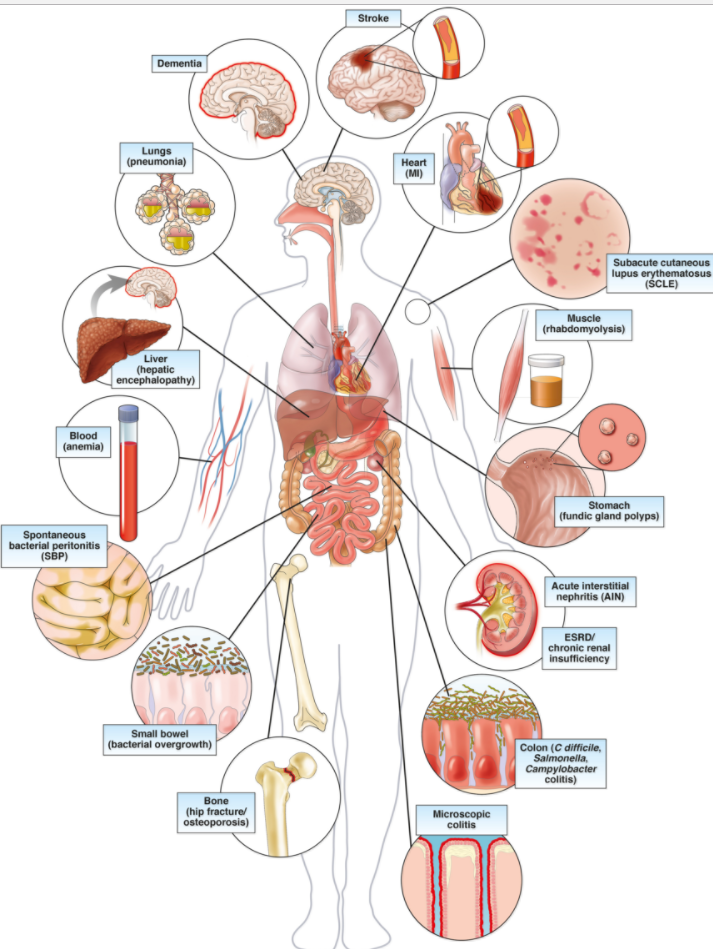
AGA Blog: What are the complications of PPI Therapy?

AGA Journals Blog: What are the complications of proton pump inhibitor (PPI) Therapy?

The blog post reviews a recent article on PPIs and potential complications.

An excerpt:

review article from Michael F. Vaezi et al discusses potential adverse consequences of proton-pump inhibitor (PPI) therapy in the July issue of Gastroenterology…(2017; 153: 35-48). The authors discuss overzealous conclusions based on weak associations that have caused widespread alarm, leading to inappropriate discontinuation of a medicine that is needed for an established disease process. They present absolute and relative risks for adverse effects associated with long-term use of PPIs…

Vaezi et al review the consistency of proposed associations with PPI use and the time period between the PPI exposure and outcome, and the effects of different doses. They provide guidance for methodologies of future studies.

The review article concludes that PPIs have revolutionized the management of patients with GERD and patients at risk of upper gastrointestinal ulceration and bleeding from aspirin or NSAIDs. However, many patients receive PPIs unnecessarily for conditions or symptoms for which they would not have been expected to provide benefit… Vaezi et al state that, as always, PPIs should be given in the lowest effective dose, for the shortest possible time.

They add that much of the evidence linking PPI use to serious long-term adverse consequences is weak and insubstantial. It should not deter prescribers from using appropriate doses of PPIs for appropriate indications.

Full text of original article: Complications of Proton Pump Inhibitor Therapy

Table 6 lists the strengths of the findings along with other Hill Criteria to assess all of the proposed complications.  The vast majority of potential complications have “weak” proof; the exceptions include bacterieal enteric infections/Clostridium difficile infection which have moderate strength of evidence and and fundic gland polyps which have high strength of evidence.

My take: This study and the associated AGA Journals blog post indicate that most of the reports of complications associated with PPI remain unproven and are based on weak evidence.


Briefly Noted: Outpatient Liver Biopsy

A small retrospective study (R Bolia et al. JPGN 2017; 65: 86-88) with 497 patients (626 biopsies) found that all complications were identified within 8 hours.  Thirty (48%) had complications, with a subcapsular hematoma being most common (n=14).  Less common adverse events included fever (n=5), skin site ooze (n=3), intraperitoneal bleeding (n=3), hemobilia (n=2), anaphylaxis to gelfoam (n=2), and sepsis (n=1). In this study, the majority of biopsies were performed by interventional radiology (n=492); though, the complication rate was similar in both groups.

The authors conclude that their data support the outpatient liver biopsies in children.

My take: I disagree with the authors’ conclusion to some extent.  Their population is too small to detect rare but severe complications.  Our empiric practice is watch children older than 6 years of age for 6 hours and watch younger children (or others deemed at increased risk) for 24 hours.

Related blog posts:

Prague

Slim Pickings: Data for 2nd-Line Autoimmune Hepatitis Pediatric Therapy

A recent study (AN Zizzo et al. JPGN 2017; 65: 6-15) performed a systematic review and meta-analysis of pediatric autoimmune hepatitis (AIH) studies.

The most remarkable finding was that there were only 76 patients from 15 qualifying studies.

Other findings:

  • Response to mycophenolate mofetil (MMF) with 34 patients was 36% (according to abstract) at 6 months  (discrepancy in article –results state 38% response)
  • Response to cyclosporine with 15 patients was 83% (discrepancy in article –results state 86% response)
  • Response to tacrolimus with 4 patients was 50%
  • Adverse effects were very common, particularly with cyclosporine (64% noted at least 1 adverse effect)

The article has an associated editorial (N Kerkar, pg 2-3).  “The adverse event profile of cyclosporine with gingival hyperplasia, hypertrichosis, nephrotoxicity, and neurotoxicity made it challenging for long-term use in children.”  Besides the small number of patients, “the studies that were included were largely “observational”‘ which limits their findings as well.  The study authors recommend MMF as the preferred option for 2nd-line therapy.

My take: Fortunately, most patients with autoimmune hepatitis respond to first line therapy with azathioprine/steroids.  It is unclear what is the optimal 2nd-line treatment for refractory patients.

Related blog entries:

Egret, Shem Creek

Will Emerging Therapies for Fatty Liver Disease Be Affordable?

With non-alcoholic steatohepatitis (NASH), there are currently no established medical therapies.  However, several candidate medications look promising. However in recent years, many new medications have come with an impressive price tag and this has led to questions about whether emerging therapies for NASH will be affordable.

A recent article looked at the medication Obeticholic Acid, which was approved for treating primary biliary cholangitis.  It is possible that it will be helpful for NASH.  Yet, its cost , currently, is about $70,000 per year

GIHepNews: Despite clinical promise, obeticholic acid may be too expensive for treating NASH

Here’s an excerpt:

In the 72-week Phase II trial, called FLINT, 273 men and women with NASH were randomly assigned to receive OCA or placebo (Lancet 2015;385:956-965). Liver histology improved in 45% of those receiving OCA versus 21% in those receiving sham therapy (P=0.002). An increased risk for pruritus was the most notable adverse event among patients taking OCA (23% vs. 6% for placebo), according to the researchers. Based on the favorable benefit–risk results of the Phase II study, a Phase III trial is ongoing…

The expected benefit of OCA over lifestyle modifications for all the major long-term outcomes, such as decompensated cirrhosis (10% vs. 9.4%), liver-related mortality (9% vs. 8.1%) and transplant-free survival (72.2% vs. 71.5%), were relatively modest, the researchers reported. Those differences resulted in a cost per quality-adjusted life-year saved of $5.2 million with the assumption that 16% of patients would relapse…

 “If the efficacy compared to placebo is of the same order found in the FLINT trial, the current cost of the drug would be prohibitive in a population-based context,” said Dr. Lavine, who was a co-investigator on the trial.

My take: Given the growing burden of NASH, new effective treatments are needed.  In my view, though, cost-effectiveness has to be a consideration.

Prague Castle

NASH: What Helps Beyond Weight Loss?

Full text from ACG article: NASH: What Helps Beyond Weight Loss?

The article reinforces the value of weight loss and exercise for nonalcoholic steatohepatitis (NASH).  It suggests that Vitamin E and/or pioglitazone may be helpful. Many more medications are being evaluated.

My take: As of now, losing weight and exercise remain the cornerstone for NASH treatment.

Long Distance (Medical) Relationships Don’t Always Work

Another study (NZ Borren et al Inflamm Bowel Dis 2017; 23: 1234-9) has shown detrimental outcomes due to distance from the health care team.

In this study with 2136 patients with IBD (1197 Crohn’s disease, 9393 ulcerative colitis) with mean age of 41 years, the distance from the hospital (Massachusetts General) was compared with need for IBD-related surgery and secondary outcomes of needing biological and immunomodulator therapy.

Key findings:

  • In the four quartiles, mean distance was 2.5, 8.8, 22.0, and 50.8 miles.
  • Need for surgery was increased with distance from hospital: closest with odds ratio of 1.0, quartile 2 had OR of 1.68, quartile 3 had OR of 1.94, and quartile 4 had OR of 2.44

According to the authors, with other indications besides IBD, “over three-quarters of the examined studies demonstrated a distance-decay association with worse outcomes in individuals living further away from health care facilities.  Limitation: it is possible that patients who travel a greater distance have more disease severity and that those who have milder diseases are more likely to receive care closer to home.

My take: When highly qualified subspecialists are far away, the associated reduced access likely counters this potential benefit.  Early effective therapy is important in reducing complications.

Related blog posts:

Shem Creek, SC

Distance from Transplant Center -Not a Good Thing for Chronic Liver Disease

It is said that “absence makes the heart grow fonder.”  This expression certainly cannot be extrapolated to the liver.  A recent study (DS Goldberg et al. Clin Gastroenterol Hepatol 2017; 15: 958-60) showed that increased distance to a liver transplant center was associated with higher mortality for patients with chronic liver failure (CLF).

This study examined 16,824 patients with CLF.  In the cohort (879, 5.2%) who lived  >150 miles from the closest LT center there was a 20% higher mortality rate (Hazard ratio of 1.20; P <.001).  According to the authors, mortality with distance “modeled as a continuous variable per unit increase in 50 miles.”

From the discussion:

  • “For patients with CLF, transplant remains the only option for long-term survival. Yet for the 11 out of 12 who are never transplanted, access to specialized care may still prolong life.”
  • Limitations: This study could not account for socioeconomic factors or control for geographical variation in care.  With regard to the later, death rates from liver disease are lowest in New York, where the entire population is within 150 miles of a transplant center.  In contrast, in New Mexico and Wyoming, which have the highest age-adjusted death rates, more than 95% of patients live >150 miles from a transplant center. However, there may be many other differences in care besides distance in these regions.

My take: This study, though with some limitations, bolsters the view that patients with chronic liver disease (and probably other chronic diseases) live longer if in proximity to specialized care.

Related blog posts:

Exquisite windows in St. Vitus Cathedral, Prague


PPI and Poor Outcomes

A large observation study provides some bad publicity for proton pump inhibitors (PPI):

BMJ Open Access: Risk of death among users of Proton Pump Inhibitors: a longitudinal
observational cohort study of United States veterans (Y Xie et al BMJ Open
2017;7:e015735. doi:10.1136/bmjopen-2016-01573) Thanks to Ben Enav for this reference.

This study selected ~350,000 patients from a database which identified more than 1.7 million PPI users. These patients were ‘new’ PPI users.

Key finding:  Over a median follow-up of 5.71 years, PPI use was associated with increased risk of death compared with H2 blockers use (HR 1.25, CI 1.23 to 1.28).

The authors note the limitations of this observational study; however, they suggest that the findings cannot be fully explained by residual confounders.  They recommend limiting PPI use to “instances and durations where it is medically indicated.”

My take: As noted in a recent post (see below), some risks attributed to PPIs in observational studies do not pan out.  Yet, PPI therapies need to be better-targeted to those who will truly benefit from them.

Related blog posts:

The Battery, Charleston, SC