Primary Sclerosing Cholangitis (PSC) –Natural History Study

Last week, I posted an blog referencing new guidelines for peanut introduction.  A more detailed explanation of these guidelines: New Guidelines: Early Introduction of Peanut to Prevent Peanut Allergy from David Stukus (Thanks to Kipp Ellsworth for sharing this information)

_________________

A recent study (PL Valentino et al. JPGN 2016; 63: 603-09) follows “the largest reported pediatric PSC cohort” to determine the natural history.

Study characteristics:

This retrospective study followed 120 children (1-21 yrs) with a median age of 14 years.  27% had autoimmune sclerosing cholangitis (ASC), 63% had PSC; 24% (n=29) of entire cohort had exclusive small duct PSC. Median followup was 3.7 years.

Key findings:

  • 81% of PSC patients had inflammatory bowel disease; most (72/97) had ulcerative/indeterminant coliits. 40/72 had pancolitis.
  • PSC-IBD was more common than ASC-IBD (85% vs 68%).
  • 10-year transplant-free survival in this cohort was 89%; there were 6 liver transplants.
  • The rate of cirrhosis was lower in the group who had IBD preceding PSC (15% vs 31%,P=0.05).
  • PSC is clinically silent in the majority of patients; 64% presented with abnormal chemistries and no other symptoms.
  • ERCP therapeutic intervention was low, 3% for stenting and 7% for balloon dilatation.

The authors speculate that one reason for milder PSC-IBD disease could relate to the fact that IBD patients undergo frequent chemistries.  In those without IBD, subacute PSC could be present for a much longer period before detection.  The authors note that PSC in children presents as a milder disease with only 10% having cirrhossi compared with 30% in studies with adult patients.

My take: We have a lot to learn about PSC including which patients are likely to develop clinically significant liver disease and whether most patients benefit from treatment.

Related blog post: Should we care about subclinical PSC? (This post has links to others related to PSC)

Thunder Hole, Acadia Nat'l Park

Thunder Hole, Acadia Nat’l Park
Can the FDA stop snake oil salesmen?

A recent commentary (C Robertson, AS Kesselheim. NEJM 2016; 375: 2313-5) examines how the issue of “free speech” may undermine the FDA’s ability to regulate ineffective or dangerous medications. This has been discussed in a previous blog:

Can the FDA prohibit free speech?

In a previous case, Caronia had promoted sodium oxybate for a wide range of nonapproved uses; some of these uses “were likely to cause patients substantial harm.”

Yet, the 2nd Circuit court reversed a lower court in ruling that Caronia’s sale pitches were protected free speech.  This decision “subverted decades of presumptions about how the government could oversee the behavior of the pharmaceutical and medical device industries.”

The authors hope that an upcoming case to the 1st circuit will uphold the FDAs ability to assure that patients are protected and that the use of drugs is driven by science and not marketing.  If manufacturers are allowed to promote a wide range of uses for drugs with narrow indications, there will not be an incentive to determine if these medications are safe and effective.

My take: If the principles of free speech are extended to promoting bogus claims about pharmaceuticals and medical devices, this would be a huge blow to medical science.

Acadia Natl Park

Acadia Natl Park

Better Hydration May Lead to Better Outcomes For Hemolytic Uremic Syndrome due to E coli

According to a recent meta-analysis of 8 studies (1511 children), better hydration may reduce the risk of bad outcomes for hemolytic uremic syndrome (HUS): From JAMA Pediatrics: Shiga Toxin-Producing E coli, Hydration Status and Outcomes of Patients Infected With Shiga Toxin–Producing Escherichia coliA Systematic Review and Meta-analysis

ReferenceJAMA Pediatr. Published online November 28, 2016. doi:10.1001/jamapediatrics.2016.2952

Results: A hematocrit value greater than 23% as a measure of hydration status at presentation with HUS was associated with the development of oligoanuric HUS (OR, 2.38 [95% CI, 1.30-4.35]; I2 = 2%), renal replacement therapy (OR, 1.90 [95% CI, 1.25-2.90]; I2 = 17%), and death (OR, 5.13 [95% CI, 1.50-17.57]; I2 = 55%). Compared with putatively hydrated patients, clinically dehydrated patients had an OR of death of 3.71 (95% CI, 1.25-11.03; I2 = 0%). Intravenous fluid administration up to the day of HUS diagnosis was associated with a decreased risk of renal replacement therapy (OR, 0.26 [95% CI, 0.11-0.60]).

Conclusion from abstract: Two predictors of poor outcomes for STEC-infected children were identified: (1) the lack of intravenous fluid administration prior to establishment of HUS and (2) a higher hematocrit value at presentation. These findings point to an association between dehydration and adverse outcomes for children with HUS.

This study is in agreement with a prior study referenced on this blog: Changing Paradigm in Hemolytic Uremic Syndrome

acadia5


Peanut Allergy Prevention Guidelines

From USA Today: Peanut allergy: Everything they told you was wrong

LINK::

An excerpt:

Research suggests the method to stopping a lifelong peanut allergy is to, well, feed your baby peanut foods.

The National Institute of Allergy and Infectious Diseases, part of the federal government’s National Institute of Health, issued new guidelines to health care providers and parents Thursday…

The guidelines are based on whether a child has eczema or an egg allergy, good indicators of peanut allergies. Fauci suggests parents check with their doctor before moving forward with peanut foods.

The guidelines are as follows:

– For infants deemed a high risk for developing a peanut allergy, based on eczema or egg allergies, experts suggest feeding them food with peanuts as early as four to six months old.

– Infants with mild to moderate eczema should be introduced to peanuts at six months old.

– For babies without eczema or egg allergies, researchers say parents can start giving them peanut foods when they see fit.


From NBC News: Peanut Allergy Prevention (includes video)

High-risk infants

Babies with with severe eczema or an egg allergy should be tested at a specialist’s office when they’re 4 to 6 months old and have started taking solid food.

screenshot-59

Related blog posts:


Improved Understanding 18 Years Later

A deeply painful experience for me occurred 18 years ago when a child that I cared for had a complication following an endoscopy.  Now, a recent publication (A Sierra et al. JPGN 2016; 63: 627-32) provides relevant information.  To be clear, this article would not have averted the complication but may help explain why it happened.

This retrospective study from 2010-2014 identified 7 cases of biopsy-induced intraduodenal hematoma (IDH) from a total of 2705 nontherapeutic upper endoscopies and 1163 duodenal biopsies.

Key findings:

  • 6 of 7 children had undergone a bone marrow transplantation and were at risk for graft-versus-host disease (GVHD)
  • 1 had Noonan syndrome
  • Thrombocytopenia was NOT correlated with IDH
  • No early perforations were associated with IDH

As part of this study, the authors reviewed the entirety of published IDH in children, 47 cases.  One prior author, Sahn et al (JPGN 2015; 60: 69-74) suggested that any organ transplant could increase the risk of IDH.  In this series, 29% of their patients had undergone transplantation (2 liver, 1 heart, 1 BMT).  Interestingly, among the entire 47 cases, there had been another report of a child with Noonan syndrome, suggesting some underlying susceptibility in the coagulation or platelet function pathways.

Clinical features of IDH:

  • Following endoscopy, particularly the first 3 days, signs/symptoms included epigastric pain, abdominal tenderness, and vomiting
  • Imaging including U/S, CT and MRI can confirm diagnosis
  • Resolution can take 2-3 weeks, during which parenteral nutrition is needed
  • IDH can cause acute pancreatitis or obstructive cholestasis
  • In trauma-induced IDH, surgery is much more likely than with endoscopic/biopsy-induced IDH

My take: BMT (and other types of transplantation) markedly increase the risk of biospy-induced duodenal hematoma. In this series, 7% of BMT patients had IDH compared with 0.1% of all others.

Related blog posts:

Jones Bridge & Chattahoochee River

Jones Bridge & Chattahoochee River

What’s Wrong with “I Want My Kid Tested for Food Allergies” (Part 2)

In a previous blog entry, What’s Wrong with “I Want My Kid Tested for Food Allergies,” the pitfalls of allergy testing are detailed.

A recent study (DR Stutkus et al.Pediatrics December 2016, VOLUME 138 / ISSUE 6) suggests that primary care providers could used more education on utilizing allergy testing more effectively.  The main problem with food allergy testing is its very low positive predictive value. In a previous study of food allergy testing, the positive predictive value of food allergy testing was 2.2%!

Thanks to Kipp Ellsworth for this reference.

Abstract:

BACKGROUND AND OBJECTIVE: Immunoglobullin E (IgE)-mediated food allergies affect 5% to 8% of children. Serum IgE levels assist in diagnosing food allergies but have low positive predictive value. This can lead to misinterpretation, overdiagnosis, and unnecessary dietary elimination. Use of IgE food allergen panels has been associated with increased cost and burden. The scale of use of these panels has not been reported in the medical literature.

METHODS: We conducted a retrospective review of a commercial laboratory database associated with a tertiary care pediatric academic medical center for food IgE tests ordered by all provider types during 2013.

RESULTS: A total of 10 794 single-food IgE tests and 3065 allergen panels were ordered. Allergists ordered the majority of single-food IgE tests (58.2%) whereas 78.8% of food allergen panels were ordered by primary care providers (PCPs) (P < .001). Of all IgE tests ordered by PCPs, 45.1% were panels compared with 1.2% of orders placed by allergists (P < .001). PCPs in practice for >15 years ordered a higher number of food allergen panels (P < .05) compared with PCPs with less experience. Compared with allergists, PCPs ordered more tests for unlikely causes of food allergies (P < .001). Total cost of IgE testing and cost per patient were higher for PCPs compared with allergists.

CONCLUSIONS: Review of food allergen IgE testing through a high volume outpatient laboratory revealed PCPs order significantly more food allergen panels, tests for uncommon causes of food allergy, and generate higher cost per patient compared with allergists. These results suggest a need for increased education of PCPs regarding proper use of food IgE tests.

From Cadillac Mountain, Acadia Natl Park

From Cadillac Mountain, Acadia Natl Park


Gut Makeover -A New Years’ Resolution?

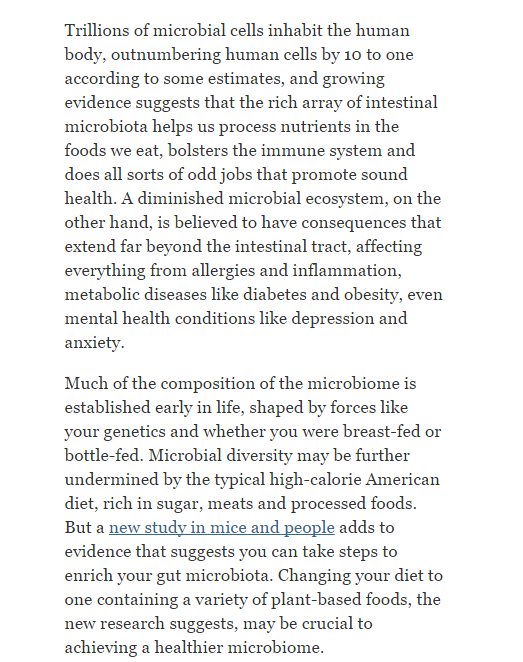
A recent NY Times article reviews a recent study which shows that changes in diet that incorporate more fruits and vegetables appears to create a ‘healthier’ microbiome.

Link: A Gut Makeover for the New Year?

screenshot-8

An excerpt:

screenshot-9

Related article: VJ Martin, MM Leonare, L Fiecntner, A Fasano. J Pediatr 2016; 179: 240-48.This review provides more specific information regarding the microbiome in health and disease.  Specifically, the authors provide data on the relationship of the microbiome to five common pediatric chronic inflammatory conditions: allergic diseases, celiac disease, inflammatory bowel disease, necrotizing enterocolitis, and obesity.

Related blog posts:


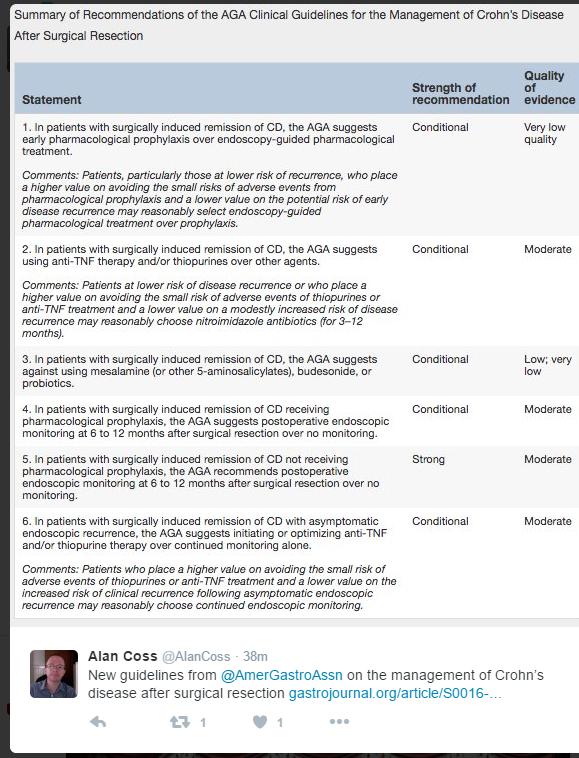
Liver Briefs 2017

Briefly noted:

RJ Fontana et al. Hepatology 2016; 64: 1870-80.  In this study of 681 adults with acute liver failure in U.S., only 3 had detectable anti-HEV IgM and all three were negative for HEV-RNA.  In addition, other putative causes of acute liver failure were present in all three.  My take: Hepatitis E is very rare explanation for acute liver failure in the U.S.

RA Rosencrantz et al. Hepatology 2016; 64: 2253-6. Case report of 2.5 yr old with autoimmune sclerosing cholangitis with Kawasaki disease. This was a well-described case with MRCP and liver histology. My take: In patients with Kawasaki with protracted liver disease, another etiology to consider.

Related blog posts:

St Maarten

St Maarten

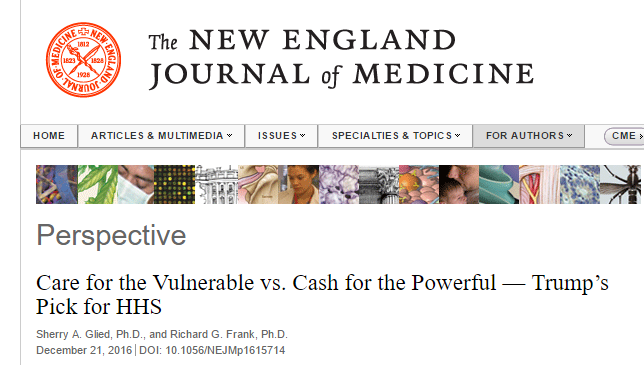
NEJM Critique of the HHS Pick: Forsakes Tradition of Looking Out for Vulnerable

A recent NEJM commentary reviews Dr. Tom Price’s congressional record and the implications for his impending appointment to head HHS.

Full Text: Care for the Vulnerable vs Cash for the Powerful –Trump’s Pick for HHS

Here’s an excerpt:

Ostensibly, he emphasizes the importance of making our health care system “more responsive and affordable to meet the needs of America’s patients and those who care for them.”4 But as compared with his predecessors’ actions, Price’s record demonstrates less concern for the sick, the poor, and the health of the public and much greater concern for the economic well-being of their physician caregivers…

Price has sponsored legislation that supports making armor-piercing bullets more accessible and opposing regulations on cigars, and he has voted against regulating tobacco as a drug. His voting record shows long-standing opposition to policies aimed at improving access to care for the most vulnerable Americans. In 2007–2008, during the presidency of George W. Bush, he was one of only 47 representatives to vote against the Domenici–Wellstone Mental Health Parity and Addiction Equity Act, which improved coverage for mental health care in private insurance plans. He also voted against funding for combating AIDS, malaria, and tuberculosis; against expansion of the State Children’s Health Insurance Program; and in favor of allowing hospitals to turn away Medicaid and Medicare patients seeking nonemergency care if they could not afford copayments.

Price favors converting Medicare to a premium-support system and changing the structure of Medicaid to a block grant — policy options that shift financial risk from the federal government to vulnerable populations.

My take: I’m worried that patients who need even basic care may not receive it if the affordable care act is repealed without a backup plan in place.

Related NY Times article discusses Dr. Price: Trump’s Health Secretary Pick Leaves Nation’s Doctors Divided The article discusses the AMA’s endorsement of Dr. Price and how many physicians have countered that the AMA does not speak for them.

screenshot-5