Hepatitis C Prevalence Underestimated

A recent study (BR Edlin et al. Hepatology 2015; 62: 1353-63) provides data suggesting that Hepatitis C virus (HCV) infection has been underestimated.

The number most commonly used is derived from the 2003-2010 National Health and Nutrition Examination Survey (NHANES) which showed 3.6 million in the U.S. with antibodies to HCV and 2.7 million currently infected.

The authors performed a systemic review and note that ~1 million people were excluded from this survey including a large number at high risk for HCV: ~500,000 incarcerated people, and 220,000 homeless people.

Based on their analysis, they conclude that “the number of US residents who have been infected with hepatitis C is unknown but is probably at least 4.6 million…and of these, at least 3.5 million… are currently infected.”

Related blog posts:

The Ecology of Microscopic Life in Household Dust

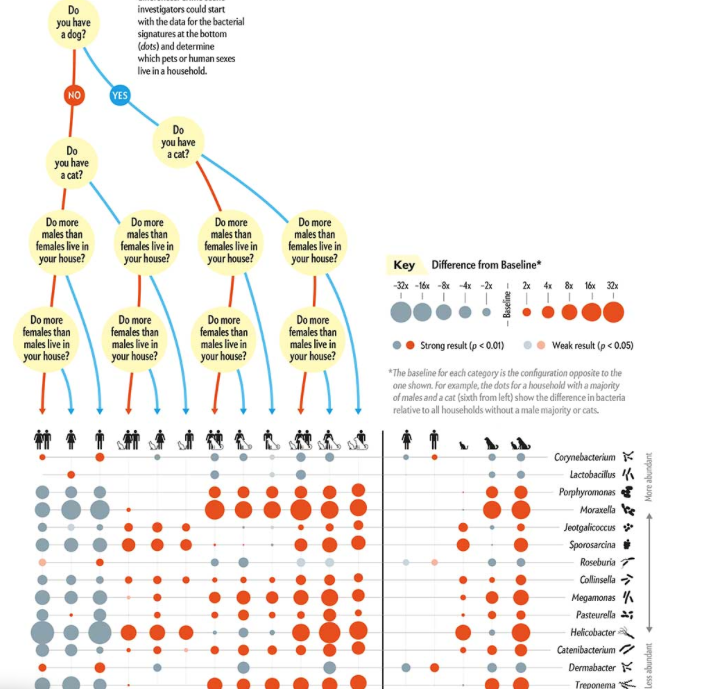
An interesting article about the fungi and bacterial in our households –has implications for our microbiome and for our predilection for allergies: full text: The Ecology of Microscopic Life in Household Dust

Barbera ́n A et al. The ecology of microscopic life in household dust. Proc. R. Soc. B 282: 20151139. http://dx.doi.org/10.1098/rspb.2015.1139 (reference from KT Park’s twitter feed)

Screen Shot 2015-11-22 at 9.07.00 AM

This article was summarized in by Mark Fischetti in Scientific American: full text: Men and Women Alter a Home’s Bacteria Differently

Screen Shot 2015-11-22 at 9.15.14 AM

“To biopsy or not to biopsy” –that is the question (for Celiac disease)

First off -thanks to Ben Gold for the following reference and the blog title as well.

  • CM Trovato et al. Am J Gastroenterol 2015; 110: 1485-89.

In this retrospective study (alluded to in a previous post:Celiac Update September 2015 | gutsandgrowth), the researchers examined whether “biopsy-sparing” protocols for symptomatic children with high titers of serum anti-transglutaminase (anti-TTG) antibody levels (>10 times upper limit of normal [ULN]) would be suitable for asymptomatic patients.

Background: In 2012, the European Society for Pediatric Gastroenterology Hepatology and Nutrition (ESPGHAN) published guidelines that it is possible to omit endoscopic biopsies for celiac disease if patients older than 2 years of age had high anti-TTG titers (>10 times ULN), positivity for EMA, compatible HLA DQ2 or HLA DQ8 and were symptomatic.

Findings:

  • Among 196 patients, the 40 who were asymptomatic had severe Marsh lesions (3a, 3b, or 3c) in 92% compared with 91% of 156 who were symptomatic. In both groups, the remaining patients had either Marsh 1 or 2 lesions.
  • 94.4% of patients had improved serology during followup along with symptomatic improvement (in those with symptoms)

Bottomline:  Whether symptomatic or not, those with high antiTTG titers who meet all of the other ESPGHAN criteria have a very high probability of celiac disease.

Briefly noted: K Marild et al. Am J Gastroenterol 2015; 110: 1475-84. This study, based on a large prospective Norwegian cohort (72,921 children) that frequent infections (>10) in the first 18 months of life increased the risk of celiac disease with an adjusted odds ratio of 1.32 (highest infection quartile compared to lowest infection quartile).  However, alternative explanations, including surveillance bias and reverse causation, cannot be excluded.

Related blog posts:


The Science Behind IBS Dietary Interventions

A succinct review (BE Lacy. Clin Gastroenterol Hepatol 2015; 13: 1899-1906) reviews the topic of dietary interventions for irritable bowel syndrome (IBS).

Here are some of the points:

  • “True food allergies are present in 1% to 4% of the US population, but are not more prevalent in IBS patients.”
  • One study found that “more than 1 in 4 patients with self-reported NCGS [nonceliac gluten sensitivity] actually fulfill the diagnosis.”  In other words, most patients with self-reported NCGS do not have NCGS.
  • “The prevalence of lactase deficiency is similar, or slightly higher, in IBS patients compared with healthy subjects; however, the self-reporting of symptoms attributed to lactose intolerance is not reliable.”
  • Potential mechanisms of food triggering GI symptoms were discussed, including intestinal permeability, visceral hypersensitivity, small intestine bacterial overgrowth, and gut microbiome.

Another article which covers the same topic: PR Gibson et al. Gastroenterol 2015; 148: 1158-74.


Which Diet is Best for Irritable Bowel Syndrome?

As noted in this blog previously, there has been increasing evidence that a low FODMAPs (fermentable oligo-, di-, monosaccharides and polyols) diet is an effective option for irritable bowel syndrome (IBS) in adults and children. Now, a study (L Bohn et al. Gastroenterol 2015; 149: 1399-1407) directly compares a low FODMAPs diet with an IBS diet in a multicenter, parallel, single-blind study of 75 patients (adults) with Rome III criteria for IBS.

The comparison IBS diet recommended regular meal patterns, avoidance of large meals, reduced intake of fat and reduced insoluble fibers, caffeine, and gas-producing foods, such as beans, cabbage and onions.  In addition, this diet recommended avoidance of spicy foods, coffee, alcohol, soft drinks, and sweeteners that end with “-ol.” This diet has been recommended by the British Dietetic Association and by the National Institute for Health and Care Excellence (NICE).  NICE Guidelines for IBS

Key findings:

  • 67 patients completed the study.  The severity of IBS symptoms improved in both groups (P<.0001) without a difference between the two groups
  • 19 (50%) of low FODMAPs had reductions in IBS severity scores of >50 compared with baseline and 17 patients (46%) in the ‘traditional’ IBS diet group had this degree of improvement.

My take: Diet changes often result in symptom improvement in IBS.  Both of these diets can be recommended in patients with IBS.

Atlanta Sky

Atlanta Sky

The Story Behind a 30 Year Esophagitis Study

A recent retrospective study ( SS Baker et al. JPGN 2015; 61: 538-40) reported on changes in esophagitis over a 30 year period at one center.  While the authors focus on the fluctuating percentage of esophagitis noted during three periods, in my opinion, they miss the opportunity to discuss more relevant findings.

Specifically, the authors note the following:

  • From 1980-88 (n=186 over 8 years) that 26.9% had esophagitis and 4.8% had >15 eos/hpf.  Normal pathology in the esophagus was noted in 73.1%.
  • From 2000-2002 (n=321 over 2 years), 41.2% had esophagitis and 8.5% had >15 eos/hpf.  Normal pathology in the esophagus was noted in 58.8%.
  • In the most recent period, 2011, (n=675 over 1 year), 31%* had esophagitis and 12.7% had >15 eos/hpf.  Normal pathology in the esophagus was noted in 69%.     *erroneously reported as 33%

What is baffling to me are the following:

  • Why the authors assert that there has been a fluctuating prevalence.  In absolute terms, the increase in cases is marked, though one can argue that in earlier periods there may have been many undiagnosed cases.
  • Why the authors do not comment on the tremendous increase in the use of endoscopy in their discussion.  In the first period, they were averaging ~23/year, the second period ~95/year and in the most recent period, they performed 675 in one year.

My take: This study shows that esophageal eosinophilia has been present for a long time and that identification of cases has increased considerably over 32 years.  In addition, the use of endoscopy has increased markedly, yet the yield of abnormal findings remains similar.

Briefly noted: C Menard-Katcher et al. JPGN 2015; 61: 541-46.  This retrospective study of 22 children showed that 55% had esophageal strictures identified by esophagram but not endoscopy.

Related blog posts:

Bamboo

Eosinophilic Esophagitis Review -NEJM

Good review:  Glenn T. Furuta, M.D., and David A. Katzka, M.D. N Engl J Med 2015; 373:1640-1648

A couple pointers from this review:

  • Estimated prevalence of eosinophilic esophagitis (EoE) 0.4% in Western countries.  Symptoms are often underestimated due to patient ‘accommodation’ which includes eating slowly/carefully, drinking a lot of liquids and avoiding items more prone to become lodged (meats, pills, breads)
  • Pathogenesis: “Birth by cesarean section, premature delivery, antibiotic exposure during infancy, food allergy, lack of breast-feeding, and living in an area of lower population density have all been associated with eosinophilic esophagitis.”
  • Impaired barrier function and enhanced the activity play a role in pathogenesis
  • Food allergy is a non-IgE-mediated process.  Omalizumab, an anti-IgE biologic, is ineffective in EoE and EoE can develop in IgE-null mice
  • Male predominance (3:1) suggests that there is a genetic component.
Esophagus with ringed appearance, furrowing, and loss of vascular markings

Esophagus with ringed appearance, furrowing, and loss of vascular markings

Another useful reference on Eosinophilic Gastritis in Children: Am J Gastroenterol 2014; 109; 1277-85.  This article provides data on clinical and histologic remission with eosinophilic gastritis (>70 eos/hpf), n=30 children.  “Response to dietary restriction was high” (82% clinical, 78% histologic response) Thanks to Seth Marcus for this reference.

Related blog posts:

NY Times: End the Gun Epidemic in America

Full link: End the Gun Epidemic in America.  This editorial published on A1 in the Dec. 5 edition of The New York Times. It is the first time an editorial has appeared on the front page since 1920.

An excerpt:

It is a moral outrage and a national disgrace that civilians can legally purchase weapons designed specifically to kill people with brutal speed and efficiency. These are weapons of war, barely modified and deliberately marketed as tools of macho vigilantism and even insurrection. America’s elected leaders offer prayers for gun victims and then, callously and without fear of consequence, reject the most basic restrictions on weapons of mass killing, as they did on Thursday. They distract us with arguments about the word terrorism. Let’s be clear: These spree killings are all, in their own ways, acts of terrorism.

Related blog posts:

Antibiotics and Growth in India

A recent study (Rogawski ET, et al. J Pediatr 2015; 167: 1096-102) examined a prospective observational cohort of 497 children in India (from “semi-urban slums”).  The authors found that early exposure to antibiotics were not associated with increased or decreased growth.

“There are several potential explanations for the lack of a growth-promoting effect.  Most of the previous studies showing increased weight gain or risk of obesity associated with antibiotics were conducted in high-income countries with Western diets.”

My take: This was a negative study on antibiotics and obesity.  This suggests that the effects of antibiotics with regard to weight gain may be limited and/or modified by diet.

Also noted: Wakamoto H, et al. J Pediatr 2015; 167: 1136-42.  This study showed that Krebs von den Lungen-6 (KL-6) which is abundant on type II alveolar pneumoctyes and respiratory epithelial cells is a fairly good serum biomarker for chronic aspiration in this study of children with severe motor and intellectual disabilities.  Figure 1 shows the distribution of KL-6 among the 37 with aspiration and the 29 without aspiration.  The median in the former was 344 vs 207 in the later, though there was overlapping results.

Related blog posts:

Sandy Springs

Sandy Springs

“New Math on Drug Cost-Effectiveness”

Competing commentaries on rising drug prices:

  • Bach PB. “New Math on Drug Cost-Effectiveness” NEJM 2015; 373: 1797-99
  • Chin WW. “A Delicate Balance –Pharmaceutical Innovation and Access” NEJM 2015; 373: 199-1801)

Dr. Bach’s commentary focuses on the exorbitant costs of many medications.  His key points:

  • “The rate of introduction of new and expensive drugs has accelerated; the pace of conversion to generics is slowing; the prices of many generics are rising; and expensive drugs are now being introduced for conditions that affect millions of people rather than thousands.”
  • “Drug prices are increasing more rapidly than their benefits.”

Dr. Chin counters that there have been more than 500 new medications that have been approved in the United States since 2000.

  • “The United States relies on competitive markets to set prices and encourage innovation —a system that, as I see it, is working well.”
  • “The…hepatitis C medications, with cure rates above 90% are a good case study: within a year, competing medications entered the market, driving down prices by about half.”
  • “Any centralized government-purchasing model would probably result in drastically limited choices for physicians and patients.”

Another “must-read” on this topic comes from Ezekiel Emmanuel & the NY Times: I Am Paying for Your Expensive Medicine  Here’s an excerpt:

In July, the Food and Drug Administration approved the first of two new PCSK9 inhibitors that lower the bad type of cholesterol, LDL. Studiessuggest that they can reduce it by up to 60 percent, … and reduce it up to 36 percent more than statins… However, there are no definitive data on how much these drugs actually reduce heart attacks, strokes and deaths from heart disease…the retail price for a prescription would be more than $14,000 per patient per year. The price is particularly steep given that these drugs may need to be taken for the rest of the patients’ lives. How much patients pay directly would depend on their insurance plan….even if the price came down to about $11,000 per patient per year, and only 1.1 million of the roughly 23 million middle-age Americans with high cholesterol actually took these drugs, the bill would be so high that for a typical insurance plan, “annual insurance premiums would increase by $124 for every person” in the insurance plan…

As the PCSK9 story is making clear, the drug cost debate is now beginning to focus on two questions that are currently unresolved: First, how do we determine value so the perspectives of all Americans are considered? Second, how do we implement and enforce that determination of value?…

Many people hope that the drug industry will self-regulate, using value-based pricing of its new drugs. But if past experience is any indication of future behavior, self-regulation may be a pipe dream. 

My take: I don’t agree with Dr. Chin that our system has the right balance at this time, though he is right that too much interference could slow innovation.  In my view, recent high-profile excesses by pharmaceutical companies have strengthened the argument for more government intervention.

Morning in Sandy Springs


Morning in Sandy Springs