M Fischer et al. Clin Gastroenterol Hepatol 2026; 24: 2359-2369. AGA Clinical Practice Update on Management of Clostridioides difficile Infection in Adults: Expert Review
This article provides 14 “Best Practice Advice” statements. Since this is geared to adults, some are not applicable for the pediatric age group. I have highlighted five of them:
- #4: Fidaxomicin (200 mg twice daily oral for 10 days) is a narrower spectrum agent, and given lower recurrence rates, is favored as first-line therapy for nonfulminant C difficile infection. However, given practical considerations, vancomycin (125 mg 4 times daily oral for 10 days) is also acceptable therapy. Metronidazole should not be used outside of fulminant disease.
- #6: Following treatment of C difficile infection, clinicians should not perform routine test of cure. Stool testing should only be performed for persistent worsening of diarrheal symptoms.
- #9: Prolonged, low dose, suppressive vancomycin regimen (125 mg daily) for secondary prophylaxis may be considered in patients with multiple recurrent episodes who are not candidates for fecal microbiota-based therapies due to ongoing comorbidities, limited life expectancy, or ongoing/frequent systemic antibiotics or who have failed multiple courses of fecal microbiota-based therapy.
- #10: Fulminant C difficile infection should be managed by a multidisciplinary team (gastroenterology/infectious disease, surgery, medicine/critical care) and treated with high-dose vancomycin 500 mg every 6 hours (oral or enteral), with metronidazole 500 mg intravenously every 8 hours, and if ileus is present, rectal vancomycin 500 mg every 6 hours should be added.
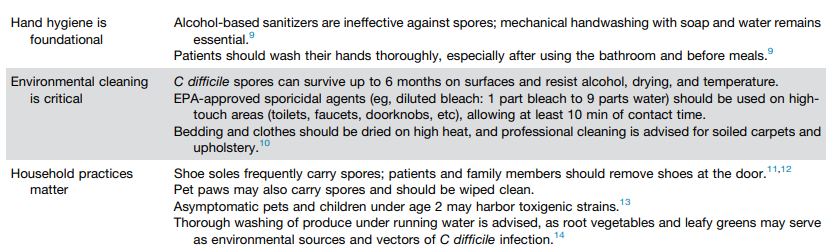
- #12: Use of vancomycin is not advised during systemic antibiotic administration to prevent C difficile infection. Probiotics are not advised to prevent an initial or recurrent C difficile infection. To promote restoration of healthy gut microbiota, patients should be instructed to consume a healthy diet including a variety of fruits and vegetables, rich in both soluble and insoluble fiber. ” Although some guidelines suggest OVP in high-risk patients, these recommendations were conditional and based on low-quality evidence.20“
For recurrent CDI, “experts recommend treating a first recurrence with an agent different from that used initially.” One option discussed by authors and in the treatment algorithms (Figure 2) includes use of a vancomycin taper. After a course of vancomycin 125 mg QID x 14 days, a typical taper would be BID x 14 days, then daily x 14 days, then every 3rd day x 14 days. An alternative is a fidaxomicin EXTEND (200 mg BID days 1-5, then every other day, days 7-25 days.
My take: This is a useful reminder of current best practices for C diff infection (in adults). Updated guidelines in pediatrics would be helpful.
Related blog posts:
- Dr. Stacy Kahn: Clostridioides difficile 2026
- AGA Clinical Practice Update: Clostridioides difficile Infection in Inflammatory Bowel Disease
- Discordant Clostridiodes difficile Testing In Patients with Inflammatory Bowel Disease
- Breaking Down the New mRNA Vaccine for C. difficile
- Clostridioides difficile Treatment in 2026
- Fidaxomicin Treatment of Clostridioides difficile in Children and Adolescents
- C difficile three-fer: Overdiagnosis with Multiplex Testing, Fidaxomicin Pediatric Approval, & Changing Incidence
- “Diagnostic Stewardship” –Reducing Unnecessary Clostridioides difficile Treatment by Changing Testing Approach (2024)
- OpenBiome Suspending FMT Shipments (2024)
- ACG Clostridium Difficile Guidelines Plus One (2021)
Disclaimer: This blog, gutsandgrowth, assumes no responsibility for any use or operation of any method, product, instruction, concept or idea contained in the material herein or for any injury or damage to persons or property (whether products liability, negligence or otherwise) resulting from such use or operation. These blog posts are for educational purposes only. Specific dosing of medications (along with potential adverse effects) should be confirmed by prescribing physician. Because of rapid advances in the medical sciences, the gutsandgrowth blog cautions that independent verification should be made of diagnosis and drug dosages. The reader is solely responsible for the conduct of any suggested test or procedure. This content is not a substitute for medical advice, diagnosis or treatment provided by a qualified healthcare provider. Always seek the advice of your physician or other qualified health provider with any questions you may have regarding a condition.