How Procedure Volume Affects Pediatric Colonoscopy Success Rates

J Huang et al. J Pediatr Gastroenterol Nutr. 2025;81:1488–1495. Open Access! Numbers matter: How pediatric endoscopy quality varies with annual procedural volume

In this retrospective study with 985 ileocolonoscopies (2021-2024):

Methods:  “Quality indicators were compared across groups using Kruskal–Wallis analyses. Multivariate modeling was performed to identify variables predicting terminal ileal intubation and TIIR ≥ 85%.”

Key findings:

  • Overall ileal intubation rate (TIIR) and cecal intubation rate (CIR) were 86.3% and 91.6%, respectively
  • Annual procedure volume ( APV ≥ 40) was identified as predictive for TIIR ≥ 85% (p < 0.01)
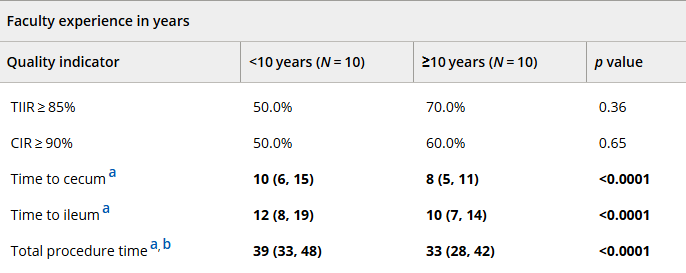
  • Faculty years’ experience (≥10 vs. <10 years) predicted shorter procedure duration (adjusted hazard ratio [confidence interval]: 1.40)
  • Adequate bowel prep was associated with higher TIIR (901% vs 76.7%), CIR (93.8% vs 86.0%) and shorter duration procedures (34 min vs 41 min)
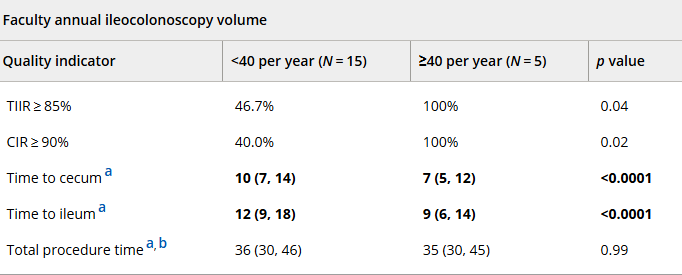
a Presented as median (IQR) in minutes. b Includes only 967 combined esophagogastroduodenoscopy/ileocolonoscopy procedures without multiservice involvement.
Bolded text and numbers reflect results demonstrating statistical significance

My take (borrowed in part from the authors): The authors state that “our findings suggest that a threshold of 40 annual procedures [ileocolonoscopies] is necessary to maintain high pediatric endoscopic quality.” While I agree that adequate procedural volume is helpful, there is a great deal of individual variation/ability. Particularly if the endoscopist has a lower procedural volume, metrics like ileal intubation rate can be useful to assure good quality.

Related blog posts:

ChatGPT for Colonoscopy Questions Plus One

T-C Lee et al. Gastroenterol 2023; 165: 509-511. Open Access! ChatGPT Answers Common Patient Questions About Colonoscopy

In this study, ChatGPT answers to questions about colonoscopy were compared to publicly available webpages of 3 randomly selected hospitals from the top-20 list of the US News & World Report Best Hospitals for Gastroenterology and GI Surgery.

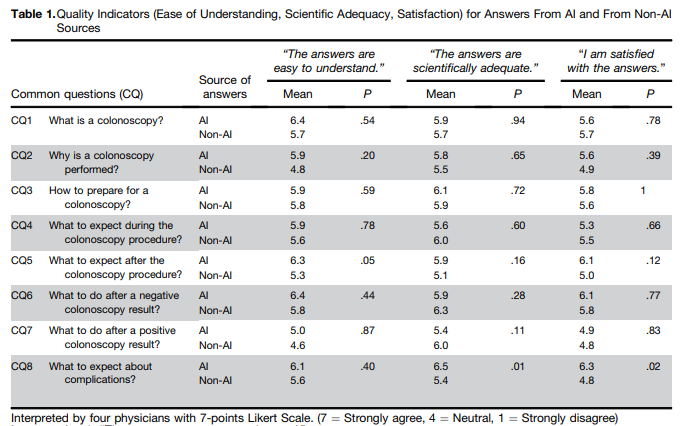
Methods: To objectively interpret the quality of ChatGPT-generated answers, 4 gastroenterologists (2 senior gastroenterologists and 2 fellows) rated 36 pairs of CQs and answers, randomly displayed, for the following quality indicators on a 7-point Likert scale: (1) ease of understanding, (2) scientific adequacy, and (3) satisfaction with the answer (Table 1) Raters were also requested to interpret whether the answers were AI generated or not.

Key findings:

  • ChatGPT answers were similar to non-AI answers, but had higher mean scores with regard to ease of understanding, scientific adequacy, and satisfaction.
  • The physician raters demonstrated only 48% accuracy in identifying ChatGPT generated answers

My take:  This is yet another study, this time focused on gastroenterology, that show how physicians/patients may benefit from leveraging chatbots to improve communication.

Related blog posts:

Also this:

How Much Harder is a Colonoscopy in Children Less Than 6 Years of Age

R Bolia et al. JPGN 2023; 77: 396-400. Characterization of Colonoscopies in Preschool Children

In this retrospective review, among 1671 colonoscopies (2014-2020), 13% (n=219) were in children less than 6 year of age (Median 3.9 yrs). Key findings:

  • Most common indications in preschoolers were rectal bleeding 35% (n = 78), inflammatory bowel disease 24% (n = 53), diarrhea 13% (n = 30), iron-deficiency anemia 11% (n = 25), and abdominal pain 7% (n = 16).
  • Ileal intubation rate (IIR) and cecal intubation rate (CIR) were lower in preschoolers (2 to <6 yrs) compared to older children, 81% vs 92% (P = 0.0001), and 93% vs 96.4% (P = 0.02), respectively, and even lower in those aged <2 years, 48.1% IIR (P = 0.0001) and 85.1% CIR. 
  • Diagnostic yield was highest for rectal bleeding at 41% (32/78) including juvenile polyps in 27. The diagnostic yield was 37% for those with diarrhea (12/30) and 36% (9/25) for those with iron deficiency anemia. Overall, diagnostic yield was 40% (87/219)
  • 10 patients (5% of total and 11.5% of those with abnormalities) had findings limited to right colon and/or ileum; thus, incomplete evaluation would have missed these findings.

The authors suggest modifying the PEnQuIN goal of IIR >/= 85% in young children. However, this is unnecessary as most endoscopists are not separating their cases by age.

My take: This study shows that colonoscopy is often more difficult to complete in younger children. Achieving high IIR improves the yield of colonoscopy. Overall, the findings in this report mirror our experience in which colonoscopy had a diagnostic yield of 42% (in non-folllowup colonoscopies) and findings isolated to ileum were noted in 6% (and additional 4% with grossly normal/abnormal histology).

Related blog posts:

Whispering Spruce Trail, Davis WV
Nelson Rocks, Circleville, WV

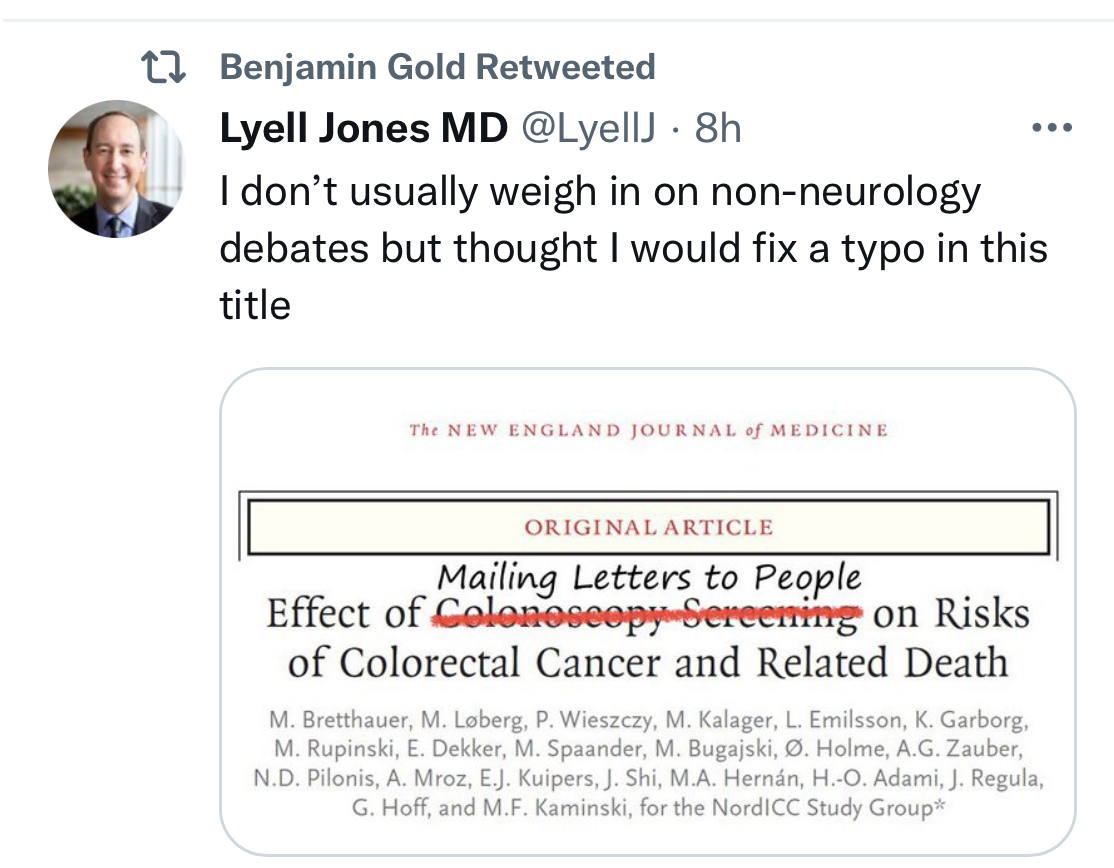
Mailing Letters to People and Risk of Colorectal Cancer

A widely covered news story in October 2022 was the disappointing results/modest benefits of a colonoscopy screening study. This study actually supports the use of colonoscopy to reduce colorectal cancer deaths but shows that typical screening programs may not work well if patients don’t show up for the test.

M Bretthauer et al. NEJM 2022; 387: 1547-1556. Effect of Colonoscopy Screening on Risks of Colorectal Cancer and Related Death

Methods: This was “a pragmatic, randomized trial involving presumptively healthy men and women 55 to 64 years of age drawn from population registries in Poland, Norway, Sweden, and the Netherlands between 2009 and 2014. The participants were randomly assigned in a 1:2 ratio either to receive an invitation to undergo a single screening colonoscopy (the invited group) or to receive no invitation or screening (the usual-care group).”

There were 84,585 participants in Poland, Norway, and Sweden — 28,220 in the invited group,

Key findings:

  • Only 11,843 (42.0%) in the invited group underwent colonoscopy screening
  • During a median follow-up of 10 years, 259 cases of colorectal cancer were diagnosed in the invited group as compared with 622 cases in the usual-care group
  • The risk of colorectal cancer at 10 years was 0.98% in the invited group and 1.20% in the usual-care group, a risk reduction of 18%
  • The risk of death from colorectal cancer was 0.28% in the invited group and 0.31% in the usual-care group (risk ratio, 0.90; 95% CI, 0.64 to 1.16)
  • The risk of death from any cause was 11.03% in the invited group and 11.04% in the usual-care group

If all invited participants had received a colonoscopy, the authors estimate the risk of colorectal cancer would have decreased from 1.22% to 0.84% and the risk of colorectal cancer death would have been reduced from 0.3% to 0.15% (a 50% drop).

My take: Colonoscopy as a screening tool only works if it is performed. Given the low response rate for screening, other tools like an annual fecal immunochemical test (FIT) need to be considered as alternatives.

Related blog posts:

How Good is Your Prep?

There are a lot of articles that have been published regarding bowel preparations prior to colonoscopy, especially in adults. One of the key advances has been split-prep dosing, which is not utilized much in the pediatric age group.

Nevertheless, a recent pediatric study (S Kumar et al. JPGN 2021; 73: 325-328. Inadequate Bowel Preparation in Pediatric Colonoscopy—Prospective Study of Potential Causes) shows that inadequate bowel preparation in their prospective cohort (n=334) was less prevalent than that noted from typical adult data. Their bowel preparation assessmetn was based on Boston Bowel Preparation Scale (BBPS).

Key finding: Inadequate bowel preparation (IBP) was noted in 12.8% (41/321); there were no age, gender, obesity, race, or insurance type associated with IBP. (IBP was defined by BBPS <5)

Their preparation instructions:

  • If <25 kg, “119 g of PEG 3350 mixed in 32 oz of sport drink” and then “additional 32 oz of a sports drink without PEG 3350”
  • If 26-49 kg, “238 g of PEG 3350 mixed with 64 ounces of fluids” and then “additional 64 oz of a sports drink without PEG 3350”
  • If >50 kg, “238 g of PEG 3350 mixed with 64 ounces of fluids” and then “64 ounces of a sports drink and four bisacodyl tablets”

My take: If you are seeing a high rate of IBP, the prep instructions in this study could be replicated (given their good results), split preps could be given for teens, and better instructions (visual aids) could be needed.

Related blog posts:

Splatter Paint Studio (on the beltline)

Disclaimer: This blog, gutsandgrowth, assumes no responsibility for any use or operation of any method, product, instruction, concept or idea contained in the material herein or for any injury or damage to persons or property (whether products liability, negligence or otherwise) resulting from such use or operation. These blog posts are for educational purposes only. Specific dosing of medications (along with potential adverse effects) should be confirmed by prescribing physician.  Because of rapid advances in the medical sciences, the gutsandgrowth blog cautions that independent verification should be made of diagnosis and drug dosages. The reader is solely responsible for the conduct of any suggested test or procedure.  This content is not a substitute for medical advice, diagnosis or treatment provided by a qualified healthcare provider. Always seek the advice of your physician or other qualified health provider with any questions you may have regarding a condition.

Clinical Remission: Trust But Verify

A recent study reminded me of the slogan ‘trust but verify.’ This slogan was popularized by Ronald Reagan in nuclear disarmament talks with the U.S.S.R. In contrast, C Sarbagili-Shabat et al (JPGN 2021; 72: 569-573. Moderate-to-severe Endoscopic Inflammation is Frequent After Clinical Remission in Pediatric Ulcerative Colitis) discuss the issue of clinical remission in ulcerative colitis.

This study  prospectively assessed for mucosal healing by endoscopy 3 to 5 months after clinical remission, PUCAI <10, was documented. Key findings:

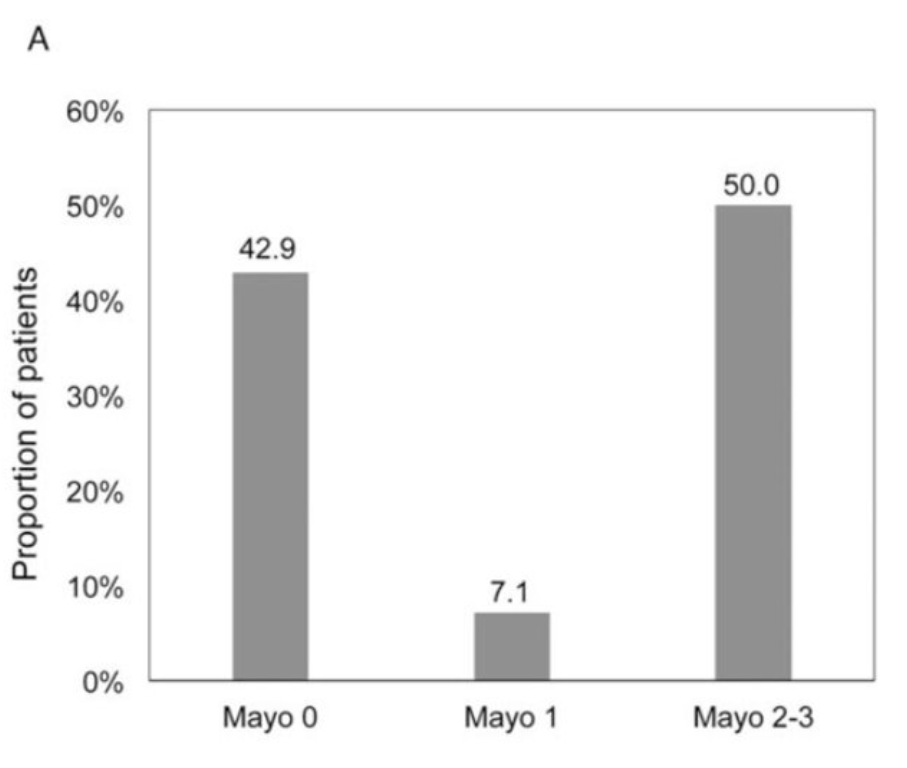
  • 28 children in continuous clinical remission at time of sigmoidoscopy were included. Mayo 0 was present in 12/28 (43%), Mayo 1 in 2/28 (7%) and Mayo 2 to 3 in 14/28 (50%) endoscopies.
  • Among 23 patients with follow-up through 18 months, remission was sustained in 6/12 (50%) with Mayo score 0 to 1 versus 2/11 (18%) of patients with Mayo 2 and 3
  • 16 (57%) of the patients were receiving 5-ASA treatment

It would have been helpful to have calprotectin values as well. In their discussion, the authors note that “a normal calprotectin is quite convincing with regard to endoscopic remission” and ECCO ESPGHAN guidelines “provide guidance that a colonoscopy should only be performed if fecal calprotectin” is >250 mcg/g.

My take: Clinical remission in ulcerative colitis should be verified. It is reasonable to start with a fecal calprotectin and if elevated to proceed with endoscopic evaluation (colonoscopy or sigmoidoscopy).

Also: new therapy for Crohn’s disease with favorable phase III study. From Pharmacy Times: Risankizumab (Skyrizi) Demonstrates Significant Improvements In Patients with Crohn Disease Two studies, ADVANCE and MOTIVATE showed similar results for Crohn’s disease. In the ADVANCE study: “40% of patients receiving 600 mg, and 32% of patients receiving 1200 mg achieved endoscopic response at week 12, compared to 12% in the placebo group.” In the MOTIVATE study, “29% and 34% of patients receiving 600 mg and 1200 mg achieved endoscopic response, respectively, compared to 11% in the placebo group.”

Related blog posts:

Results in population with reported clinical remission (Sarbagili-Shabat et al JPGN 2021; 72: 569-573)

Diagnostic Strategy For Children with Diarrhea and Abdominal Pain

A recent study (E Van de Vijver et al. Pediatrics 2020; 146: e20192235) shows a logical approach for testing children with diarrhea and abdominal pain.

Abstract and video abstract link: Test Strategies to Predict Inflammatory Bowel Disease Among Children With Nonbloody Diarrhea

Methods:

  • Prospective cohort study: n=193, 6 to 18 years who underwent a standardized diagnostic workup.
  • Patients with rectal bleeding or perianal disease were excluded because the presence of these findings prompted endoscopy regardless of their biomarkers.
  • In addition to symptoms, objective measures included C-reactive protein (>10 mg/L), hemoglobin (<−2 SD for age and sex), and fecal calprotectin (≥250 μg/g).

Key findings:

  • Twenty-two of 193 (11%) children had IBD
  • “Triaging with a strategy that involves symptoms, blood markers, and calprotectin will result in 14 of 100 patients being exposed to endoscopy. Three of them will not have IBD, and no IBD-affected child will be missed.

My take: The approach advocated by the authors of reserving a diagnostic endoscopy for children at high risk for IBD based on stool tests/blood tests in addition to symptoms has merit.  I would add a couple caveats:

  1. In this population, I would recommend checking for celiac disease (eg. tissue tranglutaminase IgA antibody, serum IgA level)
  2. I think in individuals with ‘borderline’ elevations of calprotectin (50-250 μg/g), followup testing is needed and if remains persistently elevated, then ileocolonoscopy is likely warranted.  (Calprotectin values in younger children tend to be higher -so this approach is best suited in children >5 years of age)

Related blog posts:

“Sub-10-minute High-quality Diagnostic Colonoscopy”

Like the last two days, this post addresses “high quality” colonoscopy…

A recent report (M Thomson et al. JPGN 2019: 69: 6-12) describes quicker pediatric colonoscopy times than previously reported and with 100% rate of ileal intubation.

In this report, there were 181 colonoscopies.

Time of colonoscopy:

  • The authors emphasize the fact that their mean time to the terminal ileum was 9.8 minutes.  Their good technical skill is probably related in part to experience: all 6 endoscopists had more than 10 years of experience (mean 19 years) and more than a thousand prior colonoscopies each.

Ileal Intubation Rate:

  • The 100% ileal intubation rate similarly indicates good technical skill.  It may indicate that their patient population was healthier as ileal structuring (which can prevent ileal intubation) can be noted in patients with Crohn’s disease.

Low Diagnostic Yield:

  • In my view, the study reports a low diagnostic yield.  They report 33% had abnormal histology (when excluding patients with IBD followup examinations)
  • 38% of their patients had colonoscopy due to abdominal pain. They reported a yield in this group of only 11.6% though this includes 4 patients with “TI lymphoid hyperplasia.”   Is this an abnormal finding?

My take: This study shows that with good technical skill colonoscopy can be done quickly with ileal intubation times averaging 10 minutes and with ileal intubation rates close to 100%.  In my view, another quality metric is diagnostic yield and their yield is lower than has been reported in most pediatric studies.

Related references:

  • K Siau et al. JPGN 2019; 69: 18-23.  This study describes “Direct Observation of Procedural Skills” (DOPS). Among 29 trainees, 81% of DOPS were rate competent after 125-140 procedures.
  • MT Barakat et al. JPGN 2019; 69: 24-31. This study noted that the vast majority of pediatric GI centers (>90%) were performing less than 25 ERCPs annually and that >70% “believe their institution’s current arrangement for performing pediatric therapeutic endoscopy is inadequate.”

Quality Metrics in Pediatric Colonoscopy
Continuing the theme from yesterday’s post…

Because of similar research in our group, I was interested in a recent study looking at pediatric colonoscopy quality indicators: CS Pasquarella et al.. JPGN 2019; 68: 648-54. (Editorial: CG Sauer, CM Walsh. JPGN 2019; 607-08.)

The authors analyzed 391 colonoscopies.

Key findings:

  • Ileal intubation rate of 91% (which is similar to our rate)
  • Ileal intubation rate was greater in their endoscopy suite where assistance was readily available.
  • Time for procedure: 34 minutes with staff alone compared to 42 minutes with a fellow trainee participant

To this point, we have not collected data on procedure duration at our institution –though 34 minutes seemed longer than I expected.

The authors also comment on cecal intubation.  I find this statistic to be less useful in pediatrics than adult medicine.  Reaching the cecum is important in cancer screening whereas reaching the ileum is important in identifying cases of inflammatory bowel disease.  The former is the main focus in adult gastroenterology and the latter is the main focus in pediatric gastroenterology.

My take: The editorial notes that “endoscopic providers and users can only know whether high-quality care is being delivered if it is being measured.”  I do think ileal intubation is important but other measures include good prep, low complication rate, appropriate patient selection (eg. good indication), and careful followup. Our work in this area will be presented at our upcoming NASPGHAN meeting–stay tuned.

Related blog posts:

Sagrad Familia, Barcelona


Colonoscopy and Isolated Abdominal Pain = Low Value Care

A recent study (HK Singh, LC Ee. JPGN 2019; 68: 214-7) reviewed a single center’s colonoscopy data (n=652) from 2011-15 with a focus on patients who underwent this procedure for abdominal pain.

Key findings:

  • Only 15 patients had isolated abdominal pain as an indication. In total 68 patients had abdominal pain as an indication but the majority had other ‘red flags’ such as rectal bleeding, family history of IBD or polyposis, weight loss, anemia, food allergy, or altered bowel habits
  • None of these 15 patients with isolated abdominal pain had organic disease
  • Among 36 patients with a measured fecal calprotectin and abdominal pain, all with elevated levels had positive histologic findings.
  • The ileal intubation rate/biopsy rate was 92.4%

I was particularly interested in this study because our group has reviewed our clinical experience in a large cohort undergoing outpatient colonoscopy (findings will be presented this fall).  Our group has a similar ileal intubation rate and a low rate of organic disease in those with isolated abdominal pain.

My take: More efforts are needed to carefully select pediatric patients undergoing endoscopy to minimize low value procedures.

Related blog posts:

Georgia Aquarium