

Tag Archives: COVID-19
1st Cases of COVID-19 in Pediatric Inflammatory Bowel Disease –All Mild
A recent case series, D Turner et al. JPGN June 2020 – Volume 70 – Issue 6 – p 727-733 doi: 10.1097/MPG.0000000000002729: Full text: Corona Virus Disease 2019 and Paediatric Inflammatory Bowel Diseases
- Eight PIBD children had COVID-19 globally, all with mild infection without needing hospitalization despite treatment with immunomodulators and/or biologics. ..
- Preliminary data for PIBD patients during COVID-19 outbreak are reassuring. Standard IBD treatments including biologics should continue at present through the pandemic, especially in children who generally have more severe IBD course on one hand, and milder SARS-CoV-2 infection on the other.


Related blog posts:
Need/Benefit of Widespread Use of Masks
NPR interview (5 minutes) with Atul Gawande: How The Widespread Mask Use Could Slow The Coronavirus Pandemic
“NPR’s Mary Louise Kelly talks with Dr. Atul Gawande, a staff writer for the New Yorker, about the efficacy of different face masks and why masks remain essential in dealing with the coronavirus”
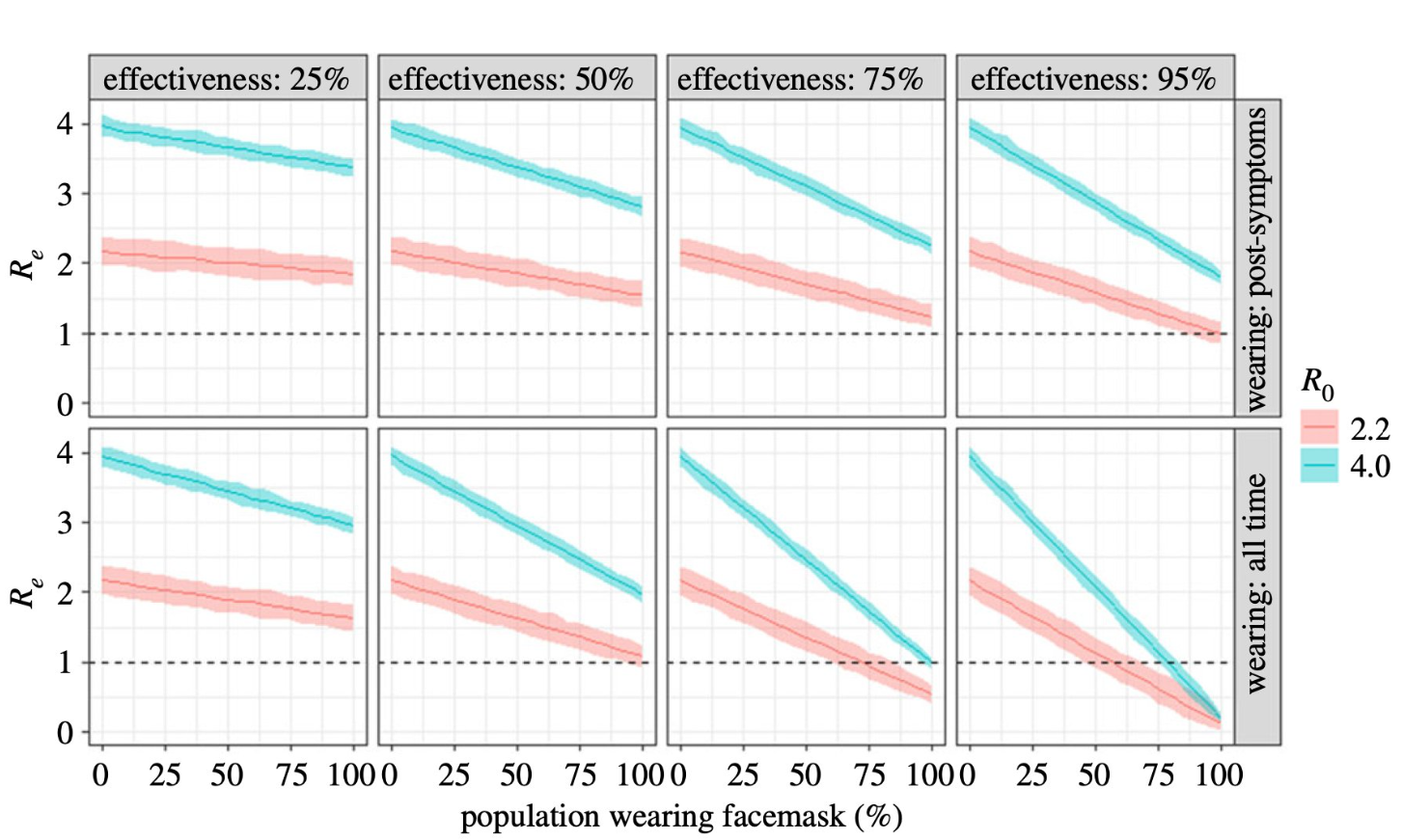
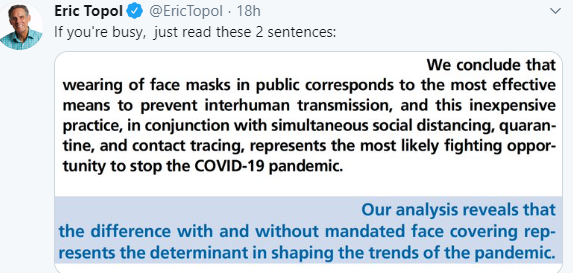
Proceedings of the Royal Society A. Published:10 June 2020 https://doi.org/10.1098/rspa.2020.0376 Full Text Link: A modelling framework to assess the likely effectiveness of facemasks in combination with ‘lock-down’ in managing the COVID-19 pandemic
Related blog posts:
- NY Times: Japan’s Secret Success with Coronavirus
- @Atul_Gawande: How to Reopen
- Is It Safe for Me to Go to Work? | gutsandgrowth
- High Risk Workers Need N-95 Masks
NY Times: Japan’s Secret Success with Coronavirus
NY Times: Is the Secret to Japan’s Virus Success Right in Front of Its Face?
An excerpt:
In America, masks have become a weapon in the culture wars. In Japan, wearing one is no big deal, and deaths have stayed low…
Face coverings are nothing new here….
Yet a feared spike in cases and deaths has not materialized. Japan has reported more than 17,000 infections and just over 900 deaths, while the United States, with a population roughly two and a half times as large, is approaching 1.9 million cases and 110,000 deaths.
“Japan, I think a lot of people agree, kind of did everything wrong, with poor social distancing, karaoke bars still open and public transit packed near the zone where the worst outbreaks were happening,” Jeremy Howard, a researcher at the University of San Francisco who has studied the use of masks, said of the country’s early response. “But the one thing that Japan did right was masks.”…
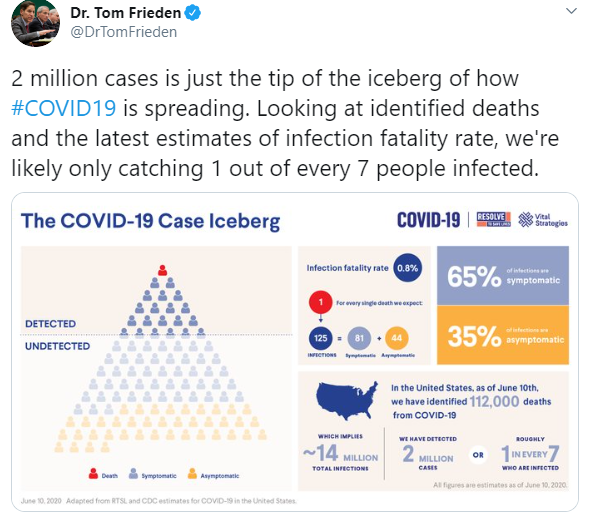
The scientific evidence on whether a mask protects the wearer from infection is mixed. But experiments show that masks can be effective in blocking the emission of respiratory droplets that may contain the virus, even when someone has no symptoms of illness. And there is some evidence that infected people with no symptoms can still transmit the coronavirus.
Related blog posts:
- High Risk Workers Need N95 Masks
- @Atul_Gawande: How to Reopen
- How to Protect Healthcare Workers from COVID-19: Lessons from Hong Kong and Singapore
- Nationwide Coronavirus Data Skewed & More on Masks | gutsandgrowth
- Is It Safe for Me to Go to Work? | gutsandgrowth
- COVID-19 Posts

Huntingdon Lake, Sandy Springs (no image filters used)

COVID-19 Retractions
Two recent retractions indicate why multiple studies and careful analysis are often necessary to draw definitive conclusions, even from the most respected journals.
- NEJM: Retraction: Cardiovascular Disease, Drug Therapy, and Mortality in Covid-19. N Engl J Med. DOI: 10.1056/NEJMoa2007621. Link to original article: Cardiovascular Disease, Drug Therapy, and Mortality in Covid-19
- Lancet: Retraction—Hydroxychloroquine or chloroquine with or without a macrolide for treatment of COVID-19: a multinational registry analysis Original study: Hydroxychloroquine or chloroquine with or without a macrolide for treatment of COVID-19: a multinational registry analysis

High Risk Workers Need N95 Masks
NY Times article that summarized recent Lancet study: Medical Workers Should Use Respirator Masks, Not Surgical Masks
Original Lancet Study (DK Chu et al. June 1, 2020
https://doi.org/10.1016/S0140-6736(20)31142-9): Physical distancing, face masks, and eye protection to prevent person-to-person transmission of SARS-CoV-2 and
COVID-19: a systematic review and meta-analysis
An excerpt from NY Times article:
The surgical masks used in risky settings like hospitals offer much less protection against the coronavirus, an analysis found…
The results, published on Monday in The Lancet, make it clear that the W.H.O. and the Centers for Disease Control and Prevention should recommend that essential workers like nurses and emergency responders wear N95 masks, not just surgical masks
N95 masks offered 96 percent protection, the analysis found, while the figure for surgical masks was 77 percent. The findings are particularly important as the United States moves to reopen the economy, Dr. Michaels said…
Workers in health care settings are not the only ones at high risk of coronavirus infection: employees in meatpacking plants and some farms are all also at high risk of coronavirus infection and could benefit from N95 masks..
The new analysis also suggests that covering the eyes with face shields, goggles and glasses may provide additional safeguards for health care workers and people in the community.
Related blog posts:
- @Atul_Gawande: How to Reopen
- How to Protect Healthcare Workers from COVID-19: Lessons from Hong Kong and Singapore
- Nationwide Coronavirus Data Skewed & More on Masks | gutsandgrowth
- Is It Safe for Me to Go to Work? | gutsandgrowth
- COVID-19 Posts


Liver Shorts -May 2020 & CDC Recommendations for Office (NY Times Summary)
NY Times: C.D.C. Recommends Sweeping Changes to American Offices

FDA Approves Hepatitis C Pangenomic Treatment for Children (Mar 19, 2020):
The U.S. Food and Drug Administration today approved a supplemental application for Epclusa (sofosbuvir and velpatasvir) to treat hepatitis C virus (HCV) in children ages 6 years and older or weighing at least 37 pounds (17 kilograms) with any of the six HCV genotypes—or strains—without cirrhosis (liver disease) or with mild cirrhosis.
Review: NAFLD in China 1999-2018 J Zhou et al. Hepatology 2020; 71: 1851-4.
- NALFD increased by 8-9% in prevalence, to 29.1%. This means there are more than 230 million individuals with NAFLD in China.
Use of HCV-positive donors for liver transplantation to HCV-negative recipients. N Anwar et al. Liver Transplantation 2020; 26: 673-80. Key finding: HCV-positive organs had similar outcomes regarding graft function, patient survival and post-LT complications.
Recent Decline in Hepatocellular Carcinoma Rates in U.S. MS Shiels, TR O’Brien. Gastroenterol 2020; 158: 1503-5. Using SEER-21 population based cancer registries covering 37% of U.S. population, the authors found a recent decline in rates of HCC:
- 2000-2016: 119,078 cases of HCC in SEER-21 registries, 5.84/100,000
- Rates increased b 5.6% per year from 2000-2007, then by 2.7% per year from 2007 to 2013, subsequent rate reached a plateau and declined with drop of 1.4% per year (P=.12)
- Improvement could have been due in part to improvement in viral hepatitis treatment; a less favorable explanation could be that the drop occured due to a death from another cause (eg. non-HCC death due to cirrhosis, opioid-related death
Related blog posts:
- Increasing Incidence of Hepatocellular Carcinoma (2017)
- Risk of HCC in NAFLD patients increasing
- Hepatocellular carcinoma after Fontan Procedure
- Does Screening for Hepatocellular Carcinoma Improve Outcomes in Patients with Cirrhosis?
- Is Tenofovir the Best Medication for Hepatitis B Infection?
Potential Treatment for Nonalcoholic Steatohepatitis N Chalasani et al. Gastroenterol 2020; 158: 1334-45. The study explored the use of Belapectin, an inhibitor of Galectin-3, in patients with nonalcoholic steatohepatitis and cirrhosis. n=162, phase 2 randomized, double-blind study. Key finding: 1 year of every 2 week infusions were safe but not associated with significant reductions in hepatic venous pressure gradient (HVPG) or fibrosis. However, in a subgroup without varices, there was lowered HVPG and lowered risk of new varices.
Treatment Options for Minimal Hepatic Encephalopathy: RK Dhiman et al. Clin Gastroenterol Hepato 2020; 18: 800-12. This meta-analysis which included 25 trials (n=1563) found the following:
- For reversing minimal hepatic encephalopathy (MHE), rifaximin (OR 7.53) and lactulose (OR 5.39) were effective with moderate quality evidence. Probiotics had OR 3.89 and L-ornithine L-aspartate had OR 4.45 —both with low quality evidence.
- For prevention of HE, L-ornithine L-aspartate had OR 0.19 (‘high moderate’ quality), and lactulose had OR 0.22 (moderate quality) were effective. Probiotics had OR 0.27 with low quality evidence.
- The authors conlude that lactulose is the most effective agent for prevention and reversal of MHE.
Related blog posts:
- FMT for Hepatic Encephalopathy
- Probiotics for Hepatic Encephalopathy | gutsandgrowth
- Hepatology Update (Part 2) -Summer 2014 | gutsandgrowth
- Two Shorts -Minimal Hepatic Encephalopathy and Fish Oil Protection | gutsandgrowth

Curbside Humor
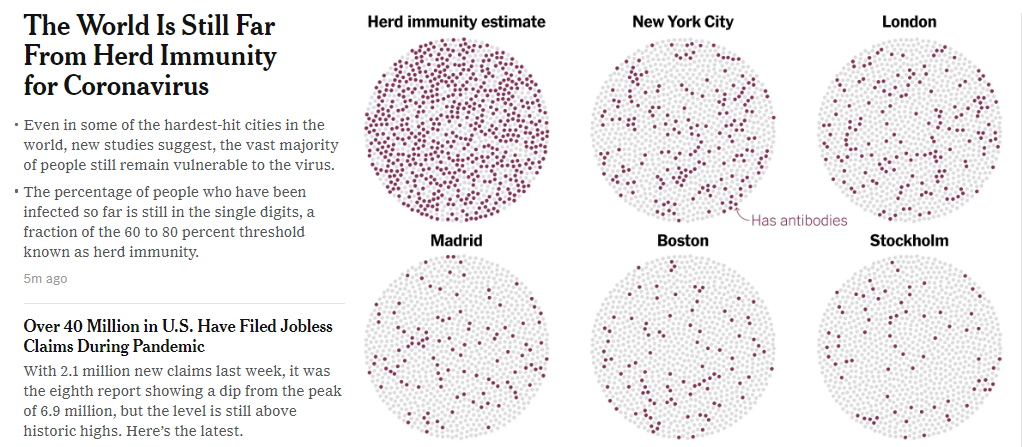
NY Times: Not Close to Herd Immunity
Image
Is It Safe for Me to Go to Work?
Just for fun —YouTube (~3 minute video): The Swish Machine: 70 Step Basketball Trickshot (Rube Goldberg Machine)
Full text —MR Larochelle. DOI: 10.1056/NEJMp2013413. NEJM: Is It Safe for Me to Go to Work?
An excerpt:
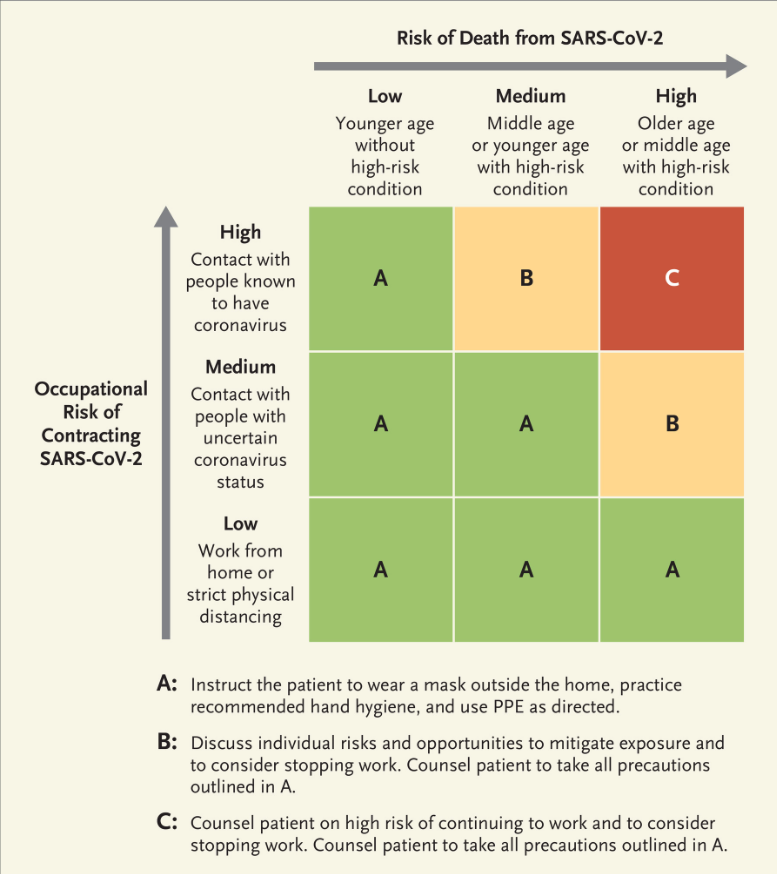
I believe that a strategy to protect at-risk workers needs at least three components: a framework for counseling patients about the risks posed by continuing to work, urgent policy changes to ensure financial protections for people who are kept out of work, and a data-driven plan for safe reentry into the workforce…
The Occupational Safety and Health Administration has published guidance and proposed a scheme for classifying the risk of SARS-CoV-2 infection as high, medium, or low based on potential contact with persons who may or do have the virus (www.osha.gov/Publications/OSHA3990.pdf. opens in new tab). Low-, medium-, and high-risk categories of individual risk of death from Covid-19 are based on age and the presence of high-risk chronic conditions identified by the CDC…
As states move to reopen their economies, millions of nonessential employees will join essential employees in putting themselves at risk for contracting SARS-CoV-2 at work. Physicians should engage patients in individualized risk assessments. Our society has the moral imperative and means to provide vulnerable employees a financial safety net until we can better ensure their workplace safety.
Related blog post: @Atul_Gawande: How to Reopen
“Coronavirus Disease 2019 and the Pediatric Gastroenterologist”
Full Text: KF Murray, BD Gold, R Shamir et al. JPGN 2020; 70: 720-6. Coronavirus Disease 2019 and the Pediatric Gastroenterologist. This article includes CME availability too!
Some excerpts:
- The latest global count updates can be found at: https://www.who.int/emergencies/diseases/novel-coronavirus-2019/situation-reports/.
- SARS-CoV-2 is a positive-sense, single-stranded RNA virus belonging to the genus Betacoronavirus, and phylogenetically related (88%–89% similarity) to the two bat-derived SARS-like coronaviruses, bat-SL-CoVZC45 and bat-SL-CoVZXC21….
- Routine gastroenterology practice poses increased risk of exposure and potential viral transmission during ambulatory interaction, especially during endoscopic procedures…
- The use of telemedicine is now a critical tool for the pediatric gastroenterologists and their patients, whether in the academic setting or private practice…The recently published AAP guideline, entitled Telehealth Payer Policy in Response to COVID-19 (https://downloads.aap.org/DOPA/Telehealth_2_rev.pdf and https://www.aap.org/en-us/professional-resources/practice-transformation/telehealth/Pages/compendium.aspx), which outlines policy changes aiming to alleviate barriers to telehealth care, along with a webinar on telehealth and guidance on structuring your practice during the pandemic are tools that can be employed in both the academic and private practice pediatric gastroenterologist office to facilitate ongoing quality care of their patients
My take: This article provides a concise update and numerous resources. As the information about the coronavirus is rapidly changing, the recommendations will continue to evolve.
Also, JPGN has a large number of articles available on its COVID-19 page: Link: COVID-19 page This page includes articles related to endoscopy, PPE, telemedicine, and central line infections. Also, based on a personal communication, there will be a link to a recently published article soon on “Pediatric Crohn’s Disease and Multisystem Inflammatory Syndrome in Children (MIS-C) and COVID-19 Treated With Infliximab.”(Dolinger M T, Person H, Smith R, et al. Journal of Pediatric Gastroenterology & Nutrition 2020; PMID: 32452979 DOI: 10.1097/MPG.0000000000002809)

 gutsandgrowth