AGA Update: Pre-endoscopy COVID Testing Is Not Needed

Here’s a link: AGA says stay the course, despite the Delta variant

An excerpt:

“AGA suggests against re-instituting routine pre-procedure testing prior to elective endoscopy. The downsides (delays in patient care, burden, inaccurate results) outweigh potential benefits. Infection and transmission of SARS-CoV2 from asymptomatic individuals is rare especially among vaccinated health care workers using personal protective equipment (PPE), even with the emergence of the Delta variant.”

“If PPE is available, AGA recommends using N95 masks” for both upper endoscopy and colonoscopy”

COVID Booster Advice for IBD from Dr. David Rubin (@IBDMD)

On Friday, our office started fielding questions regarding COVID-19 booster shots in our IBD population. Currently, I agree with the advice for patients as detailed by Dr. Rubin in the screenshots that follow. Key points:

  • Studies have shown that IBD patients are not at increased risk of COVID-19 infections compared to the general population. 
  • Except for those on high-dose prednisone, it appears that our patient population with IBD does mount an adequate response to vaccination.  That is, they are not considered severely immunocompromised. 
  • In short, it is reasonable, but not a clear recommendation, to give a booster mRNA vaccine dose to patients who are receiving anti-TNF agents and those receiving immunomodulators; this is a patient choice.

Also, from CDC 8/13/21:

Disclaimer: This blog, gutsandgrowth, assumes no responsibility for any use or operation of any method, product, instruction, concept or idea contained in the material herein or for any injury or damage to persons or property (whether products liability, negligence or otherwise) resulting from such use or operation. These blog posts are for educational purposes only. Specific dosing of medications (along with potential adverse effects) should be confirmed by prescribing physician.  Because of rapid advances in the medical sciences, the gutsandgrowth blog cautions that independent verification should be made of diagnosis and drug dosages. The reader is solely responsible for the conduct of any suggested test or procedure.  This content is not a substitute for medical advice, diagnosis or treatment provided by a qualified healthcare provider. Always seek the advice of your physician or other qualified health provider with any questions you may have regarding a condition.

“What is Biden Waiting For?” & COVID-19 Vaccine Effectiveness for Delta Variant

A good read by Don McNeil Jr: What is Biden Waiting For?

He argues that the federal government needs to do a lot more, including the use of vaccine mandates to control this pandemic.

Some excerpts:

  • Why is this administration so hesitant about saving American lives? And the American economy?….
  • The key to saving lives is vaccine. The key to reopening offices and factories is vaccine. The key to reopening schools is vaccine. The key to keeping bars and restaurants open in cold weather is vaccine. The key to travel and shopping is vaccine. Vaccine in everybody….
  • mRNA vaccines start waning after six months. Israel is already offering booster shots to everyone over 60. We must do the same….We are too fearful of very rare side effects…
  • Why in the world do we not yet have federal vaccine passports? In a land of block-chain currencies, QR code menus, encrypted texts and microchip credit cards, those little CDC-logo flashcards are just pathetic…
  • It’s also time to drop “religious exemptions.” No major religion — not one, from Confucianism to Catholicism — opposes vaccination…
  • We need to treat deliberate disinformation for what it is: a betrayal of the American public.

My take: With the emergence of the Delta variant, it will take a much higher level of vaccination/natural immunity (>95%) to control this pandemic. Vaccination is a much safer strategy than natural immunity (after infections).

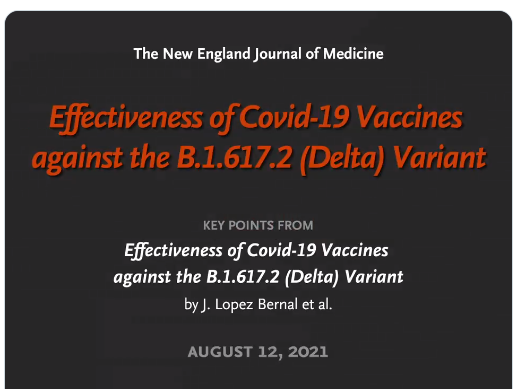
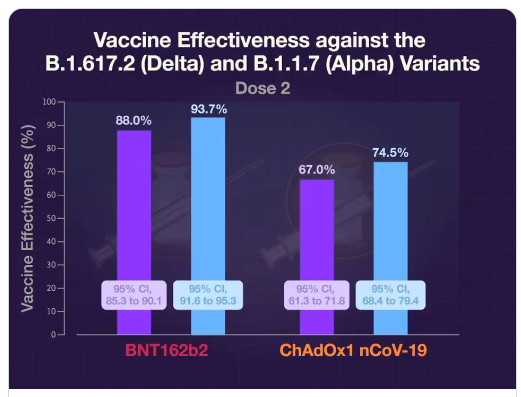
Also, NEJM Quick take: Effectiveness of COVID-19 Vaccines (1:29 min). Pfizer-(BNT162b2) vaccine had 88% effectiveness against Delta variant in England after 2 doses compared to 94% for alpha variant..

Notable COVID Studies Including Persistent Post-COVID Symptoms in Children

COVID-19 Advice from CHOA:

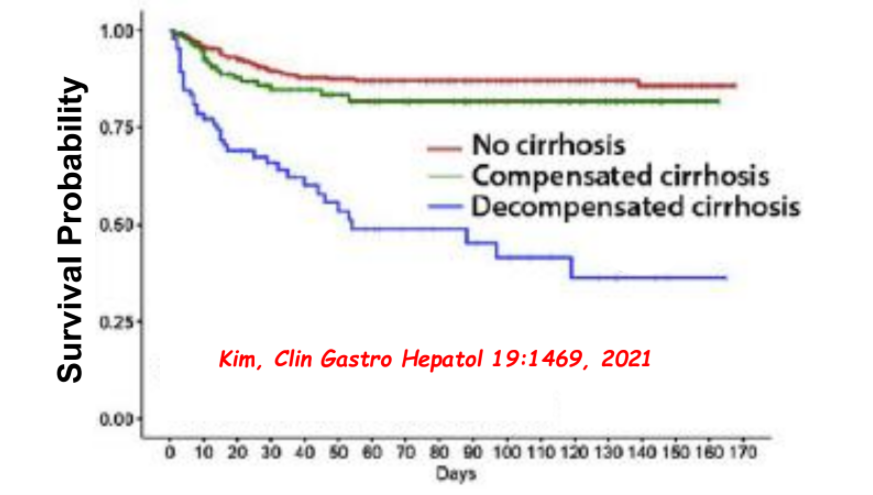
D Kim et al. Clin Gastroenterol Hepatol 2021; 19: 1469-1479. Full text: Predictors of Outcomes of COVID-19 in Patients With Chronic Liver Disease: US Multi-center Study

Key findings:

  • The overall all-cause mortality in this cohort with chronic liver disease was 14.0% (n = 121 of 867), and 61.7% (n = 535) had severe COVID-19
  • Liver-specific factors associated with independent risk of higher overall mortality were alcohol-related liver disease (ALD) (hazard ratio [HR] 2.42), decompensated cirrhosis (HR 2.91) and hepatocellular carcinoma (HCC) (HR 3.31)
  • Related blog post: Aspen Webinar 2021: COVID-19 and the Liver

BK Elmunzer et al (>120 authors!) Clin Gastroenterol Hepatol 2021; 19: 1355-1365. Full text: Digestive Manifestations in Patients Hospitalized With Coronavirus Disease 2019

Key findings:

  • In this cohort with 1992 patients hospitalized with COVID-19, gastrointestinal symptoms and liver test abnormalities were common, but the majority were mild and their presence was not associated with a more severe clinical course: GI symptoms had OR of 0.93 and liver test abnormalities had OR of 1.31 for mechanical ventilation or death.
  • Common GI symptoms: diarrhea (34%), nausea (27%), vomiting (16%), and abdominal pain (11%). 35% of patients developed an abnormal alanine aminotransferase or total bilirubin level; these were increased to less than 5 times the upper limit of normal in 77% of cases.

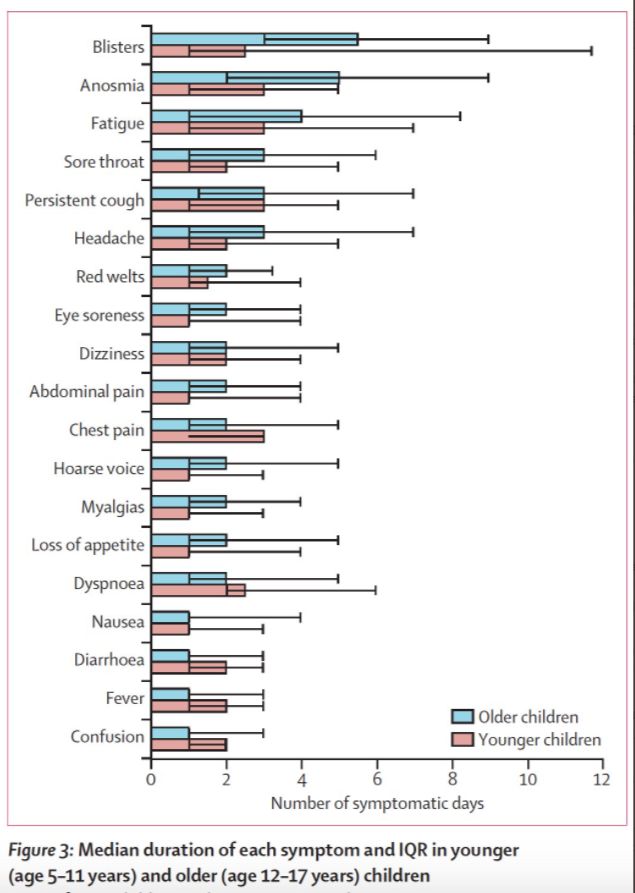
Lancet Child Adolesc Health 2021. Published Online August 3, 2021. https://doi.org/10.1016/S2352-4642(21)00198-X. Open Access: Illness duration and symptom profile in symptomatic UK school-aged children tested for SARS-CoV-2.

  • Key finding: In this prospective cohort study, 25 of 1379 (1.8%) children (5-17 yrs) had symptoms lasting at least 56 days and 4.4% had symptoms lasting more than 4 weeks.

Disclaimer: This blog, gutsandgrowth, assumes no responsibility for any use or operation of any method, product, instruction, concept or idea contained in the material herein or for any injury or damage to persons or property (whether products liability, negligence or otherwise) resulting from such use or operation. These blog posts are for educational purposes only. Specific dosing of medications (along with potential adverse effects) should be confirmed by prescribing physician.  Because of rapid advances in the medical sciences, the gutsandgrowth blog cautions that independent verification should be made of diagnosis and drug dosages. The reader is solely responsible for the conduct of any suggested test or procedure.  This content is not a substitute for medical advice, diagnosis or treatment provided by a qualified healthcare provider. Always seek the advice of your physician or other qualified health provider with any questions you may have regarding a condition.

Aspen Webinar 2021 Part 1-COVID-19 and the Liver

Notes from this year’s Aspen Webinar 2021. This blog entry has abbreviated/summarized some of these presentations. Though not intentional, some important material is likely to have been omitted; in addition, transcription errors are possible as well. The first talk was excellent.

What’s Hot -COVID-19 and the Liver  William Balistreri

This lecture covered a ton of information and publications with regard to COVID-19 and the liver.

Key points:

  • Numerous studies generally show that liver problems related to COVID-19 are mild, particularly in children
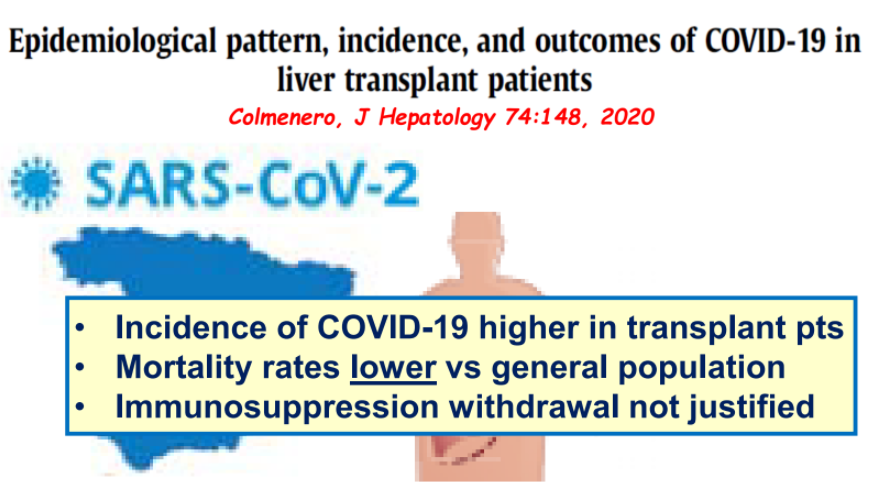
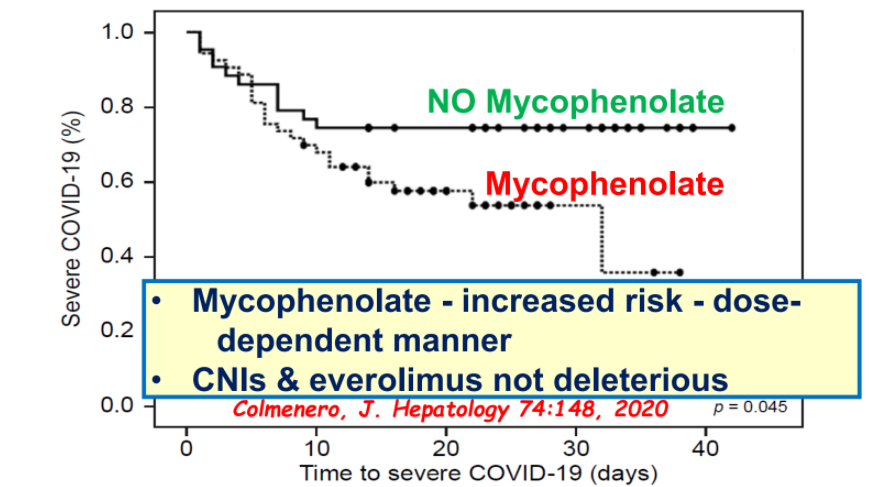
  • Most immunosuppression agents do not worsen outcomes with COVID-19 and should not be reduced in autoimmune hepatitis or liver transplantation; the exception, mycophenolate has been associated with worsened outcomes
  • Cirrhosis is associated with worse outcomes in patients with COVID-19
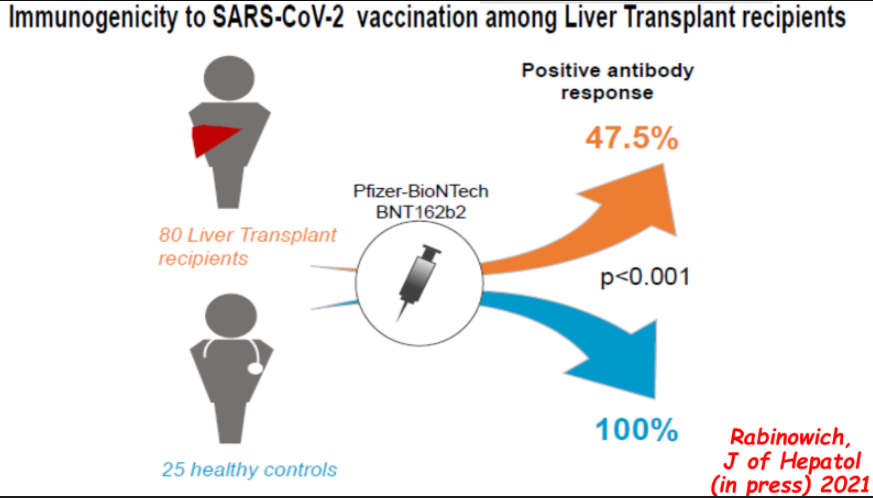
  • Vaccine response is blunted in immunocompromised patients with 40-50% developing antibody response after two doses of mRNA vaccines and generally lower titers.  3rd dose of vaccine may improve response.

Some of the slides:

Pediatric Data:

Risks of Vaccines Compared to COVID-19 Infection in 12-17 Year Olds

NY Times: Covid Is a Greater Risk to Young People Than the Vaccines (July 4, 2021)

This article elaborates on the risks of vaccination, especially due to myocarditis, compared to the risks posed by COVID-19 infection. Even using very cautious estimates, the authors find that the risks of hospitalizations, cardiac morbidity, and deaths are likely to be much lower in those who receive the vaccine.

Key points:

  • “Among the 6.14 million Americans 17 and under who have been fully vaccinated, there have been 653 possibly related hospitalizations lasting a day or longer…. If that rate holds, it means that if all 73 million Americans ages 17 and under are eventually vaccinated, there will be around 7,700 hospitalizations.”
  • “So far, 326 Americans age 17 and younger have died of Covid-19.”
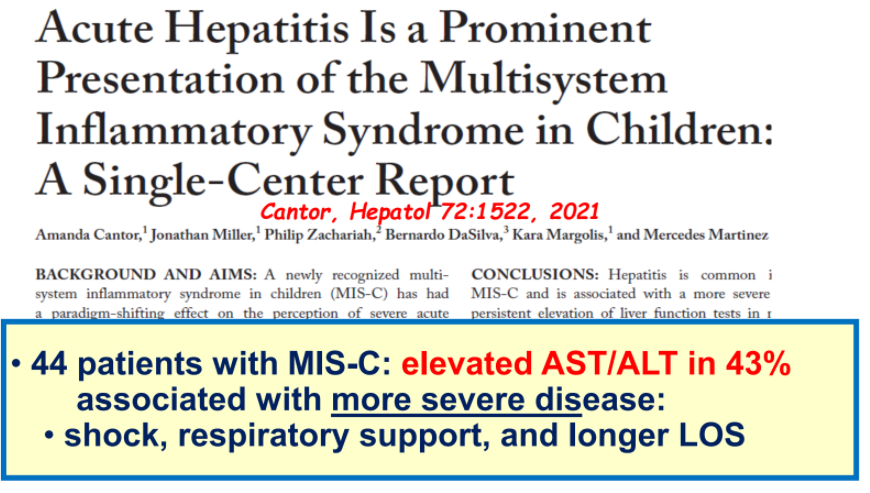
  • “If the coronavirus were eventually to infect all 73 million children in the United States, we would conservatively expect Covid-19 to be responsible for around 14,600 hospitalizations….[and] lead to over 27,000 additional hospitalizations from the [MIS-C] syndrome.”
  • Unlike hospitalizations related to vaccines which have typically been brief and uneventful, “Covid-related hospitalizations in adolescents can be long and complicated, with nearly one-third requiring patients to enter the intensive care unit.”
  • “Bad things inevitably happen to a small number of people after any vaccination, a few caused by the vaccines, but most not…The virus is more dangerous.”

My take: 12-17 year olds are at less risk from COVID-19 infection than other age groups, however, this risk is still greater risk than the risk of vaccination. Protecting them with immunizations also protects other vulnerable populations and may decrease the risk of vaccine-resistant variants.

Related article: Eric Topol NY Times: It’s Time for the F.D.A. to Fully Approve the mRNA Vaccines An excerpt: “Now more than 180 million doses of the Pfizer vaccine and 133 million of Moderna’s have been administered in the United States, with millions more doses distributed worldwide. In the history of medicine, few if any biologics (vaccines, antibodies, molecules) have had their safety and efficacy scrutinized to this degree…it’s frankly unfathomable that mRNA vaccines have been proved safe and effective in hundreds of millions of people and yet still have a scarlet “E”.”

Persistent Villous Atrophy in Celiac Disease Despite a Gluten-Free Diet

A recent study (F Fernandez-Banares et al. Am J Gastroenterol 2021; 116: 1036-1043. Persistent Villous Atrophy in De Novo Adult Patients With Celiac Disease and Strict Control of Gluten-Free Diet Adherence: A Multicenter Prospective Study (CADER Study) shows that there is a high likelihood of persistent villous atrophy among adults with celiac disease (CD) despite adherence with a gluten-free diet (GFD). Thanks to Ben Gold for showing me this paper.

Key findings:

  • Among 76 patients (median age 36.5 years) who were prospectively followed for 2 years, persistent villous atrophy was observed in 40 (53%). In this group, 72.5% were asymptomatic (based on Likert scales) and 75% had negative serology
  • Detectable fecal gluten immunogenic peptides (f-GIPs) were present in at least one sample in 69% of patients. (Two samples obtained at f/u visits which were ~every 6 months during study)
  • Excellent or good adherence to GFD was demonstrated in 68.4% of patients based on dietetic evaluations. Only 6 (8%) were clearly nonadherent
  • “There were no significant differences in the rate of clinical and serological remission between patients with villous atrophy and those with mucosal recovery”
  • The authors did not find potentially modifiable predictive factors

Discussion:

  • The authors note that serology is “not useful for monitoring patients on a GFD.” Anti-TTG2 and EMA, in a recent meta-analysis, had a pooled sensitivity of around 50%.
  • “Adults are significantly less likely than children to normalize their duodenal histology.”

Editorial:

  • The associated editorial by Rej et al (pg 946-948) outline a personalized approach for dealing with persistent villous atrophy:
    • In those with persistent symptoms/positive GIPs/elevated serology/micronutrient deficiency, the first step is careful dietetic assessment. After this, endoscopy could be considered to confirm presence or absence of mucosal healing.
    • In those with no symptoms and no abnormalities, use of monitoring endoscopy needs to be weighed against the costs as well as potential complications.
    • Other points in the editorial: 1. GIPs have poor concordance with mucosal healing and 2. causes of poor mucosal healing include the following: natural slow healing process, super sensitive to gluten, ongoing gluten exposure, and refractory celiac disease.

My take: This study shows that there is ongoing gluten exposure in the majority of patients even in those with excellent or good adherence to a GFD; in addition, it shows that clinical/serological markers are NOT effective in predicting mucosal healing in adults. Nevertheless, it is not clear that followup endoscopy is beneficial.

Related blog posts:

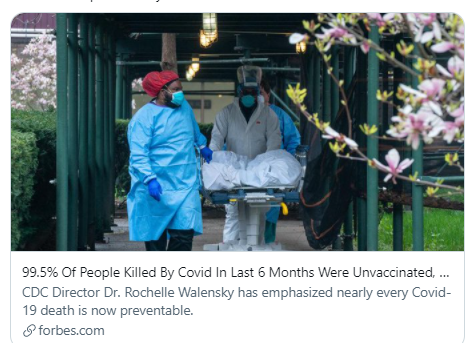
Forbes (7/1/21): 99.5% Of People Killed By Covid In Last 6 Months Were Unvaccinated, Data Suggests

Disclaimer: This blog, gutsandgrowth, assumes no responsibility for any use or operation of any method, product, instruction, concept or idea contained in the material herein or for any injury or damage to persons or property (whether products liability, negligence or otherwise) resulting from such use or operation. These blog posts are for educational purposes only. Specific dosing of medications (along with potential adverse effects) should be confirmed by prescribing physician.  Because of rapid advances in the medical sciences, the gutsandgrowth blog cautions that independent verification should be made of diagnosis and drug dosages. The reader is solely responsible for the conduct of any suggested test or procedure.  This content is not a substitute for medical advice, diagnosis or treatment provided by a qualified healthcare provider. Always seek the advice of your physician or other qualified health provider with any questions you may have regarding a condition

How Insurance Companies Can Help Stop the Pandemic in the U.S.

From AJC, Hashem Dezhbakhsh: An incentive to encourage vaccination

This is a good read. An excerpt:

Vaccine hesitancy, which can prolong the pandemic, is a textbook example of a negative consumption externality, where an individual’s choice can harm or impose costs on others. Indoor smoking, drunk driving, or littering are other examples…

One policy option is to use the insurance mechanism, with risk assessment and risk pricing as its enforcing arms….

For example, a risky driver has a higher auto insurance premium than a safe driver, a smoker has a higher health insurance premium than a non-smoker,…Similarly, health insurance premiums, deductibles, and co-pays can be set higher for those who are unvaccinated...

Using risk pricing to set insurance premiums and co-pays for these individuals makes good sense and is fair policy. It incentivizes individuals to vaccinate, while also providing a fairer insurance pricing system by charging those with self-selected higher risk a higher price, instead of shifting their medical costs to others through uniform insurance pricing.

Hydrangeas

AGA Guidelines: Pre-endoscopy COVID-19 Testing No Longer Needed

May 20, 2021: AGA Guideline–Summary: New AGA guidance: stop COVID-19 testing prior to endoscopy (for U.S.)

Full report (48 pages): AGA Rapid Review and Guideline for SARS-CoV2 Testing and Endoscopy PostVaccination: 2021 Update

“AGA has now updated its July 2020 recommendations regarding pre-procedure testing. Based on the latest available data, routine COVID-19 testing prior to endoscopy is no longer needed to perform endoscopy safely.

Read on for four key points from AGA’s newest, evidence-based COVID-19 clinical guidance. Review the full Rapid Recommendations document ahead of print — it will be published soon in Gastroenterology.

Key guidance for gastroenterologists:

  • Routine SARS-CoV-2 testing prior to endoscopy is no longer needed to perform endoscopy safely: Our systematic review found that there is little benefit in routine testing, given very low rates of infection (i.e. asymptomatic prevalence and transmission) during endoscopy to both patients and staff (0-0.5% across representative studies), with potential significant burden, including delays in care, impact of cancer burden, cost, health disparities and reduced endoscopy efficiency. Previously identified benefits of testing, including informed rationing of personal protective equipment (PPE) and patient and staff reassurance, have less relevance given adequate supply of PPE and reduced anxiety in later stages of the pandemic.
  • Vaccination status should not dictate decision-making for implementing pre-procedure SARS-CoV-2 testing: The studies included in our review were conducted prior to vaccination and show minimal benefit of testing as outlined above. While indirect data show that vaccination reduces that risk even further, the available evidence supports eliminating pre-procedure testing regardless of vaccination status of patients.
  • All patients should receive symptom screening prior to endoscopy: Centers should continue to implement universal screening of patients for COVID-19 symptoms, using a screening checklist, and follow universal precautions, including physical distancing, masks and hand hygiene in the endoscopy unit. For patients who have a positive symptom screen, pre-procedure testing can then be utilized for further triage.
  • For centers that value the small benefits (patient and staff reassurance or anxiety) over the downsides (delays care, potential exacerbation of health disparities, endoscopy efficiency, downstream consequences of false negatives and false positives), pre-procedure testing with rapid PCR tests can be considered: Rapid RT-PCR tests that can be performed on the day of endoscopy are preferable as they pose less burden to patients. In the pre-procedure setting, there is limited utility of rapid isothermal tests or antigen tests. There is no role for antibody tests in this context.”

These recommendations are only applicable IF:

My take: This is great news for our patients and hopefully will be widely adopted.