#NASPGHAN17 Annual Meeting Notes (Part 2): Year in Review

This blog entry has abbreviated/summarized this presentation. Though not intentional, some important material is likely to have been omitted; in addition, transcription errors are possible as well.

This first slide shows the growth in NASPGHAN membership:

Year in Review

Melvin Heyman  Editor, JPGN

This lecture reviewed a number of influential studies that have been published in the past year.  After brief review of the study, Dr. Heyman summarized the key take-home point.


Why Do Canadians with Cystic Fibrosis Live Longer than Patients in U.S.?

NY Times Summarizes the reasons why Canadians with Cystic Fibrosis Live Longer: Link:  Canadians With Cystic Fibrosis Live 10 Years Longer Than Americans With the Disease

Cystic fibrosis is an inherited disease that causes recurrent lung infections and other problems. The average lifespan for an American with the illness is 37 years. In Canada, it is 49.

Researchers studied records of 5,941 Canadian and 45,448 American cystic fibrosis patients between 1990 and 2013. After controlling for severity of disease, age and other factors, they found that overall death rates were 34 percent lower in Canada than in the United States.

There was no difference in death rates between Canadians and Americans with private health insurance. But Canada provides universal health care coverage under a single-payer system, so every Canadian has some kind of health insurance. The Canadian death rate was 44 percent lower than that of Americans on Medicaid or Medicare, and 77 percent lower than Americans without insurance.

 AL Stephenson et al.  Ann Intern Med. 2017. DOI: 10.7326/M16-0858

Abstract

Background:In 2011, the median age of survival of patients with cystic fibrosis reported in the United States was 36.8 years, compared with 48.5 years in Canada. Direct comparison of survival estimates between national registries is challenging because of inherent differences in methodologies used, data processing techniques, and ascertainment bias.
Objective:To use a standardized approach to calculate cystic fibrosis survival estimates and to explore differences between Canada and the United States.
Design:Population-based study.
Setting:42 Canadian cystic fibrosis clinics and 110 U.S. cystic fibrosis care centers.
Patients:Patients followed in the Canadian Cystic Fibrosis Registry (CCFR) and U.S. Cystic Fibrosis Foundation Patient Registry (CFFPR) between 1990 and 2013.
Measurements:Cox proportional hazards models were used to compare survival between patients followed in the CCFR (n = 5941) and those in the CFFPR (n = 45 448). Multivariable models were used to adjust for factors known to be associated with survival.
Results:Median age of survival in patients with cystic fibrosis increased in both countries between 1990 and 2013; however, in 1995 and 2005, survival in Canada increased at a faster rate than in the United States (P < 0.001). On the basis of contemporary data from 2009 to 2013, the median age of survival in Canada was 10 years greater than in the United States (50.9 vs. 40.6 years, respectively). The adjusted risk for death was 34% lower in Canada than the United States (hazard ratio, 0.66 [95% CI, 0.54 to 0.81]). A greater proportion of patients in Canada received transplants (10.3% vs. 6.5%, respectively [standardized difference, 13.7]). Differences in survival between U.S. and Canadian patients varied according to U.S. patients’ insurance status.
Limitation:Ascertainment bias due to missing data or nonrandom loss to follow-up might affect the results.
Conclusion:Differences in cystic fibrosis survival between Canada and the United States persisted after adjustment for risk factors associated with survival, except for private-insurance status among U.S. patients. Differential access to transplantation, increased posttransplant survival, and differences in health care systems may, in part, explain the Canadian survival advantage.
Primary Funding Source:U.S. Cystic Fibrosis Foundation.

Sainte-Chapelle, Paris

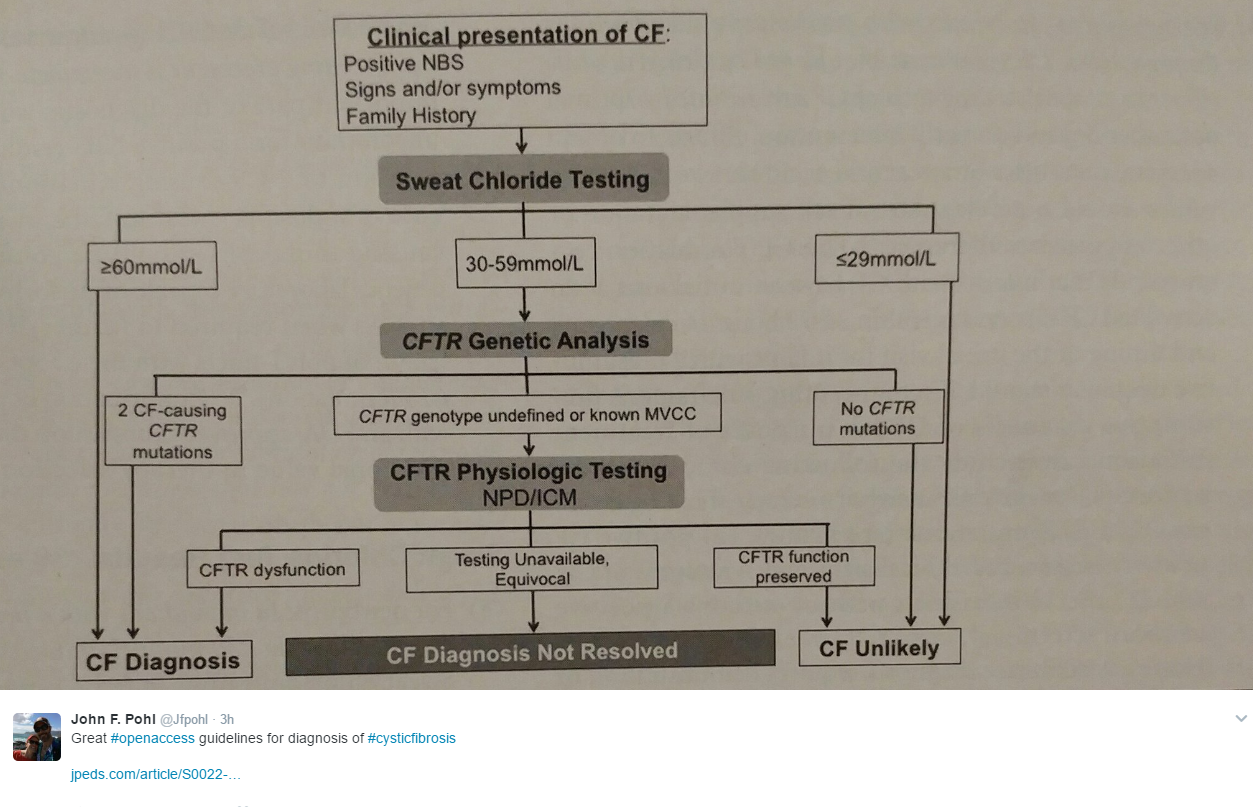
Complexity in Cystic Fibrosis Diagnosis

The availability of multiple diagnostic techniques for cystic fibrosis has increased the complexity and created areas of uncertainty.  A recent supplement (J Pediatr 2017; 181S: 1-55) delve into these issues.

“The diagnosis of CF has become increasingly complex, as CFTR mutations resulting in a wide spectrum of dysfunction have been increasingly identified.”

On page S6, 27 consensus recommendations are given.

The article S45-51, reviews cystic fibrosis transmembrane conductance regulator-related metabolic syndrome (CRMS) and cystic fibrosis screen positive, inconclusive diagnosis (CFSPID).  Key points:

  • CRMS and CFSPID are equivalent entities with CRMS being the preferred terminology in the US
  • CRMS/CFSPID are relatively frequent; for every 3 to 5 cases of CF, there is one case of CRMS/CFSPID.
  • The majority of CRMS/CFSPID do NOT develop CF. Approximately 10-20% develop clinical features concerning for CF.

screenshot-116

Related blog posts:


Nutrition Guidelines for Cystic Fibrosis

Wilschanski et al (JPGN 2016; 63: 671-5) provide a summary (“highlights”) of a full report (Turck D et al. Clin Nutr 2016; 35: 557-77) on nutritional recommendations for infant and children with cystic fibrosis.

What’s in here:

Table 1: criteria for adequate nutritional status including

  • Age <2 yrs: 50% for weight & height compared to healthy-age peers
  • Age 2-18 yrs: 50% BMI compared to healthy peers

Table 2: nutritional assessment and followup

  • Assess elastase-1 annually if pancreatic sufficient
  • Assess pancreatic enzyme supplementation
  • Annual blood tests: CBC/d, iron status, fat-soluble vitamins, LFTs.  Possibly: fatty acids
  • If older than 10 years, annual glucose tolerance
  • Dietary review every 3 months
  • Bone density assessment between 8-10 yrs and then every 1-5 yrs

Table 3: Energy requirements

  • Anticipate need for 110-200% compared with healthy peers

Table 4: Pancreatic enzyme replacement therapy (PERT)

  • 0-1 yr: 2000-4000 units lipase/120 mL of formula/breast milk & 2000 units lipase/gram of dietary fat
  • 1-4 yrs: 2000-4000 units of lipase/gram of dietary fat (max 10,000 units lipase/kg/day)
  • >4 yrs: starting dose; 500 units lipase/kg/meal -titrate up to 1000-2500 units lipase/kg/meal (max 10,000 units lipase/kg/day)

Table 5: Fat-soluble vitamin/vitamin guidelines

Table 6: Sodium supplementation

  • 0-6 months: 1-2 mmol/kg/day –give salt in small portions throughout the day, “diluted in water or fruit juice”.  In some infants, up to 4 mmol/kg/day if increased losses (eg. due to heat, gastrointestinal losses)
  • Older children: anticipate need for additional salty foods or use sodium chloride capsules, especially when excessive sweating (eg. fever, sports, hot weather)

Related blog posts:

Disclaimer: These blog posts are for educational purposes only. Specific dosing of medications (along with potential adverse effects) should be confirmed by prescribing physician.  This content is not a substitute for medical advice, diagnosis or treatment provided by a qualified healthcare provider. Always seek the advice of your physician or other qualified health provider with any questions you may have regarding a condition.

Maine Coast, near Acadia

Maine Coast, near Acadia


Ursodeoxycholic Acid, Cystic Fibrosis, and the Problem with Surrogate Markers

A recent study (C Colombo et al. J Pediatr 2016; 177: 59-65) examined 20 patients with cystic fibrosis-associated liver disease (CFLD) who were receiving ursodeoxycholic acid (UDCA) for at least 2 years.  Specifically, they wanted to focus on the extent of biotransformation of UDCA to its hepatotoxic metabolite, lithocholic acid.  The possibility that long-term UDCA therapy could be detrimental was propelled by a primary sclerosing cholangitis study (K Lindor et al. Hepatology 2009; 50: 808) which indicated that high doses of UDCA resulted in worse outcomes despite better “liver function tests.”

Dosing of UDCA: 20 mg/kg/day

Key findings: UDCA became the predominant serum bile acid; 2 hours after UDCA administration, “both UDA and chenodeoxycholic acid significantly increase (P< .01), but no significant changes in serum lithocholic acid concentrations were observed.”

What does this study prove?

Well, not very much.  There are other potential mechanisms for UDCA toxicity and as the editorial notes, “we still lack the necessary endpoints in CF liver disease with which to assess the efficacy of UDCA or any therapy that is on the horizon.”

My take: Because our surrogate markers are unreliable for CFLD, there really is no way to know with certainty whether UDCA therapy is beneficial.

gardenpic3

Clearing Out My Desk

These articles have been sitting on my desk or my email and worth a quick mention:

“Proton Pump Inhibitors Alter Specific Taxa in the Human Gastrointestinal Microbiome: A Crossover Trial” DE Freedberg et al. Gastroenterol 2015; 149: 883-85. In this study of 12 healthy volunteers over 12 weeks, the study’s major finding (according to associated commentary) “is the absence of any significant changes in microbial diversity with proton pump inhibitors.” However, there was “an increase in bacterial taxa associated with C difficile infection.”

“Quality of Life and Its Determinants in a Multicenter Cohort of Children with Alagille Syndrome” BM Kamath et al. J Pediatr 2015; 167: 390-6.  Quality of life is impaired in Alagille compared to healthy children and children with alpha-one antitrypsin; it is associated with growth failure which may be modifiable.

“Baseline Ultrasound and Clinical Correlates in Children with Cystic Fibrosis” DH Leung et al. J Pediatr 2015; 167: 862-68.  In this prospective study of children (n=719) from age 3-12 years, unsuspected cirrhosis was seen in 3.3% of patients and a heterogeneous liver echotexture was identified in 8.9%.

Case report of phlegmonous gastritis associated with ulcerative colitis (with good pictures): J Cordova, R Gokhale, B Kirschner. Gastroenterol 2015; 149: 867-69.

“High Prevalence of Idiopathic Bile Acid Diarrhea Among Patients with Diarrhea-Predominant Irritable Bowel Syndrome Based on Rome III Criteria” I Aziz et al. Clin Gastroenterol Hepatol 2015; 13: 1650-55.

Emergence of plasmid-mediated colistin resistance mechanism MCR-1 in animals and human beings in China: a microbiological and molecular biological study” The Lancet. DOI: http://dx.doi.org/10.1016/S1473-3099(15)00424-7 (Reference from Sana Syed)

Complex Family of CFTR-Associated Disorders

While most clinicians are familiar with cystic fibrosis (CF), much fewer are familiar with a group of disorders related to the cystic fibrosis transmembrane conductance regulator (CFTR) that do not meet the criteria for cystic fibrosis.  A summary of these disorders is provided in a recent editorial (Levy H, Farrell PM. J Pediatrics 2015; 166: 1337-40).  In addition, the editorial provides insight into a related study: Groves T et al.. J Pediatrics 2015; 166: 1469-74.

The editorialists note that new disorders have been created due to newborn screening and due to the use of CF mutation analysis.  New disorders:

  • CRMS -CFTR-related metabolic syndrome.  CRMS describes infants with elevated immunoreactive trypsinogen and inconclusive sweat testing and DNA results.  Inconclusive sweat testing includes sweat tests 30-59 mmol/L if age <6 months or 40-59 mmol/L if >6 months on at least 2 occasions.  DNA testing is inconclusive if there are fewer than 2 CF disease-related mutations identified.  DNA testing is also considered inconclusive if there are 2 CFTR mutations but sweat testing is normal.
  • CFTR-RD -CFTR related disease.  CFTR-RD describes symptomatic individuals beyond infancy who have sweat testing <60 mmol/L and up to 2 CFTR mutations, at least one of which is not clearly categorized as a CF-causing mutation.  Thus, these individuals do not fulfill criteria for CF but could have congenital bilateral absence of vas deferens, acute recurrent or chronic pancreatitis, or disseminated bronchiectasis.
  • Delayed CF -Delayed CF describes patients eventually diagnosed with CF who had initially intermediate sweat chloride values.  Over time, their condition evolves to fulfill the criteria for CF.  In the retrospective study by Groves et al, 14 of 29 (48%) evolved to a diagnosis of CF.  These patients with delayed CF had less pancreatic insufficiency (OR 0.06), milder obstructive lung disease, less colonization with Pseudomonas aeruginosa (OR 0.04), and overall disease severity as measured by Shwachman scores at 2 years.
  • Nutritional outcomes were improved at 2 years in this Delayed CF cohort in comparison to 28 matched patients diagnosed with CF in the newborn period, but did not persist to later ages.

The editorial notes that nearly 20% of patients with CF are being enrolled in the CF foundation patient registry without sweat chloride testing results.  They do not favor this approach because the diagnosis of CF requires proof of CFTR dysfunction, not simply CF DNA mutations.

Take-home message: Patients who do not meet the criteria for CF  but who have intermediate sweat testing or abnormal CF DNA mutations need to be followed.  Some will fulfill the criteria with time and others may develop other clinical problems even without having CF.

Lumacaftor-Ivacaftor for Cystic Fibrosis

“Lumacaftor–Ivacaftor in Patients with Cystic Fibrosis Homozygous for Phe508del CFTR”  DOI: 10.1056/NEJMoa1409547

Abstract (from NEJM twitter feed):

BACKGROUND

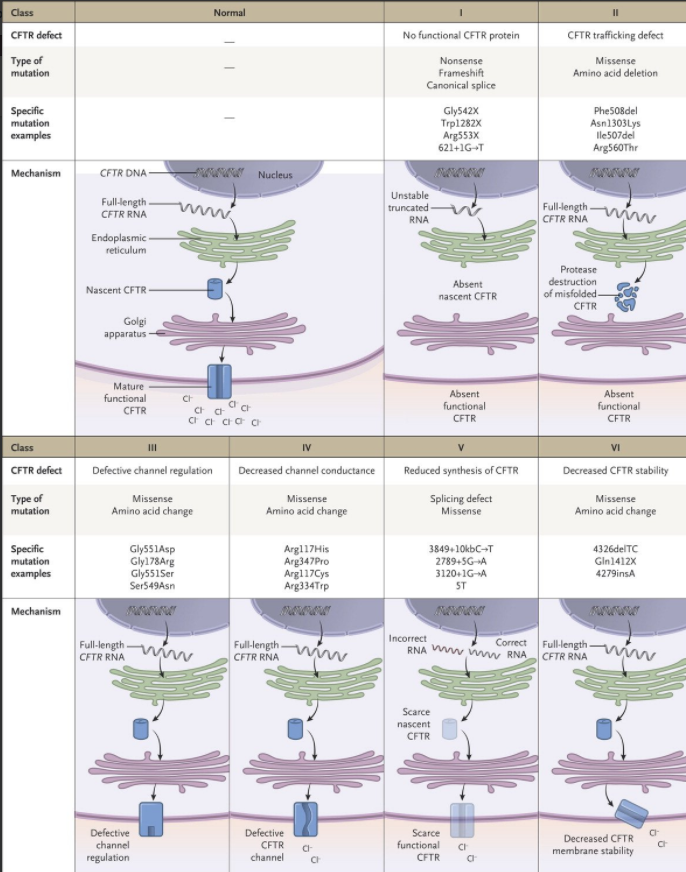
Cystic fibrosis is a life-limiting disease that is caused by defective or deficient cystic fibrosis transmembrane conductance regulator (CFTR) protein activity. Phe508del is the most common CFTRmutation.

METHODS

We conducted two phase 3, randomized, double-blind, placebo-controlled studies that were designed to assess the effects of lumacaftor (VX-809), a CFTR corrector, in combination with ivacaftor (VX-770), a CFTR potentiator, in patients 12 years of age or older who had cystic fibrosis and were homozygous for the Phe508delCFTR mutation. In both studies, patients were randomly assigned to receive either lumacaftor (600 mg once daily or 400 mg every 12 hours) in combination with ivacaftor (250 mg every 12 hours) or matched placebo for 24 weeks. The primary end point was the absolute change from baseline in the percentage of predicted forced expiratory volume in 1 second (FEV1) at week 24.

RESULTS

A total of 1108 patients underwent randomization and received study drug. The mean baseline FEV1 was 61% of the predicted value. In both studies, there were significant improvements in the primary end point in both lumacaftor–ivacaftor dose groups; the difference between active treatment and placebo with respect to the mean absolute improvement in the percentage of predicted FEV1 ranged from 2.6 to 4.0 percentage points (P<0.001), which corresponded to a mean relative treatment difference of 4.3 to 6.7% (P<0.001). Pooled analyses showed that the rate of pulmonary exacerbations was 30 to 39% lower in the lumacaftor–ivacaftor groups than in the placebo group; the rate of events leading to hospitalization or the use of intravenous antibiotics was lower in the lumacaftor–ivacaftor groups as well. The incidence of adverse events was generally similar in the lumacaftor–ivacaftor and placebo groups. The rate of discontinuation due to an adverse event was 4.2% among patients who received lumacaftor–ivacaftor versus 1.6% among those who received placebo.

CONCLUSIONS

These data show that lumacaftor in combination with ivacaftor provided a benefit for patients with cystic fibrosis homozygous for the Phe508del CFTR mutation. (Funded by Vertex Pharmaceuticals and others; TRAFFIC and TRANSPORT ClinicalTrials.gov numbers,NCT01807923 and NCT01807949.)

Take-home point: The combination of a CFTR corrector and potentiator may “benefit patients who are homozygous for the Phe508del CFTR mutation and represents a treatment milestone for the 45% of patients with cystic fibrosis who are homozygous for this mutation.”

Related blog postIvacaftor for Cystic Fibrosis | gutsandgrowth

N2U -Part 3: EoE, IBD, and Cystic Fibrosis

2015 N2U Syllabus & Presentations

EoE Dietary Pointers (Syllabus pg 83-94): Sally Schwartz, Valeria Cohran

  • Even with SFED, elemental supplements helpful
  • Drink elemental beverages from covered glass with straw (improves palatability)
  • Cross-contamination –big issue
  • Label reading critical

Related posts:

IBD EEN Pointers (Syllabus pg 95-102): Rebecca Pipkorn, Justine Turner

  • Polymeric formulas –most palatable and least expensive. Oral EEN is used costly/not covered
  • EEN particularly helpful with microperforation/flare-up presentation and with infections (eg. TB)
  • EEN induces mucosal healing and improved symptoms

References:

  • Levin et al. Inflamm Bowel Dis. 2014;20:278-285.
  • Johnson et al. Gut 2006;55:356-361.
  • Sigall-Boneh et al. Inflamm Bowel Dis. 2014;20:1353-1360.
  • Wilschanski et al. Gut 1996;38543–548.
  • Critich et al. J Pediatr Gastroenterol Nutr. 2012;54: 298–305. NASPGHAN Guidelines

Conclusions:

  • Enteral therapy offers an alternative to steroids in patients with CD
  • Has potential to improve growth and IBD symptoms
  • Avoids the side effects of steroids
  • Need further research:
  1. – Unclear of the mechanism
  2. – Unclear of the best protocol
  3. – No standard protocol for reintroduction of food

Related posts:

Cystic Fibrosis (Syllabus pg 34-50) Justine Turner

Case in point: 10 yo with CF and poor growth, hx/o DIOS, poor intake, and distention.  Family had refused tube feedings previously.

Key point: Long-term survival is linked to nutritional status

  • Zemel et al. J Pediatr. 2000; 137(3):374-380.
  • Stallings et al. J Am Diet Assoc. 2008; 108(5):832-839.
  • McPhail et al. J Pediatr. 2008; 153(6):752-757.
  • Sharma et al. Thorax 2001; 56:746-750.

Other Caveats:

  • Intervene early
  • Breast milk (often with supplements) is optimal for infants
  • Poor oral intake àcould need periactin and/or supplemental feeds
  • Discussion re: pros/cons of Gtubes (pg 47 in syllabus)
  • Psychology support

Nutrition Goals

  • – Normal growth and optimal nutritional status
  • – Ages 0-2 year: Weight for length >50th percentile
  • – Ages 2-20 year: BMI percentile at or above 50th percentile
  • – BMI for males:23
  • – BMI for females: 22

Nutritional assessment at every visit & review:

  • – Weight, length/height, weight for length, BMI, head circumference in infants
  • – Nutritional education & dietary counseling
  • – Review PERT
  • – Review need for micronutrient supplementation: fat soluble vitamins (A, D, E, K), Ca, Fe, Zn, Na (salt), essential fatty acids

PERT (Pancreatic enzyme replacement therapy):

  • Infants 2000-4000 U lipase with 120 mL breast milk or formula– Mouth care for infants (and breast feeding mother)
  • Children 500-2500 U lipase/kg per meal (≤10000 U/kg/day or ≤ 4000 U/g fat/day); half meal dose with snacks
  • Ideally taken with meals and orally
  • Microspheres preferred formulation
  • Acid blockade (used to optimize enzyme activity)
  • Gold standard to assess adequacy is 72h fecal fat collection

Cystic Fibrosis Related Diabetes

  • Rare before 10 years of age
  • Increases mortality risk 6-fold
  • Weight loss and pulmonary decline begin 2-4 years prior to
  • diagnosis of CFRD

Related posts:


Robie House (at Univ Chicago)

Robie House (at Univ Chicago)