Fibrosis and Steatotic Liver Disease -Who Needs to be Followed by Hepatology?

N Ma et al. JPGN 2024; 79:229–237. Fibrosis and steatotic liver disease in US adolescents according to the new nomenclature

Methods: Among 1410 adolescents (12–19 years) in NHANES (2017-March, 2020), the controlled attenuation parameter (CAP) of transient elastography (TE) was used to define steatosis and fibrosis (TE ≥ 7.4 kPa). Obesity and alanine aminotransferase (ALT) ≥ 80 U/L were used to identify adolescents qualifying for hepatology referral according to practice guidelines.

Key findings:

  • At the supplier (EchoSens)-recommended CAP threshold of 240 dB/m, 30.5% of adolescents had steatotic liver disease (SLD) and about 85% of adolescents with NAFLD met criteria for MASLD. At a CAP threshold of 270 dB/m, SLD prevalence was about 16% in adolescents. The other 15% of NAFLD patients do not meet diagnostic criteria MASLD and would receive a diagnosis of cryptogenic SLD or possible MASLD
  • At higher CAP thresholds, MASLD/NAFLD concordance increased and approached 100%.
  • Among adolescents with MASLD-fibrosis, only 8.8% had overweight/obese and ALT ≥ 80 U/L. Thus, more than 90% of adolescents in this group would not merit hepatology evaluation based on current guidelines.

My take: This study identifies potential problems with current thresholds for which patients need to be seen by pediatric hepatologists. This will be even more important as effective pharmaceuticals become available.

Related blog posts:

Channel Islands off the California coast

Resmetirom for MASH

SA Harrison et al. NEJM 2024; 390: 497-509. A Phase 3, Randomized, Controlled Trial of Resmetirom in NASH with Liver Fibrosis

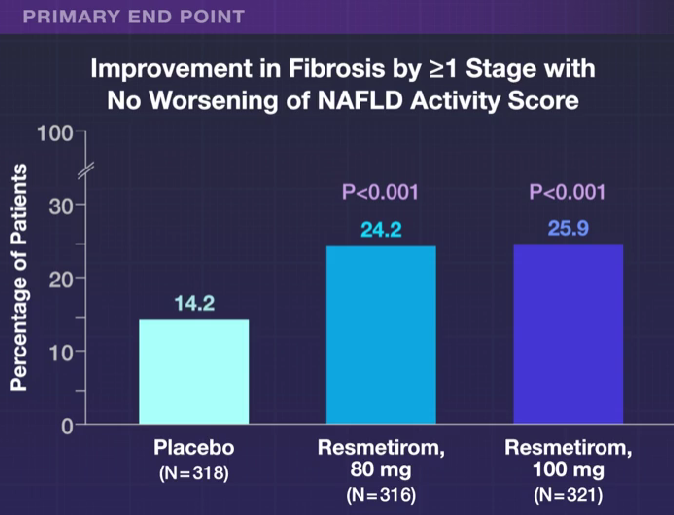
This “MAESTRO-NASH” study enrolled 966 adult patients biopsy-confirmed NASH (now termed MASH) and a fibrosis stage of F1B, F2, or F3. Approximately 60% of each arm had F3 fibrosis. Patients were randomly assigned in a 1:1:1 ratio to receive once-daily d resmetirom at a dose of 80 mg or 100 mg or placebo; Resmetirom is an oral, liver-directed, thyroid hormone receptor beta–selective agonist.

Key findings:

  • MASH “resolution with no worsening of fibrosis was achieved in 25.9% of the patients in the 80-mg resmetirom group and 29.9% of those in the 100-mg resmetirom group, as compared with 9.7% of those in the placebo group (P<0.001)”
  • “Fibrosis improvement by at least one stage with no worsening of the NAFLD activity score was achieved in 24.2% of the patients in the 80-mg resmetirom group and 25.9% of those in the 100-mg resmetirom group, as compared with 14.2% of those in the placebo group (P<0.001)”
  • “Levels of a broad range of atherogenic lipids and lipoproteins, including LDL cholesterol, non-HDL cholesterol, triglycerides, apolipoprotein B, and lipoprotein(a), appeared to be reduced by resmetirom relative to placebo, findings consistent with those of earlier studies.18,19
  • Diarrhea and nausea were more frequent in the resmetirom group compared to placebo, though there were no differences in serious adverse effects. Patients in the 100 mg group were more likely to discontinue treatment (~7%) compared to 2% in the other two groups.
  • “In this trial, achievement of a 30% reduction in hepatic fat (MRI-PDFF) or a 120% increase in the sex hormone–binding globulin level appeared to be associated with biopsy responses.”

In their discussion, the authors note that “Noninvasive testing to identify patients with NASH for treatment and to monitor treatment response will be important in clinical practice in which liver biopsy is infrequently used.”

The associated editorial by Kenneth Cusi (pg 559-561) notes the following:

  • Resmetirom had neutral effects on body weight and insulin resistance. 
  • “Treatment affected the pituitary–thyroid hormone axis, with prohormone free T4 levels decreasing by approximately 17 to 21% and mean thyrotropin levels also decreasing.” It is unclear if this has any long-term significance (long-term data needed). ”Careful surveillance to detect early endocrine disease that is related to potential thyroid, gonadal, or bone disease appears warranted to avoid any potential risks from long-term treatment.”
  • When subtracting the placebo effect, he notes that “approximately 2 of 10 patients treated will have NASH resolution and approximately 1 of 10 patients treated will have fibrosis improvement.” Thus, combination therapy may be needed.

My take: This study brings us a step closer to having a medication which can improve MASH as currently there are no FDA-approved medications. My speculation is that medications which achieve persistent weight loss will have a more pronounced effect on liver health and overall health.

Related blog posts:

Radiomic Imaging in Crohn’s Disease

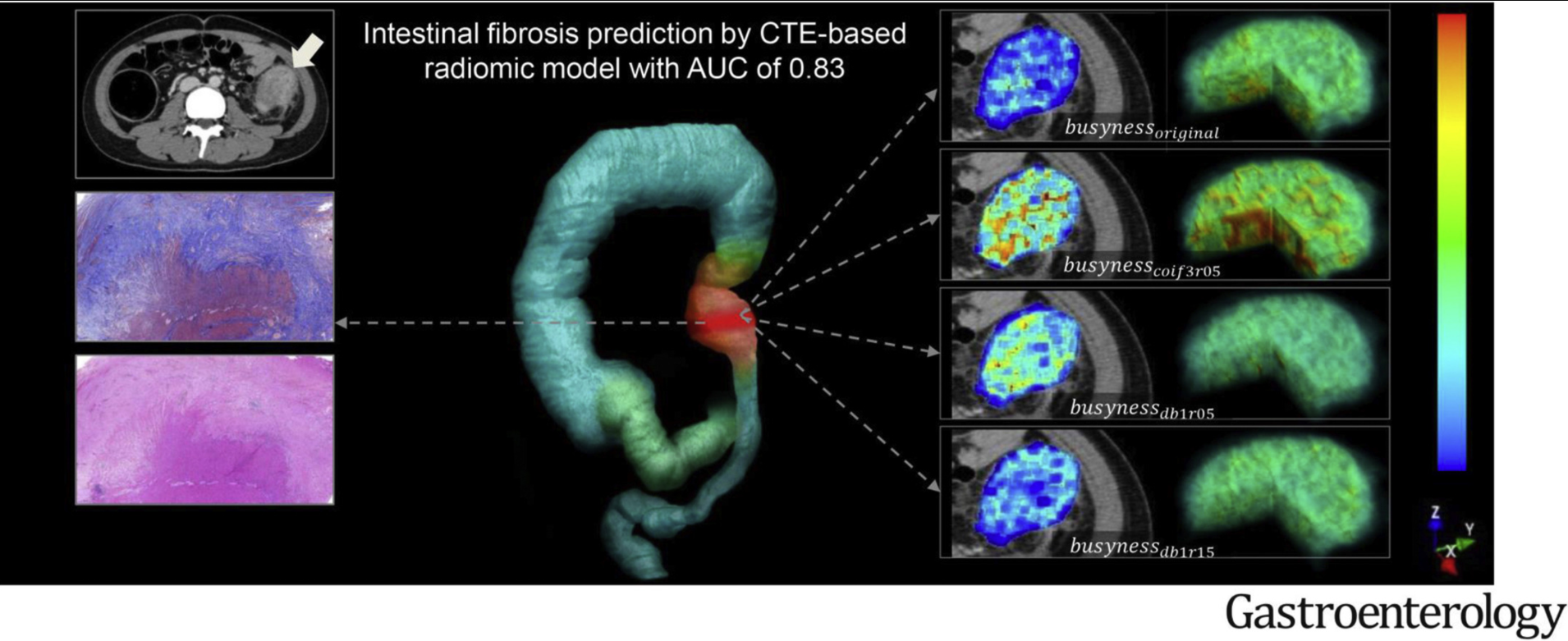
X Li et al. Gastroenterol 2021; 160: 2303-2316. Development and Validation of a Novel Computed-Tomography Enterography Radiomic Approach for Characterization of Intestinal Fibrosis in Crohn’s Disease

Methods: This article describes the development a computed-tomography enterography (CTE)–based radiomic model (RM). This retrospective multicenter study included 167 CD patients who underwent preoperative CTE and bowel resection. 1454 radiomic features were extracted from venous-phase CTE and a machine learning–based RM was developed based on the reproducible features using logistic regression. The RM was validated in an independent external test cohort recruited from 3 centers.

Key findings:

  • In the training cohort, the area under the ROC curve (AUC) of RM for distinguishing moderate–severe from none–mild intestinal fibrosis was 0.888.
  • In the test cohort, the RM had an AUC of 0.816.
  • RM was more accurate than visual interpretations by either radiologist (radiologist 1, AUC = 0.554; radiologist 2, AUC = 0.598; both, P < .001) in the test cohort

My take: This CT approach with RM allowed for accurate characterization of intestinal fibrosis in CD. The images look pretty cool too.

Progression of Fatty Liver Disease in Children

SA Xanthakos et al. Gastroenterol 2020; 159: 159: 1731-1751. Progression of Fatty Liver Disease in Children Receiving Standard of Care Lifestyle Advice

This prospective study followed the natural history of NAFLD in children with timed liver biopsy reassessment in children (n=122) using the placebo arms of 2 large multicenter clinical trials; patients received standard of care lifestyle advice. The study population had a mean age of 13 years; 71% were Hispanic participants

Key findings:

  • At enrollment, 31% of the children had definite NASH, 34% had borderline zone 1 NASH, 13% had borderline zone 3 NASH, and 21% had fatty liver but not NASH
  • Over a mean period of 1.6 ± 0.4 years, borderline or definite NASH resolved in 29% of the children, whereas 18% of the children with fatty liver or borderline NASH developed definite NASH
  • Fibrosis improved in 34% of the children but worsened in 23%
  • Progression was more likely with increasing ALT, increasing GGT, type 2 diabetes/increasing HgbA1c
  • Overall, one-third had histologic features of progression within 2 years, in association with increasing obesity and serum levels of aminotransferases and loss of glucose homeostasis.
  • The study conclusions are limited by selection bias, potential liver biopsy sampling errors, limited enrollment of non-Hispanic children, and relatively short duration of follow-up

Related blog posts:

Direct-Acting Antivirals in Patients Without Advanced Hep C Liver Disease

A recent study (LI Backus et al. Hepatology 2018; 68: 827-38, editorial 804-06) indicates that direct-acting antivirals (DAA) improve mortality in patients with hepatitis C virus (HCV) without advanced liver disease.

Using a registry from the Veterans Affairs, the authors identified 40,664 treated with interferon-free DAA regimens.  Overall there was a 96.8% sustained virologic response (SVR).  These patients were compare with 62,882 patients who did not receive DAA and without apparent advanced fibrosis.

Background: Long-term benefits have been established in patients with HCV and advanced fibrosis who have had viral eradication with DAA regimens with less hepatic decompensation and less hepatocellular carcinoma.

Key findings:

  • SVR in this cohort was associated with a 59% unadjusted reduction in all-cause mortality when compared to those who did not achieve SVR and a 69% reduction compared to the untreated cohort.
  • In absolute terms, 1-year mortality rates were reduced by 1.3% with SVR compared to treated group without SVR and by 2.9% compared to no treatments.

These declines in mortality occurred despite the fact that DAA-treated patients had more comorbid conditions and similar access to providers among the three groups.  The findings in this population of veterans will need to be replicated in other populations.

My take: This study is a big leap forward by showing that even in groups without advanced fibrosis, treatment with DAA improved a significant clinical endpoint not just a biomarker.  There are likely other unmeasured benefits in terms of health and quality of life that are likely to accrue after viral eradication

Related blog posts:

Lake Louise, Banff

Liver Briefs May 2017

Briefly noted:

O Jeanniard-Malet et al. JPGN 2017; 64: 524-7. This survey of 28 centers in France assessed clinical practice with regard to primary prophylaxis in portal hypertension. More than 75% use endoscopy to screen for varices in patients with chronic liver conditions. “In cases of grade 2 varices with red marks and grade 3 varices >90% of centres perform sclerotherapy or endoscopic variceal ligation.”

Y-D Ren et al. Hepatology 2017; 65: 1765-8. FMT for chronic HBV? This small study with 5 patients who received fecal microbiota transplantation in an effort to clear HBeAg.  There were 13 controls.  Patients in both group received either ongoing entecavir or tenofovir antiviral therapy (& had received for at least 3 years). FMT was given every 4 weeks (1 to 7 treatments). HBeAg declined gradually after each round.  Three patients in the FMT arm cleared HBeAg compared with none in the control arm.  Two of the three cleared HBeAg after on FMT and the third after two rounds of FMT.

Y Sun et al. Hepatology 2017; 65: 1438-50.  In this report, the authors propose to augment the liver biopsy classification in patients with Hepatitis B.  Their goal is to provide more information about dynamic changes regarding fibrosis using three terms:

  • Predominantly progressive: thick/broad/loose/pale septa with inflammation
  • Predominantly regressive: delicate/thin/dense/splitting septa
  • Indeteminate

Using this new designation, they characterized 71 paired liver biopsies before and after entecavir for 78 weeks.  Before treatment: 58%, 29%, and 13% for progressive, regressive and indeterminate; after treatment: 11%, 11%, and 78% respectively.

Rodin Museum, Gates of Hell


Coffee and Caffeine Associated With Less Fibrosis Among Patients with Hepatitis C

Perhaps I need to start drinking coffee.  In the absence of smoking or alcohol, it is reported to have a number of benefits. A recent study (N Khalaf et al. Clin Gastroenterol Hepatol 2015; 13: 1521-31) found that a “modest daily caffeine intake (as little as 100 mg) may protect against advanced hepatic fibrosis in men with chronic HCV infection.” This cross-sectional study of veterans with chronic HCV looked at 910 patients.  Patients were divided into controls with mild fibrosis (F0-F3) based on FibroSURE compared with those with F3/F4-F4 advanced fibrosis.  FibroSURE estimates are based on an algorithm which incorporates α2-macroglobulin, apolipoprotein A1, haptoglobin, total bilirubin, γ-glutamyl -transpeptidase, and alanine amiontransferase. Key findings:

  • Caffeinated coffee was higher among controls than those with advanced fibrosis (1.37 vs 1.05 cups/d, P=.038)
  • Overall caffeine ingestion was also higher in the controls; 66% of controls consumed >100 mg/day compared with 58% of those with advanced fibrosis.

Limitation: observaitonal, retrospective study with self-reported coffee/caffeine consumption. Related blog posts:

Screen Shot 2015-08-23 at 9.25.15 PM

NAFLD –Analogous to a Dog Chasing A Bus?

I am not sure of the origin of the expression “what is a dog going to do if it catches a bus?”  However, I am reminded of this expression after reading a recent article about nonalcoholic fatty liver disease (J Pediatr 2014; 164: 707-13).

This retrospective study, “Histologic Abnormalities in Children with Nonalcoholic Fatty Liver Disease with Normal or Mildly Elevated Alanine Aminotransferase Levels,” analyzed 91 children (5-18 years) with suspected NAFLD who had normal or mildly elevated ALT values from 12 U.S. medical centers.  They obtained liver biopsy specimens within 180 days of the ALT measurement and compared them from 392 children with elevated ALT.

When reading this title, one has to wonder, how did they select these children for this study?  First of all the authors used two NASH CRN databases with 483 children.  The reasons for NAFLD evaluation at entry in the current study included symptoms of liver disease in 22%, identification during evaluation of another illness in 38%, routine physical exam (41%), and other causes in 6%. At one point, elevated ALT was evident in 74% and radiographic evidence of steatosis in 55%.

The authors conclude that “liver biopsy specimens from children with NAFLD with normal or mildly elevated ALT levels show significant histological abnormalities, including advanced fibrosis…measurement of ALT may underestimate liver injury in NAFLD.” Yet, while it is true that ALT values may not have adequate sensitivity for liver injury, the authors deploy some circular logic; when one understands the selection of these patients, it comes as no surprise that some had advanced liver findings on biopsy.  If one identifies an abnormal liver on ultrasound and confirms this on liver biopsy, this is targeting a population whose findings are not generalizable.

Outside of a research study, how does one decide which patients will benefit from a liver biopsy? This study does not offer any clarity.

And, if one identifies more cases of NAFLD, what is one to do?  Besides weight loss (which should be recommended already in the majority), there are no other proven treatments.  The associated editorial (pgs 684-86) reminds the reader to use appropriate normative values for ALT (<25.8 U/L for boys and <22.1 U/L for girls).  In the study’s discussion, the lack of consensus among expert recommendations is acknowledged.  Furthermore, in those who have recommended frequent screening with ALT values in obese children, the authors note that “evidence of the utility and cost-effectiveness of this approach is still lacking.”

Another study in the same issue (J Pediatr 2014; 164: 699-706) suggests a possible link between obstructive sleep apnea (OSA) and more advanced liver histology in NAFLD.  This was a cross-sectional study with only 25 patients (88% Hispanic, mean age 12.8 years).  The authors speculate that nighttime hypoxemia triggers oxidative stress and may induce further liver injury.  53% of those with OSA had stage 2 or higher fibrosis compared with only 10% of those without OSA.

Bottomline: NAFLD occurs in a lot of children and a normal or mildly elevated ALT does not exclude more severe disease.  OSA may be either an epiphenomenon or a causative factor for more severe NAFLD findings.

Related blog posts:

Coming soon –Fibroscan?

Transient elastography as measured by the Fibroscan device is used throughout the world, except notably in the U.S.  That may change soon as an application is under review by the FDA (Gastroenterology & Hepatology 2012; 8: 605-7).

  • Fibroscan works by measuring shear wave velocity with a 50-MHz wave that is “passed into the liver from a small transducer on the end of an ultrasound probe.”
  • “The technology measures the velocity of the sound wave passing through the liver and then converts that measurement into a liver stiffness measurement.”
  • Takes 5-7 minutes to perform
  • Fibroscan is particularly reliable when showing either no fibrosis or advanced fibrosis.  Less accuracy is noted with moderate fibrosis.
  • Technology can be augmented with noninvasive biomarkers of fibrosis
  • Not reliable in several groups: morbidly obese & patients with ascites

Additional references:

  • Am J Gastroenterol 2011; 106: 2121-22. Staging liver fibrosis for HCV
  • Gastroenterol 2005; 128: 343-50.  Comparison of elastography, biomarkers, and liver biopsy for staging fibrosis

NAFLD Guidelines 2012

Given the pervasiveness of Non-alcoholic Fatty Liver Disease (NAFLD), updated practice guidelines are worth a look (Hepatology 2012; 55: 2005-23, also in Gastroenterology 2012; 142: 1592-1609)).  While the review includes updated information on incidence, prevalence, risk groups, natural history, the focus remains on specific graded recommendations.

These AGA/AASLD/ACG guidelines do not recommend screening adults due to uncertainties surrounding diagnostic tests and treatment.  This includes high risk populations such as diabetics and bariatric patients.  In addition, unlike recent obesity guidelines from the AAP (Pediatrics 2007; 120: S164-192), these guidelines do not recommend screening children for NAFLD.

Specific management recommendations:

  • Exclude competing etiologies in patients with suspected NAFLD: iron studies, autoantibodies, Wilson’s, viral hepatitis, celiac serology, muscle disease
  • Consider liver biopsy in higher risk patients: metabolic syndrome patients, patients with higher NAFLD Fibrosis score, or before treatment
  • Serum/plasma CK18 is promising biomarker.  Not recommended for routine practice at this time.

Treatment Recommendations:

  • Weight loss (3-5%) helps steatosis and greater losses (up to 10%) may be needed to improve necroinflammation.
  • Metformin –not recommended for liver disease in NASH/NAFLD.
  • Pioglitazone can be used to treat steatohepatitis; however, “long-term safety and efficacy of pioglitazone in patients with NASH is not established.”
  • Vitamin E at 800 units/day improves liver histology in biopsy-proven NASH.  Not recommended without biopsy-confirmed NASH, in diabetic patients, or patients with cirrhosis.  Concern with Vitamin E in adults has been an association with increased all-cause mortality in some studies (but not in others).
  • Avoid alcohol in patients with NAFLD

Website to download PDF version:

http://www.gastro.org/journals-publications/news/societies-develop-new-nafld-clinical-practice-guideline

Another opinion on which patients to biopsy:

http://www.gastro.org/journals-publications/aga-perspectives/june-july-2012/should-we-routinely-do-liver-biopsy-in-nafld-patients

Related posts:

A liver disease tsunami