Changing Liver Mortality Trends Since 2007

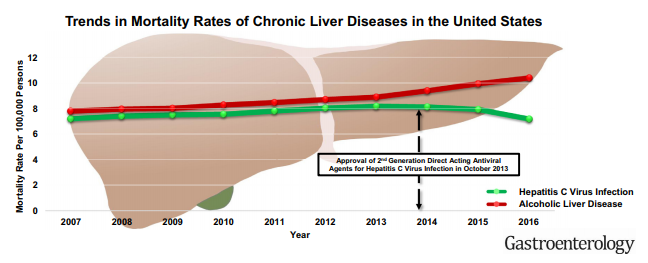
A recent study (D Kim et al. Gastroenterol 2018; 155: 1154-63) used a CDC database which captures >99% of deaths in the U.S. to analyze mortality trends from 2007 through 2016.  Full text link available online: Changing Trends in Etiology-Based Annual Liver Mortality

When looking at all-cause mortality, there has been a significant decline in deaths associated with hepatitis C (HCV) but not in deaths associated with alcoholic liver disease (ALD).  The image below shows the trend and the impact of direct-acting antivirals.  Deaths associated with nonalcholic fatty liver disease (NAFLD) and due to hepatitis B (HBV) are described in this study as well, though both together account for less than 1/4th deaths associated with ALD.  Interestingly, mortality related to NAFLD was increasing slowly over the study period.
Related blog posts:


Liver Shorts August 2018

M Yakoot et al. JPGN 2018; 67: 86-89. This prospective, open-label, unblinded study from Egypt indicated that 29 of 30 (96.7%) pediatric (12-17 yr) patients with HCV (genotype 4) attained an SVR12 with sofusbuvir/daclatasvir.  No serious adverse effects were evident.  The one patient who did not achieve SVR12 was lost to followup but had viral negativity after completing treatment.

Related blog post: New HCV Treatment Effective in Adolescents –Important Study Now Published Online

O El-Sherif, ZG Jiang et al. Gastroenterol 2018; 154: 2111-21. This study showed that a “BE3A Score” based on BMI <25, no Encephalopathy, no Ascites, Albumin >3.5 and ALT >60 IU/L could be used to discriminate the likelihood of reducing the Child-Pugh-Turcotte (CPT) score to class A in patients with hepatitis C virus-associated decompensated cirrhosis who received DAA therapy.  This retrospective  analysis was based on 4 trials of a sofusbuvir-therapy with 502 CPT class B and 120 CPT class C patients.

AH Ali et al. Hepatology 2018; 67: 2338-51.  This study convincingly shows that surveillance for hepatobiliary cancers improves outcomes in patients with primary sclerosing cholangitis.  Among their cohort of 830 patients (Mayo clinic), 79 developed malignancies.  Of those under surveillance (n=40), the 5-year survival was 68% compared to 20% for those who had not been under surveillance.  While the true cynic might ascribe some of the difference to ‘lead-time’ bias, this is unlikely to account for this difference at 5 years.

F Aberg et al. Hepatology 2018; 67: 2141-49.  This Finish-population prospective study, over an 11 year follow-up, using a nationally-representative cohort (n=6771) showed that even moderate alcohol consumption worsened outcomes (eg hepatic decompensation, hepatocellular carcinoma) in patients with nonalcoholic fatty liver disease.  In addition, the authors showed that diabetes the most significant predictor of poor outcome (HR 6.79). In a related commentary, pg 2072-73, the authors state that this article “put an end to the ongoing ddebate whether moderate alcohol drinking (less than 20 g of alcohol/day or 2 drinks per day) could be helpful.”

HCV Treatment and “MELD Purgatory”

A recent study (A Kwong et al. Liver Transplantation 2018; 24: 735-43) and associated editorial (P Martin, pg 727-8) highlight an unintended consequence of HCV therapeutic success –“MELD purgatory.”

The study notes that with the availability of more effective direct-acting antivirals for HCV, there has been a decrease in wait-list mortality and a decrease in disease severity.  This was determined by reviewing 3 timed cohorts (2004 n=2408, 2009 n=2402, and 2014 n=2817) from the Organ Procurement and Transplantation database.

  • For example, the 2014 had a 21% lower risk of wait-list death (HR 0.79) than the 2009 cohort.  This is in contrast to other (non-HCV) disease in which there was no change in mortality.
  • Also, the MELD rate of change was 2.35 per year for the 2009 cohort compared to 1.90 for the 2014 group.
  • In their discussion, the authors note that while patients with HCV can achieve a sustained virologic response, those with advanced liver disease still need liver transplantation.  In these patient, there is a much lower prospect of attaining a high enough MELD score to receive organ offers –“leaving them with persistent complications and a decreased quality of life.”  This situation has been termed “MELD purgatory.”

The editorial notes that in the five years since the introduction of sofosbuvir, HCV has been displaced as the single commonest indication for liver transplantation by nonalcoholic fatty liver disease.  These agents have led to a decrease in advance HCV-related liver disease.  In addition, in the past, HCV infection had near universal recurrence after transplantation and this is no longer the situation.

My take: Undeniably, the advent of DAA have made a huge dent in progressive HCV liver disease. However, those with advanced liver disease may be stuck in a purgatory between good health and poor quality of life even after clearance of HCV infection.

Related blog posts:

HBV Reactivation Risk with HCV DAA Therapy and What to Do About It

A recent prospective study (C-J Liu et al. Gastroenterol 2018; 154: 989-97) provided some reassurance about the likelihood of hepatitis B virus (HBV) reactivation during hepatitis C virus (HCV) treatment with direct-acting antivirals (DAA).

In this study with 111 patients with both HCV and HBV treated with ledpasvir/sofusbuvir, all (100%) of the patients had a sustained virologic response for their HCV infection. Other key findings:

  • Of the 37 patients with baseline HBV DNA < 20 IU.mL, 31 (84%) developed detectable HBV DNA levels through posttreatment week 12.
  • Of the 74 patients with baseline HBV DNA >20 IU/mL, 39 (53%) developed increases in HBV DNA >1 log10 IU/mL through posttreatment week 12.
  • 5 patients developed ALT >2 times ULN and 3 patients were started on HBV therapy.

The associated editorial (pgs 795-8) made the following recommendations:

  • “HBsAg-negative/HBcAb-positive patients should be monitored with ALT alone until SVR12 and should be tested with HBsAg +/- HBV DNA only if ALT increases or fails to normalize on therapy.”
  • “HBsAg-positive patients with undetectable baseline HBV DNA should be considered for preemptive anti-HBV treatment, or monitored with ALT and HBV DNA until SVR12”
  • “HBsAg-positive patients with positive baseline HBV DNA should be started on preemptive anti-HBV treatment until SVR12.”

Using the above management strategy will limit the number of HBV-infected patients who need to be treated.

My take: This study and the associated editorial provide useful information regarding DAA in coinfected HBV/HCV patients; this is important for patients and practitioners, especially given the black box warning on DAA medications.

Related blog posts:

Disclaimer: These blog posts are for educational purposes only. Specific dosing of medications/diets (along with potential adverse effects) should be confirmed by prescribing physician/nutritionist.  This content is not a substitute for medical advice, diagnosis or treatment provided by a qualified healthcare provider. Always seek the advice of your physician or other qualified health provider with any questions you may have regarding a condition.

Hepatitis C Infections Increasing -Tied to Opioid Crisis

Just when it looked like new treatments could eliminate/cure hepatitis C virus (HCV), it turns out that with the opioid epidemic, HCV infections are increasing at a rapid pace (TJ Liang, JW Ward. NEJM 2018; 378: 1169-71).

Related blog posts:

Estimated number of new Hepatitis B and Hepatitis C Infections in the U.S. from CDC Data.

Opioid Epidemic Affecting HCV Infection in Adolescents (as well as adults)

SA Barritt et al. J Pediatr 2018; 192: 159-64. Increasing Prevalence of Hepatitis C among Hospitalized Children Is Associated with an Increase in Substance Abuse

Background:  “After a sustained decline in new HCV cases, in recent years there has been a significant increase in HCV incidence in adults in many areas, primarily associated with the use and abuse of intravenous heroin and prescription opioids.” This study examines this trend in adolescents.

From abstract:

Study design

We examined hospitalizations in children using the Kids’ Inpatient Database, a part of the Healthcare Cost and Utilization Project. We identified cases using the International Classification of Diseases, 9th edition, codes for HCV infection during 2006, 2009, and 2012. Nonparametric tests for trend were used to calculate trend statistics.

Results

From 2006 to 2012 nationally, the number of hospitalizations of children with HCV increased 37% (2.69 to 3.69 per 10 000 admissions; P < .001). The mean age of children hospitalized was 17.6 years (95% CI, 17.4-17.8). HCV cases among those 19-20 years of age represented 68% of the total HCV diagnoses, with a 54% increase over the years sampled (P < .001 for trend). The burden of HCV in children was highest in whites, those in the lowest income quartile, and in the Northeast and Southern regions of the US (all P < .0001). The prevalence of substance use among children with HCV increased from 25% in 2006 to 41% in 2012 (P < .001).

Conclusion

The increases of HCV in hospitalized children are largely in teenagers, highly associated with substance abuse, and concentrated in Northeast and Southern states. These results strongly suggest that public health efforts to prevent and treat HCV will also need to include adolescents.

My take: Despite the availability of highly effective therapy for hepatitis C, the opioid epidemic undermines any prospect for eliminating hepatitis C infections.

Related blog posts:

Defining the Role for Elastography

The ability to determine if a patient has cirrhosis/severe fibrosis with a noninvasive test can help determine appropriate monitoring and treatment for many liver conditions. As such the AGA has provided recommendations for the use of vibration-controlled transient elastography (VCTE).

  • JK Lim et al. Gastroenterol 2017; 152: 1536-43.
  • S Singh et al. Gastroenterol 2017; 152: 1544-77.

Many recommendations are based on the specific unit of measurement, kilopascals (kPa)

Specific recommendations (most with low  or very low quality evidence):

  • “In adults with chronic HCV, we can accurately diagnosis cirrhosis …with VCTE-defined liver stiffness of ≥12.5 (±1) kPa.”  The AGA suggests using VCTE rather than MRE for detection of cirrhosis.
  • “In adults with chronic HCV who have achieved SVR…we can accurately rule out advanced fibrosis (F3 and F4) with post-treatment VCTE-..of ≤9.5 (±1) kPa.” . Even in patients who have had HCV eradicated, if cirrhosis has been identified, careful followup is recommended.
  • “In adults with chronic HBV, we can accurately diagnosis cirrhosis…with VCTE…of ≥11.0 (±1) kPa.”
  • “The AGA makes no recommendation regarding the role of VCTE in the diagnosis of cirrhosis in adults with NAFLD.” For NAFLD, VCTE is not as helpful as with chronic HCV and HBV.  Currently, liver biopsy remains the “gold standard.” However, for noninvasive imaging, “the AGA suggest using MRE, rather than VCTE, for detection of cirrhosis.
  • For adults with suspected compensated cirrhosis, a VCTE of 19.5 or greater can be used “to assess the need for esophagogastroduodenoscopy to identify high risk esophageal varices.”

My take: These elastography recommendations are applicable for adults.  For pediatric patients, these reports suggest that elastography may be helpful in specific circumstances as well.

Related posts:

Omaha Beach

Heroin Epidemic Causing Surge in Hepatitis C Infections

From NPR: Heroin Epidemic is Driving a Spike in Hepatitis C Cases

An excerpt:

The number of new Hepatitis C cases leaped nearly 300 percent from 2010 to 2015, according to a report released Thursday by the Centers for Disease Control and Prevention. And the CDC points to the likely culprit behind the spike in cases of the infectious disease: the use of heroin and other injection drugs.

And despite the existence of therapies that can cure more than 90 percent of infections, the organization says the disease remains a deadly threat. In 2013, for instance, the CDC says some 19,000 people died of their infections.

From CNN: New Hepatitis C Infections Triple due to Opioid Epidemic

The number of new nationally reported infections with the virus swelled from 850 in 2010 to 2,436 cases in 2015, with the highest rates among young people, mainly 20- to 29-year-olds, who inject drugs, according to a new report released Thursday by the Centers for Disease Control and Prevention.

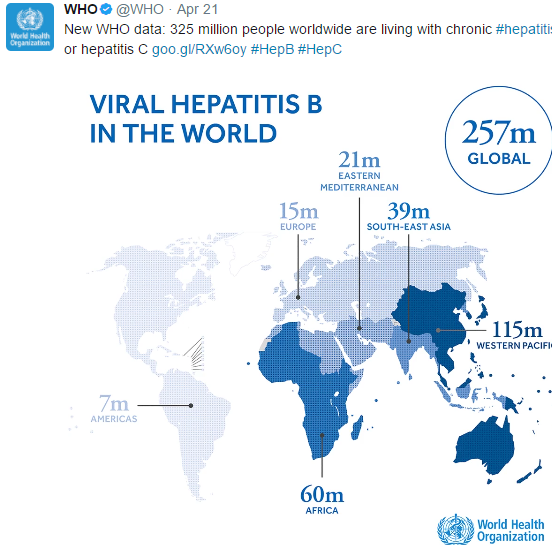
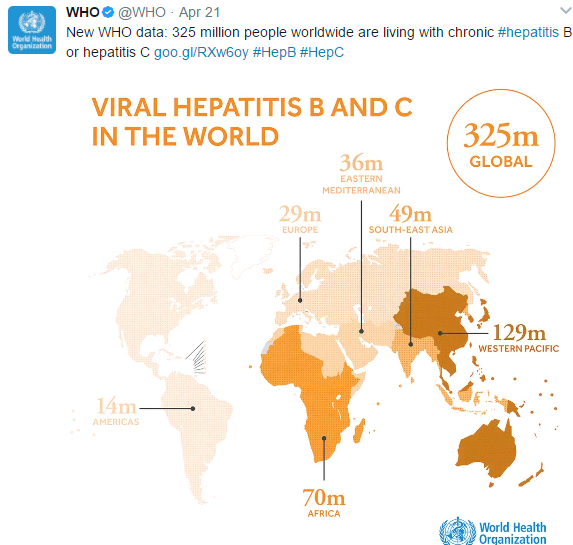
Burden of Hepatitis B and Hepatitis C

Related blog posts: