More on Anti-TNF Drug Levels (part 2) and a Few Mentions

Another study (K Papamichael et al. Clin Gastroenterol Hepatol 2016; 14: 543-9) examined therapeutic drug levels with regard to infliximab induction and mucosal healing.

In this retrospective study with 101 patients with ulcerative colitis, 54 (53.4%) achieved mucosal healing between weeks 10-14, defined by a Mayo endoscopic score of 0 or 1.  97% of patients were treated with 5 mg/kg infusions.

Key finding:

  • Infliximab threshold concentrations of 28.3 mcg/mL at week 2, 15 mcg/mL at week 6, and 2.1 mcg/mL at week 14 were associated with mucosal healing.

My take: While this study provides information on what type of levels to expect at 2, 6, and 14 weeks, what is really important is figuring out which patients need higher doses of infusions from the start.

Unrelated, briefly noted:

R Yadlapati et al. Clin Gastroenterol Hepatol 2016; 14: 535-42. In this prospective blinded cohort study of 59 subjects, oropharyngeal pH testing (Restech Dx-pH) and salivary pepsin analysis was not able to distinguish between healthy volunteers and subjects with a combination of laryngeal and reflux symptoms.

M Moris et al. Clin Gastroenterol Hepatol 2016; 14: 585-93. This study reports increasing findings of small pancreatic cysts with more (and better) MRI imaging.

Y Kawamura et al. Clin Gastroenterol Hepatol 2016; 14: 597-605. This retrospective study shows, among almost 10,000 patients with fatty liver disease, that alcohol consumption of ≥40 g/day is an independent risk factor for hepatocellular carcinoma.

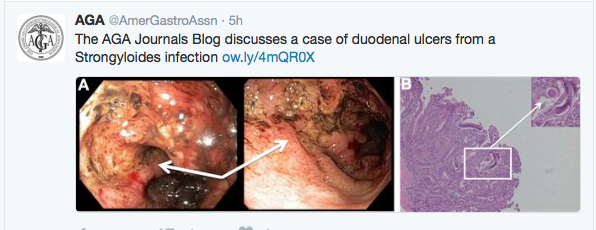
Strongloides

Here’s Why Biologic Therapy for Crohn’s Helps Adolescents Grow

It is well-recognized that Crohn’s disease is associated with delays in the onset and progression of puberty with the potential for stunted growth, impaired bone accrual, and diminished quality of life.

Now, a study (MD DeBoer et al. J Pediatr 2016; 171: 146-52) shows that initiation of anti-tumor necrosis factor α (anti-TNFα) treatment results in a rapid increase in sex hormone and gonadotropin levels.

In 72 adolescents, this observational study followed levels of sex hormones, gonadotropin levels, dual-energy x-ray absorptiometry, along with cytokine/inflammatory markers at initiation of anti-TNFα therapy, at 10 weeks and at 12 months.

Key findings:

  • By week 10 , testosterone z scores in males increased from a median of -0.36 to 0.40 (P<0.05)
  • By week 10 , estradiol z scores in females increased from a median of -0.35 to -0.02 (P<0.01)

My take (from the authors): This study suggests that “systemic inflammation suppresses gonadotropin-stimulated production of sex hormones” and that treatment of this inflammation with anti-TNFα agents allows rapid resumption normal production.

Related blog posts:

Law Quad, Univeristy of Michigan

Law Quad, Univeristy of Michigan

European Experience with Biosimilars

While there are numerous concerns regarding the use of biosimilar products, the preliminary experience with biosimilar infliximab has been favorable.

Full text link: European Experience of Infliximab Biosimilars for IBD (Gastroenterology & Hepatology)

Key points:

  • Biosimilars are leading to cost reductions of 30-40%.  In addition, to lowering the cost of infliximab, this is leading to reductions in costs for adalimumab and vedolizumab which are competing as 1st line therapies.
  • In the authors study of the first 210 patients, they did not find any difference in terms of immunogenicity or side effects.  In addition, efficacy was comparable to the ‘originator’ drug.

My take: Infliximab and adalimumab have been blockbuster medications for pharmaceutical companies, in part because they provide a great clinical benefit.  However, if biosimilars are truly biosimilar, the cost reductions will result in their widespread adoption.

Related blog post: Biosimilars -Position Statement  GutsandGrowth  This position statement: “Treatment of a child with sustained remission on a specific medication should not be switched to a biosimilar until clinical trials in IBD are available to support the safety and efficacy of such a change”

Castillo San Felipe del Morro

Castillo San Felipe del Morro

Nummular Eczema due to Infliximab

An image report (YM Dawkins et al. Clin Gastroenterol Hepatolo 2016; 14: xxxv-xxxvi) describes a 30-year-old with ulcerative colitis who developed nummular eczema two years after the start of infliximab.  He was treated with topical agents and a course of systemic corticosteroids.  The authors note that in a few patients, withdrawal of anti-TNF therapy is needed, but this was not needed in their patient.

SkinRxnNumEczemaIFX

Related blog posts:

‘Don’t Believe Our Study’

The message I inferred from a recent study (CA Siegel et al. Clin Gastroenterol Hepatol 2015; 13: 2233-40) was to disregard their results which generally showed a lack of benefit of combination therapy (aka “concomitant immunomodulator” or dual therapy) compared with anti-tumor necrosis factor (anti-TNF) monotherapy for Crohn’s disease.

Specifically, the authors state the following in their discussion:

Although our results challenge the clinical importance of combination therapy in this specific scenario, it is hard to ignore the preponderance of data to date relating to the pharmacokinetics of anti-TNF medications that support the approach of combination therapy over monotherapy.

Here’s the background for this study.  The authors performed a meta-analysis of placebo-controlled trials (n=1601 subjects) to examine the question of whether continued use of immunomodulators (IMs) would be of benefit in patients who had failed monotherapy with IMs (“IM-experienced”).  The authors note that the SONIC study showed that combination therapy (infliximab and azathioprine) was more beneficial in patients who were IM-naive than monotherapy.  This meta-analysis included data from 3 anti-TNF agents: infliximab, adalimumab, and certolizumab.

Key findings:

  • Combination therapy was no more effective than monotherapy in inducing 6-month remission (odds ratio 1.02) or in maintaining a response (OR 1.53).
  • In subgroup analysis, there was a statistically-significant protective effect of baseline IM exposure versus no baseline IM exposure among those treated with infliximab.
  • Generally, combination therapy was not associated with any change in adverse reactions; however, combination therapy with infliximab had lower adverse events, which was driven by infusion reactions.

My take: This study indicates that combination therapy is likely helpful in IM-experienced patients who are starting infliximab and possibly not effective with the other anti-TNF agents.  The authors emphasize the need for well-designed, prospective, randomized, placebo-controlled trial for a definitive answer.  Until then, don’t believe their study.

Of interest: Recently I became aware of a college scholarship opportunity for young adults with IBD: Abbvie Scholarship Program.

Related blog posts:

Clever Marketing or Truth in Advertising?

Clever Marketing or Truth in Advertising?

Yosemite National Park

Yosemite National Park

What is Your Infliximab Adherence Rate?

I started thinking about this question after a recent study (DS Vitale, et al. JPGN 2015; 61: 408-10) examined adherence at a single pediatric center (2010-2012). Adherence indicated “those who attended >80% of scheduled infusions.” Key findings:

  • 91.4% adherence rate of patients (n=151 with >4 infusions)
  • Adherent patients (n=138) attended an average of 98% of their infusions. Nonadherent patients attended, on average, 76% of their infusions.
  • The study provided some preliminary evidence that there was greater acute care use in nonadherent patients.
  • There were no demographic features that could predict adherence pattern.

My take: One of the key advantages of infusion therapy is improved and documented adherence.  Infusions also provide opportunities to assess patient in a scheduled manner. This study shows that subsets of patients with scheduled infusions have suboptimal adherence  — another target for quality improvement!

Atlanta Botanical Gardens, Bruce Munro Exhibit

Atlanta Botanical Gardens, Bruce Munro Exhibit


Should All Pediatric Patients with Crohn’s Disease Continue Combination Therapy?

Among patients/families who are not in denial about their inflammatory bowel disease, especially Crohn’s disease, an important discussion is the use of combination therapy.  This has been discussed on this blog before (see some links below).  More data on this subject has been published and again favors the use of combination therapy (V Grossi, T Lerer, et al. Clin Gastroenterol Hepatol 2015; 13: 1748-56).

This study collected data from 2002-2014 on 502 children who participated in a prospective multicenter study. This data was derived from an observational registry rather than a randomized trial, but likely reflects real-world experience with regard to newly diagnosed patients. The authors excluded those with prior biologic therapy and prior resectional surgery.

KEY FINDINGS:

  • Children receiving combination immunomodulator (IM) treatment were more likely to have durable infliximab therapy at 1 year, 3 years, and 5 years.
  • Greater length of concomitant IMs was associated with better durability.
  • For patients who had IM > 6 months after starting infliximab (n=194), durability was 0.70 at 5 years compared with 0.55 for patients with IM <6 months (n=144), and 0.48 for those who did not receive IMs (n=135).
  • In boys, methotrexate appeared to be superior to thiopurines (P<.01): 0.98 at 5 yrs compared with 0.58.  However, there were 60 males receiving methotrexate.  In the study, only 21 females received methotrexate which limited any conclusions.

Among patients who stopped IFX, the reasons included loss of response (n=61, 43%), hypersensitivity reaction (n=41, 29%), elective (n=25, 18%), lost to f/u (n=5, 3%), and other causes (10, 7%).

The “right” dose of methotrexate as a combination agent remains unclear.  There was a wide range of dosing schedules in this study.  It is worth observing that the COMMIT study in adults found no significant difference in adults who received methotrexate in addition to infliximab compared with those receiving infliximab monotherapy.

Take-home message: In this large pediatric observational study, the use of immunomodulators increased the likely durability of infliximab.  Given prior conflicting data (particularly with regard to methotrexate), even more studies are needed to determine exactly how useful combination therapy is and when monotherapy will suffice.  From my viewpoint, I worry much more about loss of efficacy to infliximab than I worry about medication adverse effects.  As such, I will continue to inform families that combination therapy appears to improve infliximab durability.

Related blog posts:

Mount Washburn, Yellowstone

Mount Washburn, Yellowstone

Anti-TNF Therapy: Rapid Reduction in Pain in Crohn’s Disease

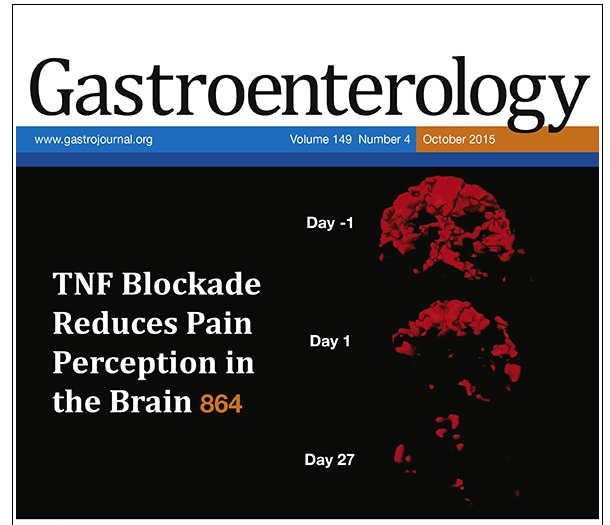
A pretty cool use of technology provides strong evidence that decreased pain perception in the brain of patient’s with Crohn’s disease (CD) occurs well before anti-inflammatory effects like mucosal healing (A Hess et al. Gastroenterol 2015; 149: 864-66). In this study, the authors prospectively identified 4 patients with CD and performed functional MRI on day -1, day 1, and day 27. Key findings:

  • In three patients, who responded with a decrease in Harvey-Bradshaw Index by ≥2 points 14 weeks after anti-TNF initiation, the pain signal induced by either finger tapping or compression (see cover below) was markedly improved 1 day after anti-TNF initiation.
  • In the CD non responder, there was only slight reduction in signals at 24 hours and no improvement from baseline at day 27.

My take: This study explains why so many patients with severe symptoms can be managed quickly as outpatients.  The effects of anti-TNF therapy on pain occur within 24 hrs!  Pretty cool. Screen Shot 2015-10-11 at 5.56.36 PM

Another Look at “Step-up” IBD Therapy

Whether and how long to continue immunomodulators in patients who have undergone a “step-up” treatment to anti-tumor necrosis factor (anti-TNF) therapy remains murky.  This is due to conflicting data from different patient cohorts, changing treatment trends, (e.g. use of drug monitoring to enhance anti-TNF therapy), and different endpoints. With regard to the latter, dual therapy has been clearly more effective in some landmark studies (eg. SONIC, UC SUCCESS); however, there have been ongoing concerns regarding long-term outcomes and adverse effects.

Will more studies help resolve this question? Perhaps, but not today.

A recent study (MT Osterman et al. Clin Gastroenterol Hepatol 2015; 13: 1293-1301) examined a retrospective cohort of new users of anti-TNF therapy for Crohn’s disease in Medicare recipients.  The authors matched 381 combination with infliximab (ie. dual therapy) with 912 users of monotherapy. In addition, the authors did the same with adalimumab with 196 combination users and 505 monotherapy users. In their cohort, combination therapy occurred primarily as a “step-up” treatment after institution of thiopurine therapy.

Results:

  • Key outcome measures were unchanged: rates of surgery (hazard ratio [HR] 1.2, hospitalization HR 0.82, discontinuation of anti-TNF therapy or surgery HR 1.09, and serious infection HR 0.93
  • Opportunistic infections were increased in combination therapy with HR 2.64 and herpes zoster infection was increased with HR 3.16

Take-home message: This study suggests, at least in this elderly population, that once remission is achieved with anti-TNF therapy, discontinuation of thiopurine therapy or use of an alternative immunomodulator therapy may be worthwhile.  At the same time, definitive answers to these type of questions await carefully designed randomized trials.

Related blog posts:

Higher Stool Infliximab Correlates with Poor Response in Severe Ulcerative Colitis

A recent study (full text link: “Loss of Infliximab into feces is associated with lack of response to therapy in patients with severe ulcerative colitisGastroenterol 2015; 149; 350-55.e2) provides information about patients with ulcerative colitis who do not respond well to infliximab therapy.

In this study, the authors obtained fecal samples from 30 consecutive patients with moderate to severe UC during the 1st 2 weeks of therapy.  In addition, they obtained serum infliximab levels as well as assessed clinical and endoscopic response at 2 weeks, 8 weeks, and 3 months after treatment began.

Key findings:

  • Fecal infliximab was detected in 129 of 195 (66%) samples.  The greatest loss was observed approximately 2 days after infusion. Low serum albumin was associated with greater infliximab levels in the stool.
  • Clinical nonresponders at week 2 had significantly higher fecal infliximab
  • The authors did not observe a correlation between fecal and serum infliximab concentrations.  However, it is possible that stool losses could indicate lower mucosal concentrations of infliximab.
From AGA twitter account

From AGA twitter account

From AGA twitter account

From AGA twitter account

From AGA twitter feed

From AGA twitter feed

Bottomline: It is not clear whether stool losses of infliximab directly contribute to drug failure or whether the loss is another biomarker of disease activity/high-risk patients.

The study authors note that “intestinal loss of IFX in moderate to severely active UC is associated with a diminished response to this treatment.  Patients with severe disease can, therefore, benefit from more intensive dosing regiments. This strategy warrants a prospective clinical trial.”

Related blog posts: