Will This Abdominal Pain Last Forever? Part 3 (2024)

Jones MP, Koloski NA, Walker MM, et al. A minority of childhood disorders of gut-brain interaction persist into adulthood: a risk-factor analysis. Am J Gastroenterol. Published online April 24, 2024. doi:10.14309/ajg.0000000000002751

Methods: General practice records were obtained for 1,256,331 UK patients including 60,794 patients whose medical record spanned both childhood and adulthood years. Children had to have an age of first contact of 12 years or younger.

Key points:

  • Eleven percent of patients with irritable bowel syndrome (IBS) and 20% of patients with functional dyspepsia (FD) diagnosed in childhood had repeat diagnoses of the same condition in adulthood
  • Female sex (odds ratio [OR] 2.02) was associated with persistence for IBS
  • Childhood non-steroidal anti-inflammatory drug use (OR 1.31, 95% confidence interval [CI] 1.09–1.56) was a risk factor for persistence in IBS
  • In the subsample cohort which included adults and children with disorders of gut-brain interaction (DGBI), 22% of first diagnosis of IBS and 24% of FD occurred before the age of 18 years
  • Neither socioeconomic status nor ethnicity was associated with a repeat DGBI diagnosis
  • Having a diagnosis of childhood depression, but not childhood anxiety, was associated with a repeat DGBI diagnosis. Both anxiety and depression were associated with DGBI diagnosis in adulthood among those without childhood DGBI.

In their discussion, the authors note several strengths which included a large nationally-representative sample. Limitations included the use of a retrospective design and database. Also, diagnosis was not based on Rome criteria but at discretion of practitioner (which is routine in clinical practice). The overall number of children with DGBIs who had repeat diagnosis as adults is lower than prior estimates. The authors speculate that female sex as a risk factor for repeat DGBIs could be due to underlying intestinal immune activation which is generally enhanced in women.

My take: This study suggests that more children outgrow their DGBIs with age than prior studies; yet, it is still a significant number of patients burdened with these ongoing disorders.

Related blog posts:

More Data Supporting Dietary Treatment for Irritable Bowel

S Nybacka et al. The Lancet Gastroenterol Hepatol 2024; DOI: https://doi.org/10.1016/S2468-1253(24)00045-1. A low FODMAP diet plus traditional dietary advice versus a low-carbohydrate diet versus pharmacological treatment in irritable bowel syndrome (CARBIS): a single-centre, single-blind, randomised controlled trial

In this Swedish study with 294 randomized participants who had with moderate to severe I.B.S, 96 assigned to the LFTD (low FODMAPs with IBS advice) diet, 97 to the low-carbohydrate diet, and 101 to optimised medical treatment. Response was defined as a reduction of 50 or more in IBS-SSS compared with baseline.

Key findings:

  • Response rate after 4 weeks: 73 (76%) of 96 participants in the LFTD diet group, 69 (71%) of 97 participants in the low-carbohydrate diet group, and 59 (58%) of 101 participants in the optimised medical treatment group

The findings of this study were included in a recent NY Times Article (4/18/24): What’s the Best Way to Treat I.B.S.?

An excerpt:
“A new study suggests that certain dietary changes may be more effective than medication.. When she checked on the participants during the trial, one from the low-FODMAP group cried when she described how much better she felt on the diet. Another in the low-carbohydrate group said she “never in her life had felt so good in her stomach,” Dr. Nybacka said…

Dr. Chey said the study was well done and provided “real data” to support what many doctors have observed: That “diet therapy is at least as good and probably better” than medication.

My take: Dietary therapies and psychological therapies are underutilized in the management of IBS. For those using dietary therapies, counseling with a nutritionist is a good idea.

Related blog posts:

Grand Canyon (from Seth Hochman)

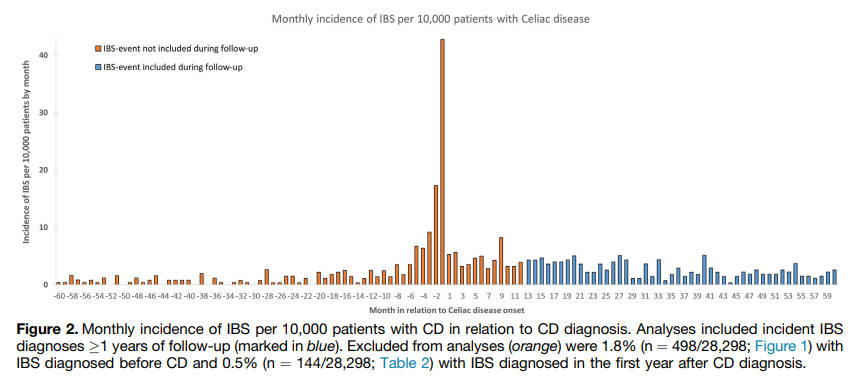
Increased Risk of Irritable Bowel Before and After the Diagnosis of Celiac Disease

K Marild et al. Clin Gastroenterol Hepatol 2024; Open Access (PDF)! Association Between Celiac Disease and Irritable Bowel Syndrome: A Nationwide Cohort Study

Methods: Using Swedish histopathology and register-based data, we identified 27,262 patients with CD diagnosed in 2002–2017 and 132,922 age- and sex-matched general population comparators.

Key Findings:

  • During an average of 11.1 years of follow-up, 732 celiac patients (2.7%) were diagnosed with IBS vs 1131 matched general population comparators (0.9%).
  • Compared with siblings (n= 32,010), celiac patients (n = 19,211) had >/= 2-fold risk of later IBS (aHR, 2.42)
  • Compared with celiac patients with mucosal healing, those with persistent villus atrophy on follow-up biopsy were less likely to be diagnosed with IBS (aHR, 0.66)

Interpretation of findings:

“We found celiac patients with persistent villus atrophy on follow-up biopsy less likely to be
diagnosed with IBS than those with mucosal healing. Traditionally, physicians have hesitated to diagnose IBS in patients with an organic gastrointestinal disorder (eg, CD), possibly underestimating the observed IBS risk in CD. This reluctance to diagnose IBS may be particularly true for celiac patients who have not achieved mucosal healing, because persistent villus atrophy may indicate that ongoing symptoms are due to gluten exposure
instead of IBS.”

Surveillance bias is another challenge of studies associating IBS with CD. From the outset of diagnosing and managing these conditions, they are often mutually excluded (eg, CD-specific serology tests are often part of the workup of IBS-like symptoms). Consequently, the
strength of the association between these conditions may be overestimated.” This is why the authors focused on IBS events beyond the first year of CD diagnosis and there continue to be an increased risk of IBS 10 years of follow-up.

Another limitation of this study: “a large proportion of IBS patients are cared for in
primary care or never seek care at all, and hence our study may have had a low sensitivity for IBS, particularly mild IBS.”

My take: While recurrent symptoms in patients with CD could indicate ongoing gluten exposure, recurrent symptoms can also be due to IBS which can occur even with mucosal healing.

Related blog posts:

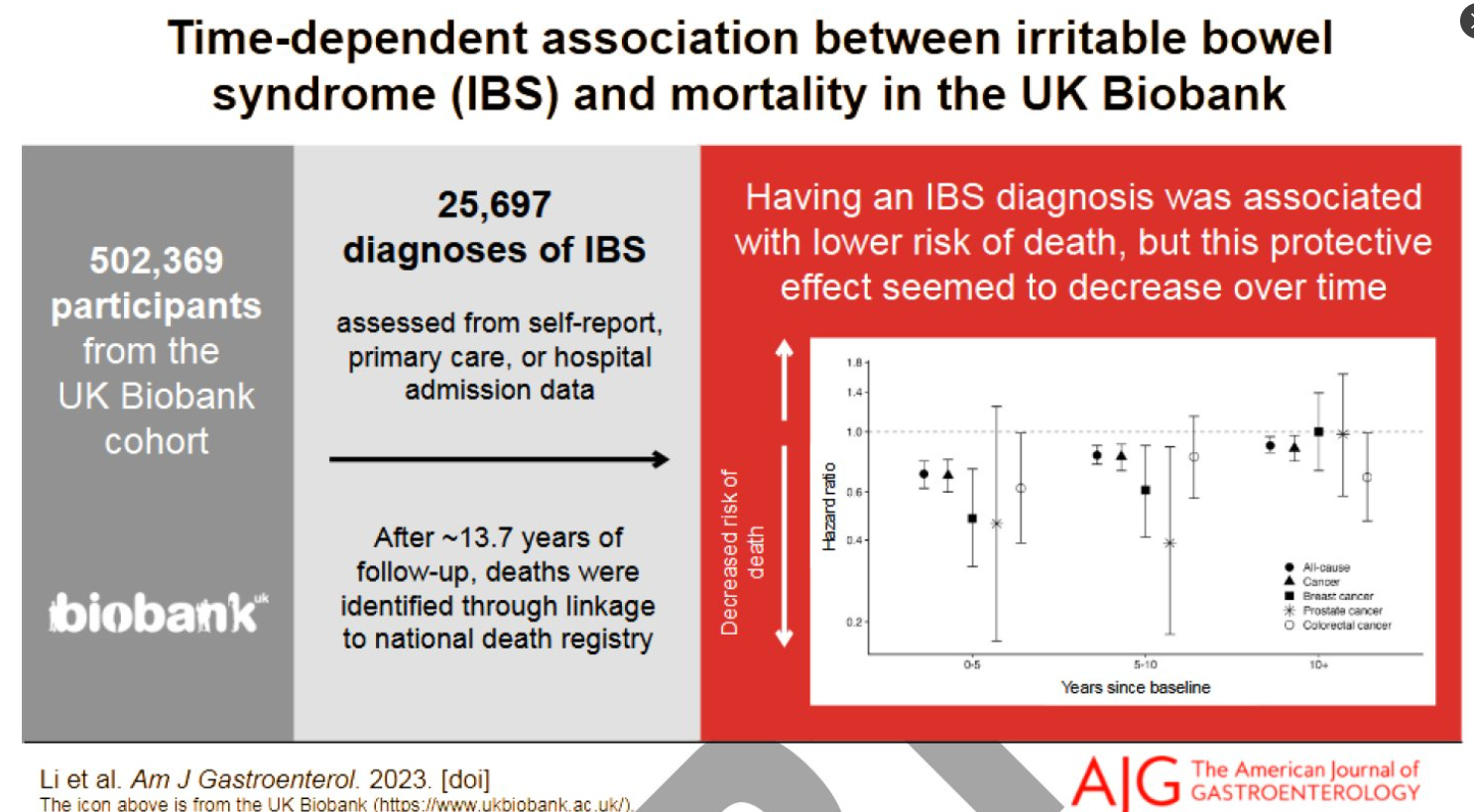
Irritable Bowel Syndrome Associated with Improved Survival

F Li et al. AJG 2024; DOI10.14309/ajg.0000000000002675. The Time-Dependent Association between Irritable Bowel Syndrome and All-cause and Cause-specific Mortality: A Prospective Cohort Study within the UK Biobank

Key findings:

  • Having an IBS diagnosis was strongly associated with lower risks of all-cause (HR=0.70) and all cancer (HR=0.69) mortality in the first 5-years of follow-up. These associations were attenuated over follow-up, but even after 10 years of follow-up, associations remained inverse (all-cause: HR=0.89; all cancer: HR=0.87) after full adjustment.
  • Individuals with IBS had decreased risk of mortality from breast, prostate, and colorectal cancer in some of the follow-up time categories.

My take: Having IBS may cause suffering but appears to lower risk of death. The reason for this is not clear.

Atlantis Study: Possibly Best Evidence That Tricyclics May Help Irritable Bowel

Thanks to Ben Gold for this reference.

AC Ford et al. The Lancet 2023; DOI:https://doi.org/10.1016/S0140-6736(23)01523-4. Open Access! Amitriptyline at Low-Dose and Titrated for Irritable Bowel Syndrome as Second-Line Treatment in primary care (ATLANTIS): a randomised, double-blind, placebo-controlled, phase 3 trial

In this randomized, double-blind, placebo-controlled study of 463 adults (median age 48 yrs), the authors compared low-dose oral amitriptyline (10 mg once daily) or placebo for 6 months, with dose titration over 3 weeks (up to 30 mg once daily). The use of the Rome IV criteria resulted in the selection of a group of patients with higher symptom severity,50 borne out by the mean IBS-SSS scores at baseline, which were in the moderate to severe range. The median duration of IBS among participants was 10 years.

Key findings:

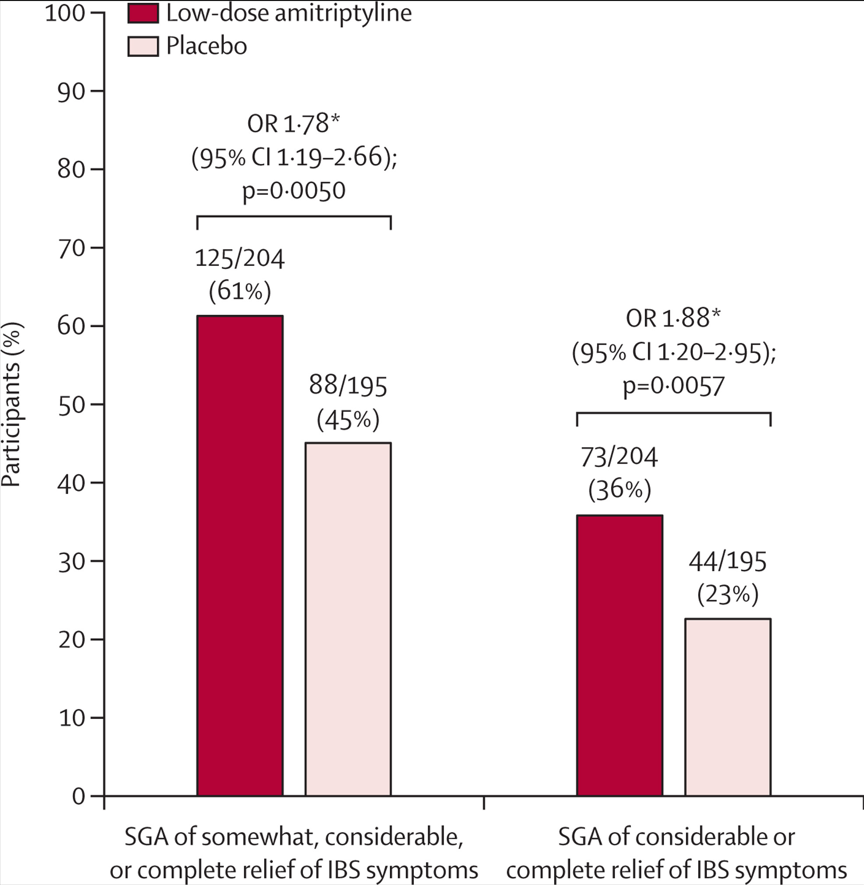
  • Intention-to-treat analysis of the primary outcome showed a significant difference in favour of low-dose amitriptyline in IBS-SSS score between groups at 6 months (–27·0, 95% CI –46·9 to –7·10; p=0·0079)
  • 46 (20%) participants discontinued low-dose amitriptyline (30 [13%] due to adverse events), and 59 (26%) discontinued placebo (20 [9%] due to adverse events) before 6 months.

In their discussion, the authors note that “this is the largest trial of a tricyclic antidepressant in IBS ever undertaken and the first based entirely in a primary care setting…low-dose amitriptyline met the primary outcome, with a mean decrease in IBS-SSS of almost 100 points at both months 3 and 6 compared with baseline, and also met the key secondary outcome for effectiveness, as well as other IBS symptom measures.”

“There was no effect of low-dose amitriptyline on somatoform symptom-reporting scores, or anxiety or depression scores, during 6 month follow-up, nor was there any impact on work and social activities.:

Key secondary outcome of SGA of relief of IBS symptoms at 6 months. SGA=subjective global assessment.

My take (borrowed from authors): Titrated low-dose amitriptyline was superior to placebo as a second-line treatment for IBS in primary care across multiple outcomes, and was safe and well tolerated.

Related blog posts:

Disclaimer: This blog, gutsandgrowth, assumes no responsibility for any use or operation of any method, product, instruction, concept or idea contained in the material herein or for any injury or damage to persons or property (whether products liability, negligence or otherwise) resulting from such use or operation. These blog posts are for educational purposes only. Specific dosing of medications (along with potential adverse effects) should be confirmed by prescribing physician.  Because of rapid advances in the medical sciences, the gutsandgrowth blog cautions that independent verification should be made of diagnosis and drug dosages. The reader is solely responsible for the conduct of any suggested test or procedure.  This content is not a substitute for medical advice, diagnosis or treatment provided by a qualified healthcare provider. Always seek the advice of your physician or other qualified health provider with any questions you may have regarding a condition.

Briefly Noted: Kiwi for IBS-C

R Gearry et al. AJG 2022. DOI: 10.14309/ajg.0000000000002124.Open Access! Consumption of 2 Green Kiwifruits Daily Improves Constipation and Abdominal Comfort—Results of an International Multicenter Randomized Controlled Trial

Participants included healthy controls (n = 63), patients with functional constipation (FC, n = 60), and patients with constipation-predominant irritable bowel syndrome (IBS-C, n = 61). Mean age 35 years.

Key findings: Consumption of green kiwifruit was associated with a clinically relevant increase of ≥ 1.5 CSBM (complete spontaneous bowel movement) per week (Functional constipation; 1.53, P < 0.0001, IBS-C; 1.73, P = 0.0003) and significantly improved measures of GI comfort (GI symptom rating scale total score) in constipated participants (FC, P < 0.0001; IBS-C, P < 0.0001)

Related blog post: Small Study: Kiwi For Constipation

Which Diet is Best for Irritable Bowel Syndrome? A Randomized Trial

A Rej et al. Clin Gastroenterol Hepatol 2022; 20: 2876-2887. Open Access! Efficacy and Acceptability of Dietary Therapies in Non-Constipated Irritable Bowel Syndrome: A Randomized Trial of Traditional Dietary Advice, the Low FODMAP Diet, and the Gluten-Free Diet

Methods: In patients (n=99) with Rome IV–defined non-constipated IBS, outcomes after randomization to one of three diets were compared. The “traditional dietary advice” group: “Its principles include adopting healthy, sensible eating patterns such as having regular meals, never eating too little/too much, maintaining adequate hydration, and reducing the intake of (1) alcohol/caffeine/fizzy drinks, (2) fatty/spicy/processed foods, (3) fresh fruit to a maximum of 3 per day, (4) fiber and other commonly consumed gas-producing foods (eg, beans, bread, sweeteners, etc), and (5) addressing any perceived food intolerances (eg, dairy).” (Link: National Institute for Health and Care Excellence advice on IBS mgt). The Gluten-Free diet allowed for cross-contamination. All patients had specialist dietary counseling.

Key findings:

  • All three diets resulted in improvement. The primary end point of ≥50-point reduction in IBS-SSS was met by 42% (n = 14/33) undertaking TDA, 55% (n = 18/33) for LFD, and 58% (n = 19/33) for GFD (P = .43)
  • Alterations in stool dysbiosis index were similar across the diets, with 22%–29% showing reduced dysbiosis
  • “The pragmatic study design, whereby the responsibility was left on patients to undertake the diets following appropriate education, means our findings can be generalized”

My take: All three diet approaches would be appropriate to reduce IBS symptoms, thought the TDA is the easiest for patients.

Related blog posts:

Is Fecal Transplantation Needed To Treat Irritable Bowel? Three Year Data

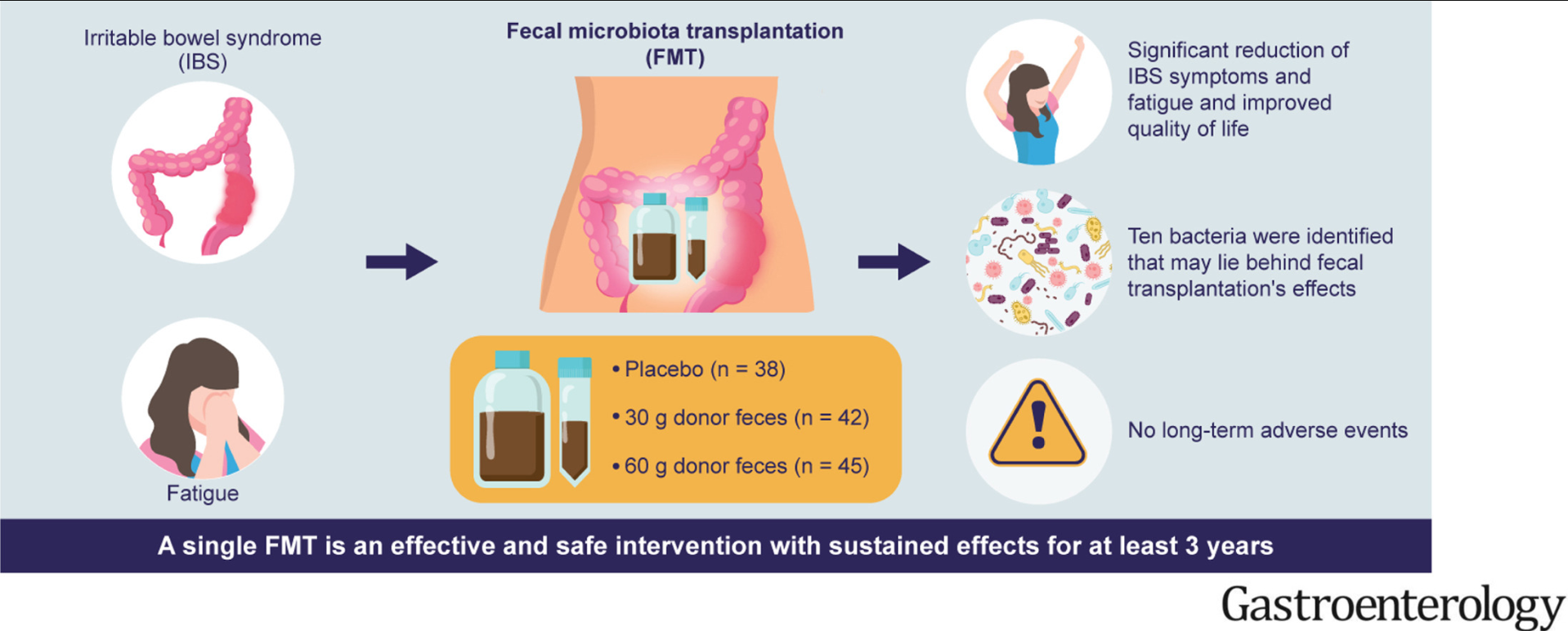
M El-Salhy et al. Gastroenterol 2022; 163: 982-994. Open Access! Efficacy of Fecal Microbiota Transplantation for Patients With Irritable Bowel Syndrome at 3 Years After Transplantation

Background: “Fecal microbiota transplantation (FMT) might be a promising treatment for IBS, and this has been investigated in 7 randomized controlled trials (RCTs). 2 In 4 of these, FMT reduced symptoms and improved the quality of life of patients with IBS, whereas no effects were indicated in the other 3. 2 The difference in these results was likely because of differences in the protocols used, the selected donors, the cohort of treated patients, the fecal transplant dose, and the route by which the transplant was administrated.2

Methods: In this placebo-controlled trial with 125 patients, fecal microbiota transplantation (FMT) was administered into duodenum (30 g or 60 g). The donor was a healthy male aged 36 years with a normal body mass index who was born via vaginal delivery, breastfed, a nonsmoker, was not taking any medication, was only treated a few times with antibiotics, exercised regularly, and consumed a sport-specific diet that was richer in protein, fiber, minerals, and vitamins than the average diet.

Key findings:

  • Response rates were 26.3%, 69.1%, and 77.8% in the placebo, 30-g, and 60-g groups, respectively, at 2 years after FMT, and 27.0%, 64.9%, and 71.8%, respectively, at 3 years after FMT. 
  • Fluorescent signals of 10 bacteria had significant correlations with IBS symptoms and fatigue after FMT in the 30-g and 60-g groups.
  • No long-term adverse events were recorded. The authors note in the discussion rare serious safety issues with FMT but indicate in this population without systemic diseases or immune deficiency, that adverse effects were mild and self-limited gastrointestinal symptoms

The associated editorial (815–817, Treatment of Irritable Bowel Syndrome Using Fecal Microbiota Transplantation: A Step Forward?) noted that 25% of patients in the donor FMT continue to experience severe symptoms based on IBS-SSS>300; in addition, 50% (in 30 g) and 40% (in 60 g) had moderately severe IBS scores >175.

The editorial suggests that overall response is modest bust similar to FDA-approved medications for IBS. The number needed to treat (NNT) would be 4-5 patients to reduce the proportion with severe IBS-SSS based on per-protocol analysis (most IBS medications range from 6 to 10).

My take: This study strengthens the notion that alterations in our microbiome can the outcomes of patients suffering from IBS. Now, we have to identify which patients will benefit from this approach and how to optimally modify the microbiome. In addition, this study suggests that finding an optimal FMT donor will impact results given variability in prior trials.

Related blog posts:

Disclaimer: This blog, gutsandgrowth, assumes no responsibility for any use or operation of any method, product, instruction, concept or idea contained in the material herein or for any injury or damage to persons or property (whether products liability, negligence or otherwise) resulting from such use or operation. These blog posts are for educational purposes only. Specific dosing of medications (along with potential adverse effects) should be confirmed by prescribing physician.  Because of rapid advances in the medical sciences, the gutsandgrowth blog cautions that independent verification should be made of diagnosis and drug dosages. The reader is solely responsible for the conduct of any suggested test or procedure.  This content is not a substitute for medical advice, diagnosis or treatment provided by a qualified healthcare provider. Always seek the advice of your physician or other qualified health provider with any questions you may have regarding a condition.

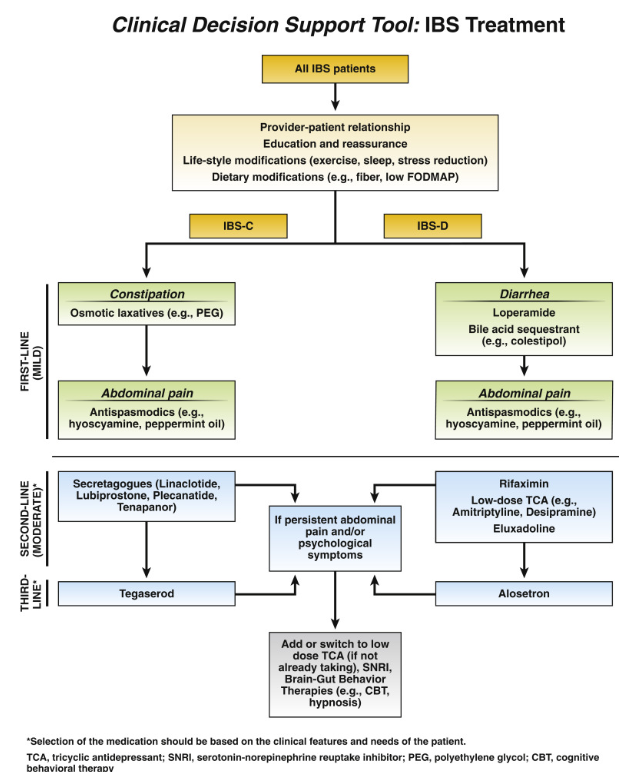
AGA Guidelines for Pharmacologic Therapy of IBS-D and IBS-C

A Lembo, S Sultan et al. Gastroenterol 2022; 162: 137-151. Open access PDF: AGA Clinical Practice Guideline on the Pharmacological Management of Irritable Bowel Syndrome With Diarrhea

LChang, S Sultan et al. Gastroenterol 2022; 162: 118-136. Open access: AGA Clinical Practice Guideline on the Pharmacological Management of Irritable Bowel Syndrome With Constipation

The associated 1-page summary (“Spotlight: IBS Treatment“) on pg 153 reviews society guidelines on testing in IBS. This includes for IBS-D celiac serology, calprotectin/lactoferrin, CRP, possilby Giardia antigen (if in endemic area) and possibly bile acid diarrhea testing. Not recommended include food allergy/sensitivity testing, colonoscopy if <45 years and lactulose or glucose hydrogen breath testing. This 1-page summary details therapeutic dosing and costs. Monthly costs of selected medications according to this report:

  • Lubiprostone (Amitiza): $374
  • Linaclotide (Linzess): $523
  • Pleacnatide (Trulance): $528
  • Tegaserod (Zelnorm): $480
  • Tenapanor (IBSRELA): $1680
  • Rifaximin (Xifaxan) $1544 (for 14 day course)
  • Eluxadoline (Viberzi): $1550
  • Alosetron (Lotronex): $1457-1929 (starting dose), $2915-3859 (max dose)

My take: These guideline publications provide comprehensive information regarding potential pharmacological therapies.

Related blog posts:

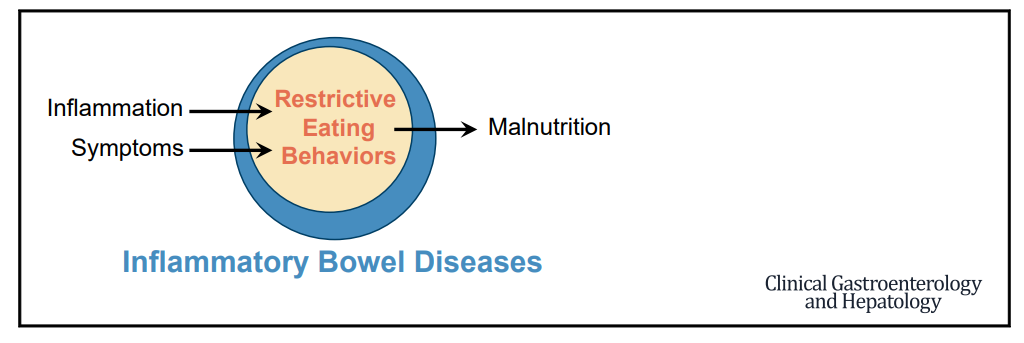
Avoidant/Restrictive Food Intake Disorder (ARFID) with Irritable Bowel Syndrome and with Inflammatory Bowel Disease

Last week, this blog highlighted a study regarding the prevalence of ARFID in pediatric neurogastroenterology (Prevalence of Avoidant/Restrictive Food Intake Disorders in Pediatric Neurogastroenterology).

Today, this post reviews a study with 955 adult patients from 4 prospective studies who had completed the IBS Quality of Life Instrument (IBS-QOL). The 3 questions constituting the food domain were used to identify patients with reported severe food avoidance and restriction.

Key findings:

  • In total, 13.2 % of the patients reported severe food avoidance and restriction, and in these patients all aspects of quality of life were lower (P < .01) and psychological, GI, and somatic symptoms were more severe (P < .05). 

The associated editorial provides a lot of information on ARFID in this setting.

Key points:

  • “The sine qua non of ARFID is a reduction in food intake, in terms of volume and/or variety, not primarily motivated by body image disturbance”
  • “Motivations behind changes in eating in ARFID need to be 1 or more of 3 prototypical presentations: (1) fear of aversive consequences (eg, IBS symptoms), (2) a lack of interest in eating or low appetite, and (3) sensitivity to sensory characteristics of food (eg, taste, texture, smell)”
  • “Weight suppression has similar deleterious health effects as is seen in anorexia nervosa, including cardiac abnormalities and bone mineral density loss”
  • “Up to 90% of patients in IBS reporting avoidance of specific foods”
  • “To identify presence of problematic avoidant/restrictive eating, there are ARFID measures validated with cutoffs (eg, the 9-item ARFID Screen;22,23 the PARDI-ARFID questionnaire).24 Nevertheless, more research is needed on the utility of these screening measures in IBS populations”

My take: Patients with ARFID and IBS need much more careful dietary counseling. So, it is important to consider the possibility of ARFID in this patient population.

Related article: E Yelencich et al. Clin Gastroenterol Hepatol 2022; 20: 1282-1289. Open Access PDF: Avoidant Restrictive Food Intake Disorder Prevalent Among Patients With Inflammatory Bowel Disease In this cross-sectional study of adults with IBD, 28/161 (17%) had a positive ARFID risk score (>/=24). Most participants (92%) reported avoiding 1 or more foods while having active symptoms, and 74% continued to avoid 1 or more foods even in the absence of symptoms. Patients with a positive ARFID risk screen were significantly more likely to be at risk for malnutrition (60.7% vs 15.8%; P < .01)

Related blog post:

Afraid to Eat -Could be “Avoidant Restrictive Food Intake Disorder”