Frequency of Erythema Nodosum and Pyoderma Gangrenosum in 32,497 Pediatric Patients with Inflammatory Bowel Disease

MY Yousif et al. JPGN 2024; 79:1009–1016. Open Access! The association between erythema nodosum and pyoderma gangrenosum and pediatric inflammatory bowel disease

Using the ImproveCareNow prospective registry, the authors analyzed a total of 285,913 visits from 32,497 patients aged ≤ 21 years.

Key findings:

  • The occurrence of erythema nodousm (EN) was 1.57% and the occurrence of pyoderma gangrenosum (PG) was 0.90%. Co-occurrence of EN and PG was reported in 0.30% patients.
  • Both EN and PG were associated (p < 0.0001) with worse intestinal disease, lower remission, higher inflammatory markers, and extraintestinal manifestations (EIMs) arthritis and uveitis. 
  • Limitations: “imperfect and incomplete data entry that may introduce bias. However, due to the extensive longitudinal data, we expect any bias to be minimal.”

My take: This study clarifies how common these dermatologic findings occur in pediatric patients with IBD. Prompt recognition of these disorders is important. Recently, our group cared for a 20 yo patient with inadequately-treated PG by multiple internal medicine physicians; this led to prolonged hospitalization.

Related blog posts:

The Dancer by Auguste Renoir, National Gallery of Art

IBD Updates: Fatigue Trajectory, Risk of IBD with Derm Findings

NZ Borren et al. Inflamm Bowel Dis 2021; 27: 1740-1746. Open Access: Longitudinal Trajectory of Fatigue in Patients With Inflammatory Bowel Disease: A Prospective Study

In this prospective study using the CCFA IBD Partners cohort, the authors examined fatigue symptoms with questionnaires (FACIT-F and MDI) at 3 timepoints over a 1 year period. There was likely a strong selection bias among participants (mean disease duration was 18 years) who chose to complete theses questionnaires. Key findings:

  • Persistent fatigue (at baseline and at 6 months) was the most common pattern, affecting two-thirds (65.8%) of patients
  • The strongest predictor of incident fatigue was sleep disturbance at baseline (odds ratio, 2.91.
  • Only 12.3% of those with fatigue at baseline had symptom resolution by 6 months. Resolution was more likely in patients with a diagnosis of ulcerative colitis, quiescent disease, and an absence of significant psychological comorbidity

My take: In those with fatigue, it is often persistent.

Related blog post: #MondayNightIBD and Fatigue

D King et al. Inflamm Bowel Dis 2021; 27: 1731-1739. The Risk of Later Diagnosis of Inflammatory Bowel Disease in Patients With Dermatological Disorders Associated With Inflammatory Bowel Disease

The authors retrospectively studied 7447 patients with dermatological conditions such as erythema nodosum (EN), pyoderma gangrenosum, Sweet’s syndrome, and aphthous stomatitis which can occur with inflammatory bowel disease (IBD) and are considered dermatological extraintestinal manifestations (D-EIMs).

Key findings:

  • 131 (1.8%) subsequent IBD diagnoses in patients with D-EIMs compared with 65 (0.2%) in those without D-EIMs
  • Median time to IBD diagnosis was 205 days (IQR, 44-661 days) in those with D-EIMs

My take: The absolute risk if IBD is low in patients with D-EIMs but still increased 6-fold. This would probably be a good population to screen for IBD with a biomarker (eg. calprotectin)

Related blog post: Review of Pyoderma Gangrenosum

J Shah et al. Inflamm Bowel Dis 2021; 27: 1832-1838. Ocular Manifestations of Inflammatory Bowel Disease Nice review: “ocular manifestations of IBD include keratopathy, episcleritis, scleritis, and uveitis and are among the most common extraintestinal manifestations.” Urgent referral to ophthalmology needed if deep eye pain that can awaken from sleep (?scleritis), if photosensitivity/blurry vision/headache (?anterior uveitis), or if floaters/decreased vision (?posterior uveitis)

Review of Pyoderma Gangrenosum

K Vaidy et al. JPGN Reports 2020; Full text: Treatment of Pyoderma Gangrenosum in Pediatric Inflammatory Bowel Disease

This in-depth report reviews pyoderma gangrenosum including the differential diagnosis, the pathophysiology/genetics, presentation/diagnosis and treatment approaches. Anti-TNF therapy: “Currently available published data support using an anti-TNF-α biologic agent as first-line therapy for severe PG therapy in pediatric IBD, as well as for those cases that have not responded to local therapies.”

Related blog posts -PG:

IBD Update -July 2020

X Roblin et al. Gut 2020; DOI: 10.1136/gutjnl-2019-319758 Addition of azathioprine to the switch of anti-TNF in patients with IBD in clinical relapse with undetectable anti-TNF trough levels and antidrug antibodies: a prospective randomised trial. Key Findings:

  • Rates of clinical failure and occurrence of unfavourable pharmacokinetics were higher in monotherapy compared with combination therapy
  • At 24 months, survival rates without clinical failure and without appearance of unfavourable pharmacokinetics were respectively 22% versus 77% and 22% versus 78% (p<0.001 for both) in monotherapy versus combination therapy

RC Ungaro et al. Clin Gastroenterol Hepatol 2020; 18: 1152-60.  The authors retrospectively analyzed 3178 patients with Crohn’s disease and found that stopping mesalamine therapy in individuals who were starting biologic therapy did NOT increase their risk of adverse clinical events.  They caution that their findings should be validated in a prospective study.

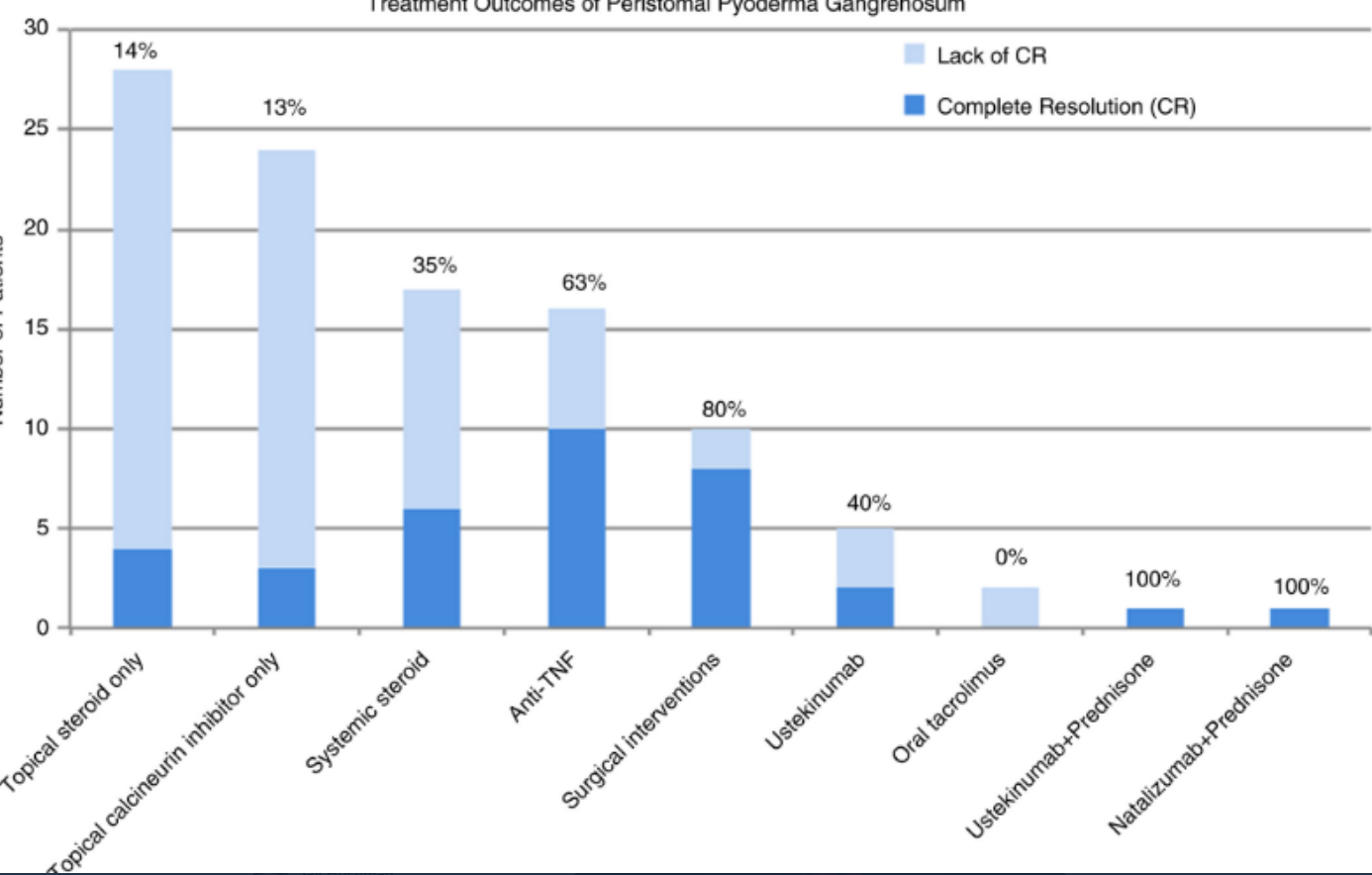
J Wang et al. AP&T. https://doi.org/10.1111/apt.15766. Full Text: Risk factors and treatment outcomes of peristomal pyoderma gangrenosum in patients with inflammatory bowel disease Key finding: “Complete resolution with topical corticosteroids and calcineurin inhibitors alone were low (14% and 13% respectively). Higher rates of complete resolution were reported with anti‐tumour necrosis factor (TNF) agents (63%) and surgical interventions (80%).”

B Verstockt et al. Clin Gastroenterol Hepatol 2020; 18: 1142-51. The authors found that expression of 4 genes in colon tissue could be used to predict which patients will enter endoscopic remission with vedolizumab therapy.  Given the increasing number of expensive therapies for IBD, the ability to predict likely success with treatment rather than selecting empirically would be a huge advance.

ST Leach et al. JPGN 2020; 70: 580-5. The authors found that fecal calprotectin was overall the best fecal biomarker for pediatric Crohn’s disease (=156 patients); however, FA12  (aka S100A12) at 5 mcg/g predicted mucosal healing with greater specificity (87% vs 70%) –though this is related in part to the cut-off values. For calprotectin to have greater specificity (>90%), a cut-off of <100 mcg/g lowered the sensitivity to 63%. FA12 also performs better in younger children as calprotectin levels are higher in this age group in healthy children.

Tofacitinib Case Reports for Acute Severe UC and Pyoderma Gangrenosum

Two recent case reports indicate that Tofacitinib may be useful in refractory cases of acute severe ulcerative colitis (ASUC) (JA Berinstein et al. Clin Gastroenterol Hepatol 2019; 17: 988-90) and for pyoderma gangrenosum (PG) (B Kochar et al. Clin Gastroenterol Hepatol 2019; 17: 991-93)

The case report for ASUC described 4 patients who received off-label high-intensity tofacitinib.  Initially dosing was 10 mg 3 times a day for 9 doses with subsequent transition to standard dosing.  All four patients had a rapid improvement, though one patient required a colectomy 6 months later and one patient required urgent colectomy after rapid return of symptoms when tofacitinib dose was reduced.

The case report for PG involved 3 patients -two healed with tofacitinib and one improved considerably; the latter patient required dose escalation to 10 mg twice a day.  To understand the mechanism of action further, the authors performed immunohistochemical staining from skin biopsy specimens from two patients and detected “strong staining of phosphorylated JAK-1, phosphorylated JAK-2, phosphorylated JAK-3…in the epidermis.”  Tofacitinib is an oral JAK-1/JAK-3 inhibitor.  In all of these patients, inflammatory arthritis was the indication for tofacitinib.

My take: Due to tofacitinib’s rapid onset of action as well as its rapid clearance, it is a promising agent for both acute severe ulcerative colitis and pyoderma gangrenosum.  More clinical trials are needed.

Related blog posts -Tofacitinib:

Related blog posts -ASUC:

Related blog posts -PG:

Disclaimer: These blog posts are for educational purposes only. Specific dosing of medications/diets (along with potential adverse effects) should be confirmed by prescribing physician/nutritionist.  This content is not a substitute for medical advice, diagnosis or treatment provided by a qualified healthcare provider. Always seek the advice of your physician or other qualified health provider with any questions you may have regarding a condition.

Image below is from an unrelated tweet.

Does Sun Exposure Lower the Risk of Crohn Disease?

An intriguing recent study suggests that individuals who spend more time outside are less likely to develop Crohn disease (CD) (Inflamm Bowel Dis 2014; 20: 75-81).

In this prospective cohort study from France, 123 cases of inflammatory bowel disease (45 CD, 71 ulcerative colitis, and 7 indeterminant colitis)  developed among the 91,870 women in the study.  The study period had a mean followup of 13.1 years and followed women between 40 and 65 years. The authors estimated residential sun exposure by utilizing a database (derived from satellite collection) containing the mean daily ultraviolet radiation dose for each French county.

Key findings:

  • Higher levels of sun exposure were associated with a decreased risk of Crohn disease with a Hazard Ratio (HR) of 0.49.
  • Sun exposure did not affect the likelihood of developing UC (HR 1.21).
  • In women with information about dietary vitamin D intake, higher sun exposure had a HR of 0.29 for developing CD.  That being said, the authors note a low dietary vitamin D intake in their population.

Despite the large cohort, this study has a number of limitations. The absolute number of IBD patients can lead to a Type 1 error (false-positive conclusion).  In addition, the age of the study population and the lack of data regarding individual sun exposure limit the conclusions as well.  Besides these factors, there may be confounders such as changes in diet and soil exposure which are not accounted for.

At the same time, there have been other studies which have shown a latitude effect.  As with this study, those living in sunny areas had a lower incidence of CD.

Bottomline: This study suggests that additional sun exposure is associated with a lower risk of developing Crohn disease.  Whether this lower risk is directly through better vitamin D levels or simply an epiphenomenon is unclear.

Other recent unrelated studies:

Gut 2013; 62: 1122-30.  A randomized phase 1 study of etrolizumab (rhuMAb β-7) in moderate to severe ulcerative colitis.  Etrolizumab is an adhesion cell molecular blocker.

Inflamm Bowel Dis 2014; 20: 21-35.  Meta-analysis of 23 randomized controlled trials of probiotics for UC, Pouchitis, and CD.  Probiotics, in particular VSL#3, increased UC remission rates and helped maintain remission in patients with pouchitis.

Inflamm Bowel Dis 2014; 20: 213-27. Review article of cutaneous manifestations of inflammatory bowel disease.  Good pictures of multiple problems including metastatic Crohn disease, erythema nodosum, pyoderma gangrenosum, Sweet’s syndrome, aseptic abscess syndrome, and epidermolysis bullosa acquisita.

Inflamm Bowel Dis 2013; 19: 1753-63.  Review on hair loss associated with inflammatory bowel disease. Remember telogen effluvium?

Related posts:

For those who read from the top to the very bottom, here’s a tangential question: Do you know what a “sun dog” is?   Sun dog – Wikipedia, the free encyclopedia