VTE Protocol for Hospitalized Kids with IBD

Tucson Botanical Gardens

LG Hamant et al JPGN 2023; 76: 610-615. Venous Thromboembolism Prophylaxis in Pediatric Inflammatory Bowel Disease Patients Hospitalized With a Central Line

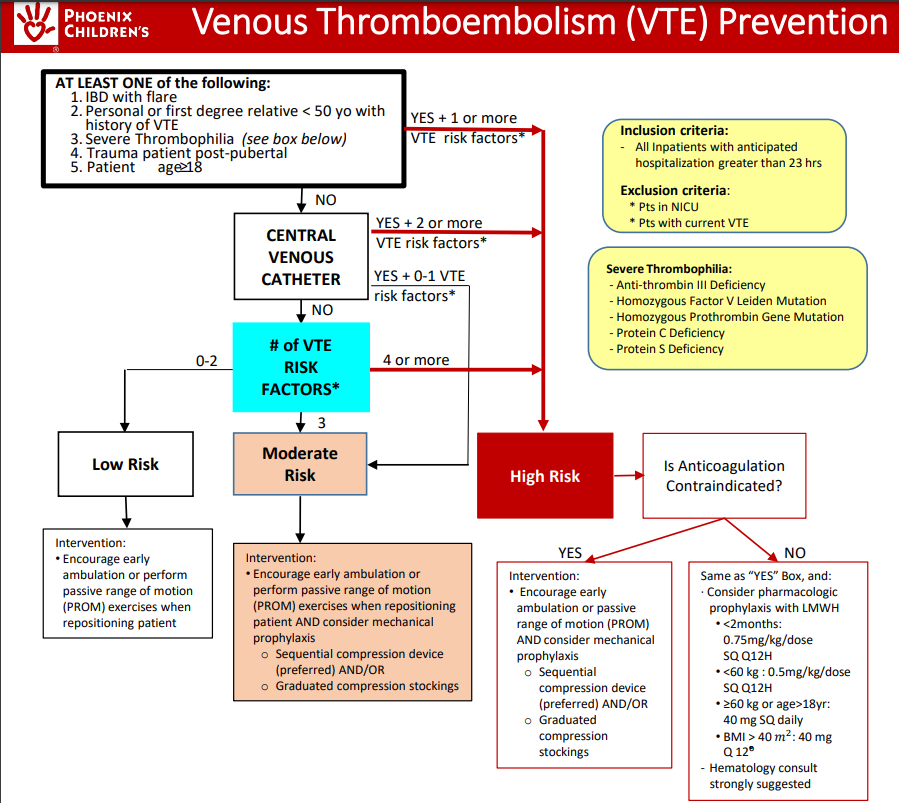
This article reviews the results of a venous thromboembolism (VTE) protocol that was implemented in 2018 in children with inflammatory bowel disease (IBD). A total of 313 hospitalizations across 187 different patients were identified that met criteria including IBD and central venous access. This retrospective review focused on children with IBD and and central venous catheter (CVC)  Key findings:

  • VTE prophylaxis increased from 5.24% (n = 12) prior to the intervention to 63.10% (n = 53) after the intervention
  • Rate of Doppler US increased from 9.17% (n = 21) prior to the intervention to 17.86% (n = 15) after the intervention
  • Diagnosis of VTE increased from 0.87% (n = 2) prior to the intervention to 7.14% (n = 6) after the intervention (attributed to better detection)

This article provides an algorithm for implementing VTE prophylaxis, recommending prophylaxis if 2 or more risk factors –both IBD and CVCs are risk factors. Mechanical prophylaxis (along with frequent ambulation, if feasible) is generally recommended if there are at least 2 risk factors, whereas anticoagulation prophylaxis is generally recommended if there are at least 4 risk factors. Other risk factors include being post-pubertal, obese, prolonged surgery (>90 minutes) within 2 weeks, altered mobility, and mechanical ventilation (see full protocol in article).

My take: In children at increased risk, the approach to reducing VTE in this article is quite sensible. Nevertheless, more research, especially with regard to institution of anticoagulation, is needed.
Related blog posts:

Disclaimer: This blog, gutsandgrowth, assumes no responsibility for any use or operation of any method, product, instruction, concept or idea contained in the material herein or for any injury or damage to persons or property (whether products liability, negligence or otherwise) resulting from such use or operation. These blog posts are for educational purposes only. Specific dosing of medications (along with potential adverse effects) should be confirmed by prescribing physician.  Because of rapid advances in the medical sciences, the gutsandgrowth blog cautions that independent verification should be made of diagnosis and drug dosages. The reader is solely responsible for the conduct of any suggested test or procedure.  This content is not a substitute for medical advice, diagnosis or treatment provided by a qualified healthcare provider. Always seek the advice of your physician or other qualified health provider with any questions you may have regarding a condition.


Thrombosis in Pediatric Patients with Intestinal Failure

G Keefe et al. J Pediatr 2023; 253: 152-157. High Rate of Venous Thromboembolism in Severe Pediatric Intestinal Failure

This retrospective study (n=263) examined the rate of venous thromboembolism (VTE) in pediatric patients who required parenteral nutrition for at least 90 consecutive days.

Key findings:

  • The cumulative incidence of VTE was 28.1%, with a rate of 0.32 VTEs per 1000 catheter-days
  • The number of catheters and early gestational age were noted to be independent risk factors for VTE
  • No patients had progression of thrombus while receiving therapeutic anticoagulation
  • Of those with acute DVTs (n=47), 24 (51%)resolved on repeat imaging, 14 (30%)were stable, and and 9 (19%) had decreased
  • 4.4% (2 of 45) had a major bleed while on anticoagulation

The authors note that the true rate of VTE is likely even higher because only 42% categorized as not having a VTE had undergone dedicated venous imaging.

My take: A lot of patients with intestinal failure develop VTE. Given the risks of treatment, the role of prophylactic anticoagulation remains unclear. This is where a prospective study would be helpful.

Related blog posts:

Little Finger Rock Trail, Tucson, AZ

Ustekinumab in Pediatric Patients and More on VTE Prophylaxis

FS Kim et al. JPGN 2021; 73: 610-614. Open Access (PDF): Experience Using Ustekinumab in Pediatric Patients With Medically Refractory Crohn Disease

In this retrospective study with 38 pediatric patients with Crohn’s disease, 34% had stricturing or penetrating disease. Key findings:

  • At time of last follow-up, 84.2% of patients remained on UST for a median duration on UST of 62.1 weeks, and 60.5% achieved clinical remission
  • 89.5% of patients had no significant adverse events
  • Sixteen (of 38, 42.1%) patients required dose escalation, to every 4 weeks (n= 15 of these 16, 93.8%) or every 6 weeks (Nn=1 of 16, 6.3%)

My take: Ustekinumab had good efficacy in this group of refractory pediatric patients.

Related blog posts:

E Story et al. JPGN 2021; 73: 604-609. Safety of Venous Thromboprophylaxis With Low-molecular-weight Heparin in Children With Ulcerative Colitis

In this retrospective study with 218 inpatient pediatric patients with active ulcerative colitis, the key findings:

  • Use of enoxaparin did not result in a greater fall in hemoglobin among those with acute severe colitis (initial PUCAI ≥65) during the week following admission and there was not an increased risk of needing a transfusion
  • VTE occurred in 2 of 130 in control group and 1 of 88 in enoxaparin group (enoxaparin group was sicker)

My take: The absolute risk of VTE is low in the pediatric population. This study shows that enoxaparin prophylaxis is NOT associated with increased issues with blood loss. In those with active disease, the presence of CVC and use of steroids are known risk factors and require consideration of, at minimum, nonpharmacologic interventions.

Related blog posts:

Billy Goat Trail, Chesapeake and Ohio Canal National Park

Latest on VTE in Pediatric IBD

MA Aardoom et al. JCC 2021; https://doi.org/10.1093/ecco-jcc/jjab171 The incidence and characteristics of venous thromboembolisms in paediatric-onset inflammatory bowel disease; a prospective international cohort study based on the PIBD-SETQuality Safety Registry

Design: 2016-2020: paediatric gastroenterologists prospectively replied to the international Safety Registry, monthly indicating whether they had observed a VTE case in a patient <19 years with IBD. n=24,802 PIBD patients

Key findings:

  • Twenty cases of VTE were identified (30% Crohn’s disease)
  • The VTE incidence was 3.72 [95%CI 2.27 – 5.74] per 10,000 person-years, 14-fold higher than in the general pediatric population (0.27 [95%CI 0.18-0.38], p<0.001)
  • All but one patient had active IBD, 45% were using steroids and 45% hospitalized.
  • Cerebral sinus venous thrombosis was most frequently reported (50%) VTE

My take: The absolute risk of VTE is low in the pediatric population. In those with active disease, the presence of CVC and use of steroids are known risk factors and require consideration of, at minimum, nonpharmacologic interventions.

Related blog posts:

Stratifying Risk of Clots in Inflammatory Bowel Disease

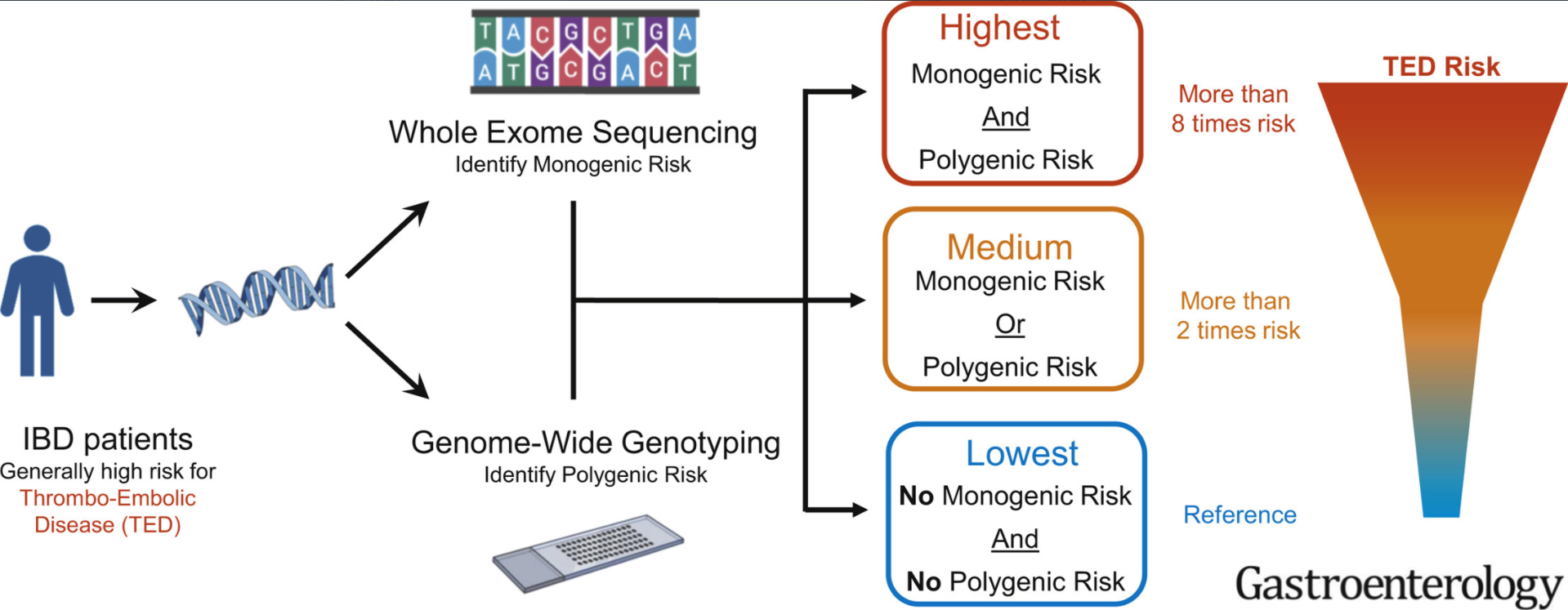
T Naito et al. Gastroenterol 2021; 160: 771-780. Full text: Prevalence and Effect of Genetic Risk of Thromboembolic Disease in Inflammatory Bowel Disease

Background: 10% of healthy subjects are genetically at high risk for thromboembolic disease (TED). For adults with inflammatory bowel disease, TED is “largest cause of mortality in
patients”

Key findings:

  • In total, this retrospective study had 792 IBD patients who had both whole-exome sequencing and genotyping data to identify thrombophilia pathogenic variants. 122 of 792 IBD patients (15.4%) as genetically high risk for TED.
  • Genetic TED risk was significantly associated with increased TED event (odds ratio,2.5; P ¼ .0036).
  • Patients with high TED genetic risk more frequently had thrombosis at multiple sites (78% vs 42%, odds ratio, 3.96; P ¼ .048)

“Our analyses demonstrate that approximately 1 in 7 patients with IBD have odds 2.5 times higher than nongenetically high-risk patients with IBD for experiencing TED.” The risk of TED in IBD is generally 3- to 4-fold higher than the general population

My take: In children, the risk of clots is much lower than in adults. Thus, the potential to identify those at highest risk would be useful in order to target interventions. Also, patients at higher risk for TED may affect choice of treatment (eg. avoiding JAK inhibitors).

Related blog posts:

From The Onion:

From The Onion

IBD Shorts February 2020

Cost of IBD Care is Increasing. From Healio Gastro: Chronic inflammatory disease expenditures nearly double over last 2 decades Reference: Click B, et al. Poster 22. Presented at: Crohn’s and Colitis Congress; Jan. 23-25, 2020; Austin, Texas

An excerpt from Healio Gastro summary: [Using] the Medical Expenditure Panel Survey (MEPS), a nationally representative database of health care use and expenditure data collected since 1998The researchers assessed total annual, outpatient, inpatient, emergency and pharmacy expenditures in both patients with IBD (n = 641) and RA (n = 641). They used three separate time periods – 1998-2001, 2006-2009 and 2012-2015 –to compare expenditures over time…

Median per-patient annual health care expenditure in patients with IBD was $6,570 compared with $4,010 in patients with RA across all years of the study. Total annual spending increased approximately 2.2 times (95% CI, 1.6-3; P < .01) over the study period and was 36% higher in IBD than RA (P = 0.01).

Pharmaceutical spending increased more than fourfold (95% CI, 3.2-6.1; P < .01) and became the largest cost category (44% total). However, inpatient expenses in IBD decreased 40% over the study period.

My take: While the cost has increased, these new treatments are improving outcomes.  With the emergence of biosimilars, there may be improvement in pharmaceutical spending.

More on Proactive Therapeutic Drug Monitoring (pTDM) Being Helpful: SR Fernandes et al. Inflamm Bowel Dis 2020; 26: 263-70, editorial 271-2.  In this study, a prospective group of patients (n=56) undergoing pTDM were compared with a historical control group (n=149). pTDM had less frequent surgery (9% vs. 21%) and higher rates of mucosal healing (73% vs. 39%).  Treatment escalation was 3 times more common with pTDM than in the control group.

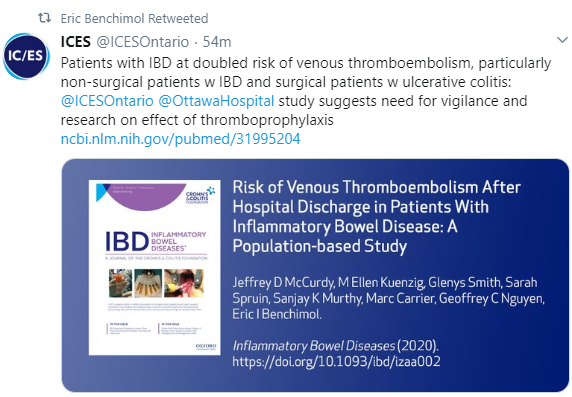
Increased risk of VTE in IBD patientsJD McCurdy et al. Inflamm Bowel Dis 2020; https://doi.org/10.1093/ibd/izaa002

Abstract Link: Risk of Venous Thromboembolism After Hospital Discharge in Patients With Inflammatory Bowel Disease: A Population-based Study

In a population-based study from Ontario, the authors analyzed a total of 81,900 IBD discharges (62,848 nonsurgical and 19,052 surgical) which were matched to non-IBD controls… The cumulative incidence of VTE at 12 months after discharge was 2.3% for nonsurgical IBD patients and 1.6% for surgical IBD patients…Nonsurgical IBD patients and surgical patients with ulcerative colitis are 1.7-fold more likely to develop postdischarge VTE than non-IBD patients.

Venous Thrombosis in Pediatric Inflammatory Bowel Disease

A recent “Grand Rounds” review of venous thrombosis (VT) in pediatric inflammatory bowel disease (E Mitchel, T Diamond, L Albenberg. J Pediatr 2020; 216: 213-7) provides some practical advice in an area in need of more clarity.

Risk factors for VT:

  • inflammation
  • malnutrition
  • dehydration
  • malabsorption
  • need for surgery
  • medications (eg. steroids)
  • immobilization
  • infection
  • placement of central line
  • hormonal contraceptive use
  • cigarette use
  • hereditary thrombophilia/first-degree relative with VT

Key points:

  • Pediatric patients with IBD are at increased risk for VT with an estimated incidence between 0.09% and 1.9%.  Patients hospitalized with an IBD flare have a “6-fold increased risk for pulmonary embolism and deep-vein thrombosis as compared” to hospitalized patients without IBD.  In another study, the risk was lower with a relative risk for VT of 2.37 for Crohn’s and 1.99 for ulcerative colitis (UC).
  • ESPGHAN guidelines recommend prophylactic anticoagulation in patients with acute severe colitis and at least 1 risk factor (in prepubertal children — at least 2 risk factors).  Mobilization and hydration are also recommended.
  • At the authors’ institution, “patients <12 years do not meet routine criteria” for thromboprophylaxis unless at high risk.
  • Patients >12 years who are at medium or high risk are given mechanical prophylaxis with a pneumatic compression device (if no contraindications).
  • In those at high risk and >12 years, pharmacologic prophylaxis is considered in concert with hematology service. “High risk is considered altered mobility and at least 1 risk factor.”

My take: In adolescents hospitalized with IBD, this article suggests that almost all should receive mechanical prophylaxis for VT and a subset at increased risk may benefit from pharmaccologic prophylaxis.

Related blog posts:

From a visit to Montreal

Catheter-Related Venous Thrombosis in Pediatric Patients with Inflammatory Bowel Disease

A recent retrospective study (CE Diamond et al. J Pediatr 2018; 198: 53-9) examined the issue of catheter-related venous thrombosis in pediatric inflammatory bowel disease (IBD) patients (2015-17).

In total, 40 patients (47 hospitalizations, median age 14 yrs) with IBD were reviewed.  At the discretion of the treating physician, anticoagulation therapy (AT) with enoxaparin was administered in some children due to the recognized increase risk of venous thromboembolism (VTE).  This protocol did NOT evaluate for subclinical venous thrombotic events.  Detection of VTE was undertaken in those who became symptomatic (eg. pain or swelling).

AT protocol: 

  • In patients less than 40 kg, the starting dose of enoxaparin was 0.5 mg/kg/dose SC every 12 hrs with anti-factor Xa levels drawn 4-6 hours after the patient had received at least 2 doses with a target level of 0.1-0.3 U/mL. The first dose was administered on the same day as CVC placement but after placement.
  • In patients >40 kg, a fixed dose of 40 mg of enoxaparin SC every 24 hrs without laboratory monitoring

Key findings:

  • 5 of 23 (22%) hospitalizations without AT developed VTE; in contrast 0 of 24 with AT prophylaxis.  Mean duration of AT was 11 days.
  • All five who developed VTE had complete resolution after treatment with anticoagulation Rx. No cases of genetic thrombophilia were identified.
  • Bleeding issues were similar in the two groups –46% of those receiving AT Rx required at least one blood transfusion compared with 39% who did not receive AT Rx.

Overall, these groups (with and without AT Rx) had similar demographic features and had severe active IBD.  Most were receiving biologic therapy and the majority were receiving steroids.  The authors observed a trend towards more use of AT over the study period, “suggesting increased comfort levels of treating physician…even in the presence of rectal bleeding.”

My take: This relatively small study found that AT Rx reduced the rate of CVC-related venous thrombosis.  A larger prospective study is needed to confirm the potential benefit of AT treatment.

Related blog posts:

Artwork near Azalea Drive/Chattahoochee river

Disclaimer: These blog posts are for educational purposes only. Specific dosing of medications (along with potential adverse effects) should be confirmed by prescribing physician.  This content is not a substitute for medical advice, diagnosis or treatment provided by a qualified healthcare provider. Always seek the advice of your physician or other qualified health provider with any questions you may have regarding a condition.

Venous Thromboembolism: A Good Question for Pediatric Collaboration

Two recent clinical review articles (see below) indicate that most adults with inflammatory bowel disease (IBD) admitted to the hospital would benefit from venous thromboembolism (VTE) prophylaxis.  Since children with IBD have a lower risk of VTE, it is unclear whether more efforts at VTE prophylaxis are needed in the pediatric population.  Previous studies have shown that in those IBD patients less than 20 years, the incidence rate was 8.9 per 10,000 person years.  In contrast, in those IBD patients older than 60, the incidence rate was 54.6 per 10,000 person years (VTE with IBD | gutsandgrowth).

  • Inflammatory Bowel Dis 2015; 21: 1195-1203.
  • Inflammatory Bowel Dis 2015; 21: 1204-1213.

In the first article, the authors review common risk factors and disease-specific risk factors.  They state the following:

Because hospitalization puts the patient at greater risk for TE compared with an outpatient setting, all hospitalized patients should receive anticoagulant therapy in the absence of severe bleeding, even if the patients are in remission.

The second review describes epidemiological data, pathophysiology, and VTE prevention. They also state the following:

Currently, the most effective strategy for preventing VTE in hospitalized patients with IBD with active disease is prophylactic anticoagulation.  In fact, all of the current guidelines for the management of patients with IBD suggest the use of anticoagulants to prevent VTE.

The authors note that the rates of thromboprophylaxis are “still unacceptably low.”

Bottomline: In adults with active IBD, VTE prophylaxis is recommended. In the pediatric population due to the lower incidence of VTE, more study is needed –perhaps another project for ImproveCareNow.

Briefly noted:

Cochrane Review of Vedolizumab for Ulcerative Colitis.  Inflammatory Bowel Dis 2015; 21: 1151-59.  Based on four studies (n=606 patients) with low risk of bias, pooled analysis showed that vedolizumab was superior to placebo for induction of remission (RR=0.86), clinical response (RR=0.82), endoscopic remission (RR=0.82) and for achieving remission at 52 weeks in week 6 responders (RR=2.73).  No statistically significant difference was observed in the incidence of adverse events between vedolizumab and placebo.

Zoo Atlanta

Zoo Atlanta

Microparticles and Pediatric IBD

Before reading a recent publication (JPGN 2013; 56: 401-07), I was not aware of microparticles; microparticles may play an important role in the development of venous thromboembolism (VTE).  Pediatric patients with inflammatory bowel disease (IBD) have a higher relative risk of VTE compared to their peers than individuals >60 years of age, though the absolute risk is low.  Much of the pathophysiology underlying the increased VTE risk remain uncertain.

Microparticles have been called “platelet dust” and are microvesicles that are released from the plasma membrane of many cells (leukocytes, red blood cells, endothelial cells, and platelets).

This study examined plasma samples from 33 pediatric patients with Crohn disease (CD), 20 pediatric patients with ulcerative colitis (UC), and 60 healthy controls. Subsequently, microparticles’ procoagulant activity was measured.  The CD and UC patients were consecutively enrolled from the outpatient clinic.  Only 3 patients in each IBD group was receiving a biologic therapy (infliximab). The disease activity and extent were compared with measures of procoagulant activity.

Several assays were undertaken to assess microparticles and thrombin generation. Key findings:

  • Increased procoagulant function of microparticles was identified in all CD patients (active and quiescent) and in UC patients with active disease.
  • A positive correlation was found between disease activity scores and procoagulant activity.

The authors note that elevated microparticles “may play a role in inflammation.” Inflammation and coagulation likely influence each other.  The authors note that VTE risk is greatest during flares but is still increased in patients in remission compared with controls.

The authors do not discuss the relationship of mucosal healing to microparticles or VTE. However, given that clinical remission is not defined currently based on mucosal healing, it would be of interest to know the status of these microparticles and the risk of VTE with mucosal healing. Perhaps the “quiescent” CD patients have ongoing disease contributing to their increased risk of VTE and increased procoagulation function of microparticles.

Related blog entry:

VTE with IBD | gutsandgrowth

**According to previous expert consensus guidelines, “routine heparin prophylaxis cannot be justified in children until better evidence is available to suggest that the benefit outweigh the risks”  (Turner D, et al. Am J Gastroenterol 2011; 106: 574-88).