Unknown's avatar

About gutsandgrowth

I am a pediatric gastroenterologist at GI Care for Kids (previously called CCDHC) in Atlanta, Georgia. The goal of my blog is to share some of my reading in my field more broadly. In addition, I wanted to provide my voice to a wide range of topics that often have inaccurate or incomplete information. Before starting this blog in 2011, I would tear out articles from journals and/or keep notes in a palm pilot. This blog helps provide an updated source of information that is easy to access and search, along with links to useful multimedia sources. I was born and raised in Chattanooga. After graduating from the University of Virginia, I attended Baylor College of Medicine. I completed residency and fellowship training at the University of Cincinnati at the Children’s Hospital Medical Center. I received funding from the National Institutes of Health for molecular biology research of the gastrointestinal tract. During my fellowship, I had the opportunity to work with some of the most amazing pediatric gastroenterologists and mentors. Some of these individuals included Mitchell Cohen, William Balistreri, James Heubi, Jorge Bezerra, Colin Rudolph, John Bucuvalas, and Michael Farrell. I am grateful for their teaching and their friendship. During my training with their help, I received a nationwide award for the best research by a GI fellow. I have authored numerous publications/presentations including original research, case reports, review articles, and textbook chapters on various pediatric gastrointestinal problems. In addition, I have been recognized by Atlanta Magazine as a "Top Doctor" in my field multiple times. Currently, I am the vice chair of the section of nutrition for the Georgia Chapter of the American Academy of Pediatrics. In addition, I am an adjunct Associate Clinical Professor of Pediatrics at Emory University School of Medicine. Other society memberships have included the North American Society for Pediatric Gastroenterology Hepatology and Nutrition (NASPGHAN), American Academy of Pediatrics, the Food Allergy Network, the American Gastroenterology Association, the American Association for the Study of Liver Diseases, and the Crohn’s and Colitis Foundation. As part of a national pediatric GI organization called NASPGHAN (and its affiliated website GIKids), I have helped develop educational materials on a wide-range of gastrointestinal and liver diseases which are used across the country. Also, I have been an invited speaker for national campaigns to improve the evaluation and treatment of gastroesophageal reflux disease, celiac disease, eosinophilic esophagitis, hepatitis C, and inflammatory bowel disease (IBD). Some information on these topics has been posted at my work website, www.gicareforkids.com, which has links to multiple other useful resources. I am fortunate to work at GI Care For Kids. Our group has 17 terrific physicians with a wide range of subspecialization, including liver diseases, feeding disorders, eosinophilic diseases, inflammatory bowel disease, cystic fibrosis, DiGeorge/22q, celiac disease, and motility disorders. Many of our physicians are recognized nationally for their achievements. Our group of physicians have worked closely together for many years. None of the physicians in our group have ever left to join other groups. I have also worked with the same nurse (Bernadette) since I moved to Atlanta in 1997. For many families, more practical matters about our office include the following: – 14 office/satellite locations – physicians who speak Spanish – cutting edge research – on-site nutritionists – on-site psychology support for abdominal pain and feeding disorders – participation in ImproveCareNow to better the outcomes for children with inflammatory bowel disease – office endoscopy suite (lower costs and easier scheduling) – office infusion center (lower costs and easier for families) – easy access to nursing advice (each physician has at least one nurse) I am married and have two sons (both adults). I like to read, walk/hike, bike, swim, and play tennis with my free time. I do not have any financial relationships with pharmaceutical companies or other financial relationships to disclose. I have helped enroll patients in industry-sponsored research studies.
FDA Warning for Obesity Devices: Intragastric Balloons

FDA Warning: Five Die While Using Obesity Devices (Intragastric Balloons)

An excerpt:

At least five people have died soon after being fitted with balloons aimed at helping them lose weight, the Food and Drug Administration said Thursday.

The FDA says it doesn’t know if the devices or the surgery to implant them is to blame but issued an alert to doctors to closely monitor patients who get them.

Related blog post: In the News: Weight Loss Intragastric Balloons

Pediatric Views on Biosimilars and Interchangeability

A recent commmentary (D Patel, KT Park. JPGN 2017; 134-6) explains the topic of interchangeability and its relationship to biosimlars. While biosimilars are expected to reduce the cost of biologic therapy, there are concerns regarding immunogenicity and whether switching to these products could reduce therapeutic sustainability.

The authors explain that some products are truly interchangeable and produce the same clinical result.  An interchangeable medicine (eg. typical generic) does not increase safety risk and switching from originator drug can be done by pharmacists or government payers without intervention of the prescribing health provider.

CT-P13 (Inflectra) has been approved as a biosimilar but has not been deemed an interchangeable product.  This is important.  Biosimilars “could have clinical consequences and repeated switches may increase immunogenicity.” Also, biosimilar products are much more complicated products than typical generic drugs.

Other key points:

  • The assumption that CT-P13 is interchangeable in pediatric IBD is “highly debatable.” Biosimilars undergo fewer studies than originator products.  CT-P13 has data from PLANETRA and PLANETAS trials “which may not be applicable for IBD, particularly pediatric IBD, given the inherent differences in disease pathophysiology.”
  • “No long-term, multiple-switch (eg. originator to biosimilar to originator) studies in pediatric or adult patients have been performed.”
  • “It is premature and possibly risky to assume that interchangeability will not cause differences in immunogenicity without long-term evidence in the pediatric population.” Pediatric patients likely have a “higher probability of developing autoantiantibodies” and need effective therapy for a longer duration.

My take: We still have a lot to learn.  Until more studies are available, switching stable patients could increase risk of losing response.

Related blog posts:

Dry Falls, Highlands NC

AGA Recommendations on Biosimilars

The AGA has made several recommendations regarding biosimilars –#2 and #6 are particularly of interest to pediatric gastroenterologists. More on this topic will follow tomorrow.

Link: AGA Makes Six Recommendations to FDA on Interchangeable Biosimilars

Related blog posts:

Abstract Only: Mucosal Healing in Pediatric Inflammatory Bowel Disease

This post provides the full abstract from today’s earlier post.


A retrospective study (Inflamm Bowel Dis 2017; 23: 1447-53) describes assessment of mucosal healing in pediatric patients with inflammatory bowel disease.

Here is abstract:

Background: Mucosal healing (MH) is associated with improved clinical outcomes in patients with Crohn’s disease (CD) and ulcerative colitis (UC). MH as a target for treatment has been suggested, although there is little pediatric data. The goal of this study was to evaluate MH in clinical practice in pediatric patients with inflammatory bowel disease in clinical remission.

Methods: A retrospective review of electronic health record data was performed on all patients with CD or UC who underwent at least 2 colonoscopies from 2010 through 2016. Only patients in clinical remission undergoing a scope for MH were included in our study. The incidence of MH and histologic healing (HH) was analyzed, along with cumulative rates of MH in each group. MH was defined by both physician assessment of MH and an endoscopic score of zero for CD and UC.

Results: A total of 76 patients with CD and 28 patients with UC underwent at least one MH scope while in clinical remission. Of the 76 patients with CD, 51 patients (67%) demonstrated MH by physician assessment, 34 patients (45%) demonstrated MH by a simple endoscopic score for CD of zero, and 35 patients (46%) demonstrated HH. Of the 28 patients with UC, 20 patients (71%) demonstrated MH by physician assessment, 10 patients (36%) demonstrated MH by a Mayo score of zero, and 10 patients (36%) demonstrated HH. Nineteen patients underwent a second MH scope and 11 (58%) demonstrated MH by physician assessment, 7 patients (37%) demonstrated MH by simple endoscopic score for CD or Mayo scores of zero, and 5 patients (26%) demonstrated HH. Of those patients with active disease, 21 of 25 patients with CD underwent escalation of therapy, whereas 8 of 8 patients with UC underwent escalation of therapy. Cumulative rates of MH when defined by physician assessment were 79% (60 of 76 patients) in CD and 79% (22 of 28 patients) in UC.

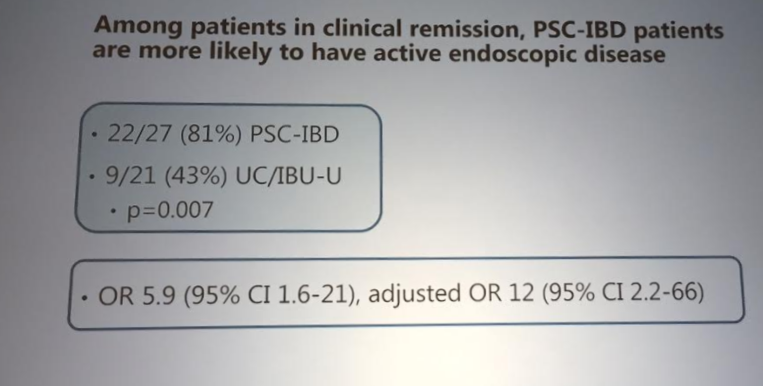
Conclusions: MH is feasible in pediatric CD and UC, and rates of cumulative MH in pediatric patients are similar to previously published adult data. In children with inflammatory bowel disease in clinical remission, approximately one-third demonstrate active disease at endoscopy.

Pediatric IBD: Treating to Target

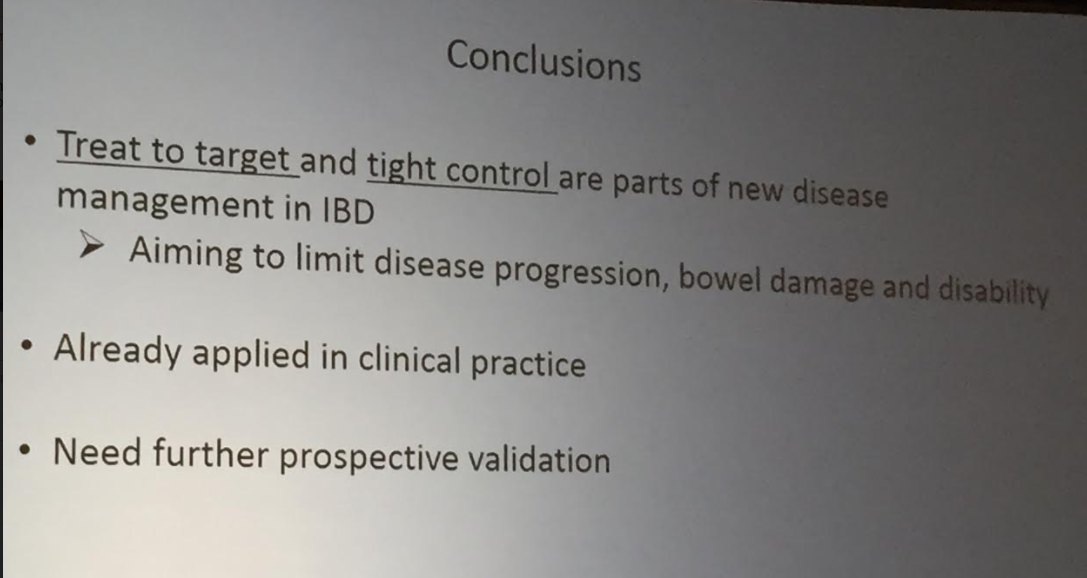
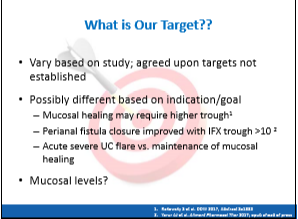
In 2014, an influential study by Sandborn et al (Clin Gastroenterol Hepatol 2014; 12: 978-85) described the importance of mucosal healing in a strategy termed “treating to target.”  The main findings (reviewed in a previous post Treating to Target) were the following:

  • Only half of the patients achieved MH.  “After a median follow-up of 62 weeks, 50.7% had MH and 61.1% had endoscopic improvement.”  79% of those who underwent adjustments achieved MH.
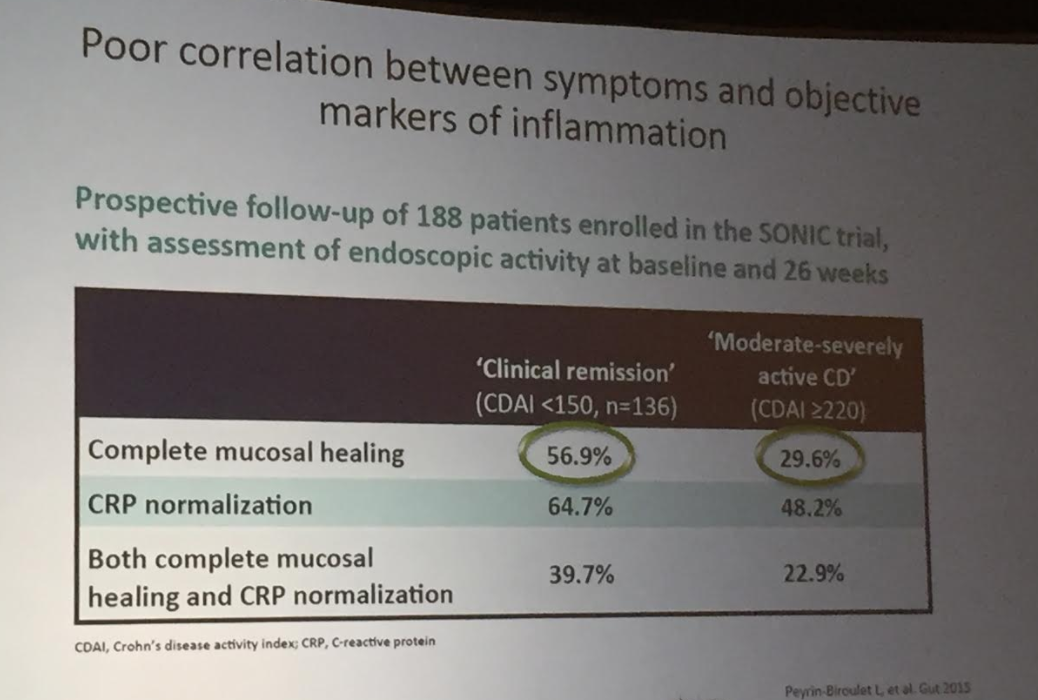
  • Clinical symptoms do not correlate with MH. “40.9% of patients experienced clinical symptoms despite MH and 18.8% of patients without clinical symptoms had significant endoscopic lesions.”
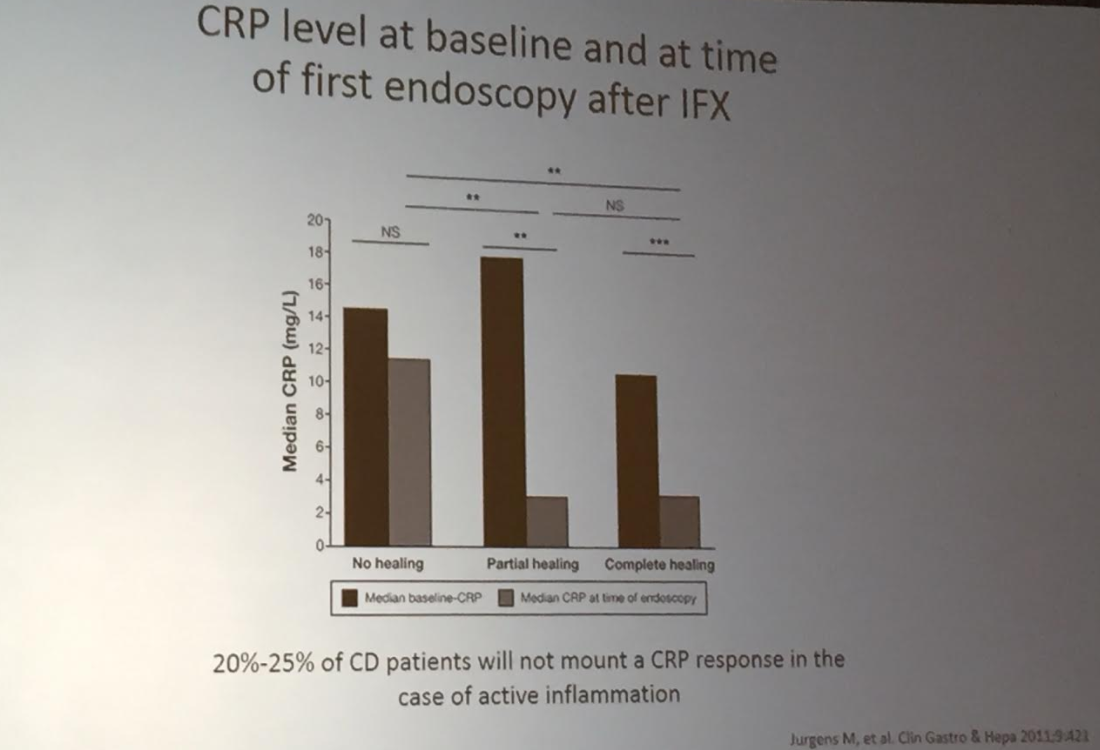
  • Biomarkers may be effective at predicting MH. “None of the patients with MH had an increased concentration of CRP.”
  • Adjusting treatment is needed if abnormal endoscopy; this is inherent in the philosophy of treating-to-target.

Now, my colleagues at Emory have published a single-center experience on mucosal healing (MH) (SL Santha, PR Shankar, A Pan, B Schoen, S Kugasthasan, CG Sauer. Inflamm Bowel Dis 2017; 23: 1447-53).  While this study has the typical limitations of a retrospective study, it makes several useful points.  It takes a little extra effort to interpret their findings as they describe their results based only on the 104 patients with clinical remission rather than based on the total of 182 patients who had at least two colonoscopies.  78 were excluded due to ‘acute GI symptoms.’

Of the 104 patients considered to be in clinical remission, 76 had Crohn’s disease and 28 patients had ulcerative colitis.

Key findings:

  • For patients with ulcerative colitis (UC) who were in clinical remission, 20 (71%) had MH per physician assessment, though only 10 patients (36%) had MH based on Mayo score of zero.  10 patients (36%) demonstrated histologic healing.
  • For patients with Crohn’s disease (CD) who were in clinical remission, 51 (67%) had MH per physician assessment, 34 (45%) had MH base on simple endoscopic score for CD, and 35 (46%) had histologic healing.
  • 21 of 25 CD patients and 8 of 8 patients with UC underwent escalation of therapy based on endoscopic evaluation. 9 patients underwent dose optimization of their biologic as the modification in their therapy; this step is now routinely done in pediatrics without followup endoscopy.

The discrepancy in MH rates based on physician assessment, endoscopic scores, and histologic healing is explained.  Generally, MH based on physician assessment would include normal and those with very mild mucosal disease.  “For CD, this included small and rare aphthous ulcers, and for UC, this included mild Mayo 1 erythema in only one segment of bowel.”

Questions about the approach to ‘treating to target:’

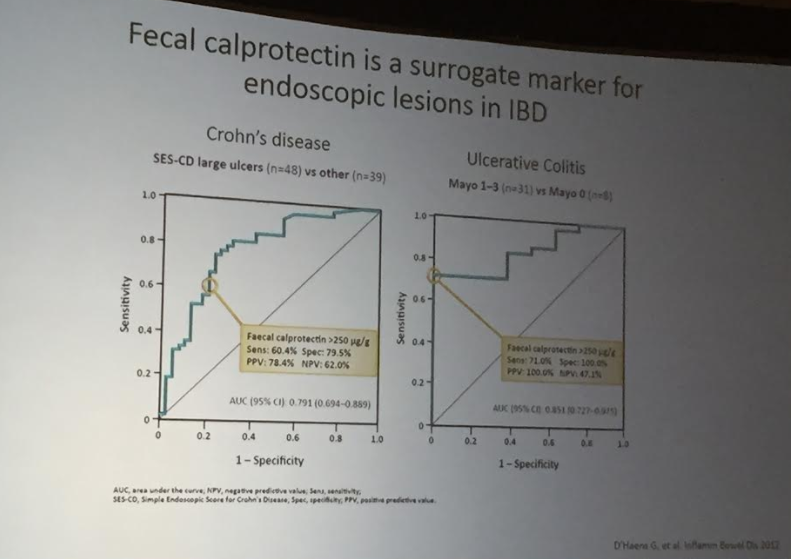
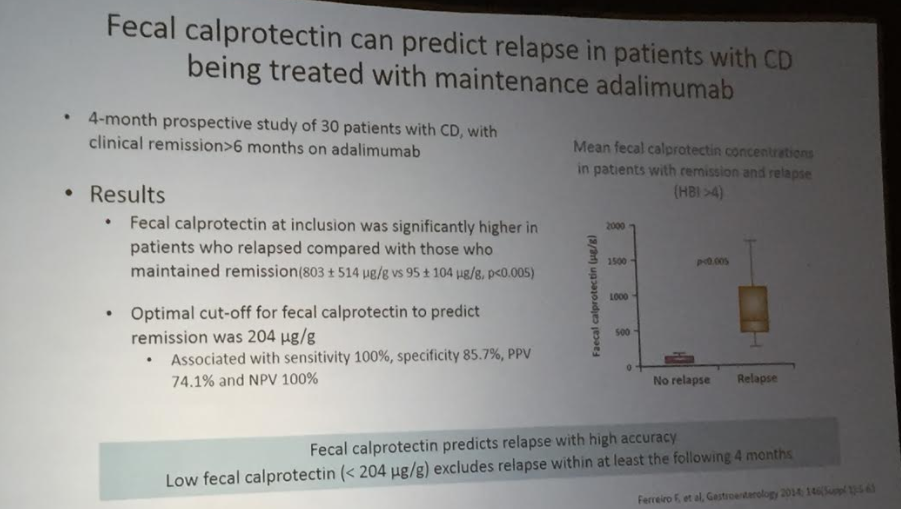
  • This study does not describe other alternative modalities to assess for mucosal healing. Is it feasible to use a biomarker like an abnormal calprotectin to target those in need of further evaluation? In those with abnormal biomarkers, dose escalation would not require a repeat scope.
  • The Emory group has used MRE extensively, but does not report MRE findings in this population.  Would MRE (which does not require sedation) be more useful in some patients?

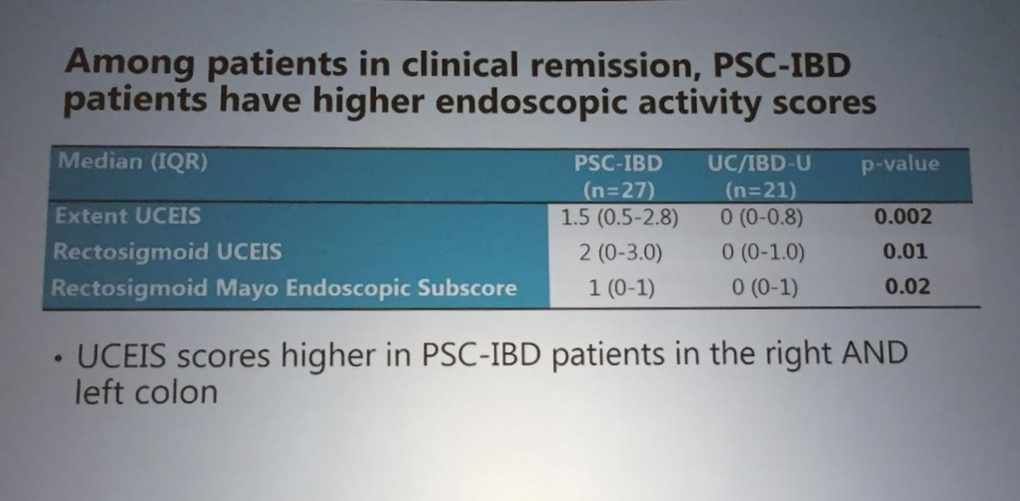
As in adult patients, this study does show the need for objective markers in pediatric inflammatory bowel disease; 30% of patients who were considered to be in clinical remission had active disease with further investigation.  This finding has implications for ImproveCareNow which uses physician global assessment in tracking remission rates for pediatric IBD.

In their discussion, the authors state that “changes in medical therapy can increase the MH rate to nearly 80%, which could be even higher with additional changes in those who did not demonstrate MH on a second endoscopy.”  This sentence needs to be carefully interpreted.  The authors were able to show MH based on physician assessment in 82 of 104 patients (79%) who were in clinical remission.  This rate would be MUCH lower if the entire cohort of 182 were included, possibly no greater than 50%.

The authors conclude with “endoscopy should be considered in pediatric patients with IBD in clinical remission to identify those without MH who may require medication escalation despite the absence of clinical symptoms.”

My take: I agree with the authors that objective markers of clinical remission need to be obtained to assess the effectiveness of therapy.  However, I am not convinced that endoscopy is needed in every patient who is doing well on therapy; other biomarkers and imaging may be more beneficial.

Related blog posts:

Sign at Pisgah Fish Camp Restaurant: “On this site in 1897 nothing happened.”


Something Useful for Apparent Life-Threatening Events (ALTEs)

In many cases of Apparent Life-Threatening Events (ALTEs) (also called Brief Resolved Unexplained Events, BRUEs) in infants, the exact reasons are unclear.  Sometimes these events are blamed on reflux despite studies indicating this is unlikely in the vast majority (see links at bottom of post).

A recent study (DR Duncan, J Amirault, PD Mitchell, K Larson, RL Rosen. JPGN 2017; 65: 168-73) finds that oropharyngeal dysphagia is correlated with ALTEs.

In this retrospective study which took place between 2012-15, the authors reviewed all patients admitted with ALTE.  They excluded infants with underlying diseases that included known neurologic impairment, congenital heart disease, and other congenital anomalies.

Demographics:

  • Median age 49 days
  • Color change: blue 65%, pale 8%, red 10%, none 17%
  • URI symptoms: 23%
  • Relationship to feeds: during 20%, after 35%, none 45%
  • Appeared well in ED 86%

Key findings:

  • Video fluoroscopic swallow study (VFSS) [also called oropharyngeal motility swallow study] was obtained in 29%.  In this group, 73% (n=40) had evidence of aspiration or penetration.
  • 26% of patients who had clinical feeding evaluation and VFSS were ascribed as having no oropharyngeal dysphagia prior to detecting aspiration on VFSS.
  • “Of all of the diagnostic tests ordered on patients with  ALTEs, the VFSS had the highest rate of abnormalities.”

Conclusion (from authors): “Oropharyngeal dysphagia with aspiration is the most common diagnosis identified in infants presenting with ALTEs.  The algorithm for ALTE should be revised to include an assessment of VFSS as clinical feeding evaluations are inadequate to assess for aspiration.”

Related blog post: What to do with ALTEs

Also, an except and link from NASPGHAN Consensus guidelines on GERD (2009)

  • In premature infants, a relationship between GER (i.e. reflux) and pathologic apnea and/or bradycardia has not been established. Despite a lack of convincing evidence, if pathological apnea occurs in the face of pre- existing reflux, then the following two statements are the most common features:
  • Although reflux causes physiologic apnea, it causes pathologic apneic episodes in only a very small number of newborns and infants.
  • When reflux causes pathological apnea, the infant is more likely to be awake and the apnea is more likely to be obstructive in nature.
  • A diagnosis of an acute life-threatening event (ALTE) warrants consideration of causes other than GER (i.e. reflux).Reflux of gastric acid seems to be related to ALTEs (episodes of combinations of apnea, color change, change in muscle tone, choking, and gagging) in < 5 % of infants with ALTE. 
  • Link: Gastroesophageal Reflux Disease in the Pediatric  – NASPGHAN.o

Dry Falls, Highlands, NC

Hepatitis B Reactivation with Direct-Acting Antiviral Hepatitis C Therapy

“I refuse to accept the view that mankind is so tragically bound to the starless midnight of racism and war that the bright daybreak of peace and brotherhood can never become a reality.” Martin Luther King, Jr

——————
More information on hepatitis B virus (HBV) reactivation with direct-acting antiviral (DAA) hepatitis C virus (HCV) therapy has been published:

  • PS Belperio et al. Hepatology 2017; 66: 27-36
  • G Chen et al Hepatology 2017; 66: 13-26
  • Editorial: RP Perrillo. G Chen et al Hepatology 2017; 66: 4-6.

In a previous post on this topic (:), it was noted that physicians need to be aware of HBV reactivation with DAAs. It appears that HCV can suppress HBV replication and that successful HCV therapy allows for HBV reactivation.

Belperio et al reviewed data from an observational study on more than 62,000 HCV-infected veterans, including 377 who had HBsAg-positivity and 7295 who had anti-HBc-positivity.

Key findings:

  • 8 of 377 HBsAg-positive had reactivation (defined as HBV DNA increase of >1000 IU/mL) of HBV during DAA treatment of HCV. Only one of these eight had a severe hepatitis (ALT 154o IU)
  • 1 of 7295 HBc-positive had HBV reactivation. This rate of reactivation is actually lower than HBV reactivation reported with ‘inactive’ disease (1-2% per year).
  • For HBV screening, the authors recommend HBsAg and anti-HBc testing

Chen et al performed a systematic review (of 28 studies included) and meta-analysis had identified overt  HBV reactivation in 12.2% of those receiving DAAs.  This was a lower rate of HBV reactivation than with interferon (14.5%); however, reactivation during DAA therapy occurred earlier (typically 4-12 weeks into treatment) and was more clinically significant. There was significant variation in the virologic and ALT criteria used to define HBV reactivation.  The authors conclude that it is “important to have HBV serology (HBsAg, anti-HBc) in all HCV patients prior to therapy.

Perillo recommends that in addition to screening, “it is my belief that anti-HBV prophylaxis be given to all HBsAg-positive patients, ” regardless of HBV DNA level.

My take: These articles help quantitate the risk of HBV reactivation during HCV therapy.

Ben Sawyer Bridge, Sullivans Island

Related blog posts:

Swing bridge, Ben Sawyer Bridge, Sullivans Island


One in Three Americans Used Prescription Opioids in 2015

NBC News: One in Three Americans Took Prescription Opioid Painkillers in 2015

An excerpt: How many Americans are using prescription opioid painkillers? About one in three.

That’s the stunning number in a new survey released Monday from the National Institute on Drug Abuse, which calculated that a whopping 91.8 million Americans used drugs like OxyContin or Vicodin in 2015.

And nearly five percent of the adults surveyed told researchers they took these drugs without their doctor’s permission, the study reported.  They didn’t get their meds from some seedy drug dealer, either.

“The most commonly reported sources were friends and relatives for free,” the study reported. “Or a physician.”

Hypophosphatemia with an Elemental Formula

A recent retrospective study (LF Gonzalez Ballesteros et al Bone 2017; 97: 287-92) of 17 centers in North America and Ireland (2014-2016) identified a frequent association between an elemental formula and idiopathic hypophosphatemia in infants and children.

Key findings:

  • “Fifty-one children were identified at 17 institutions with unexplaned hypophosphatemia.  Most children had complex illnesses and been solely fed Neocate® formula products for variable periods of time.”
  • “Hypophosphatemia was detected during evaluation of fractures or rickets.  Increased alkaline phosphatase activity”  was noted in nearly all cases.
  • “Most all improved with addition of supplemental phosphate or change to a different formula product.”
  • Median age was 3.0 years (range 0.2 years to 15.5 years).  Median duration of Neocate® was 1.3 years

Since the composition of the formula had adequate phosphate, the authors speculate that the “bioavailability of formula phosphorus may be impaired in certain clinical settings.” Interestingly, this report singles out Neocate® products, “although the possibility of hypophosphatemia may occur with other amino-acid based formulas cannot be excluded.” Neocate® infant has similar amounts of phosphorus as Elecare®: 82.2 mg of phosphorus per 100 kcal compared with 84.2 mg.

My take: In patients receiving exclusive amino-acid based formulas (especially Neocate®), it is probably worthwhile to periodically monitor phosphate, calcium, alkaline phosphatase and possibly other micronutrients.

College of Charleston

Surgery as Placebo

A recent summary by 538 website details how surgery can be a powerful placebo: Surgery Is One Hell of a Placebo

Here’s an excerpt:

“expectations matter, and we know they matter because of a bizarre research technique called sham surgery. In these fake operations, patients are led to believe that they are having a real surgical procedure…

2014 review of 53 trials that compared elective surgical procedures to placebos found that sham surgeries provided some benefit in 74 percent of the trials and worked as well as the real deal in about half.1 Consider the middle-aged guy going in for surgery to treat his knee pain. Arthroscopic knee surgery has been a common orthopedic procedure in the United States, with about 692,000 of them performed in 2010,2 but the procedure has proven no better than a sham when done to address degenerative wear and tear, particularly on the meniscus

Even without a robust placebo effect, an ineffective surgery may seemhelpful. Chronic pain often peaks and wanes, which means that if a patient sought treatment when the pain was at its worst, the improvement of symptoms after surgery could be the result of a condition’s natural course, rather than the treatment. That softening of symptoms from an extreme measure of pain is an example of the statistical concept of regression to the mean.

My take: Both with medicine and surgery, sometimes improvement occurs even when the treatment itself is not effective.

Dupont Forest, NC