Unknown's avatar

About gutsandgrowth

I am a pediatric gastroenterologist at GI Care for Kids (previously called CCDHC) in Atlanta, Georgia. The goal of my blog is to share some of my reading in my field more broadly. In addition, I wanted to provide my voice to a wide range of topics that often have inaccurate or incomplete information. Before starting this blog in 2011, I would tear out articles from journals and/or keep notes in a palm pilot. This blog helps provide an updated source of information that is easy to access and search, along with links to useful multimedia sources. I was born and raised in Chattanooga. After graduating from the University of Virginia, I attended Baylor College of Medicine. I completed residency and fellowship training at the University of Cincinnati at the Children’s Hospital Medical Center. I received funding from the National Institutes of Health for molecular biology research of the gastrointestinal tract. During my fellowship, I had the opportunity to work with some of the most amazing pediatric gastroenterologists and mentors. Some of these individuals included Mitchell Cohen, William Balistreri, James Heubi, Jorge Bezerra, Colin Rudolph, John Bucuvalas, and Michael Farrell. I am grateful for their teaching and their friendship. During my training with their help, I received a nationwide award for the best research by a GI fellow. I have authored numerous publications/presentations including original research, case reports, review articles, and textbook chapters on various pediatric gastrointestinal problems. In addition, I have been recognized by Atlanta Magazine as a "Top Doctor" in my field multiple times. Currently, I am the vice chair of the section of nutrition for the Georgia Chapter of the American Academy of Pediatrics. In addition, I am an adjunct Associate Clinical Professor of Pediatrics at Emory University School of Medicine. Other society memberships have included the North American Society for Pediatric Gastroenterology Hepatology and Nutrition (NASPGHAN), American Academy of Pediatrics, the Food Allergy Network, the American Gastroenterology Association, the American Association for the Study of Liver Diseases, and the Crohn’s and Colitis Foundation. As part of a national pediatric GI organization called NASPGHAN (and its affiliated website GIKids), I have helped develop educational materials on a wide-range of gastrointestinal and liver diseases which are used across the country. Also, I have been an invited speaker for national campaigns to improve the evaluation and treatment of gastroesophageal reflux disease, celiac disease, eosinophilic esophagitis, hepatitis C, and inflammatory bowel disease (IBD). Some information on these topics has been posted at my work website, www.gicareforkids.com, which has links to multiple other useful resources. I am fortunate to work at GI Care For Kids. Our group has 17 terrific physicians with a wide range of subspecialization, including liver diseases, feeding disorders, eosinophilic diseases, inflammatory bowel disease, cystic fibrosis, DiGeorge/22q, celiac disease, and motility disorders. Many of our physicians are recognized nationally for their achievements. Our group of physicians have worked closely together for many years. None of the physicians in our group have ever left to join other groups. I have also worked with the same nurse (Bernadette) since I moved to Atlanta in 1997. For many families, more practical matters about our office include the following: – 14 office/satellite locations – physicians who speak Spanish – cutting edge research – on-site nutritionists – on-site psychology support for abdominal pain and feeding disorders – participation in ImproveCareNow to better the outcomes for children with inflammatory bowel disease – office endoscopy suite (lower costs and easier scheduling) – office infusion center (lower costs and easier for families) – easy access to nursing advice (each physician has at least one nurse) I am married and have two sons (both adults). I like to read, walk/hike, bike, swim, and play tennis with my free time. I do not have any financial relationships with pharmaceutical companies or other financial relationships to disclose. I have helped enroll patients in industry-sponsored research studies.

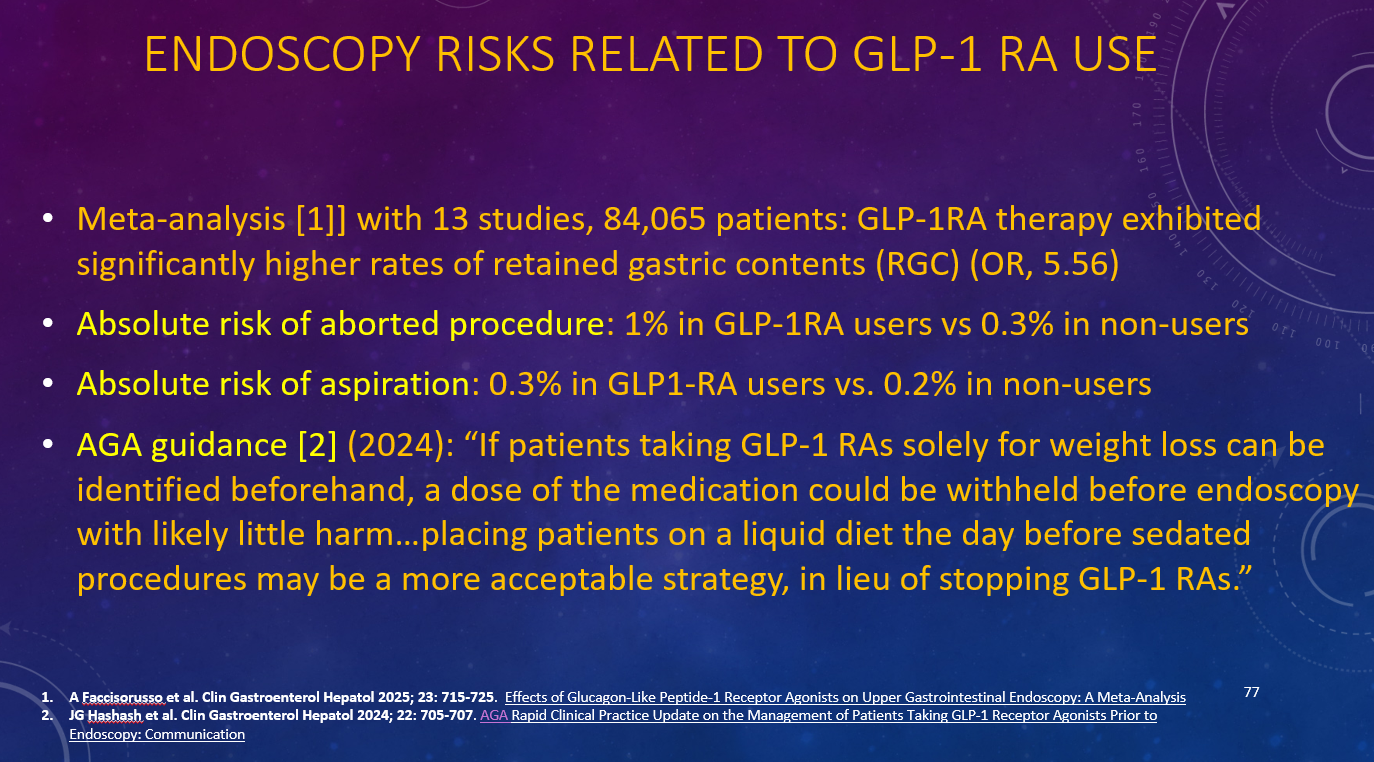
Worrisome Report: PPI Use and Early Onset Colorectal Cancer

C Strong, ACG 10/28/25: Long-Term PPI Treatment Linked to Higher Risk for Early-Onset CRC Before Age 50

An excerpt:

“Long-term treatment with proton pump inhibitors (PPIs) is independently associated with an increased risk for early-onset colorectal cancer (EOCRC) among individuals aged younger than 50 years, according to study results presented at the American College of Gastroenterology (ACG) 2025 conference…”

“Researchers reviewed data from the National Inpatient Sample from 2016 to 2020. Individuals were aged 18 to 49 years and had a main diagnosis of colorectal cancer (CRC)…Investigators identified PPI exposure through diagnostic codes indicating long-term use (Z79.891) or adverse effects (T45.4X5A/D)….

“Of the 7140 hospitalizations for patients with EOCRC aged younger than 50 years, 1056 (14.8%) reported long-term PPI treatment. After multivariable adjustment, PPI users had a 41% increased risk for EOCRC vs individuals without PPI use (adjusted odds ratio [aOR], 1.41…”

My take: More studies will be needed to determine if this link between PPI use and early onset CRC is truly significant. Many prior associations between PPI and other health conditions on observational studies have not held up with well-controlled studies. There was no increased risk of cancer in a previous randomized control trial (see below).

Related blog posts:

Amicalola Falls State Park

CDC Website Changed to Include False Claims About Autism and Vaccines

11/20/25 AAP: AAP: ‘Stop wasting government resources to amplify false claims’ about vaccines, autism

An excerpt:


The AAP and more than 40 other medical, health and patient advocacy groups also issued a joint statement condemning the change and called on the CDC to “return to its long history of promoting evidence-based information.”

Potential links between vaccines and autism have been studied for decades. More than 40 high-quality studies in seven countries involving over 5.6 million people have found no connection.

“The conclusion is clear and unambiguous: There’s no link between vaccines and autism,” Dr. Kressly said. “Anyone repeating this harmful myth is misinformed or intentionally trying to mislead parents.”

Scientists believe there is no single root cause of autism. Interactions between genetic changes and environmental influences likely play a role, according to an AAP Fact Checked article. Improved awareness and screening and updated diagnostic criteria have contributed to increases in autism prevalence.

“At this point, it’s not about doing more studies. It’s about being willing to accept what the existing studies clearly show,” said Alison Singer, M.B.A., co-founder and president of the Autism Science Foundation.

She said spending more money on settled science takes funding away from research on genetics and services for autistic people. False claims further stigmatize autistic people and their families…

Sean T. O’Leary, M.D., M.P.H., FAAP, chair of the AAP Committee on Infectious Diseases, called the latest move to put misinformation on the trusted CDC website “madness” and “a tragic moment for this country” and said he does not blame the career CDC scientists.

“For many decades, we (could) rely on CDC to provide the American public with the best available science,” Dr. O’Leary said. “Now our government is using it as an apparatus to spread falsehoods and lies.”

Here is a screenshot on media coverage of this story:

Related blog posts:

Primary Sclerosing Cholangitis (PSC) – Medical Treatment, Therapeutic Window and Relationship to Colitis

A recent Hepatology issue with reviews on cholestatic diseases featured three articles focused on Primary Sclerosing Cholangitis (PSC). These in-depth reviews spanned ~60 pages with more than 500 references.

TH Karlsen et al. Hepatology 2025; 82: 927-948. Open Access! Medical treatment of primary sclerosing cholangitis: What have we learned and where are we going?

As an aside, all of the articles include a short AI-generated plain language summary. I am a little surprised that the journal put in a disclaimer for them: “Text is machine generated and may contain inaccuracies.” The authors and editors have the expertise to assure accuracy of the summary of their published article. (I am the one who needs a disclaimer.)

A Few Points:

  • “It has proven difficult to establish robust evidence for significant clinical benefits of medical treatment in primary sclerosing cholangitis (PSC). For ursodeoxycholic acid, clinical practice guidelines only offer vague recommendations”
  • “Norucholic acid (previously denominated nor-UDCA) is a side chain–shortened homologue of UDCA that has shown superior anticholestatic, anti-inflammatory, and antifibrotic properties compared to UDCA in animal models.9  In PSC, norucholic acid was compared to placebo in a randomized multicenter phase II trial that evaluated the safety and efficacy of 12 weeks of treatment with oral norucholic acid (500, 1000, or 1500 mg/d) compared with placebo.10 … Norucholic acid significantly reduced ALP values in all treatment arms compared to placebo, and the safety profile was comparable across groups…An ongoing phase III placebo-controlled study compares oral treatment with 1500 mg/d norucholic acid with placebo on PSC disease progression assessed by a decrease in ALP and liver histology as a combined primary endpoint (NCT03872921)”
  • Other therapies are reviewed in depth
  • LJ Horst et al. Hepatology 2025; 82: 960-984. Open Access! PSC and colitis: A complex relationship “The clinical phenotype, genetic, and intestinal microbiota associations strongly argue for PSC-IBD being a distinct form of IBD, existing alongside ulcerative colitis and Crohn’s disease. In fact, the liver itself could contribute to intestinal pathology, clinically overt in 60%–80% of patients. Recent studies suggested that on a molecular level, almost all people with PSC have underlying colitis…complex pathophysiological relationships, where factors such as genetic predisposition, changes in the intestinal microbiota, altered bile acid metabolism, and immune cell migration are among the suspected contributors.”

My take: These are good reviews that highlight how much we have learned about PSC but also details the challenges ahead.

Related blog posts:

Disclaimer: This blog, gutsandgrowth, assumes no responsibility for any use or operation of any method, product, instruction, concept or idea contained in the material herein or for any injury or damage to persons or property (whether products liability, negligence or otherwise) resulting from such use or operation. These blog posts are for educational purposes only. Specific dosing of medications (along with potential adverse effects) should be confirmed by prescribing physician.  Because of rapid advances in the medical sciences, the gutsandgrowth blog cautions that independent verification should be made of diagnosis and drug dosages. The reader is solely responsible for the conduct of any suggested test or procedure.  This content is not a substitute for medical advice, diagnosis or treatment provided by a qualified healthcare provider. Always seek the advice of your physician or other qualified health provider with any questions you may have regarding a condition.

Living-Donor Transplant Availability Lifts All Boats

“A rising tide lifts all boats” has been used to express the sentiment that a good economy is beneficial to all. However, this has been criticized as not all boats are lifted equally and some boats are a lot nicer than others. I was thinking about this expression with these recent publications. The articles indicate that the availability of living donor liver transplant (LDLT) is clearly beneficial to the recipients but also is helpful, in a lesser way, to others on the transplant list as well.

Researchers analyzed data from 474 pediatric candidates listed for liver transplants at a single center from 2001 to 2023 (Toronto).

Key findings:

  • The pLDLT group had a higher likelihood of receiving a liver transplantation (adjusted HR: 1.38)  a lower risk of dying without a transplant (adjusted HR: 0.11)
  • Survival rates from the time of listing were significantly better in the pLDLT group compared to the pDDLT (on live donor) at 1—(98.6% vs. 87.6%), 5—(96.6% vs. 84.4%), and 10—(96.6% vs. 83.1%) years
  • Having a potential live donor was linked to a 72% reduction in mortality risk (adjusted HR: 0.28)
  • The waiting time for deceased donation shortened. This correlated with increased LDLT utilization, suggesting LDLT not only improved outcomes but also shortened wait times even for pDDLT patients

From the associated editorial:

  • “LDLT continues to be underutilized in the United States with only 15% of all pediatric LTs being LDLTs.1… In 2024, only 6 pediatric centers across the United States performed 5 or more LDLTs.6…”
  • “Black and African-American and Hispanic candidates and those with public insurance are half as likely to undergo LDLT compared with Caucasian candidates and those with private insurance.7,8
  • “In a survey of over 200 parents of pediatric candidates and recipients of LT, only 72% reported knowing the steps to gain access to LDLT, and only 69% knew that donor costs were covered by the recipient’s insurance.7
  • The authors recommend collaboration between centers offering LDLT and those that don’t so that more patients could benefit

My take: More use of LDLT will result in better outcomes.

Related blog posts:

New Study: Mediterranean Diet for IBS

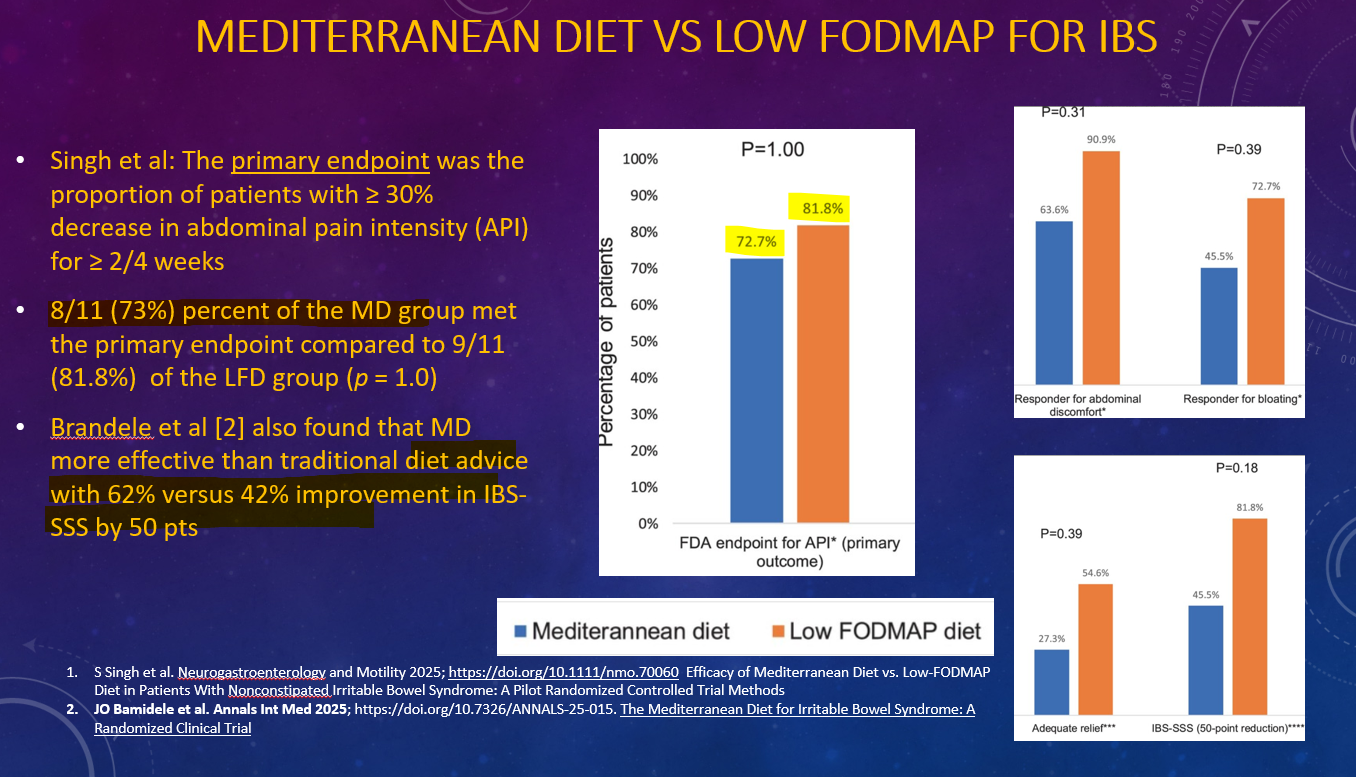
JO Bamidele et al. Annals Int Med 2025; https://doi.org/10.7326/ANNALS-25-015. The Mediterranean Diet for Irritable Bowel Syndrome: A Randomized Clinical Trial

Methods: Randomized noninferiority clinical trial (n=139 Adults from UK) — 6 weeks of the MD (Mediterranean diet) (n = 68) versus TDA (traditional diet advice) (n = 71).  Primary end point was the proportion achieving clinical response, defined as 50-point or greater reduction in IBS Symptom Severity Scale (IBS-SSS).

Traditional dietary advice’s main elements are to “adopt sensible eating habits
and avoid excess fatty foods, spicy foods, processed foods, caffeine, fizzy drinks, and alcohol. The principal components of the MD are a diet rich in fruit, vegetables,
pulses (aka legumes), whole grains, nuts, fish, and olive oil.”

Key findings:

  • The primary end point was met by 62% following a MD versus 42% following TDA (P = 0.017)
  • There was a greater reduction in the mean IBS-SSS after a MD than TDA (−101.2 vs. −64.5)

My take: I agree with the authors: The Mediterranean diet “represents a viable first-line dietary intervention for IBS.”

Related blog posts:

Meta-Analysis and Systemic Review: Efficacy of Drugs for Pediatric Constipation

A de Geus et al. Lancet Child Adolesc Health 2025 https://doi.org/10.1016/S2352-4642(25)00219-6. Open Access! Efficacy and safety of pharmacological therapies for functional constipation in children: a systematic review and meta-analysis

Thanks to Ben Gold for sharing this reference

Methods: In this systematic review and meta-analysis, the authors identified “4595 articles, of which 59 randomised controlled trials were included, representing 7045 participants with functional constipation. Interventions included polyethylene glycol (n=36 studies), lactulose (n=18), magnesium oxide or magnesium hydroxide (n=7), picosulfate (n=1), liquid paraffin (n=4), prucalopride (n=1), lubiprostone (n=2), linaclotide (n=3), plecanatide (n=1), enemas (n=2), and domperidone (n=1).”

Key findings:

  • Meta-analyses for treatment success showed that polyethylene glycol was probably more effective than placebo (RR 1·74, moderate certainty of evidence) and may be more effective than lactulose (1·35], low certainty of evidence)
  • Linaclotide probably leads to higher defecation frequency than placebo
  • Prucalopride is probably not more effective than placebo
  • “Most other therapies provided evidence that was of very low certainty, due to methodological limitations and insufficient information to assess the risk of bias, precluding any evidence-based conclusions”

The discussion reviews the problems with trial design, problems with underpowered studies, and “pervasive issues with heterogeneity.  The use of concomitant therapeutics or permitted interventions and the disease severity of the patient populations varied greatly from study to study.”

My take: This study outlines what is needed to improve future research for pediatric constipation. For now, there is little certainty regarding the effectiveness of most constipation medications.

Related blog posts:

Chalktoberfest 2025 (Marietta GA)

ACupuncTure for Irritable bOwel syNdrome (ACTION)

J-W Yang et al. Gastroenterology, Volume 169, Issue 5, 958 – 969.e5. Open Acces! Efficacy of ACupuncTure in Irritable bOwel syNdrome (ACTION): A Multicenter Randomized Controlled Trial

This ACTION study enrolled 280 patients (18-75 yrs) with IBS-D in a multicenter randomized controlled trial in 6 hospitals in China. “For the sham acupuncture group, blunt-tipped placebo needles with a similar appearance to real needles were used over the adhesive pads with no skin penetration. Five fixed pairs of non-acupoints (10 stimulation points in total) away from meridians or conventional acupoints were used.”

Key finding:

  • The primary outcome (see below) was reached by 71 (57.9%) patients in the acupuncture group compared with 47 (41.4%) patients in the sham acupuncture group (risk ratio 1.40; P = .008)
  • The effects of acupuncture in symptomatic improvements of IBS-D persisted 3 months after treatment with minimal to no side effects
  • Limitations including the difficulty of acupuncture blinding (despite the identical treatment setups)

My take: Acupuncture, especially given its safety, is a reasonable therapy for IBS-D; though, it is not recommended in recent pediatric guidelines. “The rub” in many locations is finding qualified practitioners.

Related blog posts:

Dr. B Li: Cyclic Vomiting Syndrome 2025

Dr. B Li, emeritus professor of Pediatrics (Medical College of Wisconsin), gave this year’s Billy Meyers Lecture. Dr. Li is considered the world’s foremost authority on cyclic vomiting syndrome (CVS) (‘the emperor of emesis’). He gave a fantastic update.  I have taken some notes and shared many of his slides. There may be inadvertent omissions and mistakes in my notes. More information on the CVS 2025 guidelines is noted in a separate post: 2025 Pediatric Cyclic Vomiting Syndrome Guidelines

  • Historical background of CVS: Early descriptions of CVS date back to 1880s and Samuel Gee (who also is credited with the first modern description of celiac disease). Charles Darwin was likely affected by CVS
  • Epidemiology: CVS is not a rare disorder. It likely affects ~2% of kids and adults
  • There are several patterns of CVS. Many patients who have CVS do not have a cyclical pattern
  • Lethargy and pallor are common symptoms which make patients appear more ill
  • Retching on an empty stomach and severe emesis are hallmarks and likely indicate that the primary mechanism is not due to the GI tract. Though there are some food poisonings (eg. Bacillus cereus) that can have some of these symptoms but typically milder in severity
  • Previously, CVS patients were thought to be well in between episodes. However, ~40% have inter-episode symptoms
  • Quality of life is correlated mainly with anxiety/coping rather than the severity of episodes
  • Children with CVS often (~75%) develop migraines by adulthood
  • Underlying pathophysiology likely involves the autonomic nervous system
  • 2025 CVS Guidelines — took about 3 years to develop. It is noted that the 2008 guideline diagnostic criteria missed about 48% of cases (Bujarska et al. JPGN 2025; 80: 417)
  • 2025 Guidelines emphasize limited diagnostic workup at presentation (eg. UGI and basic labs) unless there are alarm symptoms. Alarm symptoms include the following:
  • For abortive therapy, the new guidelines favor aprepitant over ondansetron, and generally favor D5 over D10 IVFs.
  • For prophylactic therapy, there is now an emphasis on non-pharmacologic therapy in addition to pharmacologic agents and PENFS. Propranolol and aprepitant are favored prior to use of TCA agents like amitriptyline due to side effect profile
  • Action plan for ED may help speed care and lower likelihood of admission
  • PENFS for prophylactic therapy had a durable response (113 days) in a recent study
  • Cannaboid hyperemesis syndrome (CHS) was first described in 2004 and has been rapidly increasing related to increased use and potency of THC products. Haloperidol, topical capsaicin and hot water (prolonged) bathing are often effective
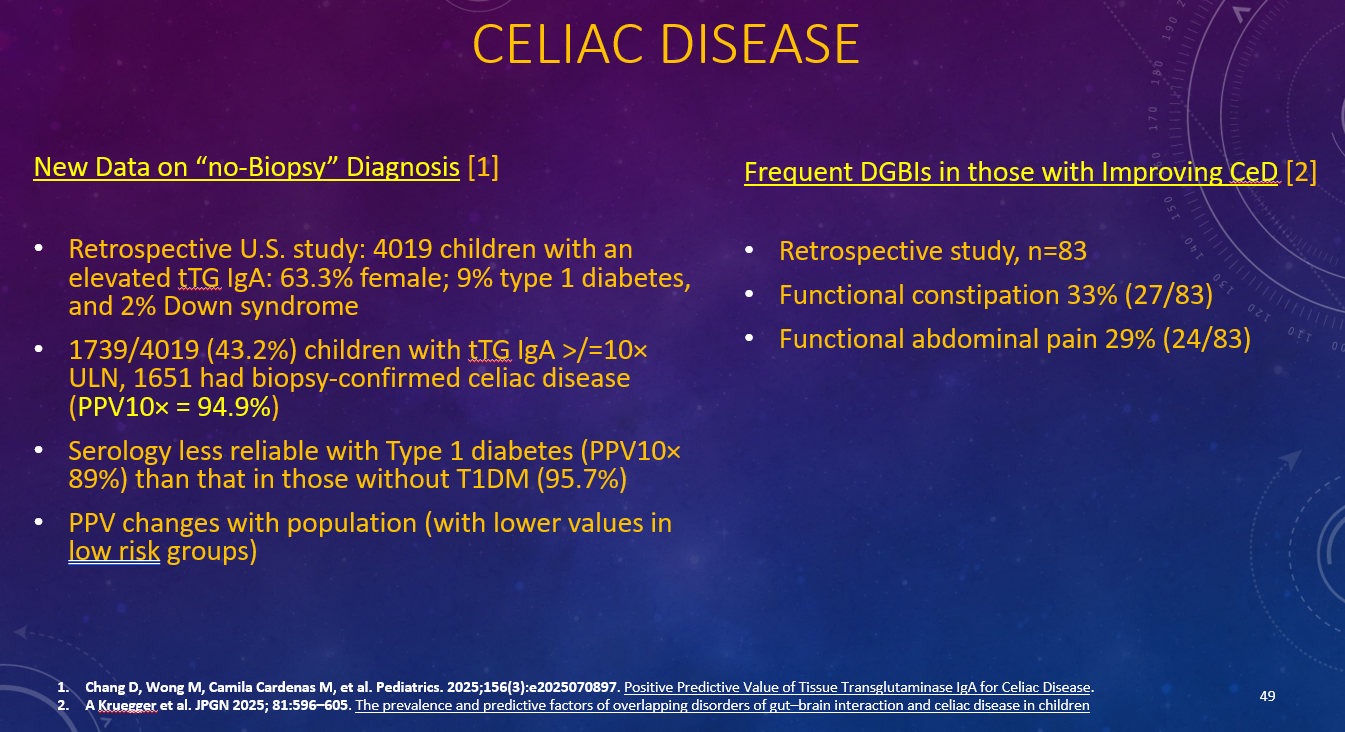
Variants include the CVS associated with mitochondrial dysfunction, the Sato variant associated with increased BP, increase ACTH/cortisol, Catmaenial CVS is related to menses, and CHS (CVS-like) associated with cannabis use

Related blog posts:

Disclaimer: This blog, gutsandgrowth, assumes no responsibility for any use or operation of any method, product, instruction, concept or idea contained in the material herein or for any injury or damage to persons or property (whether products liability, negligence or otherwise) resulting from such use or operation. These blog posts are for educational purposes only. Specific dosing of medications (along with potential adverse effects) should be confirmed by prescribing physician.  Because of rapid advances in the medical sciences, the gutsandgrowth blog cautions that independent verification should be made of diagnosis and drug dosages. The reader is solely responsible for the conduct of any suggested test or procedure.  This content is not a substitute for medical advice, diagnosis or treatment provided by a qualified healthcare provider. Always seek the advice of your physician or other qualified health provider with any questions you may have regarding a condition

Understanding the Ileal Pouch in Inflammatory Bowel Disease and Familial Adenomatous Polyposis

A Phillip et al. J Pediatr Gastroenterol Nutr. 2025;81:913–921. A narrative review of the ileal pouch in pediatric inflammatory bowel disease and familial adenomatous polyposis

Introduction: Total proctocolectomy with ileal pouch-anal anastomosis (IPAA) can be a life changing solution for a subset of pediatric inflammatory bowel disease (IBD) and familial adenomatous polyposis (FAP) patients. For patients with severe disease a three-stage approach is commonly performed.

Creation of IPAA -Three Stages:

Endoscopic Images and IPAA Anatomy:

  • The article provides guidance on complications including pouchitis, CD-like inflammation of the pouch, J-pouch failure, fertility after IPAA along with follow-up/screening recommendations.
  • As for screening, adult guidelines recommend annual screening for IBD patients with high risk features—previous dysplasia, primary sclerosing cholangitis, type C mucosa, refractory pouchitis. In those without these features, guidelines are variable, with one suggesting screening every 5 years. In FAP patients, the recommendation for surveillance screening following IPAA is pouchoscopy every 1–2 years.8

My take: Most pediatric gastroenterologists are not proficient in pouch management due to the small number of our patients needing IPAA. This review provides a terrific review/resource.

Related blog posts:

A Medical Wolf in Sheep’s Clothing – Monogenetic Diseases Not So Rare

F Rahimov et al. NEJM 2025; 393: 1589-1598. Common Diseases in Clinical Cohorts — Not Always What They Seem

This was a two-part study. First the authors examined the frequency of monogenetic rare diseases among patients with primary diagnosis of multiple sclerosis, inflammatory bowel disease (IBD), or atopic dermatitis using the UK Biobank. The UK Biobank is a prospective cohort with >500,000 participants.

In the second part of the study, the authors examined populations with these diseases who had participated in clinical trials. For IBD, the authors utilized five (phase 3) clinical trials includingthe two SERENE trials (SERENE CD, SERENE UC) which examined the use of adalimumab, two risankizumab trials, and one trial of upadacitinib. In total, exome sequencing was performed in 580 with Crohn’s disease and 900 with ulcerative colitis.
This summary of this article focuses on the findings relative to IBD.

Key findings:

  • In the UK Biobank a diagnosis of a rare monogenetic disease was identified in 53 of 1850 (2.86%) with multiple sclerosis, 75 of 6681 (1.12%) with a diagnosis of inflammatory bowel disease, and 25 of 998 (2.50%) with a diagnosis of atopic dermatitis
  • Among 1480 clinical trial IBD participants with sequencing data, the authors identified 70 (4.73%) who had a molecular diagnosis of a rare disease 
  • Patients with rare clinical variants responded poorly to medical treatments. For example, in the SERENE-adalimumab studies, 31 of 33 (94%) did not have clinical or endoscopic remission within a year

Discussion Points:

  • “It is estimated that collectively 4 to 6% of the general population are affected by some form of a rare disease.37” In the absence of routine exome sequencing, diagnosing rare diseases has been a lengthy and difficult process 
  • The higher fraction of rare diseases identified in the clinical trials cohort (4.73%) than in the U.K. Biobank cohort (1.12%) may be attributed to the targeted recruitment of patients with moderate-to-severe inflammatory bowel disease
  • TNFRSF13B was the most common pathogenetic variant in both the Biobank group (25 of 75) and the trials cohort (39 of 70). This variant causes common variable immunodeficiency and “is probably misdiagnosed as inflammatory bowel disease or primarily manifests with inflammatory bowel disease–like symptoms.”
  • “Rare disease–associated genes may offer insights into potential mechanisms of nonresponse, as we found in this study, and may help in the identification of novel therapeutic targets for inflammatory bowel disease. Conversely, some patients with rare diseases could present opportunities for drug repurposing when they have a serendipitous response to treatments in clinical trials.”

My take:

  1. This study shows that misdiagnosis of rare disease as common conditions is not infrequent.
  2. If the trial IBD population had enrolled young children, the frequency of rare monogenetic diseases would have been higher and captured a wider variety of disorders.
  3. For IBD, use of exome sequencing is widely recommended in those with very early onset disease and is a good idea in those with unusual features and in those who are not responding favorably to treatment.

Related blog posts:

From Chalktoberfest 2025