Unknown's avatar

About gutsandgrowth

I am a pediatric gastroenterologist at GI Care for Kids (previously called CCDHC) in Atlanta, Georgia. The goal of my blog is to share some of my reading in my field more broadly. In addition, I wanted to provide my voice to a wide range of topics that often have inaccurate or incomplete information. Before starting this blog in 2011, I would tear out articles from journals and/or keep notes in a palm pilot. This blog helps provide an updated source of information that is easy to access and search, along with links to useful multimedia sources. I was born and raised in Chattanooga. After graduating from the University of Virginia, I attended Baylor College of Medicine. I completed residency and fellowship training at the University of Cincinnati at the Children’s Hospital Medical Center. I received funding from the National Institutes of Health for molecular biology research of the gastrointestinal tract. During my fellowship, I had the opportunity to work with some of the most amazing pediatric gastroenterologists and mentors. Some of these individuals included Mitchell Cohen, William Balistreri, James Heubi, Jorge Bezerra, Colin Rudolph, John Bucuvalas, and Michael Farrell. I am grateful for their teaching and their friendship. During my training with their help, I received a nationwide award for the best research by a GI fellow. I have authored numerous publications/presentations including original research, case reports, review articles, and textbook chapters on various pediatric gastrointestinal problems. In addition, I have been recognized by Atlanta Magazine as a "Top Doctor" in my field multiple times. Currently, I am the vice chair of the section of nutrition for the Georgia Chapter of the American Academy of Pediatrics. In addition, I am an adjunct Associate Clinical Professor of Pediatrics at Emory University School of Medicine. Other society memberships have included the North American Society for Pediatric Gastroenterology Hepatology and Nutrition (NASPGHAN), American Academy of Pediatrics, the Food Allergy Network, the American Gastroenterology Association, the American Association for the Study of Liver Diseases, and the Crohn’s and Colitis Foundation. As part of a national pediatric GI organization called NASPGHAN (and its affiliated website GIKids), I have helped develop educational materials on a wide-range of gastrointestinal and liver diseases which are used across the country. Also, I have been an invited speaker for national campaigns to improve the evaluation and treatment of gastroesophageal reflux disease, celiac disease, eosinophilic esophagitis, hepatitis C, and inflammatory bowel disease (IBD). Some information on these topics has been posted at my work website, www.gicareforkids.com, which has links to multiple other useful resources. I am fortunate to work at GI Care For Kids. Our group has 17 terrific physicians with a wide range of subspecialization, including liver diseases, feeding disorders, eosinophilic diseases, inflammatory bowel disease, cystic fibrosis, DiGeorge/22q, celiac disease, and motility disorders. Many of our physicians are recognized nationally for their achievements. Our group of physicians have worked closely together for many years. None of the physicians in our group have ever left to join other groups. I have also worked with the same nurse (Bernadette) since I moved to Atlanta in 1997. For many families, more practical matters about our office include the following: – 14 office/satellite locations – physicians who speak Spanish – cutting edge research – on-site nutritionists – on-site psychology support for abdominal pain and feeding disorders – participation in ImproveCareNow to better the outcomes for children with inflammatory bowel disease – office endoscopy suite (lower costs and easier scheduling) – office infusion center (lower costs and easier for families) – easy access to nursing advice (each physician has at least one nurse) I am married and have two sons (both adults). I like to read, walk/hike, bike, swim, and play tennis with my free time. I do not have any financial relationships with pharmaceutical companies or other financial relationships to disclose. I have helped enroll patients in industry-sponsored research studies.

Dr. Jennifer Lee: AI for Peds GI

Recently, Dr. Jennifer Lee gave our group an excellent update on artificial intelligence (AI) for pediatric gastroenterology.  My notes below may contain errors in transcription and in omission.

  • AI is ubiquitous -it helps you login into your phone, helps with traffic apps, filters spam from email, and even edits Bowel Sounds (gets rid of the ‘umms’)
  • AI can help and AI can harm
  • Dr. Lee thinks that AI is not going to replace doctors and may help doctors in their clinical work
  • AI is teaching computers to think and predict problems. This can include analyzing radiology images, endoscopic findings (eg. polyps), interpreting EKGs, help with voice recognition, and scribe office visits (still in early stages)
  • For EoE, it was hypothesized that PPI-REE was different than EoE. However, it turned out that no significant differences were found. Thus, diagnosis of EoE no longer requires exclusion of EoE. (Related blog posts: Do We Still Need PPI-REE?, Updated Consensus Guidelines for Eosinophilic Esophagitis)
  • For colonoscopy, AI may aid polyp detection but whether this is clinically meaningful is unclear
  • With more complex analysis, AI is less transparent
  • AI algorithms can increase bias
  • Reliance on AI could lead to skill deterioration. MIT did a study showing less brain activity when using ChatGPT
  • Generative AI can create a summary of a patient chart. EHRs are partnering with AI
  • Agentic AI is when AI is set up to act autonomously like reminding patients to get vaccines, reminding to make appointments, or helping schedule appointments
  • AI in the clinic and hospital may help reduce documentation burden, improve satisfaction and improve safety for patients
  • AI does have a problem of hallucination (‘making stuff up’) (my comment: so can people). Case report of man admitted to the hospital after following ChatGPT advice in substituting sodium bromide to reduce salt intake (Eichenberger et al. Annal Internal Medicine, 2025. A Case of Bromism Influenced by Use of Artificial Intelligence)
  • AI tools are still in early stages; however, ChatGPT uptake has been much quicker than previous internet tools

Related blog posts:


Related article: A Soroush et al. Clin Gastroenterol Hepatol 2025; 23: 1472-1476. Impact of Artificial Intelligence on the Gastroenterology Workforce and Practice

Randomized Control Trial of the Modified Crohn’s Disease Exclusion Diet (CDED)

RS Boneh et al. Clin Gastroenterol Hepatol 2025; 23: 2001-2011. Open Access! Modified Crohn’s Disease Exclusion Diet Maintains Remission in Pediatric Crohn’s Disease: Randomized Controlled Trial

In this “DIETOMICS” study with 56 children with mild-to-severe Crohn’s disease, after a 2 week exclusive enteral nutrition (EEN) diet, 30 patients were randomized to CDED and 26 to EEN.

Diet intervention: The CDED group followed 3 diet phases over 24 weeks: phase 1 (weeks 3–8) supplemented with 50% PEN; phase 2 (weeks 9–14) with 25% PEN, as described previously16; and phase 3 (weeks 15–24) with gradual introduction of more foods, including 1 and 2 free meals per week from weeks 15 and 18, respectively.17 Patients in EEN group received 8 weeks of EEN followed by gradual introduction of free diet with 25% PEN up to week 24.

Key findings:

This study with a relatively small number of enrolled patients had a lot of variables in dietary parameters. “An additional potential confounder in this study is the use of IMM therapy. Although both groups were recommended to initiate IMM therapy from weeks 4 to 5 to maintain remission, several CDED patients opted for monotherapy with CDED and preferred to delay medication initiation. Interestingly, 90% of patients on CDED without IMM therapy were in remission at week 14 and 100% were in remission at week 2” (possibly impacting decision not to use IMM).

My take: This study adds another piece of information to the puzzle on dietary therapy for Crohn’s disease. The authors note the following: “while CDED shows promise as a standalone therapy in some cases, in more severe cases it may be more appropriately as an adjuvant to top-down treatment with early anti-TNF.4 Recent research and guidelines advocate for a top-down approach (anti-TNF ± nutrition) for more severe disease, emphasizing the integration of anti-TNF therapy with nutrition.8,29 This approach is crucial during critical growth stages, as the conventional step-up method may lead to ineffective use of IMM with prolonged steroid exposure and growth issues.12

Related blog posts:

Disclaimer: This blog, gutsandgrowth, assumes no responsibility for any use or operation of any method, product, instruction, concept or idea contained in the material herein or for any injury or damage to persons or property (whether products liability, negligence or otherwise) resulting from such use or operation. These blog posts are for educational purposes only. Specific dosing of medications (along with potential adverse effects) should be confirmed by prescribing physician.  Because of rapid advances in the medical sciences, the gutsandgrowth blog cautions that independent verification should be made of diagnosis and drug dosages. The reader is solely responsible for the conduct of any suggested test or procedure.  This content is not a substitute for medical advice, diagnosis or treatment provided by a qualified healthcare provider. Always seek the advice of your physician or other qualified health provider with any questions you may have regarding a condition

FDA Approves Higher Dosage of Linaclotide for IBS-C and ByHeart Formula Recall Due to Botulinism

A Brooks. HCPLive 11/5/25: FDA Approves Linaclotide (Linzess) Capsules for Pediatric IBS-C

An excerpt:

The US Food and Drug Administration (FDA)  has approved Ironwood Pharmaceuticals’ linaclotide (Linzess) capsules for pediatric patients ≥ 7 years of age with irritable bowel syndrome with constipation (IBS-C), making it the first treatment approved for IBS-C in this patient population.1

The approval for pediatric IBS-C was supported by extrapolation of efficacy from adequate and well-controlled studies in adults and a 12-week double-blind, randomized, parallel-group trial in pediatric patients 7-17 years of age who met modified Rome III criteria for child/adolescent IBS-C. The recommended dosage for this indication is 145 mcg orally once daily.1

In 2023, the FDA approved linaclotide for the treatment of pediatric patients aged 6-17 years with functional constipation at a recommended dosage of 72 mcg orally once daily. 

Reference: US Food and Drug Administration. FDA approves 1st drug for children 7 years and older with irritable bowel syndrome with constipation. November 5, 2025. Accessed November 5, 2025. https://www.fda.gov/drugs/news-events-human-drugs/fda-approves-1st-drug-children-7-years-and-older-irritable-bowel-syndrome-constipation

Also, NBC news (11/08/25): ByHeart baby formula recalled amid 10-state outbreak of infant botulism The U.S. Food and Drug Administration said the outbreak includes 13 hospitalizations since August of children who consumed ByHeart Whole Nutrition Infant Formula. No deaths have been reported.

The recall includes two lots of the powdered formula with Dec. 1 “use by” dates, the FDA said in a statement Saturday. The lot numbers are 206VABP/251261P2 and 206VABP/251131P2…The FDA says ByHeart makes up less than 1% of the baby formula sold in the U.S.

Chicago Botanic Garden

Proximal Ileal Crohn’s Disease is Harder to Treat

K Takenaka et al. Clin Gastroenterol Hepatol 2025; 23: 1991-2000. Open Access! Inadequate Efficacy of Biologics for Treating Proximal Ileal Lesions in Crohn’s Disease: A Prospective Multicenter Study

This multicenter prospective study (n=253) examined efficacy of treatment in patients with proximal ileal disease using balloon-assisted enteroscopy (BAE). The recruited patients had a mean disease duration of 4 years. 52% were naive to biologic treatment at baseline.

Key findings:

  • At baseline, 74 patients (29.2%) had proximal ileal ulcerations without terminal ileal ulcerations
  • At week 26, after treatment with anti-TNF therapy (n=103), ustekinumab (n=99) or vedolizumab (n=51), endoscopic remission was achieved in 91 patients (36.0%). Of the patients with complete ulcer healing of the terminal ileum, 28.6% (22/77) had residual ulcers in the proximal ileum
  • The rate of endoscopic remission in the proximal ileum (50.9%) was relatively lower compared with the colon (63.4%) and terminal ileum (56.7%)
  • After a median follow-up of 134 weeks, residual ulcerations in the proximal ileum were associated with a poorer prognosis (P = .0126 for hospitalization and P = .0014 for surgery). In contrast, there was no significant differences in hospitalization and surgery associated with endoscopic activity vs remission in the colon or terminal ileum.

Discussion: Residual “proximal ileal ulcerations … are associated with a poorer prognosis…Additionally, we confirmed that proximal ileal inflammation is less responsive to biologic therapies compared with colonic inflammation. Although the reasons for this disparity remain unclear”

My take: Balloon-assisted enteroscopy is not frequently used in the setting of inflammatory bowel disease, particularly in pediatrics. MRE is typically used to follow proximal small bowel disease, though it has less sensitivity for luminal mucosal disease.

Related blog posts:

Hypercoagulation with Acute Severe Ulcerative Colitis (ASUC) Persists for Months

BJ Griffiths et al. Clin Gastroenterol Hepatol 2025; 23: 1798-1807. Open Access (PDF)! Hypercoagulation After Hospital Discharge in Acute Severe Ulcerative Colitis: A Prospective Study

Methods: In this prospective study, twenty-seven adult patients with ASUC and 25 control patients with quiescent ulcerative colitis were recruited. Thrombin generation (endogenous thrombin potential), rotational thromboelastometry (EXTEM and FIBTEM maximum clot firmness), procoagulant factors, anticoagulant factors, and fibrinolytic markers were assessed for those with ASUC on admission (Day 1), Day 5, 4 weeks, and at 8–12 weeks. These assessments were performed on a single occasion for control patients.

Key findings:

Discussion:

  • “Patients with ASUC had a hypercoagulable profile on initial presentation to the hospital, before receipt of LMWH, which was consistently demonstrated by individual and global assays of coagulation. The most marked elevations of individual factors at presentation were seen in the levels of Clauss fibrinogen, platelets, VWF, and FVIII, alongside heightened
    levels of the inhibitors of fibrinolysis PAI-1 and TAFIa.”
  • “This hypercoagulable state persisted for many weeks after hospital discharge, with levels of FVIII, fibrinogen, VWF, and inhibitors of fibrinolysis (TAFIa) remained significantly elevated at all timepoints up to 12 weeks, compared with the control population. This is despite
    intensive treatment for ASUC in all patients.”
  • “VTE and pulmonary embolism are 1 of the leading causes of morbidity and mortality during IBD flare-ups. The findings from this study reinforce the importance of thromboprophylaxis administration to all patients with ASUC at first presentation to hospital.”

My take: This study is in adults; the risk of VTE is lower in children and guidance on VTE prophylaxis is not clear.

Related blog posts:

Dupilumab for FPIES

M Plassmeyer et al. Journal of Allergy and Clinical Immunology 2025; Dupilumab Opens a Therapeutic Window in Food Protein Induced Enterocolitis Syndrome by un-licensing dendritic cells

Thanks for Ben Enav for this reference.

Methods: This was a two-part study: “(i) a detailed single-patient case of wheat-triggered, endoscopy-confirmed colitic FPIES treated with dupilumab 300 mg subcutaneously every two weeks and (ii) a prospective follow-up of seven additional FPIES patients all of whom initiated dupilumab for approved comorbidities. Serial flow cytometry quantified dendritic-cell OX40L and CD8+ CRTH2+ T-cell subsets before and after treatment; open food challenges assessed clinical tolerance.”

Key Findings:

  • Index case: Within two injections of dupilumab, the wheat sensitive patient tolerated a 50 g wheat protein challenge without gastrointestinal symptoms—this was the first uneventful exposure in 20 years. Discontinuation of dupilumab led to relapse; re-initiation again restored clinical tolerance
  • Cohort: All seven additional patients (ages 2–58 yr; triggers: milk, soy, rice, wheat, shellfish) achieved unrestricted dietary tolerance within three months
  • An important finding in the index case as well as the follow up cohort is the dupilumab induced drop in dendritic cell OX40L. OX40L is a TNF-superfamily co-stimulatory molecule induced on dendritic cells and other antigen-presenting cells.

My take: Dupilumab appears to be a promising medication for FPIES and warrants further study. If confirmed to be effective, it is likely to be targeted to those with approved comorbidities and those with more severe presentations.

Related blog posts:

Amicalola Falls State Park

Kids With Acute Pancreatitis Need Followup

F Ahmed, M Abu-El-Haija. Gastroenterol 2025; 169: 572-584. Open Access! Acute Pancreatitis in Children: It’s Not Just a Simple Attack

This is a really good review of acute pancreatitis covering epidemiology, diagnosis, severity classification, management, microbiome/metabolite derangements, genetics, and complications. Most of these topics have been covered in numerous blog posts (see below).

Selected Key Points:

  • Diagnostic testing -Amylase/Lipase:  “The diagnostic efficacy of amylase for AP, in terms of sensitivity and specificity, is contingent on the selected threshold value. Elevating the cut-off point to 1000 IU/L results in a high specificity of approximately 95%. However, this comes at the cost of reduced sensitivity, which some studies report to be as low as 61%… the activity of serum lipase remains elevated for a longer duration, typically between 8 and 14 days,… Lipase demonstrates superior accuracy with most studies reporting specificities exceeding 95% and sensitivities ranging from 55%–100% at a threshold activity level of 600 IU/L…hese tests have excellent sensitivities, they may have a few limitations such as being poor predictors of severity”
  • Risk Factors in Children (from Figure 1):
  • Incidence and Severity in Children (from Figure 1):

[At a recent lecture, Jay Freeman (How to Upgrade Pancreas Care –Jay Freeman MD (Part 1)) noted that severe pancreatitis is often defined by degree of organ dysfunction (eg. cardiac, pulmonary, renal). A practical definition of severe pancreatitis in children is whether the patient requires admission to an ICU]

  • Diagnostic testing -Imaging: “Imaging techniques are crucial for diagnosing and managing AP in children…NASPGHAN) and the Society for Pediatric Radiology formed consensus guidelines where transabdominal ultrasonography was recommended as the primary imaging technique for pediatric cases with suspected AP…Recent studies in the pediatric population have indicated that US’s sensitivity for AP detection ranges from 47%–52%.25Magnetic resonance cholangiopancreatography (MRCP) is useful for anatomical assessment without radiation but may require sedation”
  • Management: “The cornerstones of therapy are early feeding and intravenous fluids… Allowing patients to eat on admission was feasible and was associated with lower length of stay. Rates of intravenous fluids are recommended at 1.5–2 times maintenance rates,49 and the preferred fluid is Lactated Ringer’s due to limited studies including a recent randomized controlled study that showed that Lactated Ringer’s was associated with a faster discharge rate when administered compared with normal saline.50
  • Genetics:  “A recently conducted study investigated the importance of genetics in pediatric AP patients…use of an extensive panel of 8 genes… PRSS1CFTRSPINK1CPA1, CTRCCLDN2CASR, and SBDS… genetics is a major component in all types of pancreatitis in children, with genetic variants being most prevalent in CP cases at 31%, followed by AP at 19%, and ARP at 6%. A key discovery was that variants in SPINK1CFTR, or PRSS1 genes were associated with faster progression from first episode of AP toward CP.53
  • Complications (from Figure 1): “After the first episode of AP, the QoL is decreased, and it may lead to other disorders such as exocrine dysfunction, endocrine dysfunction and diabetes, nutritional deficiencies, and acute recurrent pancreatitis and CP.”

My take: Even after a single episode of acute pancreatitis, there are risks for long-term complications and patients need to follow-up.

Related blog posts:

Shared Decision-Making in Celiac Disease Diagnostic Approach

Y Sunkoy, S Talathi. Am J Gastroenterol 2025; 2190-2193. Utility of the ESPGHAN Biopsy-Sparing Guidelines for Celiac Disease in Children

Thanks to Ben Gold for this reference.

Methods: Retrospective study of patients (n=2942 children) who had celiac serologies and duodenal biopsies

Key findings:

  • Prevalence of CD in this cohort was 9% (226 of 2942 patients)
  • In those with a high titer (>10xULN), 106 of 107 patients (99%) had celiac disease
  • In this cohort, even in those with with >7XULN, had a Sensitivity of 55.3%, a specificity of 99% and a PPV of 97%

In their discussion, the authors note that “we did not obtain an EMA in a second sample, which is recommended in the ESPGHAN guidelines.”

Associated commentary: Erica Brenner, American Journal of Gastroenterology 120(9):p 1985-1986. The No-Biopsy Approach for Pediatric Celiac Disease: Ready for Prime Time in North America?

  • “Shiha et al (8) found that the PPV ranged from 65% for a 1% CD prevalence to a 99% for a 40% prevalence. As the 9% CD prevalence in the study by Sunkoj et al (4) exceeds the 0.81$-1.4% prevalence in the United States (9), the reported PPV may overestimate reality.” (Related post: No-Biopsy Approach to Celiac Disease Diagnosis and Positive Predictive Value (Based on Population)
  • “Children with type 1 diabetes and trisomy 21 have a higher risk of false-positive serology and therefor may not be appropriated candidates for a no-biopsy approach.”

My take: A larger recent study (Chang et al. Pediatrics. 2025;156(3):e2025070897) found that the no-biopsy approach had a significantly lower PPV in their cohort (94.9% overall, and 95.7% in those without T1DM). Thus, in cohorts with lower prevalence of CD, the no-biopsy approach could lead to 2-4% of children being placed unnecessarily on a gluten free diet. As such, it would be good practice to discuss making a diagnosis via endoscopy vs. the no-biopsy approach as part of shared decision-making.

Related blog posts:

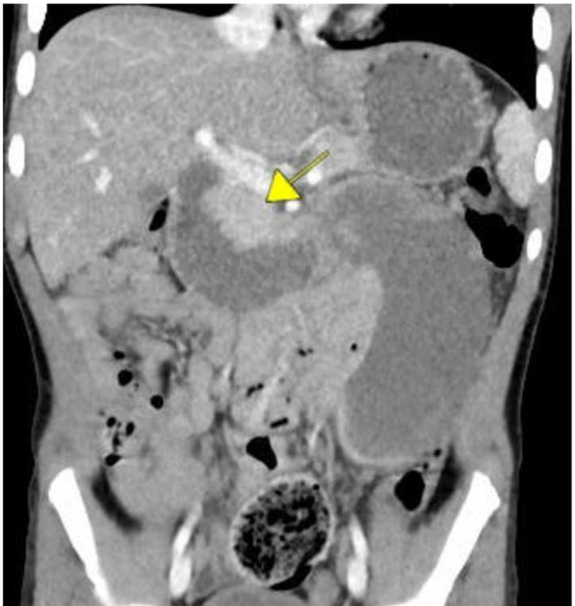
Stercoral Colitis

A Bajer, E Levine. NEJM 2025;393: e23. Stercoral Colitis

This young adult presented to the ED with left-sided abdominal pain and chronic constipation. A CT scan was consistent with a diagnosis of stercoral colitis. “In stercoral colitis, chronically impacted feces distend the colon, resulting in inflammation. In some cases, the fecaloma may lead to focal-pressure necrosis or perforation.”

My take: Most often a CT is not needed in this setting. However, it is important to recognize that a severe impaction can lead to complications.

Related blog posts:

Selective Acid Suppression for Esophageal Atresia Patients

This year’s masterpiece!

Link from AAP HealthyChildren.org: Halloween Fun & Safety Tips for Kids of All Ages


S Zeneddin et al. J Pediatr Gastroenterol Nutr. 2025;81:960–966. Acid suppression after esophageal atresia repair: Some infants do benefit

Methods: The authors performed a retrospective study using the Pediatric Health Information System for infants undergoing EA/TEF repair between 2010 and 2022 (n=1445 infants). Acid suppression was defined as receipt of an H2 blocker or proton pump inhibitor on the day of discharge or longer than 30 inpatient days. Complex EA/TEF repair was defined as delayed repair (>7 days), G-tube placement before repair (likely a sign of a long gap or type A anomaly), prolonged hospitalization (>60 days), or multiple inpatient fluoroscopies. The authors defined stricture solely if it required intervention.

Key findings:

  • 257 (17.8%) required dilation by 1 year. Of the 688 (47.6%) infants who met criteria for complex EA/TEF, 126 (18.6%) required a dilation.
  • At 1 year, stricture rate was similar in infants with simple EA/TEF, with or without acid suppression (17.5% vs. 17.0%, p = 0.90)
  • In infants with complex EA/TEF, stricture rates were lower among those who received acid suppression compared to those who did not (15.3% vs. 26.0%, p = 0.001).

The associated editorial (D George, DK Robie. J Pediatr Gastroenterol Nutr. 2025;81:911–912) reviews some of the limitations of the study but does not provide clear recommendations on utilization of acid suppression therapy: the decision should be “should be individualized, weighing the potential benefits against the risks.”

My take: It is not surprising that more complex EA would have higher stricture rates. In my training (in the 1990s!), it was routine practice to use indefinite acid suppression. This article indicates that patients with low risk EA likely do not need acid suppression. In high risk patients, the algorithm by Yasuda et al (see post below J Am Coll Surg 2024; 238: 831-843) provides their approach to weaning acid suppression.

Related blog posts:

Disclaimer: This blog, gutsandgrowth, assumes no responsibility for any use or operation of any method, product, instruction, concept or idea contained in the material herein or for any injury or damage to persons or property (whether products liability, negligence or otherwise) resulting from such use or operation. These blog posts are for educational purposes only. Specific dosing of medications (along with potential adverse effects) should be confirmed by prescribing physician.  Because of rapid advances in the medical sciences, the gutsandgrowth blog cautions that independent verification should be made of diagnosis and drug dosages. The reader is solely responsible for the conduct of any suggested test or procedure.  This content is not a substitute for medical advice, diagnosis or treatment provided by a qualified healthcare provider. Always seek the advice of your physician or other qualified health provider with any questions you may have regarding a condition.