What “Treat-to-Target” Could Look Like in Crohn’s Management

A recent study (treat to target full text -Bouguen G et al. Clin Gastroenterol Hepatol 2015; 13: 1042-50) proposes  a “new paradigm for the management of Crohn’s disease.”  The concept of treating-to-target has been discussed in several previous blogs:

The concern with the traditional management has been ongoing damage to the bowel in many patients and lack of optimizing long-term outcomes.  The authors in the report make the following points:

  • Only 10% of Crohn’s disease (CD) patients experience prolonged remission of symptoms
  • Even asymptomatic patients often have evidence of active inflammation on endoscopy
  • The majority of patients will require surgery
  • Two big obstacles: delay in initiation of highly effective therapy (eg. combined biologic/immunosuppressant) and underestimation of disease activity due to poor correlation of symptoms to actual disease activity

While the fact that the majority of patients are at risk, some populations are at increased risk including the following:

  • those who smoke cigarettes
  • patients younger than 40 years at diagnosis
  • stricturing or penetrating disease
  • need for surgery
  • inability to wean corticosteroids
  • deep ulcerations on endoscopy

However, the authors note that “the lack of adequate data in this area of research makes risk stratification very difficult in clinical practice.” The authors review several studies:

  • ACCENT-I
  • Step-Up Top-Down trial
  • IBSEN population-based cohort study
  • SONIC
  • The Leuven cohort study
  • EXTEND trial

The data from these studies is used to base their argument of pursuing mucosal healing/more aggressive treatment, though they acknowledge that one risk is potentially subjecting some patients to overtreatment.  The review indicates that mucosal healing (MH) is defined endoscopically as “the disappearance of ulceration” and that endoscopy is the tool for testing for MH for the near-term, but that other markers including MRE and surrogate biomarkers may be useful alternatives.

The authors’ Table 1 list their proposed recommendations for CD, modeled after similar recommendations for Rheumatoid Arthritis.  The Four Key points:

  1. The physician and patient need to agree on the treatment target strategy
  2. The primary target for treatment of CD should be absence of endoscopic ulceration
  3. The use of both clinical symptoms and objective measures of inflammation (endoscopic or imaging) is required in routine clinical practice to guide treatment decisions
  4. Until the desired treatment target is reached, MH should be assessed every 6 months until the disappearance of ulceration and every 1-2 years thereafter.  Drug therapy should be adjusted accordingly.

Limitations on this strategy:

  • Cost of assessment–both endoscopy and MRE are expensive
  • Cost of therapies
  • While MH can be achieved in a higher percentage of patients, there are some patients who will not respond to any of the currently available therapies
  • Risk of therapies.  Some patients will develop adverse effects from the available therapies which will limit their therapeutic options.
  • This proposed strategy has very limited data in clinical practice

Take-home message from the authors: The “natural history” is not likely to improve unless the overall, symptom-based, therapeutic strategy for CD is changed.

Atlanta Zoo, Wreathed Hornbill

Atlanta Zoo, Wreathed Hornbill


Modest Evidence That Antidepressants Improve Functional Esophageal Disorders

A systematic review (Weijenborg PW, et al. Clin Gastroenterol Hepatol 2015; 13: 251-9) identified 15 randomized, placebo-controlled trials as well as 1 conference abstract and 2 case reports that provided evidence that antidepressants can be helpful for esophageal pain.

Antidepressants that were included included tricyclic antidepressants (TCAs) and selective serotonin reuptake inhibitors (SSRIs). Table 1 list the studies; most of these drugs were dosed at low doses (eg. TCAs typically 25-50 mg).

Key findings:

  • Esophageal pain thresholds increased by 7% to 37% after antidepressant therapy
  • Functional chest pain improved by 18% to 67%
  • Heartburn improved over a range of 23% to 61%

Take-home message (from authors): “The results of the trials included in this systematic review provide modest evidence that both TCAs and SSRIs modulate esophageal sensation and reduce functional chest pain.”

Related blog posts:

Cumberland Island

Cumberland Island

Understanding Functional Abdominal Distention

A recent study (Barba E, et al. Gastroenterol 2015; 148: 732-9) provides insight into why some patients develop functional abdominal distention.

In this prospective study of 45 patients (42 women), the researchers performed numerous tests to determine the reasons for abdominal distention.  Most patients had CT scan (n=39), and electromyography (EMG) of the abominothoracic wall (n=32) both at baseline and during distention. In addition, 15 patients underwent EMG-guided biofeedback.

Findings:

  • Abdominal distention was associated with diaphragm contraction (~19% increase from baseline) and intercostal contraction (~14% increase from baseline).
  • There was an increase in thoracic antero-posterior diameter compared with basal values with increase in anterior abdominal wall protrusion.
  • Biofeedback treatment was effective in reversing these changes.  This indicates that the distention is under voluntary control.

The authors use the term for the changes that cause the abdominal distention as “abdominal accommodation.”  They note that “in healthy subjects, an increase in intra-abdominal contents induces relaxation and ascent of the diaphragm, which permits cephalic expansion of the abdominal cavity with minor protrusion of the anterior wall.” In this study, the distention was determined in real-life settings to be due to “a paradoxical contraction of the diaphragm, that pushed abdominal contents downward, and relaxation of the anterior abdominal wall.”

Bottomline: These experiments provide a ‘proof-of-concept’ regarding the mechanisms of abdominal distention, though these experiments are not practical for most patients with these symptoms.

Related blog posts:

pH Probe Testing: Rumors of My Death are Premature

Several years ago, an “obituary” was written for the pH probe (Putnam PE,J Pediatr.  2010; 157(6):878-80) due to the presumed superiority of pH-impedance (pH-MII) studies in detecting gastroesophageal reflux disease (GERD)  As noted in previous blogs (see below), there have remained a number of concerns with the assumption that pH-MII is an improvement over pH studies without impedance.  Several recent studies elaborate on those concerns:

  1. Cheng F-K F, et al. Clin Gastroenterol Hepatol 2015; 13: 867-73
  2. Patel A, et al. Clin Gastroenterol Hepatol 2015; 13: 884-91
  3. Vaezi MF. Clin Gastroenterol Hepatol 2015; 13: 892-94 (editorial)

In the first study, the authors identified 221 patients and retrospectively reviewed GERD testing from 2006-2011.  Prior to testing, 97% had received prescribed PPIs before testing; however, PPIs were discontinued for at least 1 week prior to evaluation which included upper endoscopy, esophageal manometry, and pH-MII.

  • 21 (10%) had erosive esophagitis
  • 61 (27%) had nonerosive reflux disease with increased pH
  • 18 (8%) had nonerosive reflux disease with abnormal impedance
  • 30 (14%) had hypersensitive esophagus
  • 18 (8%) had functional heartburn
  • 30 (14%) had other functional disorders
  • 43 (19%) were undetermined

Thus, this retrospective study showed that the majority (roughly 2/3rds) of patients with GERD symptoms on PPI therapy did not have GERD based on objective testing.  The authors chose to test off PPI therapy “because we postulated that the pretest probability of GERD diagnosis was low, primarily given their lack of response to PPI.”

In the second study, 187 subjects (≥18 years) underwent pH-MII testing in a prospective study from 2005-2010.  49.7% were tested off proton pump inhibitor therapy. Abnormal acid exposure time consistently predicted symptomatic outcome.  The authors note that performing pH-MII off PPI therapy best predicts response to antireflux therapy

In the third reference, the editorial which commented on the second, there are several useful points:

  • “There is little doubt that pH-impedance testing provides a more sensitive means of comprehensively identifying reflux events in a given patient. However, to date, studies have failed to demonstrate that it provides any significant additional clinical benefit.”
  • “Caution must be exercised when incorporating the added objective data from non-acidic or weakly acidic reflux events into treatment decision-making…Studies including Patel et al have not shown that knowledge regarding continued non-acid or weakly acid reflux events alter patient outcomes.”
  • “Wireless pH testing is generally better tolerated and provides longer measurement duration”
  • The use of symptom indices are too subjective.  “Recent data question the use of these indices especially in those with refractory symptoms and minimal reflux by pH or impedance testing.”  SI and SAP could be altered by chance occurrences….”A colleague expert in esophageal diseases …once said: “I know the tests are no good but I don’t know what else to use.'”
  • “Let us simplify our approach on the basis of available data and not use measures that we know are suboptimal at best.”

After looking at these studies and the previous pH probe obituary, I’m reminded of a story.  Several religious leaders were asked what they wanted someone to say at their funeral.  A few stated that they wanted their congregants/flock to comment on their values, like piety and charity.  However, one said, “I hope they say, ‘Look he’s moving!'”

Bottomline: There is no reliable evidence that pH-MII testing improves outcomes over conventional pH probe testing. In fact, the use of pH-MII, by lowering the specificity for GERD, could have a detrimental effect.  With either test, holding acid suppression for 1 week (with PPIs) is likely to be helpful in interpreting the results.

Related blog posts:

Disclaimer: These blog posts are for educational purposes only. Specific dosing of medications/diets (along with potential adverse effects) should be confirmed by prescribing physician/nutritionist.  This content is not a substitute for medical advice, diagnosis or treatment provided by a qualified healthcare provider. Always seek the advice of your physician or other qualified health provider with any questions you may have regarding a condition.

Zoo Atlanta

Zoo Atlanta

FDA Approves Rifaximin and Eluxadoline for IBS-D

From FDA (5/27/15): Two New FDA-Approved Treatments for adults with IBS-D

Excerpt:

The U.S. Food and Drug Administration today approved Viberzi (eluxadoline) and Xifaxan (rifaximin), two new treatments, manufactured by two different companies, for irritable bowel syndrome with diarrhea (IBS-D) in adult men and women….

“For some people, IBS can be quite disabling, and no one medication works for all patients suffering from this gastrointestinal disorder,” said Julie Beitz, M.D., director of the Office of Drug Evaluation III in FDA’s Center for Drug Evaluation and Research. “The approval of two new therapies underscores the FDA’s commitment to providing additional treatment options for IBS patients and their doctors.”

Viberzi, which contains a new active ingredient, is taken orally twice daily with food. Viberzi activates receptors in the nervous system that can lessen bowel contractions. Viberzi is intended to treat adults with IBS-D.

Xifaxan can be taken orally three times a day for 14 days, for the treatment of abdominal pain and diarrhea in patients with IBS-D. Patients who experience a recurrence of symptoms can be retreated with a 14 day treatment course, up to two times. Xifaxan, an antibiotic derived from rifampin, was previously approved as treatment for travelers’ diarrhea caused by E. coli and for reduction of the risk in adult patients of recurring overt hepatic encephalopathy, the changes in brain function that occur when the liver is unable to remove toxins from the blood. The exact mechanism of action of Xifaxan for treatment of IBS-D is not known, but is thought to be related to changes in the bacterial content in the gastrointestinal tract.

The safety and effectiveness of Viberzi for treatment of IBS-D were established in two double-blind, placebo-controlled clinical trials…Results showed Viberzi was more effective in simultaneously reducing abdominal pain and improving stool consistency than placebo over 26 weeks of treatment.

The safety and effectiveness of Xifaxan for treatment of IBS-D were established in three double-blind, placebo-controlled trials.

Related blog posts:

Something Bad is Going to Happen

A recent commentary (Sonnenberg A, Clin Gastroenterol Hepatol 2015; 13: 820-23) discusses the statistical inevitability of adverse events.  As such, despite our efforts to provide the best care, we should consider how we look at bad outcomes. This article highlights a few common issues in adult gastroenterology, failing to identify colorectal cancer and adverse events at the time of endoscopy.  Using statistical models, the author notes that avoiding all adverse events is nearly impossible.

The broader points for pediatric gastroenterologists/all physicians:

  • Using simple statistics, “adverse events can be expected to occur with a high probability.  Their occurrence is a function of the number of patient encounters and the probability of making mistakes.”
  • “It is a statistical misconception to believe that their rare occurrence would make it possible for an individual gastroenterologist to dodge the bullet.”
  • “It is another statistical misconception to assume that by exerting extreme caution a gastroenterologist also could avert adverse events. The only means to truly reduce adverse events is to avoid patient encounters.”
  • “The physician rarely is given credit for innumerous other patient encounters with good outcomes.  The bad outcome is considered potentially reflective of professional failure or flawed performance. The process ultimately is geared toward showing avoidable mistakes and assigning guilt.  The occurrence of an error, even at its lowest rate, generally is not accepted as a viable reason, although under different circumstances the same reviewers would be willing to accept the less-than-perfect sensitivity or specificity of all diagnostic tests.”
  • “We have to …free ourselves from the illusion that perfection will become achievable through limitless quality assurance.”
  • “Highlighting the statistical nature of adverse events is not meant to belittle the need for continued efforts at improving patient safety and increasing the quality of health care delivery…In a ‘just culture’ of safety and accountability, the occurrence of any error would become an opportunity for learning and improvement rather than retribution or punishment.”

As a personal aside, I took some solace in reading this article and previously in reading the book “Complications: A Surgeon’s Notes on an Imperfect Science” (Complications | Atul Gawande). I clearly remember a few terrible situations that from time to time still fill me with sadness and regret.  I feel better knowing that the mistakes that I have made were not due to a lack of effort or due to a lack of caring.

Take-home message: If you practice medicine, something bad is going to happen. Can we forgive ourselves if our judgement contributed to an adverse event?

Zoo Atlanta

Zoo Atlanta

Herbal Medicines for IBD and IBS

A nice review (Holtmann G, Talley NJ. Clin Gastroenterol Hepatol 2015; 13: 422-32) provides a summary of the experience of herbal medicines for disorders that include irritable bowel syndrome (IBS), functional dyspepsia, and inflammatory bowel disease (IBD).

A recurring theme in the review is that herbal medicines are poorly studied and vary greatly in the quality of their manufacturing.  “Physicians and regulators need to remain very cautious about the use of herbal remedies.” The available trials, with a long list of plant extracts, are summarized in tables in the review.

Specific points:

  • “A meta-analysis also showed that supplementation of peppermint oil, in addition to pharmacologic standard treatments, was of benefit to both constipation-predominant IBS and diarrhea-predominant IBS patients.”
  • “The use os STW5 [iberogast] also has been found to be effective compared with placebo in the treatment of IBS symptoms.”
  • Very small clinical studies have suggested possible efficacy of aloe vera and curcumin in the treatment of IBD.
  • Adverse effects: “there are numerous case reports on adverse events related to herbal medicines.” Some of these have been severe.
  • “The main driver for the use of herbal and complementary medicines is the unmet need of patients.” However, given that these preparations are non patentable, “there is limited investment of producers.”

Bottomline: There is little financial incentive for companies to determine more conclusively whether these agents are effective for functional disorders or for inflammatory bowel disease.

Related blog posts:

NPR: “Craptastic Voyage” and Fart Analysis

Surely a story for every gastroenterologist: “Before The Gas is Passed, Researchers Aim to Measure it in The Gut.”

An excerpt:

Kalantar-Zadeh and his colleagues propose in a paper in Trends in Biotechnologyonline Thursday two new devices that could keep a vigilant eye, or a nose in this case, on what’s going on deep in the gut….

The jar is pretty straightforward. A spoonful of poop goes in and a technician squeezes on a lid containing a sensor that detects the molecules of gas fuming inside and at what concentration…but he’s most excited about their other invention.

It’s a robotic pill that sniffs its way along a craptastic voyage through the gut. As the pill tumbles through, a membrane on the pill lets gasses pass onto a small molecular sensor inside that serves as its nose. The membrane blocks the other stuff sloshing around in the gut.

The pill notes the gasses that gut microbes produce, including oxygen, methane, hydrogen and hydrogen sulfide, which smells like rotten eggs. The pill’s sensor figures out how much of each gas is present, and beams the information out of the patient’s body through a tiny antenna…

The researchers aim to detect changes in gas content. As people’s health waxes or wanes because of stress or disease their intestinal ecosystems change too. Certain microbes may thrive in the new conditions while others struggle. As the populations shift, so will the concentrations of their distinctive gassy waste products.

My Take: This story reminds me about the joke I heard from a mentor about how can you tell if a person is an optimist.  An optimist is a person who finds a pile of manure under the tree on Christmas morning and declares: ‘Oh boy, I’m getting a pony.’

This story shows us that some researchers are true optimists as well; they see a lot of opportunity in studying stool and intestinal gases. Will this research will be useful or wind up being a pile of stool?

Also on NPR: Why Is Insulin So Expensive in the U.S. -summarizes recent commentary (N Engl J Med 2015; 372:1171-1175). This article is important for anyone concerned about escalating medicine costs.

Related blog post“There is No ‘Healthy’ Microbiome” | gutsandgrowth

Transoral Fundoplication for Refractory Gastroesophageal Reflux

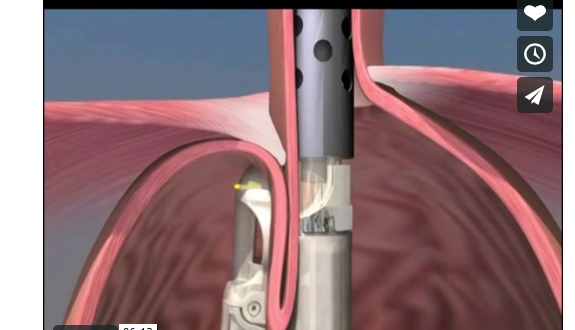
A new endoscopic technique’s efficacy has recently been reported (Gastroenterol 2015; 148: 324-33).  Since this technique is not likely to be broadly applicable to the pediatric population for some time, I will not delve into all of the details.

In essence, a carefully selected group (n=129 from a screened group of 696) of adult patients with persistent regurgitation underwent transoral fundoplication; this eliminated troublesome regurgitation in 67% compared to 45% who were randomized to sham/PPI.  Severe complications were rare.

Here is a picture of the technique:

Transoral Fundoplication

Transoral Fundoplication

Link: Description and a video animation of the procedure

Bottomline: This endoscopic procedure along with the Stretta procedure and the LINX device (using magnets) offer alternatives to surgical fundoplication in carefully-selected patients with refractory gastroesophageal reflux symptoms.

New drugs approved by FDA:

Ceftolozane (Zerbaxa) -combines a cephalosporin with a beta-lactamase inhibitor (tazobactam).  Indications: complicated intra-abdominal infections (in combination with metronidazole), and complicated urinary tract infections. From FDA: FDA approves new antibacterial drug Zerbaxa

Viekira Pak -combination of 3 new drugs: ombitasvir, paritaprevir, and dasabuvir along with  older drug: ritonavir.  Indications: Hepatitis C genotype 1. From FDA: FDA approves Viekira Pak to treat hepatitis C

Related blog posts to fundoplication:

Updated Guidelines on Genetic Testing/Management for Hereditary GI Cancer Syndromes

Here’s a link to abstract: Updated Guidelines on Genetic Testing/Management for Hereditary GI Cancer Syndromes (The American Journal of Gastroenterology 110, 223-262 (February 2015) | doi:10.1038/ajg.2014.435).  This ACG guideline specifically discusses genetic testing and management of Lynch syndrome, familial adenomatous polyposis (FAP), attenuated familial adenomatous polyposis (AFAP), MUTYH-associated polyposis (MAP), Peutz–Jeghers syndrome, juvenile polyposis syndrome, Cowden syndrome, serrated (hyperplastic) polyposis syndrome, hereditary pancreatic cancer, and hereditary gastric cancer.

I glanced at the guideline –it is about 40 pages in length.  It provides a lot of in-depth information on these infrequent disorders.

Some online resources for similar information: