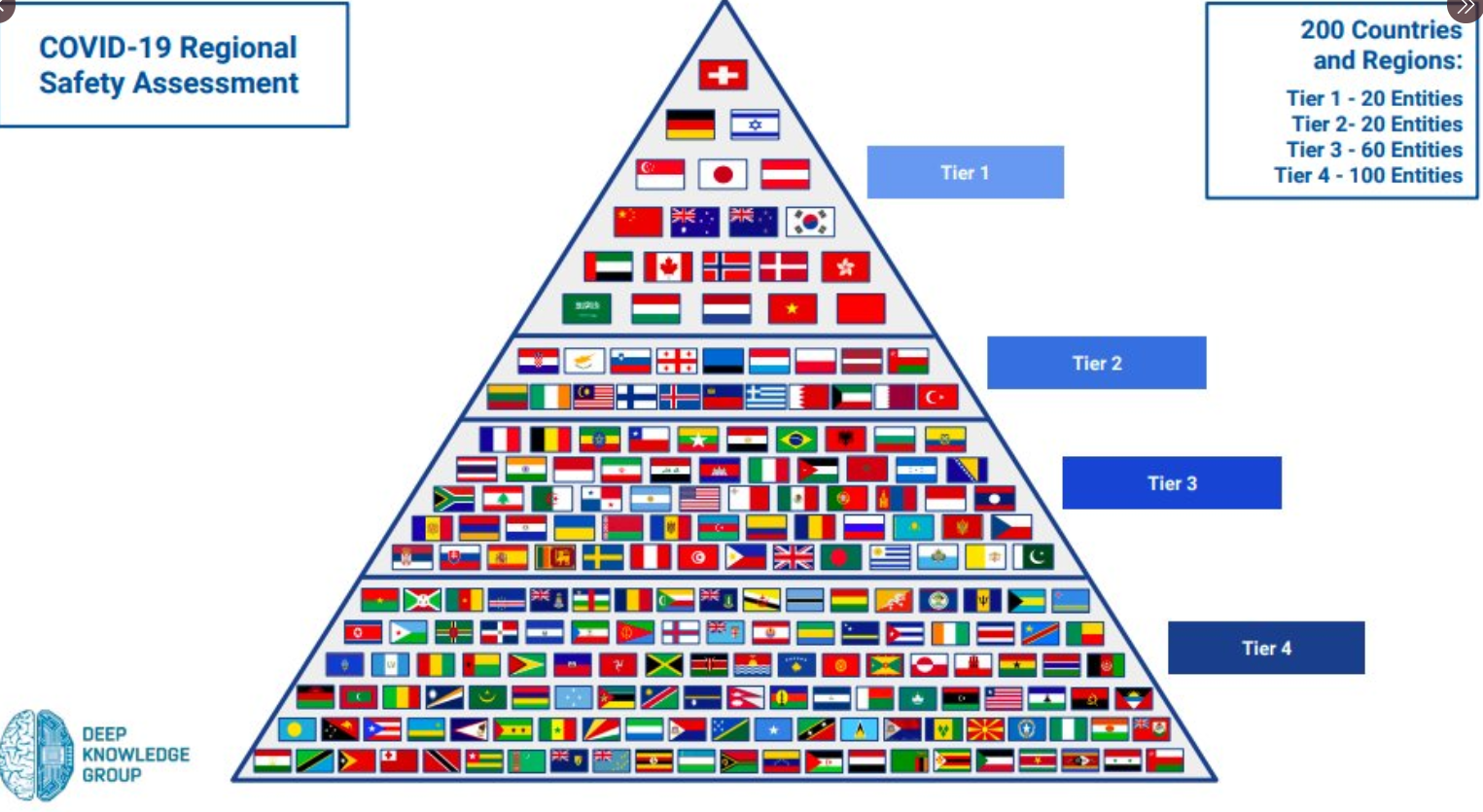
According to this ranking, U.S. is 58th in the world:
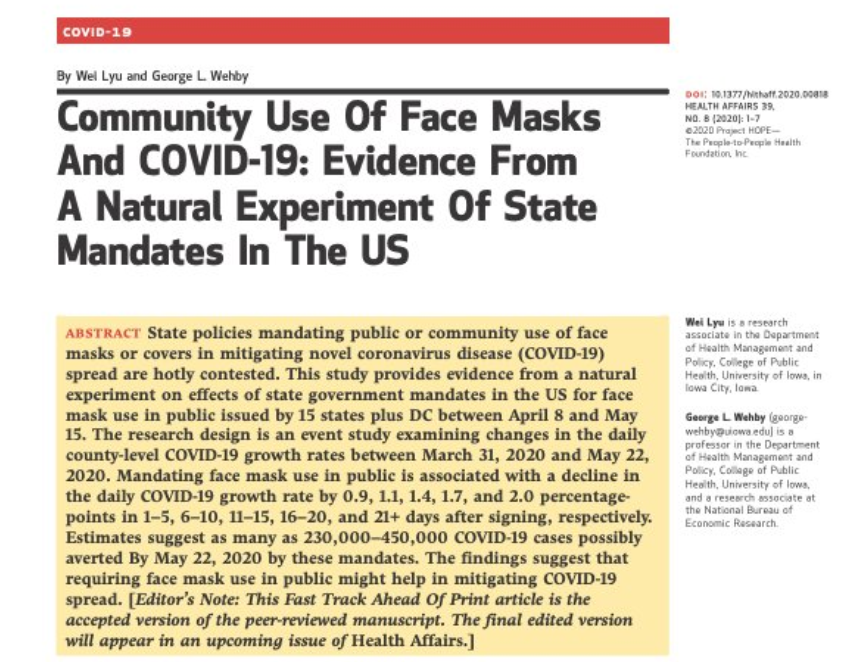
From Health Affairs, Full Text: Community Use Of Face Masks And COVID-19: Evidence From A Natural Experiment Of State Mandates In The US
Related blog posts:

According to this ranking, U.S. is 58th in the world:
From Health Affairs, Full Text: Community Use Of Face Masks And COVID-19: Evidence From A Natural Experiment Of State Mandates In The US
Related blog posts:
More data indicate that the coronavirus pandemic is NOT taking a summer holiday. Projections from IHME indicate that Georgia is likely to have 4 times as many deaths by October (~2500 to >10,000) and Florida 6 times as many (~3000 to >18,000) due to COVID-19. If projections do not worsen, the U.S. will still have more than 200,000 deaths by October.
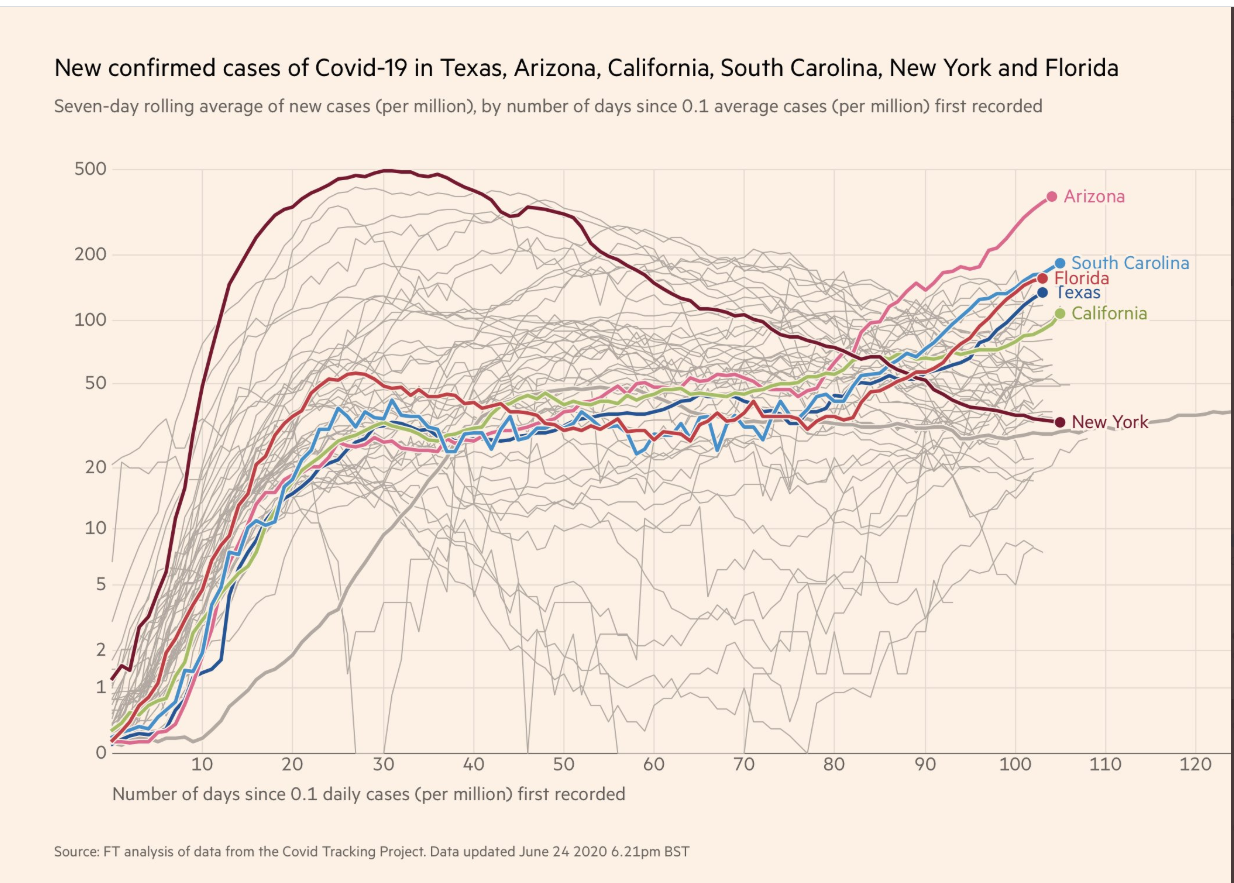
In Europe which had at one point accounted for ~80% of new infections, the daily toll is ~10%. From Financial Times website:
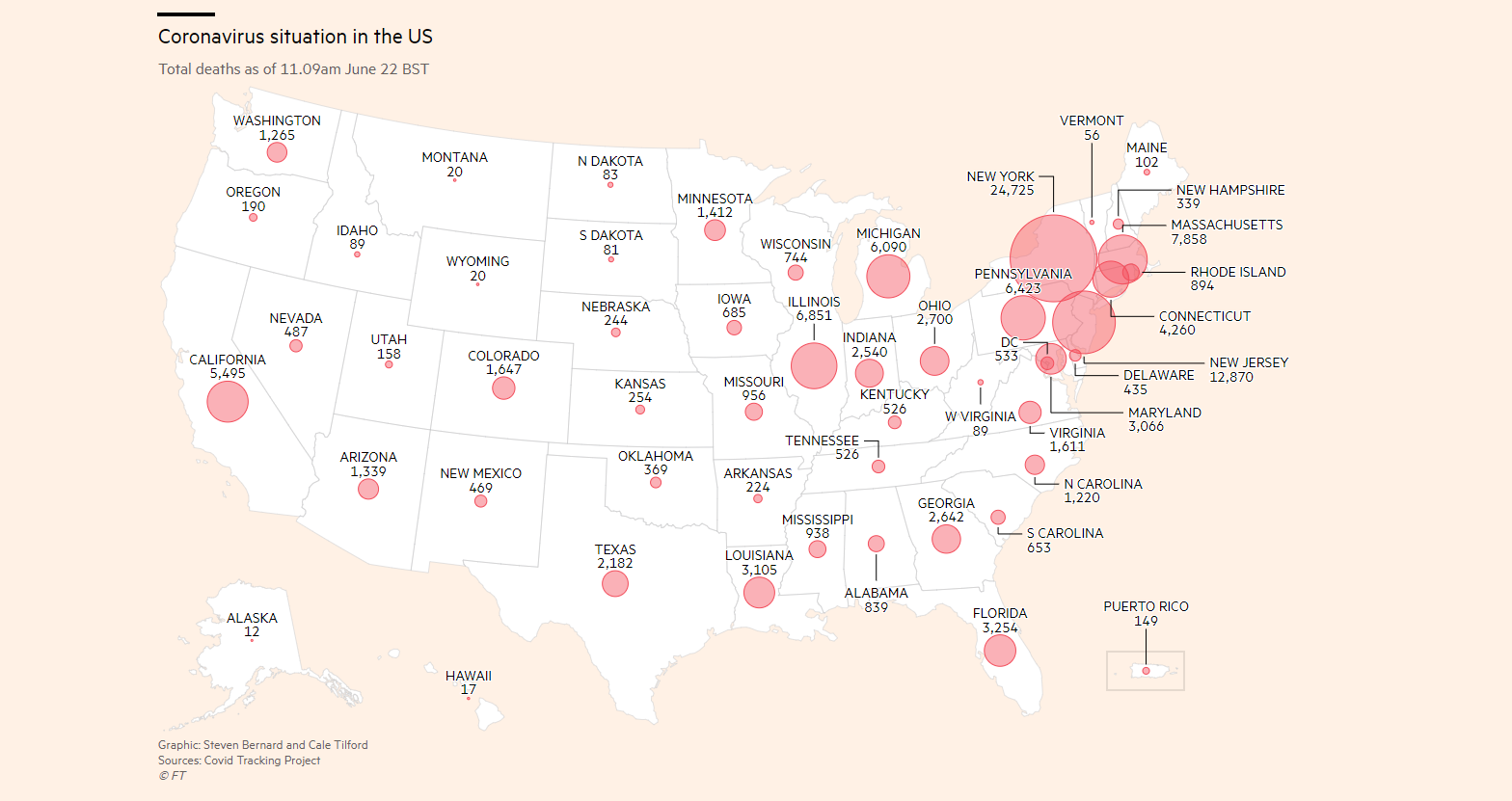
From Financial Times website

From Financial Times website
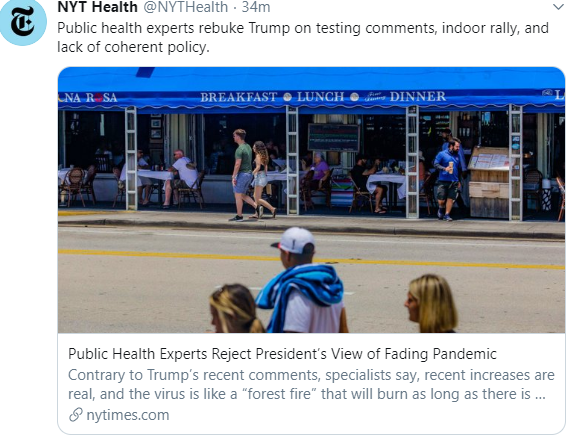

From CNN/Johns Hopkins
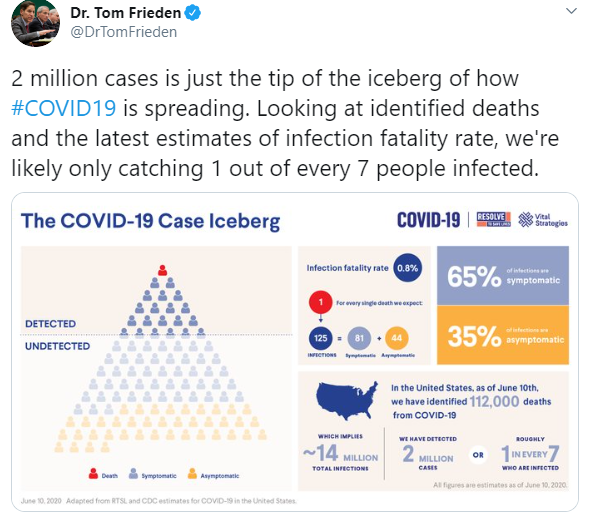
NPR: Younger Adults Are Increasingly Testing Positive for Coronavirus
The fact that younger adults account for a large fraction of the new cases is likely a significant reason why the number of daily deaths has not spiked (& improved).
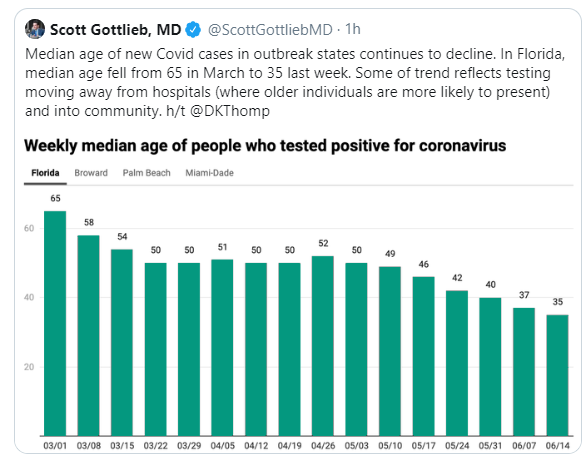
Data from Broward County, FL
Related blog posts:

NPR interview (5 minutes) with Atul Gawande: How The Widespread Mask Use Could Slow The Coronavirus Pandemic
“NPR’s Mary Louise Kelly talks with Dr. Atul Gawande, a staff writer for the New Yorker, about the efficacy of different face masks and why masks remain essential in dealing with the coronavirus”
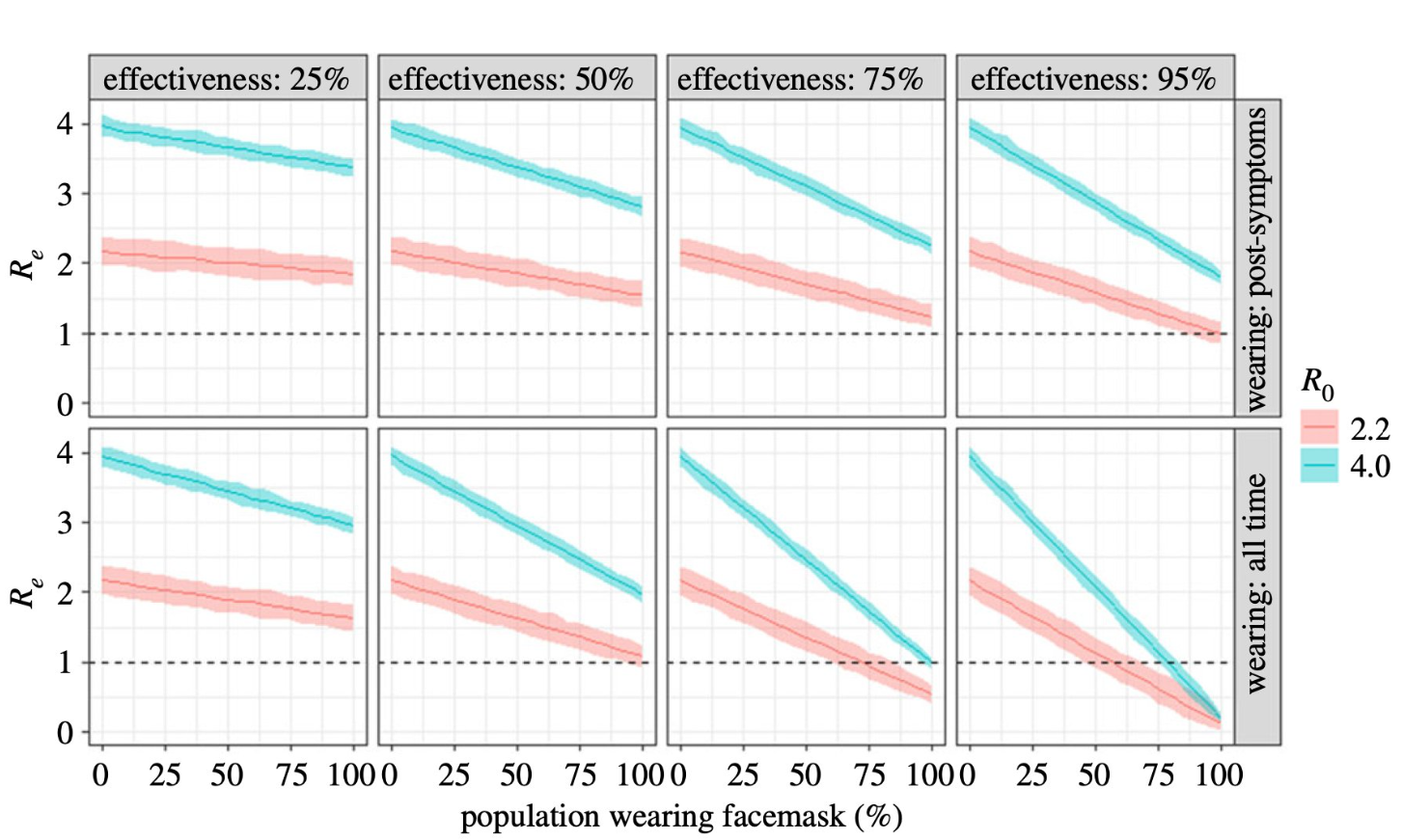
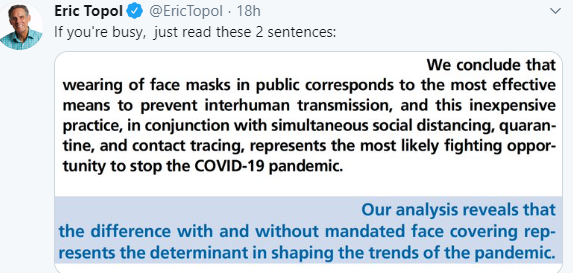
Proceedings of the Royal Society A. Published:10 June 2020 https://doi.org/10.1098/rspa.2020.0376 Full Text Link: A modelling framework to assess the likely effectiveness of facemasks in combination with ‘lock-down’ in managing the COVID-19 pandemic
Related blog posts:
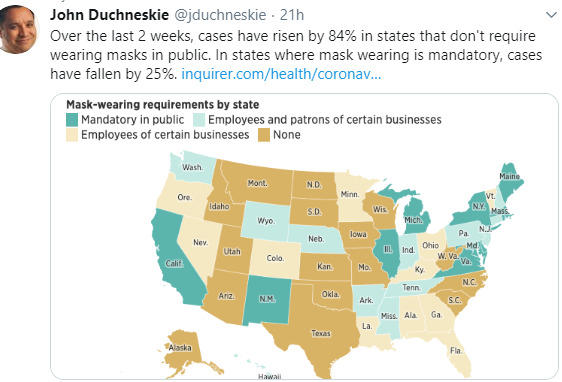
States with unfavorable trends: Arizona, Arkansas, Florida, North Carolina, South Carolina, Tennessee, Texas, and Utah. From Eric Topol Twitter feed:

Also recent modeling indicates that face masks lower transmission rate –from Reuters: Widespread mask-wearing could prevent COVID-19 second waves: study
Related blog posts:
Wired: When Health Care Moves Online, Many Patients Are Left Behind
An excerpt:
Amid the coronavirus pandemic, more of the nation’s medical care is being delivered by telephone or videoconference, as in-person care becomes a last resort for both doctors and patients. That’s a problem for tens of millions of Americans without smartphones or speedy home internet connections. For them, the digital divide is exacerbating preexisting disparities in access to health care…
Overall, as many as 157.3 million people in the US only have access to substandard download speeds. During the pandemic, roughly half of low-income American say they’re concerned about affording to pay their broadband and smartphone bills, according to April Pew Research data. In rural areas (where Pew figures suggest only 63 percent of residents have home broadband subscriptions), phone calls might be patients’ best option.
Related blog post: #NASPGHAN19 Impact of New Technology

NY Times: Is the Secret to Japan’s Virus Success Right in Front of Its Face?
An excerpt:
In America, masks have become a weapon in the culture wars. In Japan, wearing one is no big deal, and deaths have stayed low…
“Japan, I think a lot of people agree, kind of did everything wrong, with poor social distancing, karaoke bars still open and public transit packed near the zone where the worst outbreaks were happening,” Jeremy Howard, a researcher at the University of San Francisco who has studied the use of masks, said of the country’s early response. “But the one thing that Japan did right was masks.”…
The scientific evidence on whether a mask protects the wearer from infection is mixed. But experiments show that masks can be effective in blocking the emission of respiratory droplets that may contain the virus, even when someone has no symptoms of illness. And there is some evidence that infected people with no symptoms can still transmit the coronavirus.
Related blog posts:

Huntingdon Lake, Sandy Springs (no image filters used)

Two recent retractions indicate why multiple studies and careful analysis are often necessary to draw definitive conclusions, even from the most respected journals.

NY Times article that summarized recent Lancet study: Medical Workers Should Use Respirator Masks, Not Surgical Masks
Original Lancet Study (DK Chu et al. June 1, 2020
https://doi.org/10.1016/S0140-6736(20)31142-9): Physical distancing, face masks, and eye protection to prevent person-to-person transmission of SARS-CoV-2 and
COVID-19: a systematic review and meta-analysis
An excerpt from NY Times article:
The surgical masks used in risky settings like hospitals offer much less protection against the coronavirus, an analysis found…
The results, published on Monday in The Lancet, make it clear that the W.H.O. and the Centers for Disease Control and Prevention should recommend that essential workers like nurses and emergency responders wear N95 masks, not just surgical masks
N95 masks offered 96 percent protection, the analysis found, while the figure for surgical masks was 77 percent. The findings are particularly important as the United States moves to reopen the economy, Dr. Michaels said…
Workers in health care settings are not the only ones at high risk of coronavirus infection: employees in meatpacking plants and some farms are all also at high risk of coronavirus infection and could benefit from N95 masks..
The new analysis also suggests that covering the eyes with face shields, goggles and glasses may provide additional safeguards for health care workers and people in the community.
Related blog posts:


Just for fun —YouTube (~3 minute video): The Swish Machine: 70 Step Basketball Trickshot (Rube Goldberg Machine)
Full text —MR Larochelle. DOI: 10.1056/NEJMp2013413. NEJM: Is It Safe for Me to Go to Work?
An excerpt:
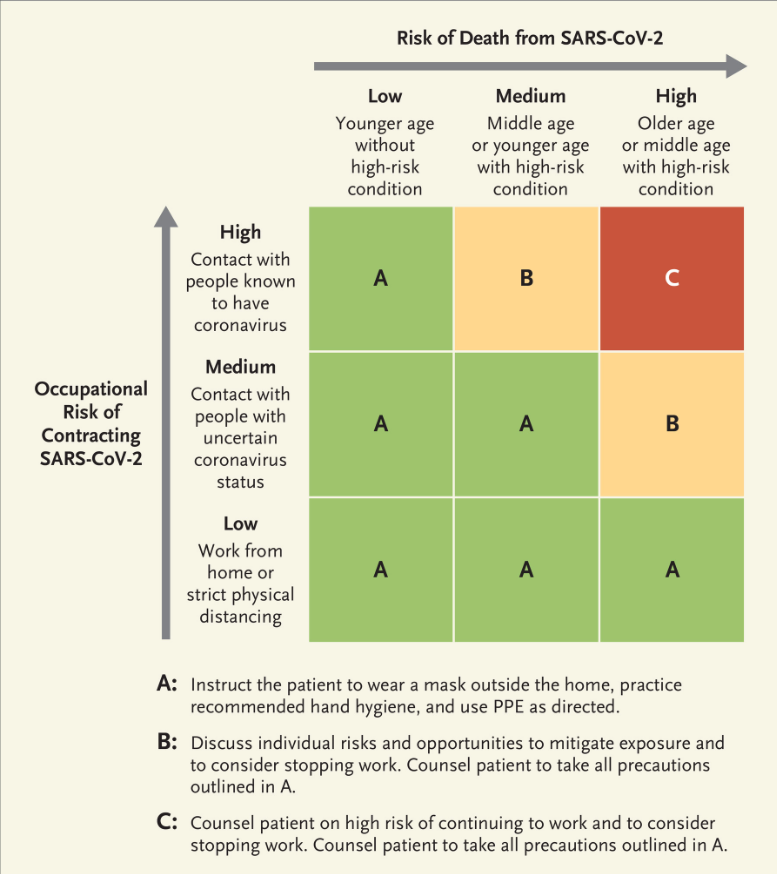
I believe that a strategy to protect at-risk workers needs at least three components: a framework for counseling patients about the risks posed by continuing to work, urgent policy changes to ensure financial protections for people who are kept out of work, and a data-driven plan for safe reentry into the workforce…
The Occupational Safety and Health Administration has published guidance and proposed a scheme for classifying the risk of SARS-CoV-2 infection as high, medium, or low based on potential contact with persons who may or do have the virus (www.osha.gov/Publications/OSHA3990.pdf. opens in new tab). Low-, medium-, and high-risk categories of individual risk of death from Covid-19 are based on age and the presence of high-risk chronic conditions identified by the CDC…
As states move to reopen their economies, millions of nonessential employees will join essential employees in putting themselves at risk for contracting SARS-CoV-2 at work. Physicians should engage patients in individualized risk assessments. Our society has the moral imperative and means to provide vulnerable employees a financial safety net until we can better ensure their workplace safety.
Related blog post: @Atul_Gawande: How to Reopen

