Why Carvedilol Is Considered Best Pharmaceutical Agent to Prevent Variceal Bleeding (in Adults)

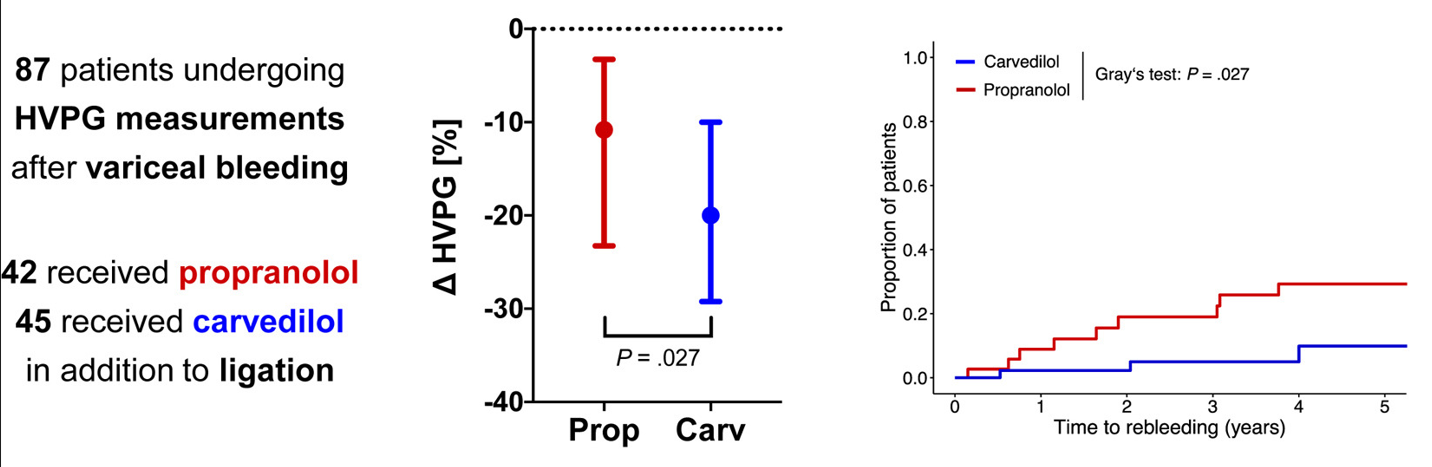
M Jachs et al. Clin Gastroenterol Hepatol 2023; 21: 2318-2326. Open Access! Carvedilol Achieves Higher Hemodynamic Response and Lower Rebleeding Rates Than Propranolol in Secondary Prophylaxis

Associated editorial: J Bosch. Clin Gastroenterol Hepatol 2023; 21:2195-2196. Open Access! Carvedilol as Best β-Blocker for Secondary Prophylaxis of Variceal Bleeding: Are We There, or Not Yet?

Key findings:

  • In a retrospective cohort comprising 87 adult patients receiving NSBB (non-selective beta blocker) in addition to band ligation after variceal bleeding, carvedilol induced more profound decreases in hepatic venous pressure gradient compared with propranolol. The higher rate of chronic hepatic venous pressure gradient response to carvedilol (53.3% vs 28.6%; P = .034) was paralleled by lower rates of variceal rebleeding, liver-related death, and further nonbleeding decompensation.

In the discussion and the editorial, it is noted that there is high-quality evidence that carvediol is superior for primary variceal prophylaxis in adults. “Carvedilol increasingly is used for the prevention of variceal bleeding, 2 and, based on the recent landmark PREDESCI study, overall hepatic decompensation/ascites3 in compensated cirrhosis, because it induces HVPG response (a ≥10% decrease in HVPG is sufficient in primary prophylaxis17) in up to 75% of patients vs 50% when using propranolol. However, it induces more pronounced decreases in blood pressure, which may be detrimental in patients with (refractory) ascites.15

Though there are concerns about dropping blood pressure, the editorial notes that “up to two-thirds of patients with compensated cirrhosis” have high blood pressure. The editorial concludes that “the study still strongly suggests that carvedilol is at least as safe as propranolol…. I am in complete agreement with the authors in suggesting that carvedilol is likely to represent the best NSBB in the treatment of portal hypertension regardless of the clinical scenario, including prevention of decompensation, ascites, first bleeding, or recurrent bleeding.” The author notes that the “recent Baveno VII recommendations declare carvedilol as the preferred NSBB, and support its use in all compensated patients with direct (HVPG ≥10 mm Hg) or indirect signs of clinically significant portal hypertension.”(J Hepatol. 2022; 76: 959-974. Baveno VII: renewing consensus in portal hypertension)

My take: In adults, Carvediol is the best NSBB for portal hypertension. In children, who may be more prone to hypotension, more data is needed.

Related blog posts:

Juan-Les-Pins, France

FGF21 Analogue Pegozafermin in NASH (MASH)

R Loomba et al. NEJM 2023; DOI: 10.1056/NEJMoa2304286. Randomized, Controlled Trial of the FGF21 Analogue Pegozafermin in NASH

Background: Pegozafermin is a long-acting glycopegylated (pegylated with the use of site-specific glycosyltransferases) fibroblast growth factor 21 (FGF21) analogue in development for the treatment of nonalcoholic steatohepatitis (NASH) and severe hypertriglyceridemia

Methods: In this phase 2b, multicenter, double-blind, 24-week, randomized, placebo-controlled trial, 222 patients with biopsy-confirmed NASH and stage F2 or F3 (moderate or severe) fibrosis were randomly assigned patients to receive subcutaneous pegozafermin at a dose of 15 mg or 30 mg weekly or 44 mg once every 2 weeks or placebo weekly or every 2 weeks. 

Key findings:

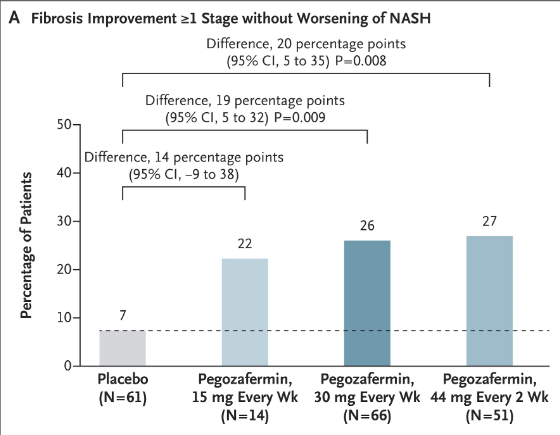
  • The percentage of patients who met the criteria for fibrosis improvement was 7% in the pooled placebo group, 22% in the 15-mg pegozafermin group, 26% in the 30-mg pegozafermin group, and 27% in the 44-mg pegozafermin group
  •  The percentage of patients who met the criteria for NASH resolution was 2% in the placebo group, 37% in the 15-mg pegozafermin group, 23% in the 30-mg pegozafermin group, and 26% in the 44-mg pegozafermin group
  • The most common adverse events associated with pegozafermin therapy were nausea and diarrhea.

My take: Thus far, there are no approved pharmacologic therapies for NASH, so this phase 2 study of pegozafermin is an important early step. It is likely that some of the medications which help obesity will likely help with NASH as well.

You No Longer Have Fatty Liver Disease-You Have Steatotic Liver Disease!

A total of 236 panelists from 56 countries participated in four online surveys and two hybrid meetings.

Key points:

  • Steatotic liver disease (SLD) was chosen as an overarching term to encompass the various “aetiologies” of steatosis.
  • The name chosen to replace NAFLD was metabolic dysfunction-associated steatotic liver disease (MASLD). There was consensus to change the definition to include the presence of at least one of five cardiometabolic risk factors (see 2nd figure).
  • The term steatohepatitis was felt to be an important pathophysiological concept that should be retained. Metabolic dysfunction-associated steatohepatitis (MASH) is the replacement term for NASH.
  • Those with no metabolic parameters and no known cause were deemed to have cryptogenic SLD.
  • A new category, outside pure MASLD, termed MetALD was selected to describe those with MASLD who consume greater amounts of alcohol per week (140 to 350 g/week and 210 to 420 g/week for females and males respectively). 

AASLD News Digest: “MASLD, formerly known as NAFLD, is the most common chronic liver disease around the world, affecting more than 30% of global population. This was why it was vital that the global liver community coalesce around an affirmative, non-stigmatizing name and diagnosis. Ultimately, the global members of the Nomenclature Development Initiative were focused on ensuring the global community had better nomenclature that could be used around the world so that the research and funding could be better directed to save more people’s lives.”

My take: NAFLD is now MASLD –time to update patient handouts (hopefully someone at GIKids.org is on top of this). Aslo, if you have really bad disease, should it be called the ‘monster MASH’ ?

Favorable Phase II Study of Cilofexor for Patients with PSC

M Trauner et al. Clin Gastroenterol Hepatol 2023; 21: 1552-1560. Open Access! Safety and Sustained Efficacy of the Farnesoid X Receptor (FXR) Agonist Cilofexor Over a 96-Week Open-label Extension in Patients With PSC

Study: There were 52 subjects enrolled in the phase II study, 47 (90%) continued in the open-label extension phase. Key findings:

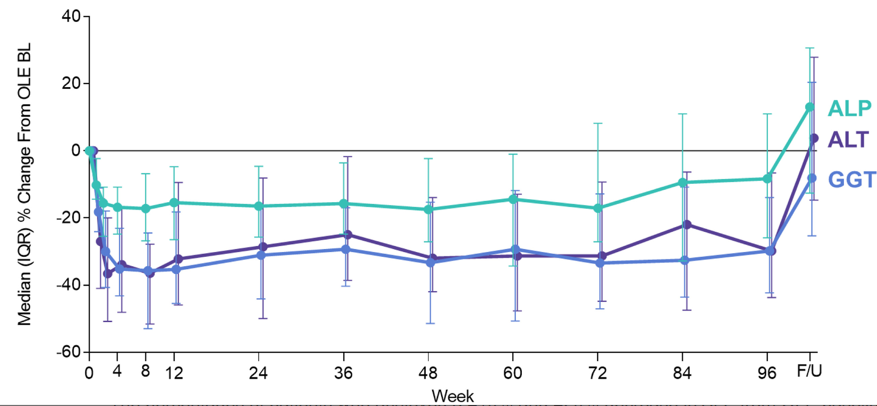
  • At week 96, reductions in serum alkaline phosphatase (median, −8.3%), gamma-glutamyl transferase (−29.8%), alanine aminotransaminase (−29.8%), and aspartate aminotransaminase (−16.7%) occurred, and rebounded after 4 weeks of untreated follow-up. Serum cytokeratin 18 M30 and M65 (which are markers of apotopsis and necrosis)were also reduced in the OLE

My take (from authors): “Whether cilofexor impacts clinically relevant endpoints associated with PSC await the results from the placebo-controlled, phase III PRIMIS study.”

Longitudinal relative change in serum ALP, GGT, and ALT from OLE baseline to week 96
and then 4-week, untreated follow up (F/U).

Related blog posts:

Liver Shorts: Relationship of Hepatic Steatosis to Cardiovascular Disease and the Cost of Liver Transplantation

HS Ahmed et al. Hepatology 2023; 77: 2063-2072. The association between hepatic steatosis and incident cardiovascular disease, cancer, and all-cause mortality in a US multicohort study

The authors included 10,040 participants from the Framingham Heart Study, the Coronary Artery Risk Development in Young Adults Study, and the Multi-ethnic Study of Atherosclerosis to assess the longitudinal association between liver fat (defined on CT) and incident cardiovascular disease (CVD).

Key finding:

Hepatic steatosis was associated with all-cause mortality after 12.7 years of mean follow-up when adjusting for baseline CVD risk factors, including body mass index (HR: 1.21, 1.04–1.40); however, the association between hepatic steatosis and incident CVD was not statistically significant after we accounted for body mass index in models considering baseline covariates or time-varying covariates. We observed no association between hepatic steatosis and CVD-related mortality or incident cancer.

My take: While CVD is the leading cause of mortality in patients with fatty liver disease, this study suggests that hepatic steatosis is a marker for this increased risk rather than an independent cause.

DU Lee et al. Liver Transplantation 2023; 29: 626-643. The trends in cost associated with liver transplantation in the US: Analysis of weighted hospital data

This lengthy article is loaded with data on trends and costs of liver transplantation in the U.S.

Key findings:

  • From 2016 to 2019, the estimated total number of LT-related hospitalizations in the US were 6685, 7075, 7260, and 7815 cases respectively.
  • There was a general increase in the total cost of LT-related hospitalizations over the years: $945.75, $1010.23, $1052.46, and $1143.84 in millions of dollars.

Editorial: A Kaplan et al. Liver Transplantation 2023; 29: 568-569. Open Access!
Liver transplant at all costs Key points:

  • Mean costs per patient for transplant-related hospitalization were around $145,000.
  • “Lee and colleagues’ important study adds to the growing concern over rising costs for LT. However, LT is 1 of many fields that must utilize a scarce resource for the maximal benefit of society. Balancing costs with a life-saving procedure that is very expensive will continue to be a persistent challenge.”

My take: It is likely that the costs of liver transplantation are going to continue to rise unless we develop a shortage of suitable liver donors or a shortage of transplant personnel. Severe fatty liver disease and alcoholic liver disease continue to increase in frequency while hospital costs continue to soar. Reducing costs will rely on reversing the tide of these diseases.

Related blog posts:

Watersound, FL

Fatty Liver Disease AASLD Practice Guidance 2023

ME Rinella et al. Hepatology 2023; 77: 1797-1835. Open Access! AASLD Practice Guidance on the clinical assessment and management of nonalcoholic fatty liver disease

This 38 page report has a ton of updated recommendations and useful advice –geared to adults with fatty liver disease. The last ~dozen pages are the 491 references.

Some of the useful points:

  • CVD and nonhepatic malignancies are the most common causes of mortality in patients with NAFLD without advanced fibrosis; death from liver disease predominates in patients with advanced fibrosis.
  • Initial lab evaluation in adults:
  • Statins are safe and recommended for CVD risk reduction in patients with NAFLD across the disease spectrum, including compensated cirrhosis.
  • Patients with NAFLD should be screened for the presence of T2DM. T2DM is the most impactful risk factor for the development of NAFLD, fibrosis progression, and HCC.108–111 Given the central pathogenic role that insulin resistance plays in the pathogenesis of both T2DM and NAFLD, it is not surprising that patients with T2DM have a higher prevalence of NAFLD (ranging from 30% to 75%)10,112,113 and a higher risk of developing NASH with fibrosis.93,114–117 
  • Other important comorbidities: dyslipidemia, obstructive sleep apnea, cardiovascular disease, and chronic kidney disease

Lifestyle factors that can be beneficial:

  • Table 6 lists potential medications though there are no FDA approved treatments for fatty liver disease. Bariatric surgery is also a beneficial treatment option “in patients who meet criteria for metabolic weight loss surgery, as it effectively resolves NAFLD or NASH in the majority of patients without cirrhosis and reduces mortality from CVD and malignancy.”
  • Potentially useful medications include Vitamin E, Pioglitazone, Liraglutide, Semaglutide, Tirzepatide and SGLT-2i. “Semaglutide can be considered for its approved indications (T2DM/obesity) in patients with NASH, as it confers a cardiovascular benefit and improves NASH. Pioglitazone improves NASH and can be considered for patients with NASH in the context of patients with T2DM . Available data on semaglutide, pioglitazone, and vitamin E do not demonstrate an antifibrotic benefit, and none has been carefully studied in patients with cirrhosis.”
  • Treatments NOT Recommended: “Metformin, ursodeoxycholic acid, dipeptidyl peptidase-4, statins, and silymarin are well studied in NASH and should not be used as a treatment for NASH as they do not offer a meaningful histological benefit.”

Related blog posts:

How Obesity Permeates Transplant Medicine

A Mathur. Liver Transplantation 2023; 29: 465-466. Open Access! Salvaging the fatty liver for transplant: is short duration NMP enough? (ed)

 “As of 2020, the Center for Disease Control (CDC) notes that 40% of the ~258 million US adults suffer from obesity. This represents just more than a 100 million people suffering from obesity. In addition, about 23 million people suffer from severe obesity with a body mass index >40 kg/m2.” Fatty liver disease (aka NAFLD), driven primarily by obesity, is a leading cause of liver transplantation. In addition, fatty liver disease is impacting the ability to treat liver failure.

“The end result of this epidemic is that we are identifying a greater proportion of organ donors with varying degrees of liver steatosis. Transplantation of steatotic livers is associated with an increased degree of ischemia-reperfusion injury (IRI) and release of inflammatory cytokines from the graft. The consequences of this can range from severe reperfusion syndromes with immediate vasoplegia and circulatory collapse to distant organ dysfunction with acute kidney injury, liver allograft dysfunction, and primary nonfunction (PNF).”

In order to try to identify suitable liver organs for transplantation, researchers are trying to identify strategies to utilize steatotic grafts safely. Patrono et al (Liver Transplantation 2023; 29: 508-502) examined the feasibility of using normothermic machine perfusion (NMP) in the setting of macrovesicular steatosis (MaS) ≥30%. They identified 10 patients who had liver transplants using NMP in patients with MaS ≥30%; 4 additional organs were not used despite NMP. 8 of 10 patients showed good liver function, representing 57% (8 of 14) of NMP fatty organs.

Another study in the same issue (NB Ha et al. Liver Transplantation 2023; 29: 476-484) showed that patients with sarcopenic obesity (=low muscle mass obesity) had high waitlist mortality of 40% compared to 21% and 12% for those with sarcopenia without obesity and for those with obesity without sarcopenia, respectively.

My take: Obesity increases the risk of fatty liver associated cirrhosis/liver failure, and is impacting the availability of suitable organs for those in need. Furthermore, in those with obesity, the presence of sarcopenia increases the risk of death on transplant waitlist.

Tucson Botanical Gardens

Practice Guidance on Wilson Disease (AASLD)

View from Mt Lemmon, Tucson AZ

ML Schilsky et al. Hepatology 2023; 77: 1428-1455. Open Access! A multidisciplinary approach to the diagnosis and management of Wilson disease: Executive summary of the 2022 Practice Guidance on Wilson disease from the American Association for the Study of Liver Diseases

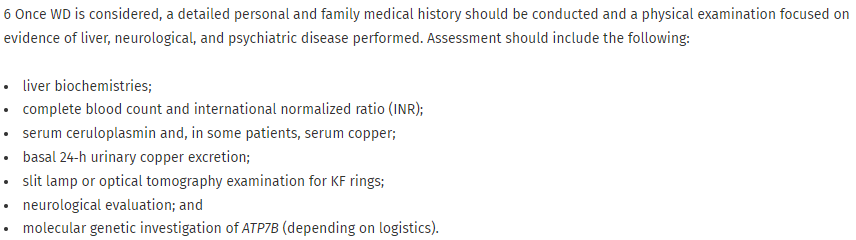
This article is an excellent review of Wilson disease (WD). It reviews clinical manifestations, disorders with overlapping findings and recommendations for diagnosis/management. “This executive summary provides a condensed overview, including the clinical algorithms, tables, and full complement of guidance statements.” Though this ‘summary’ is a lengthy publication, “the full Guidance document with comprehensive text, complete references, and supplementary materials (“A Multidisciplinary Approach to the Diagnosis and Management of Wilson Disease: 2022 Practice Guidance on Wilson Disease from the American Association for the Study of Liver Diseases”) is available on the American Association for the Study of Liver Diseases (AASLD) website (https://doi.org/10.1002/hep.32801).”

Some of the recommendations:

The Leipzig score for diagnosis of Wilson disease may aid in diagnosis

My take: This is a useful guidance and the tables/algorithms should help with both diagnosis and treatment adjustment. In my limited experience with WD, I have had a lot of difficulty with adherence to treatment in the small sample of patients under my care.

Related blog posts:

Is It a Mistake to Use Budesonide for Autoimmune Hepatitis?

A Diaz-Gonzalez et al. Hepatology 2023; 77: 1095-1105. Open Access! Budesonide as first-line treatment in patients with autoimmune hepatitis seems inferior to standard predniso(lo)ne administration

Background: AASLD guidelines also suggest the use of budesonide with azathioprine as an alternative agent (to prednisone with azathioprine) in patients without cirrhosis or a severe acute presentation.1–3 However, particularly in pediatrics, there is concern that it is not as effective.

Methods: This was a retrospective, multicenter study of 105 naive AIH patients treated with budesonide as the first-line drug. The control group included 276 patients treated with prednisone.

Key findings:

  • The biochemical response (BR) rate was significantly higher in patients treated with prednisone (87% vs. 49% of patients with budesonide, p < 0.001). BR was defined as normalization of both serum transaminases and IgG.
  • The probability of achieving BR was significantly lower in the budesonide group (OR = 0.20) at any time during follow-up, and at 6 (OR = 0.51) and 12 months after starting treatment (0.41)
  • Prednisone treatment was significantly associated with a higher risk of adverse events (24.2% vs. 15.9%). These differences vanished when patients with cirrhosis were excluded from the analysis, showing a similar incidence of AEs in both groups (p = 0.119). Of the specific adverse effects, only the presence of osteoporosis was significantly higher in the prednisone group (mainly in those older than 60 years)
  • The authors note that budesonide was “only indicated in 5.4% of patients newly diagnosed with AIH… Budesonide was mainly employed in patients with low baseline transaminases, suggesting that this drug is preferred in patients with less severe disease.”

My take: “The use of budesonide in the real-life setting was low and was associated with a lower probability of achieving BR with respect to prednisone.” It likely needs to be restricted to those with mild disease, and those with adverse events with prednisone. Cost is less of an issue as budesonide can be obtained as a generic (Mark Cuban Costplus pharmacy: Budesonide).

Related blog posts:

AGA Practice Update: Acute Hepatic Porphyrias

B Wang et al. Gastroenterol 2023; 164: 484-491. Open Access! AGA Clinical Practice Update on Diagnosis and Management of Acute Hepatic Porphyrias: Expert Review

Overall, acute hepatic porphyrias (AHP) are rare disorders. “Acute intermittent porphyria is the most common type of AHP, with an estimated prevalence of patients with symptoms of
approximately 1 in 100,000. The major clinical presentation involves attacks of severe pain, usually abdominal and generalized, without peritoneal signs or abnormalities on cross-sectional imaging…The screening tests of choice include random urine porphobilinogen and d-aminolevulinic acid corrected to creatinine.”

“All patients with elevations in urinary porphobilinogen and/or d-aminolevulinic acid should initially be presumed to have AHP. The cornerstones of management include discontinuation of porphyrinogenic drugs and chemicals, administration of oral or intravenous dextrose and
intravenous hemin, and use of analgesics and antiemetics. Diagnosis of AHP type can be confirmed after initial treatment by genetic testing for pathogenic variants in HMBS, CPOX, PPOX, and ALAD genes.”

Some of the best practice advice:

  • Women aged 15–50 years with unexplained, recurrent severe abdominal pain without a clear etiology after an initial workup should be considered for screening for an AHP.
  • Initial diagnosis of AHP should be made by biochemical testing measuring d-aminolevulinic acid, porphobilinogen, and creatinine on a random urine sample.
  • Genetic testing should be used to confirm the diagnosis of AHP in patients with positive
    biochemical testing.
  • Acute attacks of AHP that are severe enough to require hospital admission should
    be treated with intravenous hemin, given daily, preferably into a high-flow central vein

Related blog posts: