Big Advance in Cystic Fibrosis –Who Will Benefit?

Recent studies point to huge advances in cystic fibrosis (CF) therapy. Though as noted in a previous blog (Why Do Canadians with Cystic Fibrosis Live Longer?), medical advances may have limited effect based on a lot of issues including access to care.

Despite that note of caution, it is hard not to be excited about a couple of recent publications which show that triple cystic fibrosis transmembrane conductance regulator (CFTR) modulator therapy has great potential to improve outcomes for CF patients.

  • JC Davies et al. NEJM 2018; 379: 1599-611.
  • D Keating et al. NEJM 2018; 379: 1612-20.
  • Editorial: F Holguin, 1671-2

Background: In the editorial, the pathophysiology of the defect of CF is discussed and how the newer medicines either act as a potentiator of the CFTR (ivacaftor) or as corrector (lumacaftor and tezacaftor).  Potentiators increase CFTR channel opening at the cell surface whereas correctors increase the amount of CFTR protein at the cell surface. One caveat has been that these therapies had not been proven effective, individually, for Phe508del CFTR mutation which occurs in “approximately two thirds of patients.”  Combination therapy has helped in most of this group but not in those with Phe508del-minimal function (MF).

The new studies examine triple therapy with the addition of two new-generation small molecule correctors: VX-445 and VX-659. These new correctors target different sites of the CFTR protein.

Key findings:

  • in the Davies (VX-659) trial, “4 weeks of triple therapy …increased the primary end point of predicted percentage of FEV1, in the Phe508del-MF and Phe508del-Phe508del groups by an averae of 13.3% and 9.7% respectively”
  • In the Keating (VX-445) trial, triple therapy “significantly increased FEV1 in patients with those genotypes by 13.8% and 11.0% respectively.”
  • Overall, triple therapy “improved the percentage of predicted FEV1 more than double-combination therapy” in patients with a Phe508del-Phe508del mutation.  And reported efficacy in the patients with Phe508del-MF CFTR mutation.
  • The majority of patients had at least one adverse event. 3 of the 122 in the VX-445 trial discontinue treatment due to severe adverse events.

My take: These reports “represent a major breakthrough…for improving health and possibly survival in all patients who carry the most common CFTR mutation.”  Long-term outcomes will need to be followed to confirm these findings.

Related blog posts:

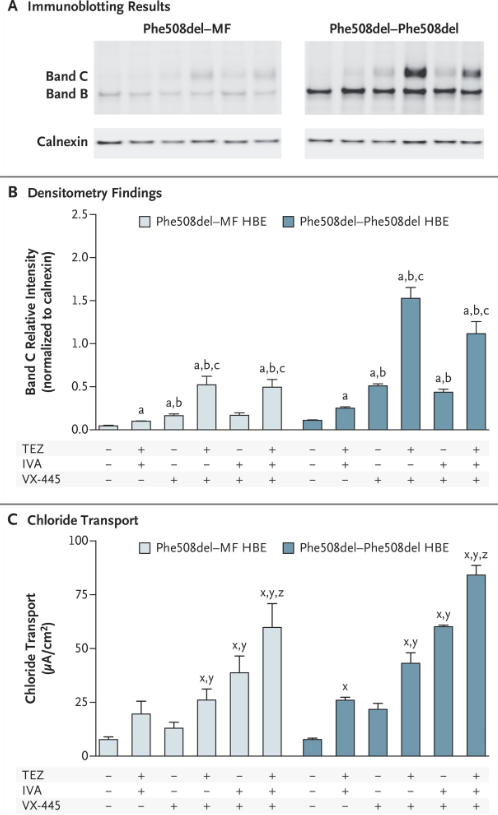
This is Figure 2 from Davies study showing immunoblot findings, densitometry findings, and chloride transport in bronchial cells. The most robust responses were with triple therapy


#NASPGHAN18 Highlights (Part 2)

I did not make it to this year’s meeting but did get a chance to catch up on a lot information via the PG 2018 Syllabus and based on information posted online.

Here are a couple of highlights for me:

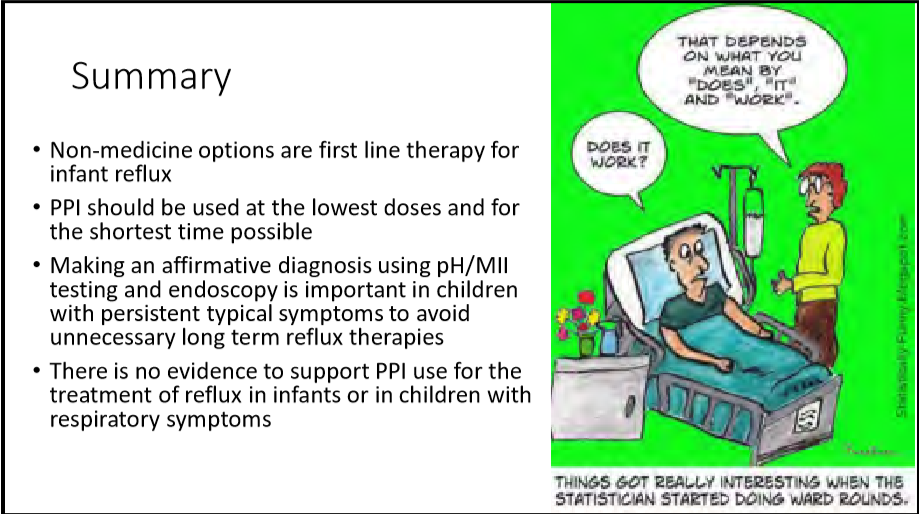
My favorite slide from postgraduate course -Dr. Robert Kramer

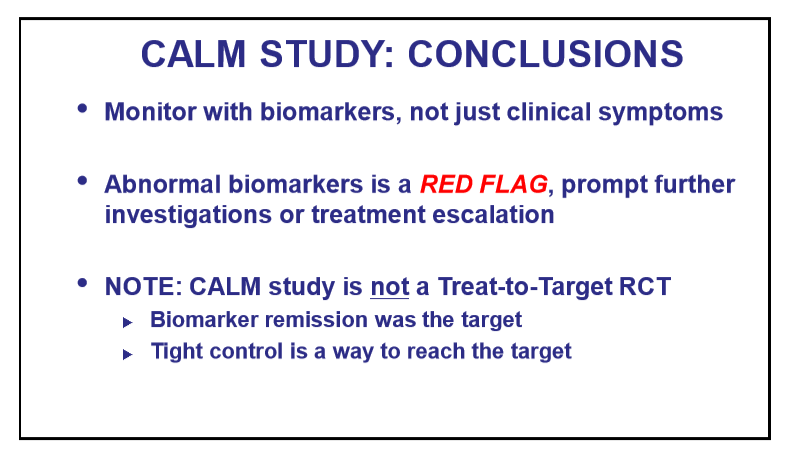
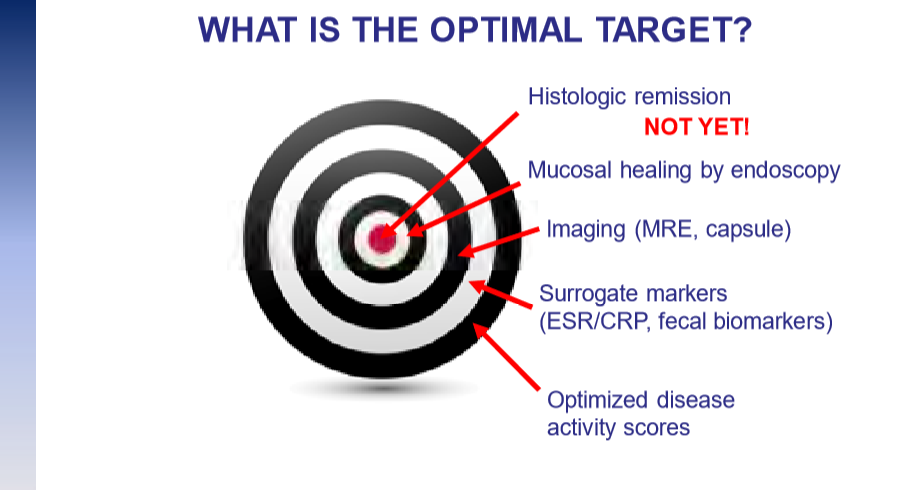
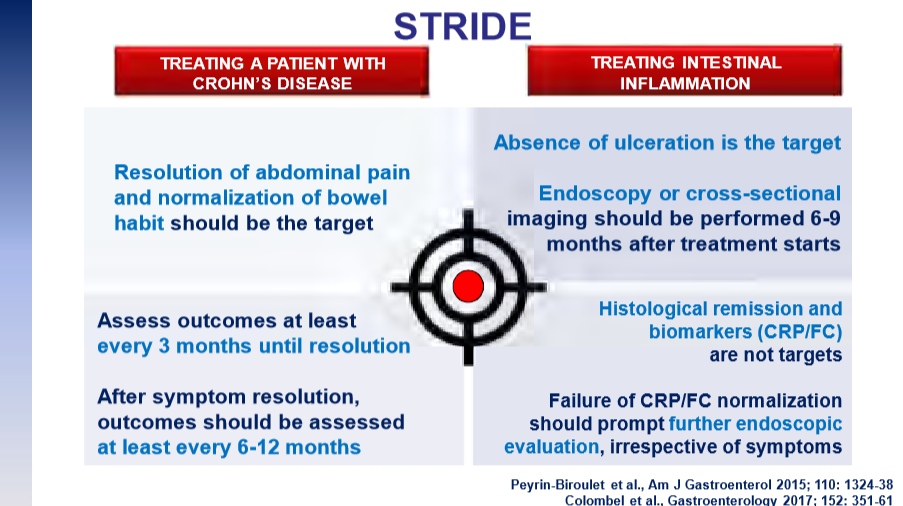
Slides regarding the topic of Treat-toTarget Dr. Eric Benchimol:

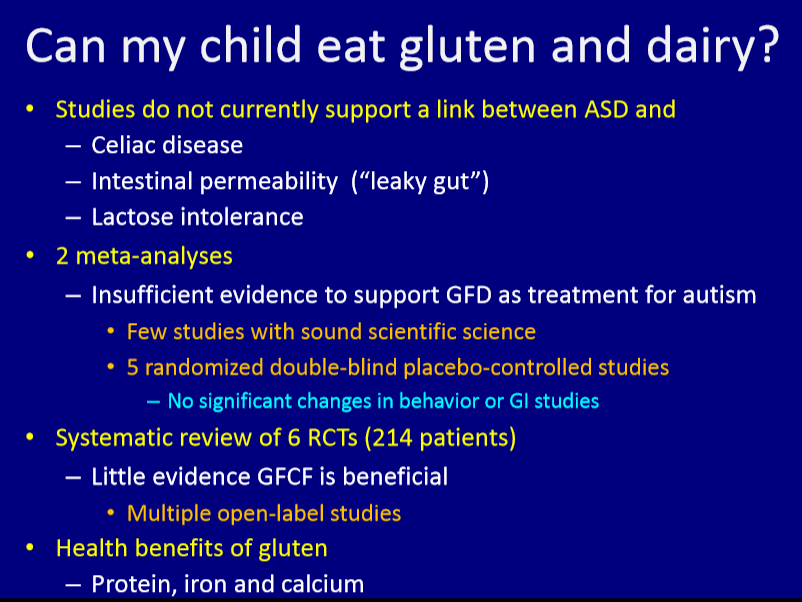
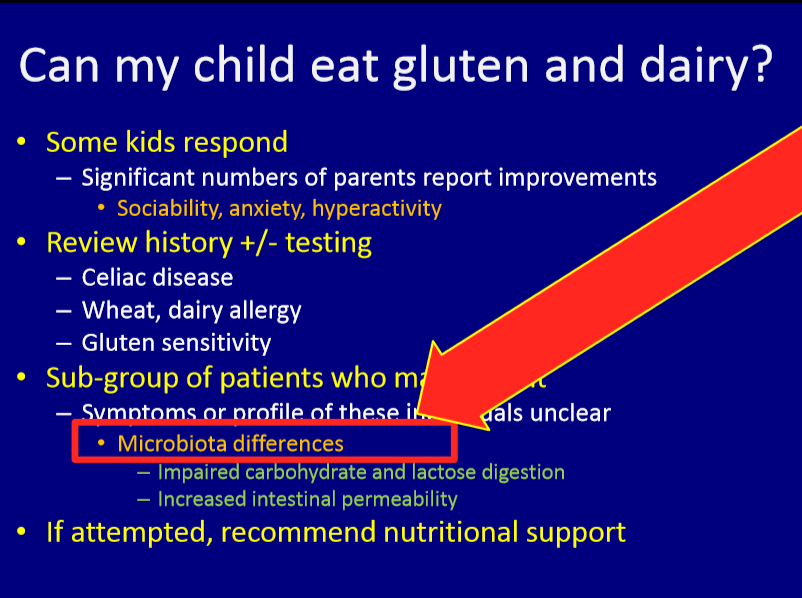
Slides regarding GI symptoms and autism from Dr. Kara Margolis:

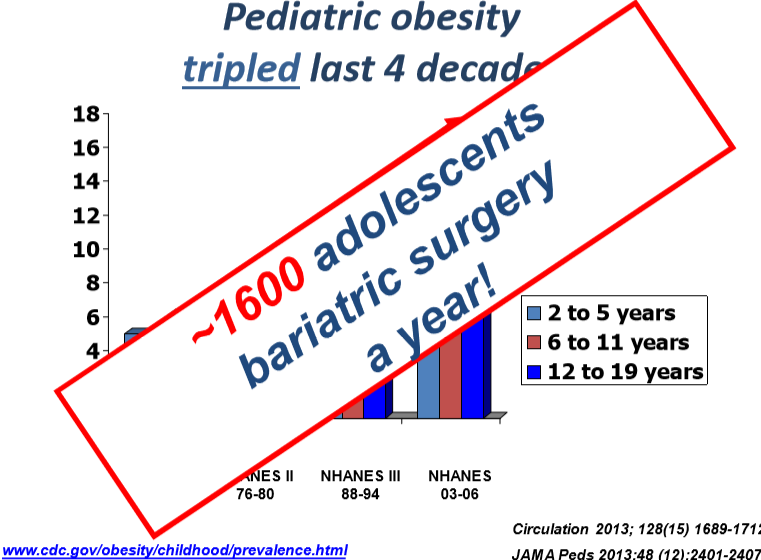
Slide regarding the frequency of bariatric surgery: Dr. Rohit Kohli:

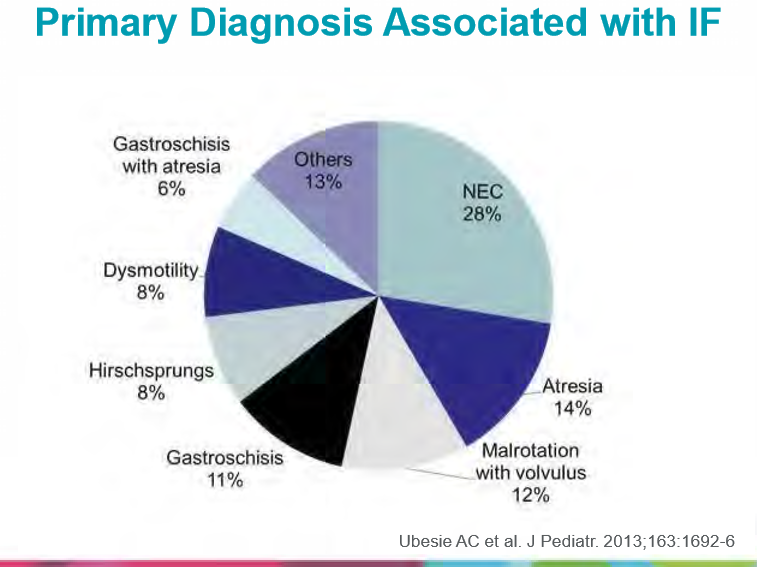
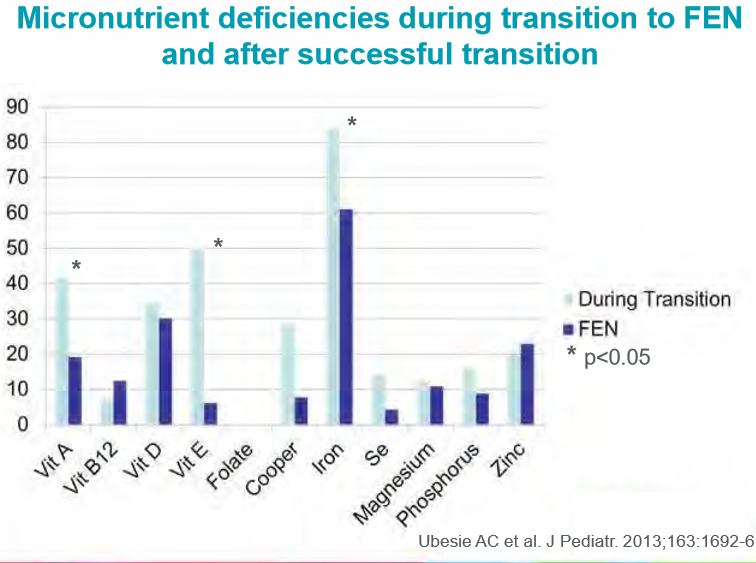
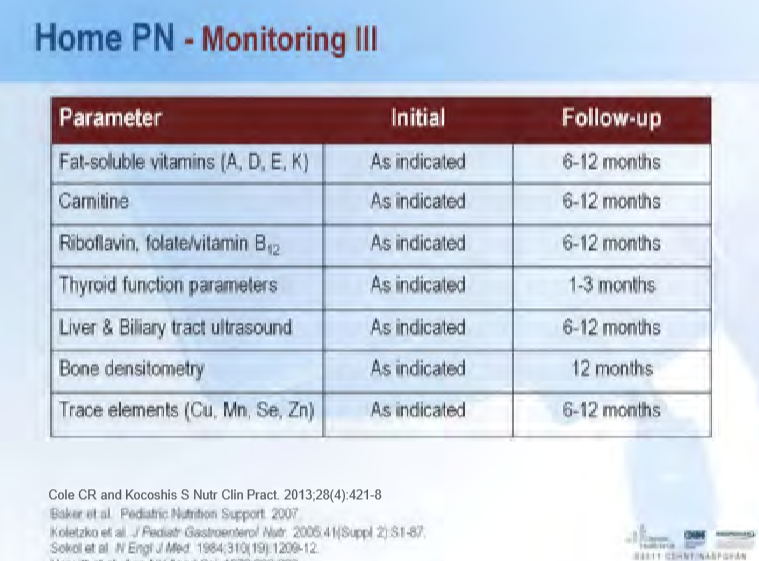
Slides regarding intestinal failure population from Dr. Conrad Cole:

From Dr. Miranda van Tilburg regarding psychological therapies for functional GI disorders:

Disclaimer: These blog posts are for educational purposes only. Specific dosing of medications/diets (along with potential adverse effects) should be confirmed by prescribing physician/nutritionist.  This content is not a substitute for medical advice, diagnosis or treatment provided by a qualified healthcare provider. Always seek the advice of your physician or other qualified health provider with any questions you may have regarding a condition.

#NASPGHAN18 Highlights and Tweets (part 1)

I did not make it to this year’s meeting but did get a chance to catch up on a lot information via the PG 2018 Syllabus and based on information posted online.

Here are a couple of highlights for me:

Slides from postgraduate course on CVS from Dr. Katja Kovacic

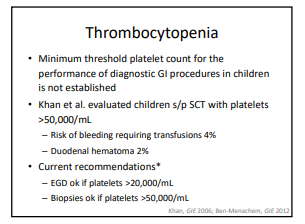
The slide from Dr. Lightdale (pg 22 in Syllabus) below suggests it is OK for scope if platelets >20K and OK for biopsies if platelets >50K. It is worth noting that some adult data indicate that even lower biospy thresholds are reasonable for biopsies (Post: Lower Endoscopic Thresholds for Thrombocytopenia). As always, one needs to consider carefully the risks compared with the benefits.

From Postgraduate Course


Disclaimer: These blog posts are for educational purposes only. Specific dosing of medications/diets (along with potential adverse effects) should be confirmed by prescribing physician/nutritionist.  This content is not a substitute for medical advice, diagnosis or treatment provided by a qualified healthcare provider. Always seek the advice of your physician or other qualified health provider with any questions you may have regarding a condition.

Briefly noted: Selective Serotonin Reuptake Inhibitors (SSRIs) and Linear Growth

CA Calarge et al. J Pediatr 2018; 201: 245-51. This study analyzed data from 4 separate trials with a total of 267 boys treated with risperidone.  In this cohort, 71% had taken an SSRI.

Key finding: The duration and cumulative dose of SSRI was inversely associated with height z score, especially during Tanner 3 and 4 stages.  The effect was approximately 1 cm for every year of treatment.

The authors speculate that SSRIs could “alter serotonin signaling, which is known to control GH secretion.”

My take:

  1. This study shows an association between SSRIs and linear growth but it remains unclear if this affects adult height (could postpone growth).
  2. This potential adverse effect needs to be considered in the clinical picture of the severe impairment and distress that can occur due to untreated depression and anxiety.

Related blog post: Brave New World: Psychotropic Manipulation and Pediatric Functional GI Disorders

Lake Louise, Banff

Why I Don’t Check Vitamin D Levels During IBD Flare-ups

A recent study (C Striscuiglio et al. JPGN 2018; 67: 501-6) helps explain the role of inflammation on vitamin D levels in pediatric patients (n=51) with inflammatory bowel disease (IBD).

Key findings:

  • The free/total 25-OH D ratio was higher in patients with newly-diagnosed IBD compared to healthy controls (P< .001)
  • A significant direct correlation was found between free/total 25-O D ratio and the activity index of disease (P= .01)
  • While there was frequent deficiency in total vitamin D levels,  the free 25-OH D which is the active form of vitamin D was normal or elevated in patients with newly-diagnosed IBD; this, in turn, was due to a decrease in vitamin-D binding protein which is related to inflammation. The authors hypothesized that at the cellular level in the intestine, there may be peripheral resistance due to inflammation and even supratherapeutic levels of free vitamin D could be needed to produce the active form (1,25-OH D).

My take: This study shows that 25-OH D levels (total) have almost no value at the onset of IBD.  Even normal or elevated free levels of 25-OH D which were found in this study does not preclude the potential need to supplement with vitamin D according to the study authors. In addition, as noted in previous posts, Vitamin D levels can normalize without supplementation when the patient’s IBD responds to therapy.

Related blog posts:

Disclaimer: These blog posts are for educational purposes only. Specific dosing of medications/diets (along with potential adverse effects) should be confirmed by prescribing physician/nutritionist.  This content is not a substitute for medical advice, diagnosis or treatment provided by a qualified healthcare provider. Always seek the advice of your physician or other qualified health provider with any questions you may have regarding a condition.

Dangerous animal –seen on our hike to the tea house, Banff

With Regard to Avoiding Excessive Weight Gain, Breastfeeding is Best

A recent study (AR Goetz et al J Pediatr 2018; 201: 27-33) examines the impact of breastfeeding on the growth of infants with high birth weight (HBW).

Background: “Exclusive breastfeeding is protective against high weight and is recommended by” the AAP for the first 6 months.  In this study, the authors hypothesized that “HBW infants would receive a lower percentage of breast milk and consume more formula than NBW infants.”

Key findings:

  • HBW infants with high weights at 7-12 months of age demonstrated a rapid decline in the percentage of breast milk feedings compared with HBW infants with normal weights at 7-12 months of age.
  • Normal birth weight infants with high weights at 7-12 months of age received a lower percentage of breast milk and more formula intake that those with normal weights at 7-12 months of age.

Because HBW is associated with later risk of obesity/overweight, identifying strategies early in life is important.  Furthermore, as a recent study in NEJM has shown (M Geserick et al. NEJM 2018; 379: 1303-12), a lot of weight gain issues happen in the first years of life:

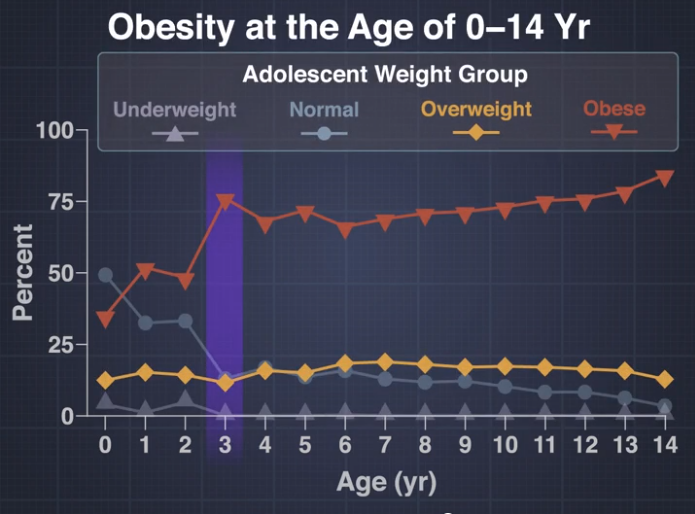
  • Almost 90% of children who were obese at 3 years of age were overweight or obese in adolescence
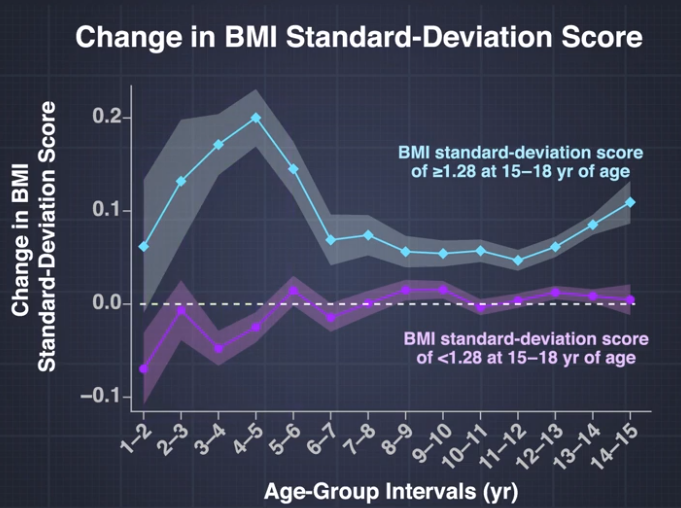
  • Among obese adolescents, the most rapid weight gain had occurred between 2 and 6 years of age

My take: This study further shows a strong association between consumption of breast milk and normal weights at 7-12 months of age, both in HBW and NBW.

Related blog posts:

Near Lake Louise, Banff

One Bad Apple Spoils the Bunch

A recent NY Times article highlights the end of a renowned food-scientist Brian Wansink’s career at Cornell which “came to an unceremonious end. On Sept. 20. The university announced that a yearlong investigation had found that he committed “academic misconduct in his research and scholarship, including misreporting of research data,” and that he had tendered his resignation.”  This commentary highlights other problems with nutrition studies: More Evidence That Nutrition Studies Don’t Always Add Up

My take: Nutrition studies are difficult –having academic misconduct is going to further undermine the credibility of these studies.

Losing the Obesity Battle Early in Life

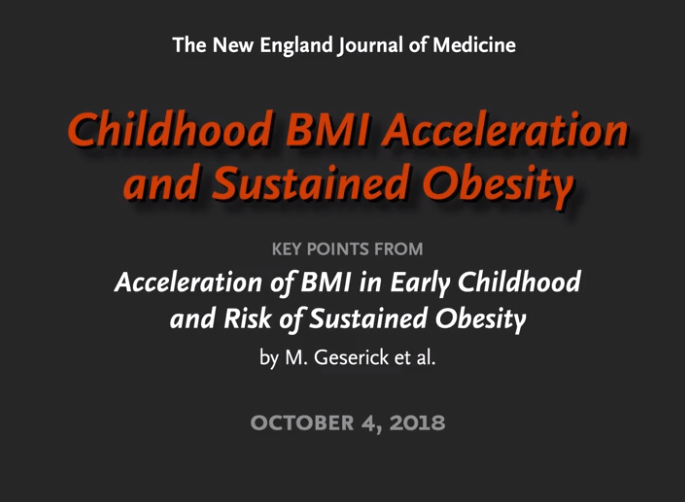
A recent study (M Geserick et al. NEJM 2018; 379: 1303-12) performed a prospective and retrospective analysis of a population-based sample of 51,505 German children to examine BMI in early childhood and risk of sustained obesity.

Key findings:

  • Most normal weight adolescents had a normal weight throughout childhood
  • Half (53%) of the obese adolescents had been overweight or obese from 5 years of age onward
  • Almost 90% of children who were obese at 3 years of age were overweight or obese in adolescence
  • Among obese adolescents, the most rapid weight gain had occurred between 2 and 6 years of age

My take: We are losing the childhood obesity battle at very young ages.

Abstract and Link to 1:32 Quick Summary: Acceleration of BMI in Early Childhood


Gastric Residual Volumes in Premature Infants

Briefly noted: B Singh et al. J Pediatr 2018; 200: 79-83.  In this study of 87 infants witth birth weights 1500-2000, avoiding routine assessment of gastric residual volumes before feeding advancement did not shorten the time to reach full feeds.  However, checking these residuals provided no clear advantages and have some potential disadvantages:

  • Time-consuming to check and may inaccurate depending on size/location of orogastric/nasogastric tube
  • Discarding gastric contents results in loss of gastric enzymes and acid

The authors note that prior studies have shown that gastric residuals are “unreliable predictors of feeding intolerance” studies have had discrepancies with regard to whether they are predictive of necrotizing enterocolitis.

Related blog post: When to Check Gastric Residuals in Preterm Infants