Link: Home Blenderized Tube Feedings: A Practical Guide for Clinical Practice
This article provides a lot of useful advice for blenderized formulas, but is not a substitute for the help of a qualified dietician/nutritionist.


Link: Home Blenderized Tube Feedings: A Practical Guide for Clinical Practice
This article provides a lot of useful advice for blenderized formulas, but is not a substitute for the help of a qualified dietician/nutritionist.
With ImproveCareNow, there have been efforts to minimize variation in care. As such, there have been suggestions to monitor labs like vitamin D, vitamin B12, and folate routinely. I have voiced concern that some of this testing is unnecessary. For vitamin B12, deficiency in pediatrics is rare; at risk populations include those with extensive small bowel resections, gastric resections or strict vegan diet.
A recent article (J Fritz et al. Inflamm Bowel Dis 2019; 25: 445-59) which is a systematic review of micronutrients in pediatric inflammatory bowel disease provides further support for the approach of less testing.
Key points:
My take: Except in patients with surgical resections and in those with unusual diets (eg. vegan), routinely checking vitamin B12, folate and most other micronutrients is unnecessary & low value care.
Related blog posts:
Vitamin B12:
Vitamin D:
Iron:
Disclaimer: These blog posts are for educational purposes only. Specific dosing of medications/diets (along with potential adverse effects) should be confirmed by prescribing physician/nutritionist. This content is not a substitute for medical advice, diagnosis or treatment provided by a qualified healthcare provider. Always seek the advice of your physician or other qualified health provider with any questions you may have regarding a condition.



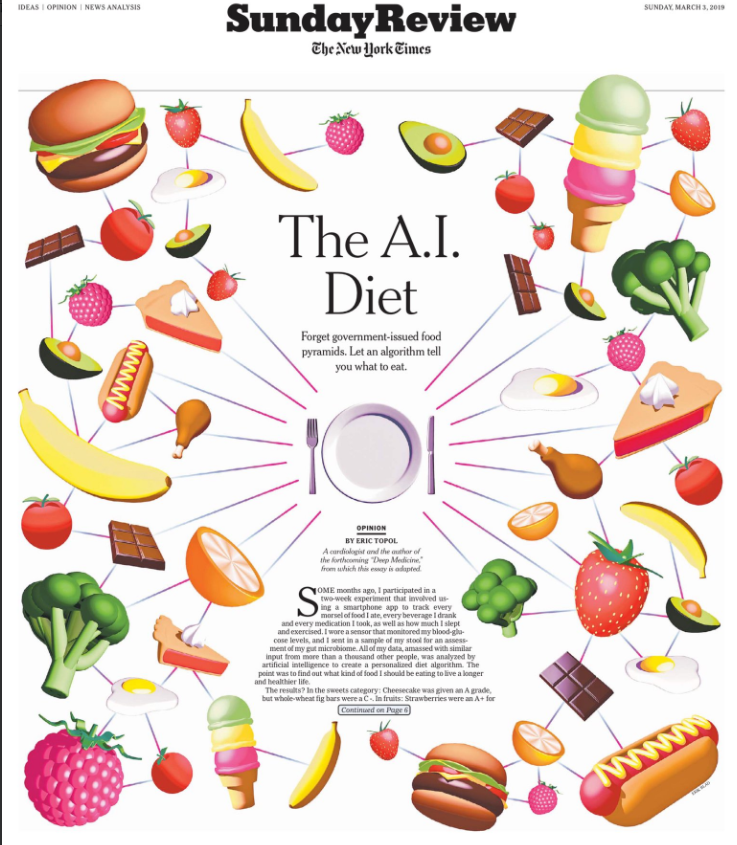
A recent commentary in the NY Times discusses the future of personalized diets. Along the way, the commentary notes how little we know about the best diet and how difficult nutrition research is to complete.
The A.I. Diet by Eric Topol who is the author of the forthcoming “Deep Medicine,” from which this essay is adapted
An excerpt:
It turns out, despite decades of diet fads and government-issued food pyramids, we know surprisingly little about the science of nutrition. It is very hard to do high-quality randomized trials: They require people to adhere to a diet for years before there can be any assessment of significant health outcomes…
Meanwhile, the field has been undermined by the food industry, which tries to exert influence over the research it funds.
Now the central flaw in the whole premise is becoming clear: the idea that there is one optimal diet for all people…
Only recently, with the ability to analyze large data sets using artificial intelligence, have we learned how simplistic and naïve the assumption of a universal diet is. It is both biologically and physiologically implausible: It contradicts the remarkable heterogeneity of human metabolism, microbiome and environment, to name just a few of the dimensions that make each of us unique. A good diet, it turns out, has to be individualized.
My take: Dr. Topol makes some important observations and he is right that there is not a simple diet solution for everyone. Nevertheless, in the near future, personalized medicine is not coming to our dinner tables and we have to rely on what we know right now –don’t eat too much sugar, do eat more fruits and vegetables, and don’t eat too much.
Related blog posts:
A recent review article (J O’Grady et al. Aliment Phamacol Ther; 2019; 49: 506-15) highlights how fiber is important for health and its potential role in fostering a diverse microbiome. Some of the material has been covered before in a previous blog/presentation: It’s Alimentary! “The Fiber Movement: Why Kids Need It and How to Get It” by Maria Oliva-Hemker .
In the introduction, the authors note that there had been a period of disappointment that fiber did not seem to help irritable bowel syndrome. Though with expanding knowledge of the diet-, microbiome- host interactions, clinicians have started to appreciate the health impact of dietary fiber.
In subsequent sections, the authors detail the different types of fiber based on solubility, viscosity and fermentation.
Key actions of fiber:
The authors note that a low-fiber diet in germ-free mice can result in a reduced microbial diversity and interestingly, the “missing taxa is transmitted to subsequent generations” even if fiber is re-introduced.
Potential beneficial fiber effects beyond bulking up stools:
Western Diet is Deficient in Fiber.
The authors recommend efforts to gradually titrate increased fiber in the diet as abrupt changes may be poorly tolerated due to gas and bloating.
My take: This article explains that the connection between fiber intake and a number of health outcomes is likely due, at least in part, to its modulation of the microbiome. Thus, fiber is important for much more than a good poop.
Related blog posts:


A recent expose from 538 explains why sports drinks are unnecessary.
538: You Don’t Need Sport Drinks to Stay Hydrated
Key points:
A few excerpts:
My take: Drink when you are thirsty. Exceptional talent and hard work, not sports drinks, are the key if you want to “Be Like Mike.”
Related blog posts:

Joshua Tree at Joshua Tree National Park



Full Text (from J Peds twitter feed): All Aboard Meal Train: Can Child-Friendly Menu Labeling Promote Healthier Choices in Hospitals? S Basak et al. J Pediatr 2019; 204: 59-65
Conclusion: “The combination of menu labeling techniques targeted to children in the inpatient hospital setting was an effective short-term tool for increasing the intake of healthier foods, although the effect of labeling waned over time.”
From the discussion: “Our findings in this study show a significantly higher odds of ordering green-light healthier option foods and lower odds of ordering red-light foods when exposed to child-friendly menu labeling. This effect waned over time, such that after 8 meals, proportions of red-light and green-light choices were similar with both menus…
Although most children’s hospital food environments include food items that have low nutritional value, this study highlights that nutrition education using menu labeling can be successfully implemented and can encourage children and their families to make healthier choices. It is our hope that labeling may also encourage hospital food providers to improve food quality at the hospital by decreasing red-light foods and increasing healthy food options at every meal. More research is needed to determine optimal techniques for various age ranges and develop menus that are age-appropriate and tailored for specific patient populations.”
My take: 1. This study from Sick Children’s is important. We can determine more effective healthy eating strategies on a ‘captive’ audience. 2. I remember several years ago when one of my partners ruffled some feathers by asking the hospital to reconsider promoting sugar-sweetened beverages while at the same time posting billboards of obese children.
Related blog posts:

A recent study (JH Savage et al J Pediatr 2018; 203: 47-54) examined the impact of breastfeeding compared with formula on microbiome diversity in 323 infants; this included 95 exclusively breastfed, 169 exclusively formula fed at time of stool collection.
Breastfed infants were more likely to have been born vaginally (74% vs 62%) and less likely to be African-American (11% vs. 36% for hispanic infants, and 52% for caucasian).
Key finding:
My take: We still don’t understand the long-term implications of these differences in microbiome alterations between breastfeeding and formula. That being said, the development/evolution of breastmilk has taken place over thousands of years and it is likely that formula, while an important substitute, will never replicate all of the useful components.
Related blog posts:

Chattanooga Riverwalk Sculpture
To all my colleagues and to others who follow this blog, I wish you a happy new year. Thank you to all of you, especially to those who provide feedback to help improve the content and usefulness.
Recently NASPGHAN released an App, titled NASPGHAN Toolbox. There are some very useful features but also some areas where more work is needed.
Work in progress: Many of the algorithms that are listed are dated and no longer accurate. To list a few examples:
Also, this ‘algorithms’ section should probably be renamed into ‘algorithms and tables’ as a large amount of the information is not algorithmic.
What I Like:
My take: This is a very good start and a very helpful toolbox for pediatric gastroenterologists but I would not rely on the algorithms.


