Good Safety Data on Infliximab vis a vis Malignancy and Hemophagocytic Lymphohistiocytosis

Using data from 5766 pediatric participants with inflammatory bowel disease in a prospective DEVELOP study (JS Hyams, MC Dubinsky et al. Gastroenterol 2017; 152: 1901-14) provide more reassurance regarding the safety of infliximab.  This study took place between 2007 to 2016 and accounted for 24,543 patient-years of followup.  While the study examined rates of malignancy, the SEER database does not include non-melanoma skin cancer; thus, the authors did not have a suitable comparator for this outcome; there were two cases of basal cell carcinoma in the study population.  This article’s abstract was published on this blog previously: Infliximab Not Associated with Malignancy

Key findings:

  • There was NO increased risk of malignancy or hemophagocytic lymphohistiocytosis (HLH) in patients exposed to infliximab as monotherapy.
  • Malignancy risk was 0.46 per 1000 patient-years in patients with infliximab exposure compared with 1.12/1000 patient-years in patients who had no exposure to biologics.
  • HLH risk was 0 in those with infliximab monotherapy compared with 0.56 per 1000 patient-years in those who had no exposure to biologics.
  • Patients exposed to thiopurines with or without biologics did have increased risks of malignancy compared with comparative populations. 13 of 15 patients who developed a malignancy and all 5 patients who developed HLH had thiopurine exposure.
  • Thiopurine exposed patients had 0.75 malignancy events per 1000 patient-years compared to 0.27 malignancy events per 1000 patient-years for patients who had no thiopurine exposure
  • Thiopurine exposed patients had 0.29 HLH events per 1000 patient-years compared to 0 HLH events per 1000 patient-years for patients who had no thiopurine exposure
  • In their discussion, the authors note that after discontinuation of thiopurine therapy for 1 or more years, the standardized incidence ratio (SIR) for malignancy approached the non-exposed group (1.48 compared to 1.30); whereas ongoing or recent thiopurine exposure had SIR of 4.45.

Limitations: Study duration (<10 years). Hard to detect changes in rare malignancies

My take: In this largest prospective pediatric cohort to date, there is NO increased risk of malignancy (excluding non-melanoma skin cancer) or HLH with infliximab therapy; however, there is a trend towards increased risk among those with thiopurine exposure. Nevertheless, as malignancy is a rare event, very low increased risk of malignancy with infliximab cannot be entirely excluded.

Related blog posts:

For HLH:


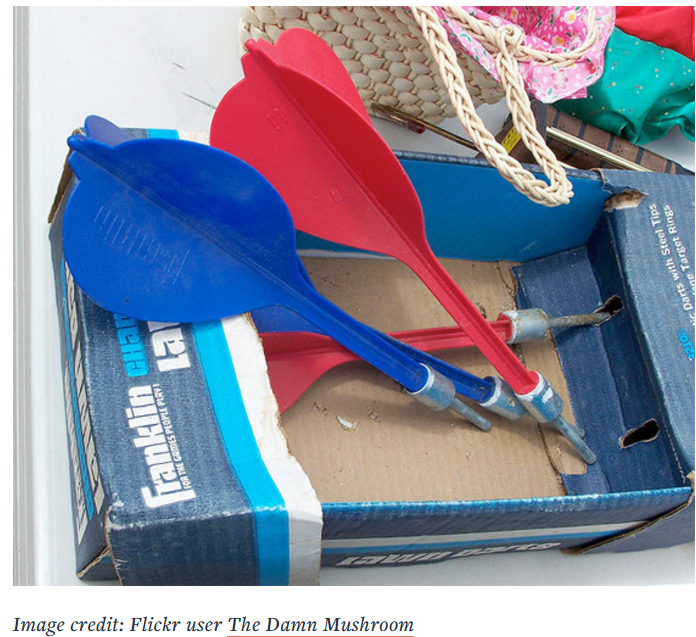
Hazardous Toys: Jarts and Magnets

I had completely forgotten about Jarts until reading a recent editorial by Athos Bousvaros (J Pediatr 2017; 186: 6-7). He succinctly describes how these lawn darts were ultimately removed from the market primarily due to the advocacy of a father who became a strong advocate after the death of his daughter.

A more complete description of the effort to remove Jarts -from Mental Floss website: How One Grieving Father Got Lawn Darts Banned

Dr. Bousvaros, in commentary on a study on high-powered (neodymium) magnets (Rosenfeld D et al. J Pediatr 2017; 186: 78-81) describes the similarities between these magnets and the jarts.  Both have caused catastrophic injuries and death.  However, the recent removal of these magnets from the market was overturned.  There is no national tracking system for magnet ingestions in U.S. or Canada.  However, the referenced study demonstrated a dramatic reduction  in medical/surgical procedures in 2014-2015 (n=10) when a ban was placed compared to 2011-2012 (n=29).

For U.S physicians, all we can do currently is to report to the CPSC (Consumer Product Safety Commission) all magnet-related injuries and to publicize the dangers of these hazardous products.  To report: go to CPSC website (link: CPSC website) and “report an unsafe product” on the right side of the page.

Related blog posts:

Is there a link between Eosinophilic Esophagitis and Celiac Disease?

Probably most pediatric gastroenterologists have seen patients who underwent endoscopy for celiac disease and found out that the patient had both celiac disease and esophageal eosinophilia.  Whether the esophageal eosinophilia should be classified as eosinophilic esophagitis (EoE) is based in part on whether one concludes that the EoE is a separate disorder and unrelated to the celiac disease.

One useful retrospective study on this topic (S Hommeida et al. JPGN 2017; 65: 58-63) examines the association between celiac disease and EoE.   Key findings:

  • Among a cohort of 10,201 children seen at the Mayo clinic, 595 were considered to have EoE and 546 had celiac disease.
  • Only 10 patients had both celiac disease and EoE.
  • The risk of EoE was not increased in children with celiac disease compared to those without celiac disease (odds ratio 0.29).  The prevalence of EoE in children with celiac disease was 1.8% whereas the prevalence among all children undergoing endoscopy was 5.8%.
  • 4 of 10 children treated only with GFD clinically improved (no followup histology)

Limitations:

  • The diagnosis of EoE was not clear in this study.  As noted in the associated editorial (pg 1-2), “the use of a high-dose proton pump inhibitor at the time of initial diagnosis is not mentioned.”
  • Overall, the number of patients with both EoE and celiac disease was small.  Thus, a much larger study could be necessary to prove the lack of an association.

My take: This study suggests that there is not an association between EoE and celiac disease. Some patients with both disorders will respond to a gluten free diet, whereas some will require additional treatment directed at EoE.

Related study: T Wallach et al. JPGN 2017; 65: 64-8. This retrospective study showed poor adherence to biopsy guidelines in EoE and celiac disease.  Among 9171 children, 8% were biopsied in accordance with 2007 AGA EoE consensus recommendations and 35% in accordance with  2006 AGA celiac guidelines.  Higher detection rates were observed among patients who had higher adherence to diagnostic guidelines. With both diseases, obtaining sufficient number of biopsies is key; and with celiac disease, obtaining biopsies from duodenal bulb as well as distal duodenum is recommended.

Chattahoochee River, Sandy Springs

Use of Antidepressant Medications to Treat Recurrent Abdominal Pain

A recent study (C AM Zar-Kessler et al. JPGN 2017; 65: 16-21) retrospectively reviewed a single center’s 8 year experience (2005-2013) using antidepressant medications to treat nonorganic abdominal pain. Of 531 cases, 192 initiated treatment with either a selective serotonin reuptake inhibitor (SSRI) or a tricyclic antidepressant (TCA).

Key findings:

  • 63 of 84 (75%) of SSRI-treated patients improved; 56 of 92 (61%) of TCA-treated patients improved.  The higher response rate to SSRIs persisted after control for psychiatric factors.
  • A much higher percentage of SSRI-treated patients, compared to TCA-treated patients, had anxiety (49% vs 22%); an additional 15% and 5%, respectively, had combined anxiety/depression.
  • The most common SSRI in this study was citalopram with median dose of 10 mg (range 5-60 mg).
  • The most common TCA in this study was nortriptyline with median dose of 20 mg (range 10-50).
  • Similar numbers of patients in each group had adverse effects, include 21 (25%) of SSRI-treated patients and 20 (22%) of TCA-treated patients.  14% of SRRI-treated patients discontinue medication due to adverse effects, compared with 17% of TCA-treated patients.
  • Mood disturbances were higher in this study among TCA-treated patients: 14% compared with 6% of SSRI-treated patients
  • TCAs were prescribed by gastroenterologists in 88% of cases; with SSRIs, only 39% of prescriptions were from gastroenterologists.

In the discussion, the authors note that “all patients who experienced GI adverse effect were prescribed medications that would worsen their underlying bowel complaint…these issues may have been mitigated if more attention was paid” to this.  “Specifically, TCAs should be used cautiously in those with constipation, whereas SSRIs should be avoided in those with diarrhea.”

My take: This study shows that both classes of antidepressants were associated with improvement.  The conclusions about effectiveness are limited as this is a retrospective study and could not control/evaluate many variables. That being said, particularly if there is coexisting anxiety, as was frequent in this study population, a SSRI may be more effective.

Related blog posts:

Disclaimer: These blog posts are for educational purposes only. Specific dosing of medications (along with potential adverse effects) should be confirmed by prescribing physician.  This content is not a substitute for medical advice, diagnosis or treatment provided by a qualified healthcare provider. Always seek the advice of your physician or other qualified health provider with any questions you may have regarding a condition.

Tynn Church, Prague


Long-term Effects on Bone Health of PPIs in Infancy?

A recent study –summarized by Pediatric News (MDedge): Antacid use in infants linked to increased fracture risk.

In this large study (874,447 children), more than 90% of the cohort had not received a prescription for any antacid.

An excerpt:

The large study revealed that use of proton pump inhibitors (PPIs) before age 1 year was linked to a 22% increased risk of fracture, compared with those not prescribed antacids…

The retrospective study’s cohort comprised 874,447 children born between 2001 and 2013 who had been in the U.S. Military Health System for at least 2 years…

Adjustment for preterm birth, low birth weight, sex, and a previous fracture barely reduced those risks: 22% increased risk for PPI use, 4% increased risk for H2 blocker use, and 31% increased risk for using both. The vast majority of children who took antacids had been prescribed them in their first 6 months, so the researchers calculated adjusted risk by age of exposure. 

My take: There are a lot of reasons to resist using PPIs in most infants, particularly lack of efficacy.  Potential harms of these medications, particularly at the youngest ages, should not be overlooked either.

Related blog posts:

Prague Castle and Charles Bridge

Antibiotics for Acute Uncomplicated Appendicitis in Children

A recent meta-analysis study (L Huang et al. JAMA Pediatr 2017; 17: 426-34 -thanks to Ben Gold for this reference) indicates that antibiotcis can be effective as treatment for acute uncomplicated appendicitis, particularly if no appendolith is present.

From the abstract:

Abstract

IMPORTANCE:

Antibiotic therapy for acute uncomplicated appendicitis is effective in adult patients, but its application in pediatric patients remains controversial.

OBJECTIVE:

To compare the safety and efficacy of antibiotic treatment vs appendectomy as the primary therapy for acute uncomplicated appendicitis in pediatric patients.

STUDY SELECTION:

Randomized clinical trials and prospective clinical controlled trials comparing antibiotic therapy with appendectomy for acute uncomplicated appendicitis in pediatric patients (aged 5-18 years) were included in the meta-analysis. The outcomes included at least 2 of the following terms: success rate of antibiotic treatment and appendectomy, complications, readmissions, length of stay, total cost, and disability days.

RESULTS:

A total of 527 articles were screened. In 5 unique studies, 404 unique patients with uncomplicated appendicitis (aged 5-15 years) were enrolled. Nonoperative treatment was successful in 152 of 168 patients (90.5%), with a Mantel-Haenszel fixed-effects risk ratio of 8.92 (95% CI, 2.67-29.79; heterogeneity, P = .99; I2 = 0%). Subgroup analysis showed that the risk for treatment failure in patients with appendicolith increased, with a Mantel-Haenszel fixed-effects risk ratio of 10.43 (95% CI, 1.46-74.26; heterogeneity, P = .91; I2 = 0%).

CONCLUSIONS AND RELEVANCE:

This meta-analysis shows that antibiotics as the initial treatment for pediatric patients with uncomplicated appendicitis may be feasible and effective without increasing the risk for complications. However, the failure rate, mainly caused by the presence of appendicolith, is higher than for appendectomy. Surgery is preferably suggested for uncomplicated appendicitis with appendicolith.

From a AHC Media synopsis of article:Although antibiotic treatment of acute appendicitis appears effective in many cases, there is a nearly nine-fold higher risk of treatment failure compared with appendectomy, with 26.8% of patients in the antibiotic treatment group requiring interval appendectomy.

My take: My opinion is that surgery is appropriate as first-line treatment for  acute uncomplicated appendicitis.

Related blog posts:

View of Omaha Beach from Normandy American Cemetery 

Adalimumab Can Reverse Growth Failure in Pediatric Crohn’s Disease

In an industry-sponsored study (TD Walters et al. Inflamm Bowel Dis 2017; 23: 967-75), adalimumab (ADA) was shown to be effective agent in reversing growth failure associated with pediatric Crohn’s disease (CD).

Background:  About one-third of children and adolescents with CD suffer from growth failure and delayed puberty.  Several prior studies have shown that anti-TNF therapy can improve height velocity and that early treatment with anti-TNF therapy (≤3 months after diagnosis) leads to greater improvement in height obtained, if initiated before puberty or early into puberty. This study examines the effectiveness of ADA in children from the IMAgINE 1 trial.

The authors identified 73 participants with growth delays (& adequate data) along with 27 participants with no growth delays.

Key findings:

  • ADA therapy significantly improved and normalized growth rates at 26 and 52 weeks in patients with baseline linear growth impairment.
  • At week 26, height velocity z-score was 1.33 among 23 children in remission compared with -0.78 (n=29) among “nonremitters”
  • At week 52, height velocity z-score was 2.17 among 27 children in remission compared with -1.57 (n=17) among “nonremitters”

My take: In moderate to severe CD, anti-TNF agents have been demonstrated to reverse growth failure; though, this is expected to occur only in patients with clinical response. To my knowledge, no other CD medical therapies have been proven to reverse growth failure (surgical treatment can improve growth as well).

Related blog posts:

Quiet Spot on U Chicago Campus

Small Pediatric Study: Probiotic Helping Some with Irritable Bowel Syndrome

In a recent study (O Jadresin et al. JPGN 2017; 64: 925-9), 55 children with functional abdominal pain or irritable bowel syndrome were randomized (prospective, double-blind, placebo-controlled study) to either L reuteri DSM or placebo.

Key findings:

  • The intervention group had more days without pain: median 89.5 days vs. 51 days (P=.029)
  • Abdominal pain was less severe in the intervention group at some time points (second month, and fourth month)
  • The two groups did not differ with regard to duration of abdominal pain, stool type, or absence from school

Limitation: Small number of patients -the estimated samples size was not reached

My take: This study suggests that probiotics may help some pediatric patients with irritable bowel syndrome.  Trying to identify which patients should receive a probiotic and which probiotic should be selected remains unclear.

Related blog posts:

Pierre Renoir’s portrait of Claude Monet, Musee d’Orsay