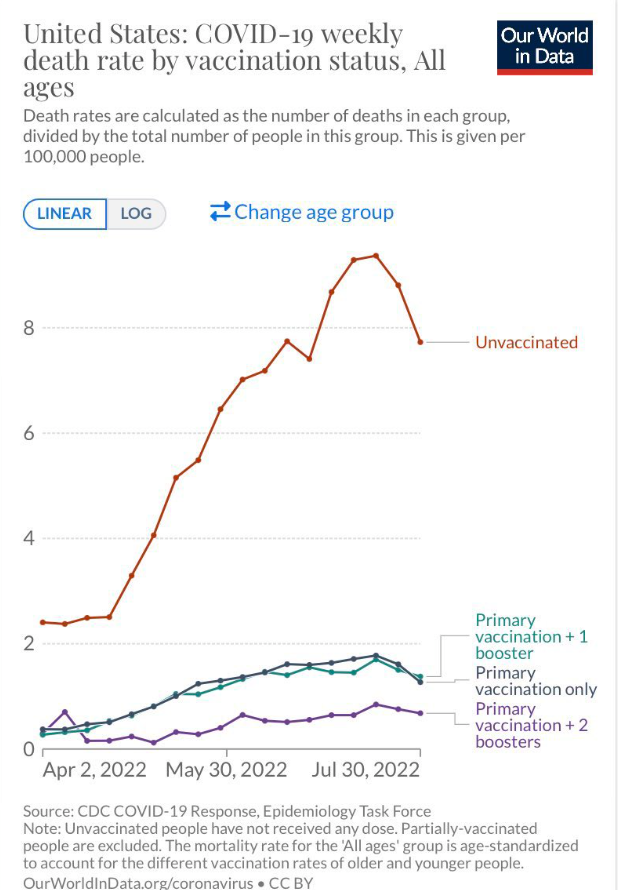
Ongoing Risk of Death in Those Without COVID-19 Vaccination
Image

NC Chang et al. Clin Gastroentol Hepatol 2022; 20: 1701-1708. Open Access! A Gap in Care Leads to Progression of Fibrosis in Eosinophilic Esophagitis Patients
In this retrospective review with 701 patients, 95 (14%) had a gap in care (mean time without care, 4.8 ± 2.3 years). Key findings:
DA Carlson et al. Clin Gastroenterol Hepatol 2022; 20: 1719-1728. Esophageal Dysmotility Is Associated With Disease Severity in Eosinophilic Esophagitis
Consecutive adult patients with EoE (n=199) completed a 16-cm functional luminal imaging probe (FLIP) during endoscopy were evaluated in a cross-sectional study. Key findings:
Thus, abnormal esophageal CRs were related to EoE disease severity, especially features of fibrostenosis. This study suggests that esophageal wall remodeling, rather than eosinophilic inflammatory intensity, was associated with esophageal dysmotility in EoE.
My take: Despite my satirical title, I think these articles are helpful by documenting that ongoing EoE results in worsening esophageal dysfunction/dysmotility (especially if not treated). In addition, they provide insight into the natural history/pathophysiology of EoE.
Related blog posts:

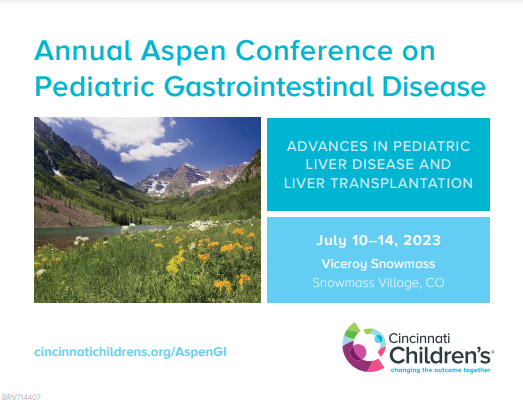
Heads up! Next year’s Aspen Pediatric GI Meeting will be July 10-14 -terrific learning experience and opportunity to mingle with some exceptional leaders in our field:
MC Dubinsky et al. Inflamm Bowel Dis 2022; 28: 1375-1385. Dashboard-Driven Accelerated Infliximab Induction Dosing Increases Infliximab Durability and Reduces Immunogenicity
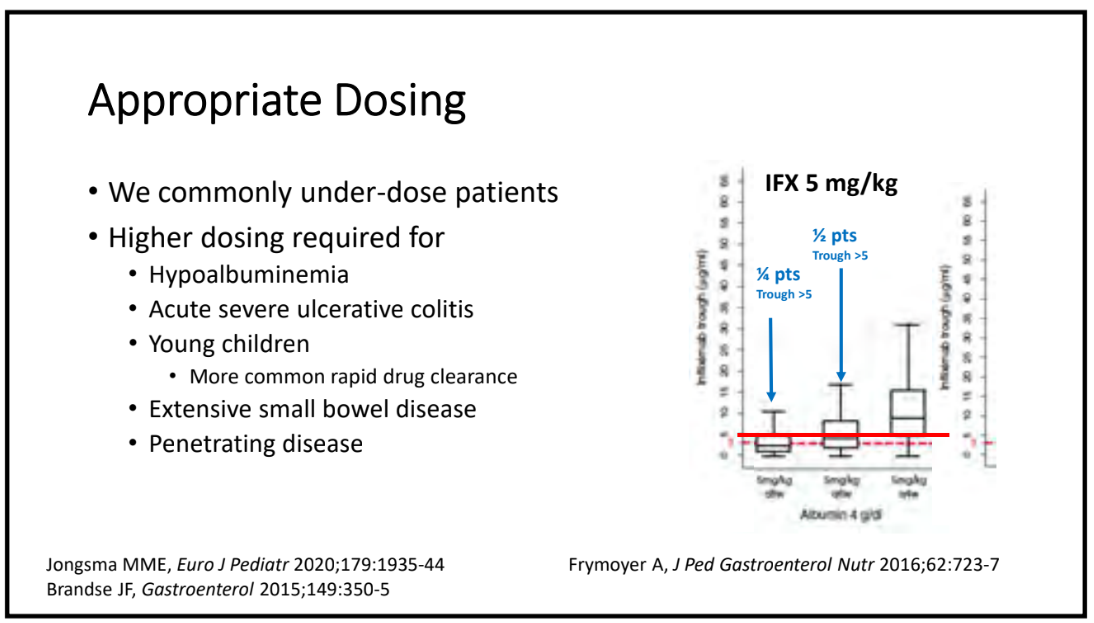
In this prospective ‘real-world’ study (adults and children), “cumulative data from each infusion (INF), weight, albumin, C-reactive protein, IFX dose, IFX trough level, and antidrug antibody presence were used to inform subsequent INF dosing.” Key findings:
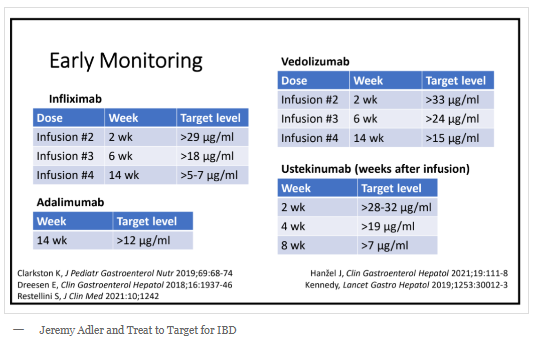
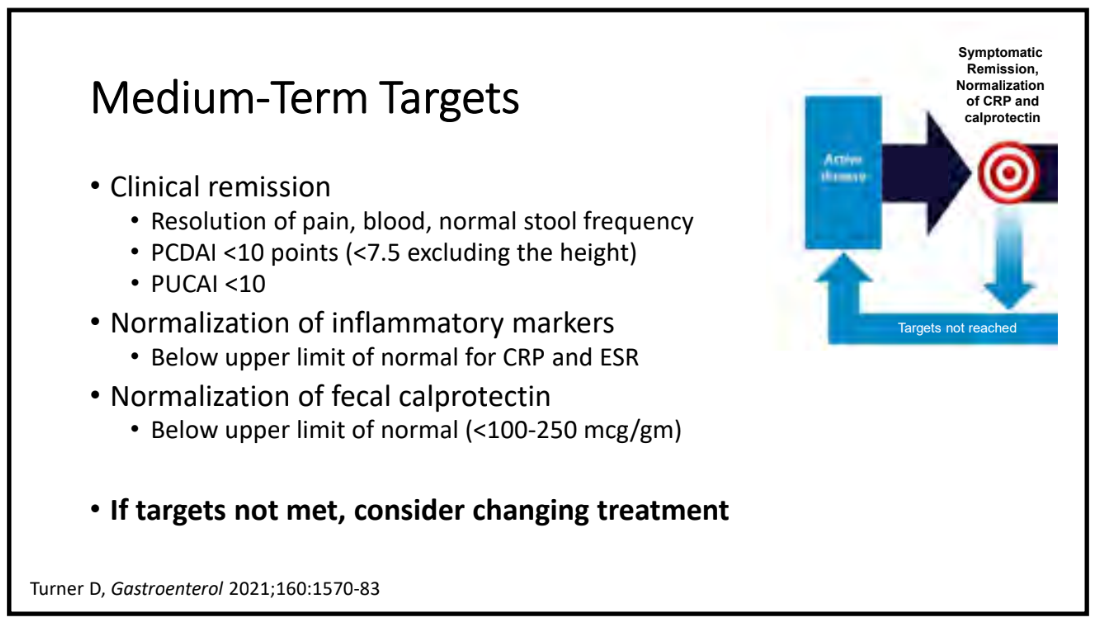
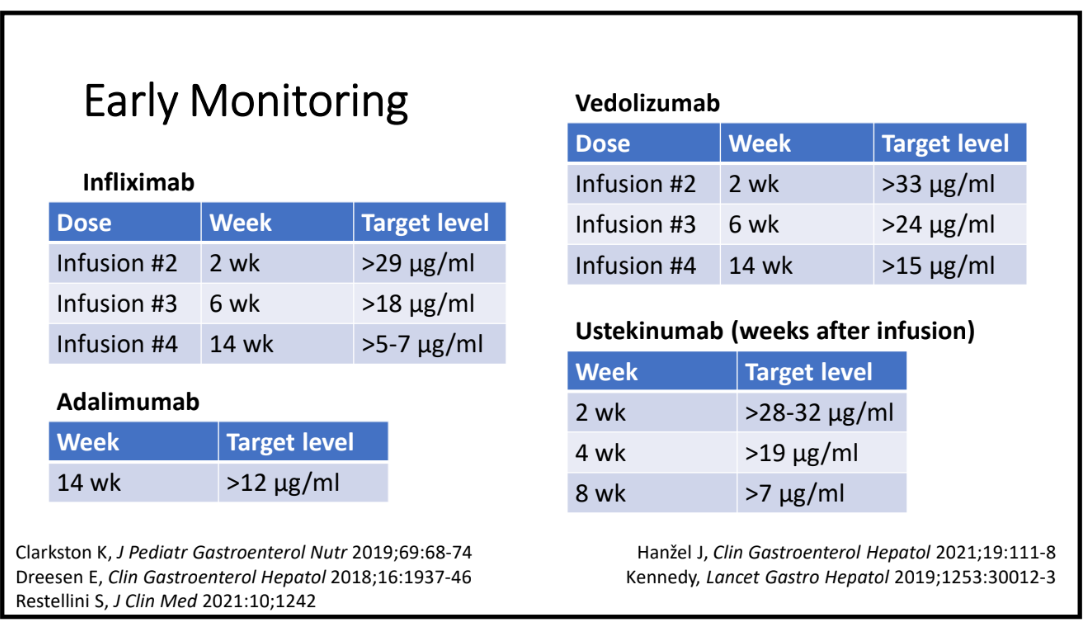
My take: The 8-week interval between induction dose (3rd) and maintenance dose (4th) is too long for many pediatric patients. For those using proactive therapeutic monitoring, checking a level prior to 3rd dose should be considered. Using an automated dosing system (like “iDose”) is likely to be helpful in optimizing response. Current target levels for TDM noted in recent post: Selected Slides from NASPGHAN 2022 Postgraduate Course (part 2) & copied below.
E Cowherd et al. Inflamm Bowel Dis 2022; 28: 1332-1337. The Cumulative Incidence of Pouchitis in Pediatric Patients With Ulcerative Colitis
Methods: Within the IQVIA Legacy PharMetrics Adjudicated Claims Database, the authors identified pediatric patients (n=68) with UC who underwent proctocolectomy with IPAA between January 1, 2007, and June 30, 2015. Key finding: In the first 2 years following IPAA, the cumulative incidence of pouchitis was 54%. My take: Most patients continue to experience significant problems after “curative” surgery.
The 6th International Symposium on Peadiatric Inflammatory Bowel Disease (PIBD) was held on September 7-10, 2022, in Edinburgh, Scotland. Highlights of several featured presentations (including video presentation on exposome) regarding the latest updates on nutrition and diet are included at this link (courtesy of Nutritional Therapy for IBD website): PIBD Symposium 2022 Nutritional Highlights


Disclaimer: This blog, gutsandgrowth, assumes no responsibility for any use or operation of any method, product, instruction, concept or idea contained in the material herein or for any injury or damage to persons or property (whether products liability, negligence or otherwise) resulting from such use or operation. These blog posts are for educational purposes only. Specific dosing of medications (along with potential adverse effects) should be confirmed by prescribing physician. Because of rapid advances in the medical sciences, the gutsandgrowth blog cautions that independent verification should be made of diagnosis and drug dosages. The reader is solely responsible for the conduct of any suggested test or procedure. This content is not a substitute for medical advice, diagnosis or treatment provided by a qualified healthcare provider. Always seek the advice of your physician or other qualified health provider with any questions you may have regarding a condition.
This weekend The Atlanta Journal-Constitution (AJC.com) ran a front page, top-of-the-fold, story of how Georgia’s mental health system is failing kids. This story highlighted how Children Healthcare of Atlanta is building a $1.5 billion 14-story state-of-the-art hospital that will not have a single psychiatry bed. Coincidentally, the NY Times 18-page opinion section also focused on America’s mental health crisis.
Related article from AJC (Dec 2021): Children’s Healthcare of Atlanta amasses immense wealth as some Georgia families struggle to access quality pediatric care
My take: Mental health issues are clearly NOT prioritized in many health care systems/providers nor by payers.
Related blog posts:


See previous post for lecturers





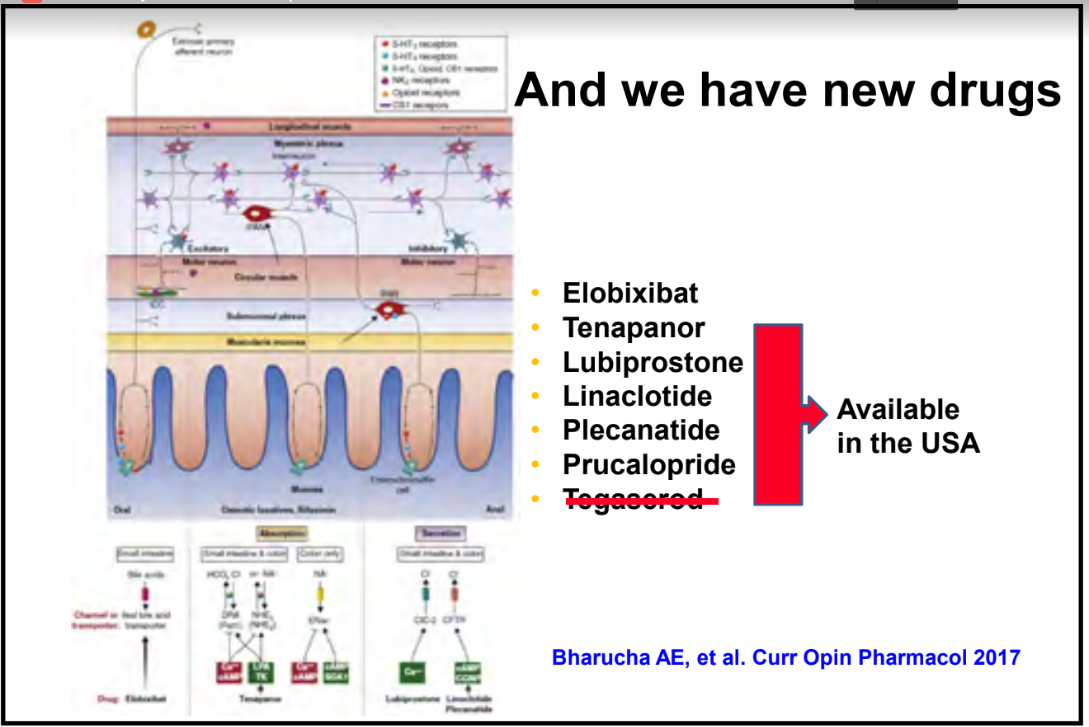

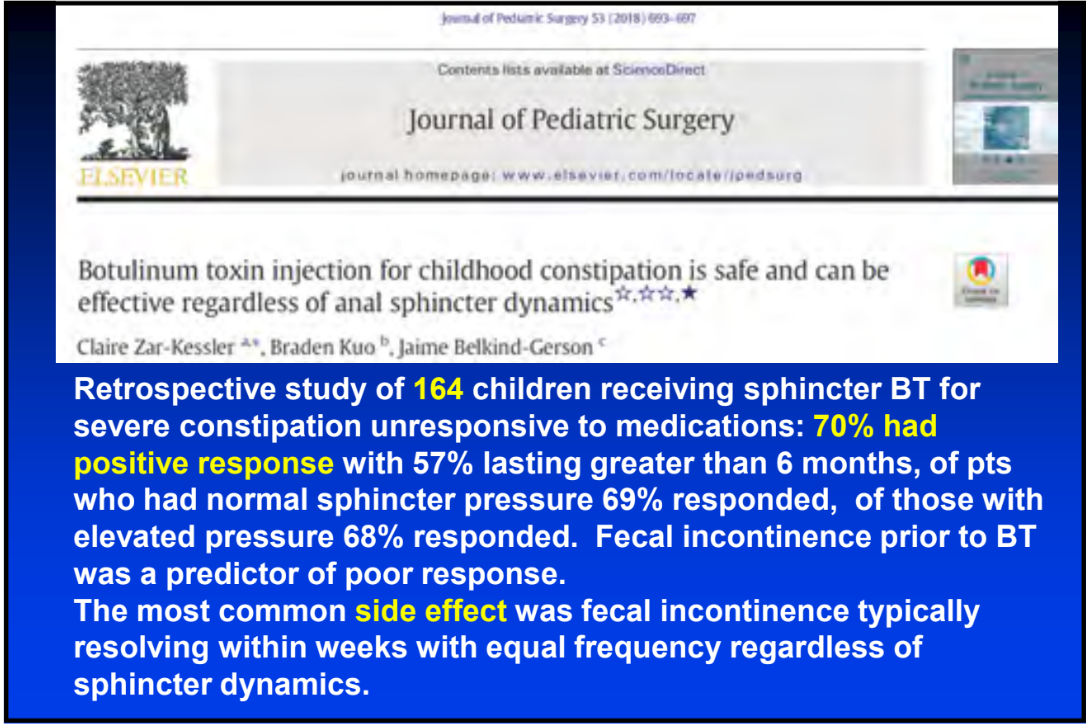

Disclaimer: This blog, gutsandgrowth, assumes no responsibility for any use or operation of any method, product, instruction, concept or idea contained in the material herein or for any injury or damage to persons or property (whether products liability, negligence or otherwise) resulting from such use or operation. These blog posts are for educational purposes only. Specific dosing of medications (along with potential adverse effects) should be confirmed by prescribing physician. Because of rapid advances in the medical sciences, the gutsandgrowth blog cautions that independent verification should be made of diagnosis and drug dosages. The reader is solely responsible for the conduct of any suggested test or procedure. This content is not a substitute for medical advice, diagnosis or treatment provided by a qualified healthcare provider. Always seek the advice of your physician or other qualified health provider with any questions you may have regarding a condition.

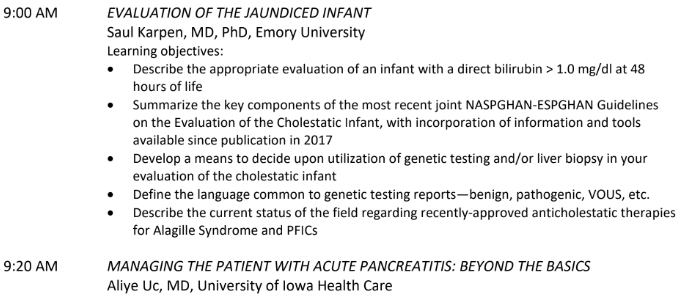

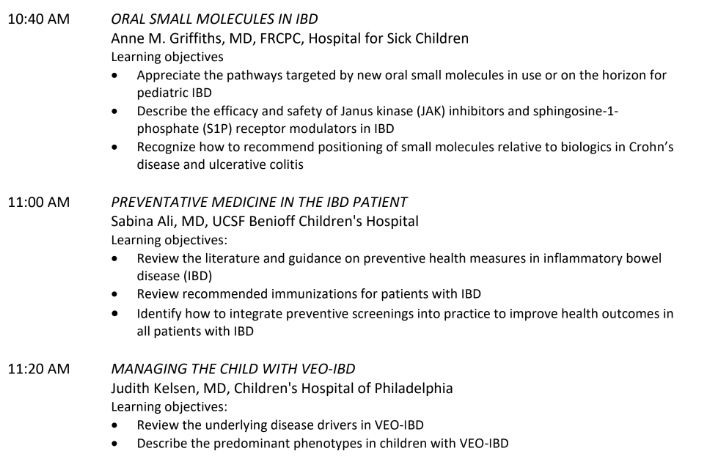


Disclaimer: This blog, gutsandgrowth, assumes no responsibility for any use or operation of any method, product, instruction, concept or idea contained in the material herein or for any injury or damage to persons or property (whether products liability, negligence or otherwise) resulting from such use or operation. These blog posts are for educational purposes only. Specific dosing of medications (along with potential adverse effects) should be confirmed by prescribing physician. Because of rapid advances in the medical sciences, the gutsandgrowth blog cautions that independent verification should be made of diagnosis and drug dosages. The reader is solely responsible for the conduct of any suggested test or procedure. This content is not a substitute for medical advice, diagnosis or treatment provided by a qualified healthcare provider. Always seek the advice of your physician or other qualified health provider with any questions you may have regarding a condition.
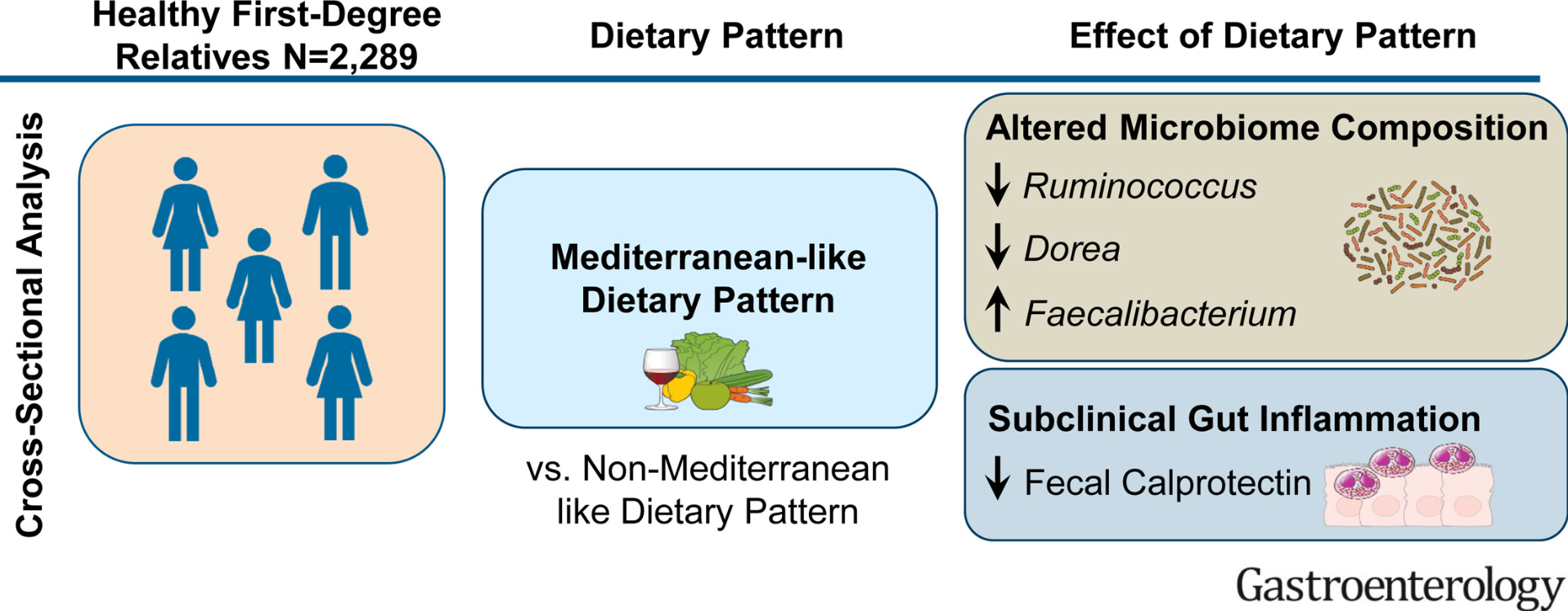
W Turpin et al. Gastroenterol 2022; 163: 685-698. Open access! Mediterranean-Like Dietary Pattern Associations With Gut Microbiome Composition and Subclinical Gastrointestinal Inflammation
As part of the Genetic, Environmental, Microbial (GEM) Project, the researchers recruited a cohort of 2289 healthy first-degree relatives of patients with Crohn’s disease. Diet was assessed with a food frequency questionnaire. Key finding: A Mediterranean-like dietary pattern is associated with microbiome (increased Ruminococcus, as well as taxa such as Faecalibacterium) and lower intestinal inflammation.
L Zhao et al. Gastroenterol 2022; 163: 699-711. Open Access! Uncovering 1058 Novel Human Enteric DNA Viruses Through Deep Long-Read Third-Generation Sequencing and Their Clinical Impact This study discovered 1058 novel human gut viruses, and these findings can contribute to current viral reference genome, future virome investigation, and colorectal cancer diagnosis. From the editorial: “Previous literature also identified virome signatures associated with certain diseases, such as colorectal cancer14 or inflammatory bowel disease,15 such that a better understanding of the viral dark matter may be used to develop biomarkers to identify individuals at risk or even to influence gut physiology.”
Related blog posts:
NBC News: ‘Gaming’ of U.S. patent system is keeping drug prices sky high, report says
Excerpts:
Drugmakers are able to extend the patents on their drugs, keeping generics off the market, through a process known as “evergreening”… The excessive use of the patent system — by drugmakers Bristol-Myers Squibb, AbbVie, Regeneron and Bayer — keeps the prices of the medications at exorbitant levels, often at the expense of American consumers, according to the report from the Initiative for Medicines, Access & Knowledge, or I-MAK, a nonprofit organization that advocates drug patent reform.
“They get the power, they get the monopoly and they start hiking their prices,” said Priti Krishtel, a health justice lawyer and a co-founder of I-MAK…
The U.S. patent system is meant to reward innovation by permitting drug companies to sell new medications on the market and barring other manufacturers from making generic versions for a set period of time — usually 20 years. Once the patent expires, generics are allowed on the market, often at a lower list price than the brand-name drug.
But drugmakers often extend their patents by making small tweaks to the drugs, sustaining their monopolies for several years...
Humira, a rheumatoid arthritis drug from the Chicago-based biotech firm AbbVie, generated $17.3 billion in annual sales in 2021. There are 311 patent applications for the drug, 94% of which were sought after FDA approval. AbbVie’s original patent on the drug expired in 2016, but it won’t face competition until 2023...
The practice of extending patents doesn’t always go unchallenged. In some cases, generic manufacturers sue the drugmakers to get their drugs on the market, Lemley said. However, he added, those lawsuits often end in settlements between the companies.
My take: As bioethicist Arthur Caplan states, this is an unethical practice and “we need to be rethinking the rules of patenting.” There is no good reason why patients in the U.S. need to be paying 5 times as much for adalimumab as patients in Europe.
Related blog posts:

A Hassan, SJ Barber. Cogn Res Princ Implic. 2021 Dec; 6: 38. Open Access! The effects of repetition frequency on the illusory truth effect. doi: 10.1186/s41235-021-00301-5
“Repeated information is often perceived as more truthful than new information. This finding is known as the illusory truth effect, and it is typically thought to occur because repetition increases processing fluency…In Experiment 1, we showed participants trivia statements up to 9 times and in Experiment 2 statements were shown up to 27 times…In both experiments, we found that perceived truthfulness increased as the number of repetitions increased. However, these truth rating increases were logarithmic in shape. The largest increase in perceived truth came from encountering a statement for the second time, and beyond this were incrementally smaller increases in perceived truth for each additional repetition.”
My take (from authors): “Although believing repeated information to be true is evolutionarily efficient in a context where most of the information encountered is correct, it can be detrimental to believe information that is incorrect.”
Related blog posts:

JB Wechsler et al. Clin Gastroenterol Hepatol 2022; 20: 1971-1976. Defining the Patchy Landscape of Esophageal Eosinophilia in Children With Eosinophilic Esophagitis
Design: The authors prospectively obtained 3-site esophageal biopsies based on rigorous endoscopic measurements of the proximal, mid, and distal esophagus and gastroesophageal junction. Biopsies were reviewed by a pathologist, and those with at least 15 eosinophils per high-power field were considered active EoE.
Key findings:
Based on this study, the authors recommend “3-site biopsies for optimal disease assessment of active EoE in children.”
My take: I think recommendations to add more and more biopsies is premature until we have evidence that identifying “focal” inflammation in the mid-esophagus has some clinical usefulness/improves outcomes. To me, a 2% increase in sensitivity over 2-site biopsies is negligible & in all likelihood, a 4-site biopsy protocol would increase the yield even further.
Related blog posts:

 gutsandgrowth