“The C.D.C. study covered the period from mid-December to late February, during which about 400 children were hospitalized with Covid at the select hospitals participating in the study.”
“Among the children who tested positive for the virus before or during their hospitalization, three-quarters of them were admitted primarily for Covid, rather than other illnesses, the C.D.C. said.”
Case: A 4 yo developed abdominal distention and crepitus after gastrostomy tube (GT) placement. An AXR (see below) showed subcutaneous emphysema (especially in left abdomen). There was no pneumoperitoneum or extravasation of contrast with fluoroscopy. Due to persistent distention, a CT scan was obtained three days after tube placement. The CT scan confirmed appropriate intragastric location of GT and nonspecific dilatation of bowel loops without pneumoperitoneum; the dilated bowel was attributed to an ileus and improved over the next few days. Thanks to colleague for sharing information.
My take: Isolated subcutaneous emphysema is rarely identified after GT placement and requires careful evaluation to assure appropriate insertion site (1,2).
In this retrospective study, among those who developed skin reactions to anti-TNF agents, 71 (64%) continued anti-TNF and 40 (36%) switched to ustekinumab (UST). Key findings:
Switching to UST had a higher rate and odds of resolution of skin findings (29/40 (73%) vs. 24/71 (34%); p <0.0001) and combined remission (21 (52%) vs. 22 (31%); p=0.03) vs. continuing anti-TNF at 6 months
Patients (n=181) on established maintenance IV infliximab who switched to SC CT-P13 were included in this retrospective multi-centre cohort study. Key findings:
Treatment persistence rate was high (N=167, 92.3%) and only 14 patients (7.7%) stopped treatment during the follow-up period. There were low rates of immunogenicity with no change in clinical disease activity indices or biomarkers
This NIDDK-funded Hepatitis B Research Network (HBRN) was established in 2009 and enrolled 362 patients. 97% of participants were born in countries where HBV is endemic or in North America to mothers born from these countries.
Key points:
Due to revised criteria for ALT values, most pediatric patients have elevated ALT and do not meet the definition of immune-tolerant
Spontaneous flares (ALT >400 in males and >350 in females) in untreated children…did not lead to hepatic decompensation
Hepatocellular carcinoma was not identified in this cohort, though HBRN centers reported historical experiences. Only one patient developed cirrhosis over 4 years of followup.
Clinical Recommendations from Authors:
Screen for HBV in children with unexplained serum aminotransferases regardless of immunization history
Screen for HBV in children with normal aminotransferases if they or their parents are from an area where HBV is endemic or other risk factors
In those with HBV, monitor aminotransferases and HBV levels every 6 months
Obtain genotype in children with HBV
Consider treatment if ALT >2 x ULN over 3-6 mo. Treatment should follow AASLD guideline
Recommend AGAINST treatment at the start of a flare
Recommend counseling to promote healthy weight and avoidance of at-risk alcohol use
Disclaimer: This blog, gutsandgrowth, assumes no responsibility for any use or operation of any method, product, instruction, concept or idea contained in the material herein or for any injury or damage to persons or property (whether products liability, negligence or otherwise) resulting from such use or operation. These blog posts are for educational purposes only. Specific dosing of medications (along with potential adverse effects) should be confirmed by prescribing physician. Because of rapid advances in the medical sciences, the gutsandgrowth blog cautions that independent verification should be made of diagnosis and drug dosages. The reader is solely responsible for the conduct of any suggested test or procedure. This content is not a substitute for medical advice, diagnosis or treatment provided by a qualified healthcare provider. Always seek the advice of your physician or other qualified health provider with any questions you may have regarding a condition.
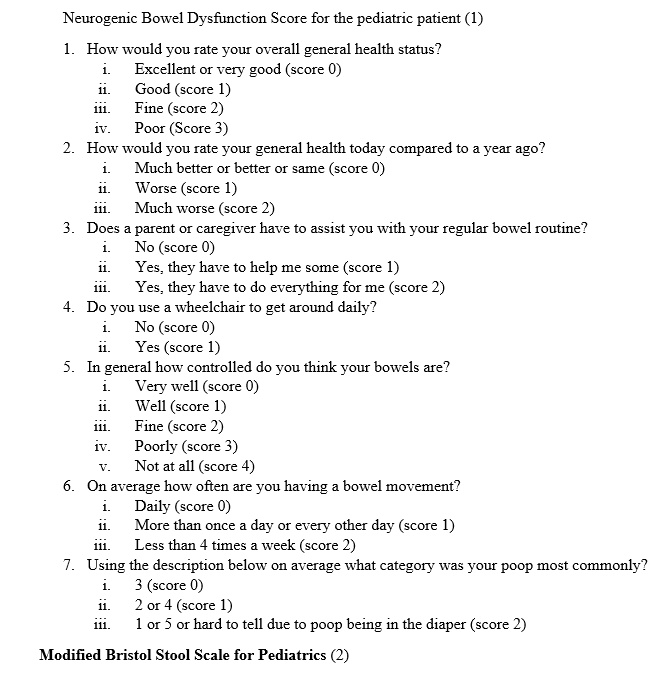
This prospective study (n=80) expands on previous observations regarding the use of a transanal irrigation device for neurogenic bowel management.
Key points:
The neurogenic bowel dysfunction (NBD) score improved at both time points (<6 months, >6 months) by 14 and 13 points respectively. 94% and 98% had improved NBD score at time 1 and time 2 respectively
Patient satisfaction was high, though 8 patients discontinued device early on due to either discomfort or poor results
NBD score can used to monitor treatment effectiveness
This article describes a retrospective review of seven patients with a dual diagnosis of inflammatory bowel disease (IBD) and chronic recurrent multifocal osteomyelitis (CRMO). In their cohort 4 of 6 were receiving anti-TNF therapy at the time of CRMO diagnosis. Misleading statements from this article:
The triad of IBD, CRMO and psoriasis has not been reported previously to their knowledge
“It seems unlikely that anti-TNF-alpha therapy would promote its [CRMO] development”
In JPGN Reports (not available on pubmed), Cordesse et al (JPGN Reports; November 2020 – Volume 1 – Issue 2 – p e007) identified the association of IBD, CRMO and psoriasis; in addition, they identified a paradoxical reaction to anti-TNF-alpha therapy; in this case series of three patients, anti-TNF-alpha therapy triggered CRMO and stopping anti-TNF-alpha therapy led to resolution of CRMO in two of the cases.
In a response to a letter to the editor (Hochman JA. JPGN 2022; DOI: 10.1097/MPG.0000000000003407. Faulty Information Regarding CRMO and IBD), Dushnicky et al (DOI: 10.1097/MPG.0000000000003433) note that JPGN Reports is not available on Pubmed; however, the articles that have described this association are near the top of a google search if one looks for “IBD, CRMO and Psoriasis.” Interestingly, in their response to the letter to the editor, the authors did not amend their claim that anti-TNF therapy is unlikely to promote CRMO despite being furnished with information showing that it can. In my view, the situation with CRMO is similar to psoriasis which can be treated with anti-TNF therapy and can paradoxically be caused by anti-TNF agents as well.
My take:
CRMO is important to recognize due to its association with IBD and to realize that antibiotics are not an effective treatment.
Anti-TNF-alpha agents can cause CRMO in some patients.
In 2022, a web browser search (eg Google), in addition to Pubmed, is probably worthwhile when claiming that this is the first case of xyz ‘to our knowledge.’
This retrospective cohort study followed 17.6 million adult residents of California for up to 12 years.
Key findings:
Overall rates of homicide were more than twice as high among cohabitants of handgun owners than among cohabitants of nonowners (adjusted hazard ratio, 2.33).
These elevated rates were driven largely by higher rates of homicide by firearm (adjusted hazard ratio, 2.83).
Among homicides occurring at home, cohabitants of gun owners had sevenfold higher rates of being fatally shot by a spouse or intimate partner (adjusted hazard ratio, 7.16); 84% of these victims were female.
My take: Gun ownership increases the likelihood of firearm-related deaths.
No Exaggeration: Too Many Children Are Dying in the U.S. “The sad fact is that a child or adolescent in the United States is 57% more likely to die by the age of 19 years than those in other wealthy nations.” This is due mainly to more deaths from MVAs and from gun violence.
“There is no level of drinking that does not confer heart disease risk. The risk is small if people have an average of seven drinks a week when compared with none. But it increases quickly as the level of alcohol consumption rises”
“The study, which may help resolve medical disputes over the effects of alcohol on the heart, involved sophisticated analyses of the genes and medical data of nearly 400,000 people who participate in the U.K. Biobank”
“Some researchers have reported that drinking modestly protects the heart because moderate drinkers as a group have less heart disease than those who drink heavily or those who abstain. Dr. Aragam and his colleagues also saw that effect. But the reason, they report, is not that alcohol protects the heart. It is that light to moderate drinkers — those who consume up to 14 drinks a week — tend to have other characteristics that decrease their risk, like smoking less, exercising more and weighing less than those who drink more heavily and those who do not drink.“
“Many earlier studies of alcohol consumption and heart health were observational, meaning the subjects were followed over time to see if the amount of drinking was linked to heart health. Such studies are only able to find correlation but not causation, researchers say. But the Biobank study’s use of Mendelian randomization is more suggestive of causality, and so its results might carry more weight.”
My take: Light alcohol consumption is NOT beneficial for your heart.
In this pilot study, 12 individuals completed a web-based curriculum for VCE proficiency.
Key finding:
Participants showed significant improvement in knowledge (P = 0.041) and photo recognition posttests (P = 0.015). All participants who completed the curriculum found it helpful and reported that they would recommend it to their colleagues
The discussion notes that “Studies have demonstrated that competence with VCE develops in an endoscopist after reading 10–15 VCE studies (6,10). There are some newer guidelines that suggest that this number may be higher…[and] it requires continuous practice. Pediatric gastroenterologists may feel their skills are not adequate when VCEs are not performed on a consistent basis at their institution”
Previous studies have shown an association between the early use of antibiotics and an increased risk of inflammatory bowel disease. A recent study examined all the children born in Denmark from 1995-2009 and followed them up to 2013 via a prospectively maintained database.
During a median 9.5 years (9.3 million total person-years), CD was diagnosed in 208 of 979,039 children.
Key findings:
Antibiotic use in the first year of life was associated with a higher risk of CD (adjusted hazard ratio, 1.4)…with the highest risk with ≥6 courses of antibiotics (adjusted hazard ratio, 4.1)
The cumulative risk of CD at the 11th birthday for children exposed to antibiotics in their first year of life was 0.16% compared to 0.11% for children unexposed to antibiotics in their first year of life.
My take: This study indicates that antibiotics (and/or serious infections) are associated with an increased the risk of pediatric Crohn’s disease but the absolute risk is very low. We still have a lot to learn about how environmental exposures, including diet, infections, antibiotics, and pollution, contribute to the increasing prevalence of inflammatory bowel disease.








 gutsandgrowth