New Paradigm in Treating Varices and Cirrhosis Management (in Adults)

2021 Halloween Pics:


G Garcia-Tsao, JG Abraldes. Gastroenterol 2021; 161: 770-773. Open Access: Nonselective Beta-Blockers in Compensated Cirrhosis: Preventing Variceal Hemorrhage or Preventing Decompensation?

Key points:

  • Carvedilol (not approved in children) is a NSBB that has additional α1 adrenergic blocking activity that enhances the portal pressure–reducing effect, compared to other NSBBs (eg. nadolol, propranolol).
  • New paradigm focuses on “the most relevant end point in compensated cirrhosis…development of decompensation”  (ascites, variceal hemorrhage, and/or hepatic encephalopathy).
  • In the PREDESCI study with 201 patients with compensated cirrhosis and CSPH, with no or small varices, to NSBBs or placebo…”clinical decompensation, was significantly lower in the NSBB arm than in the placebo arm (from 27% to 17% over a median follow-up of 37 months: HR 0.51, 95% CI 0.26–0.97)”
  • This model favors carvedilol over endoscopic variceal ligation; the “only RCT of carvedilol vs EVL in the prevention of first variceal hemorrhage showed a survival benefit of carvedilol over EVL.” Carvediol has been associated with improved survival in patients with cirrhosis (McDowell H.R. et al. Carvedilol is associated with improved survival in patients with cirrhosis: a long-term follow-up study. Aliment Pharmacol Ther. 2021; 5: 531-539)
  • This model “consists of identifying those with CSPH (by means of noninvasive methods) and treating them with carvedilol, with the goal of preventing any decompensating event (not only variceal hemorrhage).”
  • Screening endoscopy would still be recommended in newly-diagnosed decompensated cirrhosis and those intolerant to NSBBs.

My take: This new paradigm is one approach for portal hypertension in adults. More studies are needed in the pediatric age group to help determine whether medical therapy can obviate the need for EVL in most children with cirrhosis.
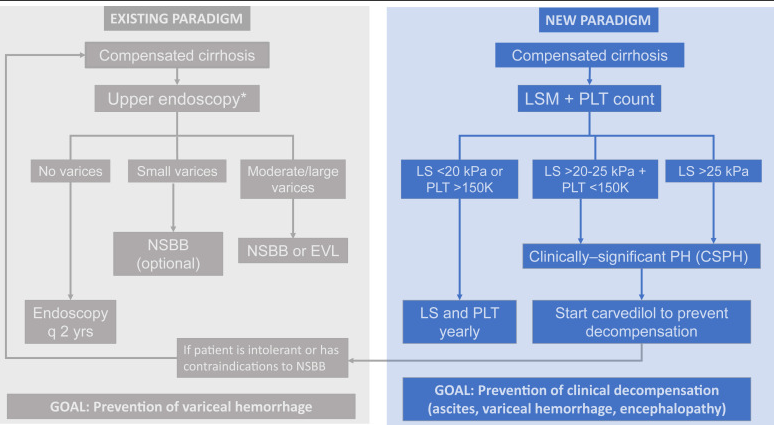
Whereas the existing paradigm focuses on the use of NSBBs for the prevention of variceal bleeding, in the new paradigm the presence of CSPH [clinically significant portal hypertension ](determined noninvasively) establishes the indication for NSBBs with the goal of preventing cirrhosis decompensation. CSPH, clinically significant portal hypertension; EVL, endoscopic variceal ligation; NSBB, nonselective beta-blocker; LS, liver stiffness; PLT, platelet count. ∗Patients with LS <20 kPa and PLT >150,000/mm3 can circumvent endoscopy because the risk of having high-risk varices is minimal

Related blog posts:

Disclaimer: This blog, gutsandgrowth, assumes no responsibility for any use or operation of any method, product, instruction, concept or idea contained in the material herein or for any injury or damage to persons or property (whether products liability, negligence or otherwise) resulting from such use or operation. These blog posts are for educational purposes only. Specific dosing of medications (along with potential adverse effects) should be confirmed by prescribing physician.  Because of rapid advances in the medical sciences, the gutsandgrowth blog cautions that independent verification should be made of diagnosis and drug dosages. The reader is solely responsible for the conduct of any suggested test or procedure.  This content is not a substitute for medical advice, diagnosis or treatment provided by a qualified healthcare provider. Always seek the advice of your physician or other qualified health provider with any questions you may have regarding a condition.


Expanding Treatment Population in Chronic Hepatitis B?

W-J Jeng. AS Lok. Clin Gastroenterol Hepatol 2021; 19: 2006-2014. Open Access: Should Treatment Indications for Chronic Hepatitis B Be Expanded?

In this review, the authors propose expanding treatment indications for chronic hepatitis B virus (HBV).

The authors review current guidelines (Table 2 lists the major society recommendations). For example, the AASLD recommends HBV treatment for the following:

  • Antiviral treatment in all patients with cirrhosis and detectable viremia, independent of alanine aminotransferase (ALT) or HBV DNA levels
  • For patients without cirrhosis, all guidelines recommend treatment in patients with immune active disease; treatment is mainly with a NA (nucleos(t)ide analog) until 1 year after confirmed HBeAg seroconversion for patients who were HBeAg-positive and until HBsAg loss for patients who were HBeAg-negative at the start of treatment
  • AASLD cut-offs for distinguishing immune active disease: ALT ≥2× ULN or evidence of significant histologic disease and HBV DNA >20,000 IU/mL for HBeAg (+) and >2000 IU/mL for HBeAg (–)

Why Expand Treatment Indications?

The main reason for advocating treatment of patients in the immune tolerant phase is the mounting evidence that persistently high viremia and persistent presence of HBeAg are associated with increased risk of cirrhosis, HCC, and liver-related mortality…In one study of 438 HBeAg-positive patients, the 15-year cumulative risk of cirrhosis and HCC increased from 3.7% and 2.1% in patients who seroconverted before age 30 to 12.9% and 3.2% in those who seroconverted between ages 30 and 40 and 42.9% and 7.7% in those who did so after age 40

Why Not Treat All Patients with Chronic Hepatitis B?

“An important reason for deferring treatment of patients in the immune tolerant phase is that spontaneous HBeAg and HBsAg clearance with remission of liver disease can occur.” This happens in 80% or more over 10-20 years.

Who Else Should Receive Treatment (Beyond Guidelines)?

“Available data support expanding treatment to immune tolerant patients and patients in the grey zones who have evidence of active/advanced liver disease based on liver biopsy or non-invasive tests and those who remain in the immune tolerant phase after age 40. Evidence supporting treatment expansion to confirmed inactive carriers and other immune tolerant patients is lacking.” “Grey zones” indicate that “the course of chronic HBV infection is characterized by fluctuations in HBV DNA and ALT levels, and many patients will be in the grey zone at some point.”

My take: Given the safety/tolerability of newer HBV treatments, these recommendations make sense. If/when HBV treatments improve further (higher loss of HBsAg or HBV DNA), then even more widespread use of HBV treatments would be worthwhile.

Related blog posts:

Hyde Farm, Marietta GA

Disclaimer: This blog, gutsandgrowth, assumes no responsibility for any use or operation of any method, product, instruction, concept or idea contained in the material herein or for any injury or damage to persons or property (whether products liability, negligence or otherwise) resulting from such use or operation. These blog posts are for educational purposes only. Specific dosing of medications (along with potential adverse effects) should be confirmed by prescribing physician.  Because of rapid advances in the medical sciences, the gutsandgrowth blog cautions that independent verification should be made of diagnosis and drug dosages. The reader is solely responsible for the conduct of any suggested test or procedure.  This content is not a substitute for medical advice, diagnosis or treatment provided by a qualified healthcare provider. Always seek the advice of your physician or other qualified health provider with any questions you may have regarding a condition.

Good News for Vitamin K

T Rooimans et al. Gastroentol 2021; 161: 1056-1059. Open Access PDF: Novel Orally Formulated Mixed Micelles Optimize Vitamin K Absorption Under Bile-Deficient Conditions

This study, using a rat animal model, demonstrated how gastro-resistant mixed micelles (MMs) could be used to overcome the limitations of current prophylactic vitamin K formulations which are associated with failures in newborns with unrecognized cholestatic liver diseases (1:2,500 live births).

Key findings:

  • Under cholestatic conditions, gastro-resistant formulations greatly improved vitamin K absorption.
  • Pathophysiology: “Our data provide an explanation why: unstabilized MMs will aggregate during gastric passage, once aggregated vitamin K will not be sufficiently resolubilized upon a subsequent pH increase”

My take: It is likely that these gastro-resistant MMs would be effective in pediatric patients. If proven in clinical trials, this would reduce bleeding events in infants and lower bleeding risks in those with chronic liver disease while obviating the need for parenteral Vitamin K.

Related blog posts: 

Hyde Farm, Marietta GA
From Eric Topol’s Twitter Feed

Likelihood of Gastrostomy Tube in Infants with Congenital Diaphragmatic Hernia

M Schwab et al. JPGN 2021: 73: 555-559. Factors and Growth Trends Associated With the Need for Gastrostomy Tube in Neonates With Congenital Diaphragmatic Hernia

My take: The need for a gastrostomy for nutritional support is associated with more severe CDH (~1/3rd of patients). Over a third of patients who received a GT, no longer needed a GT at a median of 26 months.

Related blog posts:

What’s More Important for Health: Exercise or Weight loss?

GA Gaesser, SS Angadi. iScience 2021; https://doi.org/10.1016/j.isci.2021.102995. Open access: Obesity treatment: Weight loss versus increasing fitness and physical activity for reducing health risks

Key points from this review of more than 200 relevant meta-analyses and individual studies:

  • “A weight-neutral approach to treating obesity-related health conditions may be as, or more, effective than a weight-loss-centered approach, and could avoid pitfalls associated with repeated weight loss failure… Epidemiological studies show that CRF (cardiorespiratory fitness) and PA (physical activity) significantly attenuate, and sometimes eliminate, the increased mortality risk associated with obesity. More importantly, increasing PA or CRF is consistently associated with greater reduction in risk of all-cause and CVD mortality than intentional weight loss.”
  • “The increased prevalence of weight loss attempts in the United States has coincided with the increased prevalence of obesity. Thus, a weight-centric approach to obesity treatment and prevention has been largely ineffective. It is unlikely that continued focus on weight loss as the primary metric for success will reverse the trends in obesity prevalence or result in sustainable weight loss. In fact, chronic weight cycling is the norm for millions of adults and is likely to remain so for as long as weight loss persists as the cornerstone of obesity treatment. Weight cycling is associated with health risks that are very similar to those associated with obesity, including higher all-cause mortality risk, and may contribute to weight gain.”

NY Times (9/29/21): Why Exercise Is More Important Than Weight Loss for a Longer Life “People typically lower their risks of heart disease and premature death far more by gaining fitness than by dropping weight.”

Related blog posts:

Figure 2 from article: “Joint associations between cardiorespiratory fitness (CRF), body mass index (BMI), and all-cause (top) and cardiovascular disease (CVD) (bottom) mortality. Hazard ratios reflect the pooled data from the meta-analyses of Barry et al. for all-cause mortality (Barry et al., 2014) and cardiovascular disease mortality (Barry et al., 2018). For all-cause mortality, the meta-analysis included 6 cohorts of men only, 2 cohorts of women only, and 2 cohorts of both men (~80%) and women. For CVD mortality,
the meta-analysis included 8 cohorts of men only and 1 cohort of both men (89%) and women”

Gastric Polyposis in 16 Year-Old

AG Roberts et al. JPGN Reports; 2021. – Volume 2 – Issue 4 – p e123. Open Access: Gastric Adenocarcinoma and Proximal Polyposis of the Stomach in a Hispanic Pediatric Patient With APC Gene Variant c.-191T>G

“Gastric adenocarcinoma and proximal polyposis of the stomach (GAPPS) is a rare gastric polyposis syndrome defined by numerous polyps (>100) in the fundus and body of the stomach with sparing of the lesser curvature and antrum.” Case report in a 16 yo who ultimately underwent a total gastrectomy. The geneticist identified the APC gene mutation with the OncoGeneDx Colorectal Panel by GeneDx. The rationale for the selection of this gene panel was its ability to examine 20 different genes involved in hereditary colorectal cancer and other gastrointestinal cancers. This panel checks APC, POLE, PTENSTK11BMPR1ASMAD4ATMAXIN2CDH1CHEK2EPCAMMLH1MSH2MSH6MUTYHNTHL1PMS2POLD1SCG5/GREM1, and TP53 genes

Related blog posts:

Electrocardiograms -Will We Ever Know If They Are Useful Prior to Tricyclic Antidepressants?

LJ Klein et al. JPGN 2021; 73: 523-528. Electrocardiogram Before Tricyclic Antidepressant Use: Minimal Impact in Pediatric Functional Gastrointestinal Disorders

Key findings from this retrospective review (n=233):

  • TCAs were not started in only 1.7% (4/233) due to ECG results
  • Eight (3.4%) had a cardiology referral; one (0.4%) had a prolonged QTc interval
  • No deaths and no emergency department or hospital visits for arrhythmia or drug overdose occurred

The discussion lists a number of studies generally questioning the utility of pre-medication ECGs while at the same time acknowledging that guidelines in the GI and psychiatric literature support an ECG prior to TCA use. In a large study of sudden cardiac deaths in an adult population, there was no increased risk of death with TCA dosing less than 100 mg/day (Clin Pharmcol Ther 2004; 75: 234-41).

Related blog posts:

My take (borrowed in part from authors): While “the benefit of screening ECGs remains elusive,” it is still needed to try to avoid “extremely rare but catastrophic events.” The authors, however, recommend followup ECGs only on “patients on concomitant QT prolonging medications or increases to higher dosing ranges.”

Hepatology Shorts: Glycosylation Disorders, MMF hepatotoxicity & Wilson’s Disease

R Colantuono et al. JPGN 2021; 73: 444-454. Liver Involvement in Congenital Disorders of Glycosylation: A Systematic Review

Key points:

  • There are over 130 different types of CDG with 41 that have liver involvement; 7 with a hepatopathy and 34 with in the context of multisystem disease.
  • Transferrin isoform analysis (Isoelectric focusing or high-performance liquid chromotography) detects about 50% of the CDGs; hence, genetic panel or exome sequencing is needed for diagnosis in many cases.

M Warren et al. JPGN 2021; 73: 463-470. Mycophenolate Mofetil Hepatotoxicity Associated With Mitochondrial Abnormality in Liver Transplant Recipients and Mice

Key points:

  • 4 cases of MMF hepatoxicity are presented along with EM changes which revealed unequivocal mitochondrial abnormalities similar to those seen in primary and secondary mitochondrial disorders
  • MMF hepatotoxicity was confirmed in mouse study showing that MMF caused various stress changes in the mitochondria
  • Conclusion: Although MMF is safe for the majority of patients, MMF can cause mitochondrial stress, which may trigger more severe mitochondrial abnormalities in a small subset which can be evident with EM.

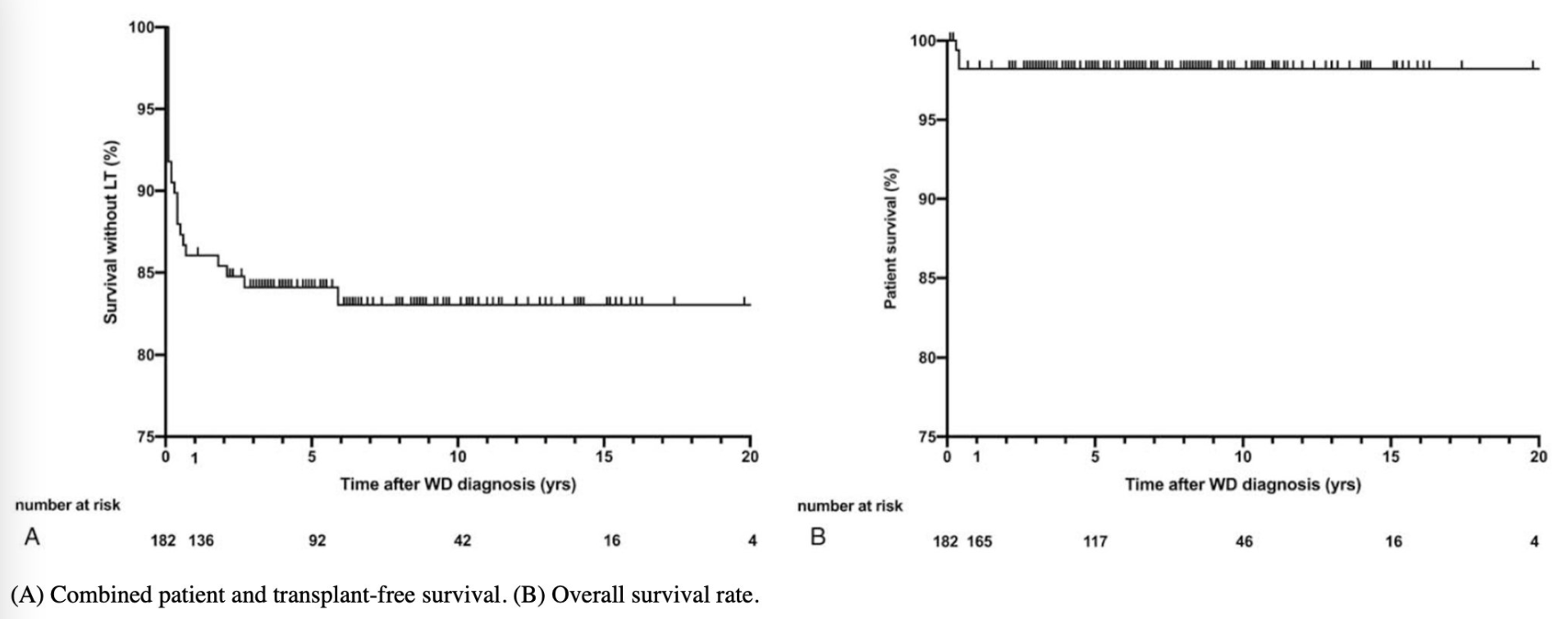
E Couchonnal et al JGPN; 73: e80-e86. Pediatric Wilson’s Disease: Phenotypic, Genetic Characterization and Outcome of 182 Children in France

This study examined the clinical data from 182 pediatric patients. WD was diagnosed at a mean age of 10.7 years. Overall survival at 20 years of followup was 98% and patient and transplant-free survival was 84% at 20 years.

Why Stool Hoarding Might Be A Good Idea

SK Hourigan et al. JPGN 2021; 73: 430-432. Updates and Challenges in Fecal Microbiota Transplantation for Clostridioides difficile Infection in Children

This good update provides a lot of useful information regarding fecal microbiota transplantation (FMT) and a word of caution regarding its future availability.

Key points regarding FMT:

  • Long-term safety remains unknown. FMT may lead to susceptibility to chronic inflammatory, allergic, and autoimmune diseases. “FMT has been associated with durable transmission of pro-carcinogenic bacteria from adult donors to pediatric recipients…although the long-term consequences…are unknown.”
  • Due to transfer of extended spectrum beta-lactamase (ESBL) E coli to 2 immunocompromised adult recipients, further screening of FMT was implemented.
  • Though there is no published evidence of SARS-CoV-2 fecal transmission, the FDA “advised additional precautions and testing in March 2020; “however, there are no molecular tests with stool…which have received emergency use authorization.” Hence, most FMT programs were on hold as of January 2021.
  • After 2021, OpenBiome, whose product was recently available again, is expected to stop distribution of FMT donor product due to increased costs of screening and the “promising biotherapeutics” that are in phase III trials.
  • Biotherapeutic is “loosely defined as drug therapy products where the active substance is extracted from a biological specimen.” The new products are likely to have “increased standardization, safety and practicality.”
  • The problem in pediatrics: none of these biotherapeutic products have started trials in children. This will lead to treatment problems. Even if one wanted to set up donor-directed FMT, it will be difficult to complete all of the screening recommended by the FDA. It could lead to self-administration by families with uncertain risks.

My take: My first reaction to this article: ‘Oh crap!’ It is sad and ironic that I will miss having available commercial stool for FMT.

Related blog posts:

From The Onion: Things That Always Surprise Foreigners About American Health Care

From The Onion
From The Onion

Two Reasons for Kids to Receive COVID Vaccine

  1. To protect children from serious illness, long-term sequelae, hospitalization and death. USA Today recently estimated that less than 700 children have died from COVID-19 -which is still a lot of vaccine-preventable illness (yearly flu deaths in children are closer to about 100 per year). Link (10/8/21) How bad is COVID-19 in kids? See the latest data and charts on kids cases; hospitalizations; deaths
  2. To protect everyone else (from Eric Topol twitter feed):