YouTube SNL New Toilet (1:51, after short ad)


YouTube SNL New Toilet (1:51, after short ad)
The AAP has updated recommendations for Down syndrome: MJ Bull et al. Pediatrics (2022) 149 (5): e2022057010. Open Access: Health Supervision for Children and Adolescents With Down Syndrome
For gastroenterologists, one area of concern is screening for celiac disease in this population due to a mildly increased risk.
Here is what is recommended in children after 1 year of age:
“For children on a diet that contains gluten, review for symptoms potentially related to celiac disease at each health supervision visit because children with Down syndrome are at increased risk. These symptoms include diarrhea or protracted constipation, slow growth, unexplained failure to thrive, anemia, abdominal pain or bloating, or refractory developmental or behavioral problems.97–99 For those with symptoms, obtain a tissue transglutaminase immunoglobulin A (TTG IgA) concentration and simultaneous quantitative IgA. The quantitative IgA is important, because an IgA deficiency renders the TTG IgA unreliable. Refer patients with abnormal laboratory values for specialty assessment. Do not institute a gluten-free diet before confirmation of the diagnosis, because lack of gluten can make interpretation of endoscopic results difficult. There is no evidence that routine screening of asymptomatic individuals would be beneficial. There are neither data nor consensus that would indicate whether patients with persistent symptoms who had normal laboratory values on initial evaluation should have further laboratory tests.”
In addition to celiac disease, the AAP article has a ton of useful resources regarding Down syndrome for clinicians and families.
My take: Celiac disease is difficult to diagnose and is much more common in children with Down syndrome. It is worth noting that other Down syndrome groups, NICE and NASPGHAN have recommended screening for celiac in all children with Down syndrome. (Ref: M Pavlovic et al. World J Clin Cases. 2017 Jul 16; 5(7): 264–269. Open Access: Screening of celiac disease in Down syndrome – Old and new dilemmas)
Related blog posts:

Also, a keen observation from Carlo Di Lorenzo’s twitter feed:
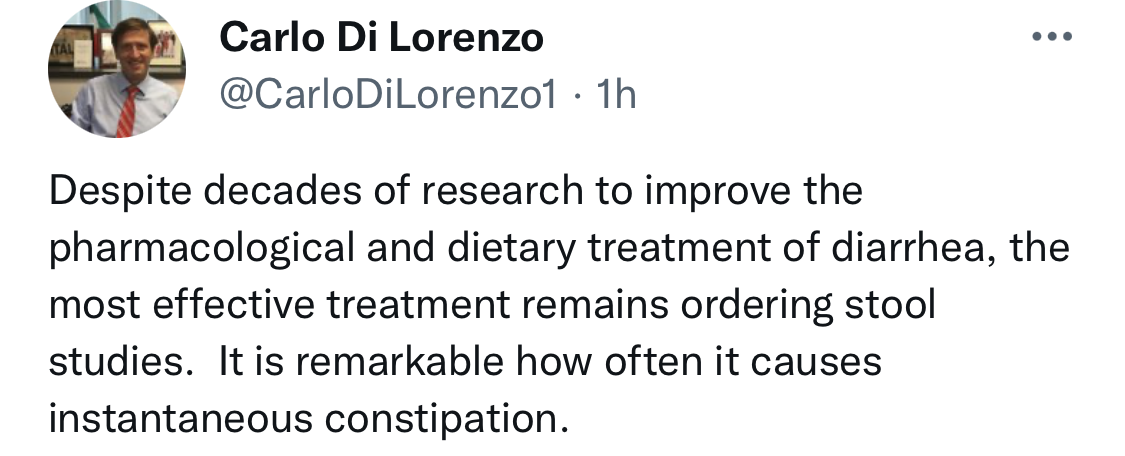
The corollary of this is how miraculous it is when a child who has not stooled for 3 weeks straight has no residual markers after swallowing a Sitz capsule.
VT Chu et al. JAMA Intern Med. Published online April 29, 2022. doi:10.1001/jamainternmed.2022.1827. Open Access: Comparison of Home Antigen Testing With RT-PCR and Viral Culture During the Course of SARS-CoV-2 Infection
Background: This was a prospective cohort study of 225 adults and children comparing reverse transcription–polymerase chain reaction (RT-PCR)–confirmed SARS-CoV-2 infection with antigen testing (QuickVue At-Home OTC COVID-19 Test) and viral culture (January to May 2021)
Key findings:
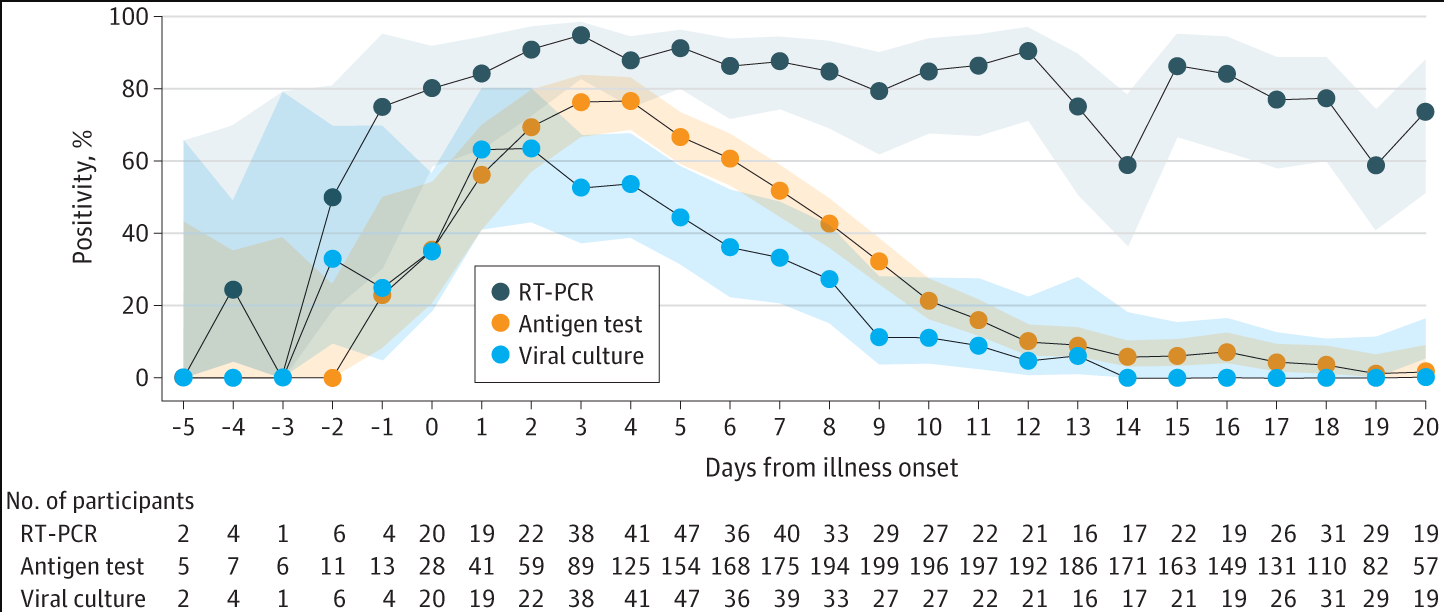
My take: This study shows that a single rapid test is NOT adequate to exclude SARS-CoV-2 infection, especially if they are symptomatic (need to recheck 1-2 days later if negative rapid test). The reliability/accuracy/sensitivity is likely to vary greatly between different rapid tests and may change significantly with different viral variants.
A summary of the discussion and more detailed information on this topic from Gastroenterology and Endoscopy News (4/20/22): Open Access: ASUC: A Medical and Surgical Emergency Requiring Comprehensive, Timely Multidisciplinary Care
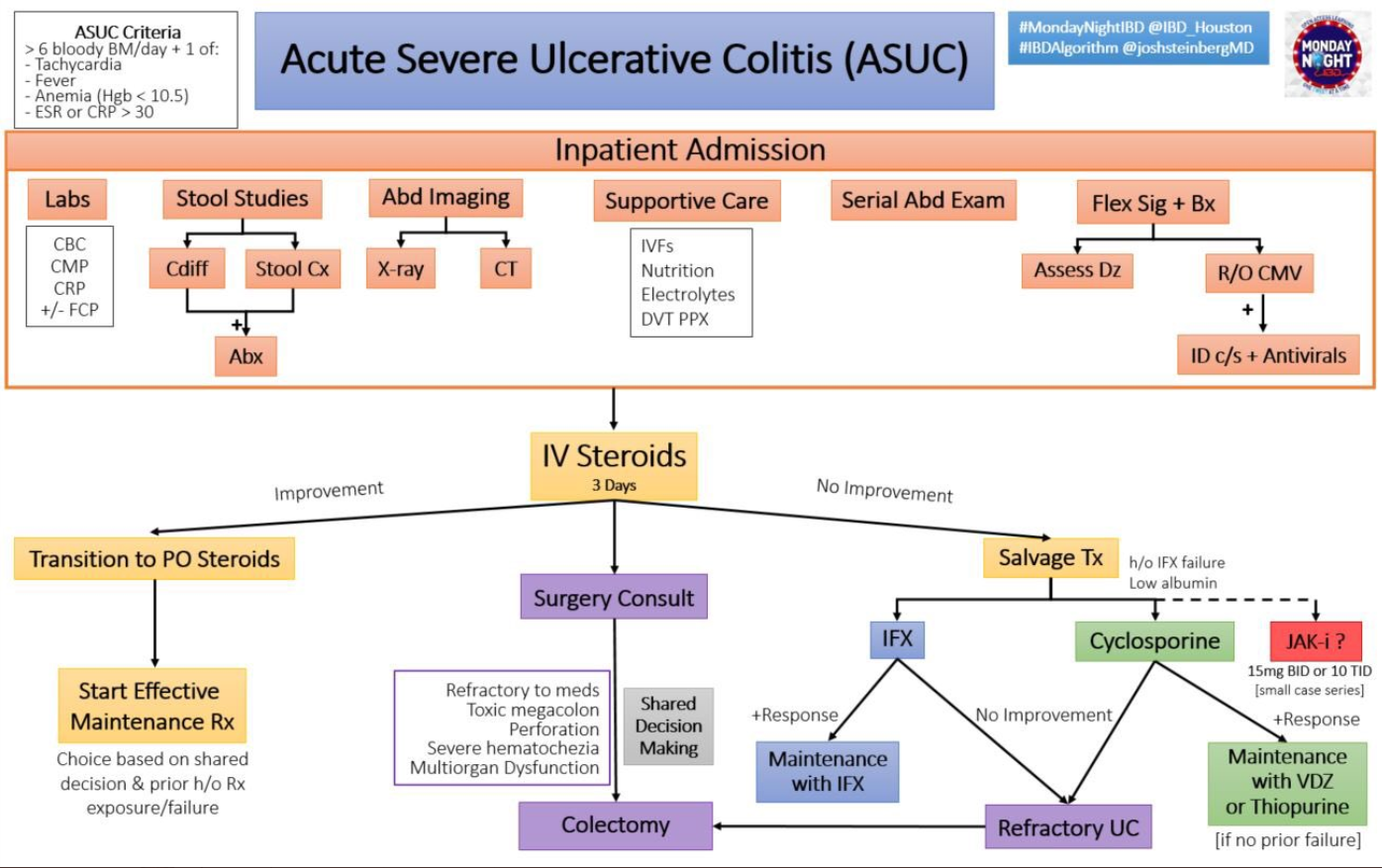
Lab workup per article:
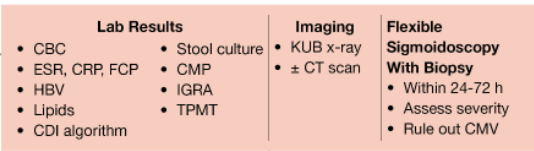
For infliximab salvage therapy, the article recommends re-dosing at 3-5 days after initial dose.
Disclaimer: This blog, gutsandgrowth, assumes no responsibility for any use or operation of any method, product, instruction, concept or idea contained in the material herein or for any injury or damage to persons or property (whether products liability, negligence or otherwise) resulting from such use or operation. These blog posts are for educational purposes only. Specific dosing of medications (along with potential adverse effects) should be confirmed by prescribing physician. Because of rapid advances in the medical sciences, the gutsandgrowth blog cautions that independent verification should be made of diagnosis and drug dosages. The reader is solely responsible for the conduct of any suggested test or procedure. This content is not a substitute for medical advice, diagnosis or treatment provided by a qualified healthcare provider. Always seek the advice of your physician or other qualified health provider with any questions you may have regarding a condition
TD Berger et al. JPGN 2022; 74: 258-266. Clinical Features and Outcomes of Paediatric Patients With Isolated Colonic Crohn Disease
This study focused on 94 with isolated colonic Crohn’s disease (L2). Key findings: Response to enteral nutrition (78.3%) was comparable to those with L1 disease (82.4%) (n=104). Skp lesions and granulomas, identified in 65% and 36% in those with L2 disease was similar to those with L1 disease.
JS Hyams et al. Inflamm Bowel Dis 2022; 28: 151-160. Open Access: Clinical and Host Biological Factors Predict Colectomy Risk in Children Newly Diagnosed With Ulcerative Colitis
Key findings:
WJ Sandborn et al. Clin Gastroenterol Hepatol 2022; 20: 578-590. Open Access: Five-Year Efficacy and Safety of Ustekinumab Treatment in Crohn’s Disease: The IM-UNITI Trial
Key findings:


From Gastroenterology and Endoscopy News (4/25/22): Open Access: For Hospitalized Patients With ASUC, 5-ASA Adds No Value to Steroids
In the first prospective randomized study, presented at the 2022 Crohn’s & Colitis Congress and published in Inflammatory Bowel Dis (S Ben-Horin et al 2022;28 [suppl 1]:S14 CORTICOSTEROIDS AND 5ASA VERSUS CORTICOSTEROIDS ALONE FOR ACUTE SEVERE ULCERATIVE COLITIS: A RANDOMIZED CONTROLLED TRIAL), investigators at 10 centers in six countries randomly assigned 149 patients hospitalized for ASUC to receive daily doses of 300 mg of hydrocortisone (or equivalent methylprednisolone) alone or in combination with 4 g of mesalamine.
Key findings:
My take: 5-ASAs do not appear to be helpful during hospitalization for ASUC but may be beneficial as a maintenance therapy in some patients.

Related blog posts:
Disclaimer: This blog, gutsandgrowth, assumes no responsibility for any use or operation of any method, product, instruction, concept or idea contained in the material herein or for any injury or damage to persons or property (whether products liability, negligence or otherwise) resulting from such use or operation. These blog posts are for educational purposes only. Specific dosing of medications (along with potential adverse effects) should be confirmed by prescribing physician. Because of rapid advances in the medical sciences, the gutsandgrowth blog cautions that independent verification should be made of diagnosis and drug dosages. The reader is solely responsible for the conduct of any suggested test or procedure. This content is not a substitute for medical advice, diagnosis or treatment provided by a qualified healthcare provider. Always seek the advice of your physician or other qualified health provider with any questions you may have regarding a condition
As an homage to May 4th, I wanted to highlight an AAP report that reminded me of Yoda telling Luke Skywalker: “If once you start down the dark path, forever will it dominate your destiny, consume you it will, as it did Obi-Wan’s apprentice.”
DS Diekema. AAP Committee on Bioethics. Pediatrics 2022; 149: e2022056549. Open Access. Health Care Clinicians and Product Promotion by Industry.
Background:
Key points:
“In his book, Influence: The Psychology of Persuasion, Cialdini summarizes this literature and describes 6 basic categories of effective persuasive techniques.57“
Reciprocation Elaborated:
“With regard to the receipt of gifts from the industry, the American Academy of Pediatrics (AAP) has endorsed the AMA guidelines, which do not prohibit gifts outright but offer the following basic principles for managing them:198
As a final incentive, “in late 2020, the Department of Health and Human Services Office of the Inspector General issued a special fraud alert highlighting concerns … in connection with speaker programs.” The Office of the Inspector General warned both companies and health care professionals that such arrangements may, under certain circumstances, violate antikickback statutes.”
My take (from the report): “At a minimum, health care clinicians should be cognizant of the techniques used to attempt to alter their behavior and guard against them.”
Related blog posts:

The blog title is a quote from Avedis Donabedian, a pioneer in the study of health care quality.
L Rosenbaum. NEJM 2022; 386: 1663-1667. Reassessing Quality Assessment — The Flawed System for Fixing a Flawed System
Background -Cost: “The Centers for Medicare and Medicaid Services (CMS) spent about $1.3 billion on measure development and maintenance between 2008 and 2018.3 Hospitals’ QI investments vary with their size, but data from the National Academy of Medicine suggest that health systems each employ 50 to 100 people for $3.5 million to $12 million per year to support measurement efforts…[and] if good care is the goal, the greatest cost of all this activity may be wasted time.”
Key points:
Paradoxical Effects of Quality Improvement Efforts
My take: It is worthwhile to try to improve quality and value in healthcare, but, not surprisingly, quite difficult to achieve. Unintended associated consequences of current efforts include an epidemic of burnout and workforce demoralization.
Related blog posts:

LK Lee et al. N Engl J Med 2022; 386:1485-1487. Open Access: Crossing Lines — A Change in the Leading Cause of Death among U.S. Children
This short commentary explains how the childhood deaths due to motor vehicle accidents have improved. “The crossing of these trend lines demonstrates how a concerted approach to injury prevention can reduce injuries and deaths — and, conversely, how a public health problem can be exacerbated in the absence of such attention.”

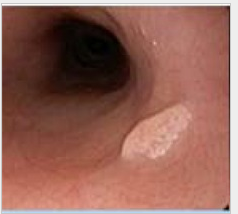
N Malhotra et al JPGN Reports 2022; doi: 10.1097/PG9.0000000000000178. Open Access: Esophageal Squamous Papilloma in the Pediatric Population
Related blog post: Esophageal Squamous Papilloma in Children Are Rare