Colorectal Cancer in Patients Up to Age to 25 Years

In a nationwide retrospective cohort from The Netherlands (pop. ~17 million), a recent study (RM de Voer et al. Clin Gastroenterol Hepatol 2021; 19: 1642-1651. Full Text: Clinical, Pathology, Genetic, and Molecular Features of Colorectal Tumors in Adolescents and Adults 25 Years or Younger) characterizes the clinical and genetic features of colorectal cancer (CRC) in individuals <26 years of age (aka AYA group) from 2000-2017.

Key findings:

  • There were 139 patients in the AYA group identified: 9 (ages 10-15), 26 (ages 16-20), and 104 (ages 21-25)
  • Overall, the AYA group represents 0.1% of all CRC cases. However, AYA cases were much more likely to be at an advanced stage at diagnosis (66% at stage 3 or 4 compared with 46% of adults with CRC in The Netherlands).
  • Negative predictors for outcomes included age <16 yrs, signet ring cell carcinoma histology, and advanced stage at diagnosis.
  • Genetic tumor risk syndromes were identified in 39% and IBD was noted in 8.4% of the AYA group. The genetic risk is underestimated as the authors did not test for all CRC-predisposing genes. Lynch syndrome was the most common genetic disorder (identified in 22 patients) followed by familial adenomatous polyposis (identified in 5 patients)

Related blog posts:

NYT: How to Look Up Prices at Your Hospital, if They Exist

NY Times (8/22/21), Sarah Kliff: How to Look Up Prices at Your Hospital, if They Exist

This article describes how to look up hospital prices which is being mandated (by Jan 2022) with new federal regulations. Currently the process is not easy because it is not consumer-friendly.

An excerpt:

Before you start looking for prices, you’ll want to know what kind of health insurance you have — both the name of your insurer and also details like whether you picked an H.M.O. plan during open enrollment or went with a P.P.O. option

For most hospitals, the data is posted on a page labeled “price transparency.” Many researchers say they begin looking for price files through a search on Google for that phrase and the hospital’s name.

The hospital’s price transparency site will probably have multiple sections and links, and the labeling of the price files isn’t always clear. You’ll want to look for something like a “comprehensive machine-readable file” or “negotiated price list.”

It’s also worth opening up files that are described as containing “standard charges” or a “chargemaster.” 

When you open the files, you see it actually has the hospital’s negotiated rates and cash prices, too.

The government has not created a standard format for hospitals to report their price data, and each hospital seems to take a slightly different approach.

Some health care experts say the large data files will become more useful after third-party data companies clean and organize the information, so that patients can search across multiple hospitals and health care services.

One data transparency company, Turquoise Health, has already created a free price lookup tool

My take: Many hospitals are starting to comply with price transparency requirement; however, it is will be cumbersome and I expect that 3rd parties (like Turquoise Health) will be needed for most people to access this data.

Related blog posts:

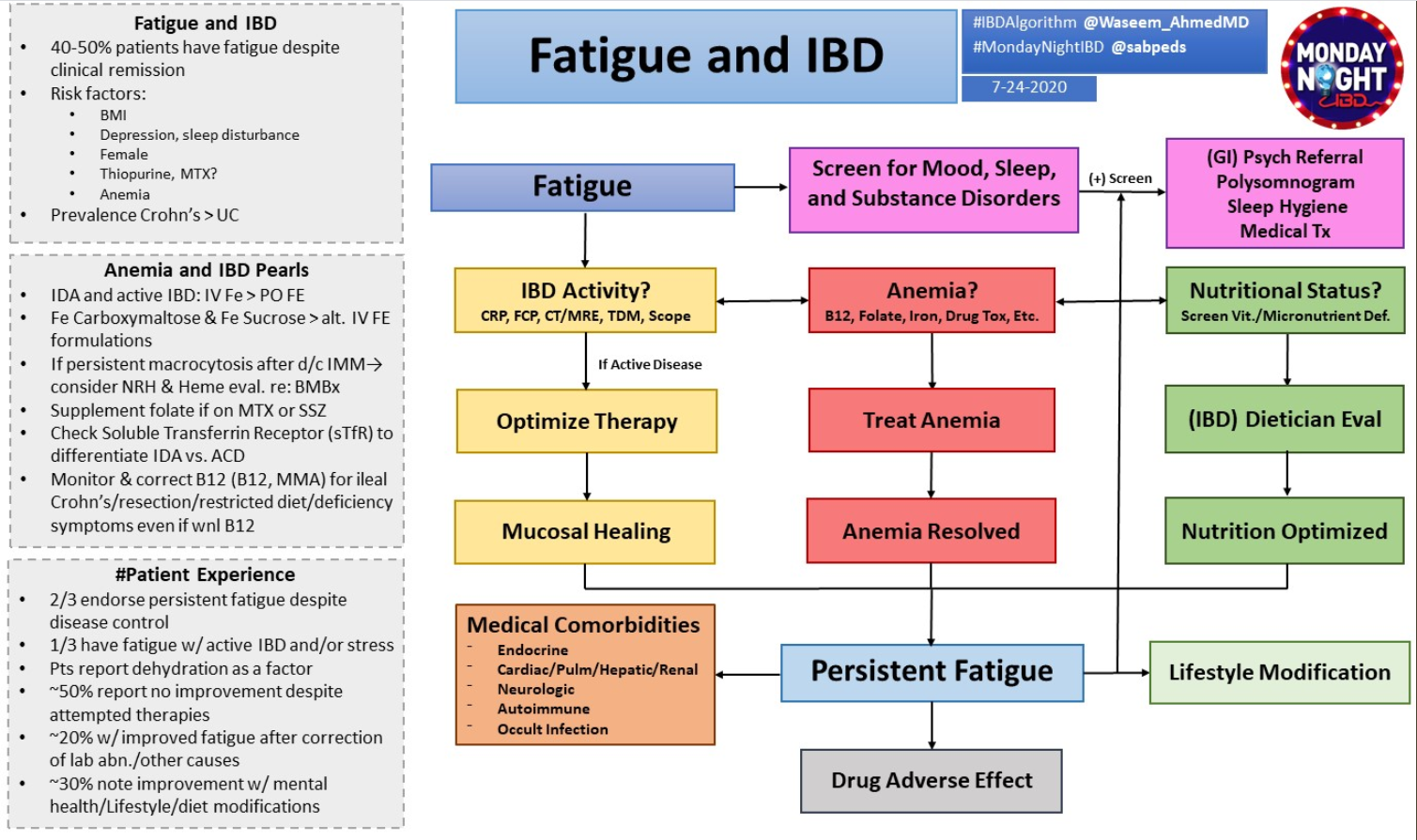
#MondayNightIBD and Fatigue

#MondayNightIBD is an open access learning forum on twitter. It was recently highlighted in Gastroenterology and Endoscopy News: A #MondayNightIBD Conversation: Fatigue, a Frustrating, Multifactorial Manifestation of IBD (requires login)

For the issue of fatigue and IBD, besides active IBD and anemia, the authors recommend considering medication side effects (especially from immunomodulators/corticosteroids and cannabis), mental health, sleep disorders, and nutritional concerns (?role for thiamine supplementation). Even when all these issues are addressed, many times fatigue persists.

Here is the proposed algorithm from July 24, 2020.

#MondayNightIBD has a lot of topics that they have covered including functional medicine, COVID, sexual health, utilizing social medicine, grief and pharmacology.

FDA Slaps Restrictions on JAK Inhibitors Over Serious Safety Risks

Medpage Today (Sept 1, 2021), Full text: FDA Slaps Restrictions on JAK Inhibitors Over Serious Safety Risks

— Use for inflammatory conditions limited to those who fail on TNF blockers

An excerpt:

The FDA has finished its review of a large postmarketing safety study of tofacitinib (Xeljanz, Xeljanz XR), and its conclusions do not bode well for the popular drug and the larger class of JAK inhibitors.

Data from the trial revealed increased risks for serious heart-related events — including myocardial infarction (MI) and stroke — as well as a higher risk for cancer, blood clots, and death. Even the lower 5-mg dose of tofacitinib turned up an increased risk of blood clots and death in the final analysis, the agency noted.

FDA is requiring new and updated warnings for tofacitinib, as well as two other arthritis medicines in the JAK inhibitor class — baricitinib (Olumiant) and upadacitinib (Rinvoq)…

Treatment with the JAK inhibitor was associated with an increased risk for major adverse cardiac events (MACE), including MI, cardiovascular death, and stroke (HR 1.33, 95% CI 0.91-1.94), which missed criteria for non-inferiority, as well as a higher risk for cancer (HR 1.48, 95% CI 1.04-2.09).

Related blog posts -Tofacitinib:

AGA Update: Pre-endoscopy COVID Testing Is Not Needed

Here’s a link: AGA says stay the course, despite the Delta variant

An excerpt:

“AGA suggests against re-instituting routine pre-procedure testing prior to elective endoscopy. The downsides (delays in patient care, burden, inaccurate results) outweigh potential benefits. Infection and transmission of SARS-CoV2 from asymptomatic individuals is rare especially among vaccinated health care workers using personal protective equipment (PPE), even with the emergence of the Delta variant.”

“If PPE is available, AGA recommends using N95 masks” for both upper endoscopy and colonoscopy”

Achalasia Frequent in Patients with Eosinophilic Esophagitis

M Ghisa et al. Clin Gastroenterol Hepatol 2021; 19: 1554-1563. Achalasia and Obstructive Motor Disorders Are Not Uncommon in Patients With Eosinophilic Esophagitis

In this study with 109 adults who were newly diagnosed with eosinophilic esophagitis (EoE), the authors consecutively performed high-resolution manometry (HRM). Key findings:

  • 68 (62%) had normal findings from HRM
  • 8 (7.3%) had achalasia (1 with type 1, 4 with type 2, and 3 with type 3)
  • 9 (8.3%) had major motor disorders of esophagus (& not achalasia) and 24 (15.6%) had minor motor disorders

These findings are important because the diagnosis of EoE could result in a diagnostic delay of concurring achalasia and because the presence of esophageal eosinophilia could perhaps play a role in the pathogenesis of achalasia (or vice versa). The finding of achalasia in 7.3% of this population is exponentially higher than the estimated prevalence of achalasia in the general population (10-16 cases per 100,000).

My take: In patients with EoE, further diagnostic workup is indicated if there are persistent symptoms.

Related blog posts:

Watersound Beach, FL

Hot Study on Hot Dogs & Healthy Eating Habits

Recently, several news reports highlighted a study which among other things claimed that each hot dog one ingests could costs a person 36 minutes off their lifespan.

Here’s a link to the original study: Small targeted dietary changes can yield substantial gains for human health and the environment (most of article is behind a pay wall)

Here’s a link to the USAToday Coverage: A hot dog shaves 36 minutes off life, study says. Nathan’s champion Joey Chestnut isn’t worried.

An excerpt:

Olivier Jolliet, one of the lead researchers on the study, published in the journal Nature Food, told USA TODAY that 5,800 foods were evaluated and then ranked based on their nutritional disease burden as well as their impact on the environment. Hot dogs were considered the most unhealthy...

The study found that substituting 10% of daily caloric intake from beef and processed meats for a mix of fruits, vegetables, nuts, legumes and select seafood could reduce your dietary carbon footprint by one-third and allow people to gain 48 minutes of healthy life per day...

Regardless of moderation, hot dogs are not exactly healthy. The World Health Organization’s International Agency for Cancer Research (IARC) reported ham, hot dogs and other processed meats may contribute to colorectal cancer. Hot dogs also are high in saturated fat and sodium. Just one hot dog can contain over a quarter of your day’s sodium allowance and over 14 grams of fat...while processed meats like hot dogs can inherently be unhealthy, it’s wrong to zero in on just hot dogs as the study does in highlighting the food. 

Coverage from the University of Michigan: Small Changes in Diet Could Help You Live Healthier, More Sustainably

An excerpt:

Researchers classified foods into three color zones: green, yellow and red, based on their combined nutritional and environmental performances, much like a traffic light. The green zone represents foods that are recommended to increase in one’s diet and contains foods that are both nutritionally beneficial and have low environmental impacts. Foods in this zone are predominantly nuts, fruits, field-grown vegetables, legumes, whole grains and some seafood.

Based on their findings, the researchers suggest:

  • Decreasing foods with the most negative health and environmental impacts including high processed meat, beef, shrimp, followed by pork, lamb and greenhouse-grown vegetables.
  • Increasing the most nutritionally beneficial foods, including field-grown fruits and vegetables, legumes, nuts and low-environmental impact seafood.

Related blog posts:

Near Watersound Beach, FL

Bleeding Risks with 22Q Deletion

PO Patel et al. J Pediatr 2021; 235; 220-225. Bleeding Severity and Phenotype in 22q11.2 Deletion Syndrome-A Cross-Sectional Investigation

Due to case series which have reported increased mucocutaneous bleeding and macrothrombocytopenia, the authors prospectively evaluated children (n=29) with 22q11 deletion syndrome (22q11DS) for bleeding disorders. Key findings:

  • In total, 17 of 29 subjects had a positive bleeding score on ISTH-BAT (International Society on Thrombosis and Hemostasis Bleeding Assessment Tool) compared with 1 of 29 control patients (P < .0001).
  • The most frequent bleeding symptoms reported in subjects with 22q11DS were epistaxis (69%) and bruising (52%).
  • Eighteen subjects had been surgically challenged, and 6 were noted to have increased perioperative hemorrhage.

My take: While this bleeding was mainly mucocutaneous, I agree with the authors that children with 22q11DS should be screened with a validated bleeding assessment tool before surgical interventions.

Related blog posts:

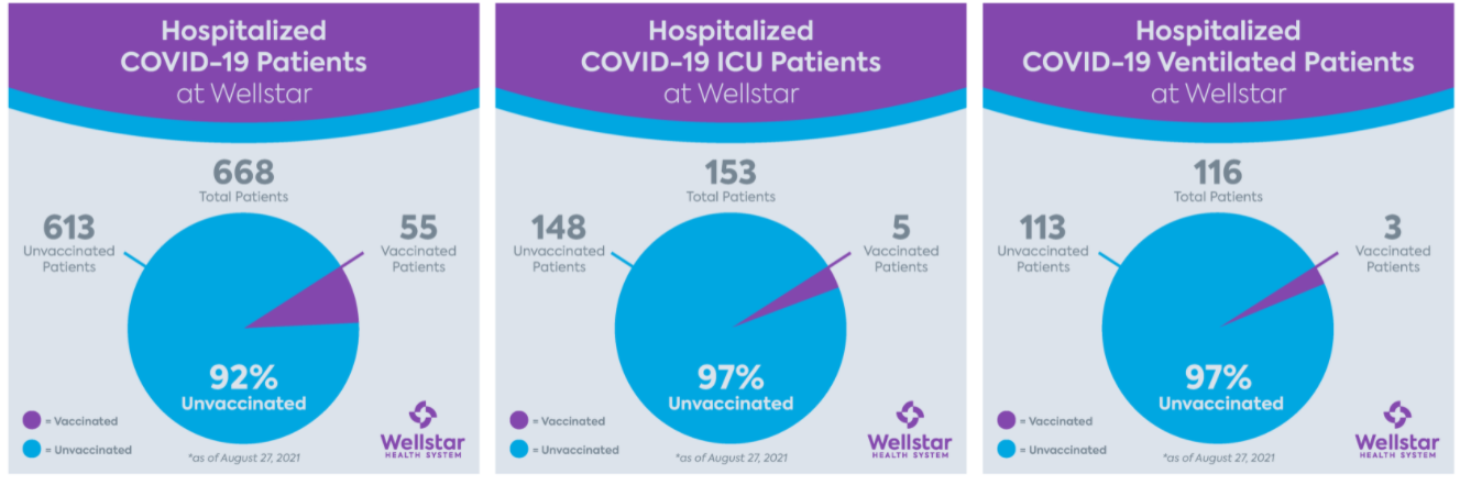
This graph shows how vaccination status is affecting hospitalization/ICU/ventilator needs in Georgia.
Shelburne Farms -Running Cows

The Elephant in the Transplant Room: Personhood

A recent study and related editorial discuss the ethics and utilization of transplantation for children with intellectual disability.

In the study by Wightman et al, the researchers performed a retrospective cohort analysis of children receiving a first kidney, liver, or heart-alone transplant in the United Network for Organ Sharing dataset from 2008 to 2017. Key findings:

  • Definite intellectual disability accounted for 594 of 6747 (9%) first pediatric kidney-alone, 318 of 4566 (7%) first pediatric liver-alone, and 324 of 3722 (9%) first pediatric heart-alone transplant recipients. 
  • Children with intellectual disability account for 7%-9% of pediatric transplant recipients with comparable long-term outcomes to other pediatric recipients.
  • The article had a number of limitations including a lack of a standardized assessment of cognitive development.

In the editorial, the author “opposes the absolute exclusion of patients with intellectual disability and end-stage organ disease from transplantation waitlists provided that the candidates are expected to gain a predefined minimum benefit threshold of life-years and quality-adjusted-life years. Intellectual disability is one of many factors that should be considered in determining transplant eligibility and each candidate should have an individualized interdisciplinary assessment.”

In this commentary, it is noted that “the vast majority (85%) of individuals classified as having intellectual disability are able to live independently with minimum levels of support.” While the author would exclude those in a persistent vegetative state and those who were minimally conscious, otherwise he advocates “the candidate with intellectual disability should be given equal priority for organ transplantation.”

My view: The suitability for transplantation of individuals with intellectual disability centers on the issue of personhood; those who meet the threshold of personhood should be eligible to receive organ transplants without discrimination.  Wikipedia-Personhood: “Defining personhood is a controversial topic in philosophy and law and is closely tied with legal and political concepts of citizenship, equality, and liberty.”

Related blog posts:

Transient Elastography in Pediatric Liver Disease

AM Banc-Husu, LM Bass. JPGN 2021; 73: 141-144. Transient Elastography in Pediatric Liver Disease

This useful review explains the techniques/technologies/limitations of transient elastography and provides pediatric values which correlate with liver fibrosis. Confounding factors, however, may affect elastography measurements, such as obesity, severe inflammation, nonfasting state, and hepatic congestion.

From Table 2 for Elastography (FibroScan technology) Cut-Off Values and Correlation with Outcomes :

  • Biliary Atresia: >15.5 kPa distinguishes METAVIR F4 fibrosis and >12.7 kPa predicts development of varices
  • Any Chronic Liver disease: >10.6 kPa distinguishes METAVIR F2 fibrosis
  • Non-alcoholic fatty liver disease: >9 kPa distinguishes advanced fibrosis
  • Portal hypertension: >9.7 kPa distinguishes presence of portal hypertension
  • Liver transplant graft: >5.6 kPa distinguishes advanced fibrosis

My take: Elastography is most useful when values are at the very low and very high end. Low values provide a lot of reassurance against significant fibrosis and high values indicate a high likelihood of significant liver fibrosis.

Related blog post:

From Shelburne Farms (https://shelburnefarms.org/) Vermont