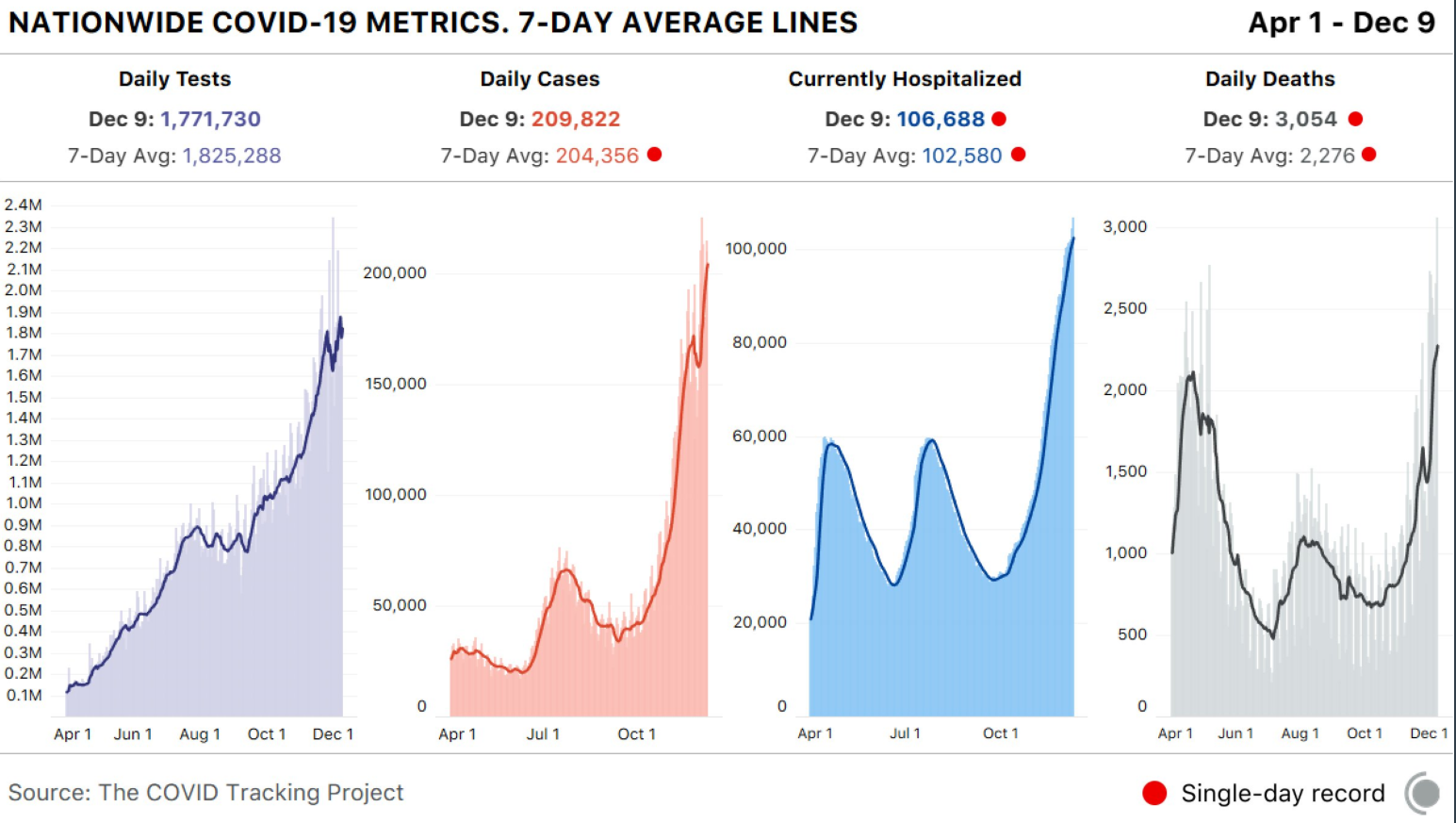
COVID-19 -New Infection Fatality Data & How to Fix the Testing Mess

From Annals of Internal Medicine 2020 https://doi.org/10.7326/M20-5352: J Blackburn et al. Full Text: Infection Fatality Ratios for COVID-19 Among Noninstitutionalized Persons 12 and Older: Results of a Random-Sample Prevalence Study

Background: Mortality rates have been calculated from confirmed cases, which overestimates the infection fatality ratio (IFR). To calculate a true IFR, population prevalence data are needed from large geographic areas where reliable death data also exist.

Results: The Table below suggests IFR of 0.01% for those <40, 0.12% for those 40-59, and 1.71% for those ≥60 in noninstitutionalized persons.  The Table indicates nearly a 3-fold increase risk in Non-White persons. Whites had an IFR of 0.18%; non-Whites had an IFR of 0.59%. Also, I think the Table incorrectly suggests that Females have a higher IFR than Males (but the numbers suggest that they are equivalent).

From The New Yorker, Atul Gawande: We Can Solve the Coronavirus-Test Mess Now—If We Want To

This is a lengthy article which describes some of the mistakes that we’ve made with testing, some of the technical details with various tests, pooled testing, at-home testing, wastewater testing, and how to fix testing (including assurance testing) to gain control of this pandemic.

An excerpt:

We could have the testing capacity we need within weeks. The reason we don’t is not simply that our national leadership is unfit but also that our health-care system is dysfunctional….

In the United States, getting a test is anything but easy…[And] through early August, results routinely took four days or more, making the tests essentially useless. 

Assurance testing” has been required by countries such as IcelandFrance, and Germany for travellers from abroad in order to avoid a mandatory two-week quarantine

Intestinal Barrier Function and Risk of Crohn’s Disease

Several recent studies have examined biomarkers to predict Crohn’s disease.  A recent prospective study (W Turpin et al. Gastroenterol 2020; DOI: https://doi.org/10.1053/j.gastro.2020.08.005Increased Intestinal Permeability is Associated with Later Development of Crohn’s Disease) sought to determine whether increased intestinal permeability, as measured by urinary fractional excretion of lactulose to mannitol ratio (LMR), is associated with future development of CD.

Methods: 1420 asymptomatic first-degree relatives (6–35 years old) of patients with CD (collected from 2008 through 2015) had LMR measured and were then followed for a diagnosis of CD from 2008 to 2017, with a median follow up time of 7.8 years. We analyzed data from 50 participants who developed CD after a median of 2.7 years during the study period, along with 1370 individuals who remained asymptomatic until October 2017

Key findings:

  • An abnormal LMR (> 0.03) was associated with diagnosis of CD during the follow-up period (hazard ratio, 3.03; 95% CI, 1.64–5.63; P=3.97×10 -4).
  • This association remained significant even when the test was performed more than 3 years before the diagnosis of CD (hazard ratio, 1.62, 95% CI, 1.051–2.50; P=.029).

My take:  It remains unclear whether abnormal barrier function primarily precedes or follows CD development.  The authors state that these findings support a model in which altered intestinal barrier function contributes to pathogenesis.

Yellow or Blue for Cautery of Non-pedunculated Polyps

Almost all polyps that pediatric gastroenterologist manage are pedunculated polyps.  Nevertheless, a recent study (H Pohl et al. Gastroenterol 2020; 159: 119-28. Full text: Effects of Blended (Yellow) vs Forced Coagulation (Blue) Currents on Adverse Events, Complete Resection, or Polyp Recurrence After Polypectomy in a Large Randomized Trial) on cautery for non-pedunculated polyps was intriguing.

Methods: This multicenter, randomized, controlled, single-blinded study enrolled patients with a large colorectal polyp across 18 medical centers between April 2013 and October 2017. N=928.  ERBE device.

Key finding:

  • Equivalent results were noted with both blended current (Yellow) or forced coagulation (Blue)
    • “Serious adverse events occurred in 7.2% of patients in the Endocut (blended) group and 7.9% of patients in the forced coagulation group, with no significant differences in the occurrence of types of events.”
    • Proportions of polyps that were completely removed: 96% in the Endocut group vs 95% in the forced coagulation group
    • Proportion of polyps found to have recurred at surveillance colonoscopy: 17% for both groups
    • “Endocut more frequently caused intraprocedural bleeding that required treatment than forced coagulation (17% vs 11%). In contrast, small residual tissue islands were more frequently described in the forced coagulation group than in the Endocut group.”

Discussion: 

  • “We also did not include pedunculated polyps. Because these polyps have a greater risk of immediate bleeding, we may infer from our study that it may be safer to apply a coagulation current with a lower risk of immediate bleeding to these polyps.”

My take: Both of these settings yielded similar results.  For now, with pedunculated polyps, probably best to rely on the coagulation setting (Blue).

Related blog posts:

Disclaimer: This blog, gutsandgrowth, assumes no responsibility for any use or operation of any method, product, instruction, concept or idea contained in the material herein or for any injury or damage to persons or property (whether products liability, negligence or otherwise) resulting from such use or operation. These blog posts are for educational purposes only. Specific dosing of medications (along with potential adverse effects) should be confirmed by prescribing physician.  Because of rapid advances in the medical sciences, the gutsandgrowth blog cautions that independent verification should be made of diagnosis and drug dosages. The reader is solely responsible for the conduct of any suggested test or procedure.  This content is not a substitute for medical advice, diagnosis or treatment provided by a qualified healthcare provider. Always seek the advice of your physician or other qualified health provider with any questions you may have regarding a condition

Eric Topol to Stephen Hahn/FDA: “Tell the Truth or Resign”

An open letter from Eric Topol to Dr.Stephen Hahn details a number of glaring mistakes at the FDA which threaten its credibility and its mission.

Here’s the link: Dear Commissioner Hahn: Tell the Truth or Resign

The letter points to three high profile, politically-fraught decisions at the FDA:

  1. Authorization of hydroxychloroquine
    • “Immediately after President Trump widely and aggressively promoted hydroxychloroquine as a “miracle drug,” on March 30, 2020, you granted an Emergency Use Authorization (EUA) for this drug without any sufficient or meaningful supportive evidence”
  2. Authorization of convalescent plasma
    • “This is a major advance…[A]nd a 35% improvement in survival is a pretty substantial clinical benefit. What that means is — and if the data continue to pan out — [of] 100 people who are sick with COVID-19, 35 would have been saved because of the admission of plasma.” Every part of that statement is incorrect and a blatant misrepresentation of the data.
  3. Authorizaton of remdesevir
    • The third breach of evidence-based data was your EUA issued August 28, 2020 broadening the remdesivir approval to include any patient hospitalized with moderate COVID-19. There are insufficient data to support this approval, as it is based on small, open-label studies with subjective endpoints.

Dr. Topol worries that Dr. Hahn will further erode confidence in the FDA by approval of a SARS-CoV-2 vaccine prematurely.  “Any shortcuts will not only jeopardize the vaccine programs but betray the public trust, which is already fragile about vaccines, and has been made more so by your lack of autonomy from the Trump administration and its overt politicization of the FDA.”

More Data on Magnetic Sphincter Augmentation for Gastroesophageal Reflux

In adults with gastroesophageal reflux, there is more data that magnetic sphincter augmentation (MSA) is a good option for many.  R Bell et al. Clin Gastroenterol Hepatol 2020; 18: 1736-1743. Full Text: Magnetic Sphincter Augmentation Superior to Proton Pump Inhibitors for Regurgitation in a 1-Year Randomized Trial)

Methods: Patients with moderate to severe regurgitation (assessed by the foregut symptom questionnaire) despite once-daily PPI therapy (n = 152) were randomly assigned to groups given twice-daily PPIs (n = 102) or laparoscopic MSA (n = 50) at 20 sites.

Key findings:

  • MSA resulted in control of regurgitation in 72/75 patients (96%); regurgitation control was independent of preoperative response to PPIs. It is noted that none of the patients in this study had grade C or grade D esophagitis.
  • Only 8/43 patients receiving PPIs (19%) reported control of regurgitation.
  • In the MSA group, MSA, 61 (81%) had improvements in GERD health-related quality of life improvement scores (greater than 50%) and 68 patients (91%) discontinued daily PPI use. The Demeester scores improved from 33.4 to 3.5 at 6 months post implanation
  • Esophageal acid exposure time decreased from 10.7% to 1.3% (P < .001) from study entry to 1-year after MSA.
  • Safety: No serious perioperative adverse events occurred in any arm of the study. Although 19 (39.6%) MSA patients and 10 (33.3%) MSA crossover patients reported instances of dysphagia, MSA patients reported less dysphagia at 6 and 12 months than at baseline

Discussion points from authors:

  • Relatively limited duration of follow-up, though “other studies of MSA have documented little decrease in efficacy between 1 and 5 years of follow-up”
  • The American College of Gastroenterology guidelines indicate “that surgical therapy is not recommended for patients who do not respond to PPI therapy. However, the basis for these recommendations and the types of symptoms evaluated for response to PPI therapy is unclear. Three prospective cohort studies have compared the effectiveness of laparoscopic fundoplication between PPI responsive and  nonresponsive populations and found significant symptom improvement with laparoscopic fundoplication in PPI nonresponders, though not quite as much as in PPI responders”
  • Increased bloating which is common after laparoscopic fundoplication was not evident with MSA which found a decrease from baseline.  “. Continued ability to belch was reported in 99% (n = 74 of 75) of all patients who received MSA at 12 months.”

In the associated editorial, JE Richter (Clin Gastroenterol Hepatol 2020; 18: 1685-1687 Full text: Laparoscopic Magnetic Sphincter Augmentation: Potential Applications and Safety Are Becoming More Clear—But the Story Is Not Over) notes that “erosion and migration of the MSA device have been a rare event thus far. In a total of nearly 10,000 device placements, there were 29 reported cases of erosions…Smaller devices were associated with higher rates of erosions. The 12-bead device was responsible for 18 of 29 erosions (62%) and is no longer available for implantation…To an admitted skeptic about new antireflux treatments, the available data about the symptomatic and
physiological effectiveness, durability, and safety of MSA are very impressive. I believe this procedure now deserves to be routinely done as an alternative surgical procedure to traditional fundoplication for patients with mild-moderate GERD….patients with severe GERD and structural sphincter dysfunction still need the traditional fundoplication”

My take: This study and others shows that MSA (aka Linx) is an effective treatment option for many adult patients with medically-refractory regurgitative reflux.

Related blog posts:

It is surprising to me that almost half of the U.S. thnk that we have handled the pandemic well

Does a Low Vitamin D Level Increase the Risk of Crohn’s Disease? And Other Biomarkers

A recent study (BN Limketkai et al. Clin Gastroenterol Hepatol 2020; 18: 1769-76Levels of Vitamin D Are Low After Crohn’s Disease Is Established But Not Before) takes advantage of stored serum from U.S. military personnel.

Key finding: By examining 240 with Crohn’s disease (CD) along with 240 control patients, the authors show that vitamin D levels prior to CD diagnosis are not associated with the development of CD up to 8 years preceding the diagnosis.

Two other articles on predictive biomarkers for CD and an associated editorial:

  • N Nair et al. Gastroenterol 2020; 159: 383-5. Association Between Early-life Exposures and Inflammatory Bowel Diseases, Based on Analyses of Deciduous Teeth
  • J Torres, F Petralia et al. Gastroenterol 2020; 159: 96-104Serum Biomarkers Identify Patients Who Will Develop Inflammatory Bowel Diseases Up to 5 Years Before Diagnosis
  • New Biomarkers for Crohn’s Disease (editorial) C Bernstein. Gastroenterol 2020; 159: 30-32. Key points from editorial:
    • “In the article by Nair et al, the authors relate the presence of heavy metals in baby teeth to the later development of Crohn’s disease…The finding of metals that can be tracked to the in utero state suggests that the offspring who will ultimately present with IBD and have high values of these metals are likely acquiring these metals from their mothers.”
    • “In the study by Torres et al, a serum bank of Department of Defense recruits was accessed to study for microbial antibodies and immune-inflammatory markers for ≤5 years antedating diagnoses of either Crohn’s disease or ulcerative colitis. Anti-Flagellin X and ASCA-IgA were predictive of Crohn’s disease…The authors have convincingly showed that these microbial antibodies and immune-inflammatory mediators are present years before the first clinical manifestation of Crohn’s disease. These phenomena very likely are early biological manifestations of Crohn’s disease. They may not be risk factors that Crohn’s disease is coming, but rather that it is already present.”

My take: Stored tissue/blood eventually may help predict who will develop CD.  Given a lack of current treatment options in those at risk, the importance of these predictive markers is unclear.

Are Your Geneticists Looking For Celiac Disease in Children With Down Syndrome?

Briefly noted: E Liu et al. JPGN 2020; 71: 252-6Routine Screening for Celiac Disease in Children With Down Syndrome Improves Case Finding

  • Retrospective chart single center review of children with Down syndrome (2011 to 2017).
  • Prevalence of celiac disease in our population of children with Down syndrome ages 3 years or older was 9.8%.
  • 90 with celiac disease diagnosis:
    • 58 biopsy-confirmed
    • 17 with diagnosis via serology threshold in accordance with ESPGHAN
    • 9 diagnosis at outside center
    • 6 with serology but not meeting definitive criteria
  • 82% were identified through screening rather than clinical symptoms

My take: To identify celiac disease in children with Down syndrome, routine screening is needed.

Pictures from Sullivan’s Island, SC -This first picture looks out on Charleston Harbor and Ft Sumter is in the distance

IBD Update -September 2020

Briefly noted:

Safety of Thiopurine Use in Paediatric Gastrointestinal Disease. E Miele et al. JPGN 2020; 71: 156-62. Useful review of thiopurines for IBD and for autoimmune hepatitis

The Effect of Adalimumab Treatment on Linear Growth in Children With Crohn Disease: A Post-hoc Analysis of the PAILOT Randomized Control Trial. M Matar et al. JPGN 2020; 71: 237-42. This study showed that 66 (of 78) who completed 72 weeks of treatment had improved (but not normalized) linear growth (height z-score at baseline improved from -0.62 to -0.33 (P=0.005) and normalization of weight and BMI. The presence of perianal disease was associated with diminished growth velocity.  Overall, this study adds to the literature that anti-TNF agents can reverse growth failure associated with Crohn’s disease.

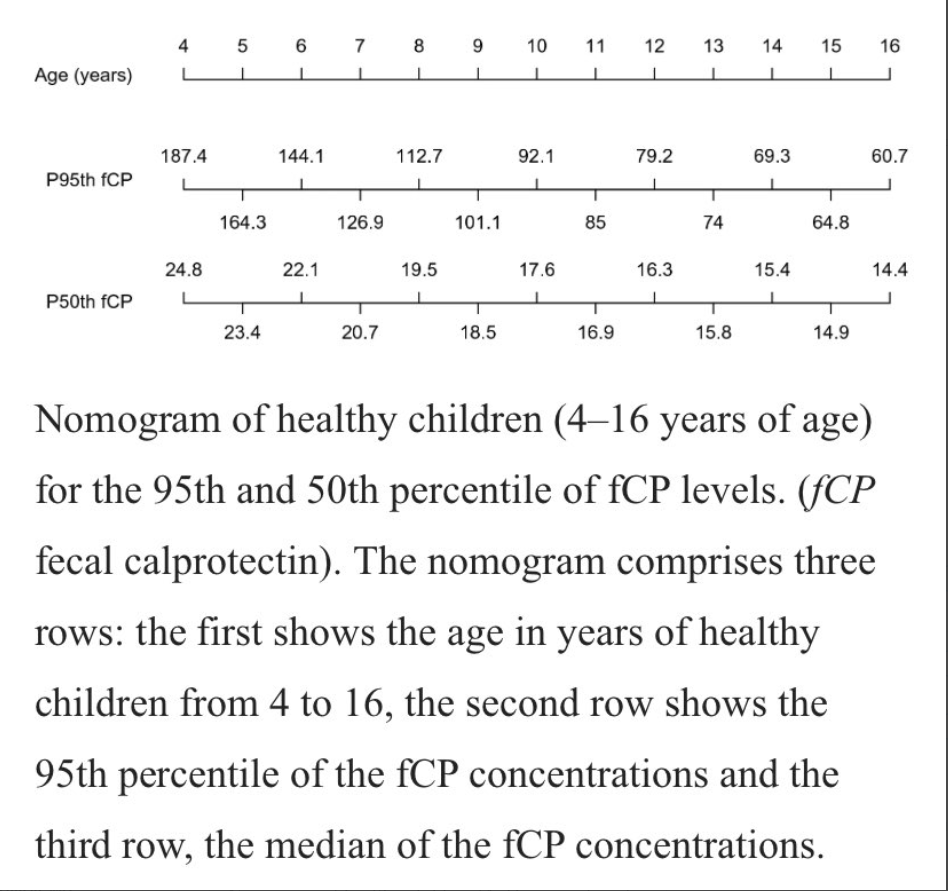
Full text: Deep Remission at 1 Year Prevents Progression of Early Crohn’s Disease  RC Ungaro et al. Gastroenterol 2020; DOI: https://doi.org/10.1053/j.gastro.2020.03.039 Key finding: When we adjusted for potential confounders, deep remission (adjusted hazard ratio, 0.19; 95% confidence interval, 0.07–0.31) was significantly associated with a lower risk of major adverse outcome.  This study is reinforced by recent data published at DDW 2020 -Abstract 401: N Plevris et al. “Early Mucosal Healing Key to Long-Term Success.”  This was highlighted by Miguel Regueiro in Gastroendonews.com.  Among 375 patients, those who achieved a fecal calprotectin (FC) <250 mcg/g within one year of diagnosis, the disease progression was 65% slower than those with FC values that did not normalize within a year.  Initiation of a biologic within 3 months of diagnosis, more than quadrupled the likelihood of FC normalization within one year.


Weak Support For Probiotics in Acute Gastroenteritis

Two recent well-controlled studies (D Schnadower et al.N Engl J Med 2018; 379:2002-2014, SB Freedman et al. N Engl J Med 2018; 379:2015-2026) showed that probiotic-treated children with acute gastroenteritis (AGE) did not have better outcomes than placebo-treated children. In addition, a recent AGA practice guideline recommended against the use of probiotics for most GI conditions, including in AGE.

However, a new report (H Szajewska et al. JPGN 2020; 71; 261-69) from an ESPGHAN  working group recommends that probiotics should have a role for AGE.  Several points about this report:

  1. Their recommendations are very qualified: “weak recommendation” with “low to very low certainty of evidence” for the following in descending order: S boulardiii, L rhamnosis GG, L reuteri DSM 17938, and L rhamnosus 19070 & L reuteri DSM 12246
  2. It is noted that this report has a disclaimer from ESPGHAN: “it does not represent ESPGHAN policy and is not endorsed by ESPGHAN”
  3. The authors have extensive disclosures
  4. The report notes that “despite large number of identified trials, we could not identify 2 randomized controlled trials of high quality for any strain that provided benefit when used for treating acute gastroenteritis”

Of note, the associated editorial (pg 146-47) also favors probiotics in the setting of AGE.  “These recommendations…have clarified that there is a role for probiotics in treating” AGE.

Related article (just published): F Mourney et al. The Pediatric Infectious Disease JournalAugust 7, 2020 – Volume Online First – Issue –doi: 10.1097/INF.0000000000002849 A Multicenter, Randomized, Double-Blind, Placebo-Controlled Trial of Saccharomyces boulardii in Infants and Children With Acute Diarrhea (n=100) Key findings: The time of recovery from diarrhea was significantly shorter in the probiotic group compared with the placebo group (65.8 ± 12 hours vs. 95.3 ± 17.6 hours, P = 0.0001).

My take: Overall, probiotic effectiveness is overstated; though, some strains may be helpful for AGE.  Still, there are concerns about variation in production and quality standards even in these strains.

Related blog posts:

For SARS-CoV-2–Is 2 Meters Enough?

NR Jones et al. BMJ 2020;370:m3223. Full Text: Two metres or one: what is the evidence for physical distancing in covid-19?

Key messages from article:

  • Current rules on safe physical distancing are based on outdated science
  • Distribution of viral particles is affected by numerous factors, including air flow
  • Evidence suggests SARS-CoV-2 may travel more than 2 m through activities such as coughing and shouting
  • Rules on distancing should reflect the multiple factors that affect risk, including ventilation, occupancy, and exposure time

Highlighted article from Eric Topol’s Twitter Feed

A more nuanced approach is recommended by authors -color-coded Figure 3 above –caption: “Risk of SARS-CoV-2 transmission from asymptomatic people in different settings and for different occupation times, venting, and crowding levels (ignoring variation in susceptibility and viral shedding rates). Face covering refers to those for the general population and not high grade respirators. The grades are indicative of qualitative relative risk and do not represent a quantitative measure. Other factors not presented in these tables may also need to be taken into account when considering transmission risk, including viral load of an infected person and people’s susceptibility to infection. Coughing or sneezing, even if these are due to irritation or allergies while asymptomatic, would exacerbate risk of exposure across an indoor space, regardless of ventilation.”