How Does the U.S Compare to African Nations in HIV Treatment?

A recent commentary (WM El-Sadr et al. NEJM 2019; 380; 1985-7) shows how poorly we are doing in our efforts to diagnose and treat HIV in this country and what we need to do to make progress in eliminating HIV.

Overall, the U.S. overall viral suppression rate, which is the percentage of all people with HIV in whom the virus is suppressed, is only 51%.  In contrast, the rates for Nambia, Uganda, and Zambia are 75%, 55%, and 50% respectively (U.S. measures use slightly different denominators than other countries.)

From NEJM twitter feed: AIDS in America –Back in the Headlines at Long Last

Link to Podcast: Ending the U.S. HIV Epidemic

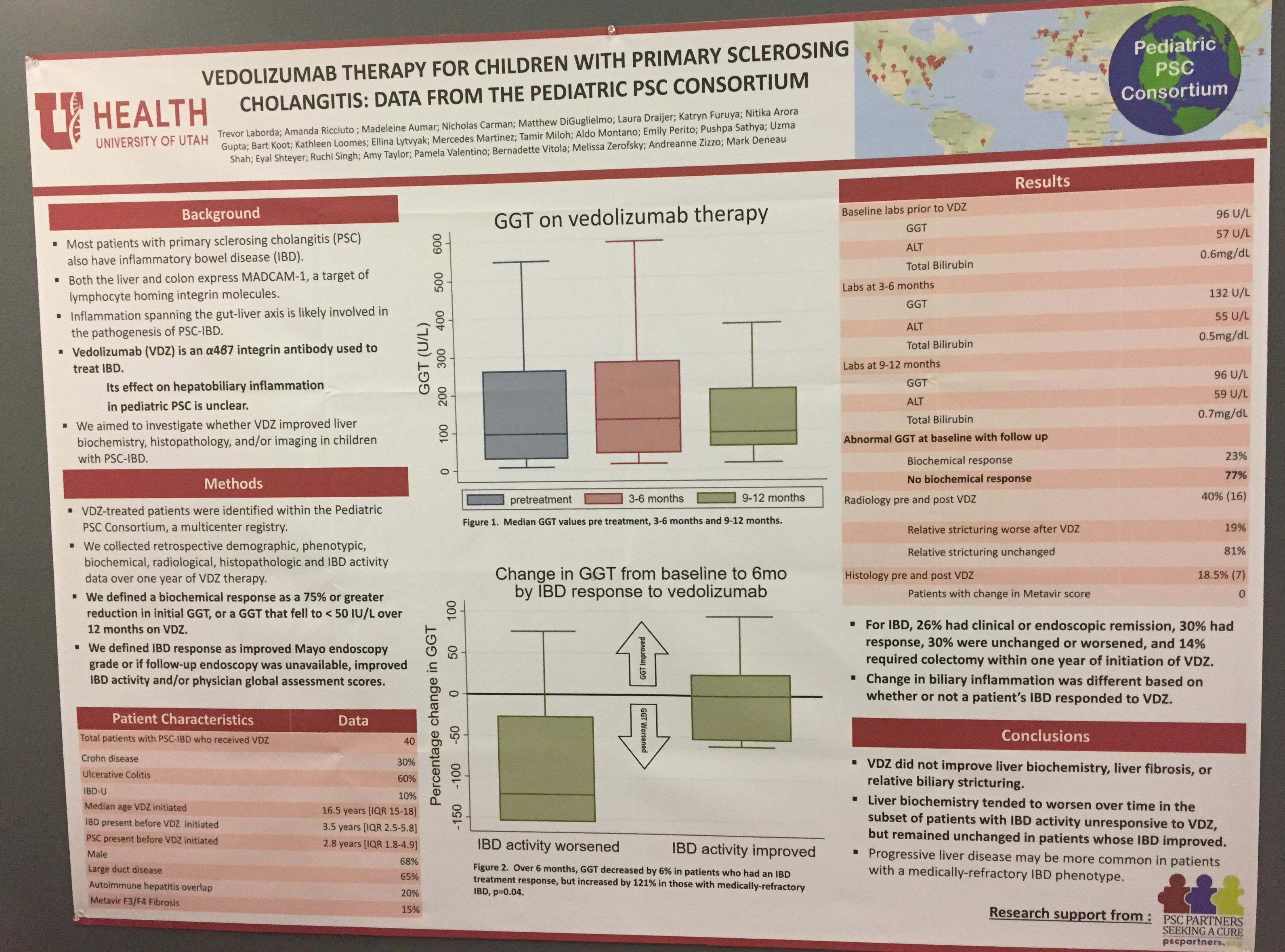
Ursodeoxycholic Acid in Pediatric Primary Sclerosing Cholangitis

A large retrospective study (M Deneau, M Perito, A Ricciuto, N Gupta et al. J Pediatr 2019; 209: 92-6) examined the outcomes/response of ursodeoxycholic acid (UDCA) for pediatric primary sclerosing cholangitis (PSC).

Background:

  • “Within 10 years of diagnosis, 30% of children with PSC will require liver transplantation and 50% of children will develop complications, including biliary strictures and hypertension.”
  • Because UDCA has not been shown to improve survival (& may worsen outcomes), it is not recommended in adults by the AASLD.
  • In pediatrics, UDCA remains the most common treatment, used in more that 80% on long-term treatment

Study population/methods:

  • 263 patients at 46 centers
  • Median age 12.1 years
  • UDCA median dose: 15 mg/kg/day

Key findings:

  • Normalization of GGT (<50 IU/L) occurred in 46% of patients in the first year after diagnosis
  • Patients with normalization was less likely among patients with Crohn’s disease and those with laboratory profiles indicative of more advanced hepatobiliary fibrosis (eg. lower platelet count, lower albumin, hyperbilirubinemia)
  • The 5-year survival with native liver was 99% in those who achieved normalization vs 77% in those who did not
  • Even in those without normalization, improvement in GGT was associated with better outcomes. “Those who had a reduction in GGT of >75% had nearly the same long-term survival as those with GGT<50 IU/L at 1 year.”
  • It has previously been shown that nearly “one-third of children who are UDCA-naive have spontaneous GGT normalization by 1 year.”  Thus, the number to treat with UDCA to have one additional case of GGT normalization is four.
  • In a previous study, one-third of patients with GGT normalization on UDCA therapy for 1 year, maintained GGT <29 after withdrawal of UDCA for 12 weeks.

The authors note that “patients who do not achieve normalization could reasonably stop UDCA as they are likely not receiving clinical benefit.”

My take: This study shows that patients who have improvement/normalization of GGT with UDCA therapy have improved outcomes.  The retrospective design of the study limits conclusions about whether UDCA therapy actually improves long-term outcomes, particularly since UDCA at higher doses has been associated with detrimental affects in adults with PSC.

Related blog posts:

Pablo Picasso, Le Compotier (Fruit Bowl) at Sofia Reina
https://www.museoreinasofia.es/en/collection/artwork/compotier-fruit-bowl

Disclaimer: These blog posts are for educational purposes only. Specific dosing of medications/diets (along with potential adverse effects) should be confirmed by prescribing physician/nutritionist.  This content is not a substitute for medical advice, diagnosis or treatment provided by a qualified healthcare provider. Always seek the advice of your physician or other qualified health provider with any questions you may have regarding a condition.

Early Life Events and the Development of Inflammatory Bowel Disease

Full Text via AGA Journal Link: Events Within the First Year of Life, but Not the Neonatal Period, Affect Risk for Later Development of Inflammatory Bowel Diseases

A recent study (CN Bernstein et al. Gastroenterol 2019; 156: 2190-7; editorial 2124) delves into the topic of early life risk factors for the development of IBD. In the background, the author note that in 2018, 267,983 Canadians (0.73%) were estimated to be living with IBD and there is a forecast that this will increase to 402,853 by 2030.

This study used a Manitoba database and examined the records of individuals diagnosed with between 1984-2010. In addition, they correlated this data with individual data of the postnatal period between 1970-2010. From this database, they analyzed 825 individuals with IBD and 5999 matched controls.

Key Findings:

  • The strongest risk factor for the development of IBD was a maternal diagnosis of IBD with an odds ratio (OR) of 4.53; the OR was higher for CD at 5.98 compared to OR of 2.71 for UC
  • Infections in the first year of life was associated with an OR of 3.06 for IBD diagnosed before age 10 years, and OR of 1.63 for IBD diagnosis before age 20 years.  Only infections in the first year of life were correlated with IBD as infections during the first 3 years of life were not associated with a significant increased risk.
  • While infections in the first year of life were associated with an increase risk of IBD, the authors could not demonstrate that individuals who developed IBD had more infections than unaffected sibling controls (though they did have more infections than the entire control cohort).
  • Highest socioeconomic quintile, also, had an increased OR of 1.35.
  • Gastrointestinal illnesses (like abdominal pain) were not found to be associated with the later development of IBD.

It is unclear whether infections in early life increase the risk of IBD or whether other factors like antibiotics contribute to the higher rate of IBD.  The authors did not find more immunodeficiency disorders in the IBD cohort compared to controls.

My take: This study identified genetic risk as substantially greater than specific environmental risks.  However, the increasing incidence of IBD suggests that environmental factors are quite significant, as genetic risk factors are less likely to change enough to account for the changes in epidemiology.  As such, there are a few explanations:

  1. There are other unidentified environment risk factors
  2. Some individuals are more susceptible to the changes that have occurred in the environment; that is, their environmental exposures are not significantly different from their peers but are significantly different than individuals from 20, 40, 60 and 100 years ago.

From AGA Journal link

Related blog posts:

FDA News: FDA Warning for FMT, IB-Stim Device Approval, Teduglutide Approval

1.From John Pohl Twitter Feed:  FDA Warns of One Death Linked to Fecal Transplants (6/13/19)

An excerpt:

The consent should include, at a minimum, a statement that the use of FMT to treat C. difficile is investigational and a discussion of its potential risks.

“Two immunocompromised adults who received investigational FMT developed invasive infections caused by extended-spectrum beta-lactamase (ESBL)-producing Escherichia coli (E.coli). One of the individuals died,” the agency said Thursday…

Openbiome, a nonprofit stool bank based in Cambridge, MA, told Focus: “We are saddened to hear of the recent patient death due to an infection from a multi-drug resistant organism (MDRO) transmitted through a fecal transplant. OpenBiome material was not involved. OpenBiome screens its donors and fecal transplant material for MDROs and related risk factors, and this serious event further highlights the importance of rigorous screening and clinical oversight for all fecal transplant procedures.”

 2. FDA approval for IB-stim (a.k.a. Neuro-stim) device.

Link:: FDA permits marketing of first medical device for relief of pain associated with irritable bowel syndrome in patients 11-18 years of age

An excerpt:

IB-Stim treatment resulted in at least a 30% decrease in usual pain at the end of three weeks in 52% of treated patients compared to 30% of patients who received the placebo, and at least a 30% decrease in worst pain in 59% of treated patients compared with 26% of patients who received the placebo.

:Kovacic K1Hainsworth K2Sood M1Chelimsky G1Unteutsch R1Nugent M3Simpson P3Miranda A4. 2017 Oct;2(10):727-737. doi: 10.1016/S2468-1253(17)30253-4. Epub 2017 Aug 18.

Link to abstract of relevant study:  Neurostimulation for abdominal pain-related functional gastrointestinal disorders in adolescents: a randomised, double-blind, sham-controlled trial.

3. FDA Approves Gattex (Teduglutide) for Pediatric SBS

From CenterWatch: Gattex New FDA Drug Approval

Pediatric SBS: “In a 24-week pediatric study 59 pediatric patients with SBS aged 1 year through 17 years chose whether to receive Gattex or standard of care (SOC)…Based on patient-diary data, patients who received Gattex 0.05 mg/kg/day experienced a 42% mean reduction in PS volume (mL/kg/day) from baseline (-23 mL/kg/day from baseline). At week 24, 38% of patients (10/26) were able to reduce PS infusion by at least 1 day per week. Patients reduced their PS infusion time by 3 hours per day on average compared to baseline.”

Related blog post: Teduglutide for SBS

Jeppesen PB, Pertkiewicz M, Messing B, Iyer K, Seidner DL, O’keefe SJ, Forbes A, Heinze H, Joelsson B Teduglutide reduces need for parenteral support among patients with short bowel syndrome with intestinal failure. Gastroenterology 2012 Dec;143(6):1473-1481

Jeppesen PB, Gilroy R, Pertkiewicz M, Allard JP, Messing B, O’Keefe SJ Randomised placebo-controlled trial of teduglutide in reducing parenteral nutrition and/or intravenous fluid requirements in patients with short bowel syndrome. Gut 2011 Jul;60(7):902-14.

Briefly Noted: Costs of Physician Burnout

NPR coverage of story: What’s Doctor Burnout Costing America?

An excerpt:

The study authors calculate that for health care organizations, the cost of burnout comes out to $7,600 per physician per year. The study notes that their cost estimate is conservative, only taking into account lost work hours and physician turnover. But other research shows burned out doctors are also more likely to make medical mistakes, have less satisfied patients, and get sued for malpractice, all of which have indirect costs.

Related blog posts:

How Helpful is Endoscopic Pancreatic Testing in Pediatrics?

A recent study (P Hopson et al. JPGN 2019; 68: 854-60) reports a high rate of isolated amylase deficiency of 10.1% in their cohort. Is this really accurate? I am skeptical.

  • This is a retrospective study and the authors undertook endoscopic pancreatic function testing (ePFT) in a large number of patients, 712 over a 6 year period.  The authors state “whenever there is clinical indication for esophagogastroduodenoscopy (EGD) we usually obtain” ePFT collections.
  • To determine the amylase levels, the authors relied upon their in-house laboratory.  Before accepting widespread deficiencies in amylase production, it would be useful to have specimens checked in more than one laboratory. At the same time, given the normalcy of the other pancreatic enzymes, it is likely that the specimens were of good quality.
  • 59 of the 72 (82%) patients with isolated amylase deficiency were younger than 2 years. It is notable that in the same issue, some of the same authors in a review article describe the technique for ePFT (JPGN 2019; 68: 768-76) and note that amylase activity is undetectable at 1 month of age and is normal at 2 years of age.  “Data are lacking as to when it is expected that most children have normal pancreatic amylase activity before 2 years of age.”
  • The authors note that 48 patients (67%) with isolated amylase deficiency had failure to thrive or poor growth.

Amylase Levels:

  • Looking at the authors’ Figure 1, they do provide their mean amylase levels; they considered a level below 10.3 micromol/min/mL to be deficient.  Is this the right cutoff? Is there evidence that levels below this result in a disease state?
  • Particularly in the first year of life, the amylase activities are much lower: approximately 2 micromol/min/mL for age 0-6 months and 12 micromol/min/mL for 6-12 months.
  • In their cohort of 72 with abnormal amylase levels, 35 (approximately half) are less than 1 year of age.  Thus, given how low the mean levels are, it is not surprising that nearly half of the patients (35/82) in this age group had abnormal ePFT.
  • Even in the 1-1.5 year olds, the mean amylase activity is lower than the older group (approximately 24 micromol/min/mL compared to more than 40 micromol/min/mL for patients older than 6 years).  The authors found 25% of the ePFT testing in this age group (1-15. yr olds) to have isolated amylase deficiency; again, this seems implausible.
  • It is notable that there is not a control population.  How often in healthy patients less than 2 years of age is the amylase level below their cutoff? In fact, the authors state that 10 of their patients with isolated amylase deficiency had constipation, and 5 had reflux which would be quite atypical presenting indications.

The technique for obtaining ePFT is detailed in the review (JPGN 2019; 68: 768-76) and includes the following:

  • Before endoscopic intubation, “a bolus of secretin (0.2 mcg/kg to max of 16 mcg) is administered” (or alternatively synthetic CCK octapeptide in a dose of 0.02 or 0.04 mcg/kg).
  • Initial fluid in stomach and duodenum is aspirated and discarded
  • Using an aspiration catheter (or thru biopsy channel if scope too small), collect 3 to 4 aliquots of fluid between 3-10 minutes after injection of secretin (should be completed within 10 minutes of secretin)
  • Place immediately on ice or dry ice
  • Samples with low pH may be contaminated
  • Avoid trauma to mucosa as bleeding can give erroneous results

I would suggest a more selective approach in utilizing endoscopy to check for both pancreatic function as well as disaccharidases.  The sensitivity, specificity, positive predictive value and negative predictive value of a test is highly dependent on the study population. In those at low risk, the results of the testing is highly suspect.

My take: The reference to the review article is worth keeping as it gives a clear description of endoscopic pancreatic function testing.  The study describing a 10% rate of amylase deficiency among a large cohort of pediatric patients requires careful interpretation, particularly as more than 80% of the deficiency group were less than 2 years of age. Clearly, a prospective study is needed.  In those with possible isolated amylase deficiency at a young age (<2 years), a double-blind randomized trial may be needed to determine if enzyme supplementation is beneficial.

Related blog posts: Transient Exocrine Pancreatic Insufficiency or Misleading Tests?

Disclaimer: These blog posts are for educational purposes only. Specific dosing of medications/diets (along with potential adverse effects) should be confirmed by prescribing physician/nutritionist.  This content is not a substitute for medical advice, diagnosis or treatment provided by a qualified healthcare provider. Always seek the advice of your physician or other qualified health provider with any questions you may have regarding a condition.


Camille Passaro, Rue Saint-Honore por la Tarde. Efecto de lluvia.  Thyssen-Bornemisza Museum; https://www.museothyssen.org/en/collection/artists/pissarro-camille/rue-saint-honore-afternoon-effect-rain


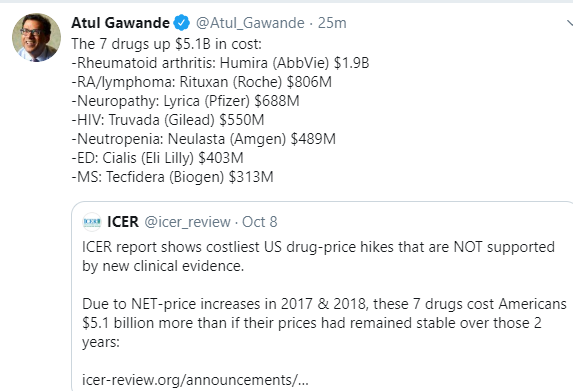
Healthcare Company CEO Salaries

Becker’s Hospital Review: Highest-paid CEOs in 2018: Who made the list from healthcare  The full list includes 200 chief executives from public companies with revenue of at least $1 billion. Thanks to Jeff Lewis for pointing out this list.

Total compensation may include salary, bonuses, perks, stock and options.

  1. Hologic, Stephen MacMillan — $42 million
  2. Align Technology, Joseph Hogan — $42 million
  3. Regeneron Pharmaceuticals, Leonard Schleifer — $27 million
  4. Centene, Michael Neidorff — $26 million
  5. Universal Health Services, Alan Miller — $24 million
  6. Abbott Laboratories, Miles White — $23 million
  7. CVS Health, Larry Merlo — $22 million
  8. Merck, Kenneth Frazier — $21 million
  9. Abbvie, Richard Gonzalez — $21 million
  10. Johnson & Johnson, Alex Gorsky — $20 million
  11. HCA Healthcare, R. Milton Johnson — $20 million
  12. Pfizer, Ian Read — $20 million
  13. Bristol-Myers Squibb, Giovanni Caforio — $19 million
  14. Cigna, David Cordani — $19 million
  15. Vertex Pharmaceuticals, Jeffrey Leiden — $19 million
  16. Thermo Fisher Scientific, Marc Casper — $19 million
  17. Amgen, Robert Bradway — $19 million
  18. UnitedHealth Group, David Wichmann — $18 million
  19. DaVita, Kent Thiry — $17 million
  20. Gilead Sciences, John Milligan — $17 million
  21. Alexion Pharmaceuticals, Ludwig Hantson — $16 million
  22. Humana, Bruce Broussard — $16 million
  23. Celgene, Mark Alles — $16 million
  24. Biogen, Michel Vounatsos — $16 million
  25. United Therapeutics, Martine Rothblatt — $16 million
  26. IQVIA Holdings, Ari Bousbib — $16 million
  27. Eli Lilly, David Ricks — $16 million
  28. Baxter International, José Almeida — $16 million
  29. Biomarin Pharmaceutical, Jean-Jacques Bienaimé — $16 million
  30. Danaher, Thomas Joyce Jr. — $15 million
  31. Molina Healthcare, Joseph Zubretsky — $15 million
  32. Tenet Healthcare, Ron Rittenmeyer — $15 million

Canaletto.  El Gran Canal desde San Vio. Thyssen-Bornemisza Museum. https://www.museothyssen.org/en/collection/artists/canaletto/grand-canal-san-vio-venice


Do Gun Law Restrictions Work?

Those opposed to gun safety provisions (a.k.a. gun control legislation) argue that laws  will not prevent criminals from obtaining firearms illegally.  A recent commentary in NY Times provides some data that shows that states with more gun safety provisions have lower levels of gun-related deaths (especially suicides).

NY Times: A Gun Killed My Son. So Why Do I Want to Own One?

Related blog posts:

Backwash Ileitis Plus One

Briefly Noted:

RM Najarian et al. JPGN 2019; 68: 835-40.  This retrospective study found microscopic/’backwash’ ileitis in 16% (17/105) of patients with new-onset ulcerative colitis. This occurred predominantly in patients with pancolitis (82%). The authors note that the term “backwash ileitis” was derived from an unproven hypothesis that the inflammation was related to retrograde contact with inflammatory substances, though some now consider ileal involvement as a secondary involvement “akin to the upper tract inflammation that can be seen in a subset of patients with UC.” The authors recommend that isolated histologic inflammation of the ileum should “not be construed as being diagnostic of either ‘indeterminant colitis’ or CD [Crohn’s disease].”

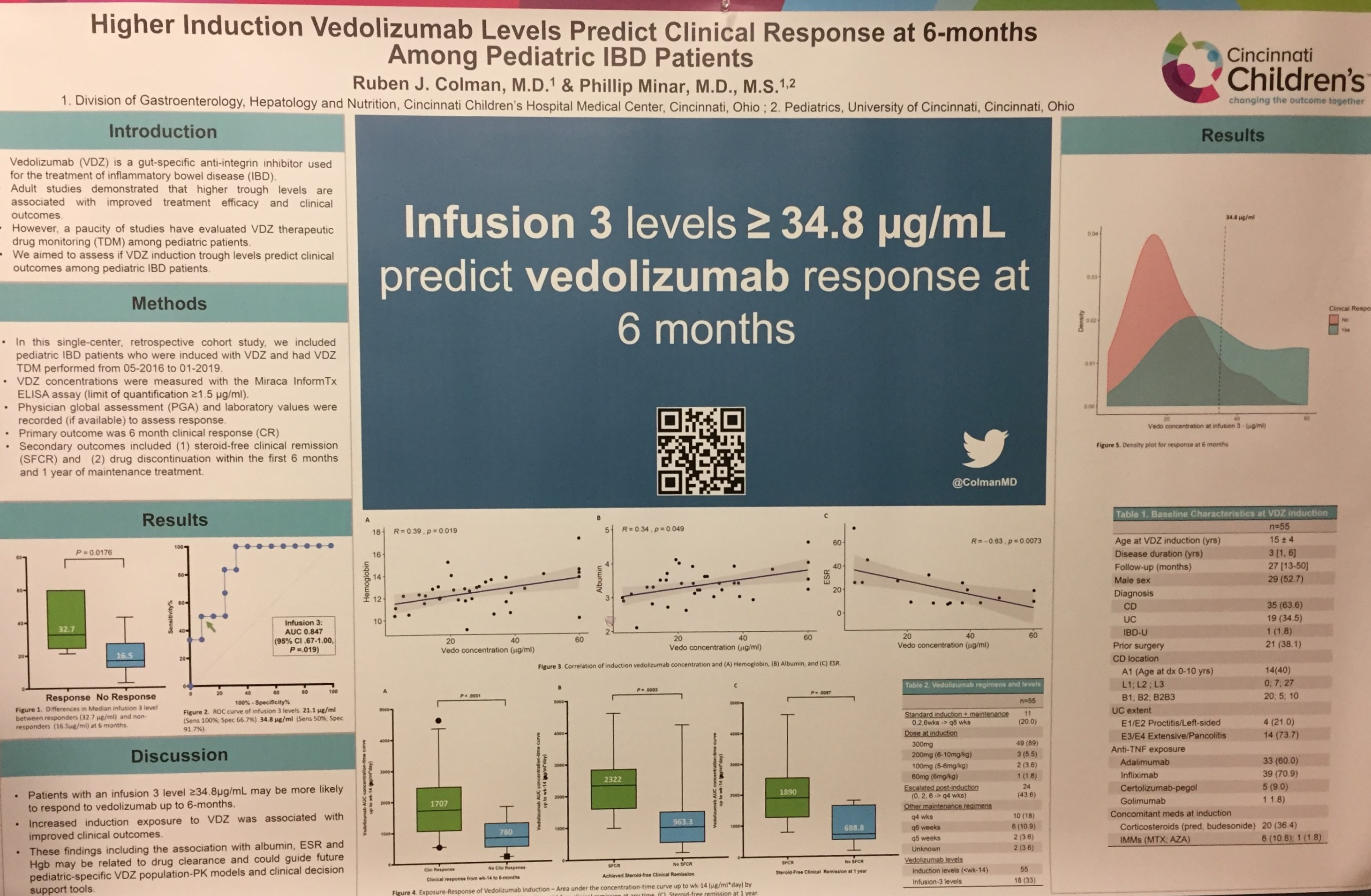
K van Hoeve et al. JPGN 2019; 68: 847-53. This retrospective study of 35 children found that higher infliximab levels during induction was associated with higher rates of clinical and biologic remission at 52 weeks. Groups at risk for lower troughs included patients with a lower weight and/or lower hemoglobin level.

Rafaela Flores Calderon by Antonio Maria Esquivel, Museo del Prado (Image in Public Domain)