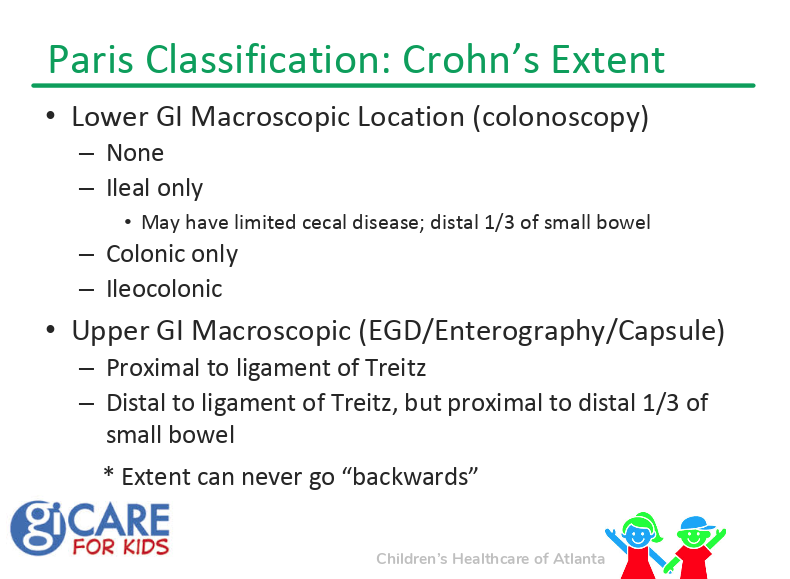
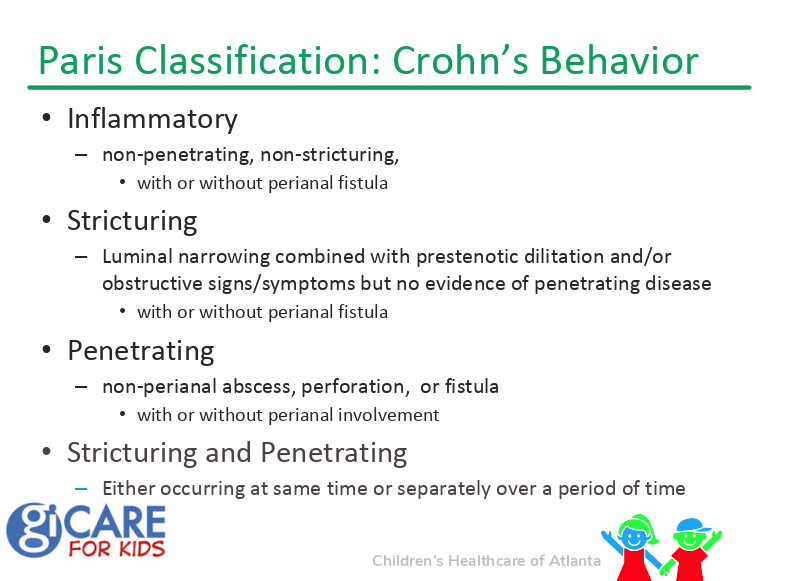
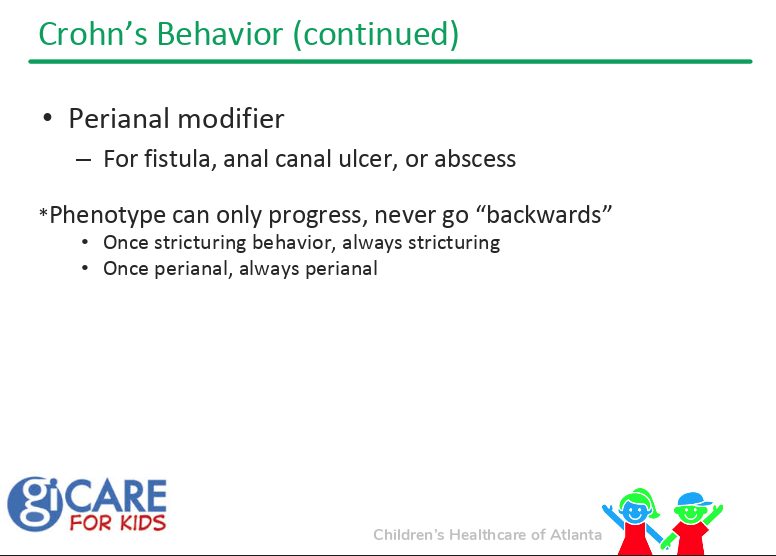
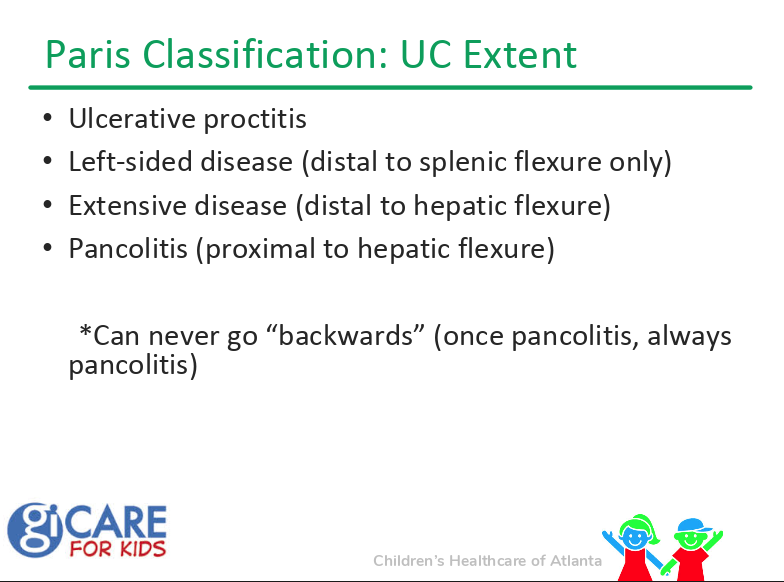
Paris Classification Quiz and Explanation

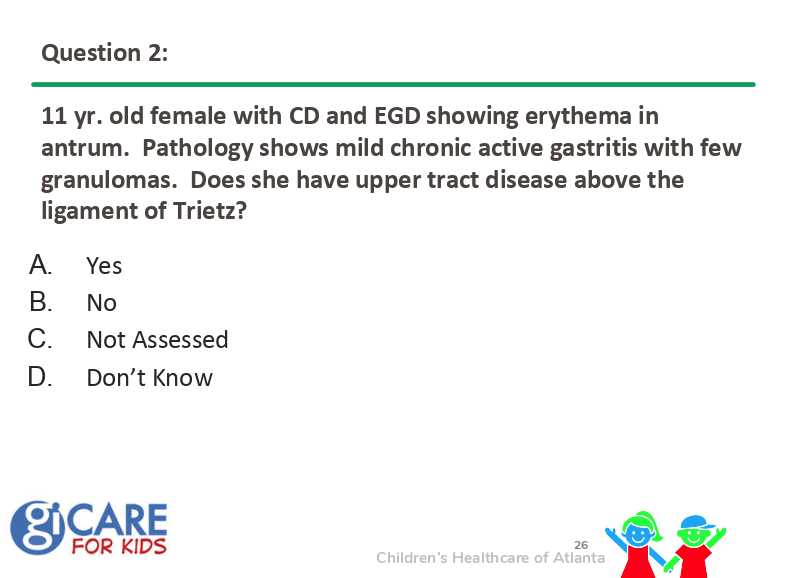
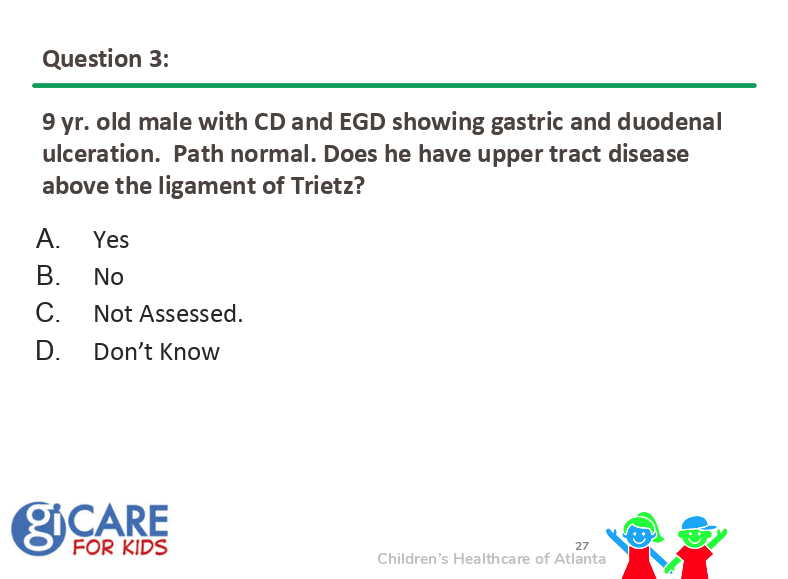
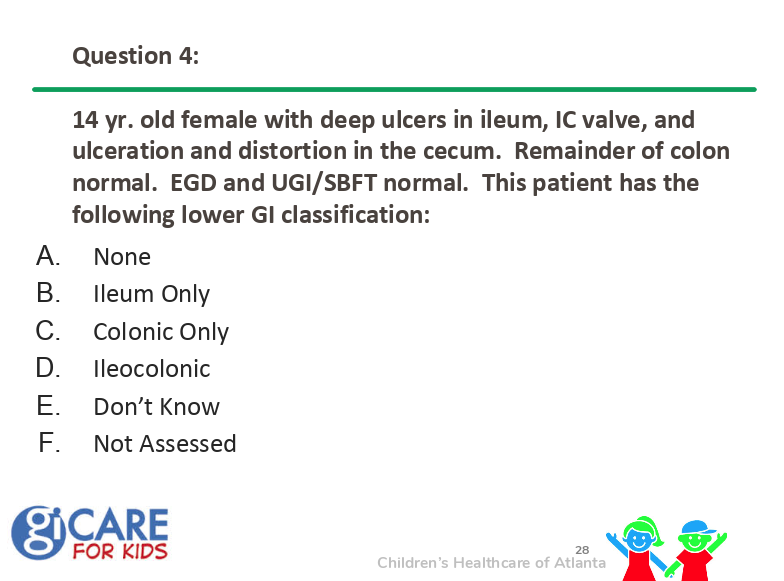
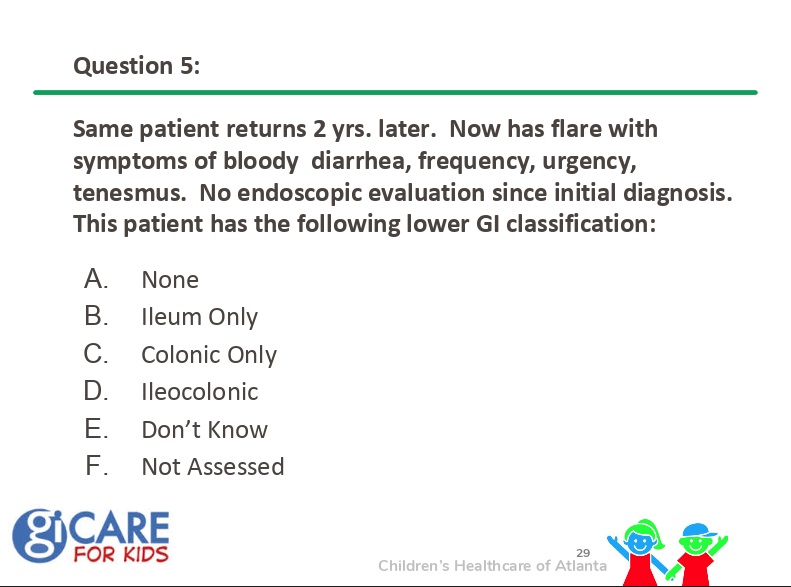
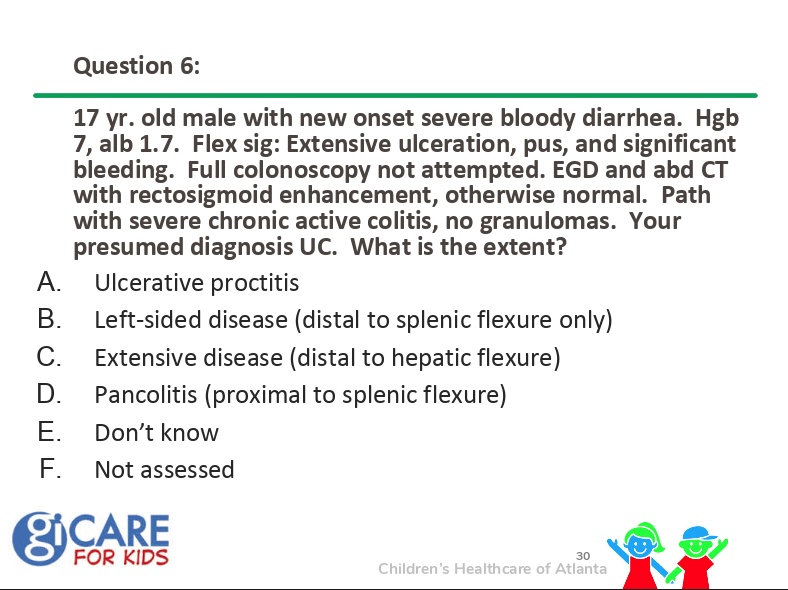
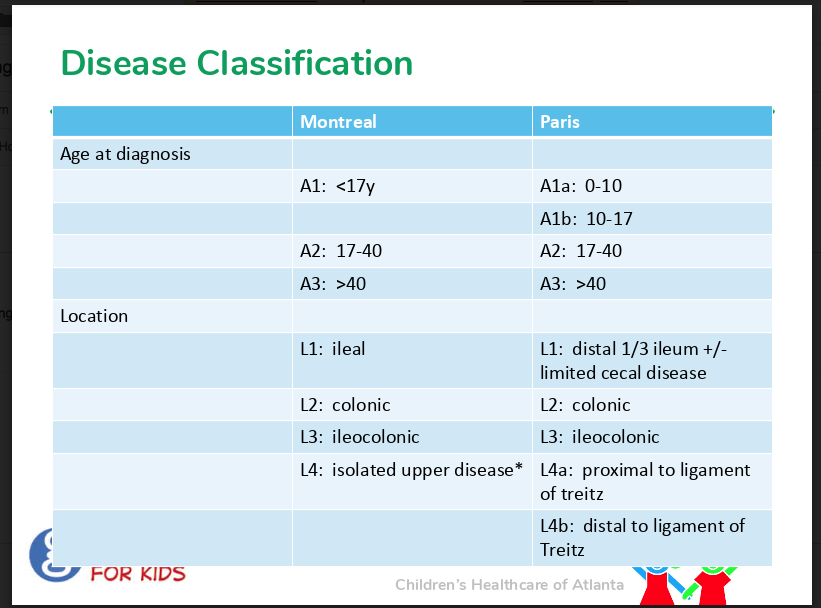
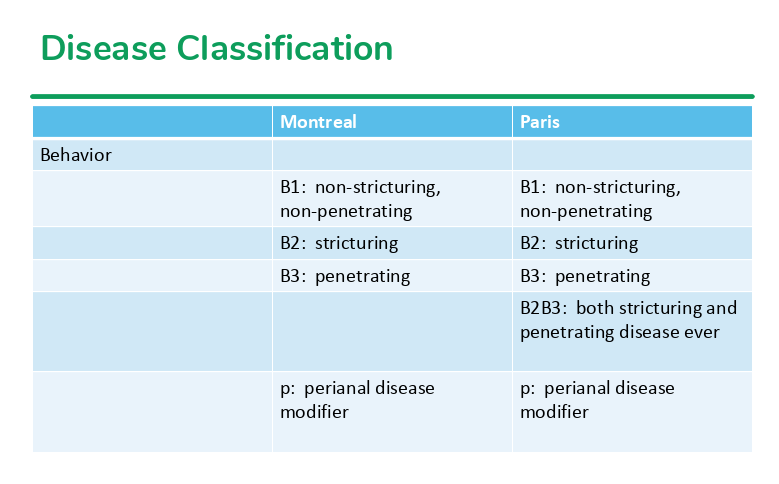
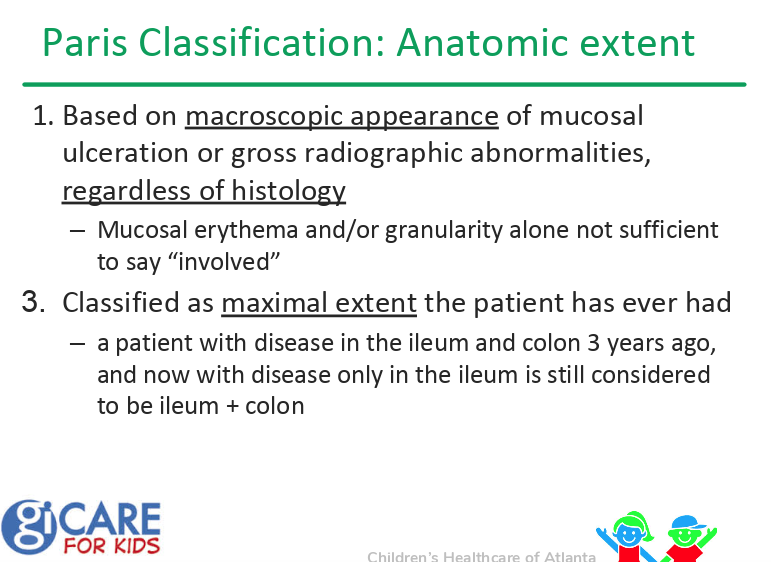
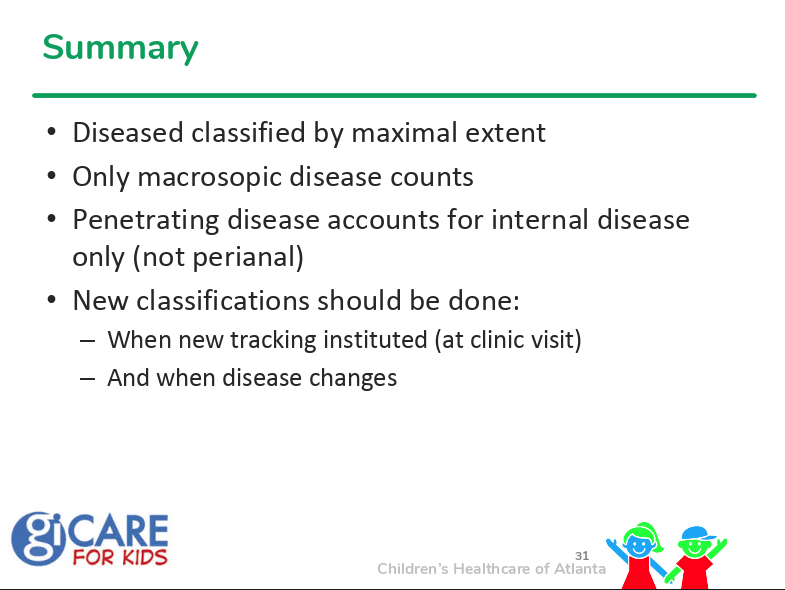
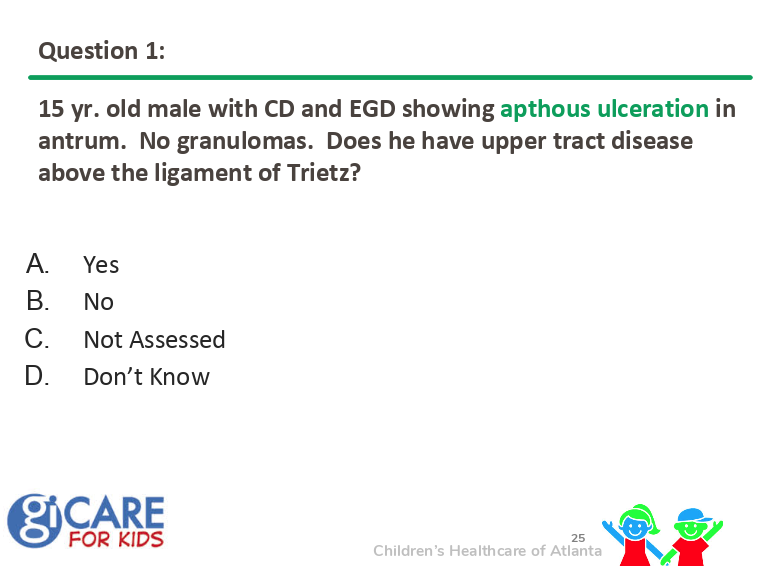
At one of our ImproveCareNow population management meetings, Dr. Chelly Dykes reviewed the Paris Classification and frequent misconceptions in using this system.  To illustrate this point, I am going to post 6 Quiz Slides and then follow that with the answers and explanation.  These quiz slides were derived from previous ImproveCareNow community meetings.

Answers:

  1. A
  2. B (macroscopic disease counts –erythema alone does not count)
  3. A (macroscopic disease counts)
  4. B (not ileum only unless colonic disease extends beyond cecum)
  5. F (though B acceptable)
  6. F (though B acceptable)

Related blog posts:

Never Too Old for Celiac Disease

A recent article (P Collin et al. AP&T 2018; 47: 563-72) reviews the presentation of celiac disease in later years (Thanks to Ben Gold for this reference).

Key findings:

  • Approximately 25% of celiac diagnoses are made at age ≥60 years
  • ~4% of celiac diagnoses are made at age ≥80 years
  • About 60% of individuals with celiac disease remain undetected
  • Adherence with gluten free diet results in “resolution of symptoms and improvement in laboratory indices…in over 90% of patients”

This review also focuses on specific related problems besides epidemiology: malabsorption, dermatitis herpetifromis, bone mineral density and fractures, autoimmune disease, heart disease, neurological disturbances, and malignancy.

Bright Angel Trail

Physician Age and Patient Outcomes

Tsugawa Y, Newhouse JP, MacArthur JD, et al. Physician age and outcomes in elderly patients in hospital in the US: observational study. BMJ. 2017;357 doi: https://doi.org/10.1136/bmj.j1797

Thanks to Ben Gold for this reference. Slides from Patient Care newsletter.

Background:

Researchers used nationally representative data on Medicare beneficiaries admitted to hospital with a medical condition during 2011-14. They wanted to find out the association between age of the treating physician and 30 day patient mortality after admission; whether this association varied with the volume of patients a physician treats; and whether physician age is associated with readmissions and costs of care. Their study included 736 537 admissions managed by 18 854 hospitalist physicians (median age 41).

Key findings

Briefly noted: Mongersen, Aprepitant, and Anesthetic Outcomes

BG Feagan et al. Gastroenterol 2018; 154: 61-4.  In this study of GED-0301 (Mongersen), an antisense oligodeoxynucleotide affecting Smad7, was randomly assigned to 63 patients with Crohn’s disease (160 mg/day).  Endoscopic improvement was observed in 37%  at week 12. Clinical remission (CDAI<150) was noted in  32% (4 weeks of Rx), 35%  (8 weeks of Rx) and 48% (12 weeks of Rx). No new safety signals were noted.

Related blog posts:

PJ Pasricha et al. Gastroenterol 2018; 154: 65-76.  First of all, I have to say that I like the visual abstracts in many Gastro studies.  In this randomized, double-masked “APRON” study of 126 patients with chronic nausea or gastroparesis receiving Aprepitant, a neurokinin-1 receptor antagonist, or placebo, the key findings were the following:

  • Aprepitant did not reduce symptoms of nausea significantly compared to placebo
  • Apreptiant-treated patients had improvements in secondary outcomes of symptom severity for nausea (1.8 vs 1.0, P=.005 on Gastroparesis Clinical Symptom Index) and overall symptoms (1.3 vs. 0.7, P=.001)

Related blog post:

B Bielawska et al. Gastroenterol 2018; 154: 77-85. Using data (administrative databases) and propensity matching from more than 3 million outpatient colonoscopies (2005-2012), the authors noted that the use of anesthesia assistance (AA) was associated with an increased risk of aspiration pneumonia (OR 1.63) but not perforation (OR 0.99). Though this study is limited by its retrospective design and reliance on administrative data, the authors state “the potential for residual confounding by indication for AA [is] extremely unlikely, especially because AA use in Ontario appears to be driven by institutional policy or business model rather than by patient factors.”

Related blog posts:

Bright Angel Trail

Predicting Hepatitis B Vaccination Failure in Infants

A brief report (KW Cheung et al. Clin Gastroenterol Hepatol 2018; 16: 144-5) describes a prospective multicenter study (2014-16) in Hong Kong which examined immunoprophylaxis failure (IF) of infants (n=654) born to mothers infected with hepatitis B virus (HBV) infection.  All infants had received HBV vaccine and HBV immunoglobulin (within 12 hours of birth).  Maternal HBV DNA & serology was measured at 28-30 weeks.

Key finding:

  • There were 7 cases of IF (1.1%). All were born to women with positive HBeAg and HBV DNA >8 log10 copies/mL (>17 million IU/mL)
  • The authors note that “although a cutoff of 200,000 IU/mL (~6 log10 copies/mL) has been recommend, the optimal viral load cutoff to initiate HBV antiviral treatment remains debatable.”

My take: HBV prophylaxis with HBV vaccination and HBIG is very effective.  However, HBV DNA levels can be used to target HBV antiviral treatment to further minimize the chance of IF failure.

Related blog posts:

Patient artwork


Briefly Noted: Pantoprazole dosing for obese children

V Shakhnovich et al. J Pediatr 2018; 193: 102-8. Using pharmocokinetic data from 41 obese children (6-17 years), the authors conclude that lean body weight dosing of pantoprazole led to pantoprazole pharmocokinetics similar to nonobese peers.  They also note that variability in age-related changes in CYP2C19 activity affected pantoprazole values in children <12 years of age.

Related blog post: #NASPGHAN17 EoE Session -James Franciosis presented data on how CYP2C19*17 allele was important in whether patients responded to PPIs for Eosinophilic Esophagitis.


Bright Angel Trail, Grand Canyon

Challenging Assumptions: Self-Management Adolescent Skills and Poor Outcomes

If you think that teaching more self-management to adolescents will lead to better outcomes, you might be wrong.  A recent study (RA Annunziato et al. J Pediatr 2018; 193: 128-33) shows that adolescents who reported greater self-management, following liver transplantation, had worse outcomes.

In this study of 9-17 year olds and their parents (213 dyads), the key finding was based on a score derived from the REFILS survey.  REFILS is an acronym for “Responsibility and Familiarity with Illness Survey.”  This survey was curtailed from 22 items to the following 13 items:

  • Understands key aspects of liver disease
  • Discusses management plan with team
  • Self-manages liver regimen
  • Knows names/dose of medications
  • Keeps track of medications
  • Correctly takes medications
  • Calls pharmacy for refills
  • Knows different types of providers
  • Knows date of next appointment
  • Makes appointments
  • Know insurance details
  • Understands insurance plan
  • Keeps healthcare records

Key finding:

  • “Negative outcomes were more likely to occur if patients reported that they are ‘in charge.’ A higher [REFILS] score, which denotes a higher level of (self-reported) management, was significantly and consistently correlated with worse adherence and organ rejection.”

The implication is that the transition of responsibilities from the parent/caregiver to the adolescent “may in fact not always be indicated or advisable…education about self-care might actually be harming patients…It is probably prudent to discourage rather than encourage adolescents from assuming self-care in some cases.”

My take: While adolescents and young adults are capable in many aspects, there are hardly any that I would trust to care for our dog (see below) for any protracted period.  Thus, in my view, without close parental supervision, entrusting the life of a liver transplant recipient to an adolescent is risky.

Related blog posts:

Charlie

How Successful is Liver Transplantation for Fatty Liver Disease?

A recent guideline update (ZM Younossi. Liver Transplantation 2018; 24: 166-70) provides some useful information about nonalcoholic fatty liver disease (NAFLD), nonalcoholic steatohepatitis (NASH), and liver transplantation (LT).

Key points:

  • “Despite metabolic comorbidities, posttransplant outcomes of NASH patients are generally good.  In fact, 1-, 3-, and 5-year patient and graft survival rates are …similar to other liver diseases.”
  • NASH/NAFLD can recur following LT…”NASH with significant fibrosis (stage ≥2) occurs in approximately 5% of recipients by 5 years after transplantation.”
  • Additional issues to manage after LT, include weight management, and metabolic conditions including diabetes, hypertension, dyslipidemia, and hypertension.  All of these conditions can be affected by specific immunosuppressants.  For example, calcineurin inhibitors and corticosteroids can exacerbate type 2 diabetes mellitus.

My take: This article indicates better LT outcomes than I expected in patients with NASH/NAFLD.

Related blog posts:

Bright Angel Trail

PFAPA Conference Report

A conference report on periodic fever, aphthous stomatitis, pharyngitis, adenitis syndrome (PFAPA): L Harel et al. J Pediatr 2018; 193: 265-74

This report reviews PFAPA along with other fever syndromes.

Table II reviews several published criteria.  Most of these include abrupt onset of fever, duration of symptoms <5 days, presence of constitutional symptoms, exclusion of cyclic neutropenia, presence of  aphthous stomatitis, pharyngitis, cervical adenitis, presence of asymptomatic intervals, normal growth.

  • The authors note that ~25% of patients are >5 years of age.
  • They note that it is important to exclude exudative tonsillitis.
  • They suggest NOT testing for familial Mediterranean fever (FMF) in the absence of clinical suspicion. The pain symptoms with FMF are much more intense and  consistent with a peritonitis.
  • They recommend checking acute phase reactants between attacks to assure normalization
  • Corticosteroids (single dose) have been shown to shorter course.  “The recommended full dose is 2 mg/kg prednisone or 0.3 mg/kg betamethasone.”
  • “It is our practice to conclude the following: 1. Fever recurring the next day [after steroids]–not a PFAPA episode, 2. fever recurring withing 2-4 days –the corticosteroid dose is too low, and 2. attack recurs >1 week –new episode.”
  • Any of the following should exclude PFAPA: “neutropenia, cough, coryza, severe abdominal pain, significant diarrhea, rash, arthritis, or neurologic abnormalities; elevated acute phase reactants between attacks”

Differential diagnosis and characteristics are reviewed in Figure 5, with emphasis on mevalonate kinase deficiency, FMF, cryopyrin-associated periodic syndromes (CAPS), and tumor necrosis factor receptor-associated periodic syndrome (TRAPS).

Related blog posts:

Disclaimer: These blog posts are for educational purposes only. Specific dosing of medications/diets (along with potential adverse effects) should be confirmed by prescribing physician/nutritionist.  This content is not a substitute for medical advice, diagnosis or treatment provided by a qualified healthcare provider. Always seek the advice of your physician or other qualified health provider with any questions you may have regarding a condition.

View from Bright Angel Trail

Hepatitis C Reactivation with Chemotherapy

There are a lot of reports describing the potential of adverse outcomes due to hepatitis B reactivation with chemotherapy as well as with treatment of hepatitis C; in addition, there are recommendations to prevent this occurrence (see below). With hepatitis C virus (HCV), the issue of reactivation has not garnered the same type of concern.  A recent study (HA Torres et al. Hepatology 2018; 67: 36-47) indicates that HCV can reactivate with chemotherapy, though this may not result in adverse outcomes. The authors prospectively followed HCV-infected patients receiving cancer therapy from 2012-16.  Reactivation was defined as HCV RNA increase >1 log over baseline and hepatic flare as an increase in ALT >3 times ULN.

Key finding:

  • “Reactivation occurred in 23 (23%)…No patient with reactivation experienced liver failure or liver-related death within 36 weeks after initiation of cancer treatment…most had an unremarkable clinical course.”

Related articleM Persico et al. Hepatology 2018; 67: 48-55.  In the Persico study, the authors examined the association of HCV with non-Hodgkin’s lymphoma. In this observational study, all patients underwent antiviral therapy with sofosbuvir/ledipasvir and chemotherapy.  Compared to a historical control group, the antiviral treatment group had similar overall survival but a significantly higher disease-free survival after 52 weeks.  Thus, the authors note that antiviral treatment combined with chemotherapy, “was shown to be safe and effective in influencing remission of aggressive lymphomas in HCV patients.”

Related blog posts:

View from Bright Angel Trail