Preterm Infants with Increased Infections Following Acid Suppression Therapy

A recent study (P Manzoni et al. J Pediatr 2018; 193: 62-7) provide more data on the detrimental effects of gastric acid inhibitors (eg. proton pump inhibitors, histamine-2 receptor antagonists).  This study was a secondary analysis using prospectively collected data from 235 preterm very low birth weight infants. Key findings:

  • “After multivariate analysis, exposure to inhibitors of gastric acidity remained significantly and independently associated with LOS [late-onset sepsis] (OR 1.03); each day of inhibitors of gastric acidity exposure conferred an additional 3.7% odds of developing LOS.”
  • Acid suppression therapy was associated with gram-negative (P<.001) and fungal pathogens (P=.001)
  • The study showed an association between acid blockers and with necrotizing enterocolitis, which was mitigated in those who received bovine lactoferrin

My take (borrowed, in part, from authors): This data “confirm, strengthen, and expand on previous reports describing an association between inhibitors of gastric acidity and infections.”  Thus, the risks of these medications is likely greater than the benefits in the majority of preterm infants.

Related blog posts:

Bright Angel Trail

Briefly Noted: Arsenic Levels with GFD, Cellphones, and Enuresis Outcomes

This post has a couple interesting items:

  1. Arsenic levels were not increased in individuals with celiac disease who were consuming a gluten-free diet
  2. Cellphones: There are good reasons for physicians to avoid giving out their cellphone numbers to patients
  3. Enuresis -most patients respond to bedwetting alarms

RD Watkins et al. Practical Gastroenterology; 2018; 42: 12-6.  In this retrospective review of 39 patients (with available arsenic levels), patients with celiac disease (adult & pediatric) had normal and/or undetectable arsenic levels.  The mean duration on a gluten-free diet was 2.35 years for pediatric patients and 3.31 years for adults.

33 Charts/Bryan Vartabedian: Should Physicians Give Their Cell Phone Numbers to Patients

E Apos et al. J Pediatr 2018; 193: 211-6.  This study showed that enuresis treatment with a bedwetting alarm system was effective in 76% of patients (n=2861) and that mean treatment time to achieve dryness was 62 days. The most frequent age group was 6 years to 10 years of age.


View from Bright Angel Trail

NY Times: A Doctor’s Guide to A Good Appointment

NY Times: A Doctor’s Guide to A Good Appointment

An excerpt:

[Choosing a doctor], You can glance at these online ratings sites, but be sure to take them with an enormous grain of salt…I recommend looking for:

  • A doctor who takes his or her time talking with you, as opposed to making you feel like you’re at a drive-through fast-food joint. 
  • A doctor who engages his or her patients in decision-making, as opposed to simply rattling off a to-do list. 
  • A doctor who you can get in touch with on the phone or through secure email.

You should also check with your insurance company — find out which doctors are in network and conveniently located. ..

If you are looking for a specialist to do a particular procedure (like hip replacement, cataract surgery, a CT-guided biopsy or heart valve surgery), look for a physician who does lots of them…

Timing: If you can schedule yourself to be the first or second visit of the day, you’ll have a better chance at being seen at your scheduled time. Don’t plan your visit when you have to something critical right afterward. 

My take: This is a useful commentary.  It also makes recommendations on finding out how much it will cost (sometimes by calling your insurance company).  Other points I would make:

  • Bring important information with you, like current medications (name, and dose or just bring the prescription container itself), previous test results and growth information
  • Bring a [short] list of questions
  • If you have a flexible schedule, in addition to the first appointments of the day, often the first appointment after lunch has a shorter wait time, particularly for physicians who tend to run late on appointments

Related blog posts:

Button Battery -Critical Emergency When in the Esophagus

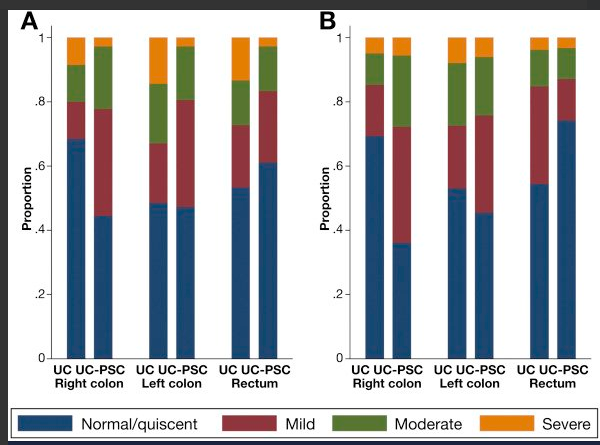
Why Does Primary Sclerosing Cholangitis Increase the Risk of Colorectal Cancer in Ulcerative Colitis?

A recent retrospective study (Clin Gastroenterol Hepatol 2018; 16: 68-74) compared adult patients who had ulcerative colitis (UC) with (n=23) and without primary sclerosing cholangitis (n=120) (PSC). All patients had pancolitis and were in clinical remission.

Key finding:

  • Patients with UC-PSC had more subclinical endoscopic activity (odds ratio (OR) 4.21) and histologic activity (OR 5.13) in the right colon compared with patients without PSC

It is known that the presence of PSC is a risk factor for colorectal cancer (CRC).  A previous meta-analysis (RM Soetiknno et al. Gastrointest Endosc 2002; 56: 48-54) described a OR of CRC of 4.09.

My take: This study shows that UC patients with PSC who are in clinical remission have a greater degree of endoscopic and histologic inflammation in the proximal colon compared to patients without PSC.  This increased inflammation is a likely factor in the increased risk for CRC.

Related blog posts:

Another Day in the US: School Deaths Related to Firearms

Between 2001-2013, gun related deaths exceeded the total number of deaths from AIDS, terrorism, war, and illegal drug overdoses combined (according to Vox -see Firearm Mortality in U.S).  Here are some tweets in reaction to yesterday’s tragic events.

Link to The Onion commentary: ‘No Way To Prevent This’

Related blog posts:


Acute Pancreatitis: Clinical Report from NASPGHAN

There are no surprises in a recent clinical report on acute pancreatitis (M Abu-El-Haija et al. JPGN 2018: 66: 159-76) from NASPGHAN.

Here are a few of the points:

  • The authors recommend ultrasound for initial imaging and checking liver enzymes, GGT, calcium and triglycerides.
  • For fluids, they indicate that in adults there is evidence suggesting that lactated ringer’s (LR) is likely preferable to normal saline.  In children, on presentation, “if evidence of hemodynamic compromise, a bolus of 10 to 20 mL/kg” of crystalloid is recommended followed by “1.5 to 2 times maintenance IV fluids.”
  • For pain management not responding to acetaminophen or NSAIDs, “IV morphine or other opioids should be used.”
  • They recommend early oral/enteral nutrition (within 48 to 72 hours of presentation).
  • They recommend against prophylactic antibiotics in severe acute pancreatitis.
  • They recommend against probiotics, anti-proteases, and antioxidant therapy.
  • For fluid collections that need drainage or necrosectomy, nonsurgical approaches are favored.
  • Acute biliary pancreatitis, “Cholecystectomy safely can and should be performed before discharge in cases of mild uncomplicated acute biliary pancreatitis.”

Related blog posts:

American Ingenuity!!

Cancer due to Overweight/Obesity

The increasing risk of cancer due to overweight and obesity has been reported by the Centers for Disease Control and Prevention in recent MMWR report (CB Steele et al. MMWR 2017; 66: 1052-8Vital Signs: Trends in Incidence of Cancers Associated with Overweight and Obesity — United States, 2005–2014

Key points:

  • Overweight and obesity are associated with increased risk of at least 13 different types of cancer.
  • Overweight- and obesity-related cancers accounted for 40% of all cancers diagnosed in 2014.
  • The incidence of overweight- and obesity-related cancers (excluding colorectal cancer) increased significantly among persons aged 20–74 years during 2005–2014, mirroring increases of obesity observed since 1960.
  • The findings emphasize the importance of intensifying nationwide efforts to prevent and treat overweight and obesity.

My take: While the medical risks related to overweight/obesity generally are attributed to worsened cardiovascular disease, this study adds information regarding the increased risks of some types of cancer as well.

Related blog posts:


Colorectal Cancer: Of Mice and Microbiota

A recent study (SH Wong et al. Gastroenterol 2017; 153: 1621-33) highlights the potential role of the microbiota and colorectal cancer (CRC).

In this study, the stool from either patients with CRC or control patients was gavaged into mice twice a week for 5 weeks.  One group of mice  had received azoxymethane (AOM) which induces neoplasia and the other group were germ-free mice.  Extensive studies involving immunohistochemistry, expresssion microarray, quantitative polymerase chain reaction, immunoblot, and flow cytometry.

Key findings:

  • Conventional, AOM-treated mice who received gavage from patients with CRC had significantly higher proportions of high-grade dysplasia (P<.05) and macroscopic polyps (P<.01)
  • Among the germ-free mice fed with stool from patients with CRC, there was a higher proportion of proliferating Ki-67-positve cells
  • These findings correlated with more dysbiosis in the mice who received stool from patients with CRC and with upregulation of genes involved in cell proliferation, stemness, apoptosis, angiogenesis, and invasiveness

“This study provides evidence that the fecal microbiota from patients with CRC can promote tumorigenesis in germ-free mice and mice given a carcinogen.”

My take: This study shows that microbiota clearly influence the risk of CRC.  I infer from this study that this could explain the potential healthy roles of diets with more fruits and vegetables, that promote healthier microbiota as well as the potential detrimental role of diets with more processed meats.

Related study: L Liu et al. Association between Inflammatory Diet Pattern and Risk of Colorectal Carcinoma Subtypes Classified by Immune Responses to Tumor Gastroenterol 2017; 153 1517-30.  Using two databases from 2 prospective cohorts with followup of 124,433 participants, inflammatory diets had a higher risk of a colorectal cancer subtype.

Related blog posts:

Bright Angel Trail

Screening for Bile Acid Synthesis Disorders

A recent study (AA Al-Hussaini et al. JPGN 2017; 65: 613-20) showed that serum (total) bile acids is effective in screening for bile acid synthesis disorders. In this prospective study from Saudi Arabia, with 626 patients and 450 with infantile cholestasis, the authors identified bile acid synthetic disorder (BASD) in 2.7% of infantile cholestasis patients.  Among the 15 cases, 11 were due to 3β-hydroxyl-Δ5-C27 steroid oxidoreductase dehydrogenase deficiency (HSD3B7).  In these conditions, serum bile acids are low or normal (< 10  μmol/L) in the setting of cholestasis; most cholestatic conditions have elevated bile acids. In addition, all of their patients with bile acid synthetic disorders had a normal or low GGT.

Cholic acid is the “only effective therapy” for bile acid synthetic disorders.  It has a high cost of “$31,000 yer year in Europe” (50 mg per day).

My take: While the authors provide a diagnostic algorithm (figure 3) for diagnosis of bile acid synthetic disorders, this will likely change with the emergence of genetic screening panel.  At this time, in infants/children with cholestasis along with a normal/low GGT and normal/low serum bile acids, one should check urine for fast atom bombardment mass spectrometry.

Related blog post:

Bright Angel Trail, Grand Canyon