
The Peachtreee Road Race, billed as the world’s largest 10K with about 60,000 runners/walkers, is an Atlanta July 4th tradition. Here are some pics from this year’s race.
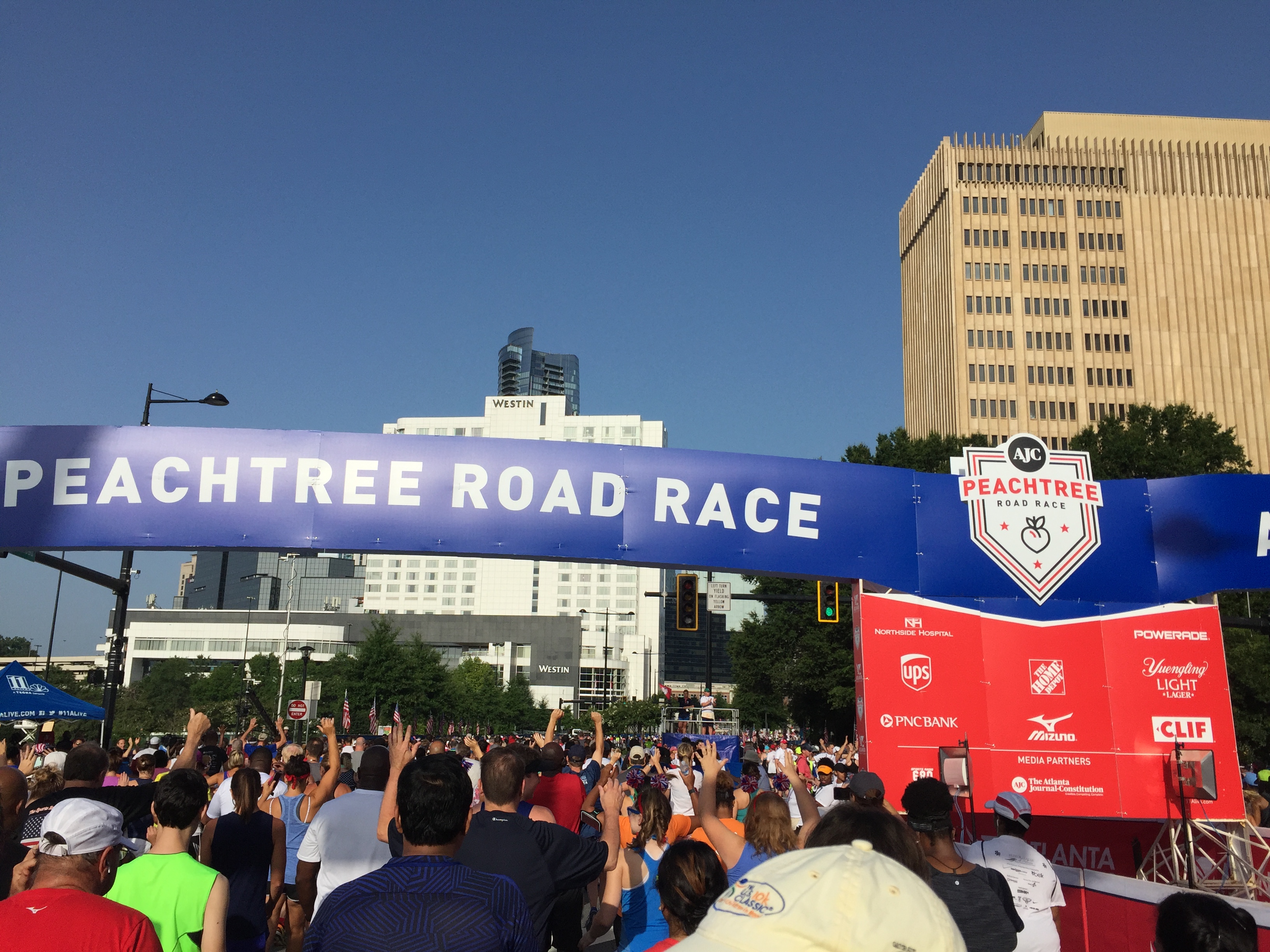







The Peachtreee Road Race, billed as the world’s largest 10K with about 60,000 runners/walkers, is an Atlanta July 4th tradition. Here are some pics from this year’s race.
This is a concise summary on the potential effects of the U.S. Senate’s efforts to ‘repeal and replace’ Obamacare: from NEJM: Health, Wealth, and the U.S. Senate
Here’s an excerpt:
The Better Care Reconciliation Act (BCRA), as the U.S. Senate calls the health care bill released by a small working group of Republican senators last week, is not designed to lead to better care for Americans. Like the House bill that was passed in early May, the American Health Care Act (AHCA), it would actually do the opposite: reduce the number of people with health insurance by about 22 million, raise insurance costs for millions more, and give states the option to allow insurers to omit coverage for many critical health care services so that patients with costly illnesses, preexisting or otherwise, would be substantially underinsured and saddled with choking out-of-pocket payments — all with predictably devastating effects on the health and lives of Americans. What would get “better” under the BCRA is the tax bill faced by wealthy individuals, which would be reduced by hundreds of billions of dollars over the next decade — about $5,000 per year for families making over $200,000 per year and $50,000 or more for those making over $1 million, according to analysis of the AHCA, which included a similar set of tax provisions.1 We believe that that trade-off is not one to which we — physicians, patients, or American society — should be reconciled.
Related blog post: Five Reasons Why Medical Groups Oppose the Senate’s AHCA

St. Vitus Cathedral, Prague
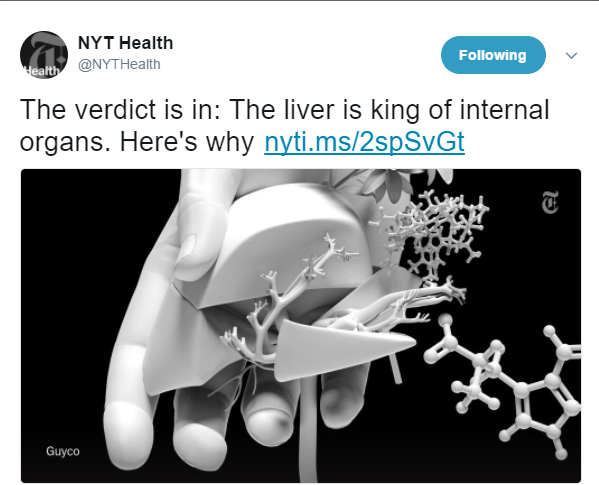
A nice summary of how great our livers are by the NY Times: The Liver: A ‘Blob’ That Runs the Body
An excerpt:
After all, a healthy liver is the one organ in the adult body that, if chopped down to a fraction of its initial size, will rapidly regenerate and perform as if brand-new. Which is a lucky thing, for the liver’s to-do list is second only to that of the brain and numbers well over 300 items, including systematically reworking the food we eat into usable building blocks for our cells; neutralizing the many potentially harmful substances that we incidentally or deliberately ingest; generating a vast pharmacopoeia of hormones, enzymes, clotting factors and immune molecules; controlling blood chemistry; and really, we’re just getting started.
A recent meta-analysis study (L Huang et al. JAMA Pediatr 2017; 17: 426-34 -thanks to Ben Gold for this reference) indicates that antibiotcis can be effective as treatment for acute uncomplicated appendicitis, particularly if no appendolith is present.
From the abstract:
Antibiotic therapy for acute uncomplicated appendicitis is effective in adult patients, but its application in pediatric patients remains controversial.
To compare the safety and efficacy of antibiotic treatment vs appendectomy as the primary therapy for acute uncomplicated appendicitis in pediatric patients.
Randomized clinical trials and prospective clinical controlled trials comparing antibiotic therapy with appendectomy for acute uncomplicated appendicitis in pediatric patients (aged 5-18 years) were included in the meta-analysis. The outcomes included at least 2 of the following terms: success rate of antibiotic treatment and appendectomy, complications, readmissions, length of stay, total cost, and disability days.
A total of 527 articles were screened. In 5 unique studies, 404 unique patients with uncomplicated appendicitis (aged 5-15 years) were enrolled. Nonoperative treatment was successful in 152 of 168 patients (90.5%), with a Mantel-Haenszel fixed-effects risk ratio of 8.92 (95% CI, 2.67-29.79; heterogeneity, P = .99; I2 = 0%). Subgroup analysis showed that the risk for treatment failure in patients with appendicolith increased, with a Mantel-Haenszel fixed-effects risk ratio of 10.43 (95% CI, 1.46-74.26; heterogeneity, P = .91; I2 = 0%).
This meta-analysis shows that antibiotics as the initial treatment for pediatric patients with uncomplicated appendicitis may be feasible and effective without increasing the risk for complications. However, the failure rate, mainly caused by the presence of appendicolith, is higher than for appendectomy. Surgery is preferably suggested for uncomplicated appendicitis with appendicolith.
From a AHC Media synopsis of article:Although antibiotic treatment of acute appendicitis appears effective in many cases, there is a nearly nine-fold higher risk of treatment failure compared with appendectomy, with 26.8% of patients in the antibiotic treatment group requiring interval appendectomy.
My take: My opinion is that surgery is appropriate as first-line treatment for acute uncomplicated appendicitis.
Related blog posts:

View of Omaha Beach from Normandy American Cemetery
A recent study: JMW Wong et al. JAMA Pediatr 2017; 17 e170012 (Thanks to Ben Gold for this reference)
Full Text Link: Effects of Advice to Drink 8 Cups of Water per Day in Adolesents with Overweight or Obesity: A Randomized Clinical Trial
Among 38 adolescents with overweight or obesity, participants were divided into a water group and a control group. The water group received “well-defined messages about water through counseling and daily text messages, a water bottle, and a water pitcher with filters.”
Key findings:
My take: Advice and behavioral supports to consume 8 cups of water per day are likely to fall short and do not seem to enhance weight loss.
Related blog posts:

Normandy American Cementary
In an industry-sponsored study (TD Walters et al. Inflamm Bowel Dis 2017; 23: 967-75), adalimumab (ADA) was shown to be effective agent in reversing growth failure associated with pediatric Crohn’s disease (CD).
Background: About one-third of children and adolescents with CD suffer from growth failure and delayed puberty. Several prior studies have shown that anti-TNF therapy can improve height velocity and that early treatment with anti-TNF therapy (≤3 months after diagnosis) leads to greater improvement in height obtained, if initiated before puberty or early into puberty. This study examines the effectiveness of ADA in children from the IMAgINE 1 trial.
The authors identified 73 participants with growth delays (& adequate data) along with 27 participants with no growth delays.
Key findings:
My take: In moderate to severe CD, anti-TNF agents have been demonstrated to reverse growth failure; though, this is expected to occur only in patients with clinical response. To my knowledge, no other CD medical therapies have been proven to reverse growth failure (surgical treatment can improve growth as well).
Related blog posts:

Quiet Spot on U Chicago Campus
A recent study (A Yada et al. Inflamm Bowel Dis 2017; 23: 853-7) finds that insurance policies are not in compliance with expert guidelines. The authors reviewed 79 policies from the top insurance companies to examine their policies regarding anti-TNF agents, vedolizumab, and ustekinumab. These policies were compared with the American Gastroenterological Association (AGA) clinical pathway recommendations for ulcerative colitis (UC) and Crohn’s disease (CD).
Key findings:
Discussion from authors:
My take (from authors): “Most insurance companies do not comply with the current standard of care for treating IBD.” My expectation is that these problems will continue and/or worsen as the options for IBD treatment become more complex.

Normandy American Cementary
In a recent study (O Jadresin et al. JPGN 2017; 64: 925-9), 55 children with functional abdominal pain or irritable bowel syndrome were randomized (prospective, double-blind, placebo-controlled study) to either L reuteri DSM or placebo.
Key findings:
Limitation: Small number of patients -the estimated samples size was not reached
My take: This study suggests that probiotics may help some pediatric patients with irritable bowel syndrome. Trying to identify which patients should receive a probiotic and which probiotic should be selected remains unclear.
Related blog posts:

Pierre Renoir’s portrait of Claude Monet, Musee d’Orsay
Thanks to Kipp Ellsworth Twitter feed for reference: Nutritional and Dietary Interventions for Autism Spectrum Disorder: A Systematic Review N Sathe Pediatrics 2017; vol 139.
Abstract:
CONTEXT: Children with autism spectrum disorder (ASD) frequently use special diets or receive nutritional supplements to treat ASD symptoms.
OBJECTIVES: Our objective was to evaluate the effectiveness and safety of dietary interventions or nutritional supplements in ASD.
DATA SOURCES: Databases, including Medline and PsycINFO.
STUDY SELECTION: Two investigators independently screened studies against predetermined criteria.
DATA EXTRACTION: One investigator extracted data with review by a second investigator. Investigators independently assessed the risk of bias and strength of evidence (SOE) (ie, confidence in the estimate of effects).
RESULTS: Nineteen randomized controlled trials (RCTs), 4 with a low risk of bias, evaluated supplements or variations of the gluten/casein-free diet and other dietary approaches. Populations, interventions, and outcomes varied. Ω-3 supplementation did not affect challenging behaviors and was associated with minimal harms (low SOE). Two RCTs of different digestive enzymes reported mixed effects on symptom severity (insufficient SOE). Studies of other supplements (methyl B12, levocarnitine) reported some improvements in symptom severity (insufficient SOE). Studies evaluating gluten/casein-free diets reported some parent-rated improvements in communication and challenging behaviors; however, data were inadequate to make conclusions about the body of evidence (insufficient SOE). Studies of gluten- or casein-containing challenge foods reported no effects on behavior or gastrointestinal symptoms with challenge foods (insufficient SOE); 1 RCT reported no effects of camel’s milk on ASD severity (insufficient SOE). Harms were disparate.
LIMITATIONS: Studies were small and short-term, and there were few fully categorized populations or concomitant interventions.
CONCLUSIONS: There is little evidence to support the use of nutritional supplements or dietary therapies for children with ASD.
Related blog post: Gluten-free, Casein-free -No improvement in Autism

Bayeux, France
Many analysts have described the American Health Care Act (AHCA) as essentially an 800 billion dollar tax cut which as a consequence eliminates health care coverage for more than 20 million.
Some of the reasons why almost all major medical groups oppose the repeal/replace effort of the Affordable Care Act are summarized from NBC News. In brief, they are the poor, the elderly, children, women, and those with preexisting conditions –all disadvantaged if the AHCA passes.
NBC News: Just About Every Major Medical Group Hates the GOP Healthcare
An excerpt -regarding children:
Medicaid covers 75 million people, including nearly 36 million children, according to data released Friday by the Center for Medicare and Medicaid Services..
“Senate leaders present their bill as providing states with flexibility. The reality is that it will put considerable pressure on states to limit their spending on health care, including for children,” said Dr. Matthew Davis, a professor of pediatrics and of medicine at Northwestern University Feinberg School of Medicine.
“The bill includes misleading ‘protections’ for children by proposing to exempt them from certain Medicaid cuts,” added Dr. Fernando Stein, president of the American Academy of Pediatrics.
“A ‘carve-out’ for children with ‘medically complex’ health issues does little to protect their coverage when the base program providing the coverage is stripped of its funding. Doing so forces states to chip away coverage in other ways, by not covering children living in poverty who do not have complex health conditions, or by scaling back the benefits that children and their families depend on,” Stein added.
Related blog posts:

 gutsandgrowth