Cholecardia

An interesting study (MS Desai et al. Hepatology 2017; 65: 189-201) examines the effect of excess bile acids on the heart.  The abstract is listed below -I’ve highlighted what I find fascinating:

Cardiac dysfunction in patients with liver cirrhosis is strongly associated with increased serum bile acid concentrations. Here we show that excess bile acids decrease fatty acid oxidation in cardiomyocytes and can cause heart dysfunction, a cardiac syndrome that we term cholecardia. Farnesoid X receptor; Small Heterodimer Partner double knockout mice, a model for bile acid overload, display cardiac hypertrophy, bradycardia, and exercise intolerance. In addition, double knockout mice exhibit an impaired cardiac response to catecholamine challenge. Consistent with this decreased cardiac function, we show that elevated serum bile acids reduce cardiac fatty acid oxidation both in vivo and ex vivo. We find that increased bile acid levels suppress expression of proliferator-activated receptor-γ coactivator 1α, a key regulator of fatty acid metabolism, and that proliferator-activated receptor-γ coactivator 1α overexpression in cardiac cells was able to rescue the bile acid-mediated reduction in fatty acid oxidation genes. Importantly, intestinal bile acid sequestration with cholestyramine was sufficient to reverse the observed heart dysfunction in the double knockout mice.

CONCLUSIONS:

Decreased proliferator-activated receptor-γ coactivator 1α expression contributes to the metabolic dysfunction in cholecardia so that reducing serum bile acid concentrations may be beneficial against the metabolic and pathological changes in the heart.

My take: There are a lot of reasons why having elevated bile acids is not a good thing. This study provides good evidence that these bile acids have specific cardiac toxicity.

Cozumel

Cozumel

Orphan Drugs –Very Profitable

Did you know that Remicade and Humira are orphan drugs?  For those concerned about pharmaceutical costs, a recent NPR article is a must.

From NPR: Drugs For Rare Diseases Have Become Uncommonly Rich Monopolies

Here’s an excerpt:

Lucrative financial incentives created by the Orphan Drug Act signed into law by President Reagan in 1983 succeeded far beyond anyone’s expectations. More than 200 companies have brought almost 450 so-called orphan drugs to market since the law took effect.

Yet a Kaiser Health News investigation shows that the system intended to help desperate patients is being manipulated by drugmakers to maximize profits and to protect niche markets for medicines already being taken by millions. The companies aren’t breaking the law but they are using the Orphan Drug Act to their advantage in ways that its architects say they didn’t foresee or intend. Today, many orphan medicines, originally developed to treat diseases affecting fewer than 200,000 people, come with astronomical price tags…

More than 70 were drugs first approved by the Food and Drug Administration for mass market use. These medicines, some with familiar brand names, were later approved as orphans. In each case, their manufacturers received millions of dollars in government incentives plus seven years of exclusive rights to treat that rare disease, or a monopoly…

When a drugmaker wins approval of a medicine for an orphan disease, the company gets seven years of exclusive rights to the marketplace, which means the FDA won’t approve another version to treat that rare disease for seven years, even if the brand name company’s patent has run out. The exclusivity is compensation for developing a drug designed for a small number of patients whose total sales weren’t expected to be that profitable…

Industry-wide, orphan drug tax credits cost the federal government $1.76 billion in fiscal 2016

My take: Any objective observer would recognize that the goals of the Orphan Drug Act are being subverted by current practice and changes are needed to achieve the goals of targeting rare diseases and reasonable medication costs.

screenshot-66


Related blog posts:

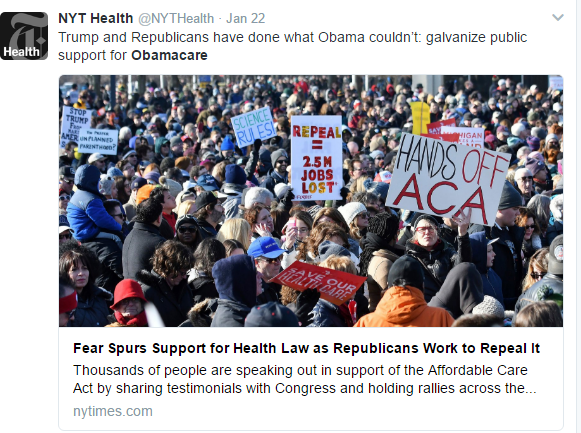
Repealing the Affordable Care Act Without a Replacement

Barack Obama, in a perspective article (BH Obama. NEJM January 6, 2017; DOI: 10.1056/NEJMp1616577), explains the hazards of “repeal and delay.”

Here’s a link to the full text: Repealing the ACA without a Replacement — The Risks to American Health Care

Here’s an excerpt:

Put simply, all our gains are at stake if Congress takes up repealing the health law without an alternative that covers more Americans, improves quality, and makes health care more affordable. That move takes away the opportunity to build on what works and fix what does not. It adds uncertainty to lives of patients, the work of their doctors, and the hospitals and health systems that care for them. And it jeopardizes the improvements in health care that millions of Americans now enjoy.

Congress can take a responsible, bipartisan approach to improving the health care system. This was how we overhauled Medicare’s flawed physician payment system less than 2 years ago. I will applaud legislation that improves Americans’ care, but Republicans should identify improvements and explain their plan from the start — they owe the American people nothing less.

Health care reform isn’t about a nameless, faceless “system.” It’s about the millions of lives at stake — from the cancer survivor who can now take a new job without fear of losing his insurance, to the young person who can stay on her parents’ insurance after college, to the countless Americans who now live healthier lives thanks to the law’s protections. Policymakers should therefore abide by the physician’s oath: “first, do no harm.”

A related article from the LA Times indicates that Aetna misled the public with regard to its reasons for pulling out of several exchanges: Link:U.S. judge finds that Aetna misled the public about its reasons for quitting Obamacare

An excerpt:

The judge’s conclusions about Aetna’s real reasons for pulling out of Obamacare — as opposed to the rationalization the company made in public — are crucial for the debate over the fate of the Affordable Care Act. That’s because the company’s withdrawal has been exploited by Republicans to justify repealing the act. Just last week, House Speaker Paul Ryan (R-Wisc.) cited Aetna’s action on the “Charlie Rose” show, saying that it proved how shaky the exchanges were. ..

Bates found that this rationalization was largely untrue. In fact, he noted, Aetna pulled out of some states and counties that were actually profitable to make a point in its lawsuit defense — and then misled the public about its motivations.

Related blog posts:

screenshot-77

Cystic Fibrosis Expert Update 2017

During one of our recent group clinical meetings, one of my partners (Edith Pilzer, MD) presented an update on cystic fibrosis.

Here is a link to her slides:Link: cf-presentation

Here are a few of my notes:

There has been a great improvement in survival of cystic fibrosis patients..  From the Cystic Fibrosis Foundation:

  • ” Today the median predicted survival age is close to 40. This is a dramatic improvement from the 1950s, when a child with CF rarely lived long enough to attend elementary school.”

cftr2org  —website provide information on specific genotypes, including whether genotype is associated with pancreatic insufficiency

From the website:

  • This website provides information for members of the general public, including cystic fibrosis patients and their family members, about what is currently known about specific genetic variants related to cystic fibrosis.
  • Patients and their family members are encouraged to visit the section, “For patients and family members” first.
  • This website also provides more in-depth research-related information for health care professionals and researchers

Pancreatic enzyme replacement therapy (PERT) (see slides)

  • Creon 3000 beads are small enough to go through Gastrostomy tube
  • Pertzye has bicarbonate; thus, additional acid blocker administration is usually not needed
  • Viokase is hard to obtain
  • Relizorb –external lipase cartiledge.  This allows formula, delivered by NG, to run through column and obviates the need for additional PERT dosing.  One cartridge designed for 500 cc but several cartridges can be ‘piggy-backed.’ Here is website: relizorb.com.  Relizorb intent is to eliminate enzymes for night feeds, though it only has lipase; yet, there still could be a need additional PERT for protease and amylase.  Potentially PERT could be administered before or after and hopefully avoid awakening at night for enzymes..

Cystic Fibrosis Related Diabetes (CFRD)

  • Frequent reason for poor growth
  • Now, with increased survival, ~35% of Cystic Fibrosis patients develop CFRD

Distal Intestinal Obstruction Syndrome (DIOS)

  • If mild, treatment with miralax is reasonable
  • If vomiting, consider surgery consult
  • If more than mild, consider water-soluble enema with 10% mucomyst

My take: Great update.  Edith has been taking care of children with cystic fibrosis for more than 30 years and has witnessed/participated in the improvement in the survival of these patients.

Related blog posts:

Disclaimer: These blog posts are for educational purposes only. Specific dosing of medications (along with potential adverse effects) should be confirmed by prescribing physician.  This content is not a substitute for medical advice, diagnosis or treatment provided by a qualified healthcare provider. Always seek the advice of your physician or other qualified health provider with any questions you may have regarding a condition.


Puerto Rico

Puerto Rico

Quick Take: Preventing Recurrent Clostridium difficile Infection with Bezlotoxumab

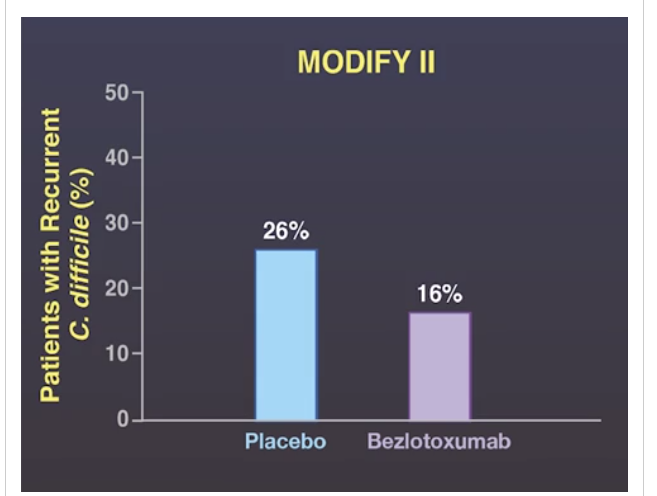
A recent study on a new monoclonal antibody to prevent Clostridium difficile infection is available from the NEJM.  Here’s the link: Preventing Clostridium difficile Infection Recurrence

screenshot-79

screenshot-81

screenshot-83

My take: In Modify I and Modify II, Bezlotoxumab reduced the rate of Clostridium difficile recurrence in elderly patients (median age 66 years). In a high risk patients, the likely hefty cost of this medication may be warranted.

These studies were likely pivotal in receiving FDA approval: FDA Approves Merck’s ZINPLAVA™ (bezlotoxumab) to Reduce Recurrence of Clostridium difficile Infection

Constipation Video from Primary Children’s Hospital

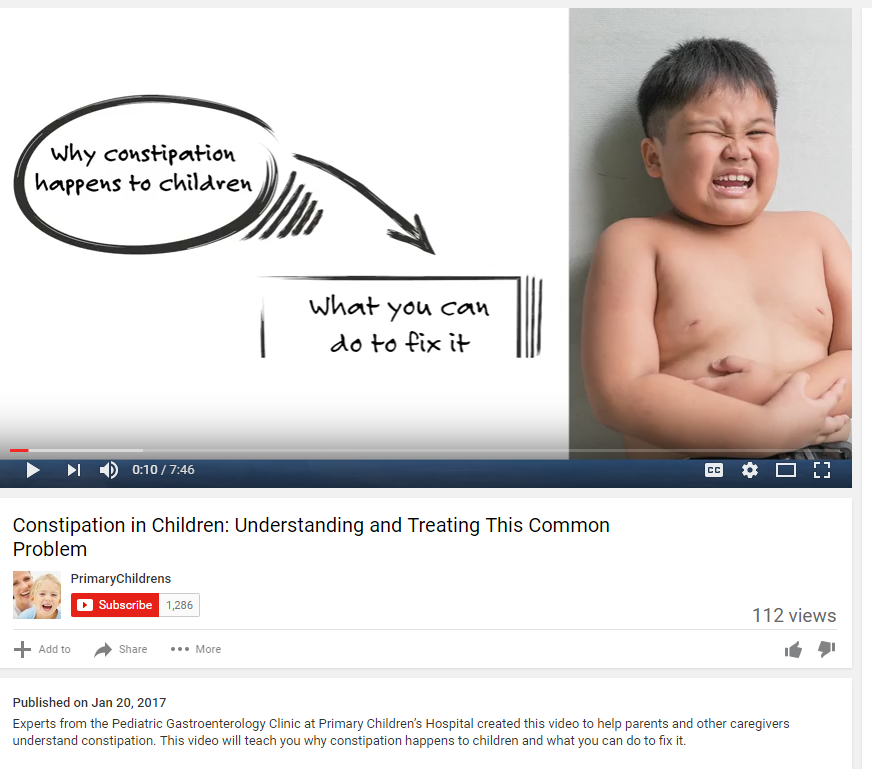
This is a really good educational video (< 8min) -now on YouTube: Constipation in Children: Understanding and Treating This Common Problem (Thanks to John Pohl’s twitter feed for this resource)

screenshot-78

Related blog posts:


Cost Effectiveness & Underpowered Studies

A recent study (ALT Ma et al. J Pediatr 2016; 179: 216-8) reaches a conclusion that questions the cost-effectiveness of pretreatment TPMT activity in pediatric patients. In my opinion, this retrospective study is ridiculous. Here’s why:

The authors examined thiopurine transmethyltransferase (TPMT level) in 228 children before starting a thiopurine. They found the following:

  • Only 2 patients experienced mild neutropenia
  • 12% of their cohort had intermediate activity and 88% normal TPMT activity

I agree with their conclusion that routine blood tests are needed following institution of thiopurines, I think stating that “from an economic point of view –the cost for testing TPMT enzyme activity was high without major clinical benefit” cannot be made with such a small study.  Deficient TPMT activity occurs in about 1 in 300.  If a single patient develops bone marrow suppression due to a thiopurine medication, this can lead to a horrific and prolonged hospitalization.  The cost of such a hospitalization, both economically and emotionally, is enormous.

My take: If I were taking a thiopurine, I would want to know if I metabolized this medication at a slower rate and was at increased risk for bone marrow suppression.  My hunch is the authors would not forgo checking a TPMT level on themselves despite their study’s conclusion, particularly if they have ever witnessed a patient with thiopurine-induced bone marrow suppression.

Related blog posts:

Grand Prismatic Spriing, Yellowstone

Grand Prismatic Spriing, Yellowstone

Briefly noted: PFAPA Study

U Lantto et al. J Pediatr 2016; 179: 172-7.  This retrospective study showed that tonsillectomy was highly effective in children with PFAPA (periodic fever, aphthous stomatitis, pharyngitis, and adenitis) -both those with classic features and incomplete features.

“In the group that met Thomas criteria, 97% (56/58) had complete resolution of fever episodes after tonsillectomy; in the group that did not meet Thomas criteria (50/50) had complete resolution.”

Thomas criteria:

  1. Recurring fevers with early age of onset (<5 years) [the authors suggest a minimum of 5 episodes]
  2. Constitutional symptoms in the absence of over upper respiratory infection with at least one of the following: aphthae, cervical adenitis, pharyngitis
  3. Exclusion of cyclic neutropenia
  4. Completely asymptomatic interval between episodes
  5. Normal growth and development

whater


Quick Take on Migraine Study

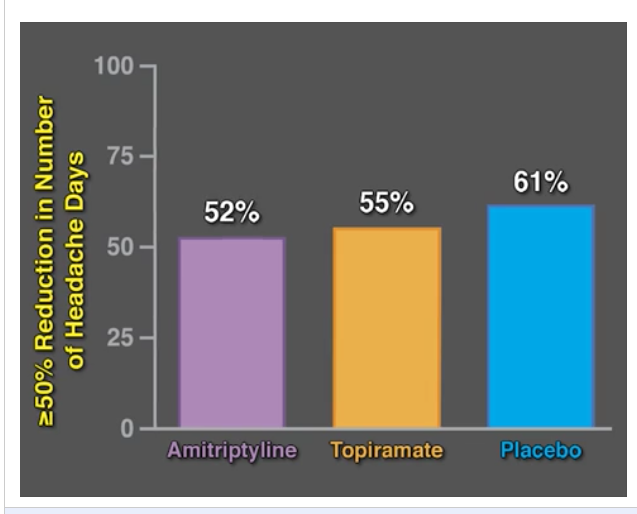
For those who missed this important pediatric study, a quick take ~2 min video link: Pediatric Migraine CHAMP Study

screen-shot-2017-01-12-at-9-49-36-pm

screen-shot-2017-01-12-at-9-50-34-pm

Related blog postTopamax and Amitriptyline Did Not Work for Pediatric Migraines

My take: It looks like placebo did pretty well with >60% response rate.  In a commentary on this subject, the authors noted that when patients are seen by the physician, the symptoms are often severe.  So, some improvement is expected, in part, due to regression to the mean; that is, it is common to return to their baseline level of symptoms.