Changing Threshold for Blood Transfusion for Iron Deficiency Anemia

DLR Sun et al. J Pediatr 2024; 266: 113878. Hemoglobin Threshold for Blood Transfusion in Young Children Hospitalized with Iron Deficiency Anemia

Background: This retrospective single-center study examined the transfusion threshold in children 6 months to 36 months (mean 18.5 months, n=125) in light of current society recommendations which advise against blood transfusion in hemodynamically stable children with iron deficiency anemia.

Key findings:

  • “A hemoglobin of 39 g/L had sensitivity 92% and specificity 72% for transfusion.”
  • In this study, there were 38 children with a hemoglobin <50 g/L who were NOT transfused

Discussion points:

  • “There is a paucity of evidence to support a hemoglobin threshold for transfusion in the management of iron deficiency anemia (IDA)….McEvoy et al recently developed an algorithm for the management of young children with IDA in the ED with a consensus of surveyed hematologists recommending a hemoglobin of <50 g/L be used for transfusion.”
  • In one study, “the median time to increased hemoglobin by at least 20 g/L…was 7 days for children receiving iron sucrose and 44 days for children receiving oral iron alone.”

My take: In children without active bleeding who are hemodynamically stable, more restrictive use of transfusion is now standard practice. In clinical practice, the exact threshold for transfusion is not clear. This study suggests that it is somewhere between 3.9 g/dL and 5 g/dL.

Related blog posts (regarding anemia and active bleeding):

Traffic Jam on St John, VI

Disclaimer: This blog, gutsandgrowth, assumes no responsibility for any use or operation of any method, product, instruction, concept or idea contained in the material herein or for any injury or damage to persons or property (whether products liability, negligence or otherwise) resulting from such use or operation. These blog posts are for educational purposes only. Specific dosing of medications (along with potential adverse effects) should be confirmed by prescribing physician.  Because of rapid advances in the medical sciences, the gutsandgrowth blog cautions that independent verification should be made of diagnosis and drug dosages. The reader is solely responsible for the conduct of any suggested test or procedure.  This content is not a substitute for medical advice, diagnosis or treatment provided by a qualified healthcare provider. Always seek the advice of your physician or other qualified health provider with any questions you may have regarding a condition.

Dr. YouTube for IBD Dietary Advice

K Gkikas et al. Inflamm Bowel Dis 2024; Volume 30, March 2024, 347–356. Open Access! YouTube as a Source of Information for Food, Diet-Related Items, and Advisory Comments for the Management of Inflammatory Bowel Disease

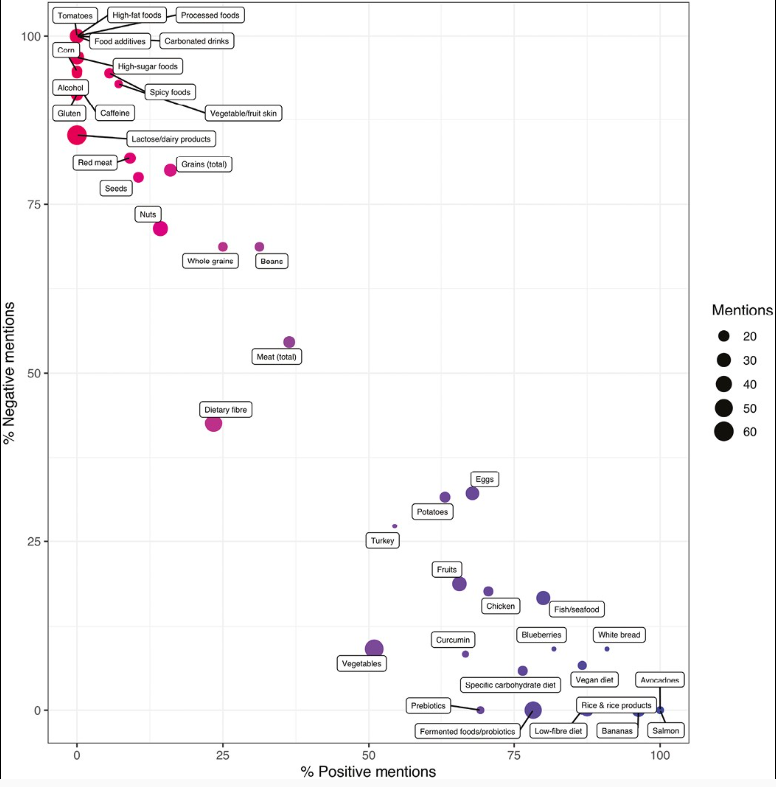
The authors assessed videos discussing dietary aspects (food, diet-related items, and advisory comments [FODRIACs]) on YouTube. Of 1800 videos screened, a total of 160 were included in the final analysis.

Background: “Currently, the only well-established dietary treatment in IBD is exclusive enteral nutrition (EEN), which is used for induction of remission mostly in pediatric CD.5,6 Over the past 2 decades, several food-based exclusion diets have been suggested as potential treatments for CD and UC, some of which demonstrated promising efficacy signals such as the CD-TREAT (Crohn’s disease treatment with eating) diet and the CDED (Crohn’s disease exclusion diet).7-9 Nonetheless, current societal guidelines do not recommend the use of any solid food–based exclusion diet as a treatment option for the induction or maintenance of clinical remission in IBD.6

Key findings:

  • Foods pertinent to a prudent dietary pattern (ie, fish, chicken, avocado, blueberries), foods high in pre- and probiotics, and certain food exclusion diets (eg, SCD) were primarily portrayed as beneficial.
  • Foods often associated with a Western dietary pattern, including processed foods, high-sugar foods and high-fat foods, red meat, and alcohol, were considered detrimental for disease outcomes in patients with IBD.
  • Neutral opinions were expressed about fiber and vegetables.
  • There was a higher video interaction rate and number of likes in patient-generated videos compared with videos from healthcare professionals.
  • Only 3% of all patient videos and 35% of videos from healthcare professionals cited any form of scientific evidence.
  • Problems with diet advice is that extensive dietary restrictions and adherence to extreme diets may lead to the development of disordered eating as well as nutrient deficiencies (nutritionist involvement is important to avoid this). In addition, reliance on unproven diets may lead some patients to forgo proven therapies.

My take: Though there are some overlapping advice in these videos, much of the dietary advice on YouTube (and elsewhere) is conflicting. In part, this reflects the lack of evidence-based dietary guidelines for IBD. Physicians should review information on dietary therapies at diagnosis and request that families contact them (or well-qualified nutritionists) when considering dietary modifications.

Related blog posts:

So Long to $1 Hot Dogs in Philly

Since baseball season is now getting started, I wanted to share this news story (which is a real story and not The Onion):

An excerpt:

“For more than a quarter-century, Phillies fans considered dollar hot dog night among the best ballpark promotions — but the team has now decided it was the wurst…Armed with projectile frankfurters, some unruly Phillies fans began chucking their favorite Hatfield meat during a game last year, and the dogs soared like cans of corn throughout the stands and onto the field…”

“It wasn’t just the throwing,” said John Weber, senior vice president, Phillies ticket operations and projects. “It’s the concourse, the crowds of everybody being at the same X amount of stands. But obviously, you know, the throwing was a little bit of a tipping point…” 

“Hey, there is still a chance in Philly to always snag a free hot dog — just catch one out of the Phanatic’s famed hot dog launcher.”

Related blog post: Hot Study on Hot Dogs & Healthy Eating Habits

OUtMATCHing Food Allergies?

  • GWK Wong. NEJM 2024; 390: 946-948 (commentary).
  • RA Wood, et al. NEJM 2024; 390: 889-899.Omalizumab for the Treatment of Multiple Food Allergies

The Omalizumab as Monotherapy and as Adjunct Therapy to Multi-Allergen Oral Immunotherapy in Food Allergic Participants (OUtMATCH) trial was designed as a multistage clinical trial to evaluate the safety and efficacy of omalizumab in persons with multiple food allergies. This publication received a lot publicity in multiple media outlets (one example below) and has been labelled a “landmark” study. For a more sober assessment of this study, I recommend reviewing the commentary by Dr. Gary Wong.

Background: “Food allergy is common, affecting up to 8% of children and 10% of adults in the United States.1,2

The key findings from the study:

In this double-blind, randomized, placebo-controlled study in patients with at least three food allergies (all with peanut), the authors found that omalizumab, a monoclonal anti-IgE antibody injected every 2-4 weeks for 16-20 weeks (then a 24-week open-label extension) had the following results:

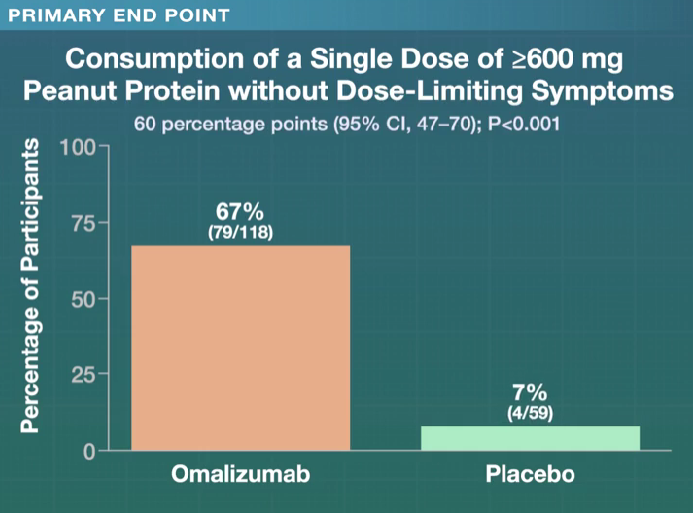
  1. A total of 79 of the 118 children/adolescent participants (67%) receiving omalizumab met the primary end-point criteria (tolerating a single dose of at least 600 mg of peanut protein, a peanut is ~250 mg), as compared with 4 of the 59 participants (7%) receiving placebo (P<0.001).
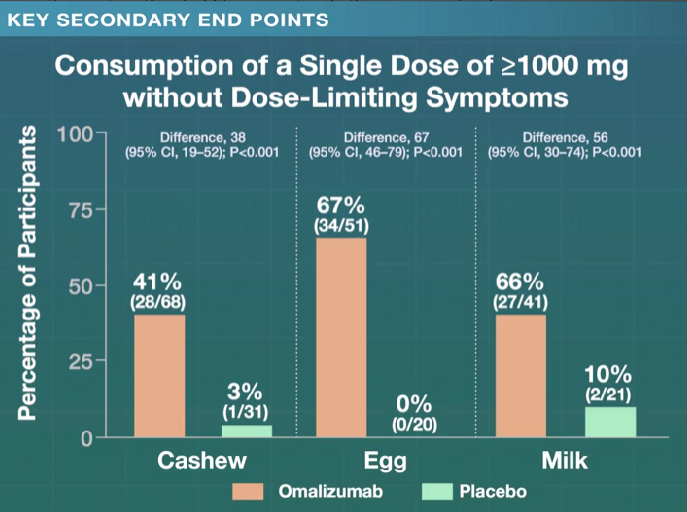
  2. Results for the key secondary end points were consistent with those of the primary end point (cashew, 41% vs. 3%; milk, 66% vs. 10%; egg, 67% vs. 0%; P<0.001 for all comparisons).

The editorial points out the following:

  1. “The concept of using anti-IgE antibody to protect patients with severe food allergy is not new. A randomized trial published in the Journal 20 years ago showed that the use of a humanized IgG1 monoclonal antibody, TNX-901, could significantly increase the threshold of reaction in patients with peanut allergy.5
  2. “21% of the participants had a decreased reaction threshold at the end of the extension period.” (?Will this ‘safety net’ continue to work in the long run)
  3. “With regard to quality-of-life assessments, no changes from baseline were seen in either caregiver or participant scores at the end of the first stage of the trial.”
  4. “In clinical trials assessing new therapies for food allergy, investigators have primarily selected reaction thresholds as the primary outcome. In real life, people want treatments that will decrease the risk of accidental allergic reactions, lift the burden on their daily lives, simplify their dietary restrictions, and improve their quality of life.”
  5. “Persons who opt to receive omalizumab must be informed that the possible protection will most likely disappear after omalizumab treatment is stopped.”
  6. “Data regarding the possible benefits of omalizumab with respect to important patient-centered outcomes and quality of life are needed before we can make recommendations for patients in clinical practice.”

NBC News 2/25/24: Newly approved drug protects against multiple food allergies, giving an ‘extra layer of comfort’ Earlier this month, the Food and Drug Administration expanded the approval for Xolair for certain kids and adults with food allergies, based on the results of the clinical trial…In the U.S., Xolair is made by drugmakers Genentech and Novartis. A spokesperson for Genentech said the estimated monthly list price for the drug is around $2,900 for children and $5,000 for adults

My take: This is a very expensive therapy that is likely to help only if maintained indefinitely. Whether it provides a durable benefit or truly improves clinical outcomes has not been established. I anticipate early adoption mainly in patients with severe allergies, especially in those with documented severe reactions.

Related blog posts:

IBD Updates: Newer biologics for post-op Crohn’s, Vedolizumab-exposed newborns, and Anti-TNF injections for Orofacial Granulomatosis

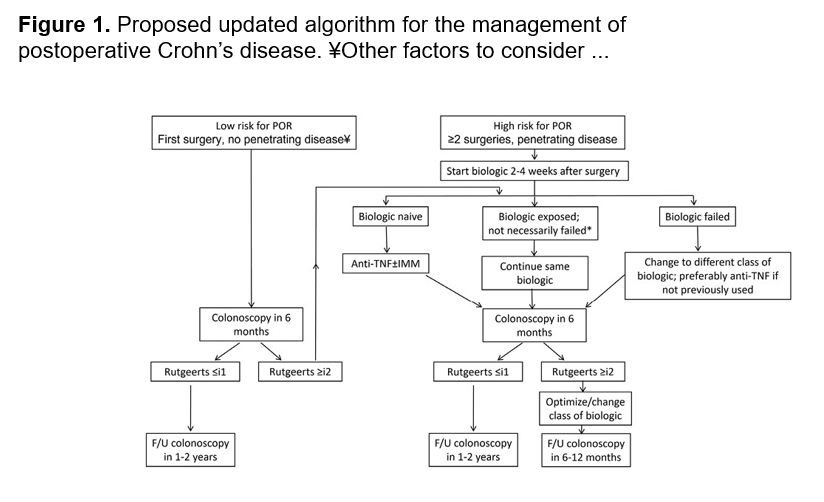
FH Mourad et al. Inflammatory Bowel Diseases, Volume 30, Issue 3, March 2024, Pages 459–469. Open Access! Are the New Biologics Effective in the Management of Postoperative Crohn’s Disease?

In this  a systematic review, the authors identified 32 relevant studies. The literature review revealed some encouraging, although conflicting, results on the role of the newer biologic agents, ustekinumab and vedolizumab, in the prevention and treatment of postoperative Crohn’s disease. My take: More high-quality studies are needed to determine the effectiveness of these newer biologics at preventing recurrence disease activity after resection.

This is their recommended management algorithm:

 ¥Other factors to consider are duration of Crohn’s disease,
age of patient at diagnosis, and length of stricture.

—————————————

JH Gorodensky et al. Inflammatory Bowel Diseases, Volume 30, Issue 3, March 2024, Pages 496–498. Serious Infections in Offspring Exposed in Utero to Vedolizumab

Background/Methods:  “Offspring exposed to vedolizumab in utero are born with lower blood drug (relative to maternal drug levels) compared with offspring exposed to TNFi or ustekinumab.4,5 In addition, offspring exposed to vedolizumab are known to clear the drug quickly after birth.6” In this IBM MarketScan database cohort of 8507 offspring to women with IBD, 43 offspring were exposed to vedolizumab. Key findings:

Key finding: The cumulative incidence of serious infection at 1 year was 2.3% in the vedolizumab group. This was lower than in those who had no drug exposure (3.0%) and similar to the rate in the TNFi (2.9%), traditional immunosuppressants (2.5%), and groups. Discussion: “This aligns with data from the PIANO study,5 a French retrospective cohort study,8 and the pan-European CONCEIVE study9

My take: This article title is textbook clickbait. A more accurate title would be “Lack of Serious Infections in Offspring Exposed in Utero to Vedolizumab”

——————————————

J Lee et al. Inflammatory Bowel Diseases, Volume 30, Issue 3, March 2024, Pages 499–500. Intralesional Injections of a TNF-α Inhibitor to Treat Orofacial Granulomatosis

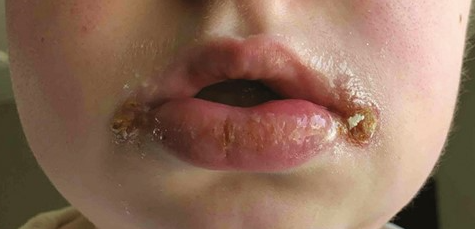
This case report demonstrated successful injection of orofacial granulomatosis in a 24 yo with moderate-to-severe CD of the small and large intestines who presented with facial edema, painful lip sores with crusting, and tongue fissures. After numerous other failed treatments (topical steroids, adalimumab, hydroxychloroquine, prednisone, and methotrexate), the patient who had a mild treatment response to certolizumab had three injections split between thigh and lower lip (intralesional). After improvement, the patient continued to maintain response with injections into the thigh.

My take: This is an interesting case report; however, this is not an established therapy for orofacial granulomatosis.

FDA-Approved Subcutaneous Infliximab (Zymfentra) Now Available

Celltrion USA (3/17/24): ZYMFENTRA™(infliximab-dyyb), the first and only FDA-approved subcutaneous infliximab, now commercially available in the U.S.

Excerpts:

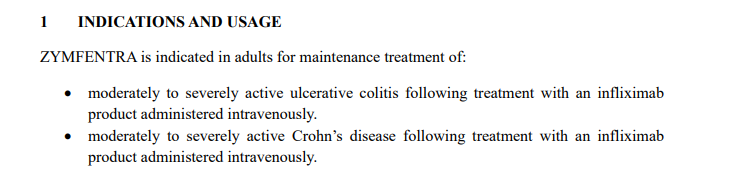
  • “ZYMFENTRA is approved for maintenance therapy in adults with moderately to severely active ulcerative colitis (UC) or moderately to severely active Crohn’s disease (CD) following an induction treatment regimen with an infliximab product administered intravenously. The recommended dose of ZYMFENTRA for maintenance treatment is 120 mg every two weeks.”
  • ” ZYMFENTRA is considered a new biologic with a first-approved subcutaneous administration form and thus will be under patent protection for its dosage form by 2037 and for its route of administration by 2040.”

FDA Label: Zymfentra Prescribing Information

My take: If the cost of the subcutaneous infliximab is competitive with the intravenous formulations, then this is going to result in a lot less infusions. Currently, this product does not have a pediatric indication. Projected cost per internet search: $6,181.08 for two shots over four weeks.

Related blog posts:

Plastics and Cardiac Outcomes: “Plastics Are Neither As Safe Nor As Inexpensive As They Seem”

R Marfella et al. NEJM 2024; 390: 900-910. Microplastics and Nanoplastics in Atheromas and Cardiovascular Events

The authors conducted a prospective, multicenter, observational study involving patients who were undergoing carotid endarterectomy for asymptomatic carotid artery disease with 257 patients who completed a mean follow-up of 34 months.

Key findings:

  • Polyethylene was detected in carotid artery plaque of 150 patients (58.4%), with a mean level of 21.7±24.5 μg per milligram of plaque; 31 patients (12.1%) also had measurable amounts of polyvinyl chloride, with a mean level of 5.2±2.4 μg per milligram of plaque.
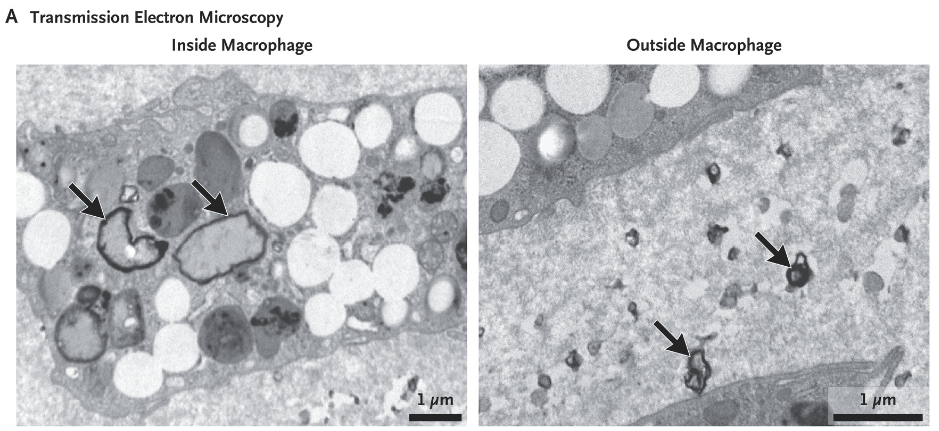
  • Electron microscopy revealed visible, jagged-edged foreign particles among plaque macrophages and scattered in the external debris.
  • There was a 4.5 -fold increase of the composite of all-cause mortality, heart attack and stroke in patients in whom microplastics and nanoplastics (MNPs) were detected within the atheroma than in those in whom these substances were not detected (hazard ratio, 4.53)
“Panel A shows transmission electron microscopy images of particles of high internal electron transparency contoured by a very thin electron opaque line. These particles do not resemble usual organic material owing to their particularly irregular shape. These particles (arrows) were detected inside living macrophages and outside in the amorphous material of the plaque (arrows).”

Discussion notes that “according to a World Health Organization statement, MNPs larger than 150 μm or 10 μm in diameter, respectively, are not absorbed into blood and do not penetrate blood vessels.25 Our findings suggest that nanoplastics, rather than microplastics, might accumulate in sites of atherosclerosis…Given the wide distribution and availability of MNPs, the attribution of all potential sources in humans is nearly impossible.”

“It is important to note that our results do not prove causality. The association between the presence of MNPs within plaque and the incidence of a composite of cardiovascular disease or death outcomes may also entail the risk from exposure to other residual, unmeasured confounding variables.”

Image available on X (formerly called twitter)

The associated editorial (PJ Landrigan. NEJM 2024; 390: 948-950) provides some additional context and notes the need for wide-scale transition form fossil carbon.

Key points:

  • “Plastics have enabled extraordinary advances in virtually every area of medicine and have made our lives immeasurably more convenient. Multiple lines of evidence now indicate, however, that plastics are neither as safe nor as inexpensive as they seem. The benefits of plastics come at great and increasingly visible costs to human health and the environment.”
  • “Plastics comprise a polymer matrix plus thousands of chemical additives that impart such properties as color, stability, flexibility, flame resistance, and water repellency. Many additives are toxic; these include carcinogens, neurotoxicants, and endocrine disruptors such as bisphenols and perfluorinated and polyfluorinated substances that can disrupt lipid metabolism and increase the risk of diabetes, cardiovascular disease, and stroke.2
  • “Worldwide, the annual output … to approximately 400 million tons today.3 This output is projected to double by 2040 and triple by 2060…Disposable, single-use items account for about 40% of current production and contribute disproportionately to the accumulation of plastic waste.”
  • ” Data from the National Biomonitoring Surveys of the Centers for Disease Control and Prevention (https://www.cdc.gov/biomonitoring/index.html. opens in new tab) suggest that plastic additive chemicals are present in the bodies of nearly all Americans. The Minderoo Monaco Commission has concluded that plastics endanger human health at every stage of the plastic life cycle.1

My take: This study provides further evidence that plastics, while incredibly important and convenient, take a huge toll on the environment and are increasingly recognized as having harmful effects on the the human body. In the same issue, is a review article “Health Effects of Fossil Fuel-Derived Endocrine Disrupters.” However, trying to reduce our dependence on plastics is not going to be easy.

Image available on X (formerly called twitter)

Related blog posts:

Therapeutic Drug Monitoring with Ustekinumab

C McDonald et al. Inflammatory Bowel Diseases, Volume 30, March 2024, Pages 423–428. Open Access! Higher Ustekinumab Levels in Maintenance Therapy are Associated with Greater Mucosal Healing and Mucosal Response in Crohn’s Disease: An Experience of 2 IBD Centers

This retrospective study enrolled 47 patients receiving maintenance ustekinumab (UST) for Crohn’s disease. Over one-third of patients (n = 18, 38.3%) were on higher than standard dosing of 90 mg every 8 weeks. The study utilized drug-tolerant ELISA assay for UST trough levels and drug antibody titers.

Key findings:

  • In this observational cohort of patients with CD on maintenance UST, 63.8% of patients (n = 30 of 47) had achieved mucosal healing at time of level assay, and 85.1% (n = 40 of 47) had achieved at least mucosal response.
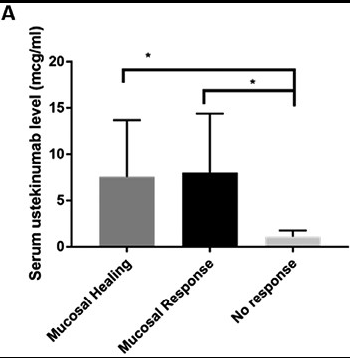
  • Patients with mucosal healing (n = 30) had significantly higher mean serum UST levels (5.7 µg/mL, SD 6.4) compared with those with no response (1.1 µg/mL, SD 0.52; n = 7, P < .0001).
  • Patients with mucosal healing (n = 30) had significantly higher mean serum UST levels (5.7 µg/mL, SD 6.4) compared with those with no response (1.1 µg/mL, SD 0.52; n = 7, P < .0001)
  • Similarly, for patients with mucosal response (n = 40), we observed a higher mean serum UST trough level (5.1 µg/mL, SD 6.1) compared with those with no response (1.1 µg/mL, SD 0.52; n = 7, P < .0001).
  • There were no antidrug antibodies detected in the cohort.

Discussion:

Unlike anti-TNF therapeutic drug monitoring, “there are few data supporting a correlation between serum ustekinumab levels and MH. The STARDUST randomized control trial34 is studying standard of care compared with treat-to-target ustekinumab therapy and has reported preliminary data at 1-year showing superiority of treat-to-target approaching achieving endoscopic response.”

My take: In this study, patients with UST levels above 2.3 μg/mL had a 10-fold level higher likelihood of mucosal healing and mucosal response. UST therapeutic drug monitoring can help “determine true nonresponse rather than insufficient dosing in patients who have not responded to UST.”

Other studies have suggested higher target levels. Mayo clinic lab site: “Concentrations > or =4.5 mcg/mL are associated with mucosal healing.” Ref: Papamichael K, Cheifetz AS, Melmed GY, et al. Appropriate therapeutic drug monitoring of biologic agents for patients with inflammatory bowel diseases. Clin Gastroenterol Hepatol. 2019;17(9):1655-1668.e3

 Mean through serum ustekinumab levels with standard deviation in patients who had achieved mucosal healing (n = 30), mucosal response (n = 40) or nonresponse (n = 7).

Related blog posts:

Practical Intestinal Rehabilitation (Part 2)

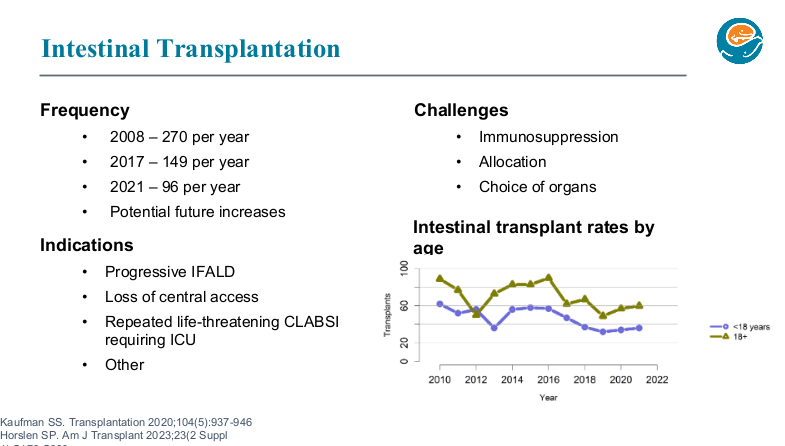
We had an brilliant lecture given to our group by Danielle Wendel who leads Seattle Children’s Intestinal Rehabilitation team. My notes below may contain errors in transcription and in omission. In addition, the information provided is based on what is done in Seattle. However, there is not a lot of evidence for much of what is done in intestinal rehabilitation. Thus, there is variation in practice at different centers and what works for one patient might not work for another. Following my notes, I have included many of her slides (same slides as yesterday’s post).

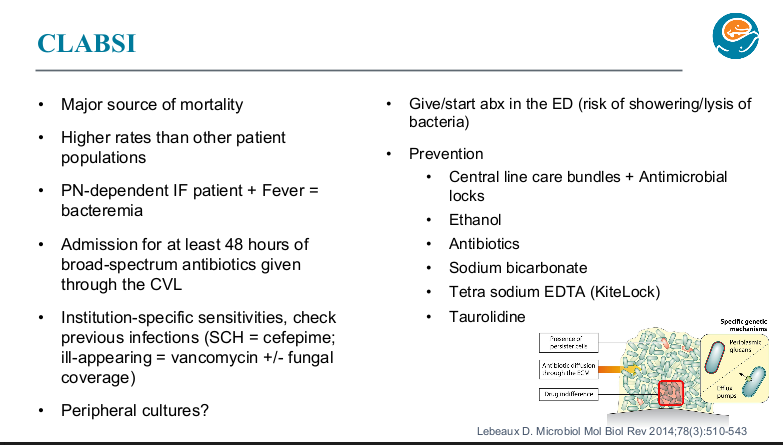
CLABSI Pointers:

  • -At Seattle, with suspected CLABSI, usually central blood culture obtained without peripheral blood culture. (Peripheral blood cultures have not helped their team improve management)
  • -Everyone with SBS and with fever (greater than or equal to 100.4) stays for at least 48 hrs on broad spectrum IV antibiotics (choice based on local sensitivities) through the central line until it is conclusively determined if they have a CLABSI (which still carry a significant mortality risk)
  • -Sodium bicarbonate lock experience has been good (8.4% solution, 1.5 mL lock for the entire time off PN in all tunneled CVL flushed in at the end of the dwell). It has become a good substitute for ethanol locks.  Their experience will be published soon.  Since sodium bicarbonate lock does not need to be withdrawn, it has been associated with less line breakage.  Several lock solutions (KiteLock and Taurolidine) are not currently available in the U.S.  KiteLock is about to be studied in Seattle.
  • -At Seattle, all CLABSI are treated  through the line and every effort is made to salvage and/or repair lines.  Line replacement increases risk of losing central IV access.
  • -Line is removed for fungal infections
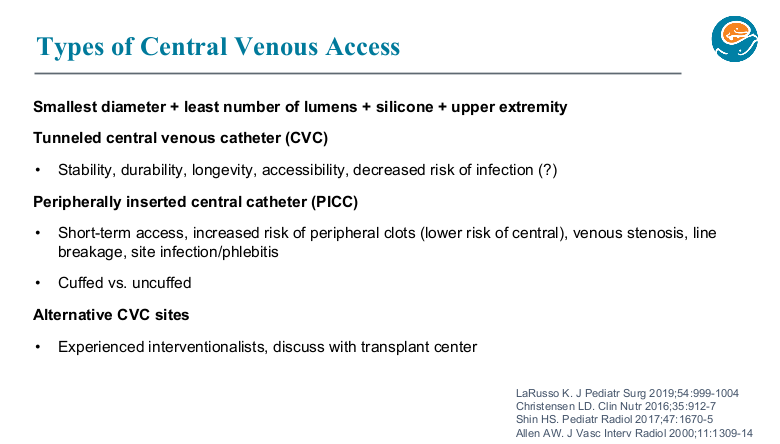
  • -The Seattle team prefers tunneled CVC

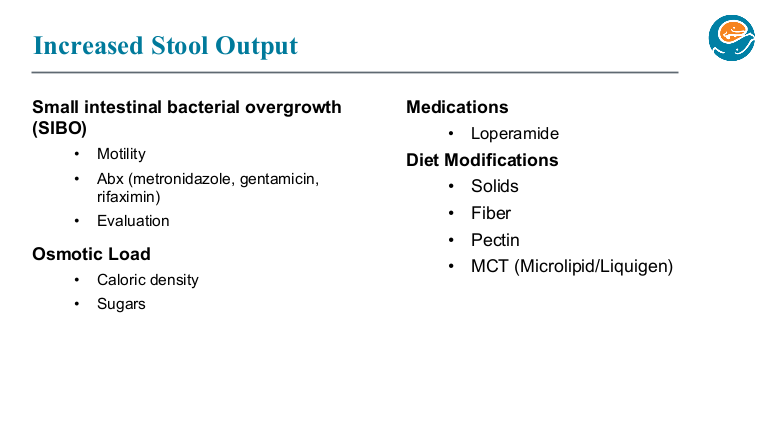
SIBO Pointers:

  • -Testing is problematic.  Breath tests are not reliable in kids with SBS.  Duodenal aspirates are often not helpful and have a number of technical difficulties; also, it is unclear whether a duodenal aspirate is representative of the bacteria in the more distal bowel.
  • -Metronidazole is their first line choice.  Gentamicin (IV formulation given enterally) is their 2nd choice.  Rifaximin is their 3rd line.  Rifaximin would possibly be used earlier in treatment except for difficulty getting covered.  When used, they crush up pills rather than have it compounded to avoid sweeteners.

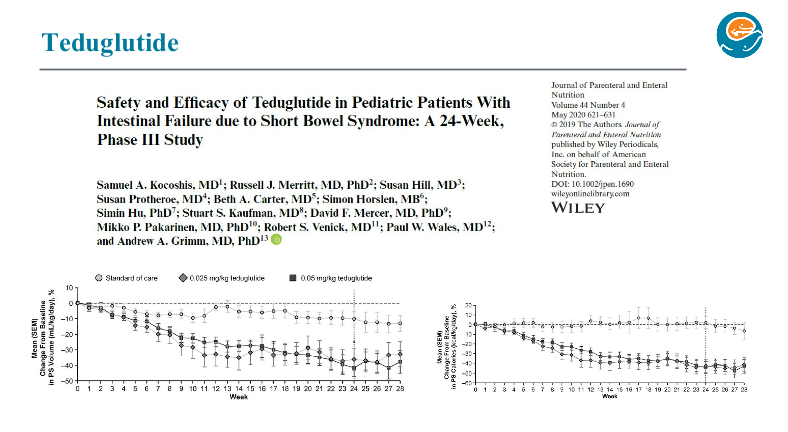
Teduglutide

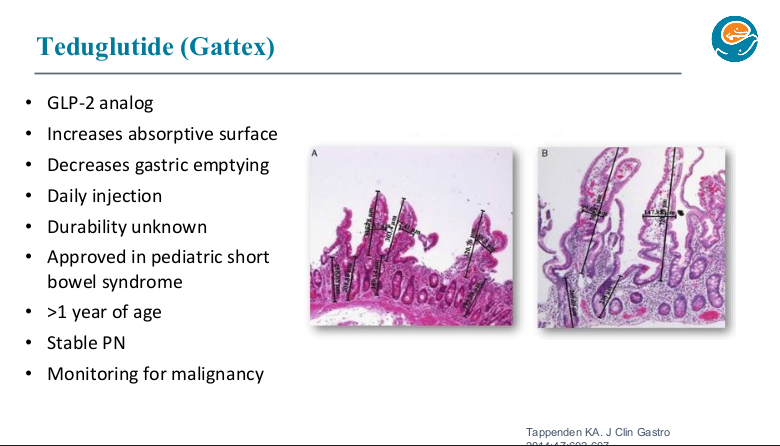
  • -Best to start if a patient is is > 1yo and on stable TPN (not able to wean)
  • -Make sure patient is using a tiny needle (not adult needle in package)
  • -Anticipate long-term treatment (?indefinite)

GI Bleeding Pointers:

  • This is being seen frequently. 
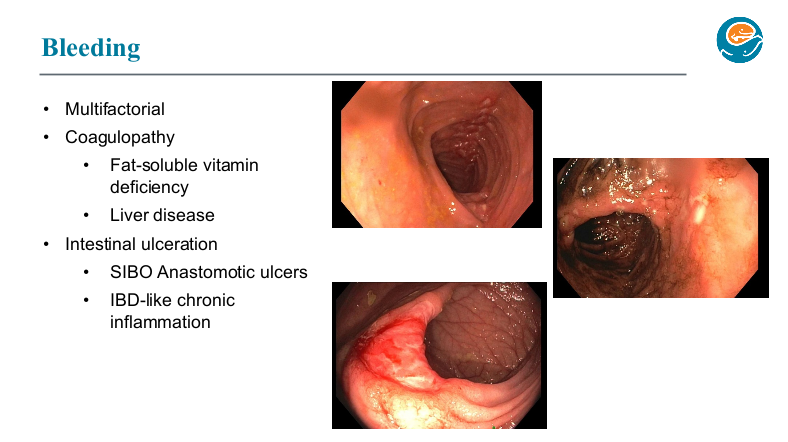
  • Etiologies include anastomotic ulcers and IBD-like lesions.   If a patient is not improving with standard approaches and possibly resection, could need an anti-TNF type agent.
  •  At Seattle, they are very selective about patients appropriate for a STEP procedure as this may be associated with more frequent bleeding over time due to the many staples used. Hand-sewn tapering may be a better option for many patients.
  • With the challenging decisions required for these bleeding patients, discussion with an experienced intestinal rehab center may be helpful.

Disclaimer: This blog, gutsandgrowth, assumes no responsibility for any use or operation of any method, product, instruction, concept or idea contained in the material herein or for any injury or damage to persons or property (whether products liability, negligence or otherwise) resulting from such use or operation. These blog posts are for educational purposes only. Specific dosing of medications (along with potential adverse effects) should be confirmed by prescribing physician.  Because of rapid advances in the medical sciences, the gutsandgrowth blog cautions that independent verification should be made of diagnosis and drug dosages. The reader is solely responsible for the conduct of any suggested test or procedure.  This content is not a substitute for medical advice, diagnosis or treatment provided by a qualified healthcare provider. Always seek the advice of your physician or other qualified health provider with any questions you may have regarding a condition.
Practical Intestinal Rehabilitation (Part 1)

We had an brilliant lecture given to our group by Danielle Wendel who leads Seattle Children’s Intestinal Rehabilitation team. My notes below may contain errors in transcription and in omission. In addition, the information provided is based on what is done in Seattle. However, there is not a lot of evidence for much of what is done in intestinal rehabilitation. Thus, there is variation in practice at different centers and what works for one patient might not work for another. Following my notes, I have included many of her slides.

Key points:

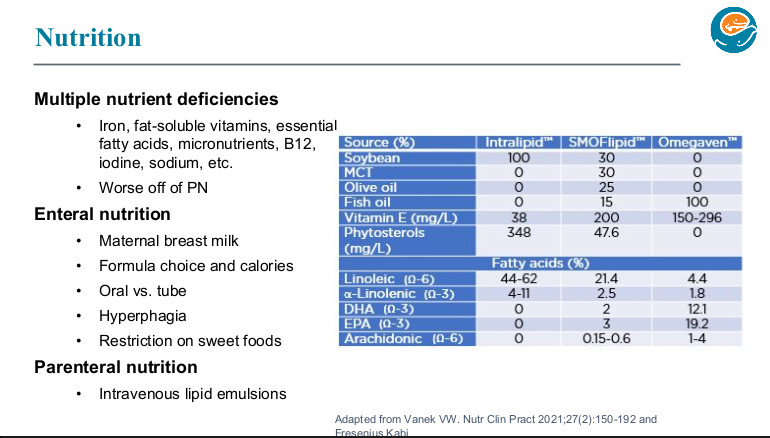
  • Enteral nutrition is key for adaptation.  At Seattle, oral feeds rather than GT feeds are preferred.
  • Time is the thing that helps the most.  Unclear which additives help.
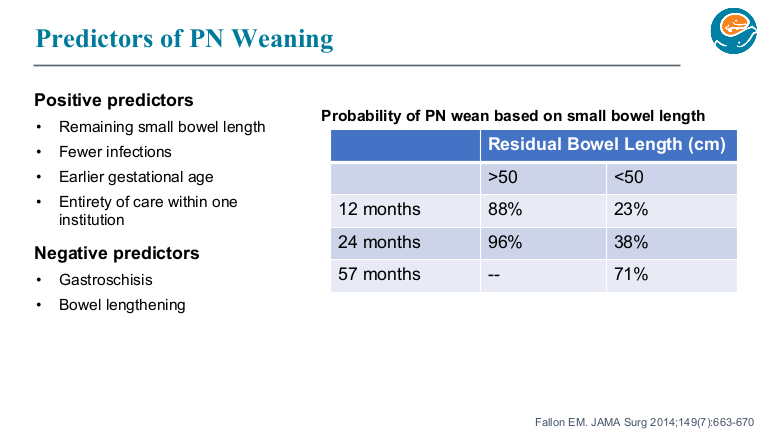
  • Though prediction models often look at >50 cm, it is important to counsel families, even with more bowel length, that the care is going to be quite challenging.
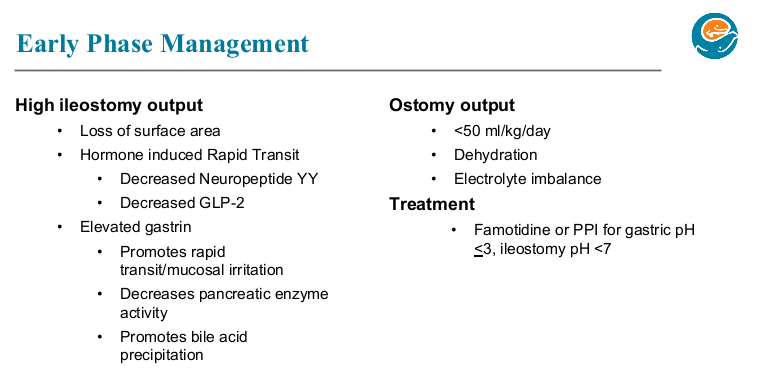
  • Acid suppression can be helpful in the early phase after resection especially if problematic high stoma output.
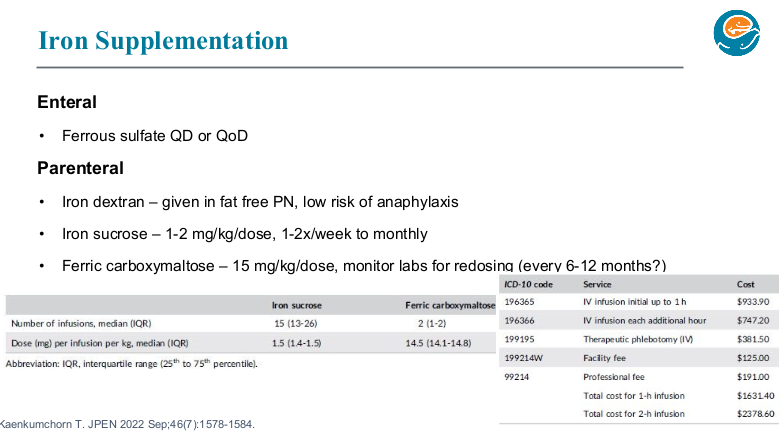
  • Iron: if given enterally, typically given everyday or every other day.  Iron dextran can be given in TPN (cannot be given with lipids).  Ferric carboxymaltose is a good choice for parenteral administration.  Due to the need for few infusions (~1-2 per year), it is safer (less line entry) and cost-effective compared to iron sucrose.
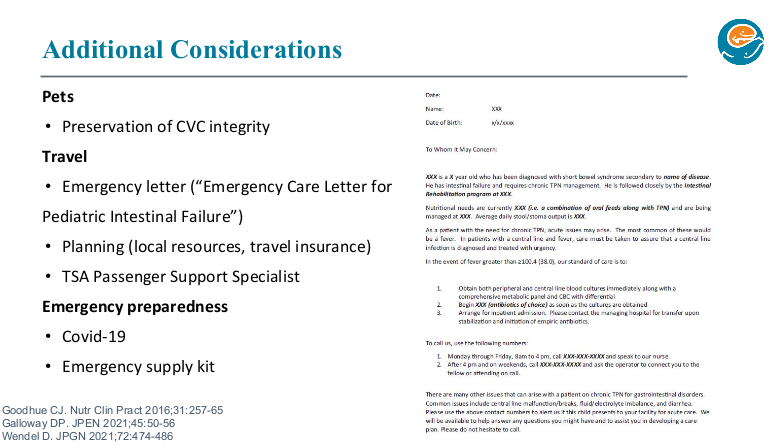
  • Seattle shares an “Emergency Care Letter” with their patients (template available in EPIC)
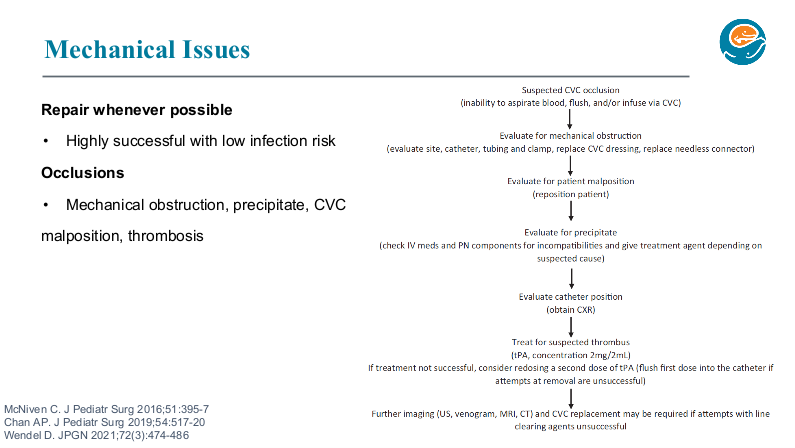
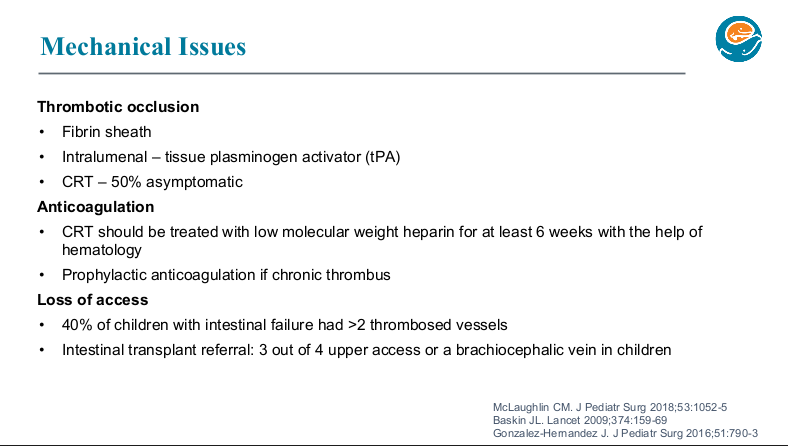
  • Yearly doppler ultrasound is recommended to assess vascular access.
  • If a patient has more than one thrombosis, the Seattle team recommends long term prophylaxis, though it might take treatment levels to prevent further thrombosis.
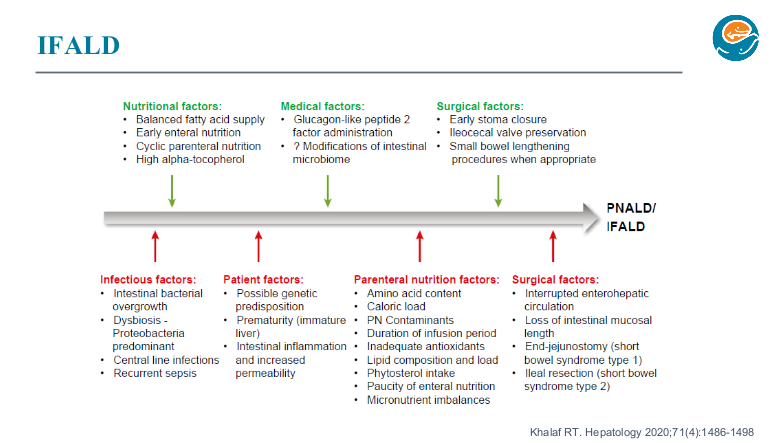
  • SMOFlipid is the most frequently used lipid at Seattle. It can be given in higher doses than Omegaven which is important nutritionally; omegaven is generally given at only 1 to 1.5 mg/kg/day and used for treatment of IFALD.
  • Long term outcomes are just as good with chronic TPN as with intestinal transplantation. So, referral generally needed based on complications like losing central access (3 of 4 upper central sites) or progressive liver disease.

Diet Pointers:

  • -In infancy, standard formula and breastmilk are preferred and thought to help with adaptation.  Some infants need elemental diets but it is not routinely given across the board  (some other institutions feel strongly about using elemental diets, but there is limited data)
  • -Kids with short bowel syndrome may tolerate volume better than concentration
  • -The Seattle program strictly restricts sweet tasting food/drink for first 3-4 years of life to help educate the child’s palate and recommends limiting these food/drink for IF patients in general.
  • -Addition of solid foods usually helps with stoma output

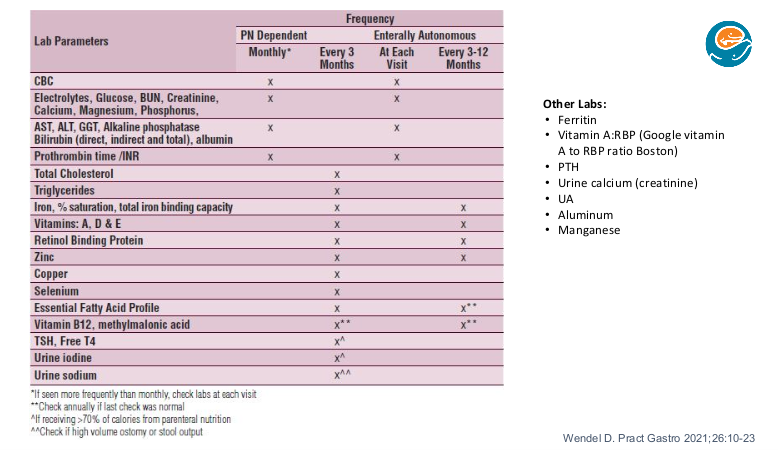
Nutrient Monitoring Pointers:

  • Usually best to batch them all lab tests for micronutrients [many micronutrients are affected by inflammation and this may affect timing of lab testing]
  •  At Seattle, aluminum and manganese are not routinely checked as they are contaminants in PN that cannot be removed
  • Serum thyroid testing is a marker for iodine deficiency in patients receiving most of their calories from PN (>70) which may be more frequent now that betadine is not used for dressing changes.  Their goal for urine iodine is >100 (can be treated with ultra-diluted potassium iodide which needs to be compounded by the pharmacy)
  • When testing for EFA (essential fatty acid) deficiency, lipids should be off for 4 hrs (or more).  Urinalysis is checked to monitor for chronic kidney disease. Urine sodium goal is >30 and is checked quarterly in patients with high ostomy output or excessive rectal stool output with poor growth.
  • Hypokalemia may be a sign of total body sodium depletion due to the kidneys dumping potassium to conserve sodium

Disclaimer: This blog, gutsandgrowth, assumes no responsibility for any use or operation of any method, product, instruction, concept or idea contained in the material herein or for any injury or damage to persons or property (whether products liability, negligence or otherwise) resulting from such use or operation. These blog posts are for educational purposes only. Specific dosing of medications (along with potential adverse effects) should be confirmed by prescribing physician.  Because of rapid advances in the medical sciences, the gutsandgrowth blog cautions that independent verification should be made of diagnosis and drug dosages. The reader is solely responsible for the conduct of any suggested test or procedure.  This content is not a substitute for medical advice, diagnosis or treatment provided by a qualified healthcare provider. Always seek the advice of your physician or other qualified health provider with any questions you may have regarding a condition.