
Selective Acid Suppression for Esophageal Atresia Patients

This year’s masterpiece!

Link from AAP HealthyChildren.org: Halloween Fun & Safety Tips for Kids of All Ages


S Zeneddin et al. J Pediatr Gastroenterol Nutr. 2025;81:960–966. Acid suppression after esophageal atresia repair: Some infants do benefit

Methods: The authors performed a retrospective study using the Pediatric Health Information System for infants undergoing EA/TEF repair between 2010 and 2022 (n=1445 infants). Acid suppression was defined as receipt of an H2 blocker or proton pump inhibitor on the day of discharge or longer than 30 inpatient days. Complex EA/TEF repair was defined as delayed repair (>7 days), G-tube placement before repair (likely a sign of a long gap or type A anomaly), prolonged hospitalization (>60 days), or multiple inpatient fluoroscopies. The authors defined stricture solely if it required intervention.

Key findings:

  • 257 (17.8%) required dilation by 1 year. Of the 688 (47.6%) infants who met criteria for complex EA/TEF, 126 (18.6%) required a dilation.
  • At 1 year, stricture rate was similar in infants with simple EA/TEF, with or without acid suppression (17.5% vs. 17.0%, p = 0.90)
  • In infants with complex EA/TEF, stricture rates were lower among those who received acid suppression compared to those who did not (15.3% vs. 26.0%, p = 0.001).
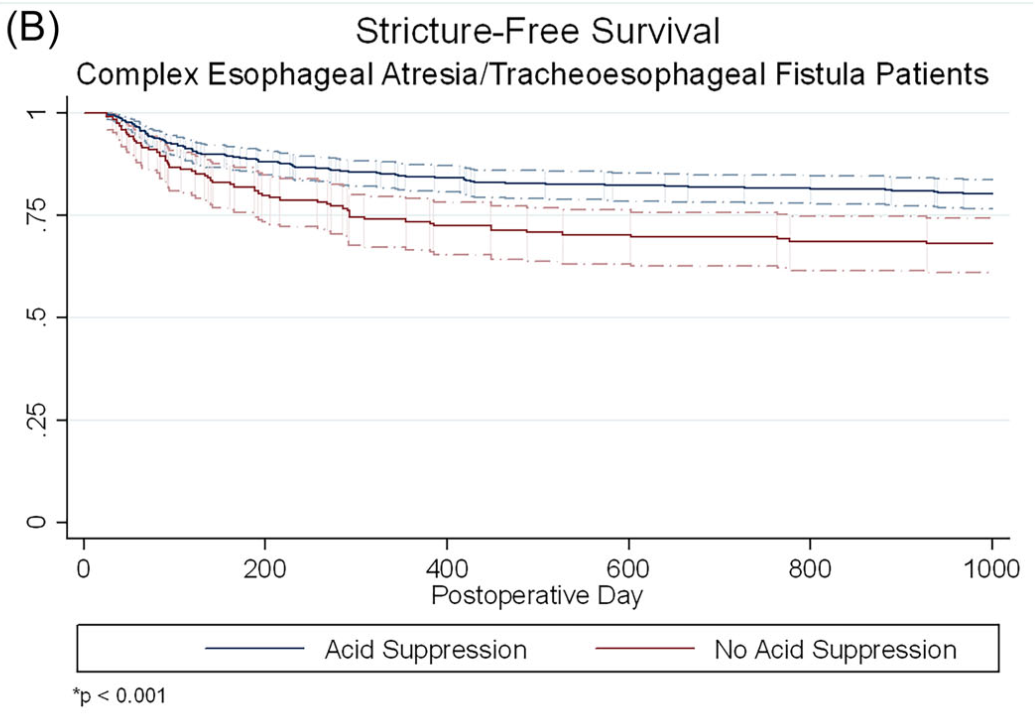
The associated editorial (D George, DK Robie. J Pediatr Gastroenterol Nutr. 2025;81:911–912) reviews some of the limitations of the study but does not provide clear recommendations on utilization of acid suppression therapy: the decision should be “should be individualized, weighing the potential benefits against the risks.”

My take: It is not surprising that more complex EA would have higher stricture rates. In my training (in the 1990s!), it was routine practice to use indefinite acid suppression. This article indicates that patients with low risk EA likely do not need acid suppression. In high risk patients, the algorithm by Yasuda et al (see post below J Am Coll Surg 2024; 238: 831-843) provides their approach to weaning acid suppression.

Related blog posts:

Disclaimer: This blog, gutsandgrowth, assumes no responsibility for any use or operation of any method, product, instruction, concept or idea contained in the material herein or for any injury or damage to persons or property (whether products liability, negligence or otherwise) resulting from such use or operation. These blog posts are for educational purposes only. Specific dosing of medications (along with potential adverse effects) should be confirmed by prescribing physician.  Because of rapid advances in the medical sciences, the gutsandgrowth blog cautions that independent verification should be made of diagnosis and drug dosages. The reader is solely responsible for the conduct of any suggested test or procedure.  This content is not a substitute for medical advice, diagnosis or treatment provided by a qualified healthcare provider. Always seek the advice of your physician or other qualified health provider with any questions you may have regarding a condition.
Early Acid Blocker Use Linked to Lung Disease in CF

C Liu et al. J Pediatr Gastroenterol Nutr. 2024;79:1124–1133. Open Access! Impact of acid blocker therapy on growth, gut microbiome, and lung disease in young children with cystic fibrosis

Background: Historically, acid suppression has been given as adjuvant therapy to optimize PERT and thereby improve growth and nutritional needs in CF

Methods: This was a prospective cohort of 145 infants followed in 6 CF centers. This was a retrospective study examining the effects of acid blocker therapy and outcomes at 3 years of life in children with cystic fibrosis.

Key findings:

  • Acid blocker therapy (ABT) use before age 3 years was frequent, with 81 (56%) of patients on H2 receptor antagonist (H2RA) or proton pump inhibitor (PPI), and higher among pancreatic insufficient (60%) versus pancreatic sufficient (26%) children.
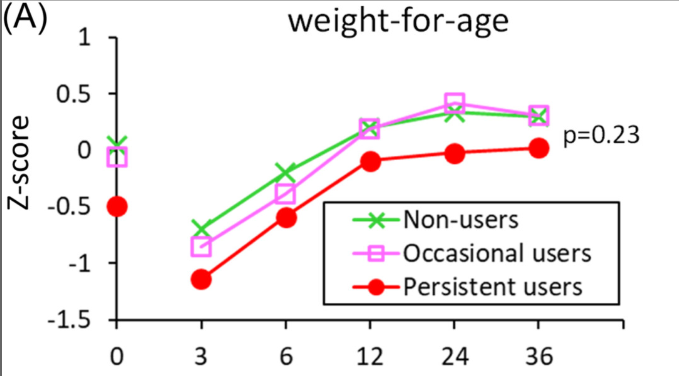
  • Growth improvements were not significantly greater.
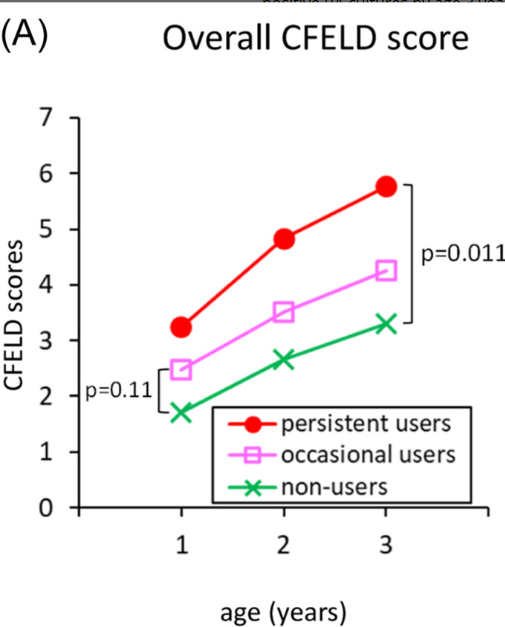
  • Early-onset lung disease was more severe, in persistent ABT users compared to nonusers of ABT.
  • ABT was associated with reduced gut microbiome diversity
CFELD =CF Early-Onset Lung Disease

Discussion:

  • “Results from our FIRST cohort of infants and toddlers with CF showed that prolonged ABT was not associated with significant improvements in growth but instead significant negative alterations to the GM and progression of early-onset lung disease. Evidence from our study is in line with the growing body of literature advocating for more judicious PPI therapy as it has been associated with adverse outcomes such as pulmonary infections, fractures, and anemia.2224
  • One limitation, which was NOT discussed in the article, was selection bias. Since there was not randomization of PPI use, it could be that PPI prescription was more common in children with more severe disease.

My take (borrowed in part from authors): Despite the potential for selection bias, it is clear that “acid blockers are not benign.” Given the potential for worse outcomes, PPI prescription should be restricted to those with a clear indication.

Related blog posts:

Acid Suppression for Laryngomalacia -Handed This Article to My ENT Colleagues

DR Duncan et al. J Pediatr 2021; 238: 42-49. Acid Suppression Does Not Improve Laryngomalacia Outcomes but Treatment for Oropharyngeal Dysphagia Might Be Protective

This retrospective cohort study with 236 subjects (55% received acid blockers) provides a compelling argument that acid suppression is unlikely to be beneficial in infants with laryngomalacia and to consider the possibility of aspiration in them as well. Among all subjects, 27% received H2RA, 11% received PPI, and 17% received both.

Key findings:

  • Subjects treated with acid suppression had a greater risk of supraglottoplasty (hazard ratio 3.36, 95% CI 1.36-8.29, P = .009), shorter time to supraglottoplasty (5.64 ± 0.92 vs 7.98 ± 1.92 months, P = .006), and increased respiratory hospitalization risk (relative risk 1.97, 95% CI 1.01-3.85, 0.047), even after adjustment for covariates
  • Subjects receiving thickening had fewer respiratory hospitalization nights and longer time to supraglottoplasty (9.3 ± 1.7 vs 4.56 ± 0.73 months, P = .004), even after adjustment.
  • Subjects with moderate-to-severe laryngomalacia were more likely to have aspiration on a video fluoroscopic swallow study (VFSS)
  • Of the 40 patients who had a supraglottoplasty, only 4 (10%) had a VFSS before and afterwards. All repeat VFSS showed improvement at a mean of 4.7 months after supraglottoplasty

It is noted that 36% of subjects underwent a VFSS and 40% had a clinical feeding evaluation. The authors note that other studies have found “a high rate of silent aspiration in laryngomalacia.”

My take:

  1. Acid blockers are unlikely to be beneficial in infants with laryngomalacia and are potentially detrimental (findings limited by retrospective design in a tertiary care setting)
  2. Symptoms in children with laryngomalacia may be due to aspiration and evaluation is needed in those with significant symptoms

Related blog posts:

WSJ 1/2/22: Why Cloth Masks Might Not Be Enough as Omicron Spreads

Preterm Infants with Increased Infections Following Acid Suppression Therapy

A recent study (P Manzoni et al. J Pediatr 2018; 193: 62-7) provide more data on the detrimental effects of gastric acid inhibitors (eg. proton pump inhibitors, histamine-2 receptor antagonists).  This study was a secondary analysis using prospectively collected data from 235 preterm very low birth weight infants. Key findings:

  • “After multivariate analysis, exposure to inhibitors of gastric acidity remained significantly and independently associated with LOS [late-onset sepsis] (OR 1.03); each day of inhibitors of gastric acidity exposure conferred an additional 3.7% odds of developing LOS.”
  • Acid suppression therapy was associated with gram-negative (P<.001) and fungal pathogens (P=.001)
  • The study showed an association between acid blockers and with necrotizing enterocolitis, which was mitigated in those who received bovine lactoferrin

My take (borrowed, in part, from authors): This data “confirm, strengthen, and expand on previous reports describing an association between inhibitors of gastric acidity and infections.”  Thus, the risks of these medications is likely greater than the benefits in the majority of preterm infants.

Related blog posts:

Bright Angel Trail

Acid Suppression/C difficile and Adrenal Suppression/Topical Steroids

Briefly noted:

J Jimenez et al. (JPGN 2015; 61: 208-11) provide more data that gastric acid suppression is associated with an increase risk of Clostridium difficile infection (CDI). This was a retrospective case-control study with 138 children with CDI and 276 controls. After adjustment, acid-suppression therapy had a 1.8 Odds Ratio association with CDI.

S Harel et al. (JPGN 2015; 61: 190-3) in this retrospective ‘pilot’ study of  patients receiving topical budesonide for eosinophilic esophagitis, 6 of 14 (43%) had mild biochemical evidence of adrenal suppression, as measured by ACTH testing. Bottomline: a prospective study is likely needed to confirm or refute these findings. In the meanwhile, stress steroid coverage could be considered in patients on prolonged budesonide.

How Histamine-2 Receptor Blockers May Cause Problems for Preemies

Previously, this blog has noted an association between ranitidine usage and necrotizing enterocolitis (NEC) (see below).  Now, another study provides insight into a potential mechanism (JPGN 2013; 56: 397-400).

This study examined the fecal microbiota in 76 premature infants who were enrolled in a case-controlled, cross-sectional study.  25 infants receiving H2-blockers were compared with 51 matched controls.

Results: microbial diversity was lower, relative abundance of Proteobacteria was increased, and Firmicutes was decreased in the stools of infants receiving H2-blockers.

While this study did not specifically examine the effect of H-2 blockers on NEC (no infants in this study had NEC), there are multiple reasons why the findings should be a cause for concern.

  • Gastric acidity acts as a natural defense against bacterial growth and H-2 blockers (as well as proton pump inhibitors) inhibit this defense
  • Previous studies have shown an association between NEC and with diminished microbial diversity/increased Proteobacteria.  Proteobacteria include well-known pathogens like Klebsiella, Shigella, Escherichia coli, and Citrobacter.

Related blog entries: