@AllergyKidsDoc: Deep Down the Rabbit Hole of Bias, Plus Two

NPR: From Camping To Dining Out: Here’s How Experts Rate The Risks Of 14 Summer Activities

This article describes the potential risks for dining out, staying at hotels, getting a haircut (ask your stylist to focus on cutting and not talking), going to the beach/pool and other activities.


Moving NY Times Graphic on coronavirus toll in U.S. (May 24, 2020): An Incalculable Loss: Remembering the Nearly 100,000 Lives Lost to Coronavirus in America


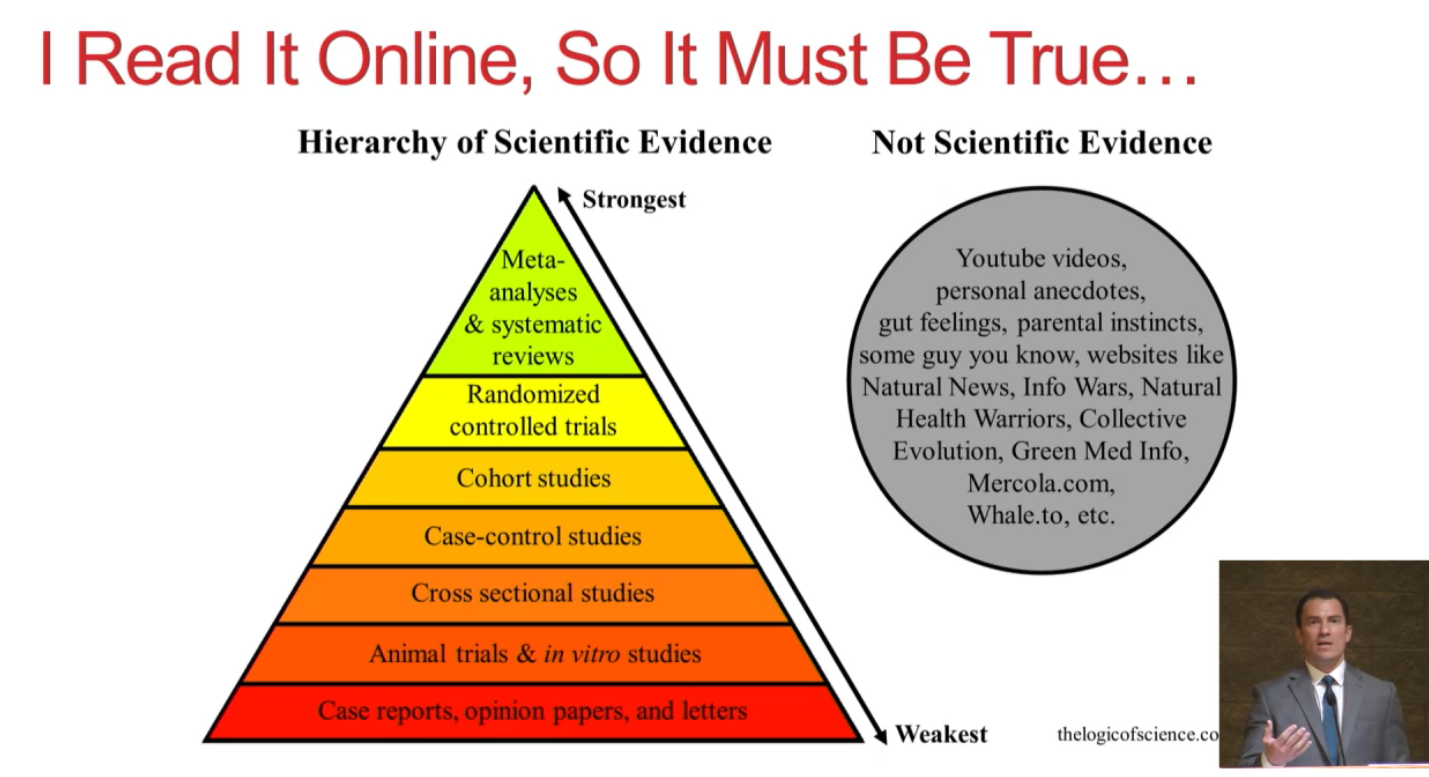
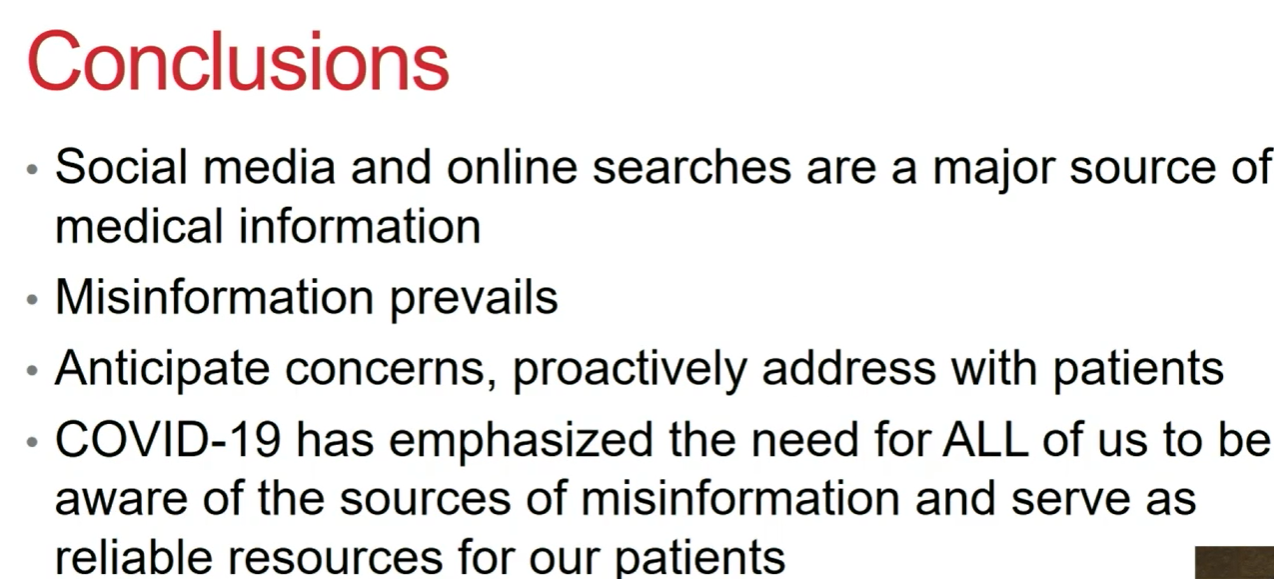
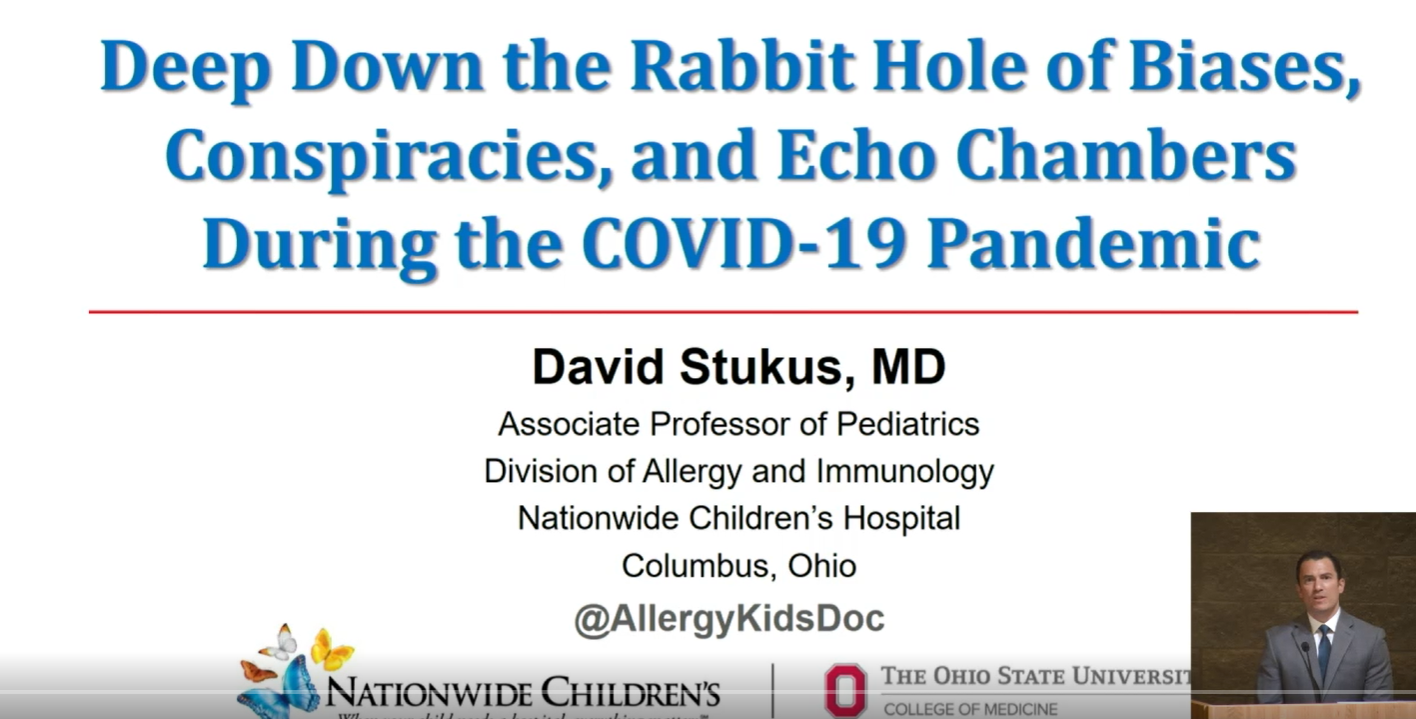
A recent lecture by Dave Stukus: Deep Down the Rabbit Hole of Biases, Conspiracies, and Echo Chambers (50 minutes). Thanks to Ben Gold for this reference.

This lecture summarizes some of the challenges of misinformation and quackery.

Some interesting points:

  • Explains common biases which lead us to faulty conclusions
  • Illustrates some far-fetched claims for Himalayan Salt Lamp as a treatment for asthma as well as Dr. Oz’s unproven recommendations for the coronavirus
  • Provides several books for those interested in learning a lot more (see last slide)

Some slides:


Related blog posts:


Not Curing Obesity with Fecal Microbiota Transplantation & More on Remdesivir

A recent pilot (n=22) double-blind study (JR Allegrett et al. Clin Gastroenterol Hepatol 2020; 18: 855-63) pours cold water on the idea that repopulating one’s microbiome would be helpful in treating obesity.

In this study, the authors examined obese patients without diabetes, nonalcoholic steatohepatitis, or metabolic syndrome.  In the treatment group, patients received FMT by capsules: 30 capsules at week 4 and then a maintenance dose of 12 capsules at week 8.  All FMT was derived from a single lean donor.

Key findings:

  • There were no significant changes in mean BMI at week 12 in either group.
  • Patients in the FMT group had sustained shifts in microbiomes associated with obesity toward those of the donor (P<.001).  In addition, bile acid profiles became more similar to the donor.

My take: Though this was a small study, it suggests that changing the microbiome by itself is likely insufficient to result in significant weight loss.

Related blog posts:

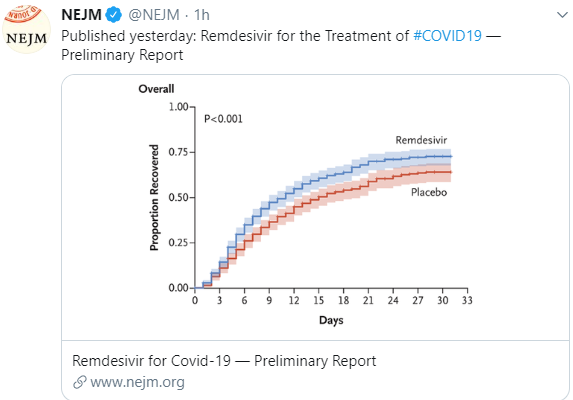
JH Beigel et al. NEJM DOI: 10.1056/NEJMoa2007764 (May 22, 2020): Full text: Remdesivir for the Treatment of Covid-19 — Preliminary Report

This was a a double-blind, randomized, placebo-controlled trial of intravenous remdesivir in adults hospitalized with Covid-19 with evidence of lower respiratory tract involvement (n=1063).

Key findings:

  • Faster recovery for remdesivir recipients: 11 days vs 15 days
  • Lower mortality rate: 7.1% with remdesivir and 11.9% with placebo (hazard ratio for death, 0.70, 95% CI, 0.47 to 1.04) (mortality difference did not reach statistical significance)


Nationwide Coronavirus Data Skewed & More on Masks

The CDC, along with numerous states, are currently using aggregated viral testing that include assays for current infection along with antibody testing that detects prior infections.  This muddies the picture on actual current coronavirus cases and makes it more difficult to determine if we are heading in the right direction.

From The Atlantic: ‘How Could the CDC Make That Mistake?

An excerpt:

The Centers for Disease Control and Prevention is conflating the results of two different types of coronavirus tests, distorting several important metrics and providing the country with an inaccurate picture of the state of the pandemic. We’ve learned that the CDC is making, at best, a debilitating mistake: combining test results that diagnose current coronavirus infections with test results that measure whether someone has ever had the virus…

The widespread use of the practice means that it remains difficult to know exactly how much the country’s ability to test people who are actively sick with COVID-19 has improved….

Georgia …has also seen its COVID-19 infections plateau amid a surge in testing. Like Texas, it reported more than 20,000 new results on Wednesday, the majority of them negative. But because, according to The Macon Telegraph, it is also blending its viral and antibody results together, its true percent-positive rate is impossible to know…

On a national scale, they call the strength of America’s response to the coronavirus into question…the portion of tests coming back positive has plummeted, from a seven-day average of 10 percent at the month’s start to 6 percent on Wednesday…The intermingling of viral and antibody tests suggests that some of those gains might be illusory.


Related blog posts:

When Can You Safely Stop Nucleos(t)ide Treatment for Hepatitis B? & Reassessment of Ventilator Success for COVID-19

A recent commentary (KS Liem et al. Gastroenterol 2020; 158: 1185-90) reviews the challenge of stopping nucleos(t)ide (NUC) treatment for chronic hepatitis B viral (HBV) infection.

Key points:

  • NUC therapy “prevents liver failure, decreases the risk of hepatocellular carcinoma, and has excellent safety”
  • Yet, there are “low rates of on-therapy functional cure” which is indicated by loss of HBV surface antigen [HBsAg]
  • Divergent recommendations: Guidelines “recommend NCU therapy in noncirrhoitic patients can be stopped after >3 years of virologic suppression (EASL), after ≥1 year of undetectable HBV DNA and 2 years of treatment (APASL), or only after achieving HBsAg loss (AASLD)
  • “Relapse is highly variable, but is especially dangerous in patients with stage 3 fibrosis or cirrhosis”
  • “Hepatic decompensation is relatively rare but is best prevented by continuing NUC therapy in all cirrhotics or those with advanced fibrosis.”
  • In a randomized controlled trial in Canada, 72 weeks after NUC discontinuation, “only 33% of pretreatment HBeAg-negative patients had a sustained off-treatment response.”
  • “The major guidelines suggest that noncirrhotic pretreatment HBeAg-positive patients can stop NUC therapy after reaching HBeAg seroconversion with undetectable HBV DNA and completing 1-3 years of consolidation therapy…these recommendations are of poor quality.”
  • Three issues need to be studied: retreatment criteria in those who stop NUC therapy, biomarkers to distinguish beneficial from detrimental flares, and better criteria for identifying those who are likely to decompensate.

My take: It is hard to argue with the author’s conclusion that “without the tools for proper patient selection, potential benefits of NUC discontinuation do not outweigh limitations of long-term NUC therapy for most patients in clinical practice.”  This is due to the safety of NUC therapy and the frequency of relapse when NUC is stopped.

Related blog posts:


From NPR: New Evidence Suggests COVID-19 Patients On Ventilators Usually Survive

An excerpt:

A study of some New York hospitals seemed to show a mortality rate of 88%. But Cooke and others say the New York figure was misleading because the analysis included only patients who had either died or been discharged. “So folks who were actually in the midst of fighting their illness were not being included in the statistic of patients who were still alive,” he says….

The mortality rate among 165 COVID-19 patients placed on a ventilator at Emory was just under 30%. And unlike the New York study, only a few patients were still on a ventilator when the data were collected.

Curbside Humor:

Also: What do you get from a pampered cow? Spoiled milk!


COVID-19: Failing the Test, What We Know About Aerolization, Georgia DPH Revisions, CDC COVID-19 Projections

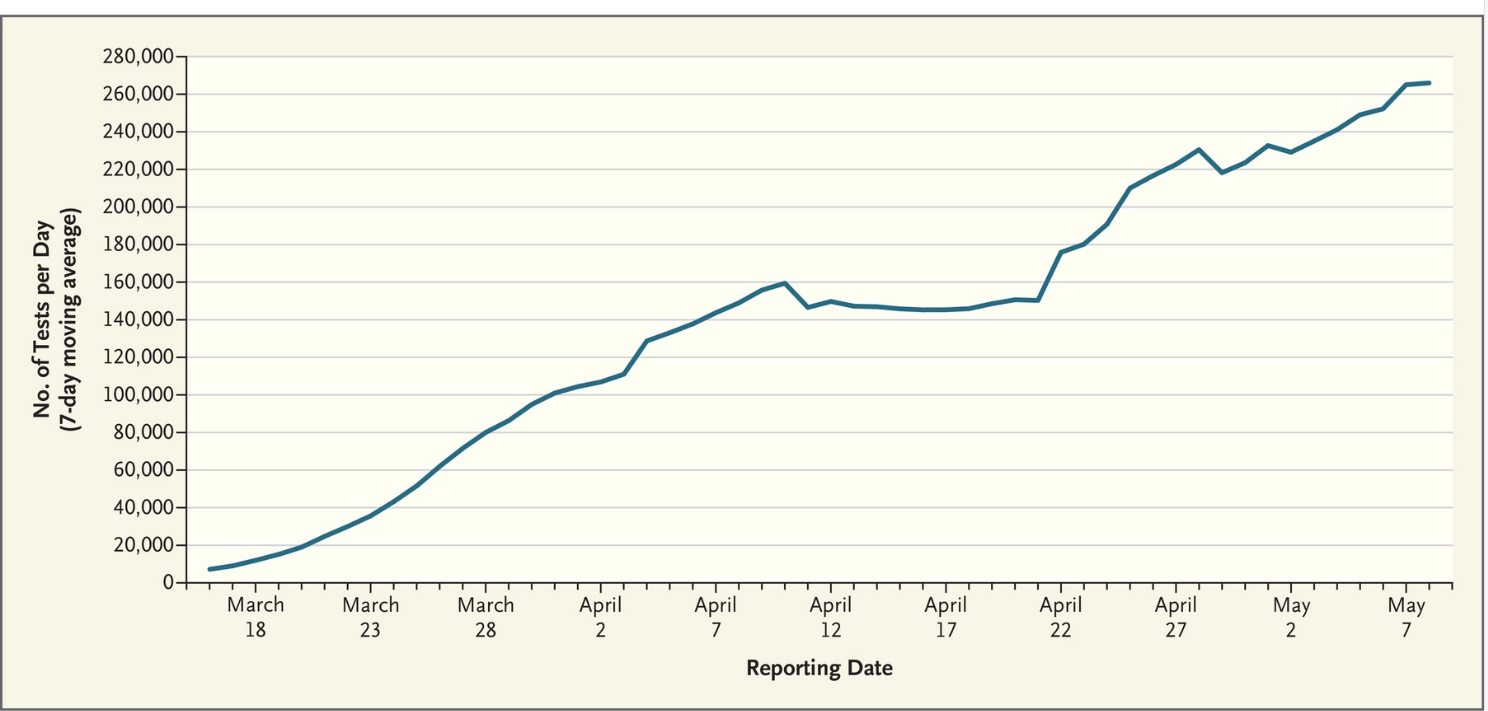
Yesterday –E Schneider NEJM commentary (DOI: 10.1056/NEJMp2014836) on how the U.S. has lagged behind other countries in SARS-CoV-2 testing  Full Text: Failing the Test

An excerpt:

Tragically, the United States, unable to match other countries’ response, has tallied the most cases and deaths in the world — and recent data suggest that those tallies are underestimates. Why has the U.S. response been so ineffectual? One key answer is testing, which has been a cornerstone of Covid-19 control elsewhere…

Having failed to test early enough to contain outbreaks, the country has fallen back on two mitigation strategies: accelerating drug and vaccine development and an unprecedented strategy of nonpharmacologic interventions (NPIs) involving draconian school and business closures, stay-at-home orders, and physical distancing

March 16 -May 8, 2020

______________________________________________________________________

T Lewis. Scientific American (May 12):  How Coronavirus Spreads through the Air: What We Know So Far

An excerpt:

According to the U.S. Centers for Disease Control and Prevention and the World Health Organization, the novel coronavirus is primarily spread by droplets from someone who is coughing, sneezing or even talking within a few feet away. But anecdotal reports hint that it could be transmissible through particles suspended in the air…

 “There is not much convincing evidence that aerosol spread is a major part of transmission” of COVID-19, Perlman says. That assessment does not mean it is not occurring, however…

Cowling hypothesizes that many respiratory viruses can be spread through the airborne route—but that the degree of contagiousness is low…

Most researchers still think the new coronavirus is primarily spread via droplets and touching infected people or surfaces. So diligent hand washing and social distancing are still the most important measures people can take to avoid infection.


From AJC: Georgia’s Latest Errors in Reporting COVID-19 Data 

In the latest bungling of tracking data for the novel coronavirus, a recently posted bar chart on the Georgia Department of Public Health’s website appeared to show good news: new confirmed cases in the counties with the most infections had dropped every single day for the past two weeks.

In fact, there was no clear downward trend. The data is still preliminary, and cases have held steady or dropped slightly in the past two weeks.

DPH’s page has led readers to think that cases were dropping dramatically, even though lower case numbers were the result of a lag in data collection.

My take: Though, the number of reported cases has been fairly steady in Georgia, the amount of testing has increased; thus, even if the numbers hold steady, this likely reflects some improvement in the absolute number of infected individuals.


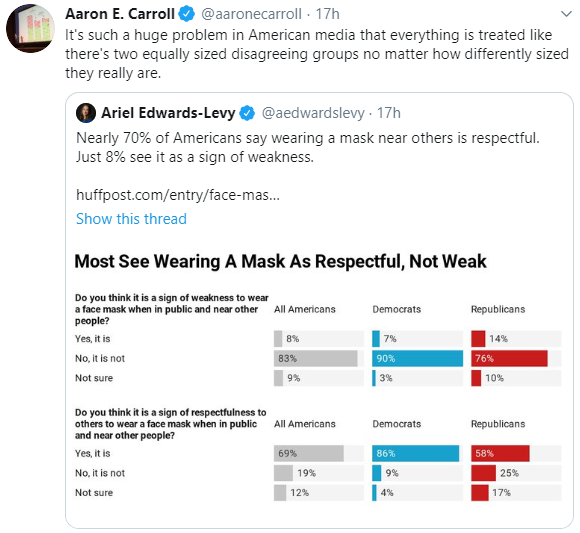
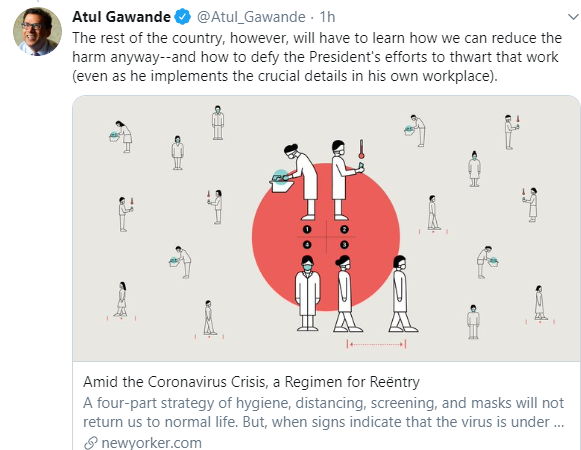
@Atul_Gawande: How to Reopen

Atul Gawande outlines what has worked at their hospital system –this is a very important read: Amid the Coronavirus Crisis, a Regimen for Reëntry

An excerpt:

Experts have identified a few indicators that must be met to begin opening nonessential businesses safely: rates of new cases should be low and falling for at least two weeks; hospitals should be able to treat all coronavirus patients in need; and there should be a capacity to test everyone with symptoms. But then what? 

In the face of enormous risks, American hospitals have learned how to avoid becoming sites of spread…

Its elements are all familiar: hygiene measures, screening, distancing, and masks. Each has flaws. Skip one, and the treatment won’t work. But, when taken together, and taken seriously, they shut down the virus.

  • a military boot camp found that a top-down program of hand washing five times a day cut medical visits for respiratory infections by forty-five per cent.
  • the six-foot rule goes a long way to shutting down this risk. But there are clearly circumstances where that is not sufficient.
  • testing when people have symptoms is important; with a positive result, a case can be quickly identified, and close contacts at work and at home can be notified. And, with a negative result, people can quickly get back to work…Daily check-ins are equally important (Owing to false-negative test results, you are still required to wait until your fever has been resolved, and your symptoms have improved, for seventy-two hours.)
  • nonetheless, patients who do not yet show symptoms, or have just begun to, are turning out to be important vectors of disease. That’s why we combined distancing with masks. They provide “source control”—blocking the spread of respiratory droplets from a person with active, but perhaps unrecognized, infection. [Most masks] are designed to safeguard others, not the wearer.

Surgical masks are effective at blocking ninety-nine per cent of the respiratory droplets expelled by people with coronaviruses or influenza viruses. The material of a double-layered cotton mask—the kind many people have been making at home—can block droplet emissions, as well. And the sars-CoV-2 virus does not last long on cloth; viral counts drop ninety-nine per cent in three hours

Evidence of the benefits of mandatory masks is now overwhelming. Our hospital system would not be able to stop viral spread without them

Job Security Study: Lots of People Have Reflux Symptoms & COVID-19 Due To Singing

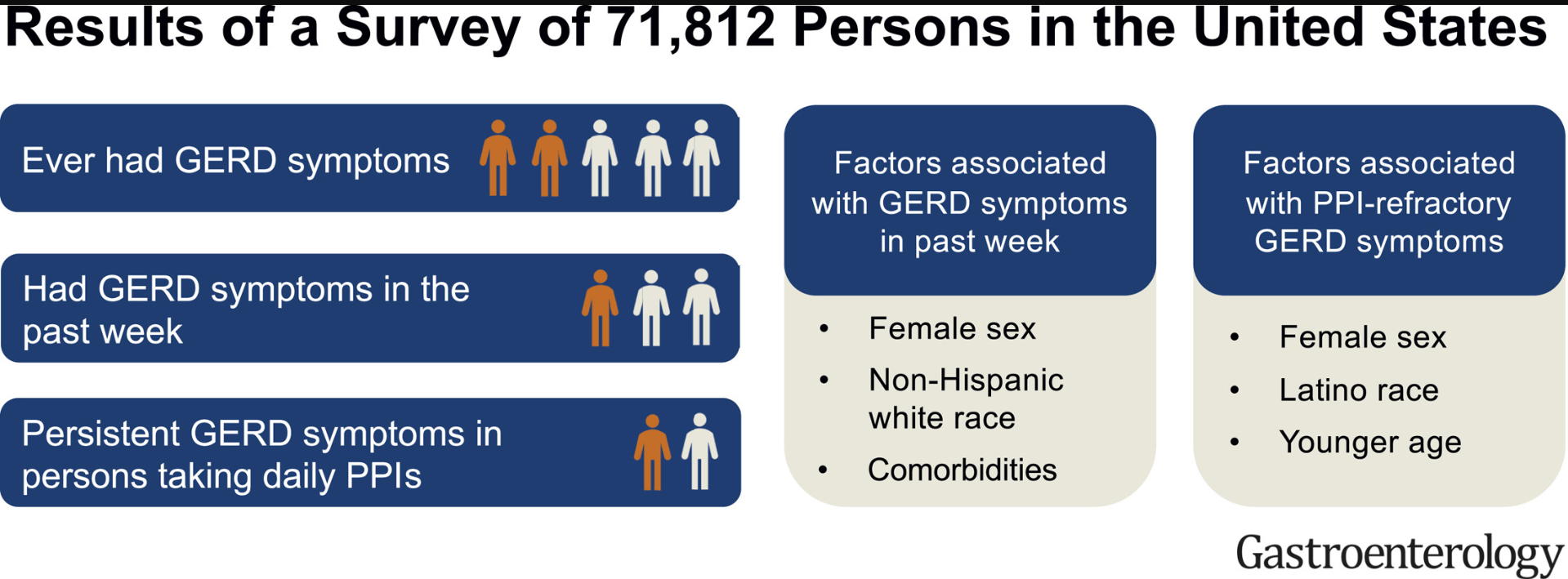
A recent study (SD Delshad, CV Almario et al. Gastroenterol 2020; 158: 1250-61) used survey data from an APP, MyGiHealth, to assess prevalence of reflux symptoms and symptoms that had not responded to proton pump inhibitor treatment.

Key findings:

  • In 2015, among 71,812 participants, 32,878 (44.1%) reported reflux symptoms previously and 23,039 (30.9%) reported reflux symptoms in previous week
  • 35% with reflux symptoms were currently receiving treatment: 55% PPIs, 24% H2RAs, and 24% antacids
  • Of the 3229 taking daily PPIs, 54% reported persistent reflux symptoms (≥2 days per week)
  • Age range of respondents was 33% for 18-29, 27% for 30-39, 17% for 40-49, 15% for 50-59, and 8% ≥60

Limitations: 

  • Potential selection bias as there was only a 5.5% response rate among the entire eligible population of 1.3 million
  • Reflux symptoms frequently is not due to reflux disease

My take: There are a lot of folks with reflux symptoms and many have ongoing symptoms despite treatment; hence, lots of opportunity to help (and job security)

Related blog posts:

Also from NY Times: Coronavirus Ravaged a Choir. But Isolation Helped Contain It.

“One sick singer attended choir practice, infecting 52 others, two of whom died. A study released by the C.D.C. shows that self-isolation and tracing efforts helped contain the outbreak.”  Only 8 of the 61 choir members did not get sick.

Graphical Abstract