Accelerated Infliximab Dosing in Acute Severe Ulcerative Colitis -plus one link

A small retrospective study (n=50) suggests that more rapid induction with infliximab may improve response and lower colectomy rate in acute severe ulcerative colitis (UC).

Link: Accelerated Infliximab in Acute UC

Here’s the abstract:

Background & Aims

Administration of infliximab to patients with acute severe ulcerative colitis (ASUC) (rescue therapy) can reduce the rate of early colectomy (within 12 months), but long-term rates of colectomy are the same as those of the pre-biologic era for these patients. The half-life of infliximab is shorter in patients with ASUC than in patients with non-severe UC, so more frequent dosing might be required to produce a therapeutic effect.

Methods

We performed a retrospective analysis of 50 hospitalized patients who received infliximab for steroid-refractory ASUC at a single academic center from September 2005 through 2013. In 2011 an accelerated dosing strategy for infliximab was introduced; we compared outcomes of standard and accelerated dosing regimens. One group of patients (n = 35) were placed on a standard dosing regimen for infliximab and then given the drug at 0, 2, and 6 weeks and then every 8 weeks thereafter. A second group (n = 15) were placed on an accelerated regimen and received 3 induction doses of infliximab within a median period of 24 days. Rates of colectomy were compared between the groups during induction and follow-up periods.

Results

There were no differences between groups in median baseline levels of C-reactive protein, albumin, or hemoglobin. The rate of colectomy during induction therapy was significantly lower with the accelerated regimen (6.7%, 1 of 15) than with the standard regimen (40%, 14 of 35) (Fisher exact test, P = .039). The standard regimen was associated with shorter time to colectomy (log-rank test, P = .042). Among patients who completed induction therapy, subsequent need for colectomy was similar between the groups during the follow-up period. Multivariate analysis showed that factors independently associated with successful induction therapy were level of albumin (g/L) when the treatment began (P = .003) and the accelerated dosing regimen (P = .03).

Conclusions

In patients with ASUC, an accelerated infliximab induction strategy reduces the need for early colectomy. An intensified infliximab dosing strategy in response to clinical or laboratory signs of breakthrough inflammation merits consideration in prospective studies.

One other link: IBD and College: Do the two play nicely (from Jeremy Adler and UofM) -describes college transition issues for our IBD patients.  Probably the most important piece of advice: “Take your medicine.”  Many really good kids decide to see what happens off therapy, often to their detriment.

What We Know Now: Therapeutic Drug Monitoring for Inflammatory Bowel Disease

This blog has discussed the utility of obtaining drug levels for both biologic agents and thiopurines.  A recent article (Inflamm Bowel Dis 2015; 21: 182-97) provides a concise up-to-date review.

Here are the key points:

  • Primary nonresponse to anti-TNF therapy (PNR) “is most commonly defined as lack of improvement of clinical signs and symptoms after the induction phase leading to discontinuation of the drug.”
  • “We think that patients who respond but fail to achieve remission…are likely almost all due to insufficient drug.”
  • Table 2 provides a list of predicting factors, both negative and positive, for PNR.  This list includes genetic mutations (e.g.. IL23R, NOD2/CARD15 variant), mucosal gene expression, clinical factors (e.g. young age, isolated colitis, smoking, nonstricturing disease, concomitant immunomodulators) and serologic (eg. CRP, hemoglobin, and presence of pANCA).
  • Patients with PNR to a TNF antagonist, “despite therapeutic concentrations of drug and no anti-drug antibodies (ADA), would likely benefit from a switch to an alternative drug with a different mechanism of action.”
  • “Patients with a high baseline inflammatory load…and increased clearance of drug because of a high turnover would likely benefit from higher induction doses.”  This hypothesis has been proven in rheumatoid arthritis patients in which patients with high TNF concentrations had a clinical response to 10 mg/kg that was “significantly better than the response to 3 and 6 mg/kg of infliximab.”
  • Patients (with ADA) with an “early immunogenic response against the TNF antagonist are unlikely to respond to dose escalation and thus should be switched to another TNF antagonist, and it should be considered to give higher induction doses in combination with an IMM [immunomodulator] to reduce the risk of immunogenicity.”

Take-home message: New definition of primary nonresponse to anti-TNF agent: “a lack of improvement of objectively assessed signs of active inflammation at baseline, after the induction phase despite the presence of adequate concentrations of drug and the absence of anti drug antibodies.”

Also noted: “Surgical management of ulcerative colitis in the era of biologicals” Inflamm Bowel Dis 2015; 21: 208-10. Key point: “Sacrificing the non responsive diseased colon is an underused or unnecessarily delayed chance to normalize ..health and life.”  “Deconditioning of patient with unreasonably long escalations of ineffective medications adds to the morbidity of surgical intervention.”

“Automimmune Features are Associated with Chronic Antibiotic-refractory Pouchitis”Inflamm Bowel Dis 2015; 21: 110-20. Key point: “Microsomal antibody expression and elevated IgG4-positive plasma cell infiltration were independent risk factors” for chronic antibiotic-refractory pouchitis.”

Update on MOC (recent blog:Resistance to Maintenance of Certification | gutsandgrowth) American Board of Internal Medicine “We Got It Wrong” “We launched programs that weren’t ready and we didn’t deliver an MOC program that physicians found meaningful. We want to change that.”

Related blog posts:

Infliximab -Low Response in Young Kids (7 years and younger) with IBD

 JPGN 2014; 59: 758-62. The full abstract for this reference follows but the message from this retrospective study of 33 children is clear –a much smaller percentage of the youngest children respond to infliximab compared to older children, adolescents and adults. In the discussion, the authors note that younger children may need higher dosing to maintain good infliximab levels or the disease pathogenesis may be much different (eg. underlying immunodeficiency and different gene mutations).

Here’s the abstract (from JPGN twitter feed):

Background: Infliximab (IFX) is efficacious for induction and maintenance of remission in pediatric patients with moderate-to-severe inflammatory bowel disease (IBD). It has, however, not been studied in patients 7 years old and younger. Our aim was to characterize efficacy and safety of IFX therapy in this cohort.

Methods: This was a retrospective study of patients with IBD ages 7 years and younger, treated with IFX between 1999 and 2011. Medical records were reviewed for age of diagnosis, disease phenotype, therapy, surgery, IFX infusion dates, dose, and intervals. Outcome measures included physician global assessment, corticosteroid requirement, and adverse events.

Results: Thirty-three children (ages 2.4–7 years) were included. Twenty patients had Crohn disease, 4 had ulcerative colitis, and 9 had indeterminate colitis. Maintenance of IFX therapy at 1, 2, and 3 years was 36%, 18%, and 12%, respectively. Patients of age 5 years and younger had the lowest rates of maintenance of therapy at 25% at year 1, and 10% at years 2 and 3 combined. Nine percent of all of the patients demonstrated response measured by the physician global assessment and were steroid free at 1 year. There were 8 infusion reactions. There were no malignancies, serious infections, or deaths.

Conclusions: IFX demonstrated a modest response rate and a low steroid-sparing effect in patients with IBD 7 years old and younger. Although this is a limited study, there appears to be a trend for decreased sustained efficacy with IFX in this age group, particularly in children 5 years old and younger, when compared with the previously published literature in older children.

IBD Update January 2015 (Part 2)

1. A retrospective study (Inflamm Bowel Dis 2014; 20: 2292-98) of 217 patients with inflammatory bowel disease(108 infliximab-treated, 109 adalimumab-treated) provides data which indicates that combination therapy (mainly with thiopurines) resulted in higher trough levels and lower antibodies to infliximab (ATI) than monotherapy in patients treated with infliximab (IFX).  This was not evident in the adalimumab (ADA)-treated patients. Overall, approximately 90% of study population had Crohn’s disease.

Key points from this study:

  • The majority of trough level/antidrug antibody levels were drawn due to loss of response.  This is a major limitation of this study.
  • Among IFX-treated patients, those with combination therapy had trough level of 7.5 mcg/mL compared with 4.6 mcg/mL.  In combination therapy patients, the incidence of ATIs was 5.7% compared with 29.8% in monotherapy patients.
  • According to this study, the dose of the immunomodulator (IM) did not significantly influence the infliximab trough level or antibody formation; that is, more than half of patients were receiving “suboptimal dosed IM” and their infliximab levels/ATIs were similar to those who were optimally-dosed.
  • Among those who were receiving combination therapy, the incidence of antibody formation was lower in IFX-treated patients who started IM concurrently with IFX compared with those in which IM was added subsequently.
  • There were many other limitations in this study, including the finding that 94% of monotherapy patients had received previous immunomodulator therapy.

Bottomline: This study suggests that combination therapy is beneficial for patients receiving infliximab (in agreement with the previous SONIC study) and may not be beneficial for patients receiving adalimumab; however, only a well-designed prospective study

2. Inflamm Bowel Dis 2014; 20: 2266-70.  This study with 749 patients from Sweden showed that a large number of inflammatory bowel disease patients did not receive with iron supplementation: “Only 46% of patients with anemia were treated with iron supplementation or blood transfusion.”  This study showed frequent persistence of anemia one year after diagnosis, especially in children. At time of diagnosis, 55% of children and 27% of adults had anemia and 28% and 16% at one year followup, respectively.

My take: Treatment of the underlying IBD, often helps anemia.  However, in some patients treating the anemia with iron may help improve symptoms as much or more than other aspects of treatment.

3. Inflamm Bowel Dis 2014; 20: 2433-49.  Reviews pain management approaches for patients with IBD. The article emphasizes how pain can be multifactoral and that opiod-induced hyperalgesia may worsen pain.

Related blog posts:


Bryce Canyon

Bryce Canyon


Anti-Tumor Necrosis Factor Therapies and Cochrane Reviews

A recent article (Inflamm Bowel Dis 2014; 20: 2132-41) reviews the best available evidence on anti-TNF therapies.  This article emerged from a Cochrane collaboration session at Digestive Diseases Week (DDW) in 2013.

Key points:

  • “There is insufficient evidence to recommend ECI (early combined immunosuppression)) for every newly diagnosed patient, although it may be justifiable in some “high-risk” patients.”
  • With Crohn’s disease, combination of infliximab and azathioprine significantly improved remission, steroid-free remission, and mucosal healing rates compared with infliximab alone.
  • “A recent Cochrane review has shown that infliximab, adalimumab, and certolizumab are all effective…The choice of TNF-α antagonist depends on adherence, patient preference, mode of delivery, and cost.
  • Elective switching of TNF-α antagonists: in patients who are doing well, elective switching “may be associated with loss of both tolerance and efficacy.”  “Dose intensification or early treatment termination was observed in 47% of patients who switched to adalimumab after an ongoing response to scheduled maintenance infliximab therapy compared with 16% of patients who remained on infliximab maintenance therapy.” 28% of ADA patients discontinued therapy compared with 2% of IFX patients.
  • When to stop therapy: among patients in deep remission >6 months who stopped, relapse occurred in 43.9% over 1 year.
  • Patients who take thiopurines or biologics (IFX or ADA) have an increased risk of nonmelanoma skin cancer. Odds ratio, compared to controls, as high as 6.75 for combination therapy (>365 days).
  • Lymphoma: the Cochrane review “found no statistically significant difference in the incidence of lymphoma between biologics and control treatment…and data from the TREAT registry also demonstrated no apparent signal for TNF-α antagonist (i.e. infliximab)-related lymphoma or overall malignancy.”
  • There has been incremental risk of Non-Hodgkin’s lymphoma and hepatosplenic T-cell lymphoma with azathioprine (thiopurines).

Related blog posts:

Other articles briefly noted:

Inflamm Bowel Dis 2014; 20: 2142-50. “Approach and management of patients with chronic hepatitis B and hepatitis C during the course of inflammatory bowel disease.”

Inflamm Bowel Dis 2014; 20: 2151-56.  Use of cyclosporin and tacrolimus in inflammatory bowel disease.  Checking hepatitis B surface antigen, surface antibody, and core antibody are recommended at the time of diagnosis of IBD. Algorithm for managing hepatitis B serology is given in Figure 1.

More NASPGHAN Meeting Notes: IBD Hot Topics

The best preparation for tomorrow is to do today’s work superbly well”  –William Osler (quote cited in NEJM 2014; 371: 1565-66).

This blog entry has abbreviated/summarized the presentations. Though not intentional, some important material is likely to have been omitted; in addition, transcription errors are possible as well.

For me, these lectures were a useful review and represent an effort to achieve Osler’s objective of doing superb work.  If I had to choose a single issue that may affect my practice: when initiating infliximab, consider checking week 14 trough levels of infliximab and optimize dosing.

The role of the microbiome in IBD   –Subra Kugathasan (Emory)

This was a terrific lecture though with some overlap with a number of other presentations at the meeting. The lecture reviewed how to interpret microbiome studies and what we are learning from these studies with regard to inflammatory bowel disease.

Enteral Nutrition and Microbiota –conclusion:

  • EN may work by suppressing the entire microbiota in Crohn’s disease thus lowering antigenic effect to the gut
  • Some microbes may be pro-inflammatory and others pro-fibrotic
  • Chicken and egg: preliminary evidence suggests that dysbiosis is probably a preceding predisposing factor rather than due to the consequence of having inflammatory bowel disease.

The Role of Drug Monitoring in Inflammatory Bowel Disease –Jennifer Strople (Children’s Hospital of Chicago)

TPMT Testing/thiopurine metabolite monitoring

  • goal: minimize adverse effects and optimize thiopurine dosing.
  • those with lower (but not absent) activity may be best candidates for treatment with azathioprine/6-mercaptopurine (thiopurines).
  • normal TPMT testing does NOT exclude complications like bone marrow suppression or pancreatitis.
  • obtaining TPMT at baseline is cost-effective
  • goal of 6-thioguanine level of >235 (odds ratio favorable of responding to/remission with treatment)
  • drug levels: allows monitoring for noncompliance; limitation of costs and using levels inappropriately. Routine testing “has no role in patients who are doing well on acceptable doses of thiopurines”
  • younger patients often need higher doses

Monitoring for anti-TNF Therapy

  • Loss of response most common in first year of therapy.
  • For infliximab (IFX), IFX trough levels >3 mcg/mL predicted sustained response. Gut 2014; 63: 1721.
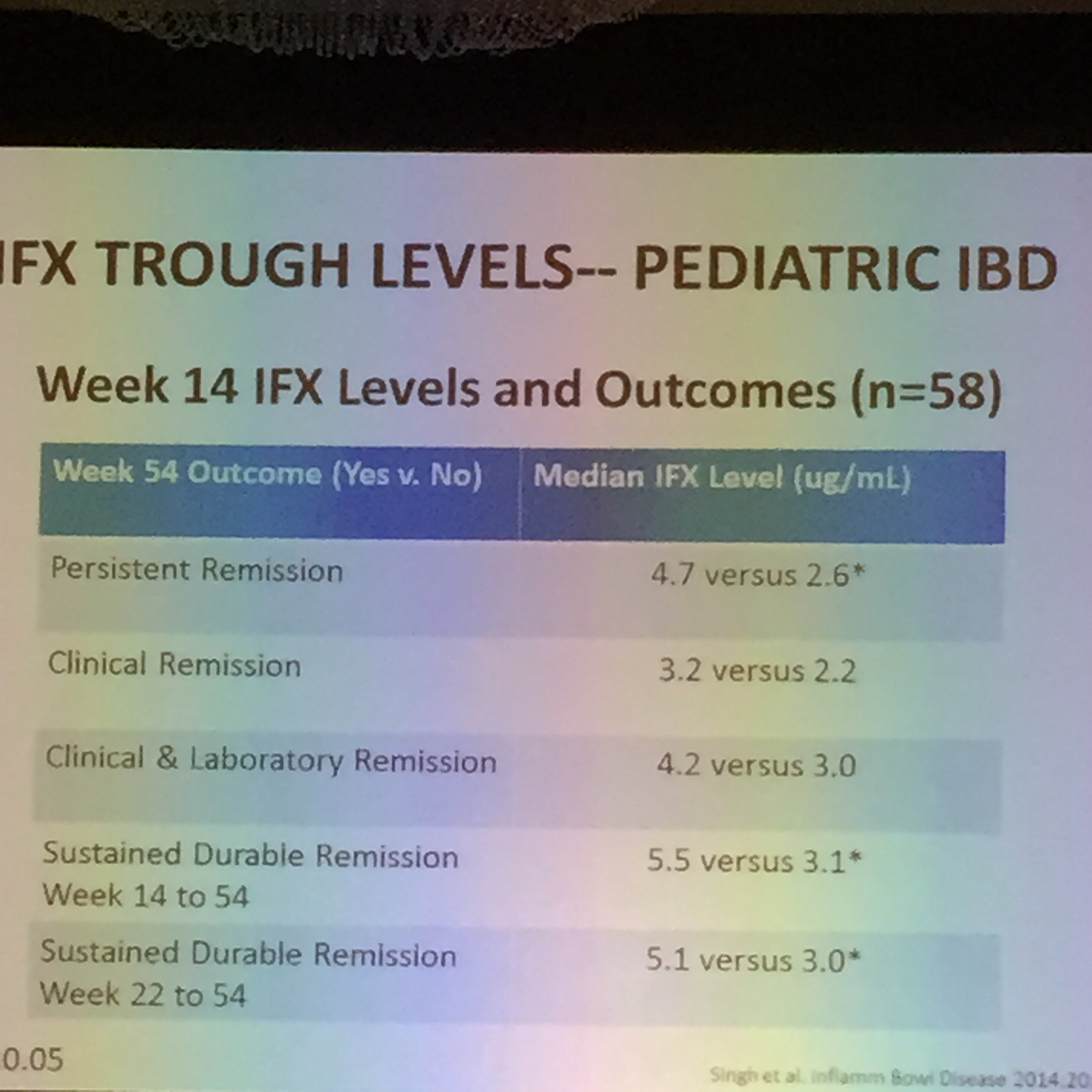
  • Week 14 IFX levels predict outcomes:
IFX Levels at 14 weeks

IFX Levels at 14 weeks

  • Preliminary data with ulcerative colitis shows that troughs >3.7 mcg/mL increases likelihood of mucosal healing and remission.
  • Undetectable trough levels of IFX associated with increased risk of colectomy with ulcerative colitis Gut 2010 59: 49
  • If a patient develops high levels of anti-drug antibodies (ADAs), this makes likelihood of response to medications unlikely. The specific ADA level is helpful; high levels of drug antibody are particularly problematic. If low levels of drug without ADAs, then increasing dose is typically effective.
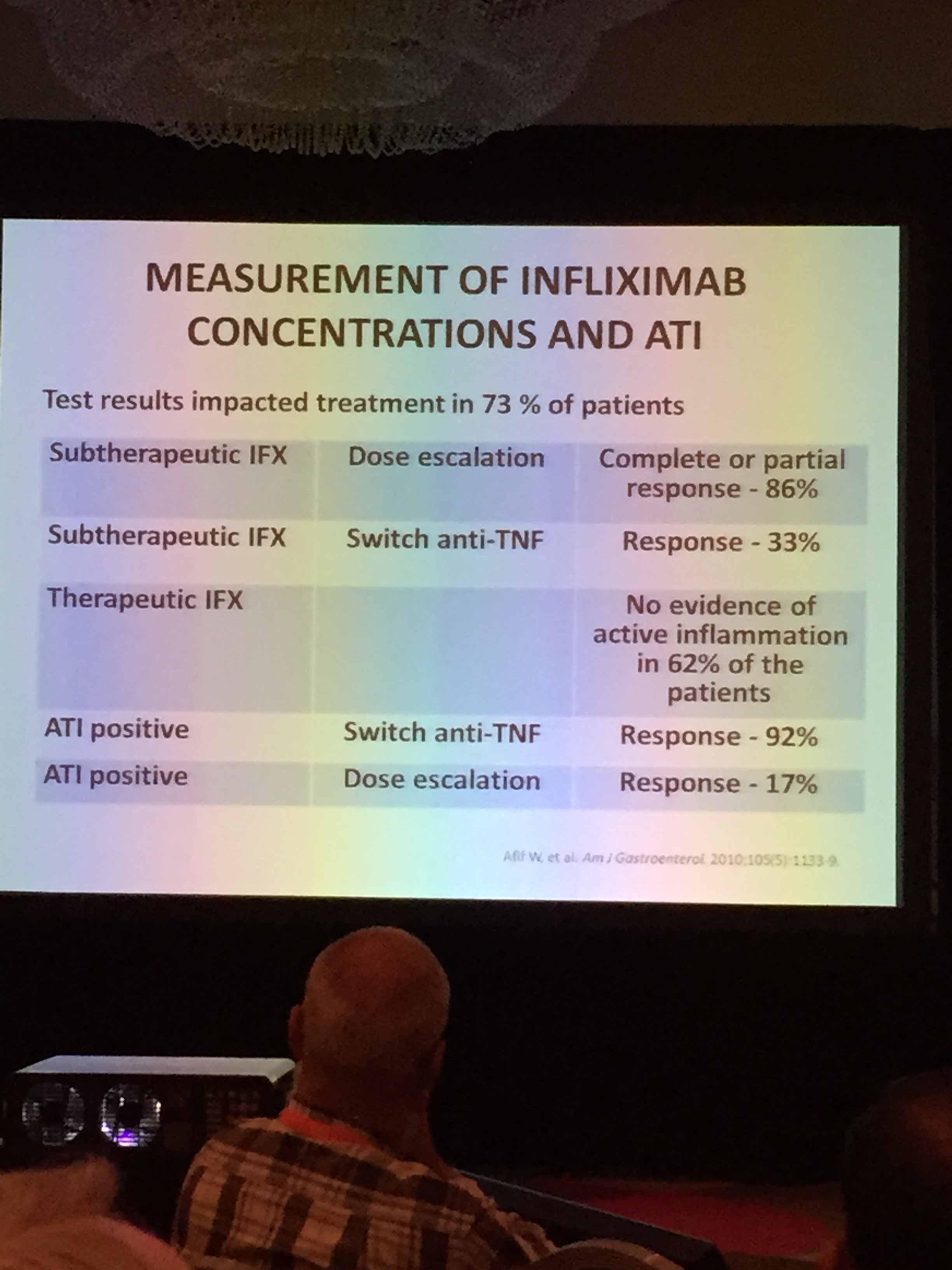
IFX Algorithm

IFX Algorithm

  •  If losing response to therapy and if active disease is present, then check drug concentration. If subtherapeutic with no ADAs or low ADAs, dose escalation with or without immunomodulator is indicated.
  • If subtherapeutic with high ADA, then change drug
  • If therapeutic level, then may need to change to different anti-TNF or drug class.

Related posts on this topic:

Debate: Immunomodulators versus Biologic agents 

  • James Markowitz –consider starting with immunomodulators
  • Maria Oliva-Hemker –consider starting with biologics

In the face of the “Biologic Tsunami,” Dr. Markowitz suggested –“Don’t throw the baby out with the bathwater”

  • Reviewed infliximab data, and adalimumab data. 1-year remission rates 50-60%.
  • Durability of infliximab may be influence by immunomodulators (IMs): patients who had IM prior to IFX had better durability of response:  45% durability in those who had no IM prior to biologic, 53% durability in those who had IM for ❤ months, 66% durability in those who had IM for >6 months prior to IFX.
  • Adult data showing lack of efficacy with IMs influenced by different characteristics compared with children (eg. different disease location, ~40-50% of adults were smokers)
  • Reviewed toxicity of IMs and biologics
  • Children with severe disease do best with “early infliximab.”
  • IMs with 40-60% efficacy over 18 months and then relatively stable.
  • In Dr. Markowitz’ practice, IM use: girls receive thiopurines and boys receive methotrexate

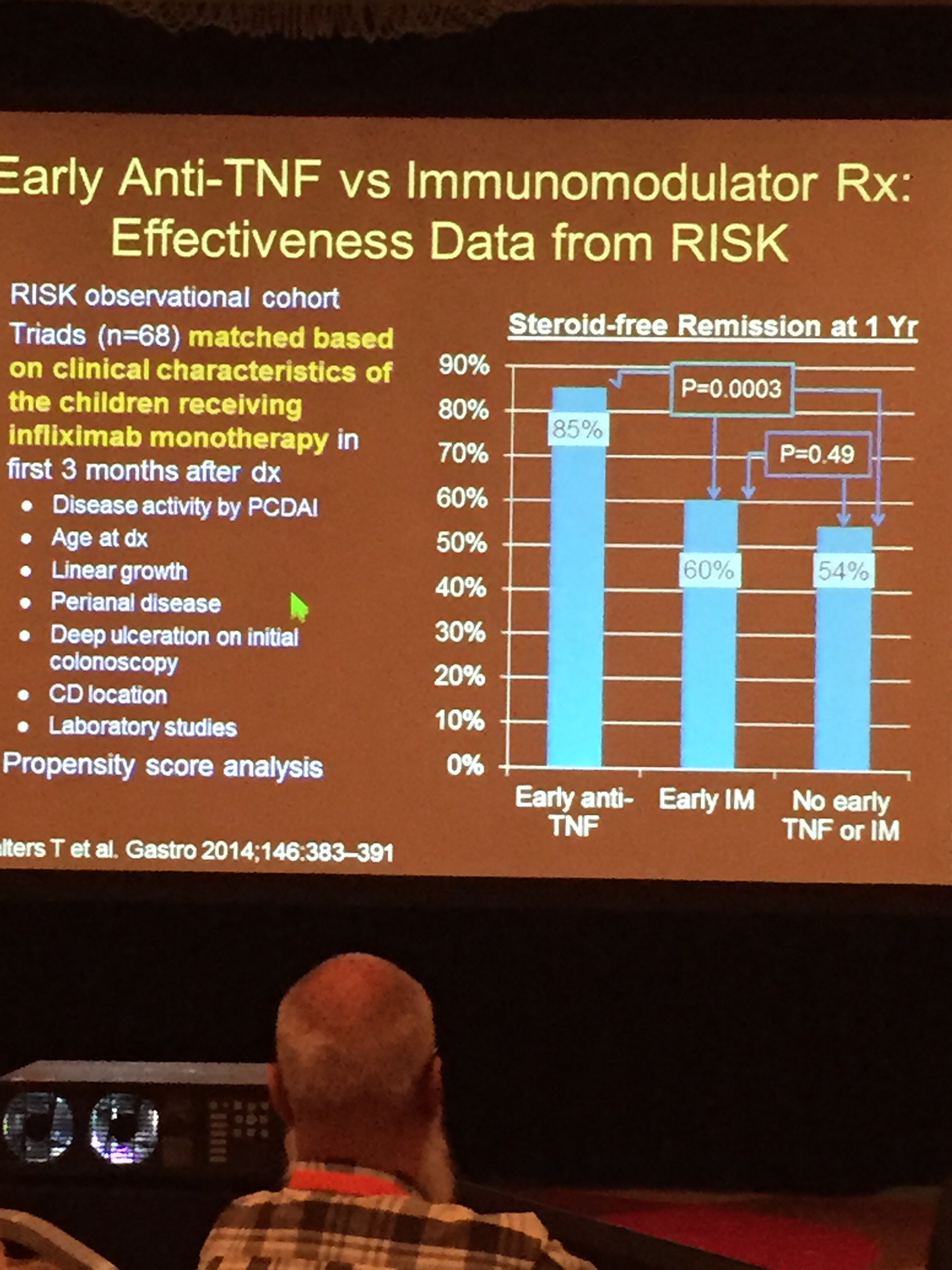
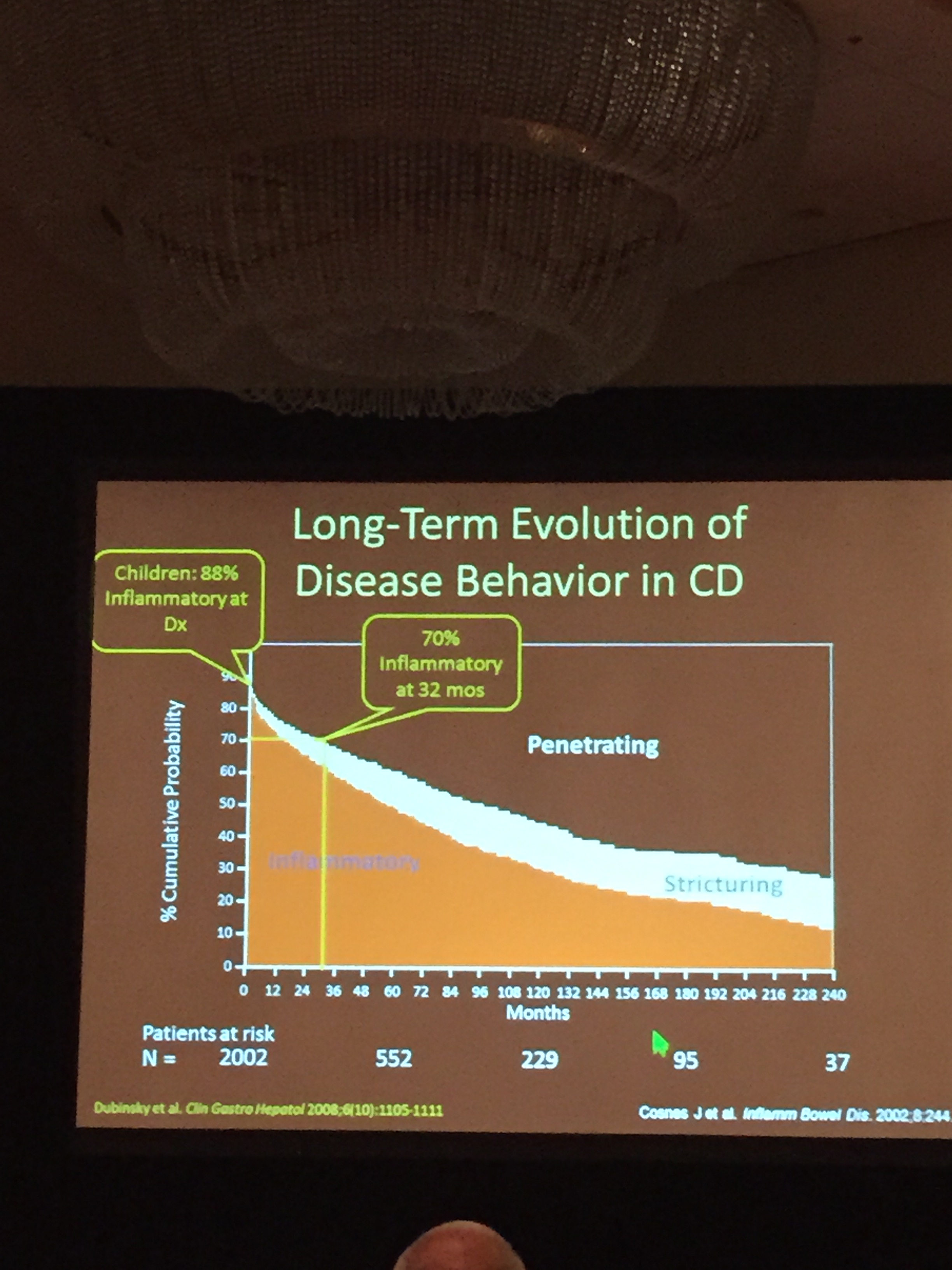
Biologics –important to start before disease phenotype changed to stricturing/penetrating disease. (See images below)

Related posts:

Early anti-TNF -RISK Cohort

Early anti-TNF -RISK Cohort


Long Term Risk of Stricturing (Cosnes et al)

Long Term Risk of Stricturing (Cosnes et al)

More Lessons in TNF Therapy (Part 2)

Another useful study (Clin Gastroenterol Hepatol 2014; 12: 1474-81, editorial 1482-84 [podcast available: http://www.gastro.org/cghpodcast%5D) on infliximab (IFX) usage addresses the issue of reinitiating IFX therapy after a “drug holiday.”

The authors conducted their retrospective single-center study in Belgium.  This detail is important as interruption of therapy is more common in Europe where agents like IFX are often stopped when patients are doing well.  In the U.S. stopping IFX occurs more commonly when there are antibodies to infliximab (ATIs) or increased clinical symptoms.  In this particularly study, 22% were restarted on IFX after loss of response (despite dose optimization) and the remainder had been stopped either due to remission, pregnancy or patient decision. Also, in their center, patients do not receive IFX unless they were allergic or refractory to steroids and/or immunomodulators for a minimum of 3 months.

In total there were 128 patients (105 with Crohn’s and 23 with ulcerative colitis).

Key findings:

  • Reintroduction of IFX resulted in a clinical response in 84.5% at week 14, 70% at 1 year, and 61% at more than 4 years.
  • Higher response was noted in those who discontinued because of remission: 90% at week 14, 77.5% at 1 year, and 66.6% at more than 4 years.
  • In patients with prior loss of response, 45% had response to reintroduction of IFX at 1 year.
  • 15 patients had acute infusion reactions, seven of these were severe.
  • ATI-positivity was associated with a higher risk of infusion reaction, though most ATI-positive patients did not develop a reaction.  Particularly in ATI-positive patients, the editorial recommends a “slow infusion protocol and possibly steroids before administration of the drug.”
  • The editorial states: “it seems reasonable to check drug levels and antibodies before the second infliximab dose.” Trough levels >2 mcg/mL and undetectable ATIs early after restarting the drug were associated with good responses. “For patients with high ATIs (≥9.1 U/mL), another drug should be considered.”
  • Among those with detectable ATIs, response at 1 year was noted in 54.8%.
  • Immunomodulator cotherapy had a beneficial effect.

Bottomline: This study provides useful insights for patients who need to reinitiate IFX treatment.  In addition, some IFX failures may be able to resume IFX after a drug holiday.

Related blog posts:

More Lessons in TNF Therapy (Part 1)

More data has been published regarding postoperative therapy with infliximab (IFX) in Crohn’s disease (Clin Gastroenterol Hepatol 2014; 12: 1494-1502, editorial 1503-6).

In this prospective, open-label study with at least 5 years of followup, 24 patients who were previously randomly assigned to receive IFX or placebo for 1 year after ileocolonic resection were given the option of continuing IFX or stopping IFX (“watch and wait approach”).  This was a strange study and perhaps mirrors clinical experience in that consistent usage of IFX was not maintained in the majority; in addition, there was not a set pattern with regard to thiopurine usage.

Of 11 patients who received IFX during the first year after surgery, 8 elected to stop IFX and all 8 experienced endoscopic recurrences at a mean of 18.2 months, including 5 who needed surgery.  Of 13 patients who received placebo during the first year after resection, 12 elected to initiate IFX at 1-year entry point;  7 of those responded with endoscopic remission. Overall, the mean percentage of time that a patient received IFX was similar between those initially assigned to IFX or placebo (50.3% vs. 53%).

Key findings:

  • Among those originally assigned to the IFX group, there was a longer mean time to first endoscopic recurrence (1231 days vs. 460 days in placebo group).
  • Colonoscopy identified recurrent disease in 22.2% of patients receiving IFX compared with 93% off IFX.  That is, throughout the study there were 84 colonoscopies.  If one was receiving IFX at the time of the colonoscopy, the adjusted rate ratio for being in remission while on IFX was 13.47.
  • Among patients who received IFX for at least 60% of the full study period, they had fewer surgical recurrences: 20.0% compared with 64.3% (5 of 8).
  • Recurrence was similar for patients receiving IFX monotherapy or in combination (though small numbers preclude a definitive assessment).
  • None of the three patients who continued IFX from the beginning have required an operation in the past 8 years.

One can speculate that the main reason why so many placebo-treated patients (12 of 13) elected to start IFX was that there was evidence of recurrent disease; conversely, many of the patients who received IFX postoperatively were in remission and opted for a watch-and-wait approach subsequently.

Study limitations: small numbers, open-label design, changes in therapy at patient’s physician discretion, and no restrictions on use of concomitant medications.

The associated editorial recommends the use of IFX postoperatively in high-risk patients (perforating disease, smokers, >1 surgical resection) and notes that therapy should be started 2-4 weeks after surgery because IFX is “less effective in preventing medical recurrence if started after endoscopic recurrence.”  The editorial suggests that low-risk patients should undergo a 6- to 12-month endoscopic evaluation.  Though, “we urgently need data from large prospective studies such as the PREVENT trial” (NCT01190839) as well as the POCER study.

Bottomline: Infliximab, administered within 4 weeks of an ileocolonic resection, reduces postoperative recurrence of Crohn’s disease and helps prevent further surgeries.  Studies (like this one) with long followup are essential to determine the effectiveness of anti-TNF (tumor necrosis factor) therapies.  It remains unclear whether only “high-risk” patients should receive anti-TNF therapy or whether these agents should be used more broadly.

Related blog posts:

Durability of Infliximab in Pediatric Crohn’s Disease

Similar to a previous recent study (How Long Will Infliximab Work? | gutsandgrowth), another large retrospective review confirms that infliximab has sustained effectiveness in the majority of children with Crohn’s disease (CD) (Inflamm Bowel Dise 2014; 20: 1177-86).

This study examined a 195 patients with a median age of 13.9 years from the years 2000-2011. Key findings:

  • Based on physician global assessment and pediatric Crohn’s activity index ≤10, 81% experienced a complete response.  Only 40 patients had endoscopic reassessment.  Among the 22 of these patients considered to be in a complete response, 16 (73%) had complete mucosal healing.
  • Despite optimization (based on clinical symptoms) in 35%, complete responders experienced a loss of response at a rate of 2% to 6% per year over 5 years.
  • In this cohort, combination therapy with at least 30 weeks of immunomodulator therapy improved durability of response.  Since 2006, the authors indicate that “our preference has been to use concomitant methotrexant rather than thiopurines” in boys.
  • Infliximab was well-tolerated.  However, severe infusion reactions were noted in 5% at some time point, 8% had psoratiform skin lesions, and 24% had elevated ALT.
  • Clinical response to infliximab was associated with enhanced linear growth.

Take-home message (from the authors): “the clinical response and growth data presented argue in favor of early treatment.”

Related blog post:

Safety Signal for Anti-TNFs

In a large population of inflammatory bowel disease patients, anti-tumor necrosis factor medications (anti-TNFs) did not increase the risk of cancer in a recent study from Denmark.  This link provides a summary of the study (JAMA 2014 June 17 [doi:10.1001/jama.2014.5613]) in GI & Hepatology News: Anti-TNFs -Safety Signal

Here’s an excerpt:

This study “assessed the risks of any cancer and 11 individual cancers, including malignant melanoma, in 56,146 IBD patients aged 15 and older…during 1999-2012, of whom 4,553 took TNF-alpha antagonists.  Median follow-up was 9.3 years…A total of 6.7% of the patients who never took TNF-alpha antagonists developed cancer during follow-up compared with 1.8% of patients who took the drugs…

Stratifying for cancer risk according to years since first exposure, no specific time-dependent pattern was observed in our study…an increased risk in the long term cannot be excluded.”

In another systemic review study (Clinical Gastroenterology and Hepatology Volume 12, Issue 9, Pages 1443–1451, September 2014) focused on pediatric IBD patients (n=5528), the authors found that “Two patients developed lymphoma (2.1/10,000 PYF). This value was … lower than the population of pediatric patients receiving thiopurine monotherapy (4.5/10,000 PYF; SIR, 0.47; 95% CI, 0.03–6.44)”…”the risk of lymphoma was no greater among children with IBD who received anti-TNF therapy than those treated with other IBD therapies or adults treated with anti-TNF agents. The rate of serious infection was significantly lower among pediatric patients with IBD treated with anti-TNF agents than those treated with steroids, or adults with IBD who received anti-TNF therapy.”  Here’s the link: anti-TNF therapy with lower lymphoma risk than thiopurines in pediatrics