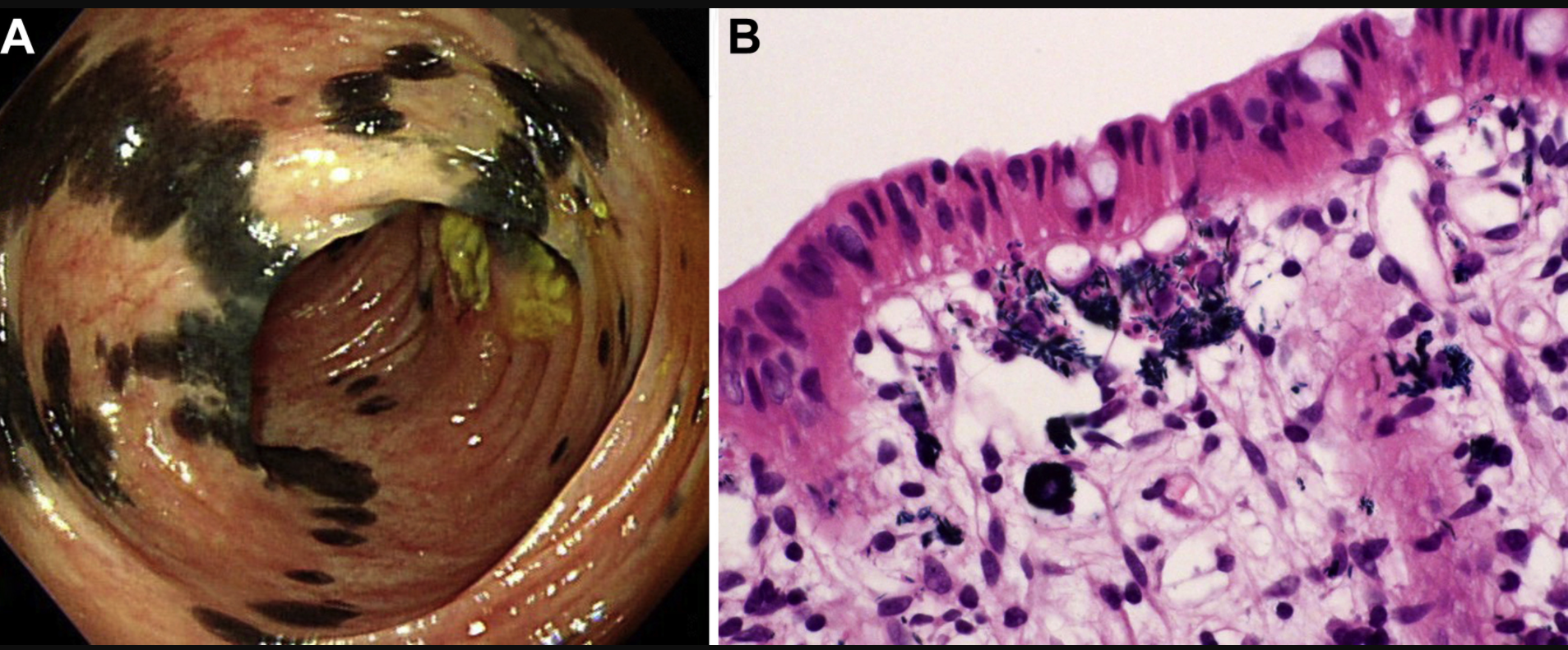
The image below is from a 57 yo woman with Crohn’s disease who was taking a supplement, indigo naturalis (Qing-Dai). “Higher magnification disclosed bluish, needle-like crystals in the cytoplasm of these histiocytes. In light of the presence of pigment-laden histiocytes, we called the lesions indigo naturalis-related pseudomelanosis. Unlike melanosis coli, which typically shows continuous homogeneous brown or black discoloration of colon mucosa (snake-skin appearance or starry sky appearance), indigo naturalis-related pseudomelanosis exhibits a haphazard distribution of black discoloration reminiscent of the skin markings of Holstein Friesian cattle…It remains to be seen whether deposition of indigo naturalis has any long-term adverse effect, although histologically the mucosa with indigo deposition was not accompanied by significant inflammatory activity.”
A long time ago I heard a joke from a mentor about how can you tell if a person is an optimist. An optimist is a person who finds a pile of manure under the tree on Christmas morning and declares: ‘Oh boy, I’m getting a pony.’
Researchers who are trying to identify oral treatments for celiac disease are probably true optimists. Yet, despite my skepticism, a recent study (D Schuppan et al. NEJM 2021; 385: 35-45. A Randomized Trial of a Transglutaminase 2 Inhibitor for Celiac Disease) provides the best proof yet that an oral treatment may be helpful.
In this 6-week randomized, double-blind, placebo-controlled study with 159 participants, treatment with ZED1227, a selective oral transglutaminiase 2 inhibitor reduced histologic injury compared to placebo; all patients were receiving a diet with 3 grams of daily gluten. Key findings:
Treatment with ZED1227 at all three dose levels attenuated gluten-induced duodenal mucosal injury. The estimated difference from placebo in the change in the mean ratio of villus height to crypt depth from baseline to week 6 was 0.44 (95% confidence interval [CI], 0.15 to 0.73) in the 10-mg group (P=0.001), 0.49 (95% CI, 0.20 to 0.77) in the 50-mg group (P<0.001), and 0.48 (95% CI, 0.20 to 0.77) in the 100-mg group (P<0.001)
The estimated differences from placebo in the change in intraepithelial lymphocyte density were −2.7 cells per 100 epithelial cells (95% CI, −7.6 to 2.2) in the 10-mg group, −4.2 cells per 100 epithelial cells (95% CI, −8.9 to 0.6) in the 50-mg group, and −9.6 cells per 100 epithelial cells (95% CI, −14.4 to −4.8) in the 100-mg group
Adverse events were similar to placebo; 3 (8%) patients in the 100 mg group developed a rash
The need for a treatment besides a gluten-free diet is significant; among adults, 40-50% do not achieve mucosal healing/recovery despite GFD institution; in addition, the diet is difficult and costly.
My take: I think it is still a long journey to find an effective & safe oral treatment for celiac disease.
Background: “The incidence of EoE during OIT has been estimated at 2.7%.” (AJ Lucendo et al. Ann Allergy Asthma Immunol 2014; 113: 624-629)
Methods: Twenty adults with IgE-mediated peanut allergy were randomly assigned to groups given peanut OIT (n = 15) or placebo (n = 5) in this prospective study. Serial gastrointestinal biopsies were collected at baseline (n = 21, 0 weeks), following dose escalation (n = 10, 52 weeks), and during the maintenance phase (n = 11, 104 weeks)
Key findings:
At baseline: 3 of the 21 subjects (14%) had esophageal peak eosinophil counts ≥15 eos/hpf and all subjects had dilated intercellular spaces (DIS)
At 52 weeks: OIT induced or exacerbated esophageal eosinophilia (EoE) at 52 weeks with peak eosinophil counts ≥15 eos/hpf in 4 of 7 patients [57%] who did not have EoE at baseline. EoE did not develop in patients receiving placebo
At 104 weeks: In 4 of 6 participants (67%), OIT-induced EoE and gastrointestinal eosinophilia resolved by the end of the maintenance phase
One patient developed a clinical diagnosis of EoE.
The discussion notes overlap between EoE and IgE-mediated food allergy. The risk of EoE in patients with IgE-mediated food allergy is 118 times that of the general population (4.7% vs 0.04%) (J Allergy Clin Immunol Pract 2017; 5: 369-375). Also, the authors note that in this study all of the peanut allergic subjects had evidence of epithelial barrier dsyfunction.
My take: This small study shows, that for most adult patients, the development of EoE during OIT is often transitory.
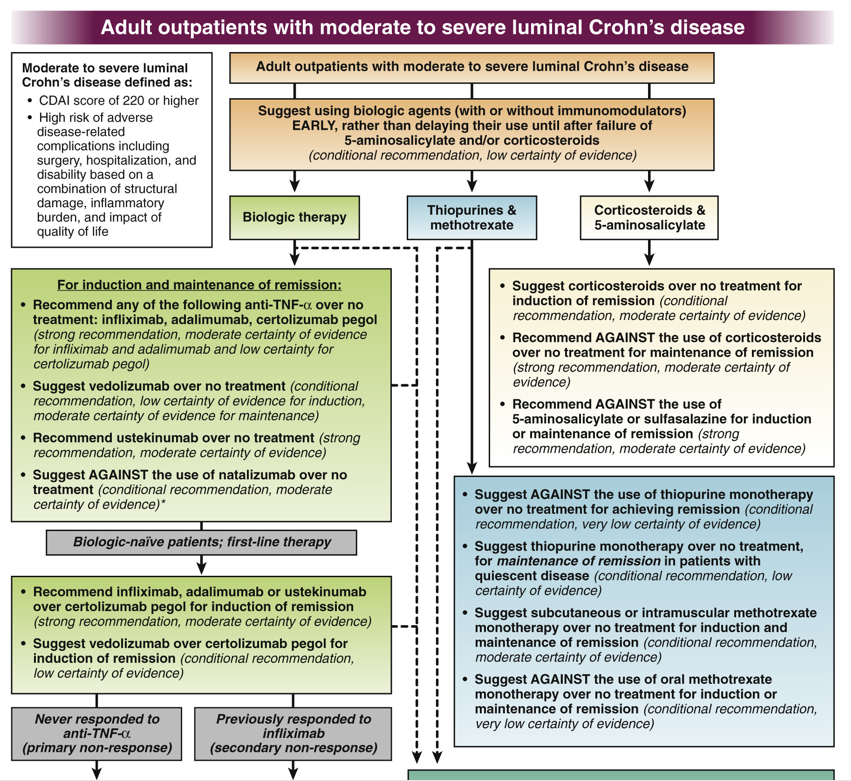
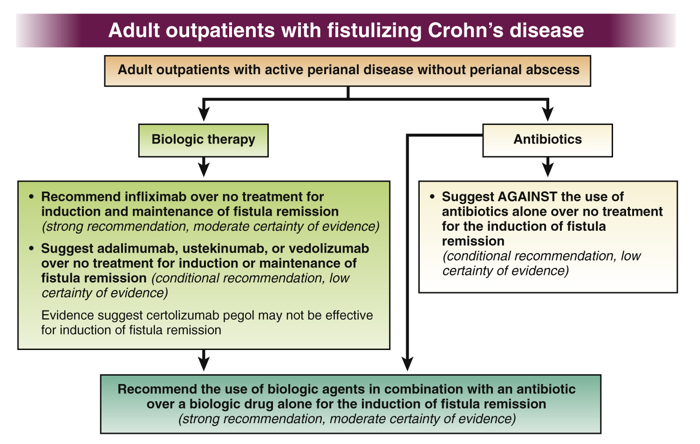
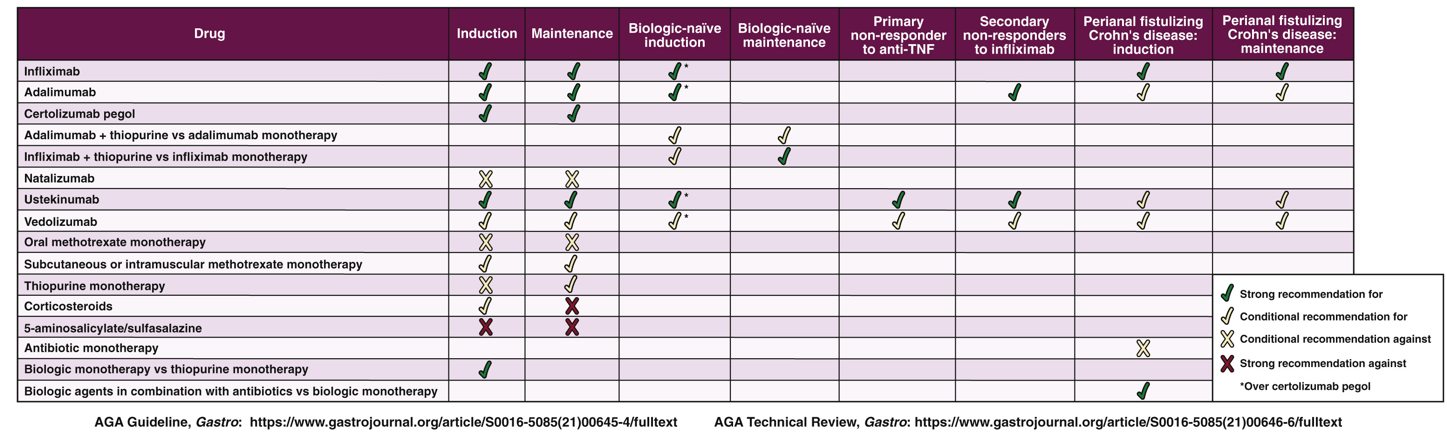
A series of articles details the 2021 AGA Guidelines for Crohn’s disease (CD) including a clinical practice guideline (pg 2496-2508), a clinical decision support tool (2509-2510), a spotlight summary (pg 2511), a technical review (2512-2557), and a review of the recommendations (pg 2557-2262). I will highlight the first article.
For me the most important of their recommendations was #7:
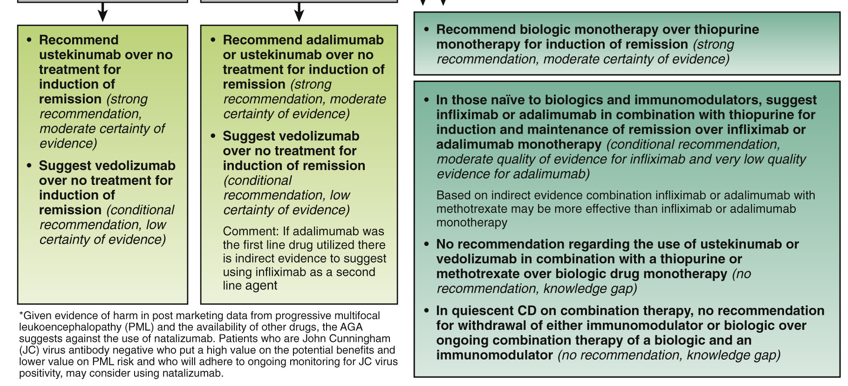
In adult outpatients with moderate to severe CD, the AGA suggests early introduction with a biologic with or without an immunomodulator rather than delaying their use until after failure of 5-aminosalicylates and/or corticosteroids.
Other points:
For moderate to severe CD, the authors support the use of anti-TNF therapy in combination with immunomodulators, support the use of ustekinumab and vedolizumab, and support the use of SC/IM (but not oral) methotrexate.
The authors are AGAINST the use of mesalamine/sulfasalazine products as well as corticosteroids for maintenance of remission for CD
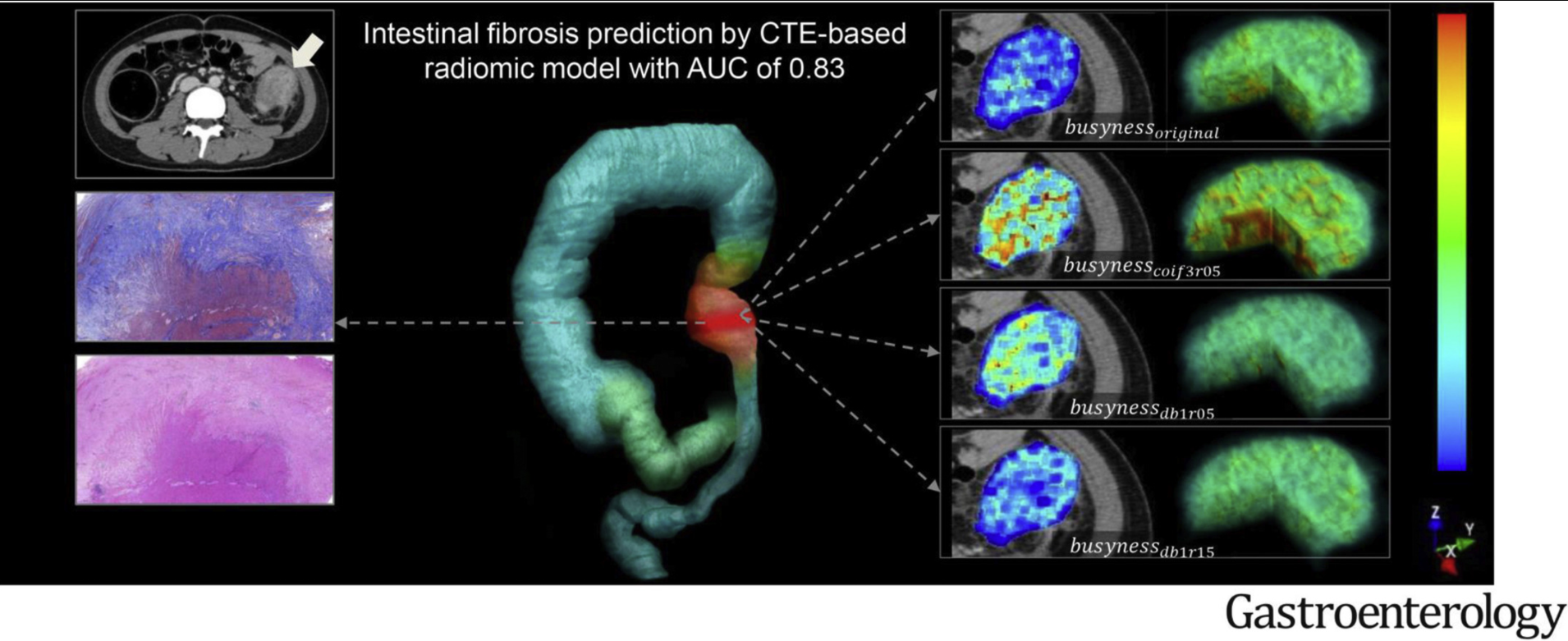
Methods: This article describes the development a computed-tomography enterography (CTE)–based radiomic model (RM). This retrospective multicenter study included 167 CD patients who underwent preoperative CTE and bowel resection. 1454 radiomic features were extracted from venous-phase CTE and a machine learning–based RM was developed based on the reproducible features using logistic regression. The RM was validated in an independent external test cohort recruited from 3 centers.
Key findings:
In the training cohort, the area under the ROC curve (AUC) of RM for distinguishing moderate–severe from none–mild intestinal fibrosis was 0.888.
In the test cohort, the RM had an AUC of 0.816.
RM was more accurate than visual interpretations by either radiologist (radiologist 1, AUC = 0.554; radiologist 2, AUC = 0.598; both, P < .001) in the test cohort
My take: This CT approach with RM allowed for accurate characterization of intestinal fibrosis in CD. The images look pretty cool too.
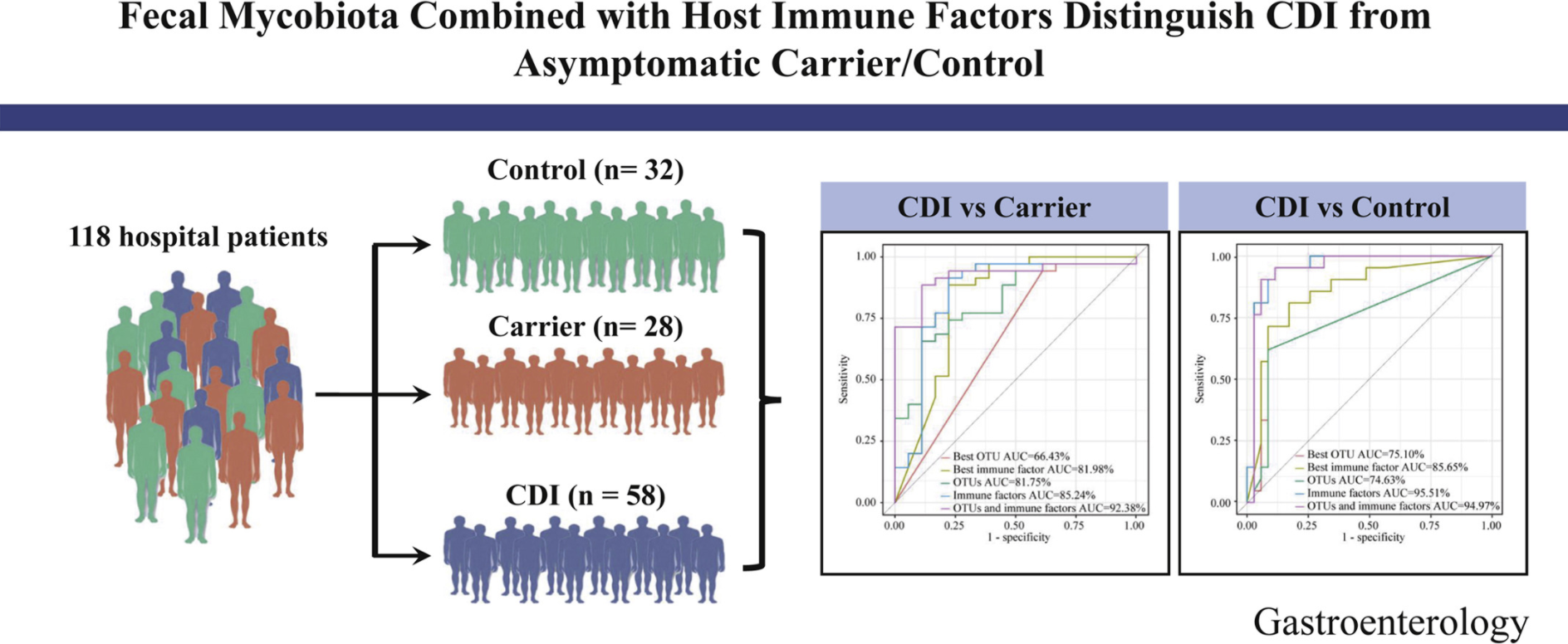
The ratio of Ascomycota to Basidiomycota was dramatically higher in patients with CDI than in Carrier and Control (P < .05).
Using 4 fungal operational taxonomic units combined with 6 host immune markers in the random forest classifier can achieve very high performance (area under the curve ∼92.38%) in distinguishing patients with CDI from Carrier.
My take: It is interesting that fecal fungal diversity (mycobiome), in addition to bacterial diversity, is reduced in those with Clostridium difficile infection (CDI) compared to both control groups and those with Clostridium difficile asymptomatic carriage.
Among 76 patients (median age 36.5 years) who were prospectively followed for 2 years, persistent villous atrophy was observed in 40 (53%). In this group, 72.5% were asymptomatic (based on Likert scales) and 75% had negative serology
Detectable fecal gluten immunogenic peptides (f-GIPs) were present in at least one sample in 69% of patients. (Two samples obtained at f/u visits which were ~every 6 months during study)
Excellent or good adherence to GFD was demonstrated in 68.4% of patients based on dietetic evaluations. Only 6 (8%) were clearly nonadherent
“There were no significant differences in the rate of clinical and serological remission between patients with villous atrophy and those with mucosal recovery”
The authors did not find potentially modifiable predictive factors
Discussion:
The authors note that serology is “not useful for monitoring patients on a GFD.” Anti-TTG2 and EMA, in a recent meta-analysis, had a pooled sensitivity of around 50%.
“Adults are significantly less likely than children to normalize their duodenal histology.”
Editorial:
The associated editorial by Rej et al (pg 946-948) outline a personalized approach for dealing with persistent villous atrophy:
In those with persistent symptoms/positive GIPs/elevated serology/micronutrient deficiency, the first step is careful dietetic assessment. After this, endoscopy could be considered to confirm presence or absence of mucosal healing.
In those with no symptoms and no abnormalities, use of monitoring endoscopy needs to be weighed against the costs as well as potential complications.
Other points in the editorial: 1. GIPs have poor concordance with mucosal healing and 2. causes of poor mucosal healing include the following: natural slow healing process, super sensitive to gluten, ongoing gluten exposure, and refractory celiac disease.
My take: This study shows that there is ongoing gluten exposure in the majority of patients even in those with excellent or good adherence to a GFD; in addition, it shows that clinical/serological markers are NOT effective in predicting mucosal healing in adults. Nevertheless, it is not clear that followup endoscopy is beneficial.
Disclaimer: This blog, gutsandgrowth, assumes no responsibility for any use or operation of any method, product, instruction, concept or idea contained in the material herein or for any injury or damage to persons or property (whether products liability, negligence or otherwise) resulting from such use or operation. These blog posts are for educational purposes only. Specific dosing of medications (along with potential adverse effects) should be confirmed by prescribing physician. Because of rapid advances in the medical sciences, the gutsandgrowth blog cautions that independent verification should be made of diagnosis and drug dosages. The reader is solely responsible for the conduct of any suggested test or procedure. This content is not a substitute for medical advice, diagnosis or treatment provided by a qualified healthcare provider. Always seek the advice of your physician or other qualified health provider with any questions you may have regarding a condition
This reported case series with 5 patients with severe ulcerative colitis (UC) who received a combination of tofacitinib and infliximab for at least 90 days were retrospectively reviewed. Tofacitinib dosing was de-escalated to 5 mg twice daily after 8 weeks. Thiopurine therapy was stopped with tofacitinib initiation.
Key findings:
Median duration of combination therapy was 9 months (range, 4–12 months). At 90 days, all patients had a reduction in Mayo score of ≥3. Four patients improved clinically and biochemically (Table 1), with 3 patients achieving steroid-free remission.
The only adverse event reported was one patient developing varicella zoster.
The authors letter title regarding tofacitinib being “safe and effective” is clearly overstated. The reply notes that in limited experience the group from the University of Michigan had a 50-year-old man develop severe pulmonary and CNS disease due to acquisition of legionnaires disease while on combination tofacitinib and infliximab.
My take: (borrowed from reply) “Efficacy and safety data obtained through rigorous randomized trials are needed…it is possible that long-term use of combination tofacitinib and infliximab will lead to an unacceptable risk of infection.”
Another study of tofacitinib: GR Lichtenstein et al. Inflamm Bowel Dis 2021; 27: 816-825. Tofacitinib, an Oral Janus Kinase Inhibitor: Analysis of Malignancy (Excluding Nonmelanoma Skin Cancer) Events Across the Ulcerative Colitis Clinical Program Key finding: With an exposure of 2576.4 patient years & 124 overall cohort tofacitinib-treated patients, 20 developed a malignancy
A recent post (Is A Gastric Emptying Study Helpful in Children?) reviewed data in children indicating that gastric emptying study (GES) results did not correlate with symptom severity in children with functional dyspepsia (FD) symptoms.
At 48-weeks, 42% of patients with an initial diagnosis of gastroparesis were reclassified as FD based on gastric-emptying results at this time point; conversely, 37% of patients with FD were reclassified as having gastroparesis
In a subset of patients, full-thickness biopsies of the stomach showed loss of interstitial cells of Cajal and CD206+ macrophages in both groups compared with obese controls.
The 48-week clinical outcomes were similar. Symptom severity remained “on average unchanged despite the change in gastric-emptying status”
My take (borrowed from authors): This study shows that “patients initially classified as one or the other are not distinguishable by clinical features or by follow-up assessment of gastric emptying…both disorders are unified by characteristic pathologic features, best summarized as a macrophage-driven “cajalopathy” of the stomach.”
While the authors state that a GES lacks reliability, the associated editorial argues that a GES may still be useful (J Tan et al. pg 1931. Full text: Gastroparesis: A Dead-end Street After All?) As individuals with delayed GE “fail to benefiit” from neuromodulators, a GES may influence treatment. However, they note that ACG guidelines indicate that a GES is not needed and all patients with dyspepsia symptoms can be treated in a “uniform sequence of proton pump inhibitors, tricyclic antidepressants and prokinetics as third-line therapy.”
“The U.S. Food and Drug Administration approved Wegovy (semaglutide) injection (2.4 mg once weekly) for chronic weight management in adults with obesity or overweight with at least one weight-related condition (such as high blood pressure, type 2 diabetes, or high cholesterol), for use in addition to a reduced calorie diet and increased physical activity…The drug is indicated for chronic weight management in patients with a body mass index (BMI) of 27 kg/m2 or greater who have at least one weight-related ailment or in patients with a BMI of 30 kg/m2 or greater… The largest placebo-controlled trial enrolled adults without diabetes. Individuals who received Wegovy lost an average of 12.4% of their initial body weight compared to individuals who received placebo”