How Much Do We Really Know About Fecal Microbiota Transplantation?

A recent study (SJ Ott et al. Gastroenterol 2017; 152: 799-811) followed 5 patients who were treated with a sterile fecal filtrate (via nasojejunal tube) for recurrent Clostridium difficile infection (CDI) for a minimum of 6 months.  This open-label study noted that this fecal filtrate transfer eliminated the symptoms of CDI in all 5 patients.

A summary of this important study is available in the AGA blog:

Here’s an excerpt: What is the Active Ingredient in FMT for CDI?

Stool was collected from 5 donors selected by the patients and fully characterized according to FMT standards. The stool was then sterile filtered to remove small particles and bacteria, and the filtrate was transferred to patients in a single administration via nasojejunal tube.

Fecal samples were collected from patients before and at 1 week and 6 weeks after FFT. Microbiome, virome, and proteome profiles of donors and patients were compared….

They identified about 300 different proteins in each of the filtrates they analyzed—most proteins were of human origin, but the filtrates also contained 20–60 bacterial and fungal proteins. The major human proteins in the filtrate proteome were human enzymes such as intestinal-type alkaline phosphatase, chymotrypsin-like elastases, and α amylases. Bacterial proteins included metabolic enzymes and redox proteins without obvious microbiome-modifying properties, such as glyceraldehyde-3-phosphate dehydrogenase, phosphoenolpyruvate carboxykinase, glutaredoxin-1, or thioredoxin-1…

Ott et al propose that the active component of FMT therapy might not be living bacteria, but bacterial components, antimicrobial compounds of bacterial origin (bacteriocins), or bacteriophages that contribute to a healthy intestinal microenvironment. These could be common to all successful FMT therapies and even rather unspecific regarding the bacterial strain(s) used for therapies. They propose that bacteriophages affect community dynamics of gut microbiota to resolve dysbiosis.

My take: This is a provocative study that challenges us to rethink how FMT works. Ultimately, treating CDI needs to be more precise.

Related blog posts:


Latiglutenase Not Effective for Celiac Disease, Plus One

A recent study (JA Murray et al. Gastroenterol 2017; 152: 787-98) examined the effectiveness of  latiglutenase for celiac disease.  Latiglutenase (aka ALV003) is an oral medicine which is a mixture of two recombinant gluten-targeting proteases.

The concept of latigluenase is that a medicine that degrades the gluten protein could obviate the need for a gluten free diet.  Unfortunately, in this study with 494 patients with celiac disease for at least 1 year, the medicine at various doses for 12 to 24 weeks was ineffective. There was no difference between the medicine and placebo with regard to villous height:crypt depth ratio, number of intraepithelial lymphocytes or serologic markers of celiac disease.  Symptom scores increased in both the active treatment group and the placebo group.  While this was a negative study, the authors did note some effect on symptom domains on higher dosing regimens. “This observation suggests that treatment with latiglutenase may affect symptoms before showing clinically meaningful effects on serologic and histologic end points.

A second study (RS Choung et al. Gastroenterol 2017; 152: 830-9) examined prevalence and morbidity of undiagnosed celiac disease in Olmstead County. After excluding patients with celiac disease, sera from 30,425 adults and 830 children were tested for tissue transglutaminase IgA antibody (tTG)  and endomysial antibody (EMA).  Case definition: patients were considered to have celiac serologically if tTG titer was 2.0 U/mL or greater with a positive EMA. The prevalence of celiac disease was 1.1% in adults and 1.0% in children. The majority of patients with celiac disease (>80%) have not received the diagnosis.  By comparing those with positive celiac serology to matched controls (2 controls for each positive), the authors determined that undiagnosed celiac disease was associated with increased rates of hypothyroidism (OR 2.2) but no other significant morbidities.  Median followup period was 6.3 years.

My take: A promising new therapy for celiac disease, latiglutenase, looks like it will not be effective and there are a lot of individuals with celiac disease who are unaware of their diagnosis.

Related blog posts:

Disclaimer: These blog posts are for educational purposes only. Specific dosing of medications (along with potential adverse effects) should be confirmed by prescribing physician.  This content is not a substitute for medical advice, diagnosis or treatment provided by a qualified healthcare provider. Always seek the advice of your physician or other qualified health provider with any questions you may have regarding a condition.

Shakespeare and Company Bookstore, Paris

Colon Cancer at Younger Ages

From USA Today: Colon and rectal cancers surge in millennials and GenX

An excerpt:

Someone born in 1990 has double the risk of early colon cancer and quadruple the risk of early rectal cancer as someone born in 1950…

Most of the nation’s 135,000 annual cases and 50,000 deaths related to colon and rectal cancer still occur among people over age 55. But the share of cases involving younger adults has risen to 29% for rectal cancer and 17% for colon cancer, the study showed. About 11,000 people in their 40s and 4,000 under 40 were diagnosed in 2013…

Known risk factors for colon and rectal cancer include obesity, inactivity and diets high in red and processed meat and low fruits, vegetables and whole grains.

screenshot-163

Chronic Diarrhea Recommendations

Recent guidelines for adults with chronic diarrhea (>4 weeks):

Full text link: LR Schiller, DS Pardi, JH Sellin. Clin Gastroenterol Hepatol 2017; 15: 182-193.

A few key points:

  • The authors advocate treatment, not testing, for adults who meet Rome criteria for irritable bowel syndrome (IBS) without alarm symptoms.
  • Dietary history is essential.
  • “True food allergies are rare causes of chronic diarrhea in adults”
One of my colleagues questioned whether this product could be part of an effective cleanout

One of my colleagues questioned whether this product could be part of an effective cleanout


Expert Advice on Clostridium difficile and Inflammatory Bowel Disease

Link: Management of Clostridium difficile Infection in Inflammatory Bowel Disease: Expert Review from the Clinical Practice Updates Committee of the AGA Institute

Abstract: The purpose of this expert review is to synthesize the existing evidence on the management of Clostridium difficile infection in patients with underlying inflammatory bowel disease. The evidence reviewed in this article is a summation of relevant scientific publications, expert opinion statements, and current practice guidelines. This review is a summary of expert opinion in the field without a formal systematic review of evidence.

Best Practice Advice 1: Clinicians should test patients who present with a flare of underlying inflammatory bowel disease for Clostridium difficile infection.

Best Practice Advice 2: Clinicians should screen for recurrent C difficile infection if diarrhea or other symptoms of colitis persist or return after antibiotic treatment for C difficile infection.

Best Practice Advice 3: Clinicians should consider treating C difficile infection in inflammatory bowel disease patients with vancomycin instead of metronidazole.

Best Practice Advice 4: Clinicians strongly should consider hospitalization for close monitoring and aggressive management for inflammatory bowel disease patients with C difficile infection who have profuse diarrhea, severe abdominal pain, a markedly increased peripheral blood leukocyte count, or other evidence of sepsis.

Best Practice Advice 5: Clinicians may postpone escalation of steroids and other immunosuppression agents during acute C difficile infection until therapy for C difficile infection has been initiated. However, the decision to withhold or continue immunosuppression in inflammatory bowel disease patients with C difficile infection should be individualized because there is insufficient existing robust literature on which to develop firm recommendations.

Best Practice Advice 6: Clinicians should offer a referral for fecal microbiota transplantation to inflammatory bowel disease patients with recurrent C difficile infection.


Related blog posts:

screenshot-94

ACG Guideline for Helicobacter Pylori

Link: ACG Clinical Guideline: Treatment of Helicobacter pylori Infection

The American Journal of Gastroenterology , (10 January 2017) | doi:10.1038/ajg.2016.563

William D Chey, Grigorios I Leontiadis, Colin W Howden and Steven F Moss

Helicobacter pylori (H. pylori) infection is a common worldwide infection that is an important cause of peptic ulcer disease and gastric cancer. H. pylori may also have a role in uninvestigated and functional dyspepsia, ulcer risk in patients taking low-dose aspirin or starting therapy with a non-steroidal anti-inflammatory medication, unexplained iron deficiency anemia, and idiopathic thrombocytopenic purpura. While choosing a treatment regimen for H. pylori, patients should be asked about previous antibiotic exposure and this information should be incorporated into the decision-making process. For first-line treatment, clarithromycin triple therapy should be confined to patients with no previous history of macrolide exposure who reside in areas where clarithromycin resistance amongst H. pylori isolates is known to be low. Most patients will be better served by first-line treatment with bismuth quadruple therapy or concomitant therapy consisting of a PPI, clarithromycin, amoxicillin, and metronidazole. When first-line therapy fails, a salvage regimen should avoid antibiotics that were previously used. If a patient received a first-line treatment containing clarithromycin, bismuth quadruple therapy or levofloxacin salvage regimens are the preferred treatment options. If a patient received first-line bismuth quadruple therapy, clarithromycin or levofloxacin-containing salvage regimens are the preferred treatment options. Details regarding the drugs, doses and durations of the recommended and suggested first-line and salvage regimens can be found in the guideline.

My take: Recent draft guidelines from our pediatric group, NASPGHAN, suggested that triple therapy, in addition to quadruple therapy, would still be considered a first-line approach.  When the NASPGHAN report is completed/published, it will be of interest to see whether this discrepancy persists.

Related blog posts:

screen-shot-2017-01-10-at-7-53-16-pm

Quick Take: Preventing Recurrent Clostridium difficile Infection with Bezlotoxumab

A recent study on a new monoclonal antibody to prevent Clostridium difficile infection is available from the NEJM.  Here’s the link: Preventing Clostridium difficile Infection Recurrence

screenshot-79

screenshot-81

screenshot-83

My take: In Modify I and Modify II, Bezlotoxumab reduced the rate of Clostridium difficile recurrence in elderly patients (median age 66 years). In a high risk patients, the likely hefty cost of this medication may be warranted.

These studies were likely pivotal in receiving FDA approval: FDA Approves Merck’s ZINPLAVA™ (bezlotoxumab) to Reduce Recurrence of Clostridium difficile Infection

Acute Pancreatitis Review

A succinct review (CE Forsmark et al. NEJM 2016; 375: 1972-81) provides some useful pointers regarding acute pancreatitis.

The review covers the causes, epidemiology, diagnosis, prediction of severity and management.  With regard to management:

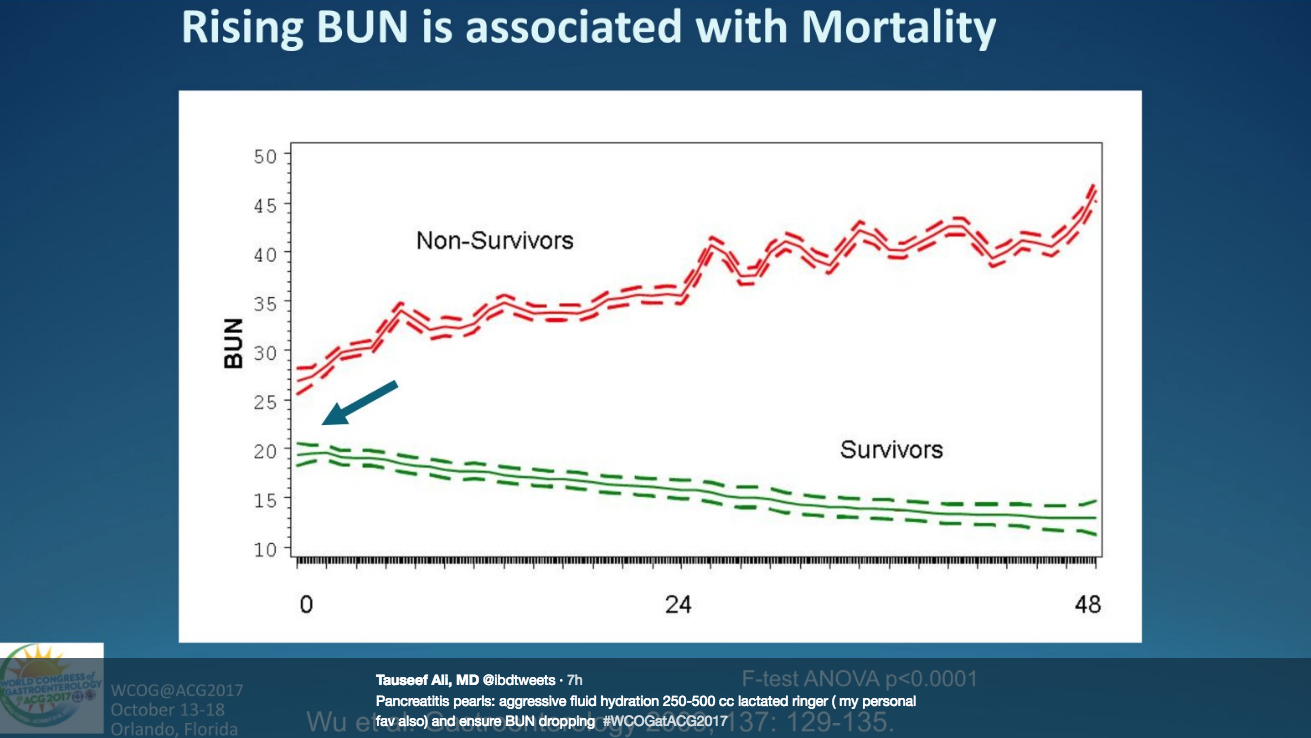
  • The authors advocate for aggressive fluid resuscitation during the initial 24 hrs -though care to avoid fluid overload.  “One trial suggested the superiority of Ringer’s lactate as compared with normal saline in reducing inflammatory markers.”
  • “Total parenteral nutrition is…more expensive, riskier, and no more effective than enteral nutrition.”
  • “In patients with mild acute pancreatitis who do not have organ failure or necrosis, there is no need for complete resolution of pain or normalization of pancreatic enzyme levels before oral feeding is started.”
  • “A low-fat soft or solid diet is safe and associated with shorter hospital stays than is a clear-liquid diet with slow advancement to solid foods.”  Thus, most patients with mild acute pancreatitis can start a low-fat diet soon after admission, “in the absence of severe pain, nausea, vomiting and ileus.”
  • By day 5, one can predict the need for enteral feeding.  Early initiation of nasoenteric feeding “is not superior to a strategy of attempting an oral diet at 72 hours, with tube feeding only if oral feeding is not tolerated” by day 5.
  • “Whether an elemental or semielemental formula is superior to a polymeric formula is not known”
  • “Prophylaxis with antibiotic therapy is not recommended for any type of acute pancreatitis unless infection is suspected or has been confirmed.”  Infection in necrotic fluid collection “is the main indication for therapy” but is rare in the first 2 weeks of illness.
  • For pancreatitis triggered by gallstones, after removal of any residual stones in the ducts, “cholecystectomy performed during the initial hospitalization…reduces the rate of subsequent gallstone-related complications by almost 75%” compared to waiting for 25-30 days.

Related blog posts:

  • Changing Practice Patterns with Pediatric Pancreatitis | gutsandgrowth
  • Why an ERCP Study Matters to Pediatric Care | gutsandgrowth This post explains why LR may be best.
  • Nutrition University / gutsandgrowth What are the nutritional management recommendations for acute pancreatitis? Justine Turner indicated that too many centers continue to rely on parenteral nutrition.  Yet, guidelines recommend the use of enteral nutrition due to lower risk of poor outcomes (eg. infections when NPO and on parenteral nutrition). ‘Resting pancreas is not helpful.’ With acute pancreatitis, enzyme secretion is reduced.  Her approach is to start nasogastric (NG) feedings at about 24 hours after presentation, as long as hemodynamically stable.  She indicated that nasojejunal (NJ) feedings can be done if NG is not well-tolerated.  NJ feedings are effective at reducing enzyme secretion.  However, Praveen Goday stated that his practice was often starting with NJ feeds.  “Sometimes there is only one shot” before the ICU team starts HAL.  Both physicians indicated that polymeric formulas were probably acceptable; however, starting with semi-elemental or elemental feedings are often done, again as a practical matter to minimize the likelihood of reverting to parenteral nutrition.
Glacier National Park

Glacier National Park

Store Your Stool at OpenBiome

Due to concerns regarding disruption of a person’s microbiome and C diff infection, there is now an option to store your own stool –should it be needed to restore your ‘health’ microbiome.

Here’s a link to the Gastroenterology & Endoscopy News Report: OpenBiome Now Stores Your Stool

An excerpt:

Banking one’s own stool is a particularly good idea for individuals who have an elective surgery scheduled and for those who are predisposed to developing C. difficile infections, such as patients with inflammatory bowel disease, Dr. Kassam said…

“Just like banking one’s blood prior to surgery, one should be able to bank their stool in anticipation of antimicrobial exposure after admission to a hospital,” Dr. Brandt said. “This is of even greater importance in the immunocompromised patient who requires multiple courses of antimicrobials.”

Related blog posts:

Acadia Natl Park

Acadia Natl Park

Learned Fear of Gastrointestinal Sensations Plus Two

Briefly noted: The authors of a recent study (E Ceunen et al. Clin Gastroenterol Hepatol 2016; 14: 1552-58) set out to study whether it is likely that healthy adults could learn to fear “innocuous visceral sensations.”  Fifty-two healthy subjects received  2 types of esophageal balloon distentions –one that was perceptible and non-painful and one that was painful.  Not surprisingly, when the researchers paired these two interventions in the experimental group, the experimental group learned to fear the innocuous stimulation as well as the painful distention.  This study provides theoretical support for one mechanism that could trigger ongoing functional gastrointestinal symptoms and a potential rationale for therapies, like cognitive behavioral therapy, which attempt to extinguish these symptoms.

In a retrospective study (AM Moon et al. Clin Gastroenterol 2016; 14: 1629-37) with 6451 patients with cirrhosis (mean age 60.6 yrs), the authors note that use of antibiotics during upper gastrointestinal bleeding (which is currently recommended) is associated with reduced mortality by ~30% at 30 days.  Despite its benefit, this intervention is often overlooked.  In the current study, only 48.6% of admissions received timely antibiotics; however, during the course of the study, the rate of antibiotic use improved from 30.6% in 2005 to 58.1% in 2013.

A recent retrospective study (N Goossens et al. Clin Gastroenterol 2016; 14: 1619-28) with 492 subjects showed that histologic NASH (in 12% of cohort) was associated with increased risk of death in patients who underwent bariatric surgery compared to patients without NASH.  Overall, bariatric surgery reduced the risk of death during the study period with HR of 0.54; the median follow-up was 10.2 years, with surgery taking place 1997-2004.  However, in patients with NASH the HR 0.90 which indicated that there was not a significant reduction in the risk of death.

Bar Harbor, ME (low tide)

Bar Harbor, ME (low tide)