Esophageal Diseases Special

Gastroenterology published a ‘special issue’ in January 2018 (volume 154; pages 263-451) which reviewed several esophageal diseases in-depth: gastroesophageal reflux disease (GERD), eosinophilic esophagitis (EoE), and esophageal cancer. For me, this issue served as a good review on GERD and EoE.

A couple of items that I picked up:

  • For both GERD and functional dyspepsia, “estimated prevalence values are approximately 20% for each.” (pg 269)
  • “15% of healthy individuals may have microscopic esophagitis” (pg 291)
  • For pH-impedance, the current view of non-acid reflux is unchanged: “unknown clinical relevance of non-acid reflux in the setting of aggressive acid suppression.” (pg 291)
  • Treatment algorithm for EoE (pg 353):
    • Induction treatment with any of the three approaches:  high dose topical corticosteroids, double dose proton pump inhibitor (PPI) or elimination diet “because no comparative studies have shown any of these to be superior to the others.”
    • Then, re-evaluation after 2-3 months (clinical, endoscopic, and histologic).  Responders should continue on therapy but maintenance treatment suggests low dose topical corticosteroid, lowering PPI to single dose, or continuing elimination diet.  For nonresponders, switching to one of the other two treatment approaches is recommended.
    • The algorithm indicates that followup evaluation of responders to insure ongoing response should be considered 1 year later
  • As for dilatation, the authors note that this does not control the underlying inflammation and thus should not be used as monotherapy. Also, “after dilatation, 75% of patients have considerable chest pain that may last several days.” (pg 354)

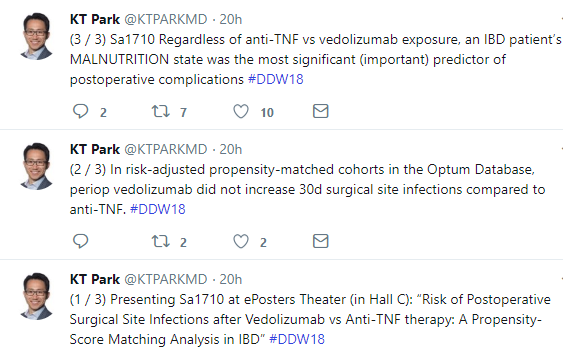
Unrelated twitter post below -IgG allergy testing is NOT a good idea:

Cost Effective Fecal Transplantation

A recent retrospective study (DE Brumbaugh et al. J Pediatr 2018; 194: 123-7) examined the effectiveness of intragastric fecal microbiota transplantation (FMT) for recurrent Clostridium difficile infection (CDI) in 42 children (47 FMTs).

Key findings:

  • 94% (16/17) success in otherwise healthy children
  • 75%  (9/12) success in medically complex children
  • 54% (7/13) success in inflammatory bowel disease.
  • Figure 2 describes cost: nasogastric FMT cost for hospital/professional charges was $1139 compared to $4998 for nasoduodenal FMT and $7767 for colonoscopy FMT

To understand the results better, one needs to look at their methods.  The authors defined CDI based on a positive fecal polymerase chain reaction (PCR) test.  All patients undergoing FMT had to have had >2 episodes of CDI.

The authors discuss the issue that asymptomatic Clostridium difficile carriage is common in IBD (“6 times that in healthy controls”) and the fact that true CDI can be difficult to ascertain as the relative contribution of IBD activity can be difficult to separate from CDI.  Interestingly, the authors did not comment on their use of PCR testing to establish infection.

As noted in a previous blog post (Overdiagnosis of Clostridium difficile with PCR assays), immunoassay testing for toxin is likely helpful in equivocal cases.  In an influential JAMA Intern Med study (JAMA Intern Med. 2015;175(11):1792-1801.  doi:10.1001/jamainternmed.2015.4114), virtually all CDI-related complications and deaths occurred in patients with positive toxin immunoassay test results. Patients with a positive molecular test result and a negative toxin immunoassay test result had outcomes that were comparable to patients without C difficile by either method.

Other useful points in this study:

  • The authors note that craniofacial anatomy may preclude NG placement in some patients (in some orogastric insertion could be an alternative)
  • Patients at high risk for GERD/aspiration along with general anesthesia patients are “not good candidates for FMT”
  • “If there is concern for undiagnosed IBD or other GI pathology, FMT via colonoscopy may be preferable” as FMT could be diagnostic and therapeutic.

My take: This study confirms the utility of intragastric FMT for recurrent CDI as a cost-effective option.  More careful examination of CDI in patients with IBD could result in determining which patients are most likely to benefit from FMT

Hoover Dam


Related blog posts:

What Should an Aerodigestive Program Look Like

A recent “consensus statement” publication (Boesch RP, et al. Pediatrics 2018; 141: e20171701) discusses the structure and functions of an aerodigestive program. Congratulations to Dr. Ben Gold –one of my partners and a coauthor.

Overall this is a useful document and a good starting point to establish what an aerodigestive program should look like.

  • Table 1 lists common conditions addressed by aerodigestive programs like chronic cough, Gtube dependence, failure to thrive, TEF/esophageal atresia, recurrent infections, craniofacial anomalices, tracheostomy dependence, vocal cord dysfunction, stridor and wheezing.
  • Table 2 lists important team members.
  • Table 3 establishes important functions like care coordination, combined endoscopy, and summary of recommendations.
  • Table 4, 5, and 6 summarizes procedural skills needed by pulmonology, gastroenterology, and ENT respectively.

The accepted definition of an aerodigestive disorder: “A pediatric aerodigestive patient is a child with a combination of multiple and interrelated congenital and/or acquired conditions affecting airway, breathing, feeding, swallowing, or growth that require a coordinated interdisciplinary diagnostic and therapeutic approach to achieve optimal outcomes.”

  • The authors were split on whether the care needs to be provided by all providers in the same space or whether coordination can occur with separate physician locations.
  • The authors argue that coordinated care is valuable, citing care in children with cystic fibrosis and inflammatory bowel disease (via ImproveCareNow).
  • They note the major limitation is that their recommendations are based on expert opinion.

My take: My main concerns with multidisciplinary care, having participated in a number of multidisciplinary teams, are the following:

  1. There is a lot of redundancy in care with these clinics.  Often, these clinics result in a patient having two GIs, two pulmonologists, and two ENTs. If the aerodigestive team is useful, the aerodigestive expertise needs to be substantially greater than the expertise of their colleagues.  If it is simply a matter of care coordination, this is a deficiency that could be corrected in the absence of a multidisciplinary team.
  2. Many patients do not need all of the multidisciplinary team members. This increases costs unnecessarily.
  3. The potential promise of care coordination is sometimes offset by the extremely lengthy visits at multidisciplinary visits.

So in my view, the key for aerodigestive clinic success is to identify a narrow population of children with high-complexity problems and to identify subspecialists with exceptional abilities.  As an aside, the study states that Cincinnati was the first location to establish a pediatric aerodigestive clinic.  The success there was in large part due to Dr. Colin Rudolph (GI) and Dr. Robin Cotton (ENT), both recognized leaders and innovators in their fields.

Tunnels and hallways inside Hoover Dam

Predicting Response to Vedolizumab and Ustekinumab for Inflammatory Bowel Disease

A recent review (A Barre, JF Colmbrel, R Ungaro. Alim Pharm Ther 2018 DOI: 10.1111/apt.14550) discusses predictors of response to vedolizumab and ustekinumab for inflammatory bowel disease (IBD). Thanks to Ben Gold for this reference.

Background:

  • “Vedolizumab is a humanised monoclonal gut-selective antibody against α4β7 integrin and inhibits the trafficking of inflammatory cells to the intestine.”
  • From Vedolizumab GEMINI trials, , “primary response to vedolizumab was typically evaluated at week 14 after induction with rates of clinical remission and clinical response ranging between 24%-36% and 49%-64% in CD, and 23%-39% and 43%-57% in UC, respectively”
  • “Ustekinumab is a monoclonal IgG1 antibody against the p40 subunit of interleukin-12 (IL-12) and interleukin-23 (IL-23) that targets both the T-helper 1 and T-helper 17 pathways involved in the pathogenesis of CD.”
  • With Ustekinumab, “in real-world observational studies, patients were treated off-label and received highly variable induction and maintenance dosing, thus limiting the generalizability of results. The rates of response were reported to be as high as 84% and remission rates as high as 35% at end of induction, with loss of response in around one-third of patients during maintenance”

Key points:

  • Patients with severe disease (by clinical activity and inflammatory biomarkers), and prior anti-TNF exposure are less likely to respond to vedolizumab.
  • Ileocolonic disease, no prior surgery and uncomplicated phenotype were associated with better responses to ustekinumab in CD

With ustekinumab, in particular, there is still very limited data on its effectiveness and long-term outcomes and this is even more the case in pediatrics. This review does a good job in compiling the current available data.

My take: While this is a nice review, it does not help me much with developing an algorithm for how I will use these relatively new medications for IBD.

Related blog posts:

Bright Angel Trail

Oats OK in Celiac Disease

A recent double-blind, randomized, placebo-controlled trial (E Lionetti et al. J Pediatr 2018; 194: 116-22) examined the effect of adding oats to the diets of 79 children and compared this to a control group of 98 children; all participants had biopsy-proven celiac disease (CD).

Background:

  • “A large body of evidence has so far suggested that the consumption of pure oats is safe in the vast majority of patients with celiac disease.”
  • Still concerns persist.  In addition, the purity of oats cannot always be guaranteed.
  • Previous studies were limited by small sample sizes, short follow-up, limited details regarding oat used, and lack of detail about cross-contamination.

This study sought to remedy prior trial deficiencies and examined clinical indices,  serology, and intestinal permeability after 6, 9 and 15 months.

Key finding:

  • There were no statistically significant clinical, serologic, or intestinal permeability variables when comparing the oat group to the control group.

My take: Oats, free of cross contaminants, are safe to incorporate into a gluten-free diet for CD.

Canyon Rim

Disclaimer: These blog posts are for educational purposes only. Specific dosing of medications/diets (along with potential adverse effects) should be confirmed by prescribing physician/nutritionist.  This content is not a substitute for medical advice, diagnosis or treatment provided by a qualified healthcare provider. Always seek the advice of your physician or other qualified health provider with any questions you may have regarding a condition.

The Latest on Pediatric Nonceliac Gluten Sensitivity

 A recent study (R Francavilla et al. Am J Gastroenterol advance online publication, 30 January 2018; doi: 10.1038/ajg.2017.483 ) examined “non-celiac gluten sensitivity” (NCGS) in a multicenter prospective trial from Italy (2013-16). 

This study included 1,114 children with chronic gastrointestinal symptoms and negative for both celiac disease and wheat allergy.  To determine if these children, had  a positive correlation between symptoms and gluten ingestion they were evaluated consecutively through the following phases: run-in, open gluten-free diet (GFD) and DBPC crossover gluten challenge.

Design: If there was a correlation between symptoms and gluten ingestion, then patients were randomized to gluten (10 g/daily) and placebo (rice starch) for 2 weeks each, separated by a washout week. The gluten challenge was considered positive in the presence of a minimum 30% decrease of global visual analogue scale between gluten and placebo.

Key findings:
  • Out of 1,114 children, 96.7% did not exhibit any correlation with gluten ingestion.
  • Among the 36 patients who seemed to show a correlation between gluten ingestion and symptoms, 28 patients entered the DBPC gluten challenge. Of these 28 children, eleven children (39%) tested positive.
  • “No predictive laboratory tests can help in identifying NGCS”

Also, it is worthwhile to quote the authors from their last paragraph: “philosopher Immanuel Kant [said], ‘all our knowledge begins with the senses, proceeds then to understanding, and ends with reason’. NCGS begins in the gut feeling of patients, and we are still in the process of understanding it, hoping that reason is not too far behind.'”

My take: This study shows that very few children (<4%) with chronic gastrointestinal symptoms had correlation with gluten ingestion. Even in this group, NGCS was excluded with a DBPC in >60% of cases.

How Gluten Free is a Gluten-Free Diet?

A recent analysis (JA Syage et al.The American Journal of Clinical Nutrition, Volume 107, Issue 2, 1 February 2018, Pages 201–207, https://doi.org/10.1093/ajcn/nqx049) (Thanks to Kipp Ellsworth for this reference) of 259 patients with celiac disease (~75% pediatric) showed that a large number with ongoing gluten ingestion based on urine and stool tests of gluten excretion.

Results: The average inadvertent exposure to gluten by CD individuals on a GFD was estimated to be ∼150–400 (mean) and ∼100–150 (median) mg/d using the stool test and ∼300–400 (mean) and ∼150 (median) mg/d using the urine test. The analyses of the latiglutenase data for CD individuals with moderate to severe symptoms indicate that patients ingested significantly >200 mg/d of gluten.

My take (borrowed from authors): These surrogate biomarkers of gluten ingestion indicate that many individuals following a GFD regularly consume sufficient gluten to trigger symptoms and perpetuate intestinal histologic damage.

Free link to full article: Determination of gluten consumption in celiac disease patients on a gluten-free diet

Despite signs like these, a lot of individuals veer off the path.

Fructans, not Gluten, Inducing Symptoms In Patients with Reported Non-Celiac Gluten Sensitivity

As with yesterday’s post, today’s study (GI Skodje et al. Gastroenterol 2018; 154: 529-39) implicates fructans, not gluten, as a culprit in increasing symptoms in those with self-reported non-celiac gluten sensitivity (NCGS).

These researchers performed a double-blind crossover challenge in 59 individuals who had instituted a gluten-free diet (GFD). The symptoms were assessed with a Gastrointestinal Symptom Rating Scale Irritable Bowel Syndrome (GSRS-IBS) through 3 challenges –gluten, fructan, and placebo.

Key findings:

  • GSRS-IBS mean values for gluten 33.1, for fructan 38.6, and placebo 34.3.  The overall GSRS-IBS value for fructans was significantly higher than for gluten P=.04
  • GSRS-IBS mean values for bloating with gluten 9.3, for fructan 11.6, and placebo 10.1

In a related editorial (K Verbeke, pages471-3), the commentary notes that  alpha-amylase-trypsin inhibitors (ATIs) may be another factor which contributes to symptoms in those with reported NCGS.  ATIs protect plants from pests/parasites by inhibiting their digestive enzymes.  They also resist proteolytic degradation in the human intestine and are known to be potent activators of innate immune cells.

My take: This is yet another study showing that among individuals with NCGS that a GFD is often unnecessary and ineffective.  Fructans are more likely to induce gastrointestinal symptoms; however, their are likely to be several food components which contribute to GI symptoms & sometimes extra-intestinal symptoms.

Related blog posts:

Fructans and FODMAPs in Children with Irritable Bowel Syndrome

A recent randomized control trial (BP Chumpitazi et al. Clin Gastroenterol Hepatol 2018; 16: 219-25) evaluated 23 children in a double-blind placebo (maltodextrin) cross-over design (2014-2016) to determine whether fructans (0.5 g/kg/day with max 19 g divided over 3 meals) worsen symptoms in children with irritable bowel syndrome (IBS). Fructans are a commonly ingested FODMAP carbohydrate (oligosaccharides).  All subjects were 7-18 years (median 12.4 years) and met Rome III IBS criteria.

Key findings:

  • Subjects had more episodes of abdominal pain/day while receiving fructan-containing diet (3.4 ± 2.6) compared with placebo-group (2.4 ± 1.7) (P<.01).
  • The fructan group had more severe bloating (P<.05) and flatulence (P=.01).  This was associated with higher hydrogen production (617 ppm/h compared with 136 pph/h) (P<.001)
  • 18/23 (78%) had more frequent abdominal pain with fructan-containing diet and 12 (52%) had fructan sensitivity which the authors defined as having an increase of ≥30% in abdominal pain frequency following fructan ingestion.

My take: While the number of participants in this study is limited, the implications are clear: in children with irritable bowel, fructans frequently exacerbate symptoms. At this time, though, it is not possible to predict which patients with IBS will benefit.

Related blog posts:


Chattahoochee River

Paris Classification Quiz and Explanation

At one of our ImproveCareNow population management meetings, Dr. Chelly Dykes reviewed the Paris Classification and frequent misconceptions in using this system.  To illustrate this point, I am going to post 6 Quiz Slides and then follow that with the answers and explanation.  These quiz slides were derived from previous ImproveCareNow community meetings.

Answers:

  1. A
  2. B (macroscopic disease counts –erythema alone does not count)
  3. A (macroscopic disease counts)
  4. B (not ileum only unless colonic disease extends beyond cecum)
  5. F (though B acceptable)
  6. F (though B acceptable)

Related blog posts: