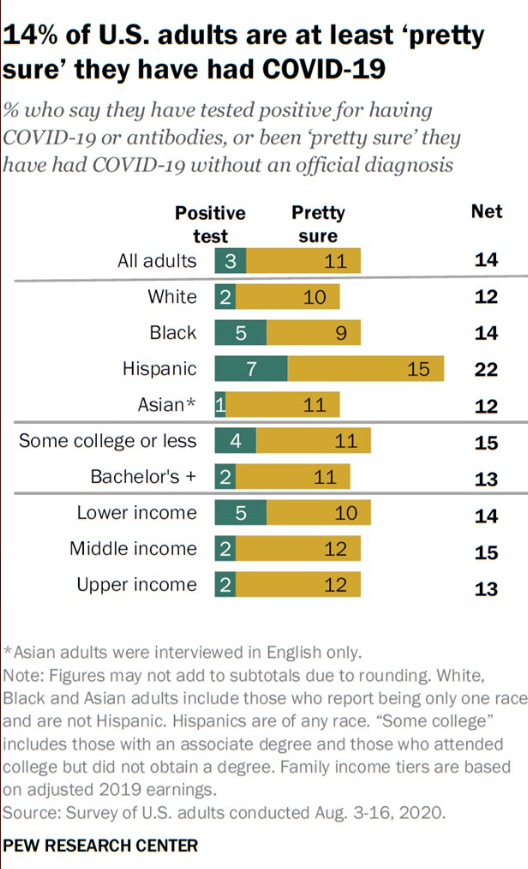
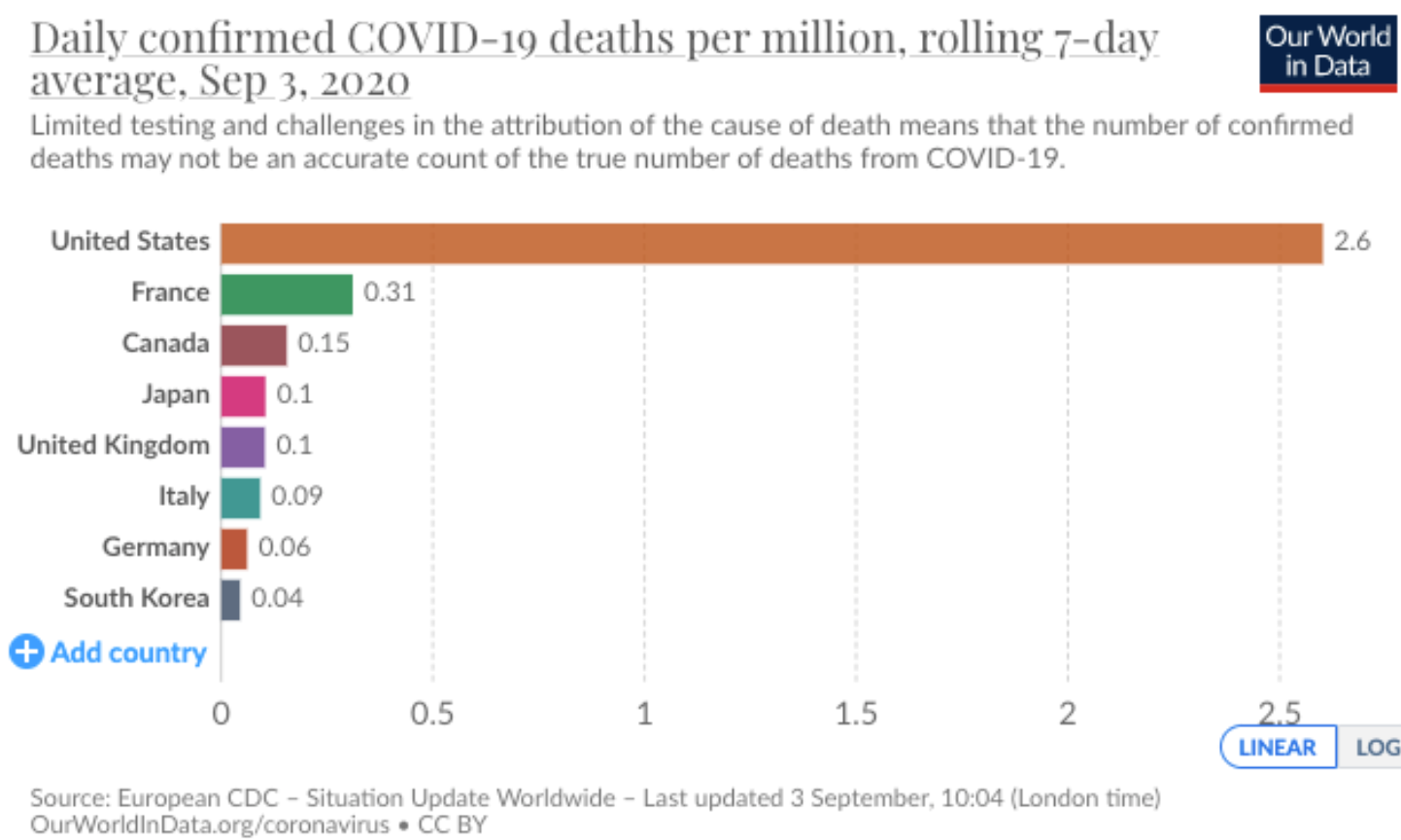
“Positioning Biologic Therapies in the Management of Pediatric Inflammatory Bowel Disease” & 14% of U.S. Infected with COVID-19

J Breton et al. Gastroenterology & Hepatology 2020; 16: 400-14. Full text: Positioning Biologic Therapies in the Management of Pediatric Inflammatory Bowel Disease

This is a terrific summary of biologic therapies for pediatric inflammatory bowel disease. Compared to adults, the pediatric data is much more limited.  This may affect recommendations.  For example, recent AGA guidelines for moderate to severe ulcerative colitis in adults suggests that either ustekinumab or tofacitinib is generally preferable as a 2nd line agent rather than vedolizumab in patients with primary infliximab failure (Blog post: AGA Guidelines: Moderate to Severe Ulcerative Colitis).  In the chart below, vedolizumab is recognized as a preferred 2nd line agent.

In the section on vedolizumab:

The favorable risk-benefit profile makes vedolizumab an ideal therapeutic choice for pediatric IBD. However, an important limitation is its delayed onset of action, for which corticosteroid use as bridge therapy is often necessary in this population that is already at increased risk of growth failure and bone loss. Recently, Hamel and colleagues published their small, single-center experience of using concomitant tacrolimus between anti-TNFα withdrawal to vedolizumab maintenance as a corticosteroid-sparing bridge therapy in moderate to severe IBD (Ref: Hamel B, Wu M, Hamel EO, Bass DM, Park KT. Outcome of tacrolimus and vedolizumab after corticosteroid and anti-TNF failure in paediatric severe colitis. BMJ Open Gastroenterol. 2018;5(1):e000195).

This article addresses therapeutic drug monitoring:

TDM is a key component of managing IBD patients on anti-TNFα therapy. While  reactive TDM of antiTNFα agents has been adopted by societal guidelines, there is an increasing body of literature to support the benefit of proactive TDM, particularly in pediatric populations

Conclusions from authors: Anti-TNFα agents have revolutionized the management of IBD, positively modifying the natural disease history in children. Importantly, inception cohort studies of pediatric CD and UC (RISK and PROTECT, respectively) have highlighted the variable course of disease and necessity of adopting an individualized approach with early use of biologic therapy in patients at risk of severe disease progression. 
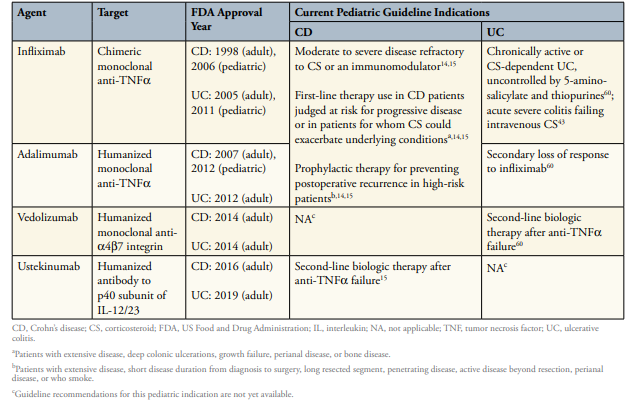
Biologics Used in Pediatric Inflammatory Bowel Disease

Related blog posts:

Disclaimer: This blog, gutsandgrowth, assumes no responsibility for any use or operation of any method, product, instruction, concept or idea contained in the material herein or for any injury or damage to persons or property (whether products liability, negligence or otherwise) resulting from such use or operation. These blog posts are for educational purposes only. Specific dosing of medications (along with potential adverse effects) should be confirmed by prescribing physician.  Because of rapid advances in the medical sciences, the gutsandgrowth blog cautions that independent verification should be made of diagnosis and drug dosages. The reader is solely responsible for the conduct of any suggested test or procedure.  This content is not a substitute for medical advice, diagnosis or treatment provided by a qualified healthcare provider. Always seek the advice of your physician or other qualified health provider with any questions you may have regarding a condition

IBD Update -September 2020

EM Kim et al. Inflamm Bowel Dis 2020; 26: 1232-38. Mucosal Eosinophilia Is an Independent Predictor of Vedolizumab Efficacy in Inflammatory Bowel Diseases n=65 patients. In IBD cohort, colonic eosinophilia (340 +/- 156 vs 236 +/- 124) was associated with clinical non-response to vedolizumab (as was prior anti-TNF treatment). In those with ulcerative colitis, mean eosinophil count was 438 in nonresponders compared to 299 in responders. In those with Crohn’s disease, colonic biopsies showed a non-significant increase in eosinophil count in non-responders compared to responders: 352 vs. 232.

MA Sofia et al. Inflamm Bowel Dis 2020; 26: 1251-9. Poor Sleep Quality in Crohn’s Disease Is Associated With Disease Activity and Risk for Hospitalization or Surgery

  • Ninety-two CD and 82 control subjects
  • Crohn’s disease subjects with Pittsburgh Sleep Quality Index (PSQI) >5 more often had inflammatory phenotypes and reported increased benzodiazepine and psychiatric medication use. Crohn’s disease subjects with PSQI >5 also reported more night awakenings due to pain and bathroom use.
  • The PSQI correlated with HBI
  • PSQI >8 was predictive of surgery or hospitalization (hazards ratio 5.37; 95% confidence interval, 1.39-27.54).

My take: This study indicates that poor sleep is a marker for increased adverse outcomes/disease activity.  It may be that sleep disturbance is due to increased disease activity or this may be a bidirectional issue in which poor sleep triggers more disease activity as well.

A Ricciuto et al. Clin Gastroenterol Hepatol 2020; 18: 1509-1517. Primary Sclerosing Cholangitis in Children With Inflammatory Bowel Diseases Is Associated With Milder Clinical Activity But More Frequent Subclinical Inflammation and Growth Impairment

This retrospective study provides additional information on the observation that children with PSC often have subclinical disease; it is similar to a prospective study by the same group in 2018 (n=37):  (prior blog post: Active Colitis More Likely in Children in Clinical Remission Who Have IBD and PSC) Key finding: Higher proportions of children with PSC-IBD had backwash ileitis, pancolitis, and rectal sparing, and more severe right-sided disease, than controls (P < .05). Conclusions: “Despite the mild clinical activity of IBD in patients with PSC, lack of symptoms does not always indicate lack of mucosal inflammation. Children with PSC-IBD have greater growth impairments compared with children with ulcerative colitis or IBD-unclassified.”

Proactive Therapeutic Drug Monitoring in Pediatric Crohn’s disease -Better Outcomes

Y Gofin et al. Inflamm Bowel Dis 2020; 26: 1276-82.  Therapeutic Drug Monitoring Increases Drug Retention of Anti–Tumor Necrosis Factor Alpha Agents in Pediatric Patients With Crohn’s Disease

Retrospective study with 197 pediatric participants (2007-2018)

Key findings:

  • Compared with the TDM- group (n=98), the TDM+ group (n=99)
    • longer drug retention time (mean ± SE, 45.0 ± 2.7 vs 33.5 ± 2.4 months; P = 0.001)
    • lower hospitalization rate per patient per year (mean ± SE, 0.51 ± 0.7 vs 0.92 ± 0.81; P < 0.001)
    • higher treatment intensification rate (70% vs 18%; P < 0.001).
  • Analysis of the entire cohort showed a longer retention time for adalimumab vs infliximab (45.3 ± 2.8 vs 34.8 ± 2.5 months; P = 0.007)

My take: This is another study showing utility of proactive therapeutic drug monitoring

Related blog posts:

Which Crohn’s Disease Ulcerations Are Harder to Treat — Small Bowel or Colon?

K Takenaka et al. Clin Gastroenterol Hepatol 2020; 18: 1545-1552. Small Bowel Healing Detected by Endoscopy in Patients With Crohn’s Disease After Treatment With Antibodies Against Tumor Necrosis Factor

Methods: This was a post-hoc analysis of data from a clinical trial from 116 patients with CD (46 with ileal and 70 with ileocolonic type) who received induction and then maintenance therapy with anti-TNF agents (2013-18). Median age 29 years.

Key findings (based on findings from balloon-assisted enteroscopy )

  • Before treatment, small bowel ulcerations were present in 114 patients (98%); 42 patients (60%) with ileocolonic disease had colon ulcerations.
  • During maintenance therapy, 41/114 patients (36%) had small bowel endoscopic healing; all the patients with small bowel endoscopic healing also had colonic endoscopic healing.
  • Failure to achieve small bowel endoscopic healing was significantly associated with stricturing or penetrating disease (P = .014), lack of concomitant treatment with immunomodulators (P = .015), and having received previous treatment with an anti-TNF agents (P = .018).
  • The authors found that endoscopic healing was only 35% (36% for small bowel and 79% for colonic inflammation)

My take: Small bowel inflammation did not respond to treatment as well as colonic inflammation.  The implication of this study is that even in patients who are doing well clinically with treatment, disease progression especially in the small bowel may be ongoing.

Briefly noted: M Kayal et al. Inflamm Bowel Dis 2020; 26: 1079-1086.  Inflammatory Pouch Conditions Are Common After Ileal Pouch Anal Anastomosis in Ulcerative Colitis Patients.

  • In this retrospective study of adults with ulcerative colitis who had undergone total proctocolectomy (TPC) with ileal pouch anal anastomosis (IPAA). Acute pouchitis occurred in 205 patients (53%), 60 of whom (30%) progressed to chronic pouchitis.
  • Cuffitis and Crohn’s disease-like condition (CDLC) of the pouch occurred in 119 (30%) patients and 46 (12%) patients
  • Pouch failure was noted in 6.7%
  • Only one-third of patients with chronic pouchitiis, cuffitis and CDLC responded to biologic therapy

Related blog posts:

Does Clostridium difficile Increase the Risk of Surgical Resection in Pediatric Crohn’s Disease?

A recent retrospective & prospective study (J Hellmann et al. Inflamm Bowel Dis 2020; 26: 1212-21Microbial Shifts and Shorter Time to Bowel Resection Surgery Associated with C. difficile in Pediatric Crohn’s Disease. Associated editorial 1222-3) suggests that C difficile infection (CDI) is associated with an increased risk of bowel resection surgery.

In the retrospective arm with 75 pediatric patients (<22 years): Key findings:

  • 14 of 75 had positive C difficile testing (mainly PCR, especially after 2009).
  • The rate of bowel resection surgery increased from 21% in those without C. difficile to 67% in those with (P = 0.003).
  • From a Kaplan-Meier survival model, the hazard ratio for time to first surgery was 4.4 (95% CI, 1.2–16.2; P = 0.00) in patients with positive C. difficile testing in the first year after diagnosis.

Importantly, the study was unable to distinguish between C difficile colonization versus infection.

In the prospective arm with 70 patients, patients underwent meatgenomic sequencing. Those with a positive PCR assay (irregardless of symptoms or calprotectin) were considered to have CDI.

  • 10 of 70 (14%) tested positive for CDI
  • 40% of those with CD and positive CDI had a history of surgery vs 15% with negative C difficile testing
  • Fecal calprotectin levels were elevated (>250) in 40% of both those testing positive for CDI and those testing negative
  • The overall fecal microbiome composition was not statistically significantly different between CDI-positive and CDI-negative
  • There were significant differences in the fecal microbiome composition between those with prior surgery and those without prior surgery.  Depletion of Alistipes and Ruminococcus species and reduction in methionine biosynthesis were noted in patients with both C. difficile carriage and past surgery

My takes:

  1. Based on my reading, the authors assert an association of shorter time to surgery associated with CDI in the retrospective cohort.  Because testing for CDI is common in those with flare-ups, it is unclear if this is a temporal phenomenon or is a causal relationship.
  2. It is interesting that their prospective cohort did not have an increased calprotectin level in those with CDI-positivity or overall composition change in microbiome in the CDI-positive group.  It would be of interest if these studies were confined to those with cytotoxin-assay positivity which has been shown to correlate with clinical outcomes.  In previous studies, individuals with PCR-positive CDI & cytotoxin-assay negative had similar outcomes to those with negative PCR assays.

Related blog posts:

Intestinal Barrier Function and Risk of Crohn’s Disease

Several recent studies have examined biomarkers to predict Crohn’s disease.  A recent prospective study (W Turpin et al. Gastroenterol 2020; DOI: https://doi.org/10.1053/j.gastro.2020.08.005Increased Intestinal Permeability is Associated with Later Development of Crohn’s Disease) sought to determine whether increased intestinal permeability, as measured by urinary fractional excretion of lactulose to mannitol ratio (LMR), is associated with future development of CD.

Methods: 1420 asymptomatic first-degree relatives (6–35 years old) of patients with CD (collected from 2008 through 2015) had LMR measured and were then followed for a diagnosis of CD from 2008 to 2017, with a median follow up time of 7.8 years. We analyzed data from 50 participants who developed CD after a median of 2.7 years during the study period, along with 1370 individuals who remained asymptomatic until October 2017

Key findings:

  • An abnormal LMR (> 0.03) was associated with diagnosis of CD during the follow-up period (hazard ratio, 3.03; 95% CI, 1.64–5.63; P=3.97×10 -4).
  • This association remained significant even when the test was performed more than 3 years before the diagnosis of CD (hazard ratio, 1.62, 95% CI, 1.051–2.50; P=.029).

My take:  It remains unclear whether abnormal barrier function primarily precedes or follows CD development.  The authors state that these findings support a model in which altered intestinal barrier function contributes to pathogenesis.

Briefly Noted: How to Approach Crohn’s Disease Complicated by an Intra-abdominal Abscess

A recent review (T Qazi, M Regueiro. Practical Gastroenterology 2020: June Issue, 10-18. Full PDF Link: Crohn’s Disease Complicated by an Intra-abdominal Abscess: Poke, Prod, or Cut?)

The article is a good review & the algorithm below provides some good guidance -if difficult to visualize, then it may be worthwhile to look at source article.

The authors propose initial management with antibiotics, minimization of steroids, nutritional support and drainage.

Medical treatment is favored after initial management:

  • Newly diagnosed Crohn’s disease
  • Extensive disease
  • No fibrostenoting disease
  • Active perianal disease

Surgical treatment is favored after initial management:

  • Long-standing disease
  • Stricture with dilatation
  • Abscess >6 cm in size
  • Prior surgical intervention

The authors note that “recent studies have suggested that roughly 30% of patients
treated with PD are able to avoid future surgical resection.”

Related blog posts:


Comparative Efficacy: Vedolizumab vs Anti-TNF Agents

M Bohm et al. AP&T: 2020; July 2020 https://doi.org/10.1111/apt.15921 Full text: Comparative safety and effectiveness of vedolizumab to tumour necrosis factor antagonist therapy for Crohn’s disease

Thanks to Ben Gold for this reference.

Methods: Retrospective observational cohort (May 2014–December 2017) propensity score‐weighted comparison of vedolizumab vs TNF‐antagonist therapy (infliximab, adalimumab, certolizumab) in CD.  This study included 1266 patients (n = 659 vedolizumab).

Key findings:

  • Rates of non‐infectious serious adverse events (odds ratio [OR] 0.072, 95% confidence interval [CI] 0.012‐0.242) were significantly lower with vedolizumab vs TNF‐antagonist therapy.
    • These events included severe arthralgias in 3 vedolizumab-treated patients.  For anti-TNF recipients, events included hypersensitivity or infusion reactions (n = 6), drug‐induced psoriasis (n = 6), drug‐induced lupus (n = 5), severe liver function test abnormalities (n = 3), skin rash (n = 2), lung cancer (n = 1) and jaw or hip necrosis (n = 2).
  • Rates of serious infections (OR 1.183, 95% CI 0.786‐1.795), were NOT significantly lower with vedolizumab vs TNF‐antagonist therapy.
    • “The risk of serious infections with biologic therapy is largely driven by disease activity and concomitant use of immunosuppressive agents…. the higher concomitant use of steroids among the vedolizumab‐treated patients in our cohort may therefore help to explain the lack of observed difference in risk for serious infections between agents.”
  • No significant difference was observed between vedolizumab and TNF‐antagonist therapy for clinical remission (hazard ratio [HR] 0.932, 95% CI 0.707‐1.228), steroid‐free clinical remission (HR 1.250, 95% CI 0.677‐2.310) or endoscopic remission (HR 0.827, 95% CI 0.595‐1.151).
    • “Our observational cohort study was not designed to be a noninferiority study, and the safety and effectiveness comparisons were exploratory in nature.”
  • The efficacy of vedolizumab in this study is more impressive given that 91% of the patients had prior anti-TNF therapy.
    • “Exploratory subgroup analyses suggested that vedolizumab might be superior to subcutaneous TNF‐antagonist therapy for the achievement of clinical remission and steroid‐free clinical remission in TNF‐antagonist–naïve patients.”
  • TNF‐antagonist therapy was associated with higher treatment persistence compared with vedolizumab.

My take: This article shows that clinical experience with vedolizumab is quite good and compares favorably with anti-TNF agents.  Randomized head-to-head studies are needed, though, to truly determine efficacy in similar populations.

Related blog posts:

The Downside of Home Infusion of Biologics

N Giese-Kim et al. Am J Gastroenterol: July 22, 2020 – Volume Publish Ahead of Print – Issue – doi: 10.14309/ajg.0000000000000750. Link to abstract:  Home Infliximab Infusions Are Associated With Suboptimal Outcomes Without Cost Savings in Inflammatory Bowel Diseases

In this study, there were 27,396 patients with IBD (1,839 pediatric patients). Overall, 5.7% of patients used home infliximab infusions.

Results:

  • Those with home infusions:
    •  more likely to be nonadherent compared with both office-based (22.2% vs 19.8%; P = .044) and hospital-based infusions (22.2% vs 21.2%; P < .001).
    • more likely to discontinue infliximab compared with office-based (44.7% vs 33.7%; P < .001) or hospital-based (44.7% vs 33.4%; P < .001) infusions.
  • On Kaplan-Meier analysis, the probabilities of remaining on infliximab by day 200 of therapy were 64.4%, 74.2%, and 79.3% for home-, hospital-, and office-based infusions, respectively (P < .001)
  • Home infusions did not decrease overall annual care costs compared with office infusions ($49,149 vs $43,466, P < .001)

My take: In my experience, office-based infusions can be provided safely and in a cost-effective manner.  From the authors: “home infliximab infusions for patients with IBD were associated with suboptimal outcomes including higher rates of nonadherence and discontinuation of infliximab. Home infusions did not result in significant cost savings compared with office infusions.”

Related blog posts:

IBD Update -August 2020

S Jansson et al JPGN 2020; 71: 40-5. This retrospective study (1998-2008) showed that pediatric patients with extraintestinal manifestations (EIM) had more severe IBD course than patients with IBD without an EIM.  EIM often had a temporal relationship with a relapse of IBD as well. Of 333 patients, 14 had an EIM at diagnosis and 47 had an EIM develop during followup.

PA Olivera, JS Lasa et al. Gastroenterol 2020; 158: 1554-73. This systematic review and meta-analysis ultimately included 82 studies with 66,159 patients (including those with IBD and other immune-mediated diseases) exposed to a JAK inhibitor; two-thirds of studies were randomized controlled trials.  Key findings:

  • Incidence rates of serious infections, herpes zoster infection, malignancy, and major cardiovascular events were 2.81, 2.67, 0.89, and 0.48 per 100 person year respectively. After meta-analysis, the authors conclude that there is an increased risk of herpes zoster (RR 1.57), but all other adverse events were not increased among patients treated with JAK inhibitors
  • Mortality was not increased in those receiving JAK inhibitors compared to placebo

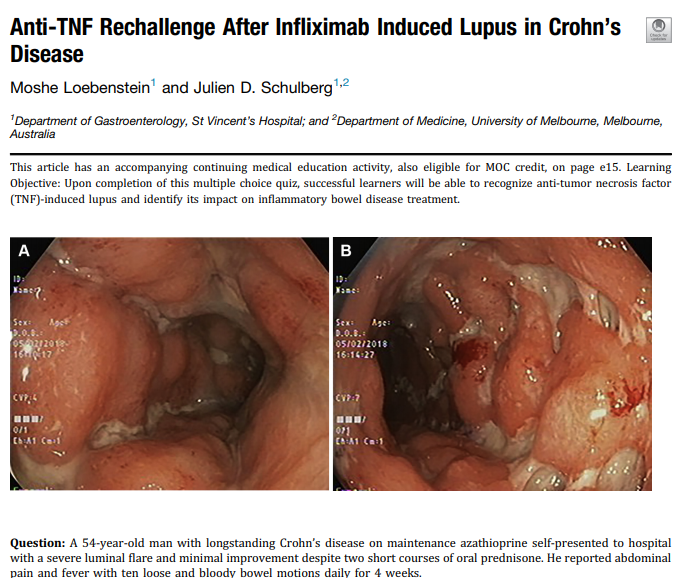
Loebenstein, JD Schulberg. Gastroenterol 2020; 158: 2069-71.  This case report describes a successful alternative anti-TNF rechallenge after infliximab induced Lupus in Crohn’s disease.  The authors note that in a previous study, 14 of 20 IBD patents with drug-induced lupus secondary to an anti-TNF agent were rechallenged with an alternative anti-TNF agent and 13/14 tolerated rechallenge without recurrent lupus (Inflamm Bowel Dise 2013; 19: 2778-86).

These images show active disease prior to intervention. The article provides f/u images showing endoscopic remission after re-starting a different anti-TNF agent.