Chronic Nonbacterial Osteomyelitis (CNO): What a GI Doctor Should Know

L Lim et al. The Journal of Pediatrics, Volume 283, 114636. Open Access! Chronic Nonbacterial Osteomyelitis: A Noninfectious Autoinflammatory Disorder of Bone

Prior to this review, I was familiar with the term chronic recurrent multifocal osteomyelitis (CRMO) but not CNO. CRMO is a severe form of CNO, usually characterized by symmetrical inflammatory bone lesions (DY Zhao et al. J Transl Autoimmun 2021; 4:100095. Chronic nonbacterial osteomyelitis (CNO) and chronic recurrent multifocal osteomyelitis (CRMO)).

In this useful review, it is noted that IBD was associated with ~9% of cases of chronic nonbacterial osteomyelitis (CNO).

    Key points:

    • “IBD identified before, during, or after CNO diagnosis, has been well-reported as an associated condition.34-37 A review of cases of CNO with IBD showed that the diagnosis of CNO preceded the diagnosis of IBD in over half of the reported cases.38
    • “Children with CNO frequently experience a high burden of pain and impaired physical function. CNO can cause permanent deformities in any bone, but especially if there is spinal involvement and diagnosis and treatment are delayed”
    • “Bone biopsies should be performed if there is clinical suspicion of infection or malignancy, although tissue usually is not needed for diagnosis unless the clinical presentation is atypical”
    • “MRI is now the standard imaging test that usually starts with targeted examination of the affected area…A whole-body MRI (WB-MRI) should be considered for all patients with CNO at diagnosis when possible, as it may help support a diagnosis of CNO by detecting additional sites of bone inflammation that may be clinically inapparent, particularly vertebral lesions”
    • “Non-steroidal anti-inflammatory drugs (NSAIDs) are usually first-line treatment for children with CNO, except for those with vertebral lesions, who require systemic treatment… over half of children treated with NSAIDs experience a disease flare within the first 2 years,14 requiring either retreatment with NSAIDs or another systemic medication”
    • “In the presence of vertebral CNO lesions, or after failing NSAID monotherapy, three categories of systemic treatments are recommended by the Childhood Arthritis and Rheumatology Research Alliance (CARRA)56: 1) synthetic DMARDs, 2) bisphosphonates, or 3) tumor necrosis factor-inhibitor (TNFi) biologic agents with or without methotrexate (to prevent the development of antibodies to the drug)”
    • “In practice, TNFi tends to be used more if children also have comorbid conditions for which TNFi already is indicated such as inflammatory arthritis and sacroiliitis,7 IBD,4,72 and psoriasis.4,14,24 “

    My take: Being familiar with CNO is important for GI physicians as it can occur (rarely) in our patients with IBD. Another important caveat, which is not discussed in this review, is that CNO can occur paradoxically due to the use of TNFi treatment.

    Related blog posts:

    The London Eye. This view makes it look a lot like a bicycle wheel.

    Sulfasalazine vs 5-ASA: Treatment Outcomes in Pediatric UC

    I Mansuri et al. J Pediatr Gastroenterol Nutr. 2025;80:988–997. Clinical outcomes of maintenance therapy with sulfasalazine compared to 5-aminosalicylates in children with ulcerative colitis

    Methods: This was a retrospective review of children diagnosed with UC between June 1999 and December 2019 at Boston Children’s Hospital. 124 started on sulfasalazine (SZ) and 309 on 5-aminosalicylates (5-ASA). Most patients had mild to moderate disease based on PUCAI score; ~12% had severe disease.

    Key findings:

    • At 1 year, 54%, 44.3%, and 36.6% of patients on SZ, 5-ASA, and those who switched, respectively, were in steroid-free remission (p = 0.13)
    • All medication switches due to adverse reactions (24) were from SZ to 5-ASA. No patient was switched from 5-ASA to SZ because of adverse reactions. The non-severe adverse reactions noted were nausea, vomiting, abdominal pain, non-severe skin rash, headache, mild leucopenia, and lymphadenitis. Three patients had serious skin reactions, and one had pancreatitis.
    • SZ tended to have more minor adverse reactions. Except for countering adverse reactions, switching between SZ and 5-ASA did not offer therapeutic benefits. Disease severity at diagnosis predicted early treatment escalation

    Discussion Points:

    • SZ offers advantages such as lower cost and availability in suspension form; the suspension form is particularly beneficial for young children and those unable to swallow the solid form of medication.
    • 5-ASA formulations can be almost 10–50 times more expensive than SZ. For example, the wholesale acquisition cost of monthly generic SZ is $30 compared to $274 for generic Lialda, $1131 for generic Pentasa, and $1890 for generic Asacol HD

    My take: About 20% of patients had to switch from Sz to 5-ASA due to adverse reactions; though, Sz had a mildly higher response rate (not statistically-significant). Switching between SZ and 5-ASA or vice versa is unlikely to provide much therapeutic benefit; patients who switched agents for medical reasons (rather than reactions) were more likely to require escalation to either a biologic or immune modulator.

    Related blog posts:

    Chatttahoochee River (Sandy Springs)

    The VEO-IBD Foundation -Developing Resource for Families

    Link: Family reflections: research gives back childhood: a family’s experience with very early onset inflammatory bowel disease Pediatric Research; https://doi.org/10.1038/s41390-024-03506-8

    An excerpt:

    Very Early Onset Inflammatory Bowel Disease is so rare and individualized that no standard of care yet exists, and almost none of the interventions are approved for infants. After eliminating all dairy, prematurely ending breastfeeding, and moving exclusively to a prescription formula, we tried and failed multiple classes of medications, hoping each time that this medication would be the one that would ease our son’s suffering. Doctors are only now building a history of successful interventions to draw from, so treatment options come from very small studies from Very Early Onset Inflammatory Bowel Disease researchers and educated guesses. Treatment options generally ramp up in aggressiveness, which is hard enough for parents of a miserably sick infant to process and decide. Once these interventions fail, drug costs and insurance approval become major hurdles. This process of trial-and-error in treating Very Early Onset Inflammatory Bowel Disease patients is a nightmare. On a weekly or monthly basis, parents must make life-altering decisions with very little data for a patient too young to advocate for themselves.

    Link: The VEO-IBD Foundation This foundation is still in its early stages, but anticipate it will be a resource for families with VEO-IBD.

    Related blog posts:

    Constipation Preceding a New Diagnosis of Inflammatory Bowel Disease

    S Cenni et al. J Pediatr Gastroenterol Nutr. 2025;80:799–806. The prevalence of constipation in children with new diagnosis of inflammatory bowel disease: A retrospective study

    This was a cross-sectional observational study in pediatric IBD-patients (n=238) with 104 (43.6%) with Crohn disease (CD), 130 (54.6%) with ulcerative colitis (UC) and 4 (1.6%). Only patients who filled out the Rome IV questionnaire for FC, through dedicated symptom recall at the next clinic appointment or telephone recall, were finally enrolled in the study for subsequent analysis.

    Key findings:

    • Forty-seven out of 238 (19.7%) had a functional constipation history before the IBD diagnosis. In the CD children the prevalence of constipation before the IBD diagnosis was 19/104 (18.2%) and in the UC patients was 28/130 (21.5%).
    • The difference in terms of endoscopic localization was statistically significant in UC patients presenting FC (p = 0.026) with a prevalence of proctitis and left side colitis (30% and 15%, respectively)
    • There was a delay in the diagnosis of patients with preceding constipation

    Discussion Points:

    • The main limitations of the present study are certainly related to the retrospective nature and, therefore, the possibility of recall biases must be taken into account.
    • Rectal bleeding that persists despite stool softener therapy should be investigated

    My take: While this study shows that constipation is fairly common prior to a diagnosis of IBD, many times a parent is told that their child is constipated on the basis of an xray or simply because the child complained of stomach pain. This likely increases the risk of recall bias. My guess is that a prospective study involving careful questioning at the time of the initial colonoscopy would yield a lower number of children who had constipation at the time of diagnosis.

    Related blog posts:

    Set of Shucked! at The Fox Theater. Really enjoyed this ‘corny’ musical.

    MMR Vaccination Safety in Immunocompromised Kids with IBD and Liver Transplant

    A Keutler et al. Vaccine 2025; 59: 127288. Open Access! Safety and immunogenicity of the measles-mumps-rubella vaccine in immunocompromised children with inflammatory bowel disease, or after liver transplantation: An observational study

    Background: “Measles is a highly contagious disease and, despite the availability of a safe and effective vaccine, remains still an important cause of childhood death worldwide [1,2]. The risk of severe illness in measles-naive individuals is particularly high in immunocompromised patients with inflammatory bowel disease (IBD) or after liver transplantation (LT) [3]…Ideally, vaccination with live attenuated vaccines (LAVVs) should be completed four weeks before organ transplantation or the initiation of immunosuppressive therapy (IST) to allow for the live vaccine’s incubation period and minimize the risk of vaccine-associated disease…LAVVs are considered contraindicated during IST due to safety concerns and limited experience.”

    Methods: “In this prospective multicenter observational study (DRKS00014569) 22 children and adolescents with incomplete MMR vaccination status were identified… with stable immunosuppressive therapy in the last three months with no evidence of underlying disease activity…Sixteen patients were vaccinated against MMR, eleven after liver transplantation and five with inflammatory bowel disease. At the time of vaccination, four patients were receiving moderate (e.g., tacrolimus drug level below 5 ng/ml), eleven were receiving high-intensity immunosuppression (e.g. anti-tumor-necrosis factor agents, mycophenolate mofetil) and one child had previously discontinued immunosuppressive treatment.”

    Immediately prior to the references, the authors provide a downloadable document detailing how they chose to categorize the degree of immunosuppression and their precise protocol, including immunologic pretesting and drug contraindications as noted below.

    Key findings:

    • There were no serious adverse events or complications related to the vaccination
    • In children receiving immunosuppressive medications, the seroconversion rate for measles after the first MMR vaccination was 73.3 % (11/15) and after the second vaccination 80 % (12/15)

    My take: In carefully-selected immunocompromised pediatric patients, the MMR vaccine may be safe. However, given the small numbers receiving vaccination in this study, the absolute safety is unclear. Even infrequent adverse effects would be problematic. This study’s protocol could be helpful for those considering vaccination in immunocompromised populations with a measles epidemic. For now, the most important approach is improving vaccination rates in those (especially family members) without contraindications.

    Related blog posts:

    Disclaimer: This blog, gutsandgrowth, assumes no responsibility for any use or operation of any method, product, instruction, concept or idea contained in the material herein or for any injury or damage to persons or property (whether products liability, negligence or otherwise) resulting from such use or operation. These blog posts are for educational purposes only. Specific dosing of medications (along with potential adverse effects) should be confirmed by prescribing physician.  Because of rapid advances in the medical sciences, the gutsandgrowth blog cautions that independent verification should be made of diagnosis and drug dosages. The reader is solely responsible for the conduct of any suggested test or procedure.  This content is not a substitute for medical advice, diagnosis or treatment provided by a qualified healthcare provider. Always seek the advice of your physician or other qualified health provider with any questions you may have regarding a condition.

    Treating Pediatric Metastatic Crohn’s Disease

    E Chang et al. JPGN Reports. 2025;1–8. DOI: 10.1002/jpr3.70022. Open Access! Genital Crohn’s disease in pediatrics and genetic associations

    This case report of four patients provides a good review of metastatic Crohn’s disease (MCD). MCD indicates that there is noncontiguous dermatological spread of CD involving the genitalia and perineum.

    Key points:

    • “Less than 100 cases of pediatric MCD have been reported in the literature to date. These lesions are characterized by swelling, plaques, nodules, fissures, ulcerations, or crusts. In children, MCD typically presents as genital swelling with or without erythema in approximately 85% of cases.”
    • “Prior studies have shown that MCD co-occurs with CD in 50.8% of children, while others may develop GI symptoms after MCD diagnosis (15.3%) or even lack signs of CD (11.9%).”
    • “Scrotal histopathology revealed granulomatous inflammation, and genetic testing identified pathogenic variants in NOD2, COL7A1, and Chek2, as well as additional variants of uncertain significance.”
    • The optimal treatment is not clear. “Prior case reports and case series have shown positive responses to TNF-α inhibitors, but relapses may be common. Similarly, only partial improvement was noted in our patients treated with infliximab and adalimumab.”

    Discussion: “Many patients do not demonstrate GI symptoms and may experience significant delays in diagnosis.”

    My take: This article provides a good review of metastatic Crohn’s disease which is a rare problem. I have had two patients with this disorder. This problem fits the adage of “the more you see, the more you know; and, the more you know, the more you see.”

    Related blog posts:

    Springway Trail in Sandy Springs, GA

    When an Inflammatory Bowel Disease Diagnosis is Far Away

    JF McLaughin et al. Clin Gastroenterol Hepatol 2025; 23: 825-834. Travel Time to Treating Center Is Associated With Diagnostic Delay in Pediatric Inflammatory Bowel Disease

    This was a cross-sectional study of newly diagnosed pediatric patients (n=869) with IBD at 22 United States sites from 2019 to 2022. 57% were diagnosed with CD, 34% with UC, and 4% with IBD-U.

    Key findings:

    • Overall, the mean time from symptom onset to diagnosis was 265.9 days
    • Factors associated with longer diagnosis time included CD vs UC (odds ratio [OR], 2.6), and longer travel time to clinic (>1 hour [OR, 1.7], >2 hours [OR, 1.8] each vs <30 minutes)
    • There was no association with race, ethnicity, birth country, gender, parent education, household income, insurance type, health literacy, and health system distrust

    The finding that there is a longer diagnostic delay with CD than UC is consistent with prior studies. The longer travel time has not been widely recognized as a factor associated with delayed diagnosis, though it has been associated with other negative outcomes like higher mortality with chronic liver disease.

    Regarding the lack of a negative impact from factors like race/ethnicity and income, my suspicion is that this is probably related to several factors:

    • Overall, the pediatric age group has a very high rate of being insured as most children without commercial insurance currently qualify for Medicaid. This helps improve access to needed/timely health care
    • A recent study showed that pediatric GI specialists do not have disparities in treatment compared to pediatric GI providers with an IBD focus; thus, pediatric specialists are more likely to minimize treatment delay (Treatment Disparities in Adult vs. Pediatric IBD Care Related to Provider Specialization)
    • Parents help limit diagnostic delay in their children

    My take: There are many places that are far away from pediatric specialists. This results in diagnostic delays.

    Related blog posts:

    Mai Khao Beach, Phuket, Thailand

    Understanding the Economic Burden of Inflammatory Bowel Disease

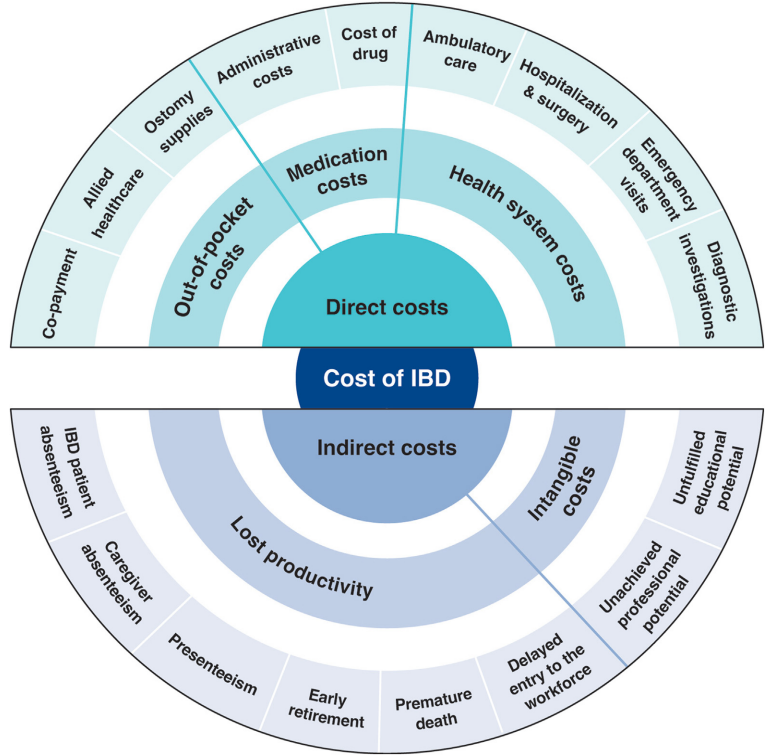
    J Burisch et al. Clin Gastroenterol Hepatol 2025; 23: 386-395. Open Access! The Cost of Inflammatory Bowel Disease Care: How to Make it Sustainable

    This article is a terrific review of care cost drivers in inflammatory bowel disease (IBD) but it does not actually have useful information on how to make the costs of care sustainable.

    Key points:

    • The most recent data from the United States (U.S.) estimated that the prevalence of IBD
      was 0.7% of the population, representing 2.39 million individuals living with IBD…the annual cost of IBD in the U.S. approximates $50 billion
    • All studies demonstrated a shift over time from costs associated with hospitalizations to costs of medications
    • The costs of prescription drugs for IBD vary significantly worldwide… A particular outlier among high-income countries is the U.S., where manufacturers set prices freely. The lack of
      nationwide price regulation, coupled with the fragmentation of the U.S. health care system and prolonged market exclusivity periods, result in U.S. drug prices that exceed, on average, international prices by several-fold…Even when insurers are successful at negotiating discounts, patients seldom benefit, as costsharing paid at the point-of-sale is based on the full, non-discounted price
    • Using a “top-down” clinical paradigm, guidelines suggest starting biologic medications early to induce remission of moderate-to-severe IBD, thereby reducing risk of complications, surgeries, and hospitalizations and improving quality of life.55,58 A randomized controlled
      trial demonstrated a clear benefit in steroid-free and surgery-free remission among patients randomized to top-down vs step-up care (79% vs 15%; P < .0001) [PROFILE study]

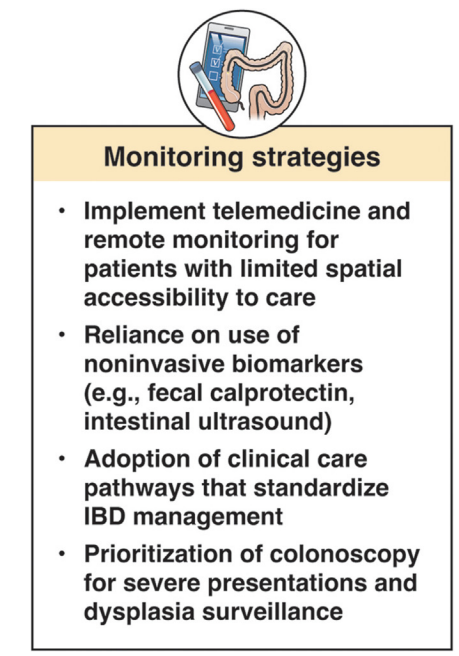
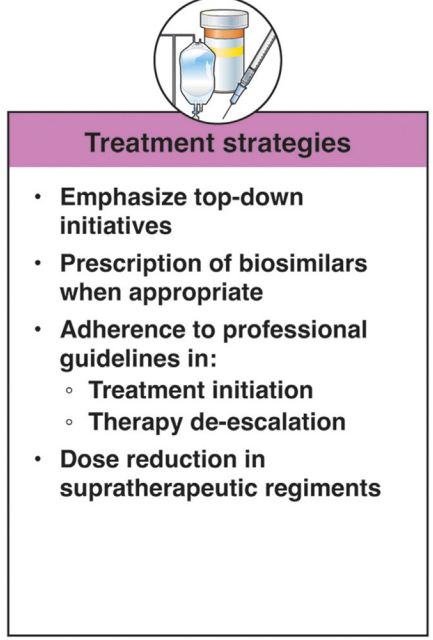
    In terms of improving cost sustainability, here is what the authors propose “Strategies for cost reduction in the clinical treatment of IBD”:

    My take: This article highlights the cost drivers in IBD but does not identify a path that appears to help address affordability.

    This article is one of 11 articles in special issue discussing the future of IBD care.

    Related blog posts:

    Treatment Disparities in Adult vs. Pediatric IBD Care Related to Provider Specialization

    JD Lewis et al. Clinical Gastroenterology and Hepatology. 2024; Volume 22, Issue 12, 2475 – 2486.e14. Open Access ! Provider Specialization in Inflammatory Bowel Diseases: Quality of Care and Outcomes

    Methods:  This was a retrospective cohort of newly diagnosed patients with IBD using data from Optum’s deidentified Clinformatics Data Mart Database (2000–2020). The study included 772 children treated by 493 providers and 2864 adults treated by 2076 providers.

    Key findings:

    • In adults, care from an IBD-focused provider was associated with more use of biologics, combination therapy, and imaging and endoscopy, and less mesalamine use for Crohn’s disease (P < .05 for all comparisons)
    • In children, none of the associations between provider focus and process or outcome measures were significant. Although not statistically significant among children, the OR for mesalamine use was 0.64, suggesting a similar association as that seen among adults
    Time to first dispensing of a biologic therapy in (A) children and (B) adults

    My take: This study indicates significant treatment disparities between IBD-focused care providers and providers without an IBD focus in the care for adults, but not in the care of children. This could be related to improved collaboration among pediatric care providers, better training, and parental involvement.

    In addition, this study focused on patients with newly-diagnosed disease. Treatment is more complicated in patients who have not responded to initial treatments; as such, IBD-focused providers may be more important in this population.

    Related blog posts:

    Do Setons Improve Outcomes in Anti-TNF Treatment for Fistulas?

    J McCurdy et al. AP&T 2025; https://doi.org/10.1111/apt.70081. The Impact of Setons on Perianal Fistula Outcomes in Patients With Crohn’s Disease Treated With Anti-TNF Therapy: A Multicentre Study

    This study included 221 patients — 81 with setons and 140 without setons. Patients were treated with their first anti-TNF therapy for perianal fistulizing Crohn’s disease (PFCD) after undergoing a pelvic MRI between 2005 and 2022 from 6 North American centers. Our primary outcome was major adverse fistula outcome (MAFO), a composite of repeat local surgical intervention, hospitalization, or fecal diversion for PFCD.

    Key findings:

    • Patients with setons had similar rates of MAFO (HR 1.23; 95% CI, 0.68–2.21) and fistula remission at 6 months (OR, 0.81; 95% CI, 0.41–1.59) and 12 months (OR, 0.63; 95% CI, 0.31–1.27) compared to patients without setons
    • In patients with abscesses, there were lower rates of MAFO (HR, 0.49; 95% CI, 0.19–1.25) but not statistically significant in patients with setons

    My take: This study indicates that seton placement may not be needed in patients who are starting anti-TNF therapy with fistulizing disease, especially if there is not an abscess present.

    Related blog posts:

    Disclaimer: This blog, gutsandgrowth, assumes no responsibility for any use or operation of any method, product, instruction, concept or idea contained in the material herein or for any injury or damage to persons or property (whether products liability, negligence or otherwise) resulting from such use or operation. These blog posts are for educational purposes only. Specific dosing of medications (along with potential adverse effects) should be confirmed by prescribing physician.  Because of rapid advances in the medical sciences, the gutsandgrowth blog cautions that independent verification should be made of diagnosis and drug dosages. The reader is solely responsible for the conduct of any suggested test or procedure.  This content is not a substitute for medical advice, diagnosis or treatment provided by a qualified healthcare provider. Always seek the advice of your physician or other qualified health provider with any questions you may have regarding a condition.