Early Postoperative Anti-TNF Therapy

JE Axelrad et al. Inflamm Bowel Dis 2023; 29: 888-897. Early Initiation of Antitumor Necrosis Factor Therapy Reduces Postoperative Recurrence of Crohn’s Disease Following Ileocecal Resection

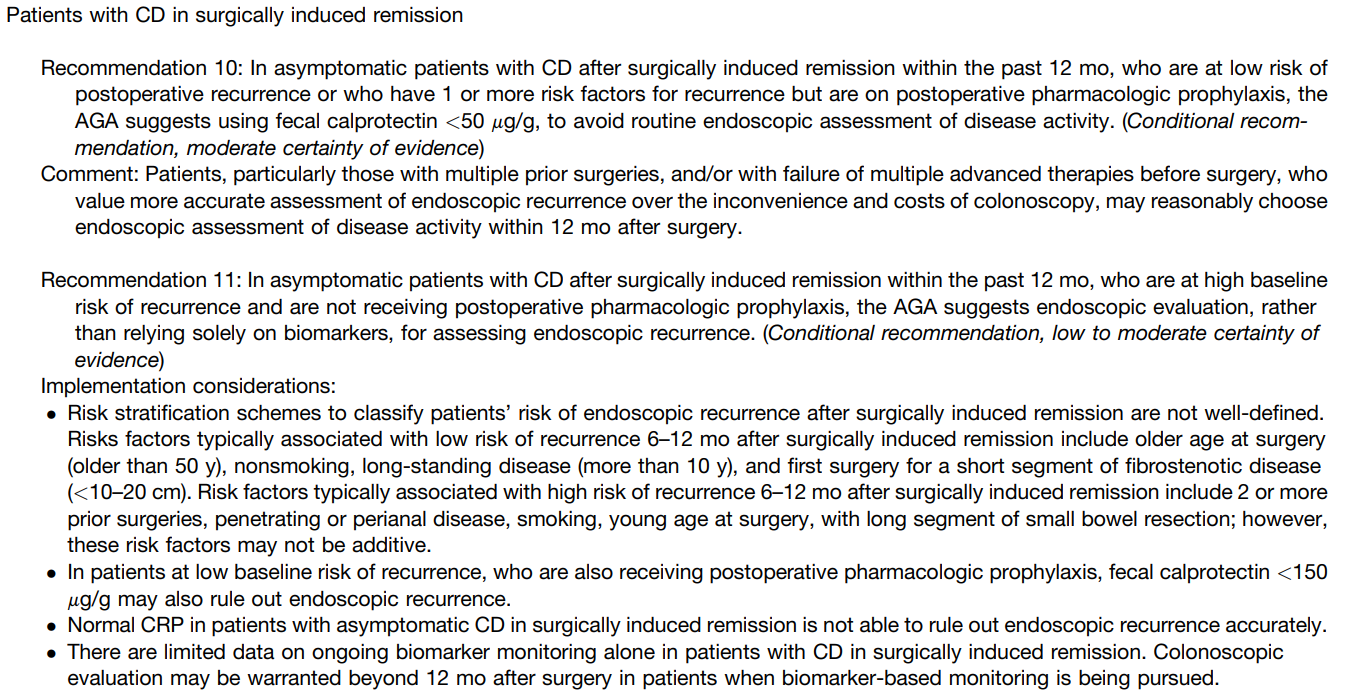
This retrospective cohort study identified 1037 patients with Crohn’s disease who underwent ileocecal resection (ICR). Only 5.4% were younger than 18 yrs at the time of surgery. In this cohort, 278 (26%) received a biologic agent as prophylaxis to prevent recurrence with 80% receiving an anti-TNF agent. In those receiving an anti-TNF agent, 35% were started on therapy within 4 weeks of surgery and 65% were started between 4 and 12 weeks. Recurrence was defined by endoscopy (≥ i2b Rutgeerts score) or radiography (active inflammation in neoterminal ileum). Key findings:

  • After adjusting for factors associated with postoperative recurrence (POR), compared with no biologic prophylaxis, the initiation of an anti-TNF agent (n=223) within 4 weeks following an ICR was associated with a reduction in POR (adjusted hazard ratio, 0.61).
  • Prophylaxis after 4 weeks following an ICR or with vedolizumab or ustekinumab was not associated with a reduction in POR compared with those who did not receive prophylaxis –though sample size with vedolizumab (n=27) and ustekinumab (n=28) was very limited
  • Most patients receiving biologic prophylaxis had prior anti-TNF exposure including 73% of the anti-TNF group, 96% of the vedolizumab group, and 93% of the ustekinumab group.

In their discussion, the authors note that their findings reinforce previous studies which showed beneficial effects of anti-TNF therapy for POR, including the PREVENT trial. This randomized controlled trial with infliximab initiation within 45 days postoperatively in high risk individuals reduced endoscopic recurrence at 18 months (22.4% compared with 51% in placebo group).

My take: Anti-TNF therapy, even in those with prior exposure, likely improves outcomes in patients with Crohn’s disease following ileocecal resection. This study indicates that starting therapy within the first 4 weeks is more beneficial.

Related blog posts:

Watersound, FL

Do We Know How To Dilate Strictures Associated With Pediatric Crohn’s Disease?

O Ledder et al. JPGN 2023; 76: 799-806. Approach to Endoscopic Balloon Dilatation in Pediatric Stricturing Crohn Disease: A Position Paper of the Endoscopy Special Interest Group of ESPGHAN

This position paper regarding dilatation of strictures in Crohn’s disease provides mostly vague advice.

Here are a few examples:

  • Imaging: “The need for fluoroscopy is dependent on the stricture phenotype and the treating team…The advantage of live imaging is obvious: it provides greater certainty of balloon position and dilatation success; however, it is difficult and impractical in some centers…In simple strictures, where balloon passage and deployment can be performed with reasonable confidence under direct vision,…it is reasonable to dispense with imaging.”
  • Dilatation Size: “In the recent pediatric case series…a median of 15 mm was used” as a target dilatation….”It is wise to set reasonable goals for dilatation…Inherited wisdom recommended limiting esophageal dilatation to no more than 3 mm per session. However,…subsequently challenged in several studies demonstrating safe dilatation up to 5 mm per session…As an informal rule, the authors limit dilatation to 2 balloon sizes per session which roughly translates to 5-6 mm. An alternative approach…is to dilate to a maximum of three times the initial stricture diameter; however, neither of these approaches are based on any robust data.”

The main clear cut recommendations are to obtain careful consent, expecting a complication rate of ~4% (eg. bleeding, sepsis, perforation), and to have surgical backup.

My take: This “position paper” offers very few positions on management advice and gives little clear guidance in terms of dilating strictures in Crohn’s disease.

Related blog posts:

Infliximab Home Infusions

SR Gupta et al. JPGN 2023; 76: 776-781. Outcomes for Standardized Home and Hospital-Based Infusions of Infliximab for Children With Inflammatory Bowel Disease

In this retrospective study with 102 children, key findings:

  • There were similar outcomes among carefully-selected children receiving home infusions (HI), “drug durability, AOs [adverse outcomes], and laboratory values were similar between HI and hospital-based infusions.” 30% of eligible patients received HI.
  • Within 2 years, only 19% remained on 5 mg/kg every 8 week dosing and the remainder required increased dosing or decreased interval.  (Further supporting data showing that 5 mg/kg every 8 week dosing is inadequate in ~80%)

The authors note that HI were arranged with a single home health company with pediatric PALS-trained nurses. In addition, there was “direct communication between the home health nurse and IBD nurse after each infusion.”

Prior studies of HI have shown increased AOs in patients receiving HI including stopping therapy, ER visits, and hospitalizations (Clin Gastroenterol Hepatol 2020; 18: 257-258, Am J Gastroenterol 2020; 115: 1698-1706, JAMA New Open 2021; 4: e2110268).

My take: If set up properly, home infusions could be a reasonable alternative to hospital-based or office-based infusions.

In this article, from May 31, 2023: Sick Workers Tied to 40% of Food Poisoning Outbreaks, C.D.C. Says

“Each year, 48 million people become sick from a food-borne illness, according to C.D.C. estimates. Of those, 128,000 are hospitalized and 3,000 die.”

VTE Protocol for Hospitalized Kids with IBD

Tucson Botanical Gardens

LG Hamant et al JPGN 2023; 76: 610-615. Venous Thromboembolism Prophylaxis in Pediatric Inflammatory Bowel Disease Patients Hospitalized With a Central Line

This article reviews the results of a venous thromboembolism (VTE) protocol that was implemented in 2018 in children with inflammatory bowel disease (IBD). A total of 313 hospitalizations across 187 different patients were identified that met criteria including IBD and central venous access. This retrospective review focused on children with IBD and and central venous catheter (CVC)  Key findings:

  • VTE prophylaxis increased from 5.24% (n = 12) prior to the intervention to 63.10% (n = 53) after the intervention
  • Rate of Doppler US increased from 9.17% (n = 21) prior to the intervention to 17.86% (n = 15) after the intervention
  • Diagnosis of VTE increased from 0.87% (n = 2) prior to the intervention to 7.14% (n = 6) after the intervention (attributed to better detection)

This article provides an algorithm for implementing VTE prophylaxis, recommending prophylaxis if 2 or more risk factors –both IBD and CVCs are risk factors. Mechanical prophylaxis (along with frequent ambulation, if feasible) is generally recommended if there are at least 2 risk factors, whereas anticoagulation prophylaxis is generally recommended if there are at least 4 risk factors. Other risk factors include being post-pubertal, obese, prolonged surgery (>90 minutes) within 2 weeks, altered mobility, and mechanical ventilation (see full protocol in article).

My take: In children at increased risk, the approach to reducing VTE in this article is quite sensible. Nevertheless, more research, especially with regard to institution of anticoagulation, is needed.

Related blog posts:

Disclaimer: This blog, gutsandgrowth, assumes no responsibility for any use or operation of any method, product, instruction, concept or idea contained in the material herein or for any injury or damage to persons or property (whether products liability, negligence or otherwise) resulting from such use or operation. These blog posts are for educational purposes only. Specific dosing of medications (along with potential adverse effects) should be confirmed by prescribing physician.  Because of rapid advances in the medical sciences, the gutsandgrowth blog cautions that independent verification should be made of diagnosis and drug dosages. The reader is solely responsible for the conduct of any suggested test or procedure.  This content is not a substitute for medical advice, diagnosis or treatment provided by a qualified healthcare provider. Always seek the advice of your physician or other qualified health provider with any questions you may have regarding a condition.

Durability of Biologics in Children with Inflammatory Bowel Disease

JL Kaplan et al. JPGN 2023; 76: 567-575. Open Access! Use, Durability, and Risks for Discontinuation of Initial and Subsequent Biologics in a Large Pediatric-Onset IBD Cohort

Methods: The authors analyzed pediatric inflammatory bowel disease (IBD) data from the ImproveCareNow Network registry (n= 17,649) between May 2006 and September 2016, including time to biologic initiation, choice of first subsequent biologics, biologic durability, and reasons for discontinuation

Key findings:

  • 7585 (43%) were treated with a biologic agent before age 18. 50% of children with Crohn’s disease (CD) received a biologic compared to 25% of children with ulcerative colitis (UC)
  • First biologic agents for all patients were anti-tumor necrosis factor agents (88% infliximab, 12% adalimumab)
  • Probability of remaining on first biologic in patients with CD: 93% at 6 months, 85% at 12 months, 79% at 24 months, and 74% at 36 months
  • Probability of remaining on first biologic in patients with UC: 84% at 6 months, 75% at 12 months, 66% at 24 months, and 55% at 36 months
  • First biologics were discontinued because of loss of response (39%), intolerance (23%), and nonresponse (19%).

My take: This is an important study that shows that anti-TNF therapy durability was 79% in patients with CD and 66% in patients with UC at 2 years. This pediatric-specific information will help with counseling families when starting biologic therapy. There was improvement in durability after 2013 compared to prior -so perhaps perhaps even better durability is occurring in 2023. It is a little ironic that this study is from ImproveCareNow given that the results are quite dated. There have been a lot of changes in the last seven years. These include the widespread use of dose optimization/therapeutic drug levels and the approval of several new classes of targeted medications.

Related blog posts:

Tucson Botanical Gardens

Isolated Ileitis in Children

A Alper et al. JPGN 2023; 76: 338-342. Isolated Terminal Ileitis in Children

This single center retrospective study reviewed 640 colonoscopies in symptomatic children.

Key findings:

  • Thirty-three children had isolated histologically-defined terminal ileitis. Seventeen children were diagnosed with CD and 18 children had idiopathic terminal ileitis (3 lost to followup)
  • Children with CD had higher prevalence of abnormal C-reactive protein levels, severe inflammation, and radiological evidence of bowel wall thickening compared with children with idiopathic ileitis.
  • Two children with idiopathic ileitis were later diagnosed with CD; the remaining 13 did not develop CD over a follow-up period of 83 months.
  • From the data presented, it appeared that the center had a low rate of ileal intubation (316 colonoscopies were excluded for this reason)
  • 75% of those with histologic ileitis had normal endoscopic appearance

When our group looked at colonoscopies (n=374) in our outpatient endoscopy center, we identified isolated ileitis in 10% (6% grossly abnormal, 4% with only histologically abnormal) (related blog post: Our Study: Provider Level Variability in Colonoscopy Yield). Higher rates of ileal intubation (90% in our study) should be considered a quality metric given that 5-10% of children may have disease isolated in ileum.

My take: This study provides reassurance that most children with histologic ileitis will not progress to CD if the ileum is visually-normal (in the absence of abnormal blood tests and/or imaging).

Related blog posts:

Chattahoochee River, Sandy Springs, GA

High Relapse Rates with Anti-TNF Withdrawal Even with Endoscopic Remission

R Mahmoud et al. Clin Gastroenterol Hepatol 2023; 21: 750-760. Open Access! Complete Endoscopic Healing Is Associated With Lower Relapse Risk After Anti-TNF Withdrawal in Inflammatory Bowel Disease

This was a prospective observational study (n=81). In order to participate, patients (all adults) had to be in confirmed baseline steroid-free clinical remission (for at least 6 months) and endoscopic healing;  endoscopic healing was defined as endoscopic Mayo score <2 or Simple Endoscopic Score for CD (SES-CD) <5 without large ulcers. Endoscopic healing was subclassified as complete endoscopic healing (Mayo 0/SES-CD 0–2) versus partial endoscopic healing (Mayo 1/SES-CD 3–4).

Key findings:

  • At 12 months, 70% (7 of 10) versus 35% (25 of 71) of patients with partial versus complete endoscopic healing relapsed, respectively (adjusted hazard rate [aHR], 3.28; 95% confidence interval [CI], 1.43–7.50)
  • Mesalamine use was associated with fewer relapses in UC/IBDU patients (aHR, 0.08; 95% CI, 0.01–0.67)
  • Thirty patients restarted anti-TNF, and clinical remission was regained in 73% at 3 months.

The authors highlight the lower relapse rate between those with complete endoscopic healing and those with partial healing. They acknowledge that those eligible for anti-TNF de-escalation are highly selected (~7% in a prior study) and “few patients with an unfavorable IBD phenotype, such as stricturing or penetrating CD, anti-TNF for perianal fistulizing CD, young age at diagnosis, or prior biological failure, were included in this study. Therefore, our findings may not be generalizable to patients with a more severe IBD phenotype.

My take: Even in those with complete endoscopic healing, there is a high rate of relapse. In addition, stopping anti-TNF therapy likely increases risk of not responding to anti-TNF therapy when it is restarted. This study does show that transitioning from anti-TNF therapy to mesalamine therapy in those with ulcerative colitis (or IBDU) could be a reasonable consideration.

Related blog posts:

IBD Update: MMR Vaccine and Lower Rates of IBD, Humira Biosimilar Data, Oral Health Associated with IBD Activity, Low Chance of Reconnection After Fecal Diversion

C Kim et al. Inflamm Bowel Dis 2023; 29: 430-436. Vaccination Against Measles, Mumps, Rubella and Incident Inflammatory Bowel Disease in a National Cohort of Privately Insured Children

This retrospective cohort study (n = 1 365 447) using de-identified claims data from a national private payer (Optum Clinformatics Data Mart), between 2001 and 2018 found that receipt of at least 1 dose of MMR had lower risk for IBD than children who did not (hazard ratio, 0.71; 95% confidence interval, 0.59-0.85). This association persisted after adjustment for potential confounding factors.

My take: This study provides reassurance to encourage MMR vaccination

A Tursi et al. Inflamm Bowel Dis 2023; 29: 376-383. Comparison of Performances of Adalimumab Biosimilars SB5, ABP501, GP2017, and MSB11022 in Treating Patients with Inflammatory Bowel Diseases: A Real-Life, Multicenter, Observational Study

In this retrospective study (n=533), compare the efficacy and safety of ADA biosimilars SB5, ABP501, GP2017, and MSB11022 in treating IBD outpatients in a real-life Italian setting. Key findings:

  • Clinical remission was obtained in 79.6% of patients new to biologics and 59.2% of patients new to ADA but not to other biologics
  • Clinical remission was maintained in 81.0% of patients switched from the originator
  • No difference in efficacy and safety was found between ADA biosimilars.

My take: This study suggests that these biosimilars are equally effective; however, the fact that nearly 20% failed to maintain remission after switching from the originator ADA indicates more comparative (prospective) studies are needed

Related blog post: Adalimumab Biosimilars on the Horizon (Finally) Plus Two Studies

GR Madsen et al. Inflamm Bowel Dis 2023; 29: 396-404. The Impact of Periodontitis on Inflammatory Bowel Disease Activity

Key finding: In this questionnaire-based study among 1093 patients with inflammatory bowel disease (IBD), periodontitis and tooth loss were significantly associated with increased IBD-related disability and more disease activity in the preceding 12 month. This type of study does not allow one to draw conclusions about causality but does provide a good rationale to encourage regular attention to oral health/dentistry.

G Kassim et al. Inflamm Bowel Dis 2023; 29: 417-422. Long-Term Outcomes of the Excluded Rectum in Crohn’s Disease: A Multicenter International Study

Methods: In this retrospective study (n=197) reviewed all CD patients between 1990 and 2014 who had undergone diversionary surgery with retention of the excluded rectum for at least 6 months and who had at least 2 years of postoperative follow-up.

Key findings:

  • 92 (47%) of 197 patients ultimately underwent subsequent proctectomy; only 20 (10%) remained symptom-free with excluded rectums.
  • Only 28 (14.2%) of 197, and only 4 (5.9%) of 66 with initial perianal disease, were able to achieve reanastomosis without further problems

Related blog posts:

Is There An Increased Risk of Infections with Anti-TNF Therapy?

J Holmgren et al. Inflamm Bowel Dis 2023; 29: 339-348. Open Access! The Risk of Serious Infections Before and After Anti-TNF Therapy in Inflammatory Bowel Disease: A Retrospective Cohort Study 

Methods: Retrospective study with 980 patients at 5 centers participating in the Swedish IBD Quality Register. Serious infections, defined as infections requiring in-patient care, the year before and after the start of anti-TNF treatment were evaluated.

A decline in the incidence rate can first be seen beyond 1 year of treatment with anti-TNF, with an incidence rate of 1.22 (95% CI, 0.90-1.66) events per 100 person year compared with 2.19 (95% CI, 1.43-3.36) events per 100 person year the year before treatment. This is a significant reduction of infections, with an incidence rate ratio of 0.56 (95% CI, 0.33-0.95; P = .030).

Key findings:

  • A 72.0% reduction in the incidence rate of perianal abscesses and intra-abdominal abscesses during treatment with anti-TNF was found compared with before treatment.
  • Figures 2 & 3 show than most infection rates decreased with treatment. CMV infection did not change significantly with 0.10 per 100 person-years prior to treatment and 0.14 per 100 person-years after starting anti-TNF therapy
  • ” In the current study, patients younger than 20 years old experienced a substantial decrease of infection incidence rate ratio (0.11) with the introduction of anti-TNF treatment. The results could be explained by the fact that young patients have a more active disease with increased risk of infection before treatment with anti-TNF.”
  • “The most common type of infection after anti-TNF treatment was pneumonia. The high incidence of pneumonia confirms earlier data.9,36,37” However, the authors show that the rate of pneumonia dropped from 0.51 to 0.27 per 100 person-years after starting anti-TNF therapy.

The authors note that a prior study by “Zabana et al showed that patients with IBD had an increased risk for serious infection after starting immunosuppressive treatment compared with before treatment (median follow-up 3 years before and 5 years after)… the discrepancy in the result may be explained by selection bias. We included all patients starting anti-TNF treatment. However, Zabana et al included only patients who suffered from infections during immunosuppressive treatment and retrospectively examined the risk of infection before start of treatment.24

Limitations of study: several other important factors affecting infections were not captured in this study including steroid exposure and nutritional status.

My take (from authors): “The incidence rate of serious infection among IBD patients did not increase with anti-TNF therapy. Instead, serious infections seemed to decrease more than 1 year after initiation of anti-TNF treatment.”

Related blog posts:

Immune Dysregulation and Inflammatory Bowel Disease

At our center, we are fortunate to work with an immune dysregulation clinic (Dr. Shanmuganathan Chandrakasan, Dr. Taylor Fitch) that helps sort out patients with inflammatory bowel disease with underlying monogenetic disorders. This is very important as specific treatments, including hematopoietic stem cell transplants (HCST), may be needed. The likelihood of an underlying monogenetic disorder is much more frequent in the VEO population. A recent talk on this topic by Taylor Fitch was given to our group. Here are some of the slides:

Generally, about 2% of those older than 6 years of age have monogenetic disorders, but it is much higher in those with severe or refractory disease.

This slide shows six major categories of immune defects.

This slide shows the high frequency of extraintestinal manifestations in patients with monogenetic disorders, particularly recurrent infections, skin/hair abnormalities, and autoimmunity. Perianal disease is also frequent in this population.

In the discussion, it was noted that DHR testing is often unreliable, especially if the specimen is not run promptly.

My take: I have had several patients with IBD/immune dysregulation, including a patient with CTLA4 and a patient with TTC7A. Making these diagnoses led to specific treatment recommendations. The patient with CTLA4 is doing well with abatacept therapy.

For those in Atlanta, a referral can be made via EPIC order and/or via contact with immune dysregulation team members. Epic order:

Related blog posts:

Disclaimer: This blog, gutsandgrowth, assumes no responsibility for any use or operation of any method, product, instruction, concept or idea contained in the material herein or for any injury or damage to persons or property (whether products liability, negligence or otherwise) resulting from such use or operation. These blog posts are for educational purposes only. Specific dosing of medications (along with potential adverse effects) should be confirmed by prescribing physician.  Because of rapid advances in the medical sciences, the gutsandgrowth blog cautions that independent verification should be made of diagnosis and drug dosages. The reader is solely responsible for the conduct of any suggested test or procedure.  This content is not a substitute for medical advice, diagnosis or treatment provided by a qualified healthcare provider. Always seek the advice of your physician or other qualified health provider with any questions you may have regarding a condition.