Adalimumab Can Reverse Growth Failure in Pediatric Crohn’s Disease

In an industry-sponsored study (TD Walters et al. Inflamm Bowel Dis 2017; 23: 967-75), adalimumab (ADA) was shown to be effective agent in reversing growth failure associated with pediatric Crohn’s disease (CD).

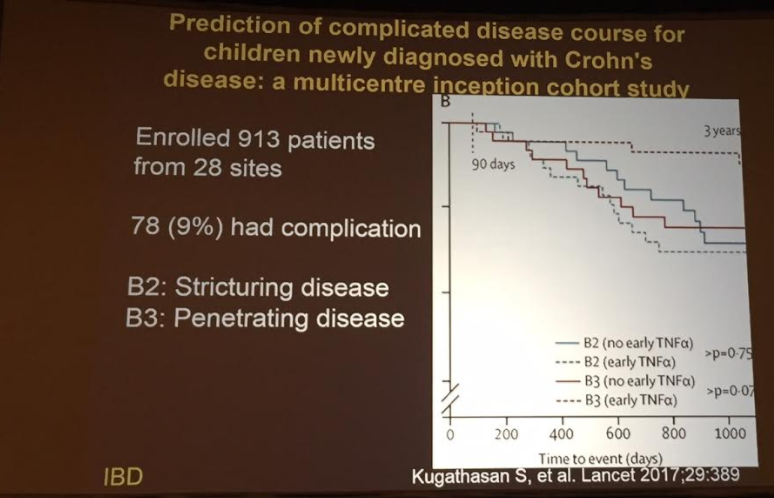
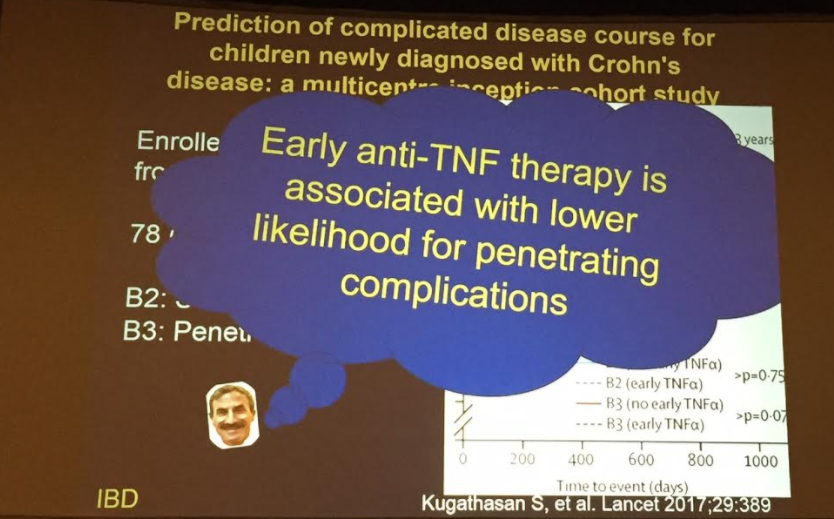
Background:  About one-third of children and adolescents with CD suffer from growth failure and delayed puberty.  Several prior studies have shown that anti-TNF therapy can improve height velocity and that early treatment with anti-TNF therapy (≤3 months after diagnosis) leads to greater improvement in height obtained, if initiated before puberty or early into puberty. This study examines the effectiveness of ADA in children from the IMAgINE 1 trial.

The authors identified 73 participants with growth delays (& adequate data) along with 27 participants with no growth delays.

Key findings:

  • ADA therapy significantly improved and normalized growth rates at 26 and 52 weeks in patients with baseline linear growth impairment.
  • At week 26, height velocity z-score was 1.33 among 23 children in remission compared with -0.78 (n=29) among “nonremitters”
  • At week 52, height velocity z-score was 2.17 among 27 children in remission compared with -1.57 (n=17) among “nonremitters”

My take: In moderate to severe CD, anti-TNF agents have been demonstrated to reverse growth failure; though, this is expected to occur only in patients with clinical response. To my knowledge, no other CD medical therapies have been proven to reverse growth failure (surgical treatment can improve growth as well).

Related blog posts:

Quiet Spot on U Chicago Campus

Small Pediatric Study: Probiotic Helping Some with Irritable Bowel Syndrome

In a recent study (O Jadresin et al. JPGN 2017; 64: 925-9), 55 children with functional abdominal pain or irritable bowel syndrome were randomized (prospective, double-blind, placebo-controlled study) to either L reuteri DSM or placebo.

Key findings:

  • The intervention group had more days without pain: median 89.5 days vs. 51 days (P=.029)
  • Abdominal pain was less severe in the intervention group at some time points (second month, and fourth month)
  • The two groups did not differ with regard to duration of abdominal pain, stool type, or absence from school

Limitation: Small number of patients -the estimated samples size was not reached

My take: This study suggests that probiotics may help some pediatric patients with irritable bowel syndrome.  Trying to identify which patients should receive a probiotic and which probiotic should be selected remains unclear.

Related blog posts:

Pierre Renoir’s portrait of Claude Monet, Musee d’Orsay

Five Reasons Medical Groups Oppose the Senate’s AHCA

Many analysts have described the American Health Care Act (AHCA) as essentially an 800 billion dollar tax cut which as a consequence eliminates health care coverage for more than 20 million.

Some of the reasons why almost all major medical groups oppose the repeal/replace effort of the Affordable Care Act are summarized from NBC News. In brief, they are the poor, the elderly, children, women, and those with preexisting conditions –all disadvantaged if the AHCA passes.
NBC News: Just About Every Major Medical Group Hates the GOP Healthcare

An excerpt -regarding children:

Medicaid covers 75 million people, including nearly 36 million children, according to data released Friday by the Center for Medicare and Medicaid Services..

“Senate leaders present their bill as providing states with flexibility. The reality is that it will put considerable pressure on states to limit their spending on health care, including for children,” said Dr. Matthew Davis, a professor of pediatrics and of medicine at Northwestern University Feinberg School of Medicine.

“The bill includes misleading ‘protections’ for children by proposing to exempt them from certain Medicaid cuts,” added Dr. Fernando Stein, president of the American Academy of Pediatrics.

“A ‘carve-out’ for children with ‘medically complex’ health issues does little to protect their coverage when the base program providing the coverage is stripped of its funding. Doing so forces states to chip away coverage in other ways, by not covering children living in poverty who do not have complex health conditions, or by scaling back the benefits that children and their families depend on,” Stein added.

Related blog posts:

Updated Pediatric Helicobacter Pylori Guidelines

Joint ESPGHAN/NASPGHAN guidelines (NL Jones et al. JPGN 2017; 64: 991-1003) have been published.  Overall, these guidelines cover a great deal of information.  It is interesting that these guidelines provide some conflicting advice with recommendations for adults.

  • Some recommendations:
    The authors recommend against diagnostic testing H pylori in children with functional abdominal pain
  • The authors recommend against using antibody-based tests from blood, urine, or saliva.
  • The authors recommend noninvasive testing for H pylori when investigating chronic immune thrombocytopenic purpura (ITP)
  • First line therapy recommendations if sensitivity is unknown: High-dose PPI-Amoxicillin-Metronidazole for 14 days OR Bismuth-based quadruple therapy (in children less than 8 years, quadruple therapy would be bismuth, PPI, amoxicillin and metronidazole; in older children it is recommended to substitute tetracycline for amoxicillin).  Specific dosing is given in this report (Table 3 and Table 4)
  • The authors recommend assessing for infection eradication at least 4 weeks after completion of therapy

My take: I favor quadruple therapy for most patients (see adult guidelines below) until sensitivities can be more easily obtained.  If you know of a reliable lab to obtain culture sensitivities, please let me know.

Related blog posts:

Adult Guidelines:

Other related posts

Improving the Value of Pediatric Colonoscopy

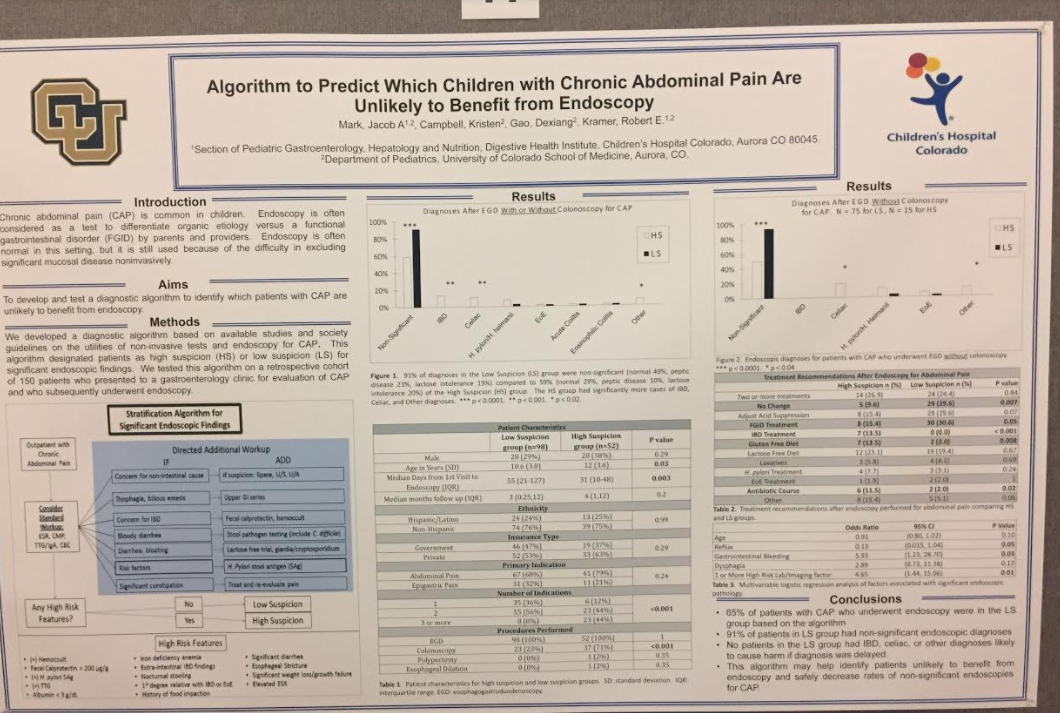
Two recent studies examine the diagnostic utility of pediatric gastrointestinal endoscopy:

  • PS Kawada et al. JPGN 2017; 64: 898-902
  • M Thomson, S Sharma. JPGN 2017; 64: 903-06

Before looking at these studies more closely, I would say that I was struck by contrasting remarks in their discussions. The first study: “a negative colonoscopy has not been shown to improve outcomes in those with functional pain” and references: Bonilla S et a. Clin Pediatr (Phila) 2011; 50: 396-401.  The second study states that “a negative endoscopic finding, with effective reassurance, can prevent unnecessary medicalization of many children in whom other nonorganic causes may present with GI symptoms.” The latter study does not provide any data to support their claim.

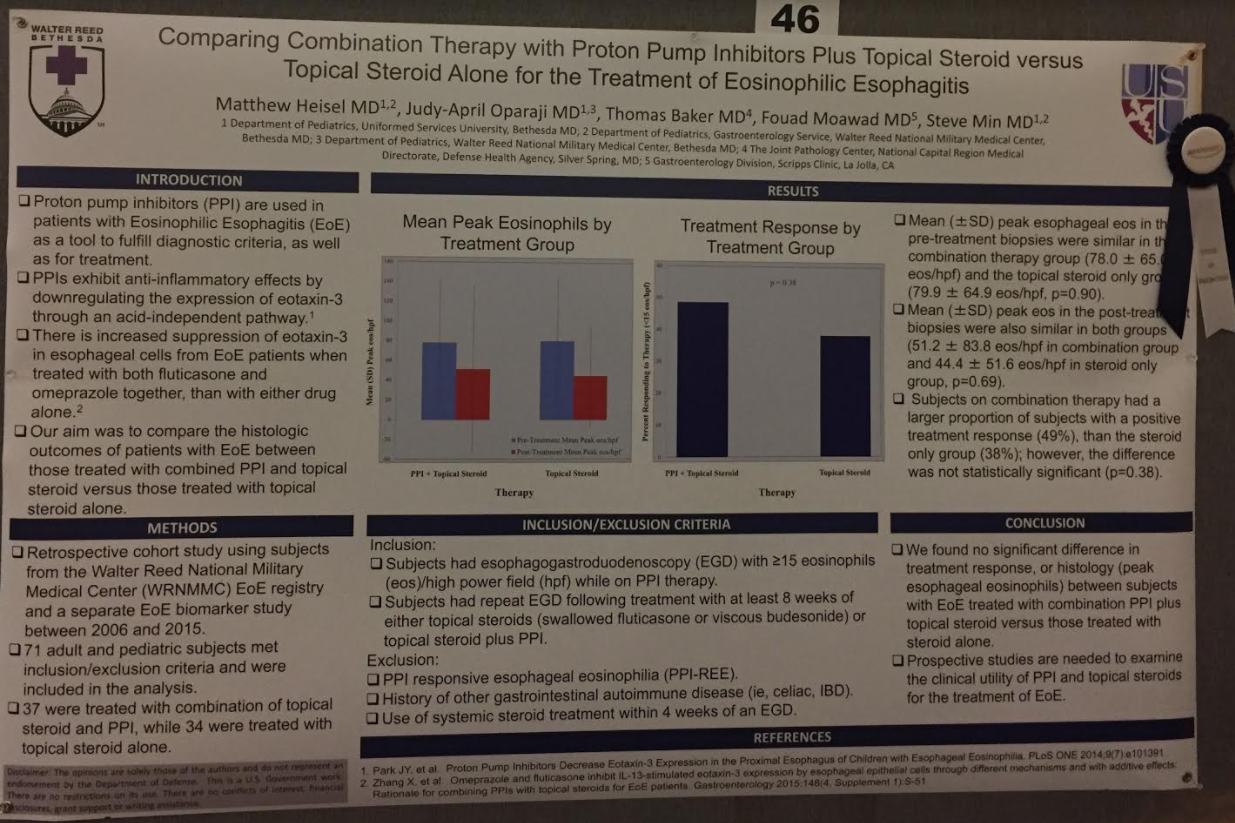
In terms of the specifics, the first study is a retrospective examination of 999 colonoscopies.  The indications for colonoscopy were suspected IBD; in this circumstance, 143 of 449 (32%) were normal.  For isolated rectal bleeding, 141 of 197 (72%) were normal.  For recurrent abdominal pain, all 46 were normal.  The cecal or beyond completion rate was only 52%, potentially lowering diagnostic yield.  The perforation rate during the 10 year timeframe (2001-2010) was 0.2%. The authors conclude that the yield of colonoscopy for recurrent abdominal pain (without other features) is very low and that many children with isolated rectal bleeding “should have a trial of conservative management before undergoing endoscopy.”
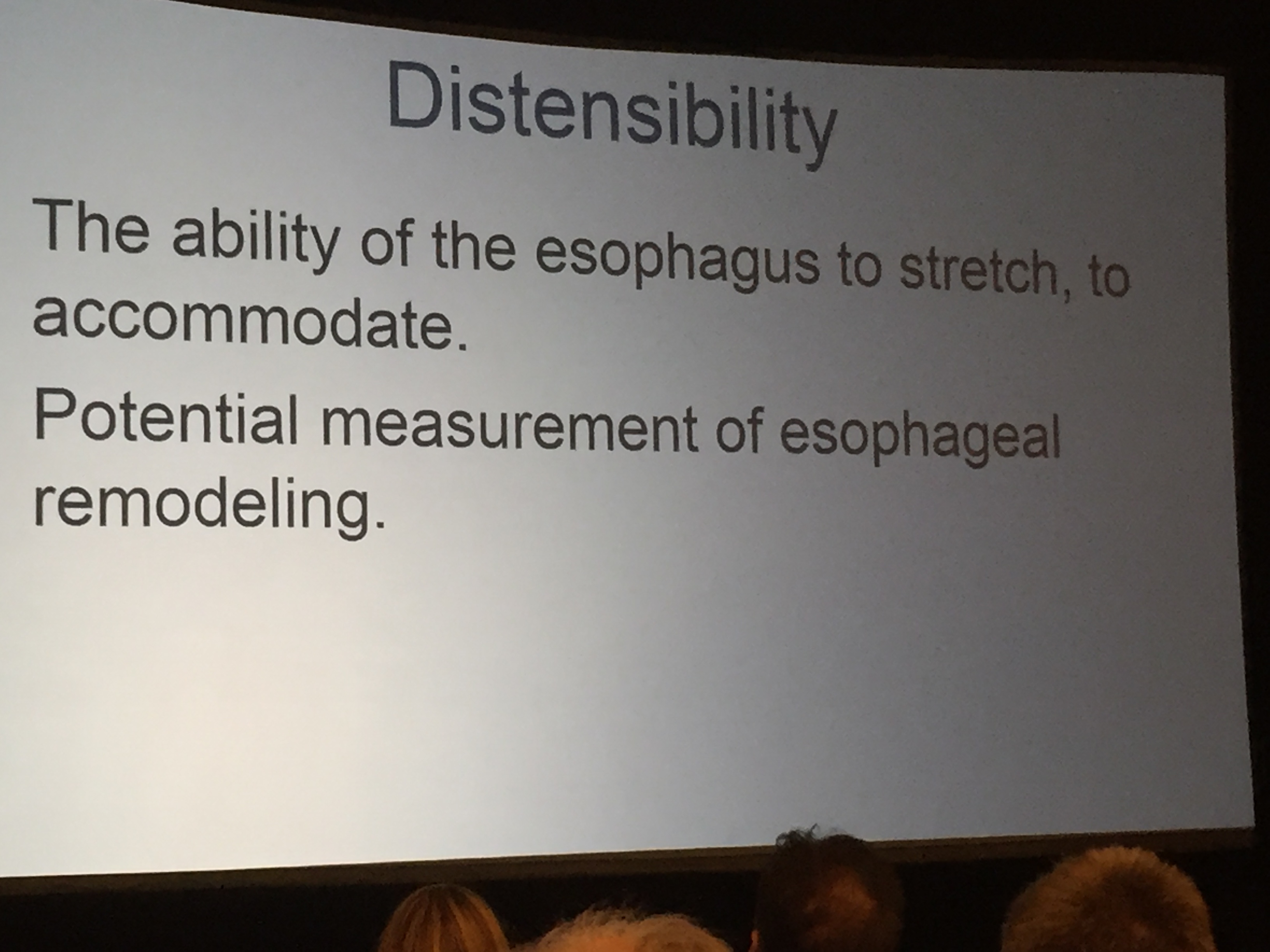
The second study retrospectively examined 153 endoscopic cases from a database of 2471 children (2012-2014).  The median age was 9.58 years. The authors found a diagnostic yield of 18.9% for upper endoscopy alone, 32.6% for ileocolonoscopy alone, and 39.2% for combined upper endoscopy/ileocolonoscopy. The terminal ileum intubation rate was 98%.
My take: Both of these studies look at pediatric endoscopy and reach opposite conclusions. The first study suggests that many colonoscopies could be avoided and the latter suggests that whether normal or not, endoscopy contributes to improved management. What is your conclusion?
Related blog posts:

Jean Hugues 1890, Edipe a Colone, Marbre taille d’apres le platre expose au Salon des Artistes fracaise. Musee d’Orsay


Low Rate of Ocular Disease in Pediatric Crohn’s Disease

A recent study (S Naviglio et al. Inflamm Bowel Dis 2017; 23: 986-90) confirms that there is a low rate of ocular disease in pediatric inflammatory bowel disease (IBD); in this cohort, half had Crohn’s disease (CD) and half had ulcerative colitis.

In this single center study, 94 children with a median age of 13.4 yrs were offered ophthalmologic examination (2014-2016).  None of these patients reported ocular symptoms.  The authors assert that 70% had intestinal remission, though 64% had elevated fecal calprotectin levels (>100 mg/kg). Key finding: One patient (1.06%) had ocular finding of uveitis (previously diagnosed prior to study)

The authors indicate that hepatobiliary manifestations, present in 9, were the most common extraintestinal IBD manifestation (EIM). Arthropathy occurred in 8, cutaneous manifestations occurred in 6 and ‘metastatic’ CD occurred in 4.

My take:  Ocular disease is an infrequent EIM in pediatric patients with IBD.

Related articleK Hata et al. Inflamm Bowel Dis 2017; 23: 1019-24. This article found that patients with EIMs were more likely to have chronic pouchitis after colectomy for ulcerative colitis. Overall, chronic pouchitis developed in 3.3%, 7.6% and 16.6% at 2, 5, and 10 years respectively. Key finding: preoperative EIM yielded a HR of 4.52.

Dreaded Nausea (2017)

This post provides followup to a previous post: Dreaded Nausea.

A recent study (AC Russell, AL Stone, LS Walker, Clin Gastroenterol Hepatol 2017; 15: 706-11) provides even more reasons to dread nausea.

This prospective study of 871 children with functional abdominal pain examined the comorbidity of nausea.  Followup data were collected from 392 patients at median of 8.7 years later.

Key findings:

  • At baseline, 44.8% of patients reported nausea. This group reported worse abdominal pain, somatic symptoms and depression than those without nausea.
  • At followup, “those with nausea in childhood continue to have more severe GI (P<.001) and somatic symptoms (P=.003)…as well as higher levels of anxiety (P=.02) and depression (P=.02).”  Anxiety and depression remained significant after controlling for baseline abdominal pain severity.
  • At the followup evaluation, the prevalence of any functional GI disorder (FGID) was 85 (48%) of those who had nausea at baseline compared with 77 (36%) for those without nausea at baseline.

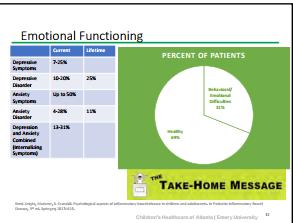
In their discussion, the authors reiterate findings from previous work on this patient sample: “current and lifetime diagnoses of anxiety disorders are substantially higher in adolescents with a history of FAP [functional abdominal pain] compared with healthy controls (lifetime, 51% vs. 20%; current 30% vs 12%). The lifetime risk of depressive disorder is also significantly higher in those with FAP (40% vs. 16%).”  They also note some limitations in their work, including the absence of formal screening for postural orthostatic tachycardia syndrome (POTS).

My take (borrowed from authors): This study “suggests that nausea is more than just a comorbid symptom of FAP and may have a different underlying etiology” and increases likelihood of persistent symptoms as well as anxiety and depression.

Briefly noted: RJ Shulman et al. Clin Gastroenterol Hepatol 2017; 15: 712-9. This randomized, double-blind study showed that added psyllium reduced frequency (but not severity) of abdominal pain in children (n=103) with irritable bowel syndrome. Psyllium was dosed at 6 g/day for 7-11 year olds, and 12 g for 12-18 year olds. Interestingly, this study did not show that psyllium caused a difference in normal stools or other mechanistic reasons for improvement, like breath hydrogen, breath methane, intestinal permeability or microbiome composition.

Related posts:

Atlanta Zoo, Bald Eagle


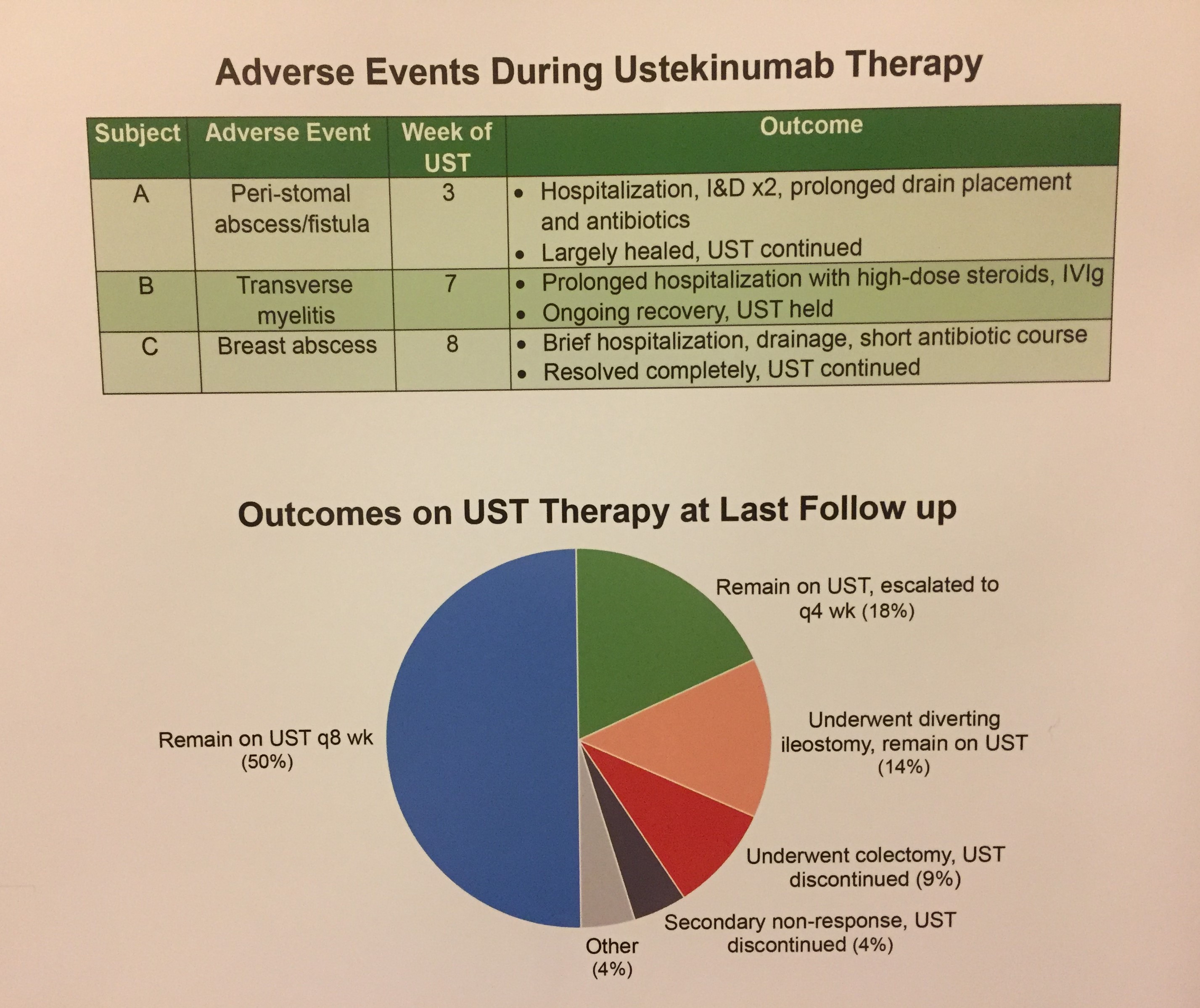
More Data for Ustekinumab in Crohn’s Disease

Briefly noted: C Ma et al. Inflamm Bowel Dis 2017; 23: 833-9.  This retrospective study examined the response to ustekinumab in 104 patients with Crohn’s disease.  All patients had achieved a steroid-free ustekinumab induction.  92.3% had failed anti-TNFα therapy.

Key findings:

  • 71.8% maintained a response at 52 weeks
  • 64.4% maintained an endoscopic or radiographic response

IBD Shorts and Postop Crohn’s Management

C Ma et al. Inflamm Bowel Dis 2017; 23: 833-9.  This retrospective study examined the ongoing response to ustekinumab in 104 patients with Crohn’s disease.  All patients had achieved a steroid-free ustekinumab induction.  92.3% had failed anti-TNFα therapy.Key findings:

  • 71.8% maintained a response at 52 weeks
  • 64.4% maintained an endoscopic or radiographic response

Related blog post: Closer Look at Ustekinumab Data

O Truffinet et al JPGN 2017; 64: 721-25. This small study with 8 children with Crohn’s disease examined the use of tacrolimus.  Six of eight showed a response to tacrolimus (target 8-15) with a clinical response at 2 months and 4 of 8 in clinical remission.  Adverse effects were common, occurring in 6 of 8.  These included renal dysfunction, diabetes, paresthesia and tremor.

J Adler et al.  JPGN 2017; 64: e117-e124. Using ImproveCareNow registry, the authors identified perianal disease (PD) in 1399 of 6679 cases (21%).  PD was more common in blacks than whites: 26% vs. 20%.  Overall, this study showed a higher rate of PD than previously recognized.

J Amil-Dias et al JPGN 2017; 64: 818-35.  This is an ESPGHAN IBD Porto Group guideline for surgical Crohn’s disease management in children.  There are 25 graded statements.  Here are a few:

  • #7 & #8. If needing surgery for CD pancolitis, the authors recommend subtotal colectomy and ileostomy.  Possible reanastomosis at later date if no significant rectal and/or perianal disease.  Ileal pouch-anal anastomosis is NOT recommended.
  • #13. Monitor Vitamin B12 if >20 cm resection of terminal ileum
  • #16. Postoperative management “should be based on ileocolonoscopy.” Figure 1 details recommendations, including need for assessment postoperatively.
  • In patients with high-risk factors, anti-TNF therapy is recommended postoperatively.  In those without high-risk factors, the authors indicate that thiopurines are reasonable with and advancing to anti-TNF if Rutgeerts i2 or greater at followup assessment.  High-risk factors include growth failure, short duration from diagnosis to surgery, extensive resection (>40 cm), and penetrating disease.

Related blog post:

Musee d’Orsay