Here’s A Bad Idea-Alcohol Consumption on the Day of Liver Transplantation

Yes –there is a retrospective study describing outcomes for patients who consume alchohol on the day of liver transplantation: J Ursic-Bedoya et al. Liver Transplantation 2021; 27: 34-42. Alcohol Consumption the Day of Liver Transplantation for Alcohol‐Associated Liver Disease Does Not Affect Long‐Term Survival: A Case‐Control Study

This study had 42 patients who had alcohol detectable in blood and/or urine matched with 84 controls among patients who received liver transplantation for alcohol-associated liver disease (ALD); this study had a median follow-up of 12.9 years..

Key findings:

  • Long‐term survival was not different between the groups; however, rates of recurrent cirrhosis and cirrhosis‐related deaths were more frequent in the alcohol consumption group
  • Relapse to any alcohol consumption rate was higher in the case group (59.5%) than in the control group (38.1%, odds ratio 2.44; CI95% = [1.13; 5.27]), but sustained excessive consumption was not significantly different between the groups (33.3% versus 29.8% in case and control groups respectively, χ2 = 0.68). 

My take: Yikes.! Fortunately, alcohol consumption is not a significant factor in pediatric liver disease. For adult hepatologists, this study highlights the need for patient support due to the frequency of alcohol relapse.

Related blog posts:

Chicago at Sunrise

How a Gluten Challenge Could Change

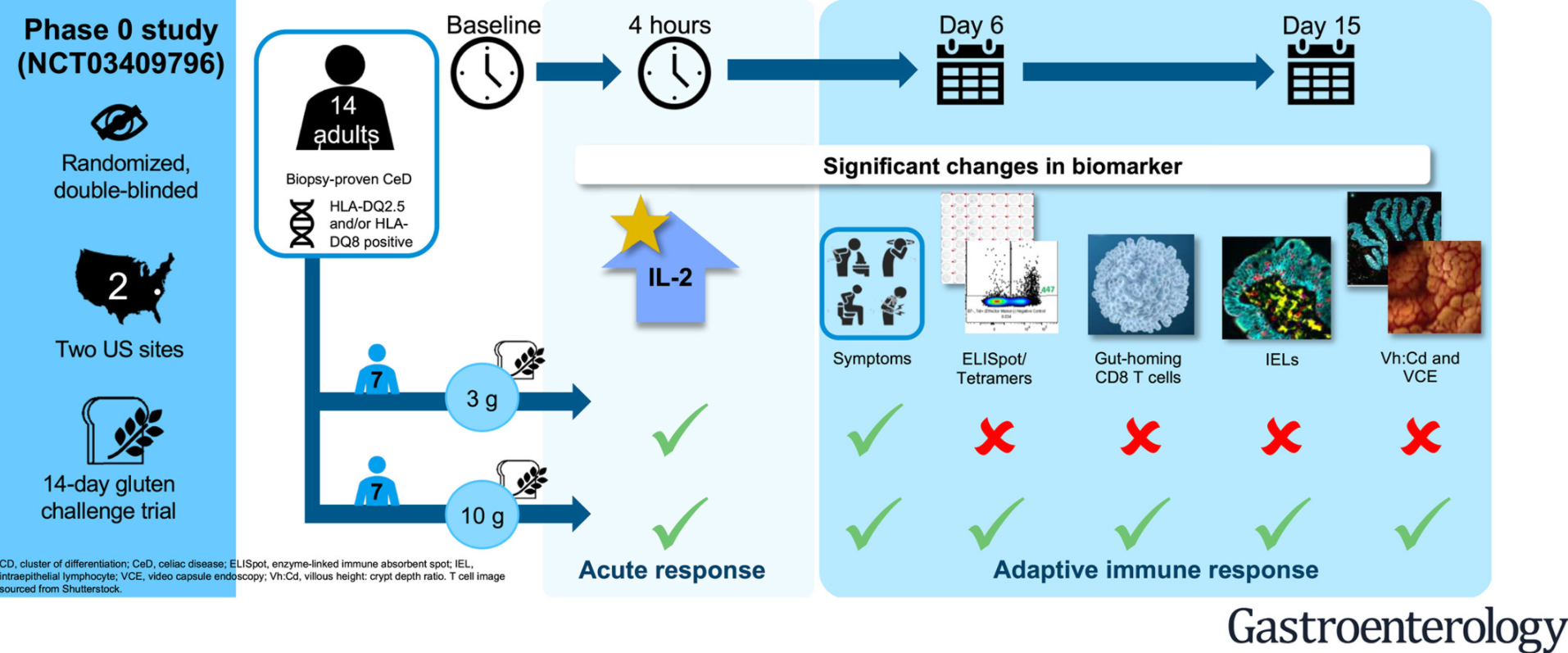
A recent randomized double-blind study (MM Leonard et al. Gastroenterol 2021; 160: 720-733. Full Text: Evaluating Responses to Gluten Challenge: A Randomized, Double-Blind, 2-Dose Gluten Challenge Trial) provide evidence that a gluten challenge could detect evidence of celiac disease in hours, not weeks.

This study consisted of 14 adults with biopsy-proven celiac disease (CD) who were randomized to 3 g or 10 g gluten/day intake for 14 days. Each participant underwent extensive studies to detect histological, visible, and biochemical changes associated with gluten introduction. Data required multiple endosopic duodenal biopsies, VCEs and blood collection.

Key findings:

  • Symptoms and plasma interleukin-2 levels “increased significantly or near significantly at both doses.”
  • Interleukin-2 appeared to be the earliest, most sensitive marker of acute gluten
    exposure. IL-2 increases were observed 4 hours after exposure in patients with CD but not in healthy controls.
  • Intestinal damage is more complex and requires a longer duration and higher dose of gluten exposure. In this study, the higher dose (10 g) of gluten exposure was required for enteropathy within the study time frame.

My take: These study findings need to be confirmed in a broader patient cohort. However, in patients needing a gluten challenge, IL-2 response after a single-dose (measured at 4 hours) could be helpful. Those without IL-2 response are unlikely to have CD. Those with an IL-2 response at 4 hours, could confirm CD by completing a gluten challenge.

Related blog posts:

Diverticulitis in Adolescents and Adults

Diverticulitis is rarely seen in the pediatric age group. Over the course of nearly 30 years, I have encountered two cases; though, many of my partners with longer clinical experience have seen none.

If/when you seen diverticulitis, here’s a link to AGA Clinical Practice Update (AF Peery et al. Gastroenterol 2021;160: 906-911): AGA Clinical Practice Update on Medical Management of Colonic Diverticulitis: Expert Review

Recommendations include the following:

  • Best Practice Advice 1: Computed tomography should be considered to confirm the diagnosis of diverticulitis in patients without a prior imaging-confirmed diagnosis and to evaluate for potential complications in patients with severe presentations. Imaging should also be considered in those who fail to improve with therapy, are immunocompromised, or who have multiple recurrences and are contemplating prophylactic surgery in order to confirm the diagnosis and location(s) of disease.
  • Best Practice Advice 3: After an acute episode of diverticulitis, colonoscopy should be delayed by 6–8 weeks or until complete resolution of the acute symptoms, whichever is longer. Colonoscopy should be considered sooner if alarm symptoms are present.
  • Best Practice Advice 5: A clear liquid diet is advised during the acute phase of uncomplicated diverticulitis. Diet should advance as symptoms improve.
  • Best Practice Advice 7: Antibiotic treatment is advised in patients with uncomplicated diverticulitis who have comorbidities or are frail, who present with refractory symptoms or vomiting, or who have a C-reactive protein >140 mg/L or baseline white blood cell count > 15 × 109 cells/L. Antibiotic treatment is advised in patients with complicated diverticulitis or uncomplicated diverticulitis with a fluid collection or longer segment of inflammation on CT scan.
  • Best Practice Advice 9: To reduce the risk of recurrence, patients with a history of diverticulitis should consume a high-quality diet, achieve or maintain a normal body mass index, be routinely physically active, and not smoke. Additionally, patients with a history of diverticulitis should avoid regular use (2 or more times per week) of nonsteroidal anti-inflammatory drugs except aspirin prescribed for secondary prevention of cardiovascular disease.

Empathetic Phone Calls

This interesting study (MK Kahlon et al. JAMA Psychiatry. Published online February 23, 2021. doi:10.1001/jamapsychiatry.2021.0113. Effect of Layperson-Delivered, Empathy-Focused Program of Telephone Calls on Loneliness, Depression, and Anxiety Among Adults During the COVID-19 Pandemic) showed empathetic phone calls to adults (63% were 65 and older) reduced loneliness and depression.

Methods: Sixteen callers, aged 17 to 23 years, were briefly trained in empathetic conversational techniques. Each called 6 to 9 participants over 4 weeks daily for the first 5 days, after which clients could choose to drop down to fewer calls but no less than 2 calls a week.

Key finding: A layperson-delivered, empathy-oriented telephone call program reduced loneliness, depression, and anxiety compared with the control group and improved the general mental health of participants within 4 weeks. 

CHOA Nutrition Support Lecture: Cystic Fibrosis Nutrition -Changing in the Age of ‘Miracle Drug’

Recently a terrific review of Cystic Fibrosis and Nutrition was presented at our CHOA nutritional colloquium.

To access this ~45 minute webinar: Next Nutrition Support Colloquium Webex on Tuesday, 2/23, at 1300-1400: “Nutrition and Cystic Fibrosis”-20210223 1812-1

Password: 5DgsMXqY

Key points:

  • Advances in Cystic Fibrosis (CF) have led to improvement in longevity, now ~46 years in 2019
  • Newer CFTR modulator therapies need to be aligned to the specific mutations. With new therapies, a high calorie diet may not be required and instead follow a standard healthy balanced diet.
    • These agents appear to be driving a big drop in hospitalizations
    • Now some patients need counseling for obesity and NAFLD
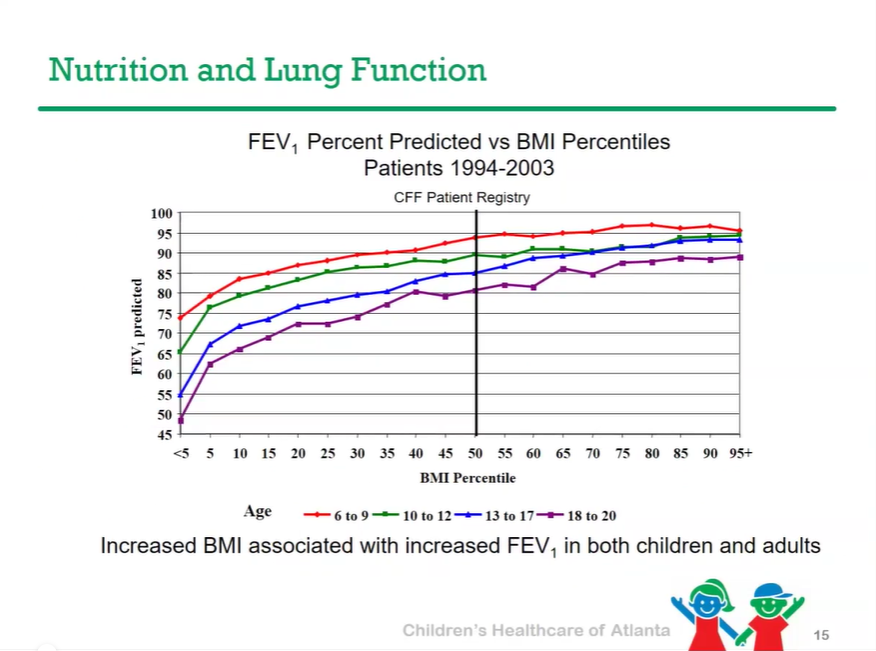
  • Better nutrition has been linked to better lung outcomes.
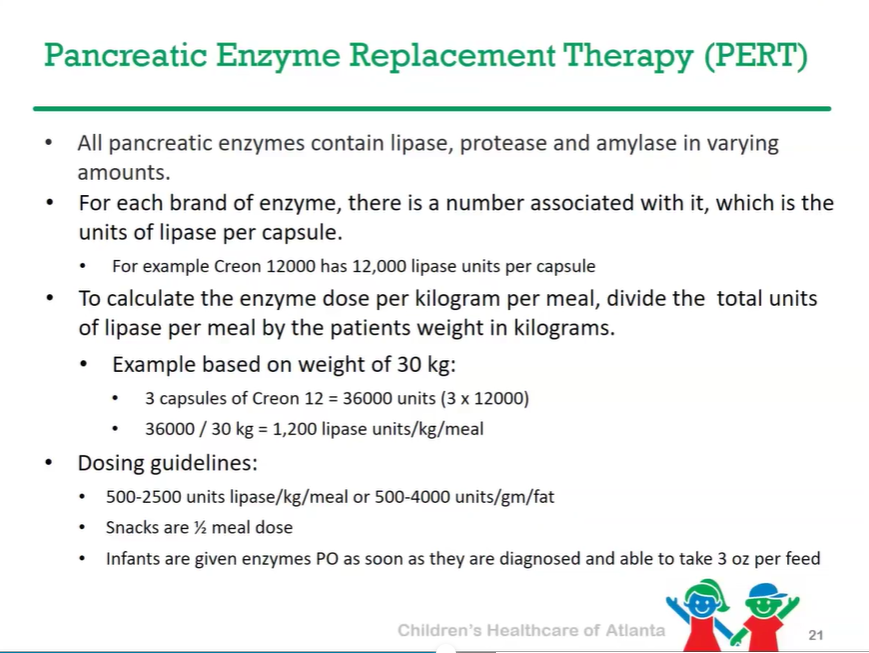
  • Pancreatic enzyme replacement therapy needed for 85-90% of patients with CF
    • CFTR modulator therapies may allow lower dosing PERT dosing
  • Fat soluble vitamin supplementation (A, D, E, K) is needed
    • Vitamin D (25-OH) goal (by CF Foundation) is >30 ng/mL
  • High salt diet is recommended due to excessive losses
  • Targeted nutritional support needs to be based on nutritional status; some patients may need G-Tube placement. CHOA algorithm developed.
  • High sugar diet may increase the development of CF related diabetes (CFRD)
  • Fibrosing colonopathy is a very rare effect of high dose pancreatic enzymes and may have been in part due to impurities in older preparations of panrcreatic enzymes.

Some of the slides:

Related blog posts:

Polyurethane vs Silcione with Ethanol Locks

Prior recommendations for ethanol locks have favored silicone central lines over polyurethane due to concerns of increased breakage rates when ethanol locks are used with polyurethane catheters. However, a recent small study indicates that this may be incorrect.

K LaRusso et al. JPEN https://doi.org/10.1002/jpen.2056. Prolonged Use of Ethanol Lock Prophylaxis With Polyurethane Catheters in Children With Intestinal Failure: A Single‐Center Experience (Reference from Conrad Cole’s twitter feed)

A 10‐year retrospective study with 10 children comprising 85 CVCs and 13,227 catheter days

Key findings:

  • Breakages were the most common complication: polyurethane 1.46/1000 vs silicone 3.76/1000 catheter days. Silicone catheters had a significantly higher breakage rate (adjusted rate ratio [RR], 2.86; 95% confidence interval [CI], 2.84–2.88; P < .001)
  • Polyurethane catheters had higher rates of occlusion (adjusted RR, 0.14; 95% CI, 0.07–0.28; P < .001) and displacements.
  • There were no differences in the overall catheter replacement rates and any other catheter‐related outcomes.

Related blog post: Central Line Pointers

From The Onion:

from The Onion

Incidental Ileitis, IBD Pipeline, & Ustekinumab Followup Data

M Agrawal et al. Journal of Crohn’s and Colitis, jjab030https://doi.org/10.1093/ecco-jcc/jjab030. Prevalence and progression of incidental terminal ileitis on non-diagnostic colonoscopy: a systematic review and meta-analysis

Key findings:

  • Seven studies reported the prevalence of IDTI (Incidentally-diagnosed terminal ileitis) in 44,398 persons undergoing non-diagnostic colonoscopy
  • The pooled prevalence rate of IDTI was 1.6%
  • Progression to overt CD was rare over 1-7 years of followup

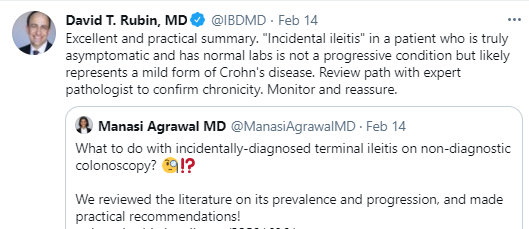
My take: As noted below by Dr. Rubin, in those with normal labs who are asymptomatic, most incidental ileitis is not progressive and should be monitored.

This slide from @RealCecum Twitter Feed and @IBDMD Twitter Feed

1. When You Are Fully Vaccinated 2.Outcomes of Duodenal Atresia and Stenosis

  1. CDC Recommendations: When You’ve Been Fully Vaccinated
  2. GS Bethell et al. JPGN 2021; 72: 239-243. One-year Outcomes of Congenital Duodenal Obstruction: A Population-based Study

This prospective observational study provides helpful outcome data for infants (n=80) born with congenital duodenal obstruction (CDO).

Key findings (also see infographic below):

  • Though there was an 8.4% overall mortality, there were no deaths directly attributed to CDO. 69% had associated anomalies.
  • Median length of stay after repair was 20 days; at 28 days following repair, 76% had been discharged home
  • Failure to achieve full enteral feeds was NOT related to CDO (due instead to other gastrointestinal anomalies). Mean time for full feeds was 13 days post-op; 90% reached full enteral feeds at 28 days.
  • Repair type: 80% had duodenoduodenostomy, 14% had duodenojejunostomy, the others: membrane incision (n=1), membrane resection (n=2), and duodenoplasty (n=2)

My take: This data will inform clinicians of expected outcomes in this population. I hope this cohort is followed long-term to provide more information about long-term outcomes including frequency of pancreatitis.