


A recent study by the APPETITE (Alberta Provincial Pediatric EnTeric Infection TEam) describes the frequency of abdominal pain with acute gastroenteritis (AGE).
S Ali et al. J Pediatr 2021; 231: 102-109. Characterizing Pain in Children with Acute Gastroenteritis Who Present for Emergency Care
This was a prospective cohort study with 2136 patients (median age 21 months) who were recruited from 2 pediatric EDs
Key findings:
In their discussion, the authors note the need for research on the development of effective, safe, and timely pain management plans. In my view, all gut pain, especially in those with chronic conditions, needs more effective treatments.
My take: This is an interesting study as very little has been published about AGE and abdominal pain. The study’s conclusions are limited by the age of the participants.
Related blog posts:


In his book, Critical path, Buckminster Fuller (Fuller 1981), American architect, systems theorist, author, designer, inventor, and futurist, created the ‘knowledge doubling curve’. He noticed that until 1900 human knowledge doubled approximately every century and by the end of World War II knowledge was doubling every 25 years (Knowledge is not everything, Paul Chamberlain). Now the doubling of knowledge, in the age of the internet and social media, has become even shorter, perhaps less than a year.
I was thinking about this knowledge doubling curve after reading two practice guidances in a recent issue of Hepatology:
The first guidance is mainly for reference as pediatric gastroenterologists do not focus on reproductive health. The authors do provide guidance on contraceptive options which is an important topic for adolescents. The main guidance is disease-specific information for pregnancy in the setting of underlying liver conditions including liver transplantation, cirrhosis, viral hepatitis, autoimmune hepatitis, PSC, PBC, Wilson’s disease, hepatitis C, nonalcoholic fatty liver disease, HELLP, acute fatty liver disease of pregnancy, Budd-Chiari, FNH, hepatocellular adenoma, and others. The guidance also provides recommendations for how to evaluate abnormal liver tests in pregnancy and reviews liver medications during pregnancy (Table 4).
The second guidance reviews the following:
Useful points:
My take: In essence, these two articles are condensed textbooks. The first on Liver Disease, Pregnancy and Reproductive Health. And the second on Bleeding in the Setting of Chronic Liver Disease and Vascular Liver Diseases.

A recent study reminded me of the slogan ‘trust but verify.’ This slogan was popularized by Ronald Reagan in nuclear disarmament talks with the U.S.S.R. In contrast, C Sarbagili-Shabat et al (JPGN 2021; 72: 569-573. Moderate-to-severe Endoscopic Inflammation is Frequent After Clinical Remission in Pediatric Ulcerative Colitis) discuss the issue of clinical remission in ulcerative colitis.
This study prospectively assessed for mucosal healing by endoscopy 3 to 5 months after clinical remission, PUCAI <10, was documented. Key findings:
It would have been helpful to have calprotectin values as well. In their discussion, the authors note that “a normal calprotectin is quite convincing with regard to endoscopic remission” and ECCO ESPGHAN guidelines “provide guidance that a colonoscopy should only be performed if fecal calprotectin” is >250 mcg/g.
My take: Clinical remission in ulcerative colitis should be verified. It is reasonable to start with a fecal calprotectin and if elevated to proceed with endoscopic evaluation (colonoscopy or sigmoidoscopy).
Also: new therapy for Crohn’s disease with favorable phase III study. From Pharmacy Times: Risankizumab (Skyrizi) Demonstrates Significant Improvements In Patients with Crohn Disease Two studies, ADVANCE and MOTIVATE showed similar results for Crohn’s disease. In the ADVANCE study: “40% of patients receiving 600 mg, and 32% of patients receiving 1200 mg achieved endoscopic response at week 12, compared to 12% in the placebo group.” In the MOTIVATE study, “29% and 34% of patients receiving 600 mg and 1200 mg achieved endoscopic response, respectively, compared to 11% in the placebo group.”
Related blog posts:
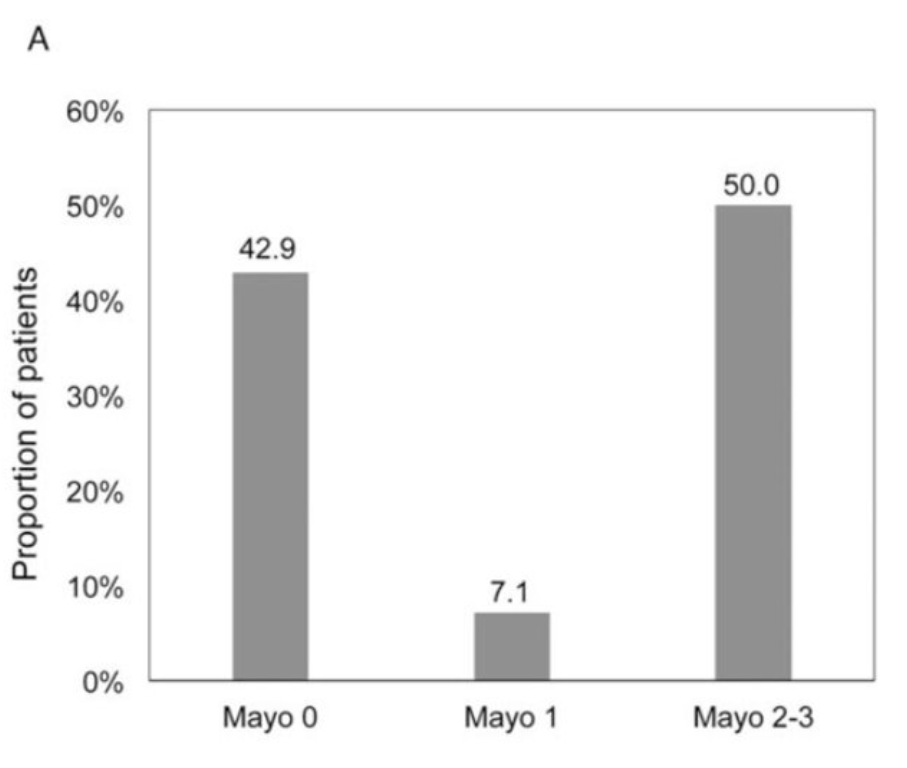

Previous studies have indicated that prolonged cholestasis before liver transplantation is associated with adverse neurodevelopmental outcomes. LH Rodijk et al (JPGN 2021; 72: 592-596. Full text: Early Motor Repertoire in Infants With Biliary Atresia: A Nationwide Prospective Cohort Study) prospectively investigate early neurologic impairment in infants with biliary atresia (n=35).
The author’s utilized Prechtl’s General Movement (GM) Assessment which is a noninvasive, cost-effective, and worldwide used method to identify infants who are at risk of neurodevelopmental impairments. This requires video recordings of 10 minutes; this was avoided in the 24 hours following liver biopsy or general anesthesia.
Key finding:
My take (from authors): “At the time of diagnosis, almost half of the infants with BA showed an atypical early motor repertoire, suggesting that neurological impairment is present already in early infancy. Compared to healthy infants, approximately 2 to 3 times more infants showed an atypical motor repertoire.”
Related blog posts:

Two recent articles delve into the topic of Pediatric to Adult Care Transition.
M Katz et al. J Pediatr (Epub head of publication) 2021. African American Pediatric Liver Transplant Recipients Have an Increased Risk of Death After Transferring to Adult Healthcare (Thanks to a friend who shared this reference & congratulations to my Emory colleagues and senior author Nitika Gupta on this publication)
This retrospective study examined 101 patients between 1990 and 2015. 64 had long-term followup data available.
Key findings:
H Pearlstein et al. JPGN 2021; 72: 563-568. Predicting Suboptimal Transitions in Adolescents with Inflammatory Bowel Disease
This retrospective study with 104 subjects defined suboptimal transition as “either a return to pediatric care or requiring care escalation within 1 year of transfer.
Key findings:
Comments: This is a small study and included only 26 patients receiving public insurance, which the authors considered as a proxy measure of socioeconomic status.
My take: These studies show the difficulties and potential deadly outcomes that face these young adults during transition from pediatrics to adult care. In many cases, medication non-adherence is a key factor and can be affected by access to care, insurance coverage, and mental health. Most young adults with serious medical problems probably would benefit from keeping their parents actively involved in their care.
Related blog posts:

Outcomes of VEO-IBD. B Kerur et al. Inflamm Bowel Dis 2021; 27: 295-302. Bowel Disease in North America: A Retrospective Cohort Study The study population included 269 children (105 [39%] Crohn’s disease, 106 [39%] ulcerative colitis, and 58 [22%] IBD unclassified). Key findings:
Related blog posts:
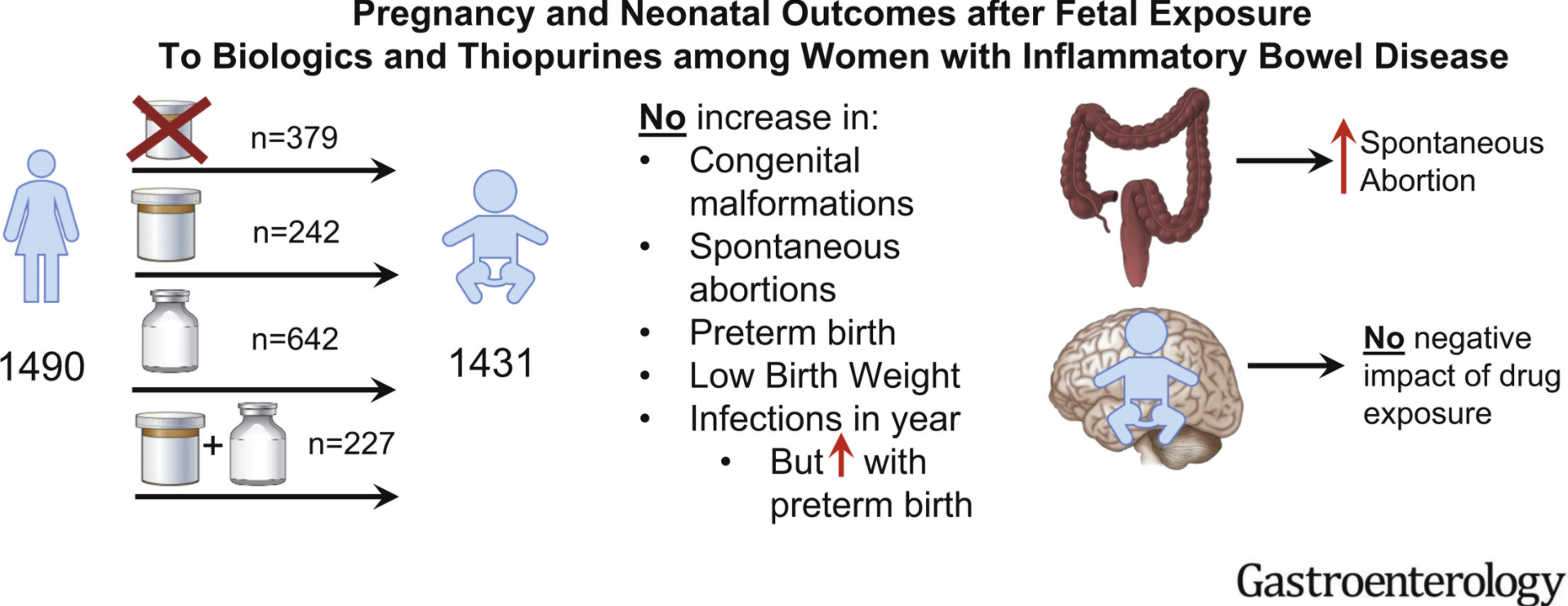
IBD Therapies and Newborn Outcomes (also covered in a prior blog post: Disease Activity, Not Medications, Linked to Neonatal Outcomes in Women with IBD). U Mahadevan et al. Gastroenterol 2021; 160: 1131-1139. Pregnancy and Neonatal Outcomes After Fetal Exposure to Biologics and Thiopurines Among Women With Inflammatory Bowel Disease
In this PIANO study (2007-2019), pregnant women with IBD were enrolled in a prospective, observational, multicenter study across the United States. PIANO is an acronym for Pregnancy in Inflammatory Bowel Disease and Neonatal Outcomes.
Disparity Not Apparent Among Insured Population. EL Barnes et al. Inflamm Bowel Dis 2021; 27: 364-370. Black and White Patients With Inflammatory Bowel Disease Show Similar Biologic Use Patterns With Medicaid Insurance
In this study, which analyzed Medicaid Analytic eXtract data from 4 states (California, Georgia, North Carolina, and Texas) between 2006 and 2011, the authors identified 14,735 patients with IBD (4672 black [32%]). Key finding: “In patients with Medicaid insurance, where access to IBD-specific therapy should be similar for all individuals, there was no significant disparity by race in the utilization of IBD-specific therapies.”
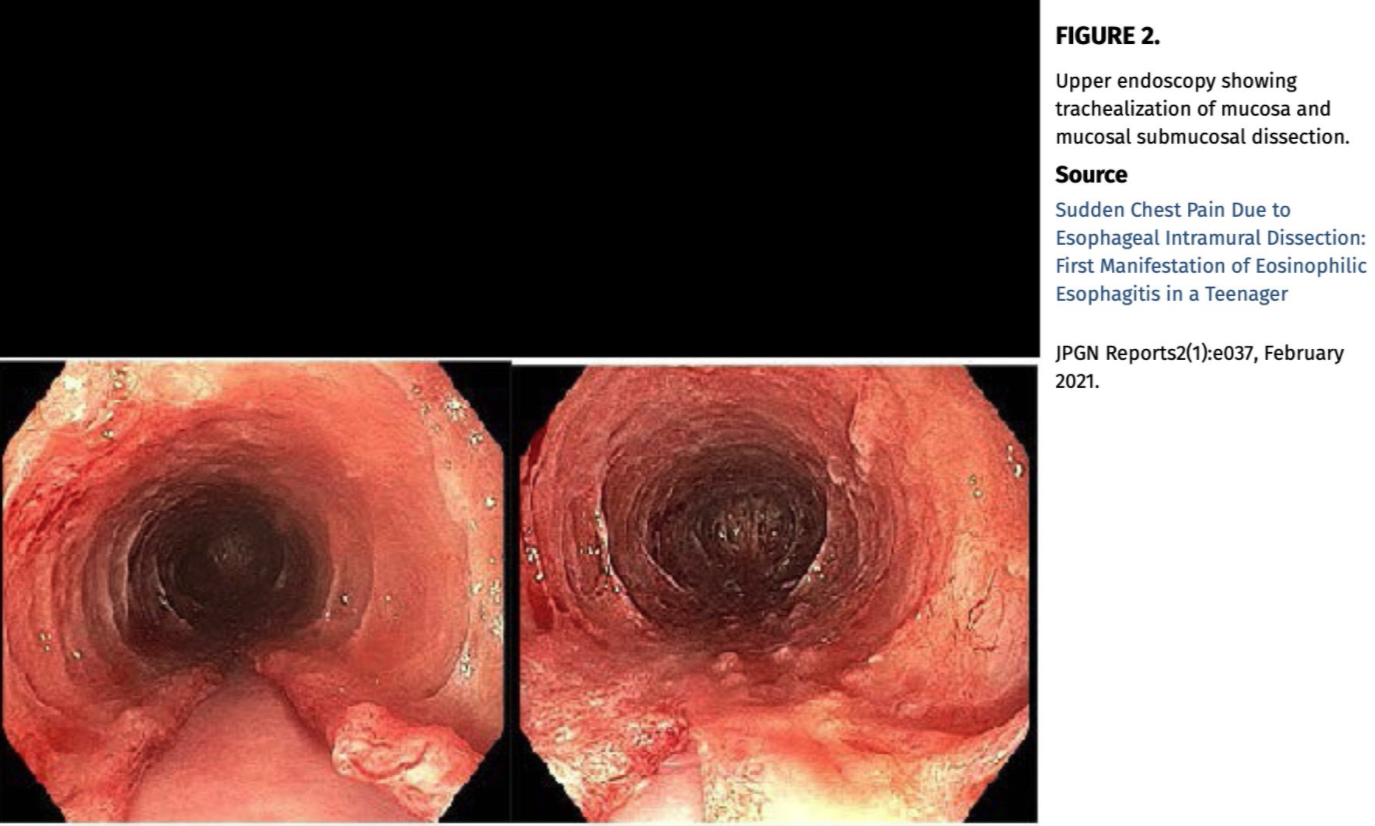
C Ariken et al. JPGN Reports: February 2021 – Volume 2 – Issue 1 – p e037 February 2021: Full Link —Sudden Chest Pain Due to Esophageal Intramural Dissection

From AAP: R Macauley et al. Pediatrics: 2021; 147 (3) e2020049685. Full text. Ethical Considerations in Pediatricians’ Use of Social Media Thanks to Ben Gold for this reference.
Summary -Recommendations
Related blog posts:

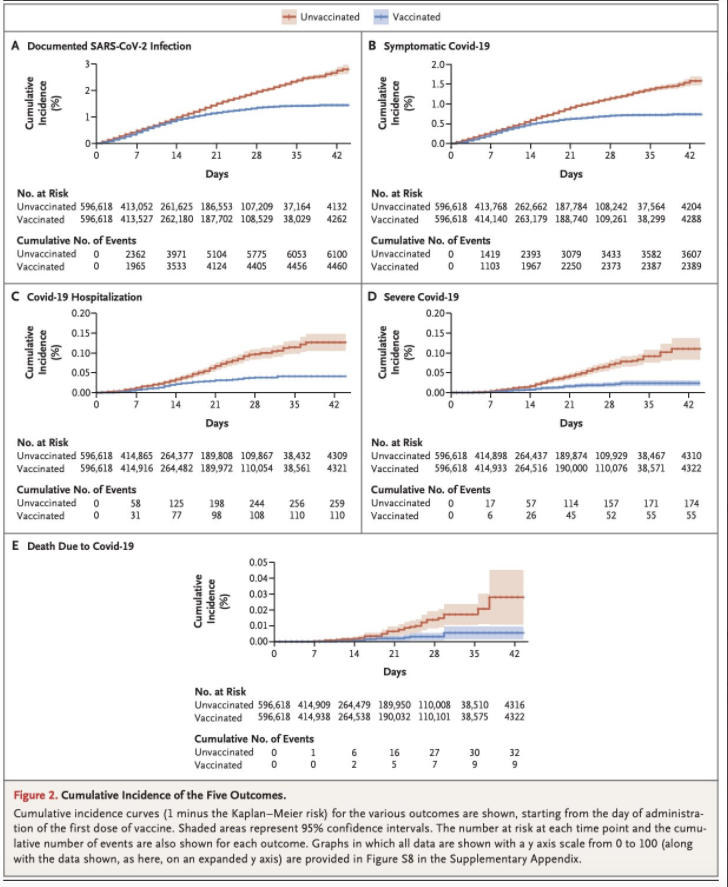
N Dagan et al. NEJM 2021;384:1412-23. DOI: 10.1056/NEJMoa2101765. PDF: BNT162b2 mRNA Covid-19 Vaccine in a Nationwide Mass Vaccination Setting
Each study group (vaccinated and unvaccinated) included 596,618 persons. Key finding:
 gutsandgrowth